2027 Best Shortest Online DNP Programs

Co-Founder and Chief Data Scientist
As a career planning expert, I understand how important it is to choose an educational path that balances quality, flexibility, and time efficiency. Our review of the shortest online DNP programs shows that the biggest differences between programs involve not just speed, but also how effectively they support working nurses balancing clinical hours, leadership training, and scheduling demands.
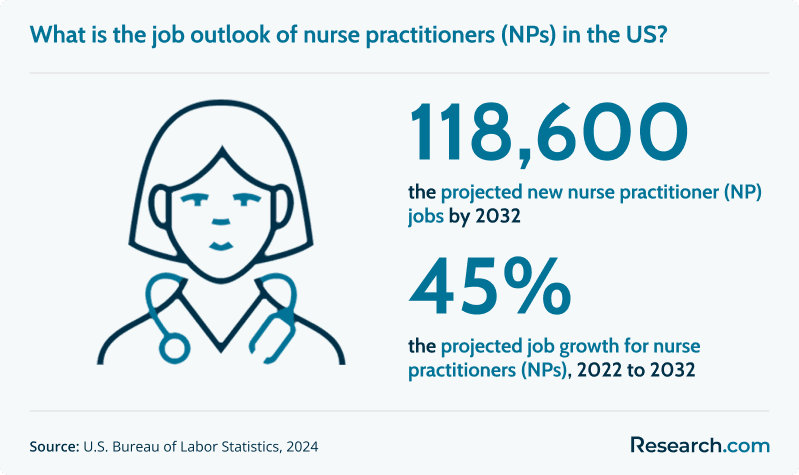
Demand for nurse practitioners is projected to grow 45% from 2022 to 2032, increasing pressure on universities to expand accelerated pathways. Drawing from my career planning experience and our evaluation of online DNP programs, this guide breaks down the 25 best shortest online DNP programs in 2027. Beyond tuition and timelines, we focused on factors students often overlook, including clinical placement support, residency requirements, transfer credit flexibility, and whether accelerated formats remain manageable for full-time professionals.
What are the benefits of getting a short online DNP degree?
- Graduating from one of the best, shortest online DNP programs in 2027 allows you to qualify for advanced roles such as nurse practitioner, clinical nurse specialist, and nurse anesthetist.
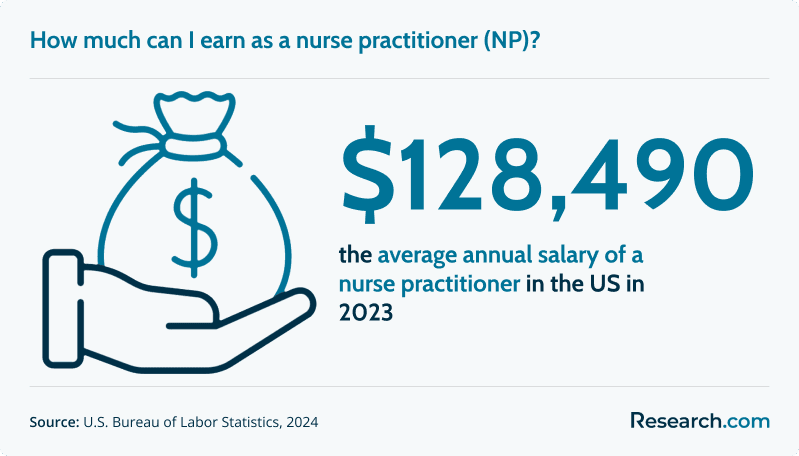
- The median annual wage for nurse practitioners in 2023 is $126,260, reflecting the lucrative earning potential of this degree.
- Earning your DNP degree online offers the flexibility to balance your studies with personal and professional responsibilities, making it more accessible for working professionals.
What can I expect from the best shortest online DNP programs in 2027?
The best, shortest online DNP programs in 2027 offer a rigorous yet streamlined curriculum designed to equip you with advanced clinical skills and leadership capabilities. These programs typically blend theoretical coursework with practical experiences, ensuring you gain comprehensive knowledge applicable to real-world settings. You can expect flexible scheduling options, allowing you to balance your studies with other commitments. Additionally, these programs often feature expert faculty and a supportive online learning community, fostering an environment conducive to professional growth and networking.
Where can I work with a degree from the best shortest online DNP programs in 2027?
With a degree from one of the best, shortest online DNP programs in 2027, you can work in a variety of healthcare settings. These include hospitals, private practices, outpatient clinics, and community health centers. You can also find opportunities in specialized areas such as pediatrics, geriatrics, and mental health. Additionally, roles in academia and research institutions are available for those interested in education and clinical research. Your advanced skills may also qualify you for leadership positions in healthcare organizations, where you can influence policy and improve patient care standards. The versatility of this degree ensures you have numerous career paths to explore.
How much can I make with a degree from the best shortest online DNP programs in 2027?
Earnings from the shortest online DNP programs are not fixed and depend more on role, specialty, and location than the degree itself. The $126,260 median nurse practitioner salary (2023) is only a midpoint, not a guaranteed outcome for DNP graduates.
Most graduates work as nurse practitioners within standard pay ranges. Acute care and psychiatric-mental health NPs often earn more due to demand, while family practice roles usually stay closer to the median unless they are in high-need areas. Pay can also change significantly by location, with rural and shortage regions sometimes offering higher compensation.
Higher earnings typically come when DNP graduates move into leadership or administrative roles like clinical director or nurse manager. These positions follow broader organizational pay structures and can increase earning ceilings beyond clinical work.
The main value of shorter DNP programs is speed. They help graduates reach advanced roles sooner, but long-term income depends on whether they remain in clinical practice or transition into leadership positions.
- 25 Best Shortest Online DNP Programs for 2027 Top DNP Programs
- How long does it take to complete the best shortest online DNP programs? How long does it take to complete the best shortest online DNP programs?
- How does the best shortest online DNP programs compare to an on-campus program? Online vs. On-Campus
- What is the average cost of the best shortest online DNP programs? Degree Cost
- What are the financial aid options for students enrolling in the best shortest online DNP programs? Financial Aid
- What are the prerequisites for enrolling in the best shortest online DNP programs? Requirements
- What courses are typically in the best shortest online DNP programs? Typical Courses
- What types of specializations are available in the best shortest online DNP programs? What types of specializations are available in the best shortest online DNP programs?
- How do you choose the best shortest online DNP program? How do you choose the best shortest online DNP program?
- What career paths are available for graduates of the best shortest online DNP programs? What career paths are available for graduates of the best shortest online DNP programs?
- Is the online DNP program accredited? Is the online DNP program accredited?
- What is the job market for graduates of the best shortest online DNP programs? Job Market
- What career support and networking opportunities do online DNP programs offer? What career support and networking opportunities do online DNP programs offer?
- What challenges might I face in an online DNP program? What challenges might I face in an online DNP program?
- What future trends are shaping online DNP education? What future trends are shaping online DNP education?
- How do online DNP programs integrate hands-on clinical experience? How do online DNP programs integrate hands-on clinical experience?
- What are the technological requirements for online DNP programs? What are the technological requirements for online DNP programs?
- How can I maintain work-life balance while pursuing a DNP online? How can I maintain work-life balance while pursuing a DNP online?
- Is an online nursing degree credible? Is an online nursing degree credible?
- What is the earning potential for graduates of the best shortest online DNP programs? What is the earning potential for graduates of the best shortest online DNP programs?
- Is there an RN to BSN program that doesn't require clinical hours? Is there an RN to BSN program that doesn't require clinical hours?
- How can advanced nursing degrees unlock nurse executive leadership opportunities? How can advanced nursing degrees unlock nurse executive leadership opportunities?
- Is an accelerated DNP pathway the fastest route to nurse practitioner practice? Is an accelerated DNP pathway the fastest route to nurse practitioner practice?
25 Best Shortest Online DNP Programs for 2027
Choosing a fast online Doctor of Nursing Practice program is not just a question of speed. For working nurses, the real decision is whether a shorter DNP pathway can fit around clinical work, meet accreditation and licensure expectations, provide enough placement support, and justify the cost. The shortest online DNP programs are usually post-master’s options designed for nurses who already hold an MSN and, in many cases, an APRN certification.
This guide compares 25 short online or primarily online DNP programs, explains how long accelerated DNP study typically takes, and shows how to evaluate cost, accreditation, clinical requirements, specialization options, and career outcomes. It is designed for nurses comparing fast DNP pathways, not for students looking for a generic nursing degree overview.
Quick answer: What is the shortest online DNP program?
The shortest online DNP programs on this list can be completed in about 12 months, but most accelerated online DNP options take about 12 to 24 months. The fastest paths are generally post-master’s DNP programs for nurses who already have graduate-level nursing preparation. BSN-to-DNP and DNP programs with nurse practitioner preparation usually take longer because they include more advanced clinical and specialty coursework.
| Best fit | Typical accelerated timeline | What to check before applying |
| MSN-prepared APRNs seeking a practice doctorate | 12 to 24 months | Clinical hour requirements, project expectations, state authorization, and accreditation |
| MSN-prepared nurses moving into leadership | About 18 to 36 months | Leadership curriculum, project site support, and employer value of the DNP |
| BSN-prepared nurses seeking NP preparation | Usually longer than post-master’s DNP programs | Specialty track, certification eligibility, licensure rules, and clinical placement support |
How we evaluated these programs
This list is based on program-level research and available institutional information. To understand how Research.com evaluates schools and programs, review our methodology. We also considered public education datasets, including the IPEDS database from the National Center for Education Statistics, Peterson’s database, and the College Scorecard.
Shortest online DNP programs: side-by-side comparison
The programs below are primarily online or online with limited in-person requirements. Because DNP programs often include clinical hours, project work, immersions, or state-specific placement rules, students should confirm details directly with the school before applying.
| Rank | School and program | Program length | Credits | Cost | Accreditation | Best for |
| 1 | Emory University Online Post-Masters DNP | ~1.5 years | 33 | $1,721 per credit | Commission on Collegiate Nursing Education (CCNE) | MSN-prepared nurses seeking a leadership-focused DNP with coursework in health systems evidence, quality and safety, policy, ethics, and law. |
| 2 | University of Minnesota Online Post-Masters DNP | ~1.5 years | 37-38 | $1,053 per credit | Commission on Collegiate Nursing Education (CCNE) | Nurses who want to design, evaluate, and lead improved care delivery models across local, national, or global settings. |
| 3 | University of Miami Online Post-Masters DNP | 1 year | 39 | $55,000 total; ~$1,410.26 per credit | Commission on Collegiate Nursing Education (CCNE) | Advanced practice nurses seeking a primarily online hybrid format with a two-semester capstone project, at least 560 clinical hours, and no dissertation. |
| 4 | University of Arizona Online DNP | ~1.5 years | 35 | $1,053 per credit | Commission on Collegiate Nursing Education (CCNE) | Nurses interested in Executive Health Systems Leadership, Nurse-Midwifery, or Adult-Gerontology Acute Care Nurse Practitioner tracks. |
| 5 | University of Cincinnati Online Post-Masters DNP | ~1.5 years | 37 | $836 in-state; $851 out-of-state per credit | Commission on Collegiate Nursing Education (CCNE) | Nurses comparing multiple tracks, including Adult-Gerontology Acute Care, Adult-Gerontology Primary Care, Family Nurse Practitioner (FNP), Occupational Health Nursing, Pediatric Acute Care, Psychiatric-Mental Health, Public Health Nursing, and Systems Leadership. |
| 6 | Frontier Nursing University Online Post-Masters DNP | 18 months | 30 | $665 per credit; $19,950 total | Accreditation Commission for Education in Nursing (ACEN) | Certified nurse-midwives and nurse practitioners seeking a rapid cycle quality improvement project, online coursework, and a three-day campus immersion. |
| 7 | Samford University Online Post-Masters DNP | ~2 to 3 years | 76 | $961 per credit | Commission on Collegiate Nursing Education (CCNE) | Nurses pursuing a Family Nurse Practitioner track and willing to complete a longer credit load than many post-master’s options. |
| 8 | Northeastern University Online Post-Masters DNP | ~2 to 3 years | 30 | $1,815 per credit | Commission on Collegiate Nursing Education (CCNE) | Nurses seeking an executive-model hybrid DNP with advanced study in leadership, practice inquiry, population health, informatics, and health policy. |
| 9 | Anderson University Online Post-Masters DNP | 5 semesters; ~3 years | 39 | $815 per credit | Commission on Collegiate Nursing Education (CCNE) | Advanced practice nurses such as nurse practitioners, clinical nurse specialists, nurse anesthetists, or nurse midwives who can complete 500 clinical hours and campus residency meetings. |
| 10 | Saint Catherine University Online Post-Masters DNP | ~3 years | 69 | $1,200 per credit; $82,800 total | Commission on Collegiate Nursing Education (CCNE) | Registered nurses looking for a practice doctorate emphasizing ethical leadership, social justice, informatics, evidence-based practice, organizational systems, economics, and policy. |
| 11 | Holy Family University Online Post APRN DNP | 12 months | 23 | $1,066 per credit | Commission on Collegiate Nursing Education (CCNE) | Post-APRN nurses seeking one of the fastest listed DNP timelines with a focus on clinical scholarship, outcomes, evidence-based practice, and quality improvement. |
| 12 | Old Dominion University Online Advanced Practice DNP | ~1.5 to 2.5 years | 36 | $620 in-state; $642 out-of-state per credit | Commission on Collegiate Nursing Education (CCNE) | Nurse practitioners, nurse midwives, clinical nurse specialists, and nurse anesthetists interested in underserved populations and health disparities. |
| 13 | Chatham University Online Post-Masters DNP | ~1.5 years | 27 | $1,160 per credit; $31,320 total | Commission on Collegiate Nursing Education (CCNE) | Master’s-prepared nurses who want 15-week online courses, one short residency near the end of the program, and a practice change project in their specialty area. |
| 14 | University of New Hampshire Online Post-Masters DNP | 18 to 28 months | 33 | $800 per credit; $26,400 total | Commission on Collegiate Nursing Education (CCNE) | Nurses aiming to strengthen evidence-based clinical leadership, management ability, interdisciplinary teamwork, and quality and safety implementation. |
| 15 | Gannon University Online Post-Masters DNP | ~1.5 to 2.5 years | 32 | $900 per credit; $28,800 total | Commission on Collegiate Nursing Education (CCNE) | MSN-prepared nurses who want to build an evidence-based practice project from prior graduate work or enter through a bridge or master’s add-on structure. |
| 16 | Delta State University Online Post-Master’s FNP-DNP | 1.5 years | 31 | $469 per credit; $4,217 per semester | Commission on Collegiate Nursing Education (CCNE) | Nurses pursuing a Family Nurse Practitioner concentration with preparation aligned to AANP or ANCC certification and APRN licensure in primary care across the lifespan. |
| 17 | Francis Marion University Online Post-Masters DNP | 1 year | 30 | $823.20 in-state; $1,646.41 out-of-state per credit | Commission on Collegiate Nursing Education (CCNE) | Full-time students seeking a one-calendar-year MSN-to-DNP option with at least 360 clinical hours and fully online delivery. |
| 18 | Westminster College Online Post-Masters DNP | 12 months | 32 | $1,345 per credit; $43,040 total | Commission on Collegiate Nursing Education (CCNE) | Advanced practice nurse leaders who want a hybrid model that combines online learning with residency-style engagement and small classes. |
| 19 | Thomas Edison State University Online Post-Masters DNP | 18 months | 36 | $806 per credit; $29,016 total | Commission on Collegiate Nursing Education (CCNE) | Nurses focused on systems-level leadership and healthcare organization transformation. |
| 20 | Maryville University Online DNP or DNP-NP | 20 to 36 months | 33 | $56,278 to $64,045 estimated tuition | Commission on Collegiate Nursing Education (CCNE) | Nurses choosing between a standalone DNP that can be completed in as little as 20 months or an NP concentration that may take as little as 36 months. |
| 21 | Nova Southeastern University Online Post-Masters DNP | ~1.5 years | 36 | $849 per credit; $30,564 total | Commission on Collegiate Nursing Education (CCNE) | Post-master’s nurses seeking a five-semester, fully online DNP with emphasis on evidence-based practice, quality improvement, and systems thinking. |
| 22 | Colorado Technical University Online Post-Masters DNP | 19 months | 49 | $32,842 total estimated tuition | Commission on Collegiate Nursing Education (CCNE) | Licensed RNs with a master’s in nursing who want a flexible online doctorate focused on healthcare delivery systems, health economics, administration, and nursing leadership. |
| 23 | University of Louisiana at Lafayette Online Post-Masters DNP | ~1.5 years | 39 | $480 per credit | Commission on Collegiate Nursing Education (CCNE) | Nurses seeking an online DNP with enrollment support, online tutoring, student resources, and coursework in evidence-based practice, leadership, policy, and advanced practice theory. |
| 24 | Johns Hopkins University Online DNP | 3 years | 70 | $1,939 per credit; $50,079 per year estimate | Commission on Collegiate Nursing Education (CCNE) | Nurses seeking tracks in Adult-Gerontological Acute Care Nurse Practitioner, Adult-Gerontological Primary Care Nurse Practitioner, Family Primary Care Nurse Practitioner, Pediatric Primary Care Nurse Practitioner, Pediatric Dual Primary/Acute Care Nurse Practitioner, Psychiatric Mental Health Nurse Practitioner, or Nurse Anesthesia. |
| 25 | Augusta University Online Post-Masters DNP | ~1.5 to 2 years | 37 | $441 per credit | Commission on Collegiate Nursing Education (CCNE) | Nurses with a master’s degree in nursing and advanced practice certification who want doctoral preparation for leadership, advanced clinical practice, and systems problem-solving. |
How long does it take to complete the shortest online DNP programs?
Most of the shortest online DNP programs take 12 to 24 months, although a few extend to about 3 years. The fastest options are usually MSN-to-DNP or post-APRN pathways because students have already completed graduate-level nursing coursework and may bring previous clinical hours into the program.
By comparison, an easiest DNP program may feel more manageable because of pacing, support, or admissions flexibility, but “easy” and “short” are not the same. A one-year DNP can be academically demanding because students often complete doctoral coursework, clinical hours, and a practice project at the same time.
| DNP pathway | Who it is for | Why the timeline differs |
| Post-master’s DNP | Nurses who already hold an MSN | Usually shorter because graduate nursing foundations are already complete. |
| Post-APRN DNP | Certified advanced practice nurses | Often among the fastest options because the student already has specialty preparation. |
| BSN-to-DNP | BSN-prepared RNs seeking doctoral and APRN preparation | Typically longer because it combines graduate coursework, specialty training, and doctoral requirements. |
| DNP-NP track | Nurses seeking a nurse practitioner role | Usually longer than a leadership-only post-master’s DNP because it includes certification-related clinical preparation. |
Online DNP vs on-campus DNP: which format is better?
An online DNP is usually better for working nurses who need scheduling flexibility and can complete clinical or project requirements near where they live. An on-campus DNP may be better for students who want frequent face-to-face faculty access, structured campus routines, or school-arranged clinical networks close to the university.
| Factor | Online or hybrid DNP | On-campus DNP |
| Flexibility | Better for nurses balancing shifts, family obligations, and travel limits. | Better for students who prefer scheduled in-person classes and a fixed routine. |
| Clinical experience | Usually completed locally, but students may need to help secure sites or preceptors. | May offer stronger nearby placement relationships, depending on the school. |
| Networking | Can connect students across regions and healthcare systems. | Often stronger for local professional networks near the campus. |
| Residency requirements | Some programs require short immersions or campus visits. | In-person attendance is built into the program structure. |
| Best choice when | You need location flexibility and have access to clinical or project sites. | You want more in-person structure or plan to work near the school’s clinical partners. |
What does a short online DNP cost?
The average tuition cost for the shortest online DNP programs commonly falls between approximately $30,000 and $60,000, but the actual price can be lower or higher depending on credit load, residency fees, state residency status, technology fees, books, travel, and whether the school charges per credit or by term.
Do not compare programs by tuition alone. A program with a low per-credit price can become expensive if it requires many more credits, while a higher per-credit program may cost less overall if it requires fewer credits. Students should also budget for background checks, clinical compliance documentation, travel to intensives, professional fees, and possible reduced work hours during clinical or project-heavy terms.
Financial aid options for online DNP students
Online DNP students may be able to combine federal aid, employer support, scholarships, grants, and payment plans. Eligibility depends on the school, enrollment status, citizenship status, satisfactory academic progress, and whether the program participates in federal aid.
- Federal student loans: Graduate nursing students may qualify for federal loan options, including Grad PLUS Loans. Borrow only after comparing total program cost, projected income, and repayment options.
- Scholarships and grants: Nursing schools, hospital systems, professional associations, and community organizations may offer awards for graduate nursing students. Some are tied to specialty, service area, academic merit, or financial need.
- Employer tuition assistance: Hospitals and healthcare systems may reimburse part of DNP tuition, especially when the degree supports leadership, advanced practice, or retention goals. Ask whether reimbursement requires a work commitment after graduation.
- Private loans: Private loans can cover remaining costs, but they may have different interest rates, credit requirements, borrower protections, and repayment terms than federal loans.
- Cost-reduction strategies: Ask whether previous graduate credits or clinical hours can reduce the required plan of study, and compare affordable options such as most affordable online DNP programs.
Admission requirements for short online DNP programs
Admission requirements vary by pathway. The most important difference is whether the program is designed for BSN-prepared nurses, MSN-prepared nurses, APRNs, or non-nurses entering through an accelerated route.
BSN-to-DNP pathway
BSN-to-DNP programs are generally for registered nurses who want to move directly from a bachelor’s degree into doctoral-level nursing education. Common requirements include:
- A bachelor of science in nursing from an accredited institution
- An active and current registered nurse license
- Minimum GPA requirements, often in the 3.0 to 3.5 range
- Professional or academic recommendation letters
- A statement of purpose explaining career goals and fit with the DNP pathway
- Prerequisite or statistics coursework, depending on the school
MSN-to-DNP pathway
MSN-to-DNP pathways are usually the shortest DNP options because they build on previous graduate nursing preparation. Common requirements include:
- A master of science in nursing from an accredited institution
- An active RN license and, for some tracks, APRN certification
- Minimum graduate GPA requirements
- Letters of recommendation
- A professional goal statement or essay
- Documentation of previous clinical hours, if the program reviews hours for DNP requirement planning
Direct-entry or accelerated DNP pathway
Direct-entry DNP routes are for students who hold a non-nursing bachelor’s degree and want to enter nursing through an accelerated pathway. These programs are not usually the shortest route for practicing nurses because they must include nursing entry preparation. Requirements may include:
- A bachelor’s degree in a non-nursing field from an accredited institution
- Prerequisite courses such as anatomy, physiology, microbiology, statistics, or related sciences; students comparing costs can review cheap nursing prerequisites online
- GRE scores, if required by the school
- Recommendation letters
- A personal statement showing readiness for intensive nursing study
Many short online DNP programs in 2027 do not require GRE scores, but test policies vary. Do not assume a nursing program is test-optional simply because other graduate fields offer no-test admissions, such as some cheapest online MBA no GMAT options.
Common courses in accelerated online DNP programs
Short DNP programs compress doctoral-level nursing content into a tight schedule. Courses differ by school and track, but most programs include work in evidence-based practice, leadership, health policy, quality improvement, informatics, population health, and a final scholarly or practice project.
| Course area | What students learn | Why it matters |
| Advanced Pathophysiology | How disease processes develop and affect patients across the lifespan. | Supports advanced clinical reasoning and decision-making. |
| Advanced Pharmacology | Medication classes, therapeutic use, pharmacokinetics, pharmacodynamics, and prescribing considerations. | Essential for advanced practice roles where prescribing authority is part of the scope. |
| Advanced Health Assessment | Comprehensive assessment, diagnostic reasoning, and patient evaluation. | Builds clinical judgment for advanced practice and specialty care. |
| Healthcare Policy and Advocacy | Policy development, healthcare regulation, financing, and advocacy strategies. | Prepares DNP nurses to influence systems, access, and health equity. |
| Leadership in Advanced Nursing Practice | Leadership theory, organizational change, interprofessional collaboration, and quality improvement. | Supports roles in clinical leadership, administration, and systems improvement. |
| Evidence-Based Practice Project | Problem identification, intervention design, evaluation, and dissemination. | Replaces the dissertation model in many practice-focused DNP programs. |
Nurses who want to move into academic or staff development roles may also compare nursing education electives with broader education pathways such as the cheapest masters in education online, although a teaching degree is not a substitute for nursing graduate preparation where nursing credentials are required.
Online DNP specializations and when each makes sense
The right DNP specialization depends on whether you want direct patient care, executive leadership, population health, mental health practice, anesthesia, or education. A faster program is only useful if the specialty aligns with your licensure, certification, and career goals.
| Specialization | Best for | Decision point |
| Family Nurse Practitioner (FNP) | Nurses who want to deliver primary care across the lifespan. | Choose this if you want broad primary care scope. If you already hold an MSN, compare the shortest post master's FNP program. For role differences, review DNP vs FNP. |
| Psychiatric-Mental Health Nurse Practitioner (PMHNP) | Nurses interested in mental health assessment, diagnosis, therapy-related care, and medication management. | Check state scope-of-practice rules and the program’s clinical placement support carefully. |
| Nurse Anesthesia | Nurses pursuing anesthesia-related practice in surgical, obstetrical, or diagnostic settings. | Expect intensive clinical requirements and a longer, more structured pathway than many post-master’s leadership DNP programs. |
| Adult-Gerontology Nurse Practitioner (AGNP) | Nurses focused on adults and older adults in primary or acute care settings. | Confirm whether the track is primary care or acute care because certification and job settings differ. |
| Pediatric Nurse Practitioner (PNP) | Nurses who want to care for infants, children, and adolescents in primary or acute care environments. | Review pediatric clinical site availability before choosing an online program. |
| Executive or systems leadership | Nurses seeking administration, quality, safety, informatics, or organizational leadership. | Useful for nurses with leadership experience, but it may not qualify you for new APRN clinical practice if the program does not include APRN preparation. |
Some nurses add complementary graduate training outside nursing to support highly specific career goals. For example, an affordable exercise science degree may support work in cardiac or pulmonary rehabilitation settings. A nurse interested in psychosocial care might compare the cheapest online MSW program, while nurses focused on population-level intervention may review the cheapest MPH programs online. These credentials can broaden expertise, but they do not replace nursing licensure or APRN certification requirements.
Specialization can also affect earning potential. In 2023, the highest-paying industry for NPs was business support services at $180,570, followed by specialized health facilities at $158,140.
How to choose the best short online DNP program
The best short online DNP program is the one that meets your professional goal without creating unnecessary licensure, clinical placement, or debt risk. Use the program’s speed as one factor, not the deciding factor.
- Confirm nursing accreditation: Look for recognized nursing program accreditation, such as the Commission on Collegiate Nursing Education (CCNE) or ACEN. Accreditation can affect employer acceptance, certification eligibility, and transfer options.
- Match the pathway to your background: A post-master’s DNP is different from a BSN-to-DNP or DNP-NP pathway. Applying to the wrong route can cost time and money.
- Ask how clinical placements work: Determine whether the school secures sites, helps identify preceptors, or expects students to arrange everything independently.
- Review state authorization: Online nursing programs may not be authorized to enroll or place students in every state. Confirm eligibility based on where you live and where you plan to complete clinical hours.
- Compare total cost, not only tuition: Include fees, books, travel, technology, compliance documentation, reduced work hours, and interest if borrowing.
- Study the DNP project requirements: Ask whether your current workplace can serve as a project site and whether the school helps with approvals.
- Check faculty and support services: Accelerated programs require fast advising, responsive faculty, library access, tutoring, technical help, and project guidance.
- Look beyond rankings: Rankings can be helpful, but your specialty fit, clinical support, accreditation, and state eligibility matter more.
| Question to ask | Why it matters |
| Is the program authorized in my state? | State rules can affect enrollment, clinical placement, and completion. |
| Who finds my preceptor? | Placement delays are one of the biggest risks in accelerated online DNP study. |
| Will prior MSN clinical hours count? | Accepted hours may affect your timeline and required clinical workload. |
| Does the program prepare me for certification or only leadership? | A leadership DNP may not lead to a new APRN role. |
| What happens if my project site falls through? | Short programs leave little room for delays. |
Student priorities also matter. In 2023, affordability was the top reason for choosing an online college at 77%, while quick completion time ranked fourth at 58%.
Career paths after a short online DNP
Graduates of short online DNP programs do not all enter the same job market. Outcomes depend on prior nursing experience, APRN certification, specialty, location, employer needs, and leadership background. Many online DNP programs are designed to deepen advanced practice, improve leadership capacity, or prepare nurses for system-level improvement rather than guarantee a new role immediately after graduation.
- Nurse Practitioner: This is the most direct path for graduates whose program includes NP preparation or who already hold NP certification. Prior clinical experience and specialty demand strongly affect hiring.
- Clinical Nurse Specialist: CNS roles require specialty expertise and may be more selective than general advanced practice positions.
- Nurse Educator: DNP graduates may teach in academic or clinical settings, but many education roles prefer candidates with teaching experience, specialty credibility, or additional educator preparation.
- Nurse Executive or Administrator: These roles involve operations, staffing, budgets, quality, policy, and strategic leadership. They are often reached through promotion rather than direct entry after graduation.
- APRN leadership roles: DNP-prepared APRNs may lead practice councils, quality initiatives, care models, or specialty programs.
- Healthcare consultant: Consulting can be a strong long-term path for nurses with deep clinical and systems expertise, but credibility usually develops over time.
- Researcher or clinical scientist: DNP graduates may work in practice-based research or evidence implementation, but research-intensive careers may require additional research training.
A 2023 case study from the National Council of State Boards of Nursing (NCSBN) found that Master’s-to-DNP programs most often focus on Nurse Practitioner education at 28%, executive and leadership training at 28%, or broad non-specialized pathways at 31%.
Is an online DNP program accredited?
Accreditation is one of the first things to verify before enrolling in any online DNP program. A properly accredited nursing program has been reviewed against academic and professional standards, which can affect certification eligibility, employer recognition, transferability, and confidence in the credential.
Look for programmatic nursing accreditation from recognized bodies such as CCNE or ACEN. Also confirm that the institution itself is appropriately accredited. Students comparing earlier nursing pathways can review BSN online options to see how accreditation affects nursing education at different degree levels.
Job market for graduates of short online DNP programs
The job market for DNP graduates is favorable in many areas, but it is not equally accessible in every location or specialty. U.S. nursing workforce data shows continued demand for advanced nursing professionals, but hiring can vary sharply by state, rural versus urban market, employer type, and specialty saturation.
There are an estimated 118,600 new NP jobs expected by 2032, with 45% projected growth. That does not mean every graduate will find the exact role they want immediately. Large metropolitan markets and popular specialties such as family practice can be competitive, while rural or underserved areas may have more openings but broader responsibilities.
A DNP may be more valuable for leadership and advancement than for entry-level NP hiring, especially when employers also consider MSN-prepared nurse practitioners. For pay details by location, see how much do DNPs make a year.
Career support and networking in online DNP programs
Strong online DNP programs offer more than recorded lectures. Look for advising, DNP project support, clinical placement guidance, resume review, interview preparation, alumni networks, faculty mentorship, and access to professional development events. These services matter more in accelerated programs because students have less time to recover from weak guidance or placement delays.
Ask whether the program has partnerships with healthcare organizations and whether students can complete practice projects at their workplace. Nurses considering a different route into graduate study may also compare bridge options such as RN to MSN online.
Challenges students face in accelerated online DNP programs
The hardest part of an online DNP is often not the online format itself. The bigger challenge is coordinating coursework, clinical hours, preceptors, project approvals, employer schedules, and state rules within a compressed timeline.
| Common mistake | Why it creates problems | Better approach |
| Choosing the fastest program without checking clinical placement support | A short timeline can collapse if a student cannot secure a site or preceptor. | Ask for written details on placement responsibilities before enrolling. |
| Looking only at tuition | Fees, travel, books, technology, and reduced work hours can change the real cost. | Build a full cost estimate for each program. |
| Assuming online means no campus visits | Many online DNP programs include intensives, residencies, or project presentations. | Confirm all in-person requirements and travel costs. |
| Ignoring state authorization | A program may not be approved to place students in every state. | Confirm enrollment and clinical eligibility for your location. |
| Assuming a leadership DNP prepares you for NP certification | Not all DNP programs include APRN specialty preparation. | Choose a certification-aligned track if your goal is NP practice. |
This issue is especially important when comparing lower-cost options such as the cheapest online FNP programs, where students should weigh price against placement support, advising, and clinical coordination.
Trends shaping online DNP education
Online DNP education is becoming more practical, data-driven, and systems-oriented. Programs increasingly use simulation, telehealth scenarios, informatics tools, quality improvement frameworks, and interprofessional learning. The goal is not just to deliver content online but to prepare nurses to make decisions in complex clinical and organizational environments.
Students should expect more work with population health data, patient safety metrics, evidence implementation, and interdisciplinary teams. Nurses entering graduate study through pathways such as online ABSN programs may notice that advanced programs assume quick adaptation to clinical reasoning, self-directed learning, and systems thinking.
How online DNP programs handle hands-on clinical experience
Online DNP programs still require real-world practice learning. The difference is that the classroom may be online while clinical hours, quality improvement projects, preceptor meetings, simulations, or intensives provide applied experience.
- Clinical practicum placements: Students complete required hours in approved healthcare settings, often near their home region.
- Preceptor-guided learning: Qualified clinicians or leaders supervise students and provide feedback during practice experiences.
- Virtual simulations: Some programs use simulated cases to build diagnostic reasoning, communication, triage, and leadership decision-making.
- On-campus intensives: Hybrid programs may require short residencies for skills work, faculty meetings, presentations, or networking.
- DNP practice project: Most programs require a final project that addresses a practice, quality, safety, population health, or system-level problem.
Technology requirements for online DNP students
Most online DNP programs require students to have reliable technology before classes begin. Technical problems can disrupt live sessions, exams, simulations, project meetings, and group work.
- High-speed internet: Needed for live classes, recorded lectures, file uploads, video meetings, and simulations.
- Computer with webcam and microphone: Required for presentations, virtual advising, proctored exams, and group collaboration.
- Learning management system access: Programs commonly use platforms such as Canvas or Blackboard for assignments, grades, discussion boards, and course materials.
- Communication tools: Students may need Zoom, Microsoft Teams, secure messaging platforms, or school-approved teleconferencing tools.
- Backup plan: Have an alternate internet source and device access if your main system fails during an exam or presentation.
How to manage work-life balance in a fast online DNP
A short online DNP can fit around work, but it still requires sustained time and energy. The most successful students plan around clinical hours, project milestones, family responsibilities, and work shifts before the program begins.
- Create a weekly study schedule: Block protected study time and treat it like a work commitment.
- Talk with your employer early: Discuss schedule flexibility, tuition assistance, clinical hour needs, and possible project-site approval.
- Use project management tools: Track assignments, clinical documentation, deadlines, approvals, and faculty meetings.
- Protect recovery time: Accelerated programs can increase burnout risk if students work full time without rest periods.
- Build a support system: Arrange family, childcare, peer, and workplace support before the busiest terms begin.
- Choose the right entry pathway: Nurses still completing earlier education may compare LPN to BSN bridge programs online before moving toward advanced practice study.
Is an online nursing degree credible?
An online nursing degree can be credible when it comes from an appropriately accredited institution and nursing program, includes required clinical or practice components, and meets professional standards for the student’s intended role. Employers generally focus on accreditation, licensure, certification eligibility, clinical preparation, reputation, and demonstrated competence rather than the fact that some coursework was online.
Students concerned about credibility should review faculty qualifications, clinical requirements, graduate outcomes, state authorization, and employer recognition. For a broader discussion, see is an online nursing degree credible.
Earning potential after a short online DNP
DNP graduates may qualify for advanced clinical, leadership, education, quality improvement, informatics, or administrative roles, but salary varies by specialty, location, experience, employer, and scope of practice. The DNP can strengthen advancement potential, but it does not guarantee a specific salary or promotion.
Family nurse practitioner roles are among the most common paths for DNP-prepared clinicians. For role-specific salary and preparation information, review this guide to family nurse practitioner salary and career requirements.
Is there an RN to BSN program that does not require clinical hours?
Some RN to BSN programs are designed for licensed RNs who already have clinical experience and may not require additional traditional clinical placements. These programs often focus on leadership, evidence-based practice, community health, informatics, and professional development. Requirements vary, so students should confirm whether a program includes projects, practice experiences, or community-based assignments even if it does not require traditional clinical rotations. For options, review which RN to BSN program does not require clinical hours.
How advanced nursing degrees support nurse executive leadership
Advanced nursing degrees can help nurses move from bedside or specialty practice into broader leadership roles. Executive-focused pathways often emphasize healthcare finance, staffing systems, quality improvement, policy, strategic planning, organizational behavior, and interprofessional collaboration.
Nurses interested in administration should compare DNP leadership tracks with MSN executive leadership pathways. For related career options, see what jobs can you get with an MSN in nurse executive leadership.
Is an accelerated DNP the fastest route to nurse practitioner practice?
An accelerated DNP can be a fast route for nurses who already meet the entry requirements, but it is not always the fastest route to NP practice. If you already have an MSN and need a post-master’s certificate or specialty preparation, another pathway may be faster. If your goal is doctoral-level preparation plus NP practice, a DNP-NP track may make sense, but it can take longer than leadership-only DNP programs because it must include specialty clinical preparation.
Students asking whether they can become an NP quickly should compare licensure requirements, certification eligibility, clinical hour expectations, and program length. For a focused discussion, see Can you be a nurse practitioner in 2 years?.
Sources and references
- Statista. (2023, September 8). U.S. students' reasons for online college selection 2023. Statista.
- U.S. Bureau of Labor Statistics. (2024). Occupational employment and wage statistics - 29-1171 Nurse practitioners. Retrieved May 28, 2024, from BLS.
- U.S. Bureau of Labor Statistics. (2024). Nurse anesthetists, nurse midwives, and nurse practitioners. Retrieved May 28, 2024, from BLS.
Key Insights
- The shortest online DNP programs are usually post-master’s or post-APRN options, with some timelines as short as 12 months.
- Speed should not outweigh accreditation, state authorization, clinical placement support, and alignment with your intended role.
- Program costs vary widely, so compare total cost rather than only per-credit tuition.
- A leadership-focused DNP and a DNP-NP pathway are not interchangeable; choose the track that matches your certification and career goal.
- Clinical placement and preceptor availability are often the biggest risks in accelerated online DNP programs.
- The DNP can support advanced practice, leadership, quality improvement, education, and systems roles, but salary and job outcomes depend on specialty, experience, location, and employer demand.
Other Things You Should Know About the Shortest Online DNP Programs
To enroll in the shortest online DNP programs in 2027, applicants typically need a BSN or MSN, an active RN license, and relevant clinical experience. Some programs may also require a minimum GPA and completion of specific coursework such as statistics or advanced practice nursing courses.
Short online DNP programs should hold accreditation from the Commission on Collegiate Nursing Education (CCNE) or the Accreditation Commission for Education in Nursing (ACEN). These accreditors are recognized for nursing education quality and are important for state licensure, federal aid eligibility, and employer review.