
2027 Most Affordable Online Women's Health Nurse Practitioner DNP Programs

Co-Founder and Chief Data Scientist
Choosing an online Women’s Health Nurse Practitioner (WHNP) Doctor of Nursing Practice (DNP) program is a major career and financial decision. The right program can prepare an experienced RN to provide advanced women’s healthcare, qualify for national WHNP certification, and move into clinical leadership, quality improvement, policy, or academic roles without relocating or leaving the workforce.
This guide is for nurses comparing affordable online WHNP DNP programs and trying to understand cost, admissions requirements, clinical placements, salary potential, certification preparation, and career fit. It also explains how online programs compare with campus-based options, what questions to ask before enrolling, and how to avoid common mistakes that can delay licensure or increase total cost.
Quick answer: Is an online WHNP DNP worth it?
An online WHNP DNP can be worth it for registered nurses who want a terminal clinical nursing degree, plan to specialize in women’s health, and need a flexible format that allows them to keep working. Graduates may pursue WHNP roles, nurse leadership positions, clinical director jobs, healthcare administration, education, policy, or quality improvement work. However, the degree is only a strong investment if the program is properly accredited, supports clinical placement, meets state licensure expectations, and fits your budget and schedule.
| Best fit | Why it may make sense | Potential concern |
| BSN-prepared RN seeking an advanced practice role | A BSN-to-DNP WHNP path combines advanced clinical preparation with doctoral-level leadership training. | It usually takes several years and requires extensive clinical hours. |
| MSN-prepared NP wanting doctoral preparation | A post-master’s DNP can strengthen leadership, policy, quality improvement, and systems-level skills. | If you are not already WHNP-certified, you may need additional specialty coursework and clinical training. |
| Working nurse who cannot relocate | Online coursework and local clinical experiences can reduce disruption to work and family responsibilities. | You still need reliable preceptors, protected study time, and occasional travel if intensives are required. |
What are the main benefits of earning an online WHNP DNP?
- Graduates may qualify for roles such as women’s health nurse practitioner, nurse leader, clinical director, healthcare administrator, educator, or policy advocate, and may pursue board certification through the National Certification Corporation (NCC).
- ZipRecruiter salary data places WHNPs with a DNP in a median annual salary range between $111,000 and $152,000, although pay varies by location, employer, experience, and scope of responsibility.
- The online format can make doctoral study more realistic for nurses who need to continue working while completing coursework, clinical requirements, and a DNP scholarly project.
What should you expect from an online Women’s Health Nurse Practitioner DNP program?
An online WHNP DNP program prepares nurses to deliver advanced, evidence-based care for women across the lifespan while also building the leadership and systems-level skills expected of doctoral-prepared nurses. The degree is not simply an online version of clinical training; it combines advanced practice coursework, supervised patient care, population health, informatics, policy, and a practice-focused DNP project.
- Most programs combine didactic online classes, supervised clinical practicum experiences, and a DNP scholarly or practice project focused on measurable improvements in women’s health outcomes.
- DNP core coursework typically addresses evidence-based practice, quality improvement, healthcare policy, informatics, leadership, population health, and interprofessional collaboration.
- Courses are commonly delivered mostly online, but programs still maintain clinical and academic expectations comparable to campus-based nursing programs.
- Students complete substantial clinical practice hours, typically over 1,000 post-baccalaureate hours. Many schools allow students to complete clinicals near their home communities with approved preceptors.
- Some programs require short campus visits for orientation, simulation, skills validation, clinical intensives, or project presentations.
- Graduates are prepared to pursue advanced clinical practice in women’s health as well as leadership, administrative, education, and quality improvement roles.
Where can WHNP DNP graduates work?
Graduates of online women’s health nurse practitioner programs can work in many settings where women need preventive, reproductive, gynecologic, prenatal, postpartum, and lifespan-focused care. The DNP also expands options beyond direct patient care into leadership, education, research, and policy.
| Work setting | Typical responsibilities | Why a DNP may help |
| OB-GYN practices | Well-woman exams, contraception counseling, STI screening, menopause care, and management of common gynecologic conditions. | Doctoral training supports evidence-based protocols, quality improvement, and care model redesign. |
| Reproductive health and family planning clinics | Fertility-related counseling, contraceptive care, sexual health services, and patient education. | DNP coursework can support population health initiatives and access-focused projects. |
| Hospitals and prenatal or postpartum care units | Care coordination, prenatal and postpartum follow-up, and collaboration with physicians, midwives, and other clinicians. | DNP-prepared nurses can lead quality, safety, and patient outcome initiatives. |
| Community health centers | Women’s health services for underserved communities, including rural and small-town populations. | Population health and policy training can support service expansion and health equity work. |
| Universities, research institutions, and public health agencies | Teaching, program development, research support, policy analysis, or public health programming. | The DNP can strengthen credibility for leadership, academic, and systems-level roles. |
| Telehealth companies and nonprofit organizations | Virtual women’s health services, maternal health programs, reproductive health education, and advocacy. | Training in informatics, policy, and care delivery innovation is increasingly relevant. |
A 2024 report from the National Association of Nurse Practitioners in Women’s Health (NPWH) found that 62% of NPWH members work in OB-GYN practices across the country. The same report noted that 27% work in small towns or rural areas, which highlights the role WHNPs can play in expanding access outside large metropolitan systems.
How much can you earn with an online WHNP DNP?
WHNP DNP graduates can earn strong salaries, but income is not guaranteed by the degree alone. Pay depends on state practice rules, employer type, geographic region, years of experience, productivity expectations, leadership responsibilities, and whether the role is clinical, administrative, academic, or policy-focused.
As of 2025, ZipRecruiter reports an average annual salary of $124,362 for WHNPs in the United States, or about $59.79 per hour. Many WHNPs earn between $110,000 and $139,000 per year, while top earners can make up to $159,000 or more depending on experience, location, and employer.
ZipRecruiter also reports that DNP-prepared nurse practitioners earn $134,369 on average per year. Nationally, nurse practitioners had a median wage of $129,210 in 2024. WHNPs in higher-cost states such as California and New York may earn more, sometimes exceeding $160,000 annually, but higher wages may come with higher living costs, heavier caseloads, or different practice expectations.
For ROI, compare the total program cost with your realistic salary increase, employer tuition support, loan repayment options, and the kinds of jobs available in the state where you plan to practice.
- Affordable Online Women’s Health Nurse Practitioner DNP Programs for 2027
- How long does an online Women’s Health Nurse Practitioner DNP take?
- Online vs. campus WHNP DNP programs
- Average cost of an online WHNP DNP program
- Financial aid for online WHNP DNP students
- Admissions requirements for online WHNP DNP programs
- Common WHNP DNP courses
- Do employers respect an online WHNP DNP?
- Can you focus on reproductive or perinatal health?
- How to choose the best online WHNP DNP program
- How clinical placements work in online WHNP DNP programs
- Common challenges in online WHNP DNP programs
- Career paths for WHNP DNP graduates
- Job market for WHNP DNP graduates
- WHNP DNP vs. other nurse practitioner specialties
- Digital learning tools in online WHNP DNP programs
Affordable Online Women’s Health Nurse Practitioner DNP Programs for 2027
How were these programs selected?
A DNP is a significant investment, so affordability matters. For this guide, we focused on online women’s health nurse practitioner programs with DNP pathways that combine reasonable tuition with the clinical preparation needed for WHNP practice, certification eligibility, and advanced nursing licensure considerations.
The research process drew from recognized education data sources, including the College Scorecard database, the IPEDS database, the National Center for Education Statistics, and Peterson’s database, including its Distance Learning Licensed Data Set. More details are available in the Research.com ranking methodology.
1. Georgia College and State University
The BSN-DNP WHNP program at Georgia College and State University is an online, cohort-based option built for working nurses. Optional part-time pacing is scheduled to begin in 2025. Students complete MSN and DNP requirements, WHNP specialty coursework, and a translational DNP project.
Students must come to campus for onboarding and orientation in the first semester, along with one to three days of labs and simulations about once per semester. GCSU also offers an MSN-DNP track for nurses who already hold an MSN, and students may add coursework to become eligible for WHNP certification.
- Program length: Three years for full-time study
- Track: BSN to DNP
- Cost per credit: $382
- Credits required: 77 credits
- Accreditation: Commission on Collegiate Nursing Education (CCNE)
2. University of South Alabama
The University of South Alabama offers a BSN-to-DNP program with a WHNP specialty. The pathway allows nurses to earn both an MSN and a DNP through one plan of study, with full-time and part-time options available.
Coursework is delivered online, clinical experiences are completed regionally, and students finish with a DNP scholarly residency project centered on clinical quality improvement. The program currently includes one required on-campus clinical intensive.
- Program length: 10 semesters for full-time study; 12 semesters for part-time students; must be completed within seven years of matriculation
- Track: BSN-DNP WHNP specialty
- Cost per credit: $594
- Credits required: 60 to 69 credits
- Accreditation: Commission on Collegiate Nursing Education (CCNE)
3. University of Alabama at Birmingham
The WHNP DNP program at the University of Alabama at Birmingham uses a part-time blended format with synchronous online coursework and scheduled campus intensives. The BSN-DNP pathway is designed for working professionals and emphasizes advanced women’s healthcare, including episodic and chronic condition management.
Students complete local clinical practicum requirements and a scholarly DNP project with faculty mentorship through a nursing school connected to an academic medical center.
- Program length: Nine to ten semesters
- Track: BSN-DNP WHNP specialty
- Cost per credit: $702 per credit for distance-accessible courses; $610 for residents and $1,505 for non-residents for in-classroom coursework
- Credits required: 79 credits
- Accreditation: Commission on Collegiate Nursing Education (CCNE)
4. Frontier Nursing University
Frontier Nursing University offers a WHNP pathway that begins with its MSN specialty preparation and continues into a DNP companion route. Students first complete WHNP training through a nursing master’s specialty degree.
The MSN is delivered mostly online, with two required campus intensives and clinical experiences completed in the student’s community. Students then complete 30 credits of DNP coursework focused on leadership, quality improvement, and policy. The program uses immersive eight-week terms, offers four annual start dates, and ends with a practice-focused quality improvement project.
- Program length: 24 to 36 months for the MSN; 18 months for the DNP
- Track: WHNP MSN with DNP pathway
- Cost per credit: $705
- Credits required: 49 credits for the MSN and 30 credits for the DNP
- Accreditation: Accreditation Commission for Education in Nursing (ACEN)
5. Herzing University
Herzing University offers a BSN-to-DNP women’s health nurse practitioner program with 100% online didactic coursework. Students complete local clinical experiences and a DNP Practice Project. The school also offers multiple start dates, rolling admissions, and a clinical placement pledge.
Student support includes advising, tutoring, and career coaching designed to help nurses manage online doctoral study alongside professional and personal obligations. Herzing also offers an MSN-DNP track in the WHNP specialty.
- Program length: 32 months
- Track: BSN to DNP-WHNP
- Cost per credit: $770
- Credits required: 74 credits
- Accreditation: Commission on Collegiate Nursing Education (CCNE)
| School | Entry point or track | Cost per credit | Credits required | Accreditation |
| Georgia College and State University | BSN to DNP | $382 | 77 credits | CCNE |
| University of South Alabama | BSN-DNP WHNP specialty | $594 | 60 to 69 credits | CCNE |
| University of Alabama at Birmingham | BSN-DNP WHNP specialty | $702 for distance-accessible courses; $610 resident and $1,505 non-resident for in-classroom coursework | 79 credits | CCNE |
| Frontier Nursing University | WHNP MSN with DNP pathway | $705 | 49 credits for the MSN and 30 credits for the DNP | ACEN |
| Herzing University | BSN to DNP-WHNP | $770 | 74 credits | CCNE |
How long does it take to complete an online Women’s Health Nurse Practitioner DNP program?
Completion time depends mainly on your starting degree, whether you study full time or part time, and how quickly you can finish clinical requirements and the DNP project.
| Entry point | Typical full-time timeline | Typical part-time timeline | Best for |
| BSN to DNP WHNP | Three to four years | Five to six years | RNs with a BSN who want to become WHNPs and earn a terminal practice degree in one pathway. |
| MSN to DNP | 1.5 to 2.5 years | Three years or more | MSN-prepared nurses or nurse practitioners seeking doctoral-level leadership and practice preparation. |
Program length can also be affected by total credits, which may range from 33 to over 90 depending on entry point, required clinical hours, campus intensives, course sequencing, and whether your school allows part-time enrollment. Some of the more accessible online WHNP programs are designed for working nurses, but added flexibility usually extends the graduation timeline.
The DNP continues to gain attention as healthcare systems face growing complexity, workforce shortages, chronic disease management demands, and the needs of an aging population. A 2024 Health Resources and Services Administration report on nursing education and training found that 2.9% of RNs who entered the profession with a bachelor’s degree went on to earn a doctorate.
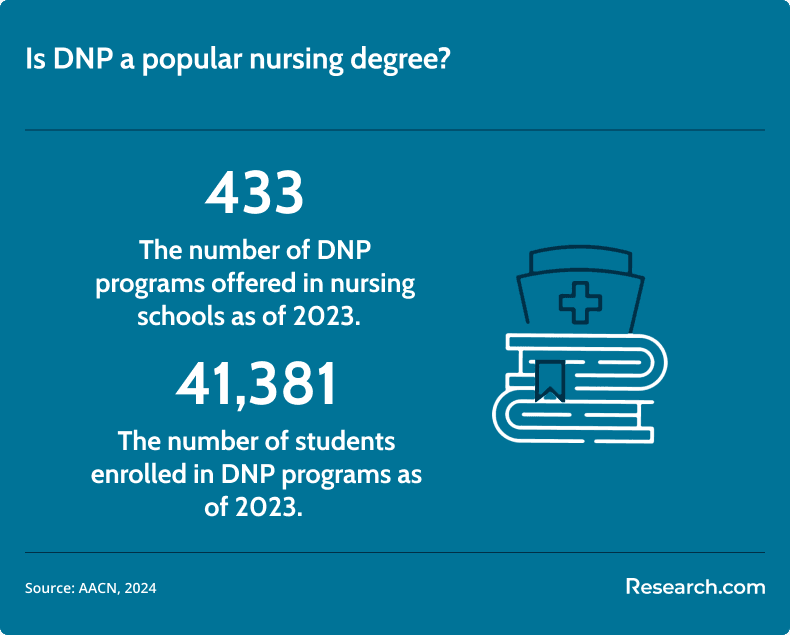
The American Association of Colleges of Nursing reported in 2024 that DNP enrollment has grown steadily since 2003 and increased by 2% in 2023 from the previous year. As of 2023, 433 schools of nursing offered Doctor of Nursing Practice programs, with 41,381 students enrolled.
How does an online WHNP DNP compare with an on-campus program?
An accredited online WHNP DNP is designed to meet the same academic, clinical, and certification-preparation expectations as a campus-based program. The main difference is how coursework is delivered and how students interact with faculty, classmates, simulation experiences, and clinical sites.
| Factor | Online WHNP DNP | On-campus WHNP DNP |
| Course delivery | Remote coursework, often with asynchronous modules and some live sessions. | Scheduled in-person classes, labs, and campus-based interaction. |
| Clinical training | Usually completed in the student’s region with approved preceptors. | Often arranged through school-affiliated or nearby clinical partners. |
| Flexibility | Stronger fit for working nurses and students with family responsibilities. | More structured schedule but less geographic flexibility. |
| Faculty and peer interaction | Virtual office hours, discussion boards, live meetings, and online advising. | More frequent face-to-face access to instructors and classmates. |
| Campus requirements | May include short intensives for orientation, skills checks, simulation, or presentations. | Regular on-site participation is expected. |
Online programs can also broaden your school options by removing geographic barriers. They often use telehealth training, virtual simulation, learning management systems, and digital collaboration tools, which can be valuable in modern healthcare settings.
The trade-off is that online learning requires discipline. Students must manage deadlines, communicate proactively, troubleshoot technology issues, and secure clinical experiences on schedule. Before enrolling, review each program’s course format, clinical placement policy, campus visit requirements, and student support model. Research on online learning challenges and opportunities can also help you understand what to expect from remote study.
What is the average cost of an online Women’s Health Nurse Practitioner DNP program?
Online WHNP DNP costs vary widely by school, entry point, number of credits, residency rules, technology fees, clinical expenses, and travel requirements. Based on the programs reviewed for this guide, total tuition generally ranges from $60,000 to $97,000. The more affordable programs we identified cost about $400 to $750 per credit in tuition.
Costs are often comparable to other specialized graduate healthcare options, including some of the most affordable online MSN MBA programs. However, the published per-credit rate is only one part of the total cost.
For example, Herzing University lists $56,980 in expected tuition for its BSN-to-DNP WHNP online program, plus $11,240 in fees, for a total estimated program cost of $68,220. Georgia College and State University lists tuition at $382 per credit hour and adds an online learning fee of $402.50 regardless of the number of credit hours taken in a semester.
| Cost factor | Why it matters | Question to ask |
| Per-credit tuition | Small differences can become significant across 60 to 79 or more credits. | Is the rate the same for online, resident, and non-resident students? |
| Program fees | Technology, clinical, simulation, lab, and graduation fees can raise the final cost. | Can the school provide a full fee schedule before enrollment? |
| Campus intensives | Travel, lodging, meals, and missed work can add expenses. | How many visits are required, and how long is each one? |
| Clinical placement costs | Students may pay for background checks, immunizations, liability coverage, or onboarding systems. | Which clinical expenses are included, and which are separate? |
| Ability to keep working | Continuing employment can offset tuition but may extend the timeline. | Is the program realistically manageable for full-time nurses? |
Online study may reduce relocation, commuting, and housing costs, and the ability to remain employed can help manage cash flow. Students comparing lower-cost routes into nursing education may also want to review the most affordable RN-to-BSN programs if they still need the bachelor’s degree required for graduate study.
What financial aid is available for online WHNP DNP students?
Funding a WHNP DNP usually requires combining several sources: federal loans, school-based aid, employer benefits, scholarships, service programs, and professional association awards. Start early because scholarship and institutional aid deadlines may arrive well before the program begins.
Federal aid and service-based programs
- Direct Unsubsidized Loans: Federal loans for graduate students. They are not based on financial need, and interest accrues while you are enrolled.
- Direct PLUS Loans: Graduate PLUS loans can help cover education costs up to the school’s cost of attendance minus other aid. A credit check is required.
- Nurse Faculty Loan Program: This HRSA-funded loan-cancellation option may forgive up to 85% of the loan for borrowers who meet the teaching service requirement.
- Nurse Corps Scholarship Program: This competitive HRSA program covers tuition, eligible fees, and a monthly stipend in exchange for service in a Health Professional Shortage Area after graduation.
University and employer-based aid
- School scholarships and grants: DNP students may qualify for need-based, merit-based, diversity-focused, or specialty-specific awards. Some require a separate application.
- Assistantships and fellowships: These are less common in fully online programs, but some hybrid programs may offer limited opportunities tied to teaching, research, or university service.
- Employer tuition assistance: Hospitals, health systems, and clinics may offer tuition reimbursement or education benefits for nurses advancing into needed roles.
External nursing scholarships
- American Association of Nurse Practitioners scholarships
- Association of Women’s Health, Obstetric and Neonatal Nurses awards, grants, and scholarships
- Nurses Educational Funds, Inc. scholarships
- National Black Nurses Association scholarships
- National Association of Hispanic Nurses scholarships
- March of Dimes Graduate Nursing Scholarships
- TYLENOL® Future Care Scholarship
- Local hospital, foundation, community, and professional nursing awards
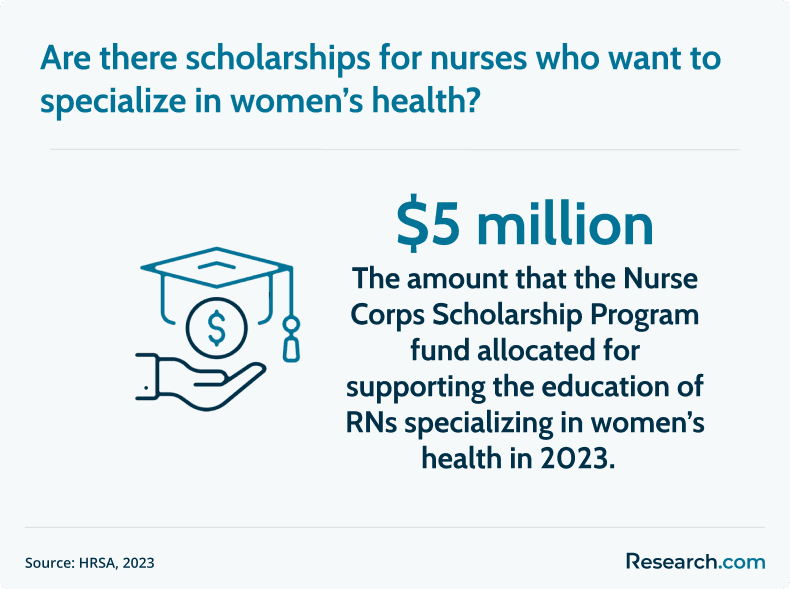
The Health Resources and Services Administration reported that $5 million from the Nurse Corps scholarship fund for 2023 was allocated for the education of RNs planning to work in women’s health. That funding reflects public investment in nurses preparing for this specialty.
- Complete the FAFSA even if you are not sure you will use loans; many schools require it for institutional aid.
- Apply early because scholarships and grants often close before admission decisions are finalized.
- Ask each school whether online DNP students qualify for the same aid as campus students.
- Tailor scholarship essays to your women’s health goals, service plans, and DNP project interests.
- Ask faculty, alumni, employers, and professional organizations about lesser-known awards.
What are the prerequisites for online Women’s Health Nurse Practitioner DNP programs?
Admissions requirements vary by university and entry point, but most online WHNP DNP programs expect applicants to have a strong nursing foundation, current licensure, clinical experience, and the academic readiness to complete doctoral-level work. The process is similar in importance to choosing an accredited speech-language pathology graduate program: accreditation, licensure alignment, and prerequisites must be verified before you apply.
- Prior nursing degree: BSN-to-DNP applicants typically need a Bachelor of Science in Nursing from a regionally accredited institution. Nurses who still need a bachelor’s degree may compare fast-track online RN-to-BSN programs.
- Active RN license: Applicants usually need an active, unrestricted RN license in the state where they will complete coursework and clinical experiences.
- GPA requirement: Many programs require a minimum undergraduate or MSN GPA of 3.0 on a 4.0 scale, often based on the last 60 semester credits. Applicants with a GPA below about 3.2 may be asked to submit GRE or GMAT scores.
- APRN license and certification for post-master’s applicants: Nurses entering after an MSN or after completing traditional or accelerated online nurse practitioner programs may need to show APRN licensure and national certification.
- English proficiency and credential evaluation: International applicants may need course-by-course credential evaluations and TOEFL or IELTS scores.
- Prerequisite sciences: Programs may require Anatomy and Physiology, Microbiology with labs, and other sciences, often completed with a C or higher within the last five years.
- Clinical experience: Some schools prefer or require one to two years of RN experience, and some prefer at least two years depending on the track.
- Application materials: Expect transcripts, recommendation letters, a résumé, a professional goal statement or letter of intent, and possibly an interview.
Even with more schools offering DNP programs, admission is still competitive. AACN reported that 65,766 qualified applications were not accepted by nursing schools nationwide, including 4,255 applications to DNP programs. AACN identified insufficient clinical placement sites, faculty, preceptors, classroom space, and budget cuts as continuing barriers.
Because clinical capacity can limit admission, apply early and consider more than one accredited program that fits your state, budget, and career goals.
What courses are usually included in an online WHNP DNP program?
Online WHNP DNP programs combine advanced practice nursing content with women’s health specialty training and doctoral-level leadership courses. Students preparing for advanced practice registered nurse roles should expect both direct-care clinical coursework and broader systems-focused DNP content.
Advanced practice nursing foundation
- Advanced pathophysiology: Detailed study of disease processes and altered physiology that supports diagnostic reasoning.
- Advanced pharmacology: Medication management, drug classifications, pharmacokinetics, pharmacodynamics, adverse effects, contraindications, and safe prescribing.
- Advanced health assessment: Comprehensive physical, psychosocial, cultural, and diagnostic assessment skills for advanced practice.
- Diagnostic reasoning and clinical decision-making: Differential diagnosis, clinical judgment, and evidence-based management planning.
Women’s health specialty coursework
- Gynecologic care: Well-woman care, contraception, STI screening and treatment, menopause care, and common gynecologic conditions.
- Reproductive health: Preconception counseling, fertility evaluation, and family planning.
- Prenatal and postpartum care: Care for uncomplicated pregnancies before and after birth. WHNPs do not typically manage labor and delivery or attend births; that role belongs to Certified Nurse-Midwives.
- Primary care of women: Acute and chronic health issues addressed through a women’s health lens.
- Behavioral and psychosocial health: Mental health, intimate partner violence, and addictive behaviors affecting women’s health.
- WHNP professional role: Scope of practice, ethics, legal responsibilities, certification expectations, and professional development.
DNP core coursework
- Evidence-based practice and clinical scholarship: Appraisal of research, translation of evidence into care, quality improvement design, and outcome evaluation.
- Organizational and systems leadership: Change management, healthcare operations, quality, safety, and leadership in complex systems.
- Healthcare policy and advocacy: Policy development, legal and ethical issues, access to care, and advocacy for women’s health priorities.
- Healthcare informatics and technology: Data systems, patient care technology, information management, and decision support.
- Epidemiology and population health: Disease patterns, prevention, health promotion, and population-level interventions.
- Healthcare economics and finance: Business principles, budgeting, reimbursement, and financial forces in healthcare delivery.
- Interprofessional collaboration: Team-based practice with physicians, midwives, nurses, pharmacists, social workers, and other professionals.
Online delivery may include recorded lectures, synchronous virtual classes, case discussions, simulation, telehealth practice, discussion forums, and written projects.
Do employers value an online Women’s Health Nurse Practitioner DNP?
Employers generally focus less on whether the coursework was online and more on whether the program was accredited, clinically rigorous, aligned with state licensure requirements, and prepared graduates for certification and practice. An online DNP from a properly accredited nursing school can be respected when it includes supervised clinical hours, qualified faculty, strong preceptor oversight, and measurable outcomes such as certification pass rates.
Online study can also signal strengths employers value: self-direction, digital communication, telehealth readiness, and comfort with learning technologies. Still, students should not assume all online degrees carry equal weight. Employers may compare DNP preparation with other pathways, including online direct-entry MSN programs, when evaluating scope of practice, clinical readiness, and leadership preparation.
Can you customize an online WHNP DNP for reproductive or perinatal health?
Yes, but the amount of customization depends on the program. A WHNP DNP must still cover broad women’s health across the lifespan, but students can often shape clinical placements, projects, electives, and mentorship around reproductive health, contraception access, fertility, prenatal care, postpartum care, or maternal health equity.
- DNP scholarly project: You can choose a practice problem tied to your interests, such as improving access to long-acting reversible contraception in a specific population.
- Electives: Some programs offer elective space that can be used for related topics, even if a dedicated perinatal elective is not available.
- Clinical placements: Students can request sites such as family planning clinics, fertility practices, prenatal clinics, postpartum care settings, or community health centers.
- Faculty mentorship: Faculty with expertise in reproductive health, perinatal care, maternal outcomes, or health equity can help focus your DNP project and professional development.
If your goal is to manage labor and delivery or provide comprehensive birth care, a dual CNM/WHNP DNP program may be a better match because certified nurse-midwifery has a different scope of practice. WHNPs and CNMs both contribute to women’s health, but they are not interchangeable roles.
How should you choose the best online WHNP DNP program?
The best online WHNP DNP is the one that fits your licensure state, budget, schedule, learning style, clinical placement needs, and career goals. Rankings and tuition are useful starting points, but they should not replace a detailed program review. The process is similar to comparing an affordable online geographic information systems degree: the right choice depends on curriculum fit, faculty expertise, practical training, cost, and outcomes.
| Selection factor | What to verify | Why it matters |
| Accreditation | Confirm CCNE or ACEN nursing accreditation. | Accreditation is typically required for certification eligibility and licensure pathways. |
| State authorization and licensure fit | Ask whether the program accepts students in your state and meets your state board’s requirements. | Online programs may not be authorized in every state or may not satisfy every licensing board. |
| Clinical placement support | Find out whether the school finds placements, assists students, or expects students to secure preceptors independently. | Weak placement support can delay graduation. |
| Certification preparation | Ask for recent WHNP-BC exam pass rates and remediation support. | Certification outcomes help indicate whether the curriculum prepares students effectively. |
| Program format | Review synchronous vs. asynchronous classes, campus intensives, term length, and part-time options. | The format must be realistic for your work schedule and family obligations. |
| Total cost | Calculate tuition, fees, travel, books, clinical expenses, and lost work time. | The cheapest tuition rate may not equal the lowest total cost. |
| Faculty and advising | Look for doctoral-prepared faculty with WHNP or related women’s health expertise. | Strong mentorship can improve clinical learning and DNP project quality. |
Questions to ask before enrolling
- Is the program accredited by CCNE or ACEN?
- Does the program meet WHNP certification and licensure expectations in my state?
- Who is responsible for finding clinical preceptors?
- How many campus visits are required, and what do they cost?
- What are the recent certification pass rates and completion rates?
- Can I study part time without losing financial aid eligibility?
- What happens if a clinical placement falls through?
- Are telehealth, simulation, and informatics integrated into the curriculum?
How are clinical placements managed in online WHNP DNP programs?
Clinical placement is one of the most important factors in choosing an online WHNP DNP program. Some schools actively coordinate placements through healthcare partners, while others expect students to identify potential preceptors and sites for approval. Either model can work, but you need to understand the level of support before you enroll.
Placements may occur in OB-GYN practices, reproductive health clinics, prenatal and postpartum care settings, family planning centers, community health centers, or other approved women’s health environments. Programs may also use virtual simulations to supplement, not replace, required patient-care experiences.
Ask each school how it verifies preceptor qualifications, handles affiliation agreements, manages state authorization, and supports students who live in rural areas or competitive clinical markets. Students comparing lower-cost WHNP options may also review affordable women’s health nurse practitioner programs.
What challenges do students face in online WHNP DNP programs?
Online WHNP DNP programs are flexible, but they are not easy. Students often balance advanced coursework, clinical hours, work schedules, family responsibilities, certification preparation, and a DNP project at the same time.
| Common mistake | Why it causes problems | Better approach |
| Choosing a program without checking accreditation | Graduates may face certification or licensure problems. | Verify CCNE or ACEN accreditation before applying. |
| Looking only at tuition | Fees, travel, clinical onboarding, and lost work time can change the total price. | Compare full cost of attendance, not only per-credit tuition. |
| Assuming all online programs meet your state’s rules | State authorization and APRN requirements differ. | Contact the school and your state board of nursing. |
| Underestimating clinical placement difficulty | Delayed preceptors can delay graduation. | Ask about placement support and start networking early. |
| Relying only on rankings | A highly ranked program may not fit your schedule, state, or specialty goals. | Use rankings as one data point alongside licensure fit and outcomes. |
| Ignoring time management demands | Online doctoral study requires consistent weekly effort. | Build protected study time before the first term starts. |
Students who want to understand how nursing programs handle reduced or different clinical structures at other levels can compare options such as RN-to-BSN programs with no clinical hours, but advanced practice WHNP preparation requires hands-on clinical experiences.
What career paths are available after an online WHNP DNP?
Graduates of online WHNP DNP programs can pursue advanced clinical roles as well as leadership, education, administration, consulting, and policy positions. The DNP can also support movement into management or systems-level work, similar to how nurses completing an online nursing leadership graduate certificate may prepare for broader leadership responsibilities.
Advanced clinical practice
The most direct path is practice as a women’s health nurse practitioner. WHNPs provide preventive and specialty care for women across the lifespan, including well-woman exams, contraceptive counseling, STI screening and treatment, management of common gynecologic conditions, preconception care, prenatal care for uncomplicated pregnancies, and postpartum follow-up.
There is also an ongoing effort to create an APRN licensure compact that could make cross-state practice easier for APRNs, including WHNPs. As of this writing, there are only a few member states in the APRN licensure compact, but supporters hope participation will grow.
Leadership and administration
- Nurse executive or chief nursing officer: Leads nursing strategy and operations across a hospital or health system.
- Director of nursing or nurse manager: Oversees departments, teams, budgets, staffing, and care quality.
- Quality improvement or patient safety officer: Designs and evaluates initiatives to improve outcomes and reduce errors.
- Clinical program manager: Builds, manages, and assesses women’s health programs or service lines.
- Healthcare consultant: Advises organizations on policy, operations, best practices, and women’s health services.
- Nurse informaticist: Uses data, health technology, and clinical expertise to improve care delivery and outcomes.
Education and academia
- Nurse educator or clinical instructor: Teaches nursing students in academic or clinical settings.
- Clinical faculty: Supervises students during practicum and clinical training.
- Curriculum development specialist: Designs or updates nursing courses and program materials.
- Academic leader: Serves as a program director, associate dean, or clinical education administrator.
Policy and advocacy
- Health policy analyst or advocate: Works with agencies, nonprofits, professional organizations, or lawmakers on women’s health access, reproductive care, maternal mortality, and healthcare policy.
- Lobbyist: Represents nursing or women’s health priorities in legislative settings.
- Consultant or medical writer: Develops education, policy, or communication materials related to reproductive and women’s health.
For a deeper look at the role, scope, and preparation process, see this women’s health nurse practitioner career guide.
What is the job market for online WHNP DNP graduates?
The labor market for nurse practitioners is strong, and WHNPs benefit from broader demand for advanced practice providers as well as ongoing needs in reproductive, gynecologic, prenatal, postpartum, and community-based women’s healthcare.
The Bureau of Labor Statistics projects 46% growth in nurse practitioner jobs from 2023 to 2033, much faster than the average for all occupations, with an expected 29,000 new positions for NPs each year.
Demand for WHNP DNP graduates is influenced by physician shortages, an aging population, expanding women’s health needs, telehealth growth, and the need for clinicians in rural and underserved communities. In states with full practice authority, WHNPs may have additional practice options, including independent practice depending on state law.
Career opportunities can include OB-GYN clinics, community health centers, hospitals, academic medical centers, reproductive health organizations, telehealth providers, public health agencies, universities, and healthcare systems. Still, job availability and scope of practice vary by state, so students should research local demand before committing to a program.
How do online WHNP DNP programs compare with other NP specialties?
WHNP DNP programs are best for nurses who want to focus on women’s health, reproductive care, gynecologic care, prenatal and postpartum care, contraception, menopause, sexual health, and related population health issues. Other NP specialties prepare nurses for different patient populations and clinical problems.
| Specialty | Primary focus | Good fit if you want to... |
| WHNP | Women’s health across the lifespan, including reproductive and gynecologic care. | Work in OB-GYN, reproductive health, family planning, prenatal or postpartum care, or women’s health leadership. |
| Psychiatric-Mental Health NP | Psychiatric assessment, diagnosis, medication management, and mental health treatment. | Focus on behavioral health, mental health access, therapy-informed care, or psychiatric medication management. Students comparing costs can review the most affordable online psychiatric NP programs. |
| Family Nurse Practitioner | Primary care for patients across the lifespan. | Provide broad primary care to children, adults, and older adults. |
| Certified Nurse-Midwife | Pregnancy, birth, postpartum care, and reproductive health within the midwifery scope. | Manage labor and birth in addition to reproductive and perinatal care. |
How do digital tools support learning in online WHNP DNP programs?
Digital tools are now central to many online WHNP DNP programs. Learning management systems, virtual simulation, telehealth platforms, recorded lectures, live web conferences, online case studies, and digital assessment tools help students practice clinical reasoning and collaborate with faculty and peers.
These tools do not replace supervised clinical practice, but they can strengthen preparation before students enter clinical settings. Virtual patient encounters and case-based assignments can help students work through diagnostic reasoning, patient education, ethical issues, and care planning in a controlled environment. Telehealth training is especially relevant as virtual care expands access to specialized women’s health services.
Students considering alternate routes into advanced practice can also compare nurse practitioner programs for non-nursing majors to understand how different educational models structure online learning and clinical preparation.
Key Insights
- An online WHNP DNP is best suited for nurses who want advanced women’s health practice preparation plus doctoral-level leadership, policy, informatics, and quality improvement training.
- Accreditation is essential. Prioritize CCNE- or ACEN-accredited programs that align with WHNP certification and your state’s APRN licensure requirements.
- Clinical placement support can make or break the student experience. Ask whether the school secures placements, assists with preceptors, or expects students to find sites independently.
- Published tuition does not show the full cost. Include fees, campus travel, clinical onboarding, books, technology, and lost work time when comparing programs.
- Salary potential is strong, but outcomes depend on geography, experience, employer, scope of practice, and role type. Use salary data as a planning tool, not a guarantee.
- WHNP and CNM roles overlap in women’s health but differ in scope. If attending births is your main goal, a nurse-midwifery pathway may be more appropriate.
- The best program is not always the cheapest or highest ranked. The strongest choice is the accredited program that fits your state, budget, schedule, clinical goals, and long-term career plan.
References:
- American Association of Colleges of Nursing (April 2024). New AACN Data Points to Enrollment Challenges Facing U.S. Schools of Nursing. https://www.aacnnursing.org/news-data/all-news/new-aacn-data-points-to-enrollment-challenges-facing-us-schools-of-nursing
- American Association of Colleges of Nursing (June 2024). Fact Sheet: The Doctor of Nursing Practice (DNP). https://www.aacnnursing.org/Portals/0/PDFs/Fact-Sheets/DNP-Fact-Sheet.pdf
- American Midwifery Certification Board (January 2024). 2023 Demographic Report. https://www.amcbmidwife.org/docs/default-source/default-document-library/demographic-report-2023.pdf
- Health Resources and Services Administration (March 2023). Nurse Corps Scholarship Program. https://bhw.hrsa.gov/sites/default/files/bureau-health-workforce/funding/2023-scholarship-program-guidance.pdf
- Health Resources and Services Administration (March 2024). Nursing Education and Training: Data from the 2022 NSSRN. https://bhw.hrsa.gov/sites/default/files/bureau-health-workforce/data-research/nssrn-education-training-report.pdf
- Herzing University (n.d.). Herzing Tuition Wizard. https://www.herzing.edu/tuition-wizard Data retrieved June 2025
- National Association of Nurse Practitioners in Women’s Health (January 2025). NPWH 2024 Year-in-Review. https://cdn.ymaws.com/npwh.org/resource/resmgr/year_in_review/NPWH_2024_Year-in-Review.pdf
- National Certification Corporation (n.d.). Statistics, Exam Results - 2020 to 2024. https://www.nccwebsite.org/certification-exams/other-helpful-information/statistics
- O*NET OnLine (n.d.). O*NET OnLine Help. https://www.onetonline.org/find/quick?s=teacher Data Retrieved June 2025
- U.S. Bureau of Labor Statistics (n.d.). Occupational Employment and Wage Statistics, Industry: Cross-industry, Private, Federal, State, and Local Government, Period: May 2024. https://data.bls.gov/oes/#/industry/000000 Data retrieved June 2025
- ZipRecruiter (June 2025). Womens Health Nurse Practitioner Salary. https://www.ziprecruiter.com/Salaries/Womens-Health-Nurse-Practitioner-Salary
- ZipRecruiter (June 2025). Dnp Nurse Practitioner Salary. https://www.ziprecruiter.com/Salaries/DNP-Nurse-Practitioner-Salary
Other Things You Should Know About Online Women's Health Nurse Practitioner DNP Programs
Graduates usually need the National Certification Corporation Women’s Health Nurse Practitioner exam, or a state-accepted equivalent, before applying for APRN licensure. State boards of nursing set the final licensing rules, and some also require a separate background check or jurisprudence requirement.
Prerequisites typically include a Bachelor of Science in Nursing (BSN), an active RN license, and clinical experience. Some programs may require completion of coursework in statistics and health assessment. Check individual program requirements for specifics.


