2027 Shortest Online Direct Entry MSN Programs For Non-Nurses

Co-Founder and Chief Data Scientist
For individuals with a bachelor's degree in a non-nursing field, a direct-entry online Master of Science in Nursing (MSN) program offers a fast-track career change into the in-demand and rewarding field of nursing. The online format provides the flexibility to balance studies with current work or family commitments. This allows passionate individuals to pursue a nursing career without putting their lives on hold entirely.
As a career planning advisor with more than a decade’s worth of experience, I know that accelerated programs can get you qualified in as little as two to three years, making it a more time-efficient option compared to traditional pathways.
My team and I have looked into the shortest online direct-entry MSN programs for non-nurses to help you achieve your career goals in the least amount of time.
What are the benefits of enrolling in an online direct-entry MSN program for non-nurses?
- For those with a bachelor's degree in another field, these programs offer a quicker path to entering the nursing profession, becoming a Registered Nurse (RN), and focusing on advanced specializations like Nurse Practitioner (NP) or Clinical Nurse Leader.
- The online format allows you to pursue your nursing education while continuing to work full-time or manage other commitments.
- Since you already hold a bachelor's degree, you will likely receive advanced standing in the program, reducing the total coursework and potentially shortening the program duration.
- Registered nurses who have an MSN degree and who specialize in certain areas as nurse practitioners earn an average of $128,490 per year or $61.78 per hour.
What can I expect from an online direct-entry MSN program for non-nurses?
When you enroll in an online direct-entry MSN program for non-nurses, you can expect intensive coursework, along with the following:
- Fast-Paced Learning. Be prepared for a rigorous academic journey. These programs condense the traditional nursing curriculum into an accelerated format, requiring dedication and strong time management skills.
- Foundational Nursing Knowledge. The program will establish a solid base in core nursing subjects like anatomy, physiology, pharmacology, and nursing assessment skills. You'll gain the knowledge and competencies necessary for safe and effective patient care.
- Advanced Practice Focus. The program will likely integrate advanced practice coursework alongside foundational nursing knowledge. This lets you delve into a specific area of nursing like family practice, pediatrics, or mental health, preparing you for a specialized role as a Nurse Practitioner or Clinical Nurse Leader.
- Clinical Placements. Expect hands-on clinical experiences in real healthcare settings like hospitals or clinics. These placements are supervised by experienced nurses and allow you to apply the knowledge learned online to real-world patient care scenarios.
- Potential for Virtual Simulations. Some programs may incorporate virtual simulations to supplement clinical placements. These simulations allow you to practice skills and decision-making in a safe, controlled environment.
Where can I work with an online direct-entry MSN degree for non-nurses?
Online MSN programs for non-nurses open doors to various exciting employment opportunities within the healthcare landscape. Here are some potential workplaces to consider:
- Hospitals. Hospitals are major employers of nurses, and with your advanced practice specialization, you could find roles in emergency rooms, intensive care units, specific patient care units (pediatrics, oncology), or as a hospitalist focusing on in-patient care.
- Outpatient Clinics. Outpatient clinics offer a different pace and environment. You might work in family practices, urgent care centers, community health clinics, or specialized clinics catering to areas like women's health or mental health.
- Telehealth Settings. Telehealth is a growing area in healthcare. With the appropriate training and depending on your state regulations, your skills could be valuable in providing virtual consultations, managing chronic conditions remotely, or offering mental health support through telehealth platforms.
- School Nursing. Schools require qualified nurses to ensure student health and well-being. Your MSN could qualify you for a school nurse position, providing essential care to students and collaborating with school staff to promote a healthy learning environment.
- Public Health Agencies. Public health agencies work towards improving population health. Your skills might be valuable in areas like disease prevention, health education programs, or community outreach initiatives.
- Long-Term Care Facilities. Nursing homes and other long-term care facilities require skilled nurses to care for elderly or chronically ill patients. Your MSN could qualify you for leadership roles or specialized care positions within these facilities.
Remember, specific job opportunities might depend on your chosen specialization within the program (Nurse Practitioner, Clinical Nurse Leader) and state regulations for advanced practice nursing.
How much can I make with an online direct-entry MSN degree for non-nurses?
According to the United States Bureau of Labor Statistics, registered nurses with an MSN degree and specialize in certain areas as nurse practitioners earn an average of $128,490 per year, or $61.78 per hour.
Generally speaking, the starting salary of nurses with an MSN typically hovers around $70,000. With a few years of experience, it can quickly surpass $110,000. The average annual MSN salary in the country is $103,577, as reported by Glassdoor in 2024.
For RNs without an MSN, their median pay is $81,220 annually. This demonstrates the substantial salary difference that an MSN degree brings.
- 2027 Shortest Online Direct-Entry MSN Programs for Non-Nurses Direct-Entry MSN Programs
- How long does it take to complete the shortest online direct entry MSN program for non-nurses? Program Length
- How do online MSN programs for non-nurses compare to on-campus programs? Online Vs. On-Campus
- What is the average cost of an online direct-entry MSN degree for non-nurses? Average Cost
- What are the financial aid options for students enrolling in an online MSN degree program for non-nurses? Financial Aid Options
- What are the prerequisites for enrolling in online MSN programs for non-nurses? Requirements
- What courses are typically included in online MSN programs for non-nurses? Courses
- What types of specializations are available in online MSN programs for non-nurses? What types of specializations are available in online MSN programs for non-nurses?
- How do you choose the shortest online MSN programs for non-nurses? How do you choose the shortest online MSN programs for non-nurses?
- How do bridge programs facilitate transitions to advanced practice nursing roles? How do bridge programs facilitate transitions to advanced practice nursing roles?
- What factors determine admissions competitiveness for online direct-entry MSN programs for non-nurses? What factors determine admissions competitiveness for online direct-entry MSN programs for non-nurses?
- Is specializing in aesthetic nursing a worthwhile pursuit for non-nurse MSN graduates? Is specializing in aesthetic nursing a worthwhile pursuit for non-nurse MSN graduates?
- What accreditation and quality standards should I check for in online MSN programs for non-nurses? What accreditation and quality standards should I check for in online MSN programs for non-nurses?
- Is the Investment in an Online Direct-Entry MSN Program Worth It? Is the Investment in an Online Direct-Entry MSN Program Worth It?
- What career paths are available for graduates of online MSN programs for non-nurses? What career paths are available for graduates of online MSN programs for non-nurses?
- What is the job market for graduates of online direct entry MSN programs for non-nurses? What is the job market for graduates of online direct entry MSN programs for non-nurses?
- What are the clinical placement requirements for online direct-entry MSN programs? What are the clinical placement requirements for online direct-entry MSN programs?
- Pathways to Doctor of Nursing Practice (DNP) for MSN Graduates Pathways to Doctor of Nursing Practice (DNP) for MSN Graduates
- How do student support services and career resources impact outcomes for non-nurse MSN students? How do student support services and career resources impact outcomes for non-nurse MSN students?
- How do MSN programs compare to DNP programs for non-nurses? How do MSN programs compare to DNP programs for non-nurses?
- How do employers view online direct-entry MSN degrees for non-nurses? How do employers view online direct-entry MSN degrees for non-nurses?
- How Do These Programs Guarantee Licensure Success and Clinical Proficiency? How Do These Programs Guarantee Licensure Success and Clinical Proficiency?
2026 Shortest Online Direct-Entry MSN Programs for Non-Nurses
Direct-entry MSN programs give bachelor’s degree holders from non-nursing fields a faster route into nursing than completing a second bachelor’s degree first. For career changers, the appeal is clear: an accelerated curriculum, graduate-level nursing preparation, eligibility to pursue RN licensure after meeting program and state requirements, and a path toward advanced nursing roles later.
The trade-off is intensity. The shortest online or hybrid direct-entry MSN programs for non-nurses usually require full-time study, clinical rotations, labs, simulation work, and limited breaks. Many are not fully online because nursing licensure requires supervised hands-on patient care. This guide explains which programs are shortest, how to compare them, what they cost, what admissions committees look for, and how to decide whether this route is worth the time and financial commitment.
Quick Answer: What Is the Shortest Online Direct-Entry MSN Program for Non-Nurses?
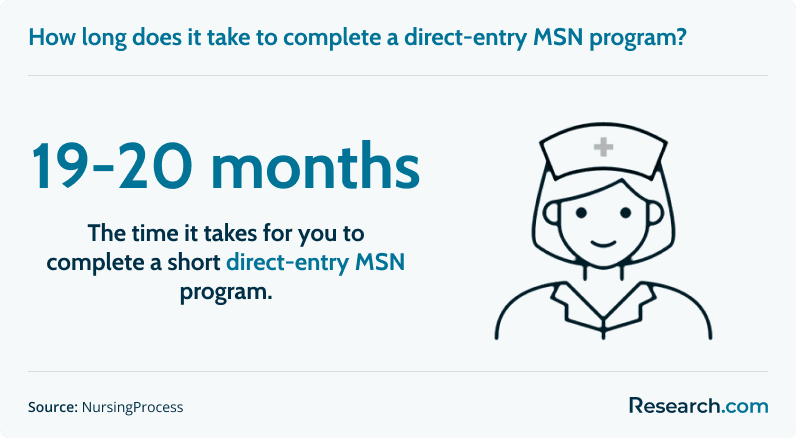
The shortest online or hybrid direct-entry MSN programs for non-nurses can be completed in about 19-20 months. Marquette University lists a 19-21 month program, while Elmhurst University, Lourdes University, Carroll University, and La Roche University list 20-month options. These programs are accelerated and typically combine online coursework with in-person labs, clinical placements, simulations, and sometimes campus residencies.
Before choosing the fastest program, confirm three things: whether the program is accredited, whether it meets RN licensure requirements in the state where you plan to practice, and how clinical placements are arranged.
How We Selected These Programs
Research.com’s ranking process considers online program reliability, affordability, and academic quality using a structured methodology. Because direct-entry MSN programs can be expensive and clinically demanding, the strongest options are not judged by speed alone.
We also reviewed information from the Integrated Postsecondary Education Data System, Peterson’s database, including its Distance Learning Licensed Data Set, College Scorecard, and the National Center for Education Statistics (NCES). Program details should still be verified directly with each school, especially tuition, state authorization, clinical placement policies, and licensure outcomes.
Shortest Online and Hybrid Direct-Entry MSN Programs for Non-Nurses
| School | Program Length | Credits | Tuition | Format Notes | Accreditation |
| Elmhurst University | 20 months | 71 | $60,000 | Online coursework with an on-campus residency and 850+ clinical hours | CCNE |
| Marquette University | 19-21 months | 75 | $65,000 | Hybrid format with online coursework, in-person labs, simulation, and clinical experience | CCNE |
| Lourdes University | 20 months | 66 | $700 per credit hour | Blends online and face-to-face instruction with clinical training | CCNE |
| Carroll University | 20 months | 72 | $780 per credit | 8-week hybrid courses, clinical courses, and lab sessions | CCNE |
| La Roche University | 20 months | 77 | $801 per credit | Accelerated hybrid format with online coursework, on-campus learning, labs, and clinical experiences | CCNE |
1. Elmhurst University
Elmhurst University offers an online Master’s Entry in Nursing Practice (MENP) for students who already hold a bachelor’s degree in another field. The program leads to a Master of Science in Nursing and is designed to prepare graduates to sit for the registered nurse licensure exam (NCLEX-RN) and the clinical nurse leader (CNL) certification exam. Graduates may also continue toward an NP role through post-graduate certification or pursue a doctor of nursing practice (DNP) program.
The curriculum requires 71 credits and includes 850+ hours of clinical training. Coursework is delivered online, but the program also includes an on-campus residency, so students should plan for travel and scheduling requirements. Elmhurst’s structure is best suited for students who want a fast, graduate-level nursing entry point and can commit to an intensive 20-month format.
- Location: Elmhurst, IL
- Type of institution: Private
- Program length: 20 months
- Credits required to graduate: 71
- Tuition: $60,000
- NCLEX-RN pass rate: 93% (2023)
- Accreditation: Commission on Collegiate Nursing Education (CCNE)
2. Marquette University
Marquette University offers an accelerated direct-entry MSN for students who do not hold a Bachelor of Science in Nursing (BSN). The program combines advanced nursing coursework, clinical experiences, and hands-on simulation labs to prepare students for the NCLEX-RN.
This is not a fully online program. Students complete a demanding mix of online learning and in-person requirements shaped by the university’s Catholic, Jesuit tradition. The curriculum covers health assessment, pharmacotherapeutics, pathological concepts, ethics, policy, healthcare advocacy, research and evidence-based nursing, community and population health nursing, maternity nursing, and organizational and systems leadership. Students also use simulation labs and attend in-person lab sessions at university facilities.
After the MSN, graduates may pursue post-degree certification options through the university, including Nurse Practitioner, Nursing Administration, and Nurse Midwife certificates.
- Location: Pleasant Prairie, WI
- Type of institution: Private
- Program length: 19-21 months
- Credits required to graduate: 75
- Tuition: $65,000
- NCLEX-RN pass rate: 94.8% (2023)
- Accreditation: CCNE
3. Lourdes University
Lourdes University offers a Direct-Entry MSN that combines online coursework, face-to-face instruction, and clinical learning in healthcare settings. The program is designed for non-nurses who want to enter RN practice and keep open the option of further graduate nursing study, such as an advanced certification as a primary care nurse, DNP, or Ph.D.
Coursework includes mental health nursing, health and physical assessment, pathophysiology, advanced pathophysiology and pharmacology, population-focused nursing, healthcare systems management and policy, health promotion and disease prevention, and nursing informatics.
- Location: Sylvania, OH
- Type of institution: Private
- Program length: 20 months
- Credits required to graduate: 66
- Tuition: $700 per credit hour
- NCLEX-RN pass rate: 95.2% (2023)
- Accreditation: CCNE
4. Carroll University
Carroll University offers a Master of Science in Nursing - Direct Entry program for students who have a bachelor’s degree outside nursing. The curriculum uses 8-week hybrid courses and includes didactic coursework with online components, clinical learning, and lab sessions in nursing laboratories.
Students study nursing and health systems, nursing assessment, human pathophysiology, pharmacology, nursing and mental healthcare, nursing foundations, research and nursing, population-focused nursing care, and nursing theory. Carroll University’s nursing department has a partnership with ProHealth Care, giving students access to clinical placements on Designated Educational Units (DEU), where they work closely with nursing staff in direct patient care.
- Location: Waukesha, WI
- Type of institution: Private
- Program length: 20 months
- Credits required to graduate: 72
- Tuition: $780 per credit
- NCLEX-RN pass rate: 95% (2022)
- Accreditation: CCNE
5. La Roche University
La Roche University offers an Entry Level MSN program (ELMSN) for bachelor’s degree holders who want to move into nursing. The program can be completed in 20 months of full-time study and uses an accelerated hybrid format with online coursework, on-campus learning, hands-on labs, and clinical experiences.
The program requires 77 credits and covers health science theory, nursing leadership, research, lab learning, and clinical practice. Graduates are prepared to take the NCLEX-RN and pursue nursing roles in hospitals, clinics, long-term care facilities, leadership, management, or patient advocacy.
- Location: Pittsburgh, PA
- Type of institution: Private
- Program length: 20 months
- Credits required to graduate: 77
- Tuition: $801 per credit
- Accreditation: CCNE
What Students Say About Online and Hybrid MSN Programs for Non-Nurses
- Emilia: "The online structure made nursing school possible while I was raising a child and working full time. I could watch lectures in the evenings, plan study time around my schedule, and still stay connected with faculty and classmates. The pace was demanding, but the support system helped me stay focused. I now work as a Nurse Practitioner and use that training to serve patients in my community."
- Blake: "My biology degree gave me a science foundation, but I needed a direct route into nursing. The accelerated format worked well for me because the online platform was organized and the faculty were responsive. Clinical rotations were the turning point. Applying coursework with real patients confirmed that nursing was the right path. I now work as a Clinical Nurse Leader and focus on patient advocacy and hospital efficiency."
- Olivia: "After a long stretch in corporate work, I wanted a career with more direct human impact. The MSN program was challenging, but the asynchronous lessons and live discussions helped me stay engaged. Finishing the program was a major accomplishment. I now work with a telemedicine startup and use technology to improve access to care in underserved areas."
Key Findings
- The fastest direct-entry MSN options for non-nurses in this guide take 19-20 months, but most require full-time enrollment and a heavy workload.
- “Online” does not mean fully remote. Direct-entry nursing programs require clinical placements, and many also require in-person labs, simulations, or campus residencies.
- Program cost varies widely. Direct-entry MSN tuition and fees can fall between $60,000 and $120,000, depending on institution type, location, credit load, and fees.
- Accreditation matters for licensure, financial aid, employer confidence, and future graduate study. CCNE accreditation appears across the listed programs.
- The shortest program is not automatically the best program. Clinical placement support, state authorization, NCLEX-RN outcomes, faculty access, and total cost should carry equal weight.
How Long Does the Shortest Online Direct-Entry MSN Program for Non-Nurses Take?
The shortest online or hybrid direct-entry MSN programs for non-nurses usually take 19-20 months. These programs move faster than traditional graduate nursing routes because they are designed for students who already completed a bachelor’s degree and do not need to repeat general education coursework.
- They build on prior bachelor’s-level study. Your previous academic background, regardless of your majors in college, allows the program to focus heavily on nursing theory, clinical judgment, patient care, and licensure preparation.
- They compress nursing coursework into an accelerated calendar. Students often take more credits per term than they would in a traditional program.
- They reduce downtime between terms. Short breaks or continuous enrollment help students finish faster, but the pace can be difficult for those working full time.
Completion time can still vary. Some students need extra time to finish prerequisites, complete clinical requirements, manage personal responsibilities, or resolve placement delays. Others may move through the program on schedule if they meet every prerequisite before starting and can commit to full-time study.
When comparing programs, ask the admissions office for a term-by-term plan of study, the expected weekly workload, the number of required campus visits, and whether any prerequisite courses must be completed before the official MSN start date.
Online vs. On-Campus Direct-Entry MSN Programs: What Changes?
Online and on-campus direct-entry MSN programs have the same basic goal: prepare non-nurses for nursing practice and RN licensure eligibility. The difference is how the didactic coursework, labs, simulations, clinical placements, and student support are delivered.
| Factor | Online or Hybrid Direct-Entry MSN | On-Campus Direct-Entry MSN |
| Course delivery | Lecture-based courses may be online, asynchronous, synchronous, or mixed. | Most classes are held face to face on a set campus schedule. |
| Clinical learning | Clinical placements must be completed in person, often near the student’s region if approved. | Clinical placements are usually arranged near the campus or affiliated healthcare systems. |
| Labs and simulation | May require campus visits, intensive residencies, or regional lab sessions. | Labs and simulations are typically completed on campus throughout the term. |
| Best fit | Students who need location flexibility but can travel for required hands-on components. | Students who prefer face-to-face learning and can relocate or commute regularly. |
| Main risk | Assuming “online” means no in-person requirements or no clinical placement challenges. | Underestimating relocation, commuting, housing, and schedule constraints. |
For nursing, hands-on learning is nonnegotiable. Online programs may use virtual simulations, case studies, and digital learning tools, but they cannot replace supervised clinical practice with real patients. Before enrolling, confirm who finds the clinical site, who approves the preceptor, and what happens if no approved placement is available in your area.
What Is the Average Cost of an Online Direct-Entry MSN for Non-Nurses?
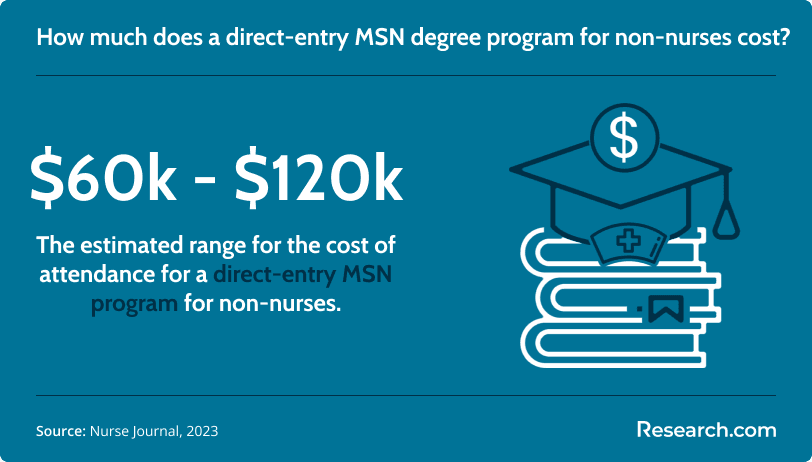
The total cost of attendance for a direct-entry Master of Science in Nursing degree online, including tuition and required fees, can fall between $60,000 and $120,000. The final amount depends on the school, number of credits, fees, travel requirements, clinical costs, and whether you must reduce work hours while enrolled.
- Institution type: Public universities may charge less than private institutions, although direct-entry MSN pricing varies by program.
- Residency status: At public universities, out-of-state tuition can raise the total price significantly.
- Program length and pace: Accelerated formats may charge higher per-credit rates or require heavier full-time enrollment.
- Fees and supplies: Budget for technology fees, books, uniforms, immunizations, background checks, clinical compliance costs, travel, and licensing exam expenses.
Do not compare tuition alone. A program with lower tuition may become more expensive if you must travel often, relocate for clinicals, or pay additional course and technology fees. Ask each school for a full cost sheet before applying.
How Can Non-Nurse MSN Students Pay for the Degree?
Financing a direct-entry MSN often requires combining several funding sources. Start with federal aid, then compare school scholarships, state support, employer benefits, and repayment options. Because graduate borrowing can add up quickly, estimate monthly repayment before accepting the full loan amount.
Federal Loan Programs
- Direct Unsubsidized Loans: These federal graduate loans are not based on financial need, but interest begins accruing when funds are disbursed.
- Direct Graduate PLUS Loans: These loans are available to eligible graduate students enrolled at least half-time in qualifying programs and require a credit check.
Graduate loan interest rates are generally higher than undergraduate loan rates. Borrow only what you need and compare the total repayment cost, not just the amount available.
Grants and Scholarships
- Federal grants: The Free Application for Federal Student Aid (FAFSA) is the starting point for federal aid eligibility, including Pell Grant access for eligible students pursuing a qualifying degree.
- State grants and scholarships: State higher education agencies and nursing workforce offices may list funding for nursing students, including graduate-level or nontraditional students.
- Nursing scholarships: Professional organizations such as the American Nurses Association (ANA) and National League for Nursing (NLN) may offer scholarship opportunities for students entering or advancing in nursing.
Employer Assistance
If you already work in healthcare, ask your employer about tuition reimbursement, loan repayment assistance, scholarship partnerships, or paid clinical scheduling flexibility. Employer support can meaningfully reduce out-of-pocket cost, but read the service commitment rules before accepting funds.
What Are the Common Admission Requirements for Online MSN Programs for Non-Nurses?
Admissions requirements vary by school, but most direct-entry MSN programs expect applicants to show academic readiness, science preparation, communication ability, and a clear reason for entering nursing.
| Requirement | What It Usually Means | Why It Matters |
| Bachelor’s degree | A completed bachelor’s degree from an accredited institution in any field | Direct-entry MSN programs are built for students who already completed undergraduate study. |
| Minimum GPA | Often between 2.75 and 3.0 on a 4.0 scale | Accelerated nursing coursework is academically demanding. |
| GRE/GMAT | Some programs may require scores, but waivers are increasingly common | Policies differ, so verify testing requirements with each program. |
| Prerequisite courses | May include anatomy, physiology, microbiology, chemistry, or related sciences | Science prerequisites help prepare students for pathophysiology, pharmacology, and clinical reasoning. |
| Healthcare exposure | May be recommended or required through work, volunteering, shadowing, or related experience | Programs want evidence that applicants understand patient care environments. |
| Application materials | Resume, essay, recommendations, transcripts, and sometimes interviews | These materials help admissions teams evaluate professionalism, motivation, and fit. |
What Courses Are Included in Direct-Entry MSN Programs for Non-Nurses?
Direct-entry MSN programs combine foundational nursing preparation with graduate-level content. The exact plan differs by school, but students should expect an intense sequence of science, clinical, leadership, research, and patient care courses.
- Foundational nursing coursework: Students commonly study anatomy and physiology, pathophysiology, pharmacology, nursing assessment, and fundamentals of nursing.
- Advanced nursing content: Graduate coursework may include advanced health assessment, advanced pharmacology, nursing leadership and management, evidence-based practice, ethics, legal issues, and healthcare systems.
- Track-related coursework: Some programs include preparation for roles such as Clinical Nurse Leader, while others position graduates to pursue additional post-graduate certification. Students interested in becoming nurse practitioners should review whether the MSN itself includes NP preparation or whether an online nurse practitioner program or post-graduate certificate is required afterward.
What Specializations Are Available After an MSN for Non-Nurses?
Some direct-entry MSN programs include a defined track, while others prepare graduates for RN licensure first and allow specialization through post-graduate certificates or later doctoral study. The right option depends on whether you want direct patient care, leadership, education, informatics, or advanced practice.
Nurse Practitioner Tracks
- Family Nurse Practitioner (FNP): Provides primary care for individuals and families across age groups.
- Adult-Gerontology Primary Care NP (AGPCNP): Focuses on primary care for adults and older adults.
- Adult-Gerontology Acute Care NP (AGACNP): Manages acute conditions among adult and geriatric patients, often in hospital settings.
- Pediatric Primary Care NP (PPCNP): Delivers primary care to infants, children, and adolescents.
- Neonatal Nurse Practitioner (NNP): Cares for newborns, especially premature infants or those with medical complications.
- Psychiatric Mental Health Nurse Practitioner (PMHNP): Provides mental health assessment, diagnosis, and treatment across patient groups.
- Women’s Health Nurse Practitioner (WHNP): Focuses on women’s health needs across the lifespan.
Non-NP Tracks
- Clinical Nurse Leader (CNL): Concentrates on patient safety, care coordination, quality improvement, and outcomes within healthcare systems.
- Nurse Educator: Prepares nurses to teach in academic institutions, clinical training settings, or healthcare organizations.
- Nurse Informaticist: Uses health information systems and technology to improve clinical workflows, patient outcomes, and data use.
For students from non-nursing backgrounds who want to become nurse practitioners as quickly as possible, direct-entry MSN programs can function as part of a longer accelerated pathway, but they do not always lead directly to NP licensure. In many cases, graduates must complete an additional certificate or advanced practice program. Compare accelerated NP programs online carefully and verify state practice requirements before assuming the MSN alone is enough.
The chart below shows the distribution of nurse practitioners by primary certification area. The percentages add to more than 100% because some nurse practitioners hold more than one certification.
How Should You Choose the Shortest Online MSN Program for Non-Nurses?
Speed should be one selection factor, not the only one. A 19-month program can be a smart choice if it is accredited, clinically well supported, affordable for your situation, and authorized for the state where you plan to become licensed. A slightly longer program may be better if it offers stronger placement support or a more manageable workload.
Step-by-Step Program Comparison
- Confirm accreditation first. Look for recognized nursing accreditation, such as CCNE. Choosing accredited online MSN programs helps protect your eligibility for licensure, financial aid, employment, and future study.
- Check state authorization and licensure alignment. Ask whether the program meets RN licensure requirements in your state and whether out-of-state clinical placements are allowed.
- Compare the full timeline. Include prerequisites, orientation, residencies, clinical placement windows, and NCLEX-RN preparation.
- Review clinical placement support. Ask whether the school secures placements, assists students, or expects students to locate approved sites independently.
- Calculate the total cost. Compare tuition, fees, travel, supplies, lost income, exam costs, and loan repayment. The cheapest MSN programs online can still be high quality if they are accredited and clinically strong.
- Ask about outcomes. Review NCLEX-RN pass rates, graduation rates, placement rates, student support, and employer relationships.
- Match the curriculum to your career goal. If you want NP practice, make sure you understand whether the direct-entry MSN includes that pathway or requires additional post-graduate certification.
Questions to Ask Before Applying
- Is the program approved for students in my state?
- Who is responsible for finding and approving clinical placements?
- How many campus visits, residencies, labs, or simulation intensives are required?
- What is the NCLEX-RN pass rate for the most recent reporting year?
- Can I work while enrolled, or is the program designed for full-time study only?
- What happens if I fail a course, cannot complete a clinical placement, or need to pause enrollment?
- Does the MSN qualify me for my intended role, or will I need a post-graduate certificate or DNP?
How Do Bridge Programs Help Nurses Move Into Advanced Practice?
Bridge programs are different from direct-entry MSN programs for non-nurses. Direct-entry MSN programs serve students who are not registered nurses. Bridge programs, such as RN-to-NP or ADN-to-MSN pathways, serve licensed nurses who want to build on existing RN education and clinical experience.
For registered nurses, RN to NP online or related bridge pathways can shorten the route to advanced practice by recognizing prior nursing preparation. These programs typically emphasize diagnostic reasoning, evidence-based practice, leadership, patient-centered care, and advanced clinical competencies. They may combine online coursework with in-person clinical training so working nurses can continue employment while completing graduate requirements.
For non-nurses, the key takeaway is sequencing. You generally need RN preparation and licensure first before moving into an NP or advanced practice pathway.
What Makes Admissions Competitive for Online Direct-Entry MSN Programs?
Admissions committees look for more than a completed bachelor’s degree. Strong applicants usually show academic readiness, completed science prerequisites, maturity, communication skills, and a realistic understanding of nursing work. Undergraduate GPA, prerequisite grades, recommendations, personal statements, resumes, interviews, and any healthcare exposure can all influence admission decisions.
Volunteer work, patient-facing experience, caregiving, research, public health work, or healthcare administration experience may help demonstrate commitment, even if the applicant has never worked as a nurse. Students concerned about selectivity can compare programs with different entry standards, including options discussed in our guide to the easiest direct entry MSN programs to get into.
Can Non-Nurse MSN Graduates Specialize in Aesthetic Nursing?
Aesthetic and cosmetic nursing can be an option after a graduate has met RN licensure requirements and developed appropriate clinical skills. This area is procedure-focused and may involve injectables, skin treatments, cosmetic consultations, and patient education, depending on state scope-of-practice rules and employer expectations.
Non-nurse MSN graduates interested in aesthetics should not assume the MSN alone is enough. They should verify state regulations, required supervision, certification expectations, malpractice coverage, and hands-on training opportunities. For income context and role expectations, review How much does an aesthetic nurse make?.
What Accreditation and Quality Standards Should You Check?
Accreditation is one of the most important safeguards when choosing an online or hybrid direct-entry MSN. A properly accredited program shows that the curriculum, faculty, clinical expectations, and student outcomes have been reviewed against nursing education standards.
- Nursing accreditation: Look for recognized programmatic accreditation such as the Commission on Collegiate Nursing Education or the Accreditation Commission for Education in Nursing.
- Institutional accreditation: Confirm that the university itself is accredited by a recognized institutional accreditor.
- State board alignment: Verify that the program satisfies RN licensure requirements in the state where you plan to practice.
- Clinical quality: Ask about placement sites, preceptor qualifications, simulation resources, and student evaluation processes.
- Student support: Review advising, tutoring, technical support, NCLEX-RN preparation, and career services.
Fast programs are appealing, but speed should not come at the expense of licensure preparation. Students comparing accelerated graduate pathways may also want to review one year online masters programs, while remembering that nursing programs require clinical time and cannot be evaluated by duration alone.
Is an Online Direct-Entry MSN Worth the Investment?
An online or hybrid direct-entry MSN may be worth it if you are committed to nursing, can manage an accelerated workload, and have confirmed that the program supports licensure in your state. It may not be worth it if you are unsure about patient care, need to keep full-time employment without flexibility, or would need to borrow heavily without a realistic repayment plan.
| It May Be Worth It If... | Consider Another Path If... |
| You already have a bachelor’s degree and want a faster graduate-level entry into nursing. | You are not sure whether you want bedside or patient-facing clinical work. |
| You can attend required labs, residencies, and clinical rotations. | You need a program that is 100% online with no in-person clinical requirements. |
| The program is accredited and approved for your intended state of licensure. | You have not verified state authorization or licensure eligibility. |
| You have a clear plan for financing tuition and reducing debt. | You are comparing only advertised tuition and ignoring fees, travel, and lost income. |
| You want a foundation for future NP, DNP, leadership, or education pathways. | You want the lowest-cost or shortest credential into healthcare, regardless of degree level. |
Compare the total financial commitment, including tuition, fees, travel, required supplies, potential lost income, and loan repayment, against your expected career path. If you are still exploring options outside nursing, broader comparisons such as best online degrees to get may help you weigh return on investment across fields.
What Career Paths Are Available After an Online MSN for Non-Nurses?
Graduates of direct-entry MSN programs usually begin by pursuing RN licensure eligibility and entering nursing practice. Depending on the program, certification, state rules, and additional education, graduates may later move into advanced practice, leadership, education, informatics, or specialized clinical roles.
- Registered Nurse roles: Graduates may work in hospitals, clinics, long-term care facilities, community health settings, or specialty units after meeting licensure requirements.
- Nurse Practitioner specialties: With the required advanced practice preparation and certification, graduates may pursue areas such as Family Nurse Practitioner, Adult-Gerontology Primary Care NP, Pediatric Primary Care NP (PPCNP), or Psychiatric Mental Health Nurse Practitioner (PMHNP).
- Clinical Nurse Leader (CNL): CNLs focus on improving care coordination, safety, quality, and patient outcomes within healthcare systems.
- Nurse Educator: Nurse educators teach students, staff nurses, or healthcare teams in academic and clinical settings.
- Nurse Informaticist: Informatics nurses use health technology, data systems, and electronic health records to improve healthcare delivery.
Work setting can affect compensation and advancement opportunities. The chart below shows the difference in annual mean wage between APRNs working in offices of other healthcare practitioners and those working in hospitals.
If a direct-entry MSN feels too intensive, expensive, or clinically demanding right now, consider related healthcare or graduate pathways before committing:
- Quick certification programs in healthcare
- RN to MSN nursing programs online
- Quick executive MHA degrees
- Affordable online finance master's degree program
What Is the Job Market for Direct-Entry MSN Graduates?
The labor market for advanced nursing roles remains strong. According to the U.S. Bureau of Labor Statistics, advanced practice registered nurses, including nurse midwives, nurse anesthetists, and nurse practitioners, are projected to see 38% employment growth from 2022 until 2032.
Demand is also influenced by nurse staffing needs. The NSI National Health Care Retention Report noted that 62% of hospitals had registered nurse vacancies over 7.5%, while less than 25% had fewer RN vacancies than 5%.
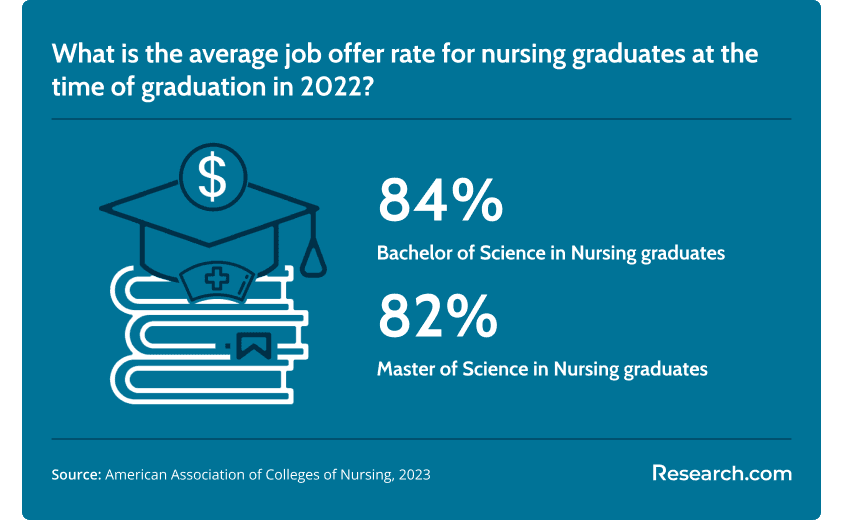
The American Association of Colleges of Nursing has also reported that MSN graduates have an average job offer rate of 82%. Still, outcomes vary by region, licensure status, specialty, clinical experience, employer demand, and willingness to work in high-need settings.
What Clinical Placement Requirements Should Online Direct-Entry MSN Students Expect?
Clinical placements are required even when coursework is online. These supervised experiences allow students to apply nursing knowledge in real healthcare environments and demonstrate required competencies.
- Mandatory clinical hours: Direct-entry MSN programs require supervised clinical hours. Depending on the program and specialization, requirements can range from 500 to over 1,000 hours.
- Local placement options: Some online programs help students complete clinical experiences near their home area through approved healthcare partners. Others expect students to identify potential sites for approval.
- Track-specific rotations: Clinical settings may vary by pathway. Nurse Practitioner students may need primary care, pediatrics, or women’s health rotations, while Clinical Nurse Leader students may focus on systems-level care coordination and quality improvement.
- Preceptors: Preceptors supervise student performance, provide feedback, and help evaluate whether students meet required competencies.
- Simulation support: Virtual or in-person simulation may supplement clinical training, but it does not replace required hands-on clinical practice.
Clinical placement is one of the biggest risk areas in online nursing education. Ask for written policies on placement responsibility, site approval timelines, preceptor qualifications, and backup plans if a placement falls through.
Pathways From an MSN to a Doctor of Nursing Practice
MSN graduates who want the highest level of nursing practice education may later pursue a Doctor of Nursing Practice (DNP). DNP programs build on MSN-level preparation and focus on advanced clinical practice, systems leadership, evidence translation, healthcare policy, and quality improvement.
Many MSN-to-DNP programs are designed as bridge or post-MSN pathways, and some allow MSN-prepared nurses to complete the DNP in as little as 1-2 years. Students comparing accelerated doctoral options can review shortest DNP program options, but they should still verify clinical requirements, state authorization, specialty certification alignment, and practicum expectations.
A DNP can be useful for nurses seeking leadership, advanced clinical specialization, healthcare policy roles, or expanded influence over patient outcomes and care systems.
How Do Student Support Services Affect Outcomes?
Support services matter more in accelerated programs because students move quickly from theory to clinical practice. Strong advising, technical help, faculty access, clinical coordination, tutoring, writing support, and NCLEX-RN preparation can reduce the risk of falling behind.
Career services also matter. Resume support, interview preparation, employer connections, alumni networks, and specialty advising can help graduates move from school into practice. Students comparing graduate outcomes may also want to explore master degree jobs that pay well, while remembering that nursing compensation depends on licensure, specialty, location, experience, and setting.
MSN vs. DNP for Non-Nurses: Which Comes First?
For non-nurses, the MSN is usually the more practical first graduate nursing degree because direct-entry MSN programs are designed to move bachelor’s degree holders into nursing preparation and RN licensure eligibility. A DNP is generally a terminal practice degree for nurses who already have advanced nursing preparation or a clear advanced practice pathway.
| Degree | Best For | Typical Role in the Pathway |
| Direct-entry MSN | Non-nurses with a bachelor’s degree who want to enter nursing | Initial graduate nursing preparation and RN licensure pathway |
| DNP | Nurses seeking advanced clinical, leadership, systems, or policy roles | Post-MSN or advanced practice development |
Non-nurses should generally begin with an accredited direct-entry MSN or another approved prelicensure nursing pathway, then consider NP certification, post-graduate certificates, or a DNP later. If you are comparing entry options, review the best online nursing degree for non nurses and verify accreditation before applying.
How Do Employers View Online Direct-Entry MSN Degrees?
Employers are most likely to value online direct-entry MSN graduates when the program is accredited, includes rigorous clinical training, maintains strong healthcare partnerships, and prepares students for licensure. The delivery format matters less than whether graduates can demonstrate safe practice, clinical judgment, communication skills, professionalism, and readiness for patient care.
Hiring managers may still ask about clinical experience, specialty preparation, NCLEX-RN status, and state licensure. If you plan to continue beyond the MSN, you may also compare long-term options such as cheap online doctoral programs, but doctoral affordability should not replace licensure and clinical quality as priorities.
Can These Programs Guarantee Licensure Success and Clinical Proficiency?
No program can honestly guarantee licensure success. Accredited direct-entry MSN programs can improve preparation through rigorous coursework, simulation, supervised clinical placements, exam preparation, mentorship, and competency evaluations, but students must still meet academic standards, complete clinical requirements, pass the NCLEX-RN, and satisfy state licensure rules.
When evaluating a program, look for transparent NCLEX-RN pass rates, clinical completion policies, remediation support, faculty access, and board approval. Students who want a lower-cost or shorter first step into healthcare may also compare alternatives such as what's the easiest associate's degree to get, but they should recognize that nursing licensure requires structured clinical education regardless of degree level.
Common Mistakes to Avoid
- Choosing the fastest program without checking licensure eligibility. Always verify state authorization and board requirements before enrolling.
- Assuming online means no campus or clinical requirements. Nursing programs require hands-on clinical training, and many hybrid programs require in-person labs or residencies.
- Comparing only tuition. Add fees, travel, books, supplies, compliance costs, exam fees, and lost income.
- Ignoring clinical placement policies. A program may be difficult to complete if you must find your own site and preceptor without strong school support.
- Assuming the MSN automatically makes you a nurse practitioner. NP practice usually requires specific advanced practice coursework, clinical hours, certification, and state licensure.
- Relying only on rankings. Rankings are useful starting points, but your best program depends on location, licensure goals, cost, support, and career plans.
Key Insights
- The shortest online or hybrid direct-entry MSN programs for non-nurses can take 19-20 months, but they are intensive and usually require full-time commitment.
- Direct-entry MSN programs are designed for bachelor’s degree holders from non-nursing fields who want a faster route into nursing than earning another bachelor’s degree first.
- Clinical training is required. Even programs marketed as online typically include in-person clinical placements, labs, simulations, or campus residencies.
- Accreditation, state licensure alignment, and clinical placement support should come before speed when comparing programs.
- Tuition and fees for direct-entry MSN programs can fall between $60,000 and $120,000, so students should compare total cost and repayment plans carefully.
- An MSN can open pathways into RN practice, leadership, education, informatics, and future NP or DNP study, but advanced practice roles may require additional certification or education.
- The best choice is the program that gets you licensed safely, fits your state and schedule, supports clinical placement, and leaves you with a manageable financial plan.
References:
- United States Bureau of Labor Statistics. (2024, April 17). Occupational Outlook Handbook: Nurse Anesthetists, Nurse Midwives, and Nurse Practitioners. BLS.
- United States Bureau of Labor Statistics. (2022, September 8). Registered Nurses: Occupational Outlook Handbook. BLS.
- United States Bureau of Labor Statistics. (2024, April 3). Occupational Employment and Wages, May 2023: 29-1171 Nurse Practitioners. BLS.
- Glassdoor. (2024, January 22). How much does a RN, MSN make? Glassdoor.
- American Association of Colleges of Nursing. (2021). Nursing Shortage Fact Sheet. AACN.
- American Association of Colleges of Nursing. (2023b, October). Employment of new nurse graduates and employer preferences for baccalaureate-prepared nurses. AACN Research Brief. AACN.
- American Association of Nurse Practitioners. (2024, February). NP Fact Sheet. AANP.
Other Things You Should Know About Online MSN Programs for Non-Nurses
Most programs require a non-nursing bachelor’s degree, a minimum GPA of 3.0, and completed prerequisites in anatomy and physiology, microbiology, statistics, and chemistry. Some schools also require a current RN license not for admission, but for any advanced standing routes.
In 2027, online direct entry MSN programs for non-nurses commonly require 500 to 1,000 clinical hours. These hours are completed in approved healthcare settings and supervised by licensed professionals to ensure students gain hands-on experience in patient care.