2027 Easiest Online MSN Programs to Get Into

Co-Founder and Chief Data Scientist
Nurses searching for the easiest online MSN programs are usually not looking for a low-quality degree. They are looking for accredited programs with realistic admission standards, flexible online coursework, clear clinical placement expectations, and a path toward advanced nursing roles without putting their current job on hold.
The important distinction is this: “easy to get into” should not mean “easy to complete” or “less rigorous.” A Master of Science in Nursing is a graduate professional degree tied to patient care, leadership, certification, and in many tracks, state licensure. The best choice is a program that matches your background, schedule, specialty goals, budget, and state requirements.
This guide explains how accessible online MSN programs work, what to compare before applying, which schools are listed in this ranking, how much programs may cost, what careers graduates pursue, and what mistakes to avoid before committing to a program.
Quick Answer: What Is the Easiest Online MSN Program to Get Into?
The easiest online MSN program to get into is typically an accredited program with broad admissions access, flexible online delivery, no GRE requirement or limited testing requirements, multiple start dates, and support for working registered nurses. However, applicants should not choose based on acceptance alone. Accreditation, clinical placement support, certification preparation, graduation outcomes, cost, and state authorization matter just as much.
For most nurses, the best “easy” MSN program is one that is administratively accessible but academically credible. Look for programs accredited by CCNE or ACEN, confirm that your specialty track meets licensure or certification requirements in your state, and compare total cost rather than tuition per credit only.
What Does “Easiest Online MSN” Really Mean?
In this context, “easiest” usually refers to admissions accessibility, not academic difficulty. Online MSN programs may be easier to enter when they accept a wider range of GPAs, offer RN-to-MSN or BSN-to-MSN pathways, waive standardized testing, provide part-time enrollment, or allow students to complete coursework asynchronously.
Graduate nursing education still requires advanced coursework, clinical practice, evidence-based projects, leadership training, and in nurse practitioner tracks, preparation for national certification. A program that is too vague about clinical hours, faculty access, outcomes, or accreditation should raise concerns, even if admission appears simple.
What are the benefits of getting the easiest online MSN?
- An online MSN can prepare registered nurses for advanced clinical, educational, leadership, informatics, and administrative roles, including nurse practitioner, nurse educator, clinical nurse specialist, nurse informaticist, and healthcare administrator positions.
- Common MSN specialties include family nurse practitioner (FNP), psychiatric-mental health nurse practitioner (PMHNP), pediatric nurse practitioner, nursing education, nursing leadership, and informatics.
- According to the U.S. Bureau of Labor Statistics, nurse practitioners, one of the most common career outcomes for MSN graduates, had a median annual salary of approximately $125,000 as of 2023.
- Nurse educators and healthcare administrators often earn between $80,000 and $120,000 annually, depending on location, experience, employer type, and responsibility level.
- Online delivery can help working nurses continue employment while completing graduate coursework, especially when programs offer asynchronous classes, part-time options, or accelerated scheduling.
- Distance learning may reduce relocation and commuting costs, but students should still budget for tuition, fees, books, technology, travel for any campus intensives, and clinical-related expenses.
| Best Fit | Why an Accessible Online MSN May Work | What to Verify First |
| Working RN with a BSN | Many programs are built around shift work and allow part-time enrollment. | Clinical placement rules, course schedule, GPA requirement, and state authorization. |
| RN seeking NP certification | Online coursework can be paired with local clinical rotations. | National certification preparation, required clinical hours, and state licensure alignment. |
| Nurse moving into leadership or education | Non-NP tracks may offer flexible practicum experiences and fewer direct patient-care clinical requirements. | Employer expectations, practicum format, and whether a doctorate may eventually be preferred. |
| Applicant with a lower GPA | Some programs use holistic admissions and consider work history, recommendations, and personal statements. | Minimum GPA policy, probationary admission options, and academic support services. |
What can I expect from an online MSN?
An online MSN combines graduate nursing theory with applied professional preparation. Students usually study advanced assessment, pharmacology, pathophysiology, research methods, health policy, leadership, population health, informatics, quality improvement, and specialty-specific practice.
Most online MSN programs are designed for licensed nurses who need flexibility. Coursework may be asynchronous, synchronous, or a mix of both. Asynchronous courses let students complete lectures and assignments within weekly deadlines, while synchronous sessions require scheduled attendance for discussions, labs, presentations, or faculty meetings.
Clinical or practicum requirements are still common. Nurse practitioner tracks usually require supervised clinical experiences, often arranged in the student’s region. Leadership, education, and informatics tracks may use project-based practicums, teaching experiences, administrative placements, or quality-improvement work. Before enrolling, ask whether the school finds placements for you, assists with placement, or expects you to secure your own preceptors.
Where can I work with an online MSN?
An online MSN can lead to roles in hospitals, outpatient clinics, private practices, community health agencies, schools, nursing programs, long-term care organizations, public health departments, insurance companies, telehealth organizations, and healthcare technology firms.
Clinical graduates may work as nurse practitioners, clinical nurse specialists, or advanced practice providers, depending on their track, certification, and state scope-of-practice rules. Non-clinical graduates may pursue nurse educator, nurse administrator, informatics, quality improvement, research, consulting, or public health roles.
How much can I make with an online MSN?
MSN salaries vary widely by specialty, employer, state, certification, years of experience, and whether the role is clinical or non-clinical. Nurse practitioners had a median annual salary of approximately $125,000 as of 2023, according to the U.S. Bureau of Labor Statistics. Nurse anesthetists, a highly specialized advanced practice role, can earn upwards of $200,000 annually. Nurse educators and healthcare administrators typically fall between $80,000 and $120,000 per year, though individual earnings can be higher or lower.
Salary should be part of your decision, but it should not be the only factor. Also consider tuition, debt, clinical placement quality, certification pass preparation, local job demand, and whether your chosen track aligns with the kind of work you actually want to do.
- 2027 easiest online MSN programs
- How long online MSN programs usually take
- Online MSN vs. campus MSN programs
- Average online MSN program cost
- Financial aid for online MSN students
- Common online MSN admission requirements
- Typical online MSN courses
- Online MSN specializations
- Student support services in online MSN programs
- How to choose an accessible online MSN program
- Career options after an online MSN
- Accelerated online NP programs
- Alternative RN pathways before an MSN
- Online MSN job market
- Direct entry MSN programs vs. traditional pathways
- Online MSN return on investment
- Online MSN challenges and quality concerns
- Accelerated RN to BSN programs as a step toward an MSN
- Licensure and certification exam preparation
2027 Easiest Online MSN Programs
How do we rank schools?
Choosing an online MSN is a financial, academic, and professional commitment. Research.com evaluates programs to help nurses compare options using data-informed criteria rather than relying only on marketing claims or admission difficulty.
This ranking uses a transparent methodology and draws from sources such as the Integrated Postsecondary Education Data System (IPEDS), Peterson's databases, including the Distance Learning Licensed Data Set, and the College Scorecard database from the National Center for Education Statistics. These sources help compare programs across factors such as delivery format, cost, institutional data, and student-relevant indicators.
1. Alcorn State University
Alcorn State University offers an online Master of Science in Nursing for registered nurses who want to move into advanced practice. Launched in 2013, the program is structured for working professionals and uses fully online asynchronous coursework. Its Family Nurse Practitioner track prepares students for primary care practice across patient populations.
- Program Length: 2-3 years
- Tracks/Concentrations: Family Nurse Practitioner (FNP)
- Cost per Credit: $510 per credit
- Required Credits to Graduate: 42-46 credits
- Accreditation: Commission on Collegiate Nursing Education (CCNE)
2. University of Detroit Mercy
The University of Detroit Mercy provides an online MSN that blends advanced clinical preparation with leadership-focused graduate nursing education. Started in 2014, the program is primarily online but includes some campus-based requirements. Students may choose tracks such as Family Nurse Practitioner, Adult-Gerontology Nurse Practitioner, Clinical Nurse Leader, and Nurse Educator.
- Program Length: 2-3 years
- Tracks/Concentrations: Family Nurse Practitioner, Adult-Gerontology Nurse Practitioner, Clinical Nurse Leader, Nurse Educator
- Cost per Credit: $1,010 per credit
- Required Credits to Graduate: 42-50 credits
- Accreditation: Commission on Collegiate Nursing Education (CCNE)
3. Cox College
Cox College offers an online Master of Science in Nursing designed for RNs pursuing advanced practice preparation. The program began in 2015 and uses asynchronous online coursework to support students balancing employment and graduate study. Its Family Nurse Practitioner track focuses on primary care preparation and certification readiness.
- Program Length: 2 years
- Tracks/Concentrations: Family Nurse Practitioner (FNP)
- Cost per Credit: $725 per credit
- Required Credits to Graduate: 42 credits
- Accreditation: Commission on Collegiate Nursing Education (CCNE)
4. Delta State University
Delta State University offers an online MSN for registered nurses who want graduate preparation in advanced nursing practice. Initiated in 2016, the program is fully online with asynchronous coursework. Its Family Nurse Practitioner track emphasizes primary care skills for patients across the lifespan.
- Program Length: 2-3 years
- Tracks/Concentrations: Family Nurse Practitioner (FNP)
- Cost per Credit: $300 per credit
- Required Credits to Graduate: 42-48 credits
- Accreditation: Commission on Collegiate Nursing Education (CCNE)
5. Arkansas Tech University
The online Master of Science in Nursing at Arkansas Tech University is intended for RNs who want to expand their clinical, educational, or advanced practice expertise. Launched in 2018, the program is designed for working nurses and includes online coursework with clinical requirements. Available focus areas include Nurse Educator and Nurse Practitioner tracks.
- Program Length: 2-3 years
- Tracks/Concentrations: Nurse Educator, Nurse Practitioner
- Cost per Credit: Approx. $395 per credit
- Required Credits to Graduate: 41-48 credits
- Accreditation: Commission on Collegiate Nursing Education (CCNE)
6. Curry College
Curry College offers an online MSN for nurses preparing for leadership, education, or advanced professional responsibilities. Started in 2014, the program uses both synchronous and asynchronous online coursework. Its Nursing Education and Nursing Leadership tracks are suited for nurses who want to teach, lead teams, manage systems, or influence practice improvement.
- Program Length: 2-3 years
- Tracks/Concentrations: Nursing Education, Nursing Leadership
- Cost per Credit: $775 per credit
- Required Credits to Graduate: 39 credits
- Accreditation: Commission on Collegiate Nursing Education (CCNE)
7. Eastern Kentucky University
Eastern Kentucky University offers an online MSN for RNs seeking advanced clinical, education, or leadership roles. Initiated in 2017, the program is fully online and uses asynchronous coursework for scheduling flexibility. Students can pursue Family Nurse Practitioner, Nurse Educator, or Clinical Nurse Leader pathways.
- Program Length: 2-3 years
- Tracks/Concentrations: Family Nurse Practitioner, Nurse Educator, Clinical Nurse Leader
- Cost per Credit: $590 per credit
- Required Credits to Graduate: 42-48 credits
- Accreditation: Commission on Collegiate Nursing Education (CCNE)
8. University of the Incarnate Word
The University of the Incarnate Word offers an online Master of Science in Nursing for RNs who want to specialize in advanced practice or nursing education. Started in 2015, the program is fully online and supports working professionals. Track options include Family Nurse Practitioner, Psychiatric Mental Health Nurse Practitioner, and Nursing Education.
- Program Length: 2-3 years
- Tracks/Concentrations: Family Nurse Practitioner, Psychiatric Mental Health Nurse Practitioner, Nursing Education
- Cost per Credit: $930 per credit
- Required Credits to Graduate: 46-50 credits
- Accreditation: Commission on Collegiate Nursing Education (CCNE)
9. Southeastern Louisiana University
Southeastern Louisiana University offers an online MSN for registered nurses preparing for advanced clinical or educational roles. Launched in 2016, the program is delivered online through asynchronous coursework. Students can choose Family Nurse Practitioner or Nurse Educator concentrations.
- Program Length: 2-3 years
- Tracks/Concentrations: Family Nurse Practitioner, Nurse Educator
- Cost per Credit: $400 per credit
- Required Credits to Graduate: 46 credits
- Accreditation: Commission on Collegiate Nursing Education (CCNE)
10. Wright State University
Wright State University offers an online MSN for nurses planning to enter advanced practice or educational roles. The program began in 2014 and uses entirely online asynchronous coursework designed for working professionals. Available specializations include Family Nurse Practitioner, Adult-Gerontology Nurse Practitioner, and Nurse Educator.
- Program Length: 2-3 years
- Tracks/Concentrations: Family Nurse Practitioner, Adult-Gerontology Nurse Practitioner, Nurse Educator
- Cost per Credit: $710 per credit
- Required Credits to Graduate: 44-46 credits
- Accreditation: Commission on Collegiate Nursing Education (CCNE)
How long does it take to complete an online MSN program?
Online MSN completion time depends on enrollment pace, specialty track, transfer credits, clinical requirements, and whether the program is accelerated or part-time. Some accelerated programs can be completed in as little as 12 months. As of 2023, there were 656 nursing schools offering master's programs.
Students comparing the easiest nursing informatics online programs should pay close attention to schedule design, practicum expectations, and whether the curriculum supports working nurses.
| Factor | How It Affects Timeline | What to Ask |
| Program format | Accelerated programs move faster but may require a heavier weekly workload. | Can I realistically complete this while working my current schedule? |
| Course load | Full-time enrollment shortens completion time; part-time study spreads costs and workload over a longer period. | How many courses are expected each term? |
| Clinical hours | NP and advanced clinical tracks often require more scheduling coordination. | Who is responsible for finding preceptors? |
| Prior education | Students with a BSN may have a more direct route, while bridge pathways may add coursework. | Are transfer credits or bridge credits accepted? |
For students asking how long does it take to become a nurse practitioner, the complete path can include earning a BSN, completing an MSN or DNP, and meeting clinical hour requirements. Depending on the pathway, the full timeline can take anywhere from six to eight years.
How does an online MSN compare to an on-campus program?
Online and on-campus MSN programs can lead to the same degree, but the student experience is different. Online programs usually offer more scheduling flexibility and can be better suited to nurses who must continue working. Campus programs may provide more in-person faculty access, peer interaction, simulation lab time, and local networking.
Students researching the easiest online master’s program should remember that flexibility does not eliminate workload. Online MSN students must be disciplined, responsive, organized, and comfortable using digital learning systems.
| Category | Online MSN | On-Campus MSN |
| Schedule | Often more flexible, especially with asynchronous courses. | Usually follows fixed class times and campus schedules. |
| Clinical experience | Often completed near the student’s location, depending on program approval. | May rely on established local clinical partners near campus. |
| Interaction | Uses discussion boards, video meetings, group projects, and virtual office hours. | Provides more face-to-face interaction with faculty and classmates. |
| Cost considerations | May reduce relocation and commuting expenses, though fees and clinical costs still apply. | May involve transportation, parking, housing, and campus-related expenses. |
| Best for | Self-directed nurses who need location and schedule flexibility. | Students who prefer structured routines and in-person engagement. |
What is the average cost of an online MSN program?
Online MSN tuition varies by school type, residency status, credit requirements, specialty, technology fees, and clinical or campus requirements. Affordable options exist, but students should calculate total program cost rather than relying on the advertised cost per credit.
General cost ranges for online MSN programs include:
- Public Institutions: $10,000 - $20,000 (in-state), $20,000 - $40,000 (out-of-state)
- Private Institutions: $30,000 - $60,000
Several factors can change the final price:
- Public vs. Private Institution: Public universities often charge lower tuition, especially for residents.
- In-State vs. Out-of-State Tuition: Some public schools offer lower rates to state residents, while others use flat online tuition.
- Program Length: Accelerated programs may cost more per term but can reduce the time spent in school.
- Financial Aid: Scholarships, grants, employer reimbursement, loans, and service-based programs can reduce out-of-pocket expenses.
If your career goal is more focused on management than clinical advanced practice, it may also be useful to compare nursing leadership degrees with what are the easiest organizational leadership degree programs.
| Cost Item | Why It Matters | Question to Ask the School |
| Tuition per credit | This is the starting point, but not the full cost. | How many credits are required for my exact track? |
| University fees | Online, technology, clinical, graduation, and student service fees can add up. | What mandatory fees apply each term? |
| Clinical expenses | Students may pay for background checks, immunizations, travel, or placement-related costs. | Are there additional clinical compliance costs? |
| Residency or campus visits | Some online programs still require in-person intensives. | Are campus visits required, and who pays travel costs? |
| Time away from work | Accelerated study may reduce work hours or overtime opportunities. | What is the expected weekly workload? |
What are the financial aid options for students enrolling in an online MSN program?
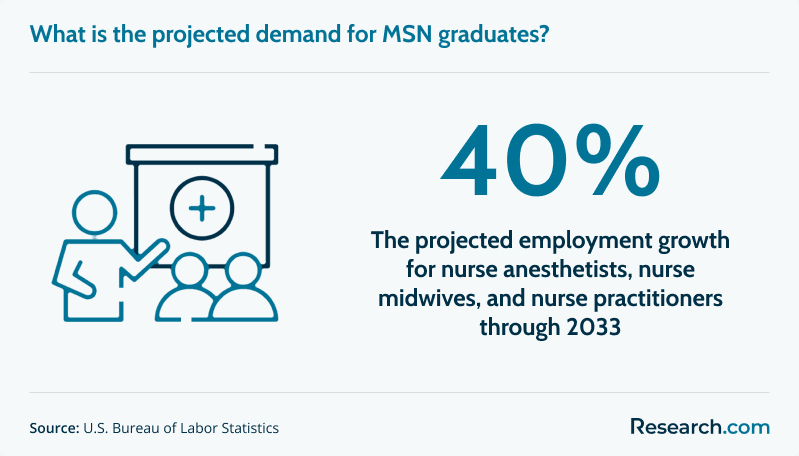
In 2023, a total of 130,348 nursing students were enrolled in master's programs. Many online MSN students use a mix of federal aid, employer benefits, scholarships, and payment plans to manage costs.
Federal Financial Aid
- Free Application for Federal Student Aid (FAFSA): Completing the FAFSA can help determine eligibility for federal loans, grants when available, and other aid programs.
- Federal Direct Loans: These loans may offer repayment flexibility and may qualify for forgiveness under certain conditions, such as eligible public service employment.
State Grants and Scholarships
Some states provide financial support for nursing students, especially those preparing for high-need specialties or service in underserved communities. Check your state higher education agency and state nursing workforce resources before applying.
Private Scholarships and Fellowships
- American Association of Colleges of Nursing (AACN): AACN maintains scholarship and fellowship information for nursing students.
- Nurse Corps Scholarship Program: This program supports nursing students in exchange for service in a Health Professional Shortage Area (HPSA) or a critical shortage facility.
Employer Tuition Reimbursement
Hospitals, health systems, clinics, and long-term care employers may reimburse part of your tuition if the degree supports workforce needs. Read the policy carefully because some employers require minimum grades, continued employment, or repayment if you leave too soon.
Military Benefits
Active-duty service members, veterans, and eligible family members may be able to use education benefits such as the GI Bill or Tuition Assistance.
What are the prerequisites for enrolling in an online MSN program?
Among nursing schools in the U.S., 66% is the average acceptance rate. Requirements for accessible and cheapest online MSN programs vary by institution, track, and student pathway. NP tracks are often more selective than some leadership or education tracks because they involve advanced clinical preparation.
Common Basic Requirements
- Bachelor's Degree: Many MSN programs require a BSN. RNs without a bachelor’s degree may first consider affordable RN to BSN online programs.
- Registered Nurse (RN) License: Applicants usually need an active, unencumbered RN license.
- Minimum GPA: Many programs list a minimum GPA, often around 3.0, though some use holistic review.
Possible Additional Requirements
- GRE or Other Standardized Test Scores: Some schools may require test scores, although many online nursing programs have reduced or removed this requirement.
- Letters of Recommendation: Recommenders may include supervisors, faculty members, nurse managers, or advanced practice nurses who can speak to your readiness.
- Personal Statement: This essay usually explains your nursing background, specialty goals, and reasons for pursuing graduate education.
- Clinical Experience: Certain tracks may prefer or require nursing experience before admission.
Direct Entry MSN Programs
Direct entry online MSN programs serve students who already hold a non-nursing bachelor’s degree and want to enter nursing through an accelerated graduate pathway. These programs are different from RN-focused MSN programs because they include foundational nursing preparation and RN licensure components.
What courses are typically in an online MSN program?
Most nationally accredited online schools offering MSN programs include a blend of core graduate nursing courses and specialty-specific courses. Requirements differ by track, but many programs include the following subjects:
- Advanced Health Assessment: Students learn advanced patient assessment, history-taking, physical examination, and interpretation of findings.
- Pharmacology: This course covers medication use, drug interactions, adverse effects, therapeutic decision-making, and prescribing considerations where applicable.
- Pathophysiology: Students examine disease processes and how physiological changes affect diagnosis, treatment, and nursing care.
- Research Methods: Coursework focuses on evaluating evidence, applying research to practice, and understanding statistical and methodological concepts.
- Healthcare Policy and Leadership: Students study healthcare systems, policy issues, quality improvement, organizational leadership, and patient safety.
- Ethics and Legal Issues: Topics may include professional accountability, informed consent, scope of practice, patient rights, and ethical decision-making.
| Course Area | Why It Matters | Most Relevant Tracks |
| Advanced assessment | Builds diagnostic and evaluation skills for advanced roles. | NP, CNS, clinical leadership |
| Pharmacology | Supports safe medication management and advanced practice decision-making. | NP, advanced clinical tracks |
| Research and evidence-based practice | Helps nurses apply data and research to improve care quality. | All MSN tracks |
| Leadership and policy | Prepares nurses to influence systems, teams, and healthcare operations. | Administration, education, clinical leadership |
| Education or informatics courses | Develops specialized skills for teaching, systems design, data, or technology roles. | Nurse educator, informatics |
What types of specializations are available in online MSN programs?
Specialization is one of the most important decisions in an MSN search because it affects clinical hours, certification, licensure, salary potential, work setting, and long-term career mobility.
- Family Nurse Practitioner (FNP): Prepares nurses to provide primary care for patients and families across the lifespan. MSN graduates who later want an additional credential may compare the fastest post master's FNP certificate.
- Adult-Gerontology Primary Care Nurse Practitioner (AGPCNP): Focuses on primary care for adults and older adults.
- Adult-Gerontology Acute Care Nurse Practitioner (AGACNP): Prepares nurses for care of acutely ill adult patients, often in hospital-based settings.
- Pediatric Nurse Practitioner (PNP): Focuses on care for infants, children, and adolescents.
- Psychiatric-Mental Health Nurse Practitioner (PMHNP): Prepares nurses to provide mental health assessment, treatment, and ongoing care.
- Neonatal Nurse Practitioner (NNP): Focuses on specialized care for newborn infants.
| Specialization | Best For | Key Consideration |
| FNP | Nurses who want broad primary care preparation. | Check certification preparation and state scope-of-practice rules. |
| PMHNP | Nurses interested in behavioral health and psychiatric care. | Verify clinical placement support in mental health settings. |
| Nurse Educator | Nurses who want to teach students, staff, or patients. | Ask whether practicum experiences include teaching practice. |
| Nursing Leadership | Nurses aiming for management, quality, or administrative roles. | Compare curriculum strength in finance, operations, policy, and systems leadership. |
| Informatics | Nurses interested in data, health technology, EHR systems, and workflow improvement. | Look for courses in analytics, systems implementation, and healthcare technology. |
What student support services do online MSN programs provide?
Support services can make the difference between an online program that is manageable and one that becomes frustrating. Strong programs provide academic advising, responsive faculty access, writing support, technical help, library resources, career services, certification guidance, and clinical placement assistance.
When comparing accessible programs, including the easiest MSN program options, ask specifically how online students receive support. Do not assume campus resources automatically translate into strong distance learning support.
How do you choose the easiest online MSN program?
In 2021, enrollment in nursing master's programs fell by 3.8%. Even with enrollment pressure, an MSN can still paves the way for more advanced roles in nursing practice when the program aligns with the student’s goals and professional requirements.
Use the following criteria to compare programs beyond admission rates.
1. Confirm Accreditation
Choose a program accredited by the Commission on Collegiate Nursing Education (CCNE) or the Accreditation Commission for Education in Nursing (ACEN). Accredited online MSN programs are more likely to meet expected academic and professional standards, and accreditation can affect certification, licensure, employment, and future doctoral study.
2. Match the Track to Your Career Goal
An FNP, PMHNP, nurse educator, informatics, and leadership MSN can lead to very different roles. Do not choose the track that looks easiest if it does not match your intended career.
3. Check Clinical Placement Policies
Clinical placement is one of the biggest pain points in online nursing education. Ask whether the school guarantees placement, provides placement coordination, maintains approved sites, or expects students to locate preceptors independently.
4. Compare Total Cost
Tuition is only one expense. Review fees, travel, course materials, background checks, clinical compliance costs, certification exam expenses, and possible income changes during school.
5. Review Admission Requirements Honestly
- Prerequisites: Confirm GPA, undergraduate coursework, RN license, and degree requirements.
- Clinical Hours: Make sure the program’s practicum structure fits your work and family schedule.
- Standardized Test Scores: Verify whether GRE or other test scores are required.
6. Evaluate Flexibility and Faculty Support
- Self-Paced Learning: Flexible scheduling can help, but deadlines and clinical requirements still apply.
- Clear Course Structure: Transparent weekly expectations reduce confusion and time-management problems.
- Supportive Faculty: Accessible instructors, advisors, and clinical coordinators are especially important online.
| Common Mistake | Why It Can Hurt You | Better Approach |
| Choosing only by acceptance rate | A program can be easy to enter but weak in support, clinical placement, or outcomes. | Compare accreditation, certification preparation, cost, and student services. |
| Ignoring state authorization | Some online programs may not meet requirements for students in every state. | Ask the school whether your state is approved for enrollment and clinical placement. |
| Assuming online means no clinicals | NP and clinical tracks usually require supervised hands-on practice. | Review clinical hour requirements before applying. |
| Looking only at tuition per credit | Fees, travel, and required credits affect total cost. | Request a full estimated cost of attendance for your exact track. |
| Relying only on rankings | A ranked school may not fit your specialty, schedule, budget, or state requirements. | Use rankings as a starting point, then verify fit with admissions and program staff. |
What career paths are available for graduates of online MSN programs?
The average rate of job offers for MSN graduates at the time of graduation is 82%. Graduates may pursue clinical, academic, administrative, research, technology, and public health roles. Some MSN-prepared nurses also continue to doctoral study, and the shortest MSN to DNP program may be relevant for nurses who want advanced leadership, practice, or academic preparation.
Clinical Roles
- Nurse Practitioner (NP): NPs provide advanced patient care in specialties such as family practice, adult-gerontology, pediatrics, psychiatric-mental health, and neonatal care.
- Clinical Nurse Specialist (CNS): CNSs bring expert clinical knowledge to areas such as critical care, oncology, geriatrics, or other specialized practice settings.
Non-Clinical Roles
- Nurse Educator: Teaches nursing students, practicing nurses, patients, or healthcare staff.
- Nurse Administrator: Oversees teams, units, departments, clinics, nursing homes, or healthcare operations.
- Nurse Researcher: Contributes to studies that improve nursing knowledge, care delivery, and patient outcomes.
- Nurse Consultant: Advises healthcare organizations on clinical practice, compliance, education, quality, or operations.
- Public Health Nurse: Supports community health through prevention, education, outreach, and population-focused programs.
Are accelerated online NP programs a viable option for career advancement?
Accelerated online NP programs may work for experienced nurses who can manage a compressed graduate schedule, intensive reading and assignments, and demanding clinical requirements. These programs can shorten the academic timeline, but they are not a shortcut around certification, clinical competency, or state licensure expectations.
Before choosing this route, review the curriculum sequence, clinical placement model, accreditation, faculty availability, and expected weekly workload. For broader comparisons, see Research.com’s guide to accelerated online NP programs.
How can alternative RN pathways prepare you for an online MSN?
Not every nurse enters an MSN through the same academic route. RN-to-BSN, RN-to-MSN, bridge, and completion programs can help nurses strengthen writing, evidence-based practice, leadership, ethics, and population health skills before graduate study.
For RNs who still need a bachelor’s credential, RN to BSN programs without clinicals may help build the academic foundation needed for MSN coursework, depending on the program’s structure and admissions policies.
What is the job market for graduates with an online MSN?
The job market for MSN graduates depends heavily on specialty, region, certification, experience, and local employer demand. Advanced practice roles remain an important part of healthcare workforce planning, especially in primary care, mental health, specialty care, and underserved communities.
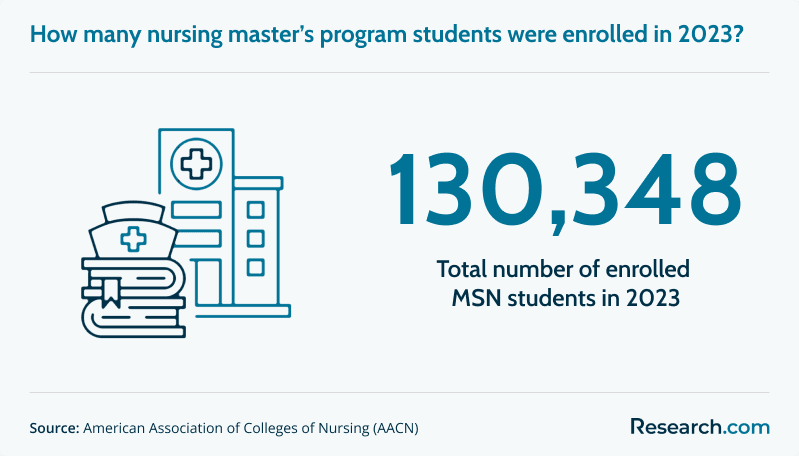
The Bureau of Labor Statistics has reported robust job growth for nurse practitioner-related professions at 45% through 2032. That outlook supports demand for advanced practice nurses, although individual outcomes are never guaranteed.
Specialization can affect employability. Family practice, informatics, and mental health tracks can open different doors, and certification is often required for advanced practice positions. Employers also look for clinical judgment, communication skills, practical experience, technology readiness, and the ability to work across interdisciplinary teams.
What differentiates direct entry MSN programs from traditional nursing pathways?
Direct entry MSN programs are built for students who already have a non-nursing bachelor’s degree and want to transition into nursing. Unlike traditional RN-to-MSN or BSN-to-MSN routes, these programs include foundational nursing education, clinical preparation, and advanced graduate coursework in an accelerated structure.
These pathways can be attractive for career changers, but they are intensive. Applicants should compare faculty qualifications, clinical partnerships, licensure preparation, student outcomes, schedule expectations, and total cost. For more focused options, review the shortest direct entry MSN programs for non-nurses online.
What is the return on investment of pursuing an online MSN?
The return on investment of an online MSN depends on how much you pay, how quickly you finish, whether you must reduce work hours, what specialty you choose, and whether the degree leads to the role you want. A lower-cost program may deliver strong value if it is accredited, supports clinical placement, prepares graduates for certification, and aligns with local employer demand.
Students should compare tuition and fees against likely career outcomes, but avoid assuming salary increases are automatic. Consider debt load, certification costs, state licensure rules, employer reimbursement, and the opportunity cost of school. If you are still deciding where nursing education fits into your long-term plan, Research.com’s guide to the easiest nursing school options can provide additional context.
What are the potential challenges and quality considerations in online MSN programs?
Online MSN programs can be convenient, but they also require discipline and careful planning. Common challenges include finding clinical placements, managing workload while working shifts, staying connected with faculty, navigating technology platforms, and understanding state-specific licensure rules.
Quality indicators include accreditation, transparent outcomes, experienced faculty, strong student support, clear clinical placement processes, and specialty-specific resources. Nurses considering tracks such as psychiatric-mental health should also compare program affordability and support by reviewing options such as affordable psych NP programs.
-
: "
Before enrolling, ask the program to confirm in writing whether it accepts students from your state, whether clinicals can be completed where you live, and whether the curriculum meets requirements for your intended certification or license.
"
Can accelerated RN to BSN programs offer a quicker step toward an MSN?
Accelerated RN to BSN programs can help nurses who do not yet hold a bachelor’s degree move toward MSN eligibility more quickly. These programs typically focus on leadership, community health, evidence-based practice, health assessment, and professional nursing development.
For experienced RNs with clear graduate school goals, a streamlined BSN completion option can be a practical first step. Programs such as the shortest RN to BSN program may help reduce time to bachelor’s completion, but students should still confirm accreditation, transfer credit policies, workload, and MSN admission compatibility.
Do online MSN programs adequately prepare graduates for licensure and certification exams?
Accredited online MSN programs are generally designed to support preparation for certification and, where applicable, licensure. Preparation may include advanced clinical coursework, simulation, exam-aligned content, specialty practicums, review resources, and faculty advising.
However, students should verify outcomes for their specific track. Ask for certification pass-rate information when available, confirm required clinical hours, and check whether the curriculum meets requirements in your state. RNs building toward graduate study may also compare foundational options such as the easiest RN to BSN program.
Questions to Ask Before Applying to an Online MSN Program
- Is the program accredited by CCNE or ACEN?
- Does the school accept students from my state?
- Will the program meet licensure or certification requirements where I plan to practice?
- Who arranges clinical placements, and what happens if a placement falls through?
- Are there campus visits, intensives, labs, or travel requirements?
- What is the total estimated cost for my exact track?
- Are GRE scores required?
- Can I enroll part-time, full-time, or in an accelerated format?
- What academic, technical, and career services are available to online students?
- What are the graduation, employment, and certification pass outcomes for the track I want?
Here’s What Graduates Have to Say About Their Online MSN
Earning my MSN online let me keep my full-time nursing position while moving toward advanced practice. Being able to study around my shifts mattered, and faculty support helped me feel connected even though the program was virtual. I now work as a nurse practitioner, which had been my long-term goal. Miriam
I worried that online learning would feel isolating, but discussion sessions and group assignments kept me engaged. Having access to materials at any time helped me manage family responsibilities, and completing clinicals near home made the program more realistic for my life. Jason
The online MSN helped me build the confidence to take on a leadership role in my hospital. The format required discipline, but it also connected me with nurses from different backgrounds and practice settings. It was the right option for advancing without stepping away from work. Leslie
Key Insights
- The “easiest” online MSN should mean accessible admissions and flexible delivery, not weak academic standards.
- Accreditation, clinical placement support, state authorization, and certification preparation are more important than acceptance rate alone.
- The average nursing school acceptance rates in the U.S. is 66% as of 2023.
- Enrollment in nursing master's programs fell by 3.8% in 2021, but MSN degrees continue to support pathways into advanced clinical, educational, leadership, and administrative roles.
- 82% is the average rate of job offers for MSN graduates at the time of graduation.
- 17.3% of registered nurses with a baccalaureate degree went on to obtain a master's in 2021.
- In 2023, there were 130,348 master's program students in 656 nursing schools in the U.S.
- Compared to 2022, there were 1,176 fewer MSN students in 2023.
- Online MSN programs can be worth it for nurses with clear specialty goals, but ROI depends on total cost, certification success, local demand, and whether the degree aligns with the role you want.
- Before enrolling, confirm in writing that the program can serve students in your state and that clinical requirements can be completed where you live.
References:
- American Association of Colleges of Nursing. (n.d.). New graduate employment data.
- American Association of Colleges of Nursing. (n.d.). New AACN data points to enrollment challenges facing U.S. schools of nursing.
- Health Resources and Services Administration. (2024). Nurse survey fact sheet. Bureau of Health Workforce.
- Health Resources and Services Administration. (n.d.). Education and training: Characteristics of registered nurses from the 2018 National Sample Survey of Registered Nurses. Bureau of Health Workforce.
- U.S. Bureau of Labor Statistics. (n.d.). Nurse anesthetists, nurse midwives, and nurse practitioners. Occupational Outlook Handbook.
Other Things You Should Know About the Easiest Online MSN Programs
Yes. Many online MSN programs require an unencumbered RN license in the state where you are practicing or where clinicals occur. Some tracks also require a BSN, a minimum 3.0 GPA, official transcripts, and a background check before clinical placement begins.
Yes, many online MSN programs have waived the GRE requirement for 2027 admissions. Applicants should verify this directly with their chosen schools as policies may vary between institutions, easing the admission process significantly for some programs.