
2027 Best Online Nursing Education MSN Programs

Co-Founder and Chief Data Scientist
Pursuing an online nursing education MSN (Master of Science in Nursing) program is a strategic move for registered nurses who want to advance their careers, specialize in high-demand areas, or step into leadership roles. An online MSN program offers the flexibility to study while continuing to work, making it ideal for busy healthcare professionals.
This flexibility is proving essential as the American Association of Colleges of Nursing reports that MSN enrollments grew by 3.8% in 2024, reflecting the strong demand for advanced nursing education. By exploring and comparing the top programs, you can make an informed decision about which one best aligns with your career goals, learning style, and budget.
What are the benefits of getting an online nursing education MSN degree?
- This degree qualifies you to become a nurse educator or instructor, roles that involve teaching and mentoring future nurses in colleges, universities, healthcare facilities, and community settings.
- Nurse educators earning a master's in nursing education have a median annual salary of around $80,000 to $85,000, with variations depending on location, experience, and institution.
- Online nursing education programs offer flexibility to study at your own pace, fitting education around work and family commitments.
What can I expect from an online nursing education MSN program?
An online Master of Science in Nursing (MSN) with a concentration in Nursing Education prepares registered nurses to teach, mentor, and train future nurses in both academic and clinical environments.
The curriculum blends advanced nursing theory with specialized courses in educational methodologies, curriculum development, and program evaluation. Students gain expertise in instructional technology, assessment strategies, adult learning principles, and culturally responsive teaching approaches tailored to diverse learner needs.
In addition to online coursework, most programs require a supervised teaching practicum, giving students hands-on experience in classrooms, simulation labs, or healthcare settings. This practicum bridges theory and practice, ensuring graduates can confidently design and deliver engaging, evidence-based nursing instruction.
By earning this degree, graduates are qualified to work as nurse educators in colleges, universities, hospitals, and community health organizations. With the ongoing shortage of qualified nursing faculty, an MSN in Nursing Education not only opens doors to rewarding teaching roles but also allows nurses to make a lasting impact on the profession’s future.
Where can I work with an online nursing education MSN degree?
You can pursue diverse career opportunities that center on teaching, mentoring, and advancing the nursing profession. Graduates are qualified to work in both academic and healthcare environments, as well as in emerging online learning platforms, giving you flexibility in where and how you teach.
Common workplaces include:
- Academic institutions
- Hospitals and healthcare systems
- Public health organizations
- Simulation and skills labs
- Online education platforms
Nurse educators are thus positioned in both academic and healthcare settings, as well as emerging online education environments, offering a broad career landscape centered on the advancement and education of nursing professionals.
How much can I make with an online nursing education MSN degree?
With a nursing education degree, you can expect to make a median annual salary of approximately $79,940 to $87,099 in the United States, depending on experience, location, and employer.
Entry-level nurse educators typically earn around $73,849 annually, while more experienced professionals earn higher, with the top salaries exceeding $120,000 per year. Online nurse educators specifically earn on average about $102,263 annually, with ranges from about $72,000 to $123,000 or more, depending on skill level and location.
- List of the Best Online Nursing Education MSN Programs for 2027 List of Programs
- How long does it take to complete an online nursing education MSN program? Completion Time
- How does an online nursing education MSN program compare to an on-campus program? How does an online nursing education MSN program compare to an on-campus program?
- What is the average cost of an online nursing education MSN program? Average Cost
- What are the financial aid options for students enrolling in an online nursing education MSN program? Financial Aid
- What are the prerequisites for enrolling in an online nursing education MSN program? Requirements
- What courses are typically in an online nursing education MSN program? What courses are typically in an online nursing education MSN program?
- What types of specializations are available in an online nursing education MSN program? What types of specializations are available in an online nursing education MSN program?
- How to choose the best online nursing education MSN program? How to choose the best online nursing education MSN program?
- What career paths are available for graduates of an online nursing education MSN program? Career Paths
- What is the job market for graduates with an online nursing education MSN degree? Job Market
- Which program is right for my career: an online accelerated BSN or an online MSN in Nursing Education? Which program is right for my career: an online accelerated BSN or an online MSN in Nursing Education?
- What post-graduation professional development opportunities are available? What post-graduation professional development opportunities are available?
- How do online nursing education MSN programs compare with DNP online programs? How do online nursing education MSN programs compare with DNP online programs?
Best Online Nursing Education MSN Programs for 2027: What to Know Before You Apply
An online MSN in Nursing Education is designed for licensed registered nurses who want to move into teaching, clinical training, curriculum design, staff development, or future doctoral study. The decision is not just about finding a flexible program. You also need to compare accreditation, practicum support, total tuition, program length, faculty access, and whether the curriculum fits the educator role you want.
This guide helps working nurses evaluate online nursing education MSN programs with a practical lens. You will find a ranked program list, a comparison of online and campus formats, admissions requirements, typical courses, cost and financial aid considerations, career options, job market context, and common mistakes to avoid before enrolling.
Quick answer: Is an online MSN in Nursing Education worth it?
An online MSN in Nursing Education can be a strong choice if you are already an RN, want to teach nursing students or practicing nurses, and need a program that fits around clinical work. The best programs are accredited, include supervised teaching or clinical education experiences, and prepare graduates for academic, hospital-based, or staff development roles. It may not be the right fit if your main goal is direct advanced clinical practice as a nurse practitioner, because a clinical MSN, post-master’s certificate, or DNP may align better with that path.
| Best fit | Consider another path if |
| You are a licensed RN with a BSN and want to teach, mentor, develop curriculum, or train nursing staff. | You want to diagnose, prescribe, or provide advanced direct patient care as a nurse practitioner. |
| You need online coursework because you work shifts, manage family responsibilities, or live far from campus. | You learn best through fixed in-person schedules and frequent face-to-face classroom interaction. |
| You are interested in academic nursing, clinical education, simulation education, or staff development. | You are not yet an RN; in that case, an online accelerated BSN may be the more appropriate starting point. |
How we rank schools
Program rankings should help you build a shortlist, not replace your own due diligence. For online nursing education MSN programs, accreditation, academic quality, cost, completion format, and reliable school data matter because graduates often pursue roles that require strong instructional, clinical, and leadership preparation.
Research.com uses validated education datasets and institutional information to support its rankings. Sources used in the ranking process include:
- Integrated Postsecondary Education Data System, also known as the IPEDS database
- Peterson’s database, including distance learning data
- College Scorecard database
- National Center for Education Statistics, NCES resources, and NCES data tools
For more detail about ranking factors and data use, visit our methodology page.
Online Nursing Education MSN Programs at a Glance
| Rank | School | Program length | Cost information | Credits or courses | Accreditation |
| 1 | Purdue University Online MSN in Nursing Education | 15 months | $420 per credit | 60 credits | Commission on Collegiate Nursing Education (CCNE) |
| 2 | Walden University Online MSN in Nursing Education | 18 months | $426 per credit | 53 credits | Commission on Collegiate Nursing Education (CCNE) |
| 3 | Grand Canyon University Online MSN in Nursing Education | 18 months | $600 per credit | 36 credits | Commission on Collegiate Nursing Education (CCNE) |
| 4 | Western Governors University Online MSN in Nursing Education | 2 years | $5,235 per 6-month term | 15 courses | Commission on Collegiate Nursing Education (CCNE) |
| 5 | Liberty University Online MSN in Nursing Education | 2 years | $580 per credit | 36 credits | Commission on Collegiate Nursing Education (CCNE) |
| 6 | Texas Christian University Online MSN in Nursing Education | 2 years | $2,145 per credit | 34 credits | Commission on Collegiate Nursing Education (CCNE) |
| 7 | Duke University Online MSN in Nursing Education | 2 years | $2,166 per credit | 36 credits | Commission on Collegiate Nursing Education (CCNE) |
| 8 | University of Rochester Online MSN in Nursing Education | 2 years | $1,740 per credit | 37 credits | Commission on Collegiate Nursing Education (CCNE) |
| 9 | Villanova University Online MSN in Nursing Education | 2 years | $1,080 per credit | 33 credits | Commission on Collegiate Nursing Education (CCNE) |
| 10 | Drexel University Online MSN in Nursing Education | 2 years | $1,169 per credit | 45 credits | Commission on Collegiate Nursing Education (CCNE) |
1. Purdue University Online MSN in Nursing Education
The online MSN in Nursing Education from Purdue Global is structured for nurses who want graduate-level preparation in teaching, leadership, evidence-based practice, health policy, and health promotion. Its curriculum emphasizes nurse educator competencies while also strengthening the broader advanced nursing knowledge expected in MSN-level study.
- Program Length: 15 months
- Cost per credit: $420
- Required credits to graduate: 60 credits
- Accreditation: Commission on Collegiate Nursing Education (CCNE)
2. Walden University Online MSN in Nursing Education
The online MSN in Nursing Education at Walden University focuses on preparing nurses to build curricula, use effective teaching methods, evaluate learning, and incorporate technology into instruction. This program may appeal to nurses who want a broad educator-focused curriculum with attention to both classroom and practice-based learning environments.
- Program Length: 18 months
- Cost per credit: $426
- Required credits to graduate: 53 credits
- Accreditation: Commission on Collegiate Nursing Education (CCNE)
3. Grand Canyon University Online MSN in Nursing Education
The online MSN in Nursing Education at Grand Canyon University (GCU) is intended for BSN-prepared registered nurses who want to teach future nurses or support education in healthcare settings. The program includes a practicum component and highlights advanced clinical assessment skills, helping students connect teaching responsibilities with real clinical judgment.
- Program Length: 18 months
- Cost per credit: $600
- Required credits to graduate: 36 credits
- Accreditation: Commission on Collegiate Nursing Education (CCNE)
4. Western Governors University Online MSN in Nursing Education
Western Governors University (WGU) offers an online MSN in Nursing Education that uses a mentor-supported model. Students work with a program mentor and develop educator skills for classroom, online, hybrid, clinical, and simulation-based settings.
- Program Length: 2 years
- Cost per credit: $5,235 per 6-month term
- Required credits to graduate: 15 courses
- Accreditation: Commission on Collegiate Nursing Education (CCNE)
5. Liberty University Online MSN in Nursing Education
The online Master of Science in Nursing with a Nurse Educator concentration at Liberty University builds on professional nursing experience and focuses on instructional leadership, research, culturally responsive care, and healthcare technology. It is designed for nurses who want to create effective learning environments in academic or clinical contexts.
- Program Length: 2 years
- Cost per credit: $580
- Required credits to graduate: 36 credits
- Accreditation: Commission on Collegiate Nursing Education (CCNE)
6. Texas Christian University Online MSN in Nursing Education
Texas Christian University (TCU) provides an online MSN in Nursing Education for registered nurses interested in teaching, curriculum development, educational evaluation, and leadership. The program includes academic and practical preparation, with clinical and teaching practicum supervision from qualified faculty and preceptors.
- Program Length: 2 years
- Cost per credit: $2,145
- Required credits to graduate: 34 credits
- Accreditation: Commission on Collegiate Nursing Education (CCNE)
7. Duke University Online MSN in Nursing Education
Duke University offers an MSN with a Nursing Education concentration that combines advanced nursing science, curriculum planning, educational technology, and teaching methods in a distance-based format. Graduates are prepared for roles such as nurse faculty member, clinical instructor, and staff development educator.
- Program Length: 2 years
- Cost per credit: $2,166
- Required credits to graduate: 36 credits
- Accreditation: Commission on Collegiate Nursing Education (CCNE)
8. University of Rochester Online MSN in Nursing Education
The online MSN in Nursing Education at the University of Rochester School of Nursing is built for experienced nurses who want to shift into teaching in academic or clinical settings. The program incorporates applied teaching experiences through partnerships with Strong Memorial Hospital, URMC affiliates, the School of Nursing, and other local colleges.
- Program Length: 2 years
- Cost per credit: $1,740
- Required credits to graduate: 37 credits
- Accreditation: Commission on Collegiate Nursing Education (CCNE)
9. Villanova University Online MSN in Nursing Education
Villanova University offers an online MSN in Nursing Education for nurses preparing to teach in academic, clinical, and community-based environments. The curriculum includes nursing research, curriculum design, instructional strategies, clinical ethics, and simulation in higher education.
- Program Length: 2 years
- Cost per credit: $1,080
- Required credits to graduate: 33 credits
- Accreditation: Commission on Collegiate Nursing Education (CCNE)
10. Drexel University Online MSN in Nursing Education
The online MSN in Nursing Education at Drexel University blends graduate nursing foundations with educational preparation. Students study topics such as patient safety, ethics, advocacy, research, advanced clinical knowledge, and teaching practice, preparing them for educator roles across healthcare and academic settings.
- Program Length: 2 years
- Cost per credit: $1,169
- Required credits to graduate: 45 credits
- Accreditation: Commission on Collegiate Nursing Education (CCNE)
How Long Does It Take to Complete an Online Nursing Education MSN Program?
Most online nursing education MSN programs take about 15 months to 2 years to complete, depending on the school, enrollment pace, credit requirements, term structure, and practicum schedule.
Many programs require roughly 30 to 40 credit hours, although individual programs may require more. Courses often run in 8- to 14-week sessions. A full-time student may finish in about 16 to 24 months, while a part-time student may need closer to 2 or more years.
Some schools offer fast track MSN nursing education online options or flexible pacing for students who can handle a heavier course load. Before choosing an accelerated format, ask whether you can realistically manage graduate coursework, work shifts, family responsibilities, and practicum hours at the same time.
| Timeline factor | How it affects completion |
| Full-time enrollment | Usually the fastest route, but it can be difficult for nurses working demanding schedules. |
| Part-time enrollment | Offers more balance but may extend the degree closer to 2 or more years. |
| Practicum placement | Delays can happen if students must secure approved local sites or preceptors. |
| Credit requirements | A 33-credit program and a 60-credit program can feel very different in workload and total cost. |
| Term format | Shorter 8-week courses can speed progress but often require concentrated weekly study time. |
How Does an Online Nursing Education MSN Program Compare to an On-Campus Program?
Online and campus-based MSN nursing education programs can lead to similar goals, but the learning experience differs. Online programs are usually better for working nurses who need schedule flexibility. Campus programs may be better for students who want consistent in-person interaction, set class times, and easier access to simulation labs and campus resources.
Most online programs use a mix of asynchronous coursework, recorded lectures, virtual discussions, written assignments, and sometimes live class sessions. Practicum requirements are typically completed locally in approved settings. Nurses who plan to continue into education-focused doctoral study may also explore pathways such as the best online MSN to EdD bridge programs.
On-campus programs provide face-to-face instruction and more structured peer and faculty contact. That can be valuable for students who prefer a predictable classroom environment or who want hands-on access to campus facilities. The trade-off is that commuting, fixed class times, and campus attendance may be harder for nurses who work rotating shifts.
| Format | Advantages | Potential drawbacks |
| Online MSN in Nursing Education | Flexible coursework, local practicum options, easier fit for working nurses, access from outside the school’s region. | Requires self-discipline, may offer less spontaneous faculty contact, practicum placement responsibility varies by school. |
| On-campus MSN in Nursing Education | In-person faculty access, scheduled learning environment, stronger campus community, easier access to labs and simulation spaces. | Less flexible, may require commuting or relocation, harder to manage with shift work. |
| Hybrid MSN in Nursing Education | Combines online flexibility with some in-person learning or intensive sessions. | Campus visits can create travel, time-off, or childcare challenges. |
What Is the Average Cost of an Online Nursing Education MSN Program?
The cost of an online nursing education MSN varies widely. Program costs are influenced by tuition per credit, required credits, university fees, books, technology fees, practicum expenses, and whether tuition is charged per credit or by term.
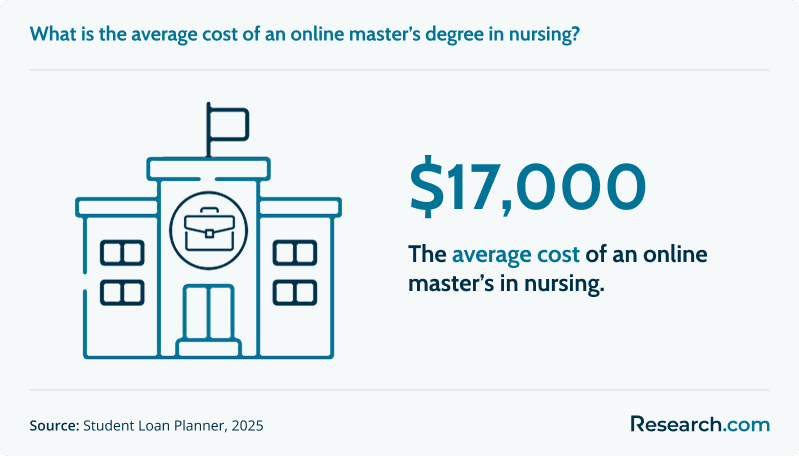
Some sources describe the average cost of online nursing education programs as about $17,000 per year, with many total tuition estimates falling between approximately $8,000 and $20,000, depending on the school and program structure. However, the program examples in this guide show that tuition can be much higher at some institutions, especially when per-credit prices exceed $1,000.
Do not compare nursing education MSN tuition directly with unrelated degrees, such as the cheapest online counseling degree, without checking credit requirements, licensure relevance, clinical expectations, and employer reimbursement policies. Total cost matters more than sticker price per credit.
| Cost item | Why it matters |
| Tuition per credit or per term | A low per-credit price may still result in a higher total cost if the program requires many credits. |
| Required credits or courses | Programs listed here range from 15 courses to 60 credits, so workload and tuition can differ substantially. |
| Fees | Technology, student services, online learning, graduation, or practicum fees can increase the final bill. |
| Books and learning materials | Graduate nursing texts, software, and simulation materials may add recurring costs. |
| Practicum expenses | Students may need background checks, immunization records, health clearance, travel, or site-specific documentation. |
| Time away from work | Accelerated study may reduce time in school but can limit overtime or require schedule changes. |
What Financial Aid Options Are Available for Online Nursing Education MSN Students?
Online MSN students often combine several funding sources, including federal loans, employer tuition assistance, scholarships, grants, and service-based programs. Because most nursing education MSN students are already working nurses, employer benefits can be especially important.
- Scholarships and grants: Nursing schools, professional organizations, foundations, and state programs may offer scholarships or grants for graduate nursing students. The American Association of Colleges of Nursing (AACN) and similar organizations can be useful places to look for nursing-specific funding. Do not assume that every federal grant applies to graduate study; confirm eligibility with the school’s financial aid office.
- Federal and private loans: Students can complete the Free Application for Federal Student Aid (FAFSA) to determine federal aid eligibility. Graduate students commonly evaluate options such as the Direct Unsubsidized Loan and the Direct Graduate PLUS Loan. Private loans are another option, but they may have different interest rates, repayment terms, and borrower protections.
- Employer tuition assistance: Hospitals, health systems, and other healthcare employers may reimburse part of an MSN program if the degree supports staff development, education, leadership, or retention goals. Ask whether reimbursement is paid upfront or after course completion, whether grades matter, and whether you must remain employed for a set period.
- Service-based programs: Some government or workforce programs may provide funding in exchange for service in a critical shortage facility, underserved area, or nurse faculty role. Review service obligations carefully before accepting this type of aid.
Questions to ask before borrowing for an MSN
- What is the total estimated cost from enrollment to graduation, including fees?
- How much employer reimbursement can I realistically use each year?
- Will the program allow part-time enrollment so I can keep working?
- What happens financially if my practicum placement is delayed?
- Does the school publish clear tuition and fee policies for online students?
What Are the Prerequisites for Enrolling in an Online Nursing Education MSN Program?
Admissions requirements exist to make sure students are licensed, clinically prepared, and ready for graduate-level nursing and teaching responsibilities. Exact requirements vary by school, but most online nursing education MSN programs expect applicants to have nursing education, RN licensure, and documentation of academic readiness.
- A Bachelor of Science in Nursing (BSN) from an accredited institution. Some schools may review applicants with other bachelor’s degrees, but additional nursing prerequisites may be required.
- An active, current, and unencumbered Registered Nurse (RN) license in the state where the student lives or works. Nurses using a compact license should confirm state-specific requirements.
- A minimum cumulative GPA, often around 3.0 on a 4.0 scale. Some schools may consider applicants with GPAs such as 2.8, depending on the admissions policy.
- Completion of prerequisite coursework if the applicant’s prior education did not include expected sciences or quantitative preparation, such as anatomy, physiology, microbiology, nutrition, chemistry/biochemistry, or statistics. Prerequisites are common across healthcare pathways; students comparing healthcare roles may also review requirements for how to become a registered medical assistant.
- Official transcripts, proof of RN licensure, a resume or CV, a statement of purpose, letters of recommendation, or evidence of clinical experience, depending on the school.
- Background checks, immunization records, health clearance, or other documentation before beginning practicum experiences.
| Requirement | What to verify |
| BSN degree | Confirm whether the program requires a BSN specifically or considers non-BSN applicants. |
| RN license | Check whether your state license meets the school’s clinical and practicum rules. |
| GPA | Ask whether conditional admission is available if your GPA is below the preferred threshold. |
| Clinical experience | Some programs prefer or require professional nursing experience before enrollment. |
| Practicum readiness | Find out when background checks, immunizations, and site approvals must be completed. |
What Courses Are Typically Included in an Online Nursing Education MSN Program?
Online nursing education MSN programs usually combine advanced nursing core courses with specialized educator preparation. The purpose is to help nurses understand graduate-level clinical concepts while learning how to teach, assess, mentor, and design learning experiences for nursing students or practicing clinicians.
The structure is similar in principle to an accelerated master's degree in technology education online: students deepen subject expertise while learning how to teach effectively in technology-supported environments.
- Advanced Pathophysiology: Students examine disease processes at a graduate level and connect biological changes to clinical decision-making and patient outcomes.
- Advanced Pharmacology: This course covers drug classes, mechanisms of action, therapeutic use, side effects, and principles related to safe medication management.
- Advanced Health Assessment: Students build skills for comprehensive assessment across diverse patient populations and clinical contexts.
- Curriculum Development and Evaluation: This course teaches students how to create learning objectives, organize nursing content, assess outcomes, and revise educational programs.
- Teaching and Learning Strategies: Students compare instructional approaches such as lecture, case-based learning, simulation, online teaching, clinical instruction, and learner-centered methods.
- Assessment and Evaluation: Students learn how to measure learning, evaluate clinical competence, design rubrics, and use assessment data responsibly.
- Educational Technology: Coursework may address learning management systems, virtual simulation, digital assessment tools, and online engagement strategies.
- Teaching Practicum: Students apply educator skills in approved academic, clinical, simulation, or staff development settings.
What Specializations Are Available in an Online Nursing Education MSN Program?
Nursing education is already a focused MSN track, but some programs allow students to add electives, certificates, or related emphases. The best option depends on where you want to teach and whether you want your future role to be academic, clinical, administrative, technology-focused, or population-health oriented.
- Nursing Education: The central track for nurses preparing to teach in colleges, universities, hospitals, community settings, simulation labs, or professional development departments.
- Public Health Nursing: A useful emphasis for nurses interested in community health education, prevention, population health, and public-facing training programs.
- Nursing Informatics: A strong fit for nurses who want to connect data, health technology, electronic health records, and digital learning tools with nursing practice and education.
- Nurse Executive or Leadership: Appropriate for nurses who want to supervise educational programs, lead staff development teams, or influence organizational learning strategy.
- Clinical nurse practitioner specialties: Students whose goals are centered on advanced direct care may compare educator tracks with clinical programs, including the best online MSN Women's Health Nurse Practitioner programs or a post master's certificate pediatric nurse practitioner online.
| Career goal | Best-aligned MSN focus |
| Teach prelicensure nursing students | Nursing Education |
| Train hospital nursing staff | Nursing Education or Clinical Education |
| Lead education programs in a health system | Nursing Education with Leadership or Nurse Executive coursework |
| Teach with simulation, online tools, or data systems | Nursing Education with Informatics or Educational Technology electives |
| Provide advanced direct clinical care | Nurse Practitioner track, post-master’s certificate, or DNP pathway |
How Should You Choose the Best Online Nursing Education MSN Program?
The best online nursing education MSN program is the one that matches your license status, career goal, budget, learning style, practicum needs, and timeline. A highly ranked program is not automatically the best program for every nurse.
- Verify accreditation first. Look for nursing program accreditation from recognized accreditors such as the Commission on Collegiate Nursing Education (CCNE) or the Accreditation Commission for Education in Nursing (ACEN). Accreditation can affect employer recognition, transferability, certification preparation, and academic credibility.
- Match the curriculum to your target role. A future college faculty member may need strong curriculum and evaluation coursework, while a hospital-based educator may need staff development, simulation, clinical teaching, and competency assessment training.
- Compare total cost, not just tuition per credit. Add tuition, fees, books, practicum expenses, travel, and potential lost work time.
- Ask who arranges practicum placements. Some schools help secure placements; others expect students to identify local sites and preceptors. This can strongly affect your timeline.
- Check scheduling flexibility. Nurses comparing program length should think the same way prospective coders might ask how long is schooling for medical billing and coding: the time commitment only works if it fits your weekly life.
- Evaluate faculty support. Ask about advisor access, faculty office hours, writing support, online tutoring, and career services.
- Review technology expectations. Online teaching programs should model strong online learning practices, not just post readings and discussion boards.
Common mistakes to avoid
| Mistake | Better approach |
| Choosing a program before checking accreditation | Confirm institutional and nursing program accreditation before applying. |
| Looking only at per-credit tuition | Calculate total program cost using required credits, fees, and practicum expenses. |
| Assuming online means easier | Expect graduate-level reading, writing, projects, and practicum work. |
| Ignoring practicum logistics | Ask early whether the school helps locate approved local teaching sites. |
| Picking the fastest program automatically | Choose an accelerated format only if your work and personal schedule can support it. |
| Assuming salary outcomes are guaranteed | Research local employers, faculty requirements, and clinical educator openings in your region. |
| Relying only on rankings | Use rankings as a shortlist, then compare fit, support, cost, and outcomes. |
What Career Paths Are Available After an Online Nursing Education MSN?
Graduates of online nursing education MSN programs commonly pursue teaching, staff development, curriculum, leadership, and professional training roles. Some also continue into doctoral study through programs such as MSN to PhD nursing programs, especially if they want research, tenure-track academic work, or high-level policy influence.
- Nurse Educator: Nurse educators teach nursing students in colleges, universities, technical schools, and other academic environments. They may develop syllabi, deliver instruction, evaluate student performance, and mentor future nurses.
- Clinical Nurse Educator: These educators work in hospitals, clinics, health systems, or specialty units. They train nursing staff, support onboarding, teach evidence-based practice, and help improve patient care processes.
- Nurse Administrator or Nurse Leader: Some graduates move into roles that supervise education teams, staff development programs, nursing departments, or learning initiatives within healthcare organizations.
- Curriculum Developer or Instructional Coordinator: These professionals design educational materials, competency frameworks, assessment tools, and continuing education content for nursing learners.
- Consultant or Healthcare Educator: Graduates may create workshops, advise on curriculum design, support compliance training, or develop educational programs for healthcare organizations.
- Doctoral student, researcher, or policy-focused educator: Some MSN graduates pursue a PhD, DNP, or EdD to move into research, advanced leadership, policy, or senior faculty roles.
| Role | Typical work setting | Main responsibilities |
| Nurse Educator | College, university, technical school, nursing program | Teach courses, mentor students, design curriculum, evaluate learning. |
| Clinical Nurse Educator | Hospital, clinic, health system | Train staff, support competency development, lead continuing education. |
| Simulation Educator | Nursing school or simulation center | Design simulation scenarios, run debriefings, assess clinical judgment. |
| Staff Development Specialist | Healthcare organization | Coordinate onboarding, skills training, compliance education, and professional development. |
| Curriculum Developer | Academic program, healthcare organization, education company | Create instructional materials, learning outcomes, assessments, and course content. |
What Is the Job Market for Graduates With an Online Nursing Education MSN Degree?
The job market for MSN-prepared nurse educators is supported by the continuing need to educate nursing students and train practicing nurses. Graduates may work in academic institutions, hospitals, health systems, professional development departments, simulation centers, and continuing education programs.
Many nurse educators work in postsecondary education roles. The U.S. Bureau of Labor Statistics tracks nurse educators, and this category is useful when reviewing occupational data for academic nursing education roles.
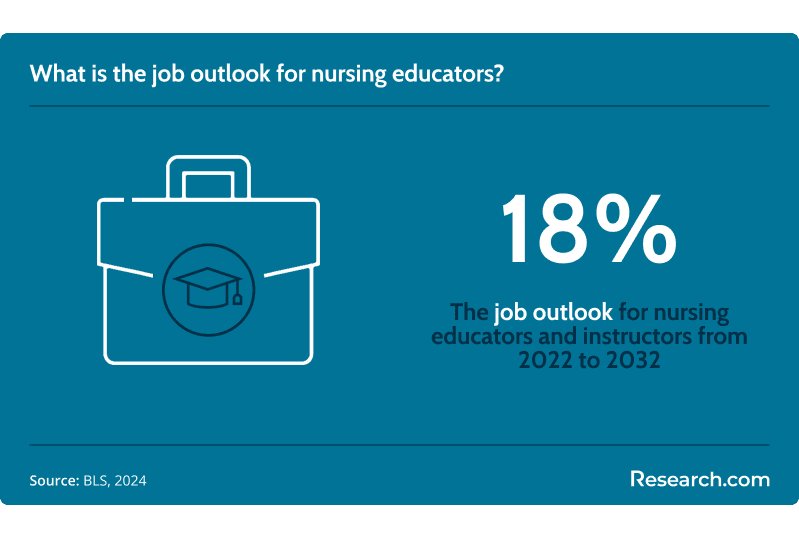
The demand for nurse educators is stated at 18% until 2032, driven by nursing program expansion and the healthcare industry’s ongoing need for skilled nursing professionals. However, job availability and compensation vary by region, employer, faculty requirements, specialty area, and whether the role is academic, clinical, or administrative.
An MSN in Nursing Education can support advancement beyond bedside roles, but it does not guarantee a specific salary or job title. Graduates who combine educator preparation with strong clinical experience, certification readiness, teaching practicum experience, and comfort with simulation or online learning tools may be more competitive for teaching and staff development positions.
Current trends affecting nurse educators
- Nursing faculty shortages: Schools need qualified instructors to educate future nurses, and faculty capacity can affect nursing program enrollment.
- Simulation and virtual learning: Nurse educators are increasingly expected to use simulation, digital tools, online platforms, and structured clinical judgment activities.
- Competency-based education: Employers and schools are paying closer attention to measurable skills, clinical judgment, and performance-based assessment.
- Healthcare workforce training needs: Hospitals and health systems need educators who can train staff on new policies, technologies, patient safety practices, and evidence-based care.
- Doctoral expectations in academia: Some full-time faculty or leadership roles may prefer or require doctoral preparation, making MSN-to-doctoral pathways relevant for long-term academic careers.
Which Program Is Right for My Career: an Online Accelerated BSN or an Online MSN in Nursing Education?
The right choice depends on where you are starting. An online accelerated BSN is for students who do not already have a nursing degree and want a faster route into registered nursing. An online MSN in Nursing Education is for licensed nurses who already have nursing preparation and want to teach, lead clinical education, or develop nursing curricula.
| Pathway | Who it is for | Primary outcome |
| Online accelerated BSN | Students with a non-nursing background who want to become registered nurses. | Preparation for entry into RN practice. |
| Online MSN in Nursing Education | Licensed RNs who want to teach nursing students or practicing nurses. | Preparation for nurse educator, clinical educator, curriculum, or staff development roles. |
If you are not yet an RN, start by researching BSN or entry-level nursing pathways. If you are already an RN with a BSN and want to move into education, an MSN in Nursing Education is the more direct graduate route.
What Post-Graduation Professional Development Opportunities Are Available?
Professional development should continue after graduation, especially because nurse educators must stay current in clinical practice, teaching methods, simulation, assessment, and healthcare technology. Useful options include alumni networks, continuing education, faculty mentoring, professional conferences, certification preparation, webinars, and doctoral study.
Some graduates also build additional credentials depending on their background. For nurses still comparing undergraduate completion options, resources such as the easiest RN to BSN nursing programs may be relevant earlier in the education pathway, although RN-to-BSN programs serve a different purpose than graduate nursing education programs.
- Join professional nursing education associations and attend teaching-focused webinars.
- Seek mentorship from experienced faculty, simulation leaders, or clinical education directors.
- Build a teaching portfolio with lesson plans, evaluation tools, simulation scenarios, and practicum projects.
- Consider doctoral study if your long-term goal is tenure-track faculty, research, or senior academic leadership.
- Ask your employer about leadership development, educator ladders, or tuition support for future credentials.
How Do Online Nursing Education MSN Programs Compare With Online DNP Programs?
An online MSN in Nursing Education focuses on teaching, curriculum design, learner assessment, clinical instruction, and educator practicum experiences. An online DNP focuses more on advanced practice, clinical leadership, systems improvement, evidence-based practice, and healthcare outcomes. Both can support leadership, but they prepare nurses for different kinds of leadership.
| Program type | Main focus | Best for |
| Online MSN in Nursing Education | Teaching, curriculum, assessment, staff development, academic and clinical education. | RNs who want to become nurse educators, clinical instructors, or education leaders. |
| Online DNP | Advanced clinical practice, systems leadership, quality improvement, evidence-based implementation. | Nurses who want high-level clinical, executive, policy, or practice leadership roles. |
If your main goal is to teach nursing students or train practicing nurses, the MSN in Nursing Education is usually the more targeted credential. If your goal is advanced practice leadership or system-level clinical improvement, compare DNP pathways, including DNP online programs.
What Students Often Value in an Online Nursing Education Degree
- Janus: "Going back to graduate school while working full time felt intimidating, but the online structure made it possible to keep my job and manage family responsibilities. The flexibility helped me stay on track, and the degree supported my move into a hospital-based nurse educator position where I now mentor new nurses."
- Kyle: "My online MSN strengthened the way I plan lessons, evaluate learning, and use tools such as online simulation. The coursework felt directly connected to the teaching responsibilities I wanted, and the support from faculty helped me feel more prepared to lead in a classroom setting."
- Linda: "One of the most useful parts of the program was learning with nurses from different regions and clinical backgrounds. Their perspectives made discussions richer and helped me think more broadly about nursing education and healthcare challenges."
Questions to Ask Schools Before You Apply
- Is the nursing program accredited by CCNE or ACEN?
- How are teaching practicum sites approved, and does the school help students find placements?
- Are courses asynchronous, synchronous, or a mix of both?
- How many hours per week should working nurses expect to study?
- What is the total estimated cost, including fees, materials, and practicum-related expenses?
- Does the program prepare students for nurse educator certification or faculty roles?
- What support is available for online students, including writing help, advising, library access, and career services?
- Can students enroll part time, pause enrollment, or adjust their course load if work demands change?
- What technology platforms, simulation tools, or learning management systems are used?
- What types of roles do graduates typically pursue?
References
- American Association of Colleges of Nursing. (2025). Fact Sheet: Nursing Faculty Shortage. AACN
- BLS. (2023). Registered Nurses. BLS
- Glassdoor. (2025). Salary: Clinical Nurse Educator in the United States 2025. Glassdoor
- Western Governors University. (2025). Nursing Education (BSN to MSN). WGU
- ZipRecruiter. (2025). Nurse Educator Salary. ZipRecruiter
Key Insights
- An online MSN in Nursing Education is best for licensed RNs who want to teach, train staff, design curriculum, or move into clinical education leadership.
- Program length commonly ranges from 15 months to 2 years, but credit requirements, practicum logistics, and enrollment pace can change the real timeline.
- Accreditation should be checked before cost, rankings, or convenience because it affects credibility, employer recognition, and future academic options.
- Total cost is more important than tuition per credit. Compare required credits, fees, materials, practicum expenses, and employer tuition assistance.
- Online programs can be as rigorous as campus programs, but they require strong time management and early planning for practicum placement.
- If your goal is advanced direct patient care, compare nurse practitioner, post-master’s certificate, or DNP options instead of assuming a nursing education MSN is the right fit.
- Use rankings to build a shortlist, then choose based on career alignment, practicum support, faculty access, flexibility, accreditation, and realistic affordability.
Other Things You Should Know About the Best Online Nursing Education MSN Programs
When balancing an online MSN Nursing Education program with full-time work, nurses should consider time management skills, program flexibility, and employer support. In 2027, many programs offer asynchronous learning, allowing nurses to study at their convenience, which helps in accommodating work schedules.
The number of required practicum hours in an online MSN in Nursing Education program varies by institution, but a common range is approximately 72 to 144 hours of supervised practicum experience. For example, Walden University requires a minimum of 72 practicum hours specifically for their Nursing Education track, which includes supervised, onsite experiences with preceptors to meet the course objectives.
In 2027, the best-rated online MSN in Nursing Education programs offer rigorous coursework, experienced faculty, and flexible scheduling designed to fit the needs of working professionals. Top programs often provide strong practicum support and comprehensive resources to ensure student success.


