
2027 Best Online MSN Women’s Health Nurse Practitioner Programs

Co-Founder and Chief Data Scientist
You know a higher standard of care is possible for your patients, but you lack the clinical authority to make it a reality. Becoming a women's health nurse practitioner is the direct path to gaining that power, transforming your practice from the inside out. This role is more vital than ever, yet only 2% of primary care NPs hold this specialization, making you an indispensable expert.
To help you get there, our career planning experts, with over a decade of experience, have created this guide to the best online women's health nurse practitioner programs. We'll give you the clear, actionable advice you need.
What are the benefits of getting an online MSN women's health NP program?
- Earning this degree provides the clinical authority to practice with greater autonomy in a high-demand field, leading to high levels of career satisfaction.
- The financial rewards are substantial, with women's health nurse practitioners earning an average annual salary of $124,362.
- Online programs offer the flexibility to balance your education with your current work and life commitments.
What can I expect from an online MSN women's health nurse practitioner program?
You should expect a rigorous and demanding academic experience. Accredited online women's health nurse practitioner programs deliver the same high-quality curriculum as their on-campus counterparts, covering advanced health sciences, pharmacology, and evidence-based practice. The standards are identical because they have to be.
The coursework, lectures, and class discussions are conducted online, providing you with valuable flexibility. However, clinical training is always conducted in person. You will be required to complete extensive, supervised clinical hours in a real healthcare setting, ensuring you have the hands-on skills needed for confident practice.
This structure is designed to produce highly competent practitioners. The public's trust in nurses is exceptionally high for a reason, and these programs are built to honor that trust by preparing you for the realities of patient care.
Where can I work with an online MSN women's health nurse practitioner degree?
Your degree opens doors to a wide range of healthcare settings. You'll find opportunities in private OB/GYN practices, community health clinics that serve diverse populations, large hospital systems, and specialized family planning centers. Your skills are in demand in various environments.
One of the fastest-growing areas is telehealth. This modern approach enables you to provide expert care remotely, offering incredible career flexibility while expanding access for patients who might otherwise be unable to receive it.
As you consider your options, it's smart to look into the scope-of-practice laws in the state where you plan to work. These regulations will shape your level of professional autonomy.
How much can I make with an online MSN women's health nurse practitioner degree?
The average salary for a women’s health nurse practitioner is $124,362 per year.
That figure is more than just a number. It’s a clear signal from the healthcare industry about how much your specialized skills are valued and needed. For most registered nurses, this represents a substantial increase in earning potential.
This confirms that investing in this advanced degree is a sound financial decision. It provides the security you need to build a long, sustainable, and impactful career.
- List of the Best Online MSN Women's Health Nurse Practitioner Programs for 2027 List of Programs
- How long does it take to complete an online MSN women's health nurse practitioner program? Completion Time
- How does an online MSN women's health NP program compare to an on-campus program? How does an online MSN women's health NP program compare to an on-campus program?
- What is the average cost of online MSN women's health nurse practitioner programs? Program Cost
- What are the financial aid options for students enrolling in an online MSN women's health NP program? Financial Aid
- What are the prerequisites for enrolling in an online MSN women's health nurse practitioner program? What are the prerequisites for enrolling in an online MSN women's health nurse practitioner program?
- What courses are typically in an online MSN women's health nurse practitioner program? What courses are typically in an online MSN women's health nurse practitioner program?
- What types of specializations are available in an online MSN women's health nurse practitioner program? What types of specializations are available in an online MSN women's health nurse practitioner program?
- How to choose the best online MSN women's health nurse practitioner program? How to choose the best online MSN women's health nurse practitioner program?
- What career paths are available for graduates of online MSN women's health nurse practitioner programs? What career paths are available for graduates of online MSN women's health nurse practitioner programs?
- What is the job market for graduates with an online MSN women's health nurse practitioner degree? Job Market
- What potential challenges should I consider with an online MSN women's health nurse practitioner program? What potential challenges should I consider with an online MSN women's health nurse practitioner program?
- How can I streamline my transition from RN to an MSN Women's Health NP program? How can I streamline my transition from RN to an MSN Women's Health NP program?
Best Online MSN Women’s Health Nurse Practitioner Programs for 2027
Choosing an online MSN Women’s Health Nurse Practitioner program is not just a question of convenience. It affects your eligibility for advanced practice roles, your clinical training experience, your certification preparation, and how quickly you can move from registered nurse to women’s health provider. This guide is for licensed RNs comparing accredited online WHNP programs and trying to understand cost, program length, clinical placement expectations, admissions requirements, and career outcomes.
Below, you will find a decision-focused ranking of online MSN women’s health nurse practitioner programs, followed by practical guidance on accreditation, online versus campus formats, financial aid, curriculum, clinical requirements, job market trends, and common mistakes to avoid before applying.
Quick answer: What is the best online MSN women’s health nurse practitioner program?
The best online MSN Women’s Health Nurse Practitioner program is the one that is accredited, fits your state authorization and clinical placement needs, prepares you for WHNP board certification, and matches your budget and timeline. Among the programs reviewed here, the University of Cincinnati, Drexel University, Regis College, University of Colorado Anschutz, Kent State University, Frontier Nursing University, Carlow University, University of South Alabama, University of Missouri-Kansas City, and the University of Alabama at Birmingham offer online or distance-accessible WHNP pathways with published program details.
How we evaluate schools
A graduate nursing program is a major professional and financial commitment, so rankings should be based on verifiable information rather than marketing claims. Our review process uses objective data from official and trusted education sources, including the IPEDS database, Peterson's database, College Scorecard, and the National Center for Education Statistics. You can also review Research.com’s full ranking methodology for more detail about how schools are assessed.
| Program | Length | Credits | Cost per Credit | Accreditation |
| University of Cincinnati - MSN Women’s Health Nurse Practitioner | 2 years | 49 | $892 in-state; $908 out-of-state | Commission on Collegiate Nursing Education (CCNE) |
| Drexel University - MSN Women’s Health/Gender Related Nurse Practitioner | 3 years | 55 | $1,169 in-state; $1,169 out-of-state | Commission on Collegiate Nursing Education (CCNE) |
| Regis College - Online Women’s Health Nurse Practitioner Program (WHNP) | 28-36 months | 46 | $995 in-state; $995 out-of-state | Accreditation Commission for Education in Nursing (ACEN) |
| University of Colorado Anschutz - Master of Science Women’s Health Nurse Practitioner | 2.5 years | 35 | $801 in-state; $1,298 out-of-state | Commission on Collegiate Nursing Education (CCNE) |
| Kent State University - MSN Women’s Health Nurse Practitioner Online Program | 2 years | 42 | $613 in-state; $623 out-of-state | Commission on Collegiate Nursing Education (CCNE) |
| Frontier Nursing University - Women’s Health Care Nurse Practitioner MSN | 2 years | 49 | $705 in-state; $705 out-of-state | Accreditation Commission for Education in Nursing (ACEN) |
| Carlow University - Online MSN Women’s Health Nurse Practitioner (WHNP) Program | 2.5 years | 49 | $946 in-state; $946 out-of-state | Commission on Collegiate Nursing Education (CCNE) |
| University of South Alabama - MSN Women’s Health Nurse Practitioner | 2 years | 45 | $594 in-state; $594 out-of-state | Commission on Collegiate Nursing Education (CCNE) |
| University of Missouri-Kansas City - MSN Women’s Health Nurse Practitioner | 2-3 years | 46 | $923 in-state; $923 out-of-state | Commission on Collegiate Nursing Education (CCNE) |
| The University of Alabama at Birmingham - MSN Women’s Health Care Nurse Practitioner | 2 years | 45 | $723 in-state; $723 out-of-state | Commission on Collegiate Nursing Education (CCNE) |
1. University of Cincinnati - MSN Women’s Health Nurse Practitioner
The University of Cincinnati offers an MSN WHNP pathway built around lifespan women’s health, preventive care, and evidence-based clinical decision-making. The program is designed for nurses who want to strengthen patient-provider communication while preparing for primary care responsibilities in women’s health settings.
- Program Length: 2 years
- Required Credits to Graduate: 49
- In-State Cost per Credit: $892
- Out-of-State Cost per Credit: $908
- Accreditation: Commission on Collegiate Nursing Education (CCNE)
2. Drexel University - MSN Women’s Health/Gender Related Nurse Practitioner
Drexel University uses a quarter-based academic structure for its women’s health and gender-related nurse practitioner program. The curriculum emphasizes gynecologic care, reproductive health, and team-based practice, making it a strong fit for nurses who want a broad clinical foundation for complex healthcare environments.
- Program Length: 3 years
- Required Credits to Graduate: 55
- In-State Cost per Credit: $1,169
- Out-of-State Cost per Credit: $1,169
- Accreditation: Commission on Collegiate Nursing Education (CCNE)
3. Regis College - Online Women’s Health Nurse Practitioner Program (WHNP)
Regis College provides multiple entry options for students pursuing the WHNP role. Its program covers women’s health from adolescence through menopause while also incorporating leadership, health policy, and advanced nursing practice coursework.
- Program Length: 28-36 months
- Required Credits to Graduate: 46
- In-State Cost per Credit: $995
- Out-of-State Cost per Credit: $995
- Accreditation: Accreditation Commission for Education in Nursing (ACEN)
4. University of Colorado Anschutz - Master of Science Women’s Health Nurse Practitioner
The University of Colorado Anschutz prepares students for advanced practice in sexual and reproductive healthcare. For students in the Denver area, a notable feature is university-arranged clinical placement, which can reduce one of the most difficult logistical barriers in online NP education.
- Program Length: 2.5 years
- Required Credits to Graduate: 35
- In-State Cost per Credit: $801
- Out-of-State Cost per Credit: $1,298
- Accreditation: Commission on Collegiate Nursing Education (CCNE)
5. Kent State University - MSN Women’s Health Nurse Practitioner Online Program
Kent State University focuses on advanced clinical reasoning, acute and chronic condition management, and primary care for women. Students complete clinical practicum experiences in ambulatory care settings in their home state while receiving faculty guidance throughout the process.
- Program Length: 2 years
- Required Credits to Graduate: 42
- In-State Cost per Credit: $613
- Out-of-State Cost per Credit: $623
- Accreditation: Commission on Collegiate Nursing Education (CCNE)
6. Frontier Nursing University - Women’s Health Care Nurse Practitioner MSN
Frontier Nursing University is known for a mission-driven approach that emphasizes care for diverse, rural, and underserved communities. The MSN WHNP curriculum supports both clinical preparation and leadership development, with clinical experiences that may be completed in students’ own communities.
- Program Length: 2 years
- Required Credits to Graduate: 49
- In-State Cost per Credit: $705
- Out-of-State Cost per Credit: $705
- Accreditation: Accreditation Commission for Education in Nursing (ACEN)
7. Carlow University - Online MSN Women’s Health Nurse Practitioner (WHNP) Program
Carlow University offers an online MSN WHNP program grounded in a scholar-practitioner model. The program emphasizes collaborative practice, advanced clinical competence, and preparation for board certification in women’s health.
- Program Length: 2.5 years
- Required Credits to Graduate: 49
- In-State Cost per Credit: $946
- Out-of-State Cost per Credit: $946
- Accreditation: Commission on Collegiate Nursing Education (CCNE)
8. University of South Alabama - MSN Women’s Health Nurse Practitioner
The University of South Alabama offers a women’s health curriculum that includes primary care, gynecologic care, and obstetric content. Students should note the required on-campus Clinical Skills Intensive, which provides hands-on training for advanced practice procedures.
- Program Length: 2 years
- Required Credits to Graduate: 45
- In-State Cost per Credit: $594
- Out-of-State Cost per Credit: $594
- Accreditation: Commission on Collegiate Nursing Education (CCNE)
9. University of Missouri-Kansas City - MSN Women’s Health Nurse Practitioner
The University of Missouri-Kansas City uses a blended format that combines online coursework with required campus visits for clinical learning. Its evidence-based curriculum prepares students to manage gynecologic, prenatal, and primary care needs for women.
- Program Length: 2-3 years
- Required Credits to Graduate: 46
- In-State Cost per Credit: $923
- Out-of-State Cost per Credit: $923
- Accreditation: Commission on Collegiate Nursing Education (CCNE)
10. The University of Alabama at Birmingham - MSN Women’s Health Care Nurse Practitioner
The University of Alabama at Birmingham provides a part-time, distance-accessible MSN WHNP format for working nurses. The program combines online class sessions with campus intensives to support skill development for advanced primary care practice in women’s health.
- Program Length: 2 years
- Required Credits to Graduate: 45
- In-State Cost per Credit: $723
- Out-of-State Cost per Credit: $723
- Accreditation: Commission on Collegiate Nursing Education (CCNE)
How Long Does It Take to Complete an Online MSN Women’s Health Nurse Practitioner Program?
Most online MSN WHNP programs take about 24 to 36 months when completed full time. Part-time study can extend the timeline, especially for nurses who continue working while completing didactic courses, skills intensives, and clinical rotations.
The clinical component is often the biggest scheduling variable. Even when coursework is online, WHNP students must complete in-person supervised clinical hours that meet program and accreditation standards. Before enrolling, ask whether the school helps secure preceptors, whether placements are available in your state, and what happens if a clinical site becomes unavailable.
Why the MSN matters for advanced nursing practice
An MSN is more than a credential upgrade. It marks the transition from bedside or staff nursing into advanced assessment, diagnosis, treatment planning, and patient education. For nurses who later want to move into research, teaching, or academic leadership, an MSN can also support progression into options such as the best online MSN to PhD bridge programs.
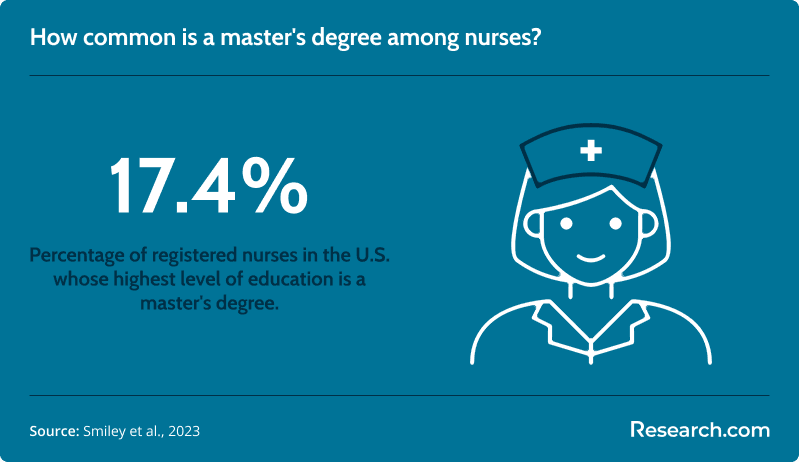
Only 17.4% of registered nurses in the U.S. currently hold a master's degree, so completing the MSN places graduates within a smaller segment of the nursing workforce with advanced preparation.
Online vs. On-Campus MSN WHNP Programs: What Is Different?
Accredited online MSN women’s health nurse practitioner programs are expected to meet the same academic and clinical standards as campus-based programs. The main difference is delivery: lectures, discussions, assignments, and some advising may be conducted virtually, while clinical training still takes place in approved in-person settings.
For students, the real question is not whether online is “easier.” It is whether the format matches your work schedule, learning style, clinical site access, and state authorization requirements.
| Factor | Online MSN WHNP | On-Campus MSN WHNP |
| Best for | Working nurses who need geographic flexibility | Students who prefer regular in-person interaction |
| Course delivery | Mostly virtual, depending on the program | Primarily classroom-based |
| Clinical training | Completed in person at approved sites | Completed in person at approved sites |
| Scheduling | Often more flexible, but still deadline-driven | More fixed class and campus schedules |
| Key risk to check | Clinical placement support in your location | Commute, relocation, and campus attendance requirements |
How to succeed in an online WHNP format
Online graduate nursing students need strong time management and consistent communication. Nurses who enjoy distance learning may also find related leadership pathways, such as online MSN to EdD programs, useful later if they plan to move into nursing education or academic administration.
- Communicate early and professionally: Contact faculty, advisors, and preceptors before small issues become major delays.
- Protect study time: Treat coursework, readings, exams, and clinical documentation as fixed professional commitments.
- Build a peer network: Online cohorts can provide study support, placement advice, and accountability during demanding terms.
- Confirm technical expectations: Make sure you can access learning platforms, virtual class sessions, testing systems, and clinical tracking tools before the first week.
What Is the Average Cost of an Online MSN Women’s Health Nurse Practitioner Program?
Total tuition for online MSN WHNP programs can range from about $26,000 to over $65,000, depending on the institution, the number of credits, tuition policies, and whether in-state rates apply. Tuition is only one part of the cost, however. Students should also account for fees, books, clinical travel, campus intensives, background checks, certification preparation, and lost work time if they reduce hours.
A lower tuition rate does not always mean a lower total cost. If a school provides limited clinical placement help, delays in securing a preceptor can postpone graduation and delay entry into an advanced practice role. Nurses comparing NP pathways may also want to review related certificate options, such as an online pediatric nurse practitioner graduate certificate, to understand how clinical support and specialty preparation vary across advanced nursing programs.
How to judge program value, not just price
One of the clearest indicators of program quality is graduate performance on the WHNP certification exam. The national first-time pass rate for the WHNP certification exam reached 79% in 2024, showing that accredited programs can prepare students effectively for certification when the curriculum, faculty support, and clinical training are strong.
When comparing programs, ask for recent certification pass rates, attrition data, clinical placement timelines, and graduate employment outcomes. These details tell you more about likely value than tuition alone.
Financial Aid Options for Online MSN Women’s Health NP Students
Online MSN WHNP students commonly use a combination of federal aid, institutional scholarships, employer benefits, and private loans. Start early, because scholarship deadlines and employer reimbursement approvals may not align with admissions timelines.
- Federal Student Aid: Submit the FAFSA to determine eligibility for federal student aid options.
- Private Loans: Consider private loans only after comparing interest rates, repayment terms, and federal loan protections.
- Institutional Scholarships: Ask each school whether graduate nursing scholarships, need-based awards, or specialty-focused funds are available.
- Employer Tuition Reimbursement: Hospitals, clinics, and healthcare systems may help pay for graduate nursing education, especially when the degree supports workforce needs.
Service-based funding and targeted resources
Some funding options are tied to service commitments. Programs such as the Nurse Corps Loan Repayment Program may help eligible nurses reduce student debt in exchange for work in designated Health Professional Shortage Areas. Read the service terms carefully before accepting this type of support.
Students connected to the military should also look for schools with military-focused advising and benefits support. Research.com’s guide to the best online colleges for military spouses can help military families evaluate online education policies, support services, and financial aid considerations.
Admissions Requirements for Online MSN Women’s Health Nurse Practitioner Programs
Most online MSN WHNP programs require applicants to be licensed registered nurses with a BSN. Admissions standards vary by school, but competitive programs generally look for academic readiness, clinical maturity, and a clear reason for choosing women’s health advanced practice.
- A Bachelor of Science in Nursing (BSN) from an accredited institution.
- An active, unencumbered Registered Nurse (RN) license.
- A minimum undergraduate GPA, typically 3.0 on a 4.0 scale.
- At least one to two years of direct patient care experience as an RN.
For many applicants, the path to enrollment represents at least six years of combined undergraduate education and professional nursing experience before beginning the MSN.
How to strengthen your WHNP application
Meeting minimum admissions requirements may not be enough at selective schools. Applicants with experience in labor and delivery, maternity care, reproductive health, gynecology, community health, or women’s health clinics may be better positioned to explain their goals and demonstrate specialty fit.
If you are comparing advanced nursing specialties, review admission expectations across programs. For example, the best online pediatric care nurse practitioner DNP programs may prioritize different clinical backgrounds, which can help you decide whether women’s health, pediatrics, family practice, or another NP route is the better match.
Common Courses in an Online MSN Women’s Health Nurse Practitioner Program
An MSN WHNP curriculum is designed to move registered nurses into advanced practice. Students typically study core advanced practice sciences, women’s health assessment and management, pharmacologic treatment, prevention, reproductive health, and healthcare policy.
- Advanced practice core: Courses often include advanced pathophysiology, advanced pharmacology, and advanced health assessment.
- Women’s health specialty content: Students study gynecologic care, reproductive health, prenatal and postpartum care, wellness, and health needs across the lifespan.
- Policy and ethics: Strong programs address healthcare systems, professional responsibility, health equity, and ethical issues in women’s health practice.
- Interprofessional practice: WHNPs frequently collaborate with physicians, midwives, nurses, imaging professionals, and other specialists. Understanding related diagnostic roles, including those covered in Research.com’s guide to online ultrasound tech school options, can help students appreciate the broader care team.
Where WHNP graduates commonly work
Women’s health nurse practitioners are employed in physician offices, hospitals, outpatient care centers, specialty clinics, reproductive health settings, and community health environments. The right setting depends on your clinical interests, state scope of practice rules, employer needs, and comfort with primary, gynecologic, prenatal, or preventive care.
As you compare programs, look at where recent graduates completed clinical rotations and where they accepted jobs. Placement patterns often reveal the school’s local employer network and the types of roles students are being prepared to enter.
Specialization Options in Women’s Health Nurse Practitioner Programs
The Women’s Health Nurse Practitioner credential is already a specialty credential. MSN WHNP programs generally prepare students for broad, board-certified women’s health practice rather than awarding narrow sub-specializations such as infertility, urogynecology, or adolescent health.
After graduation, WHNPs can build deeper expertise through continuing education, employer-based training, clinical experience, and additional certificates. This is where career direction becomes more individualized.
Post-graduate focus areas for WHNPs
Common areas of deeper practice interest include reproductive endocrinology, urogynecology, adolescent health, menopause care, sexual health, postpartum care, and gender-affirming care. A WHNP interested in postpartum care, for instance, may explore related clinical roles by reviewing resources such as what a postpartum nurse does and then building advanced practice expertise through WHNP-level training and clinical experience.
How to Choose the Best Online MSN Women’s Health Nurse Practitioner Program
The best online MSN WHNP program for you should meet three non-negotiable conditions: proper accreditation, clinical placement feasibility, and eligibility alignment with your state and certification goals. Brand recognition and ranking position matter less if a program cannot support your clinical training or does not meet requirements where you plan to practice.
Start by verifying nursing accreditation. Accreditation from the Commission on Collegiate Nursing Education (CCNE) or ACEN helps indicate that the program has been reviewed against recognized nursing education standards. Then confirm state authorization, clinical site rules, campus visit requirements, and certification preparation.
Questions to ask every WHNP program before applying
- Accreditation: Is the program currently accredited by CCNE or ACEN?
- State authorization: Can the school enroll students from your state and place students for clinicals there?
- Clinical placement: Does the school secure placements, assist with placements, or require students to find their own preceptors?
- Placement history: What percentage of the last cohort secured clinical placements on schedule?
- Campus requirements: Are there mandatory intensives, skills labs, simulations, or campus visits?
- Certification outcomes: What are the program’s recent WHNP certification pass rates?
- Cost transparency: What fees, travel expenses, and clinical compliance costs are not included in tuition?
- Student support: Who helps with advising, licensure questions, technical issues, and clinical documentation?
Common mistakes to avoid
| Mistake | Why It Can Hurt You | Better Approach |
| Choosing only by tuition | Low tuition may not offset weak clinical placement support or added travel costs. | Compare total cost, placement support, fees, and time to completion. |
| Ignoring accreditation | Accreditation can affect certification, licensure, financial aid, and employer acceptance. | Verify CCNE or ACEN status before applying. |
| Assuming online means fully remote | WHNP programs still require in-person clinical training and may require campus intensives. | Ask about all in-person requirements before enrolling. |
| Waiting too long to plan clinicals | Preceptor delays can push back graduation. | Discuss placement timelines with the school before the first term. |
| Relying only on rankings | A highly ranked program may not fit your state, budget, or schedule. | Use rankings as a starting point, then verify fit with your own constraints. |
Career Paths for Online MSN Women’s Health Nurse Practitioner Graduates
Most WHNP graduates move into direct patient care roles focused on gynecologic, reproductive, prenatal, postpartum, preventive, and lifespan women’s health services. Depending on state scope of practice rules and employer structure, WHNPs may assess patients, order and interpret tests, prescribe medications, manage treatment plans, provide counseling, and coordinate care with physicians and other healthcare professionals.
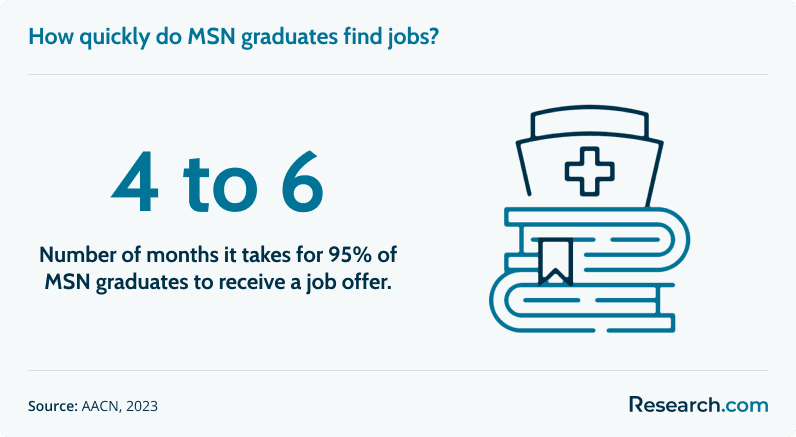
Graduates may also use their MSN preparation in public health, nursing education, clinical leadership, advocacy, or research-support roles. The reported 95% job offer rate for MSN graduates within six months of completion suggests strong employer interest, though individual outcomes depend on location, experience, specialty fit, and licensure.
Clinical, education, and policy pathways
- Women’s health clinic provider: Delivers preventive, gynecologic, reproductive, and primary care services.
- OB/GYN practice provider: Works alongside physicians, nurses, and other clinicians in specialty care settings.
- Outpatient care provider: Supports accessible women’s health services in community or ambulatory environments.
- Nursing educator or clinical instructor: Helps prepare future nurses, often with additional teaching experience or credentials.
- Public health or advocacy professional: Uses clinical insight to support maternal health, reproductive health, access to care, and policy initiatives.
WHNPs interested in broader systems change may eventually consider policy-focused education. Research.com’s guide to the fastest online public policy degree programs can help nurses explore how policy training may complement clinical expertise.
Job Market Outlook for MSN Women’s Health Nurse Practitioner Graduates
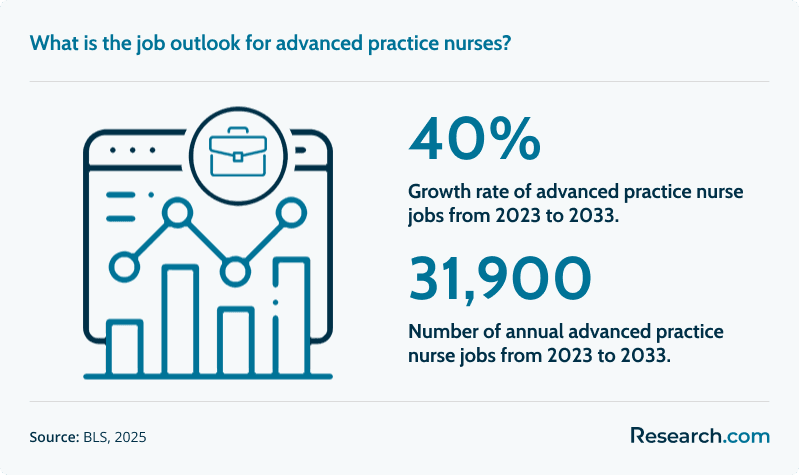
The job market for nurse practitioners remains strong. The U.S. Bureau of Labor Statistics projects 40% growth for nurse practitioner roles between 2023 and 2033, a rate that reflects continued demand for advanced practice clinicians across healthcare settings.
Several factors support demand for WHNPs, including the need for preventive care, reproductive healthcare, chronic condition management, and accessible outpatient services. However, job opportunities vary by state scope of practice, employer hiring patterns, local competition, and clinical experience.
Current trends affecting WHNP careers
- Telehealth: Virtual care has expanded access for some women’s health visits, although many assessments and procedures still require in-person care.
- Team-based care: WHNPs increasingly work in collaborative models with physicians, midwives, nurses, behavioral health professionals, and diagnostic specialists.
- Health equity focus: Employers may value clinicians who can serve rural, underserved, LGBTQ+, and culturally diverse populations.
- Emergency preparedness: Advanced practice nurses can contribute to public health response planning. Nurses interested in that intersection may also explore programs such as the accelerated online master's degree in emergency management.
Challenges to Consider Before Enrolling in an Online MSN WHNP Program
Online MSN WHNP programs can be flexible, but they are not low-effort programs. Students must manage graduate-level coursework, clinical hours, work obligations, family responsibilities, technology requirements, and professional documentation deadlines. The most serious challenge is often clinical coordination, especially if the school expects students to identify their own preceptors.
Students entering from accelerated pathways should also assess academic readiness carefully. Nurses who completed BSN accelerated programs may be well prepared, but they should still confirm whether they have enough RN experience, women’s health exposure, and advanced assessment readiness before starting a rigorous NP curriculum.
What Graduates Say About Online MSN Women’s Health NP Programs
- : "Before graduate school, I often felt limited when patients needed care that challenged outdated assumptions. The program gave me the research base and clinical language to advocate more effectively. Because I studied online, I kept working in the clinic and applied new concepts almost immediately. Now I practice with more confidence because evidence guides the conversation. — Samira"
- : "I was unsure whether an online program could really prepare me for advanced clinical work. The coursework was demanding, and the placement support made a major difference. My preceptor expected a lot from me, which helped me enter my first WHNP role with stronger hands-on skills. — Linnea"
- : "I wanted training that would help me care respectfully for transgender and non-binary patients. The content on gender-affirming care was current, practical, and affirming. Studying online also connected me with classmates in other regions who cared about the same issues. That network still influences how I practice today. — Ren"
Key Findings
- Most online MSN WHNP programs take 24 to 36 months, with clinical placement timing often determining whether students finish on schedule.
- Program costs can range from about $26,000 to over $65,000, so applicants should compare total costs rather than tuition alone.
- Accreditation from CCNE or ACEN should be treated as a non-negotiable requirement.
- The national first-time pass rate for the WHNP certification exam reached 79% in 2024, making certification outcomes an important program quality signal.
- The U.S. Bureau of Labor Statistics projects 40% growth for nurse practitioner roles between 2023 and 2033, but local demand varies by state and employer.
- Clinical placement support is one of the most important differences among online WHNP programs.
How Can I Move from RN to an MSN Women’s Health NP Program More Efficiently?
If you are an RN without a BSN, your first step is usually completing an accredited BSN pathway before applying to most MSN WHNP programs. Nurses with an ADN may consider options such as the easiest RN to BSN degrees as a bridge toward graduate study, while still checking accreditation, transfer credit policies, clinical requirements, and graduate school prerequisites.
To streamline the transition, choose a BSN pathway that accepts prior credits, fits your work schedule, and prepares you for graduate-level writing, assessment, research, and leadership coursework. If your long-term goal is women’s health advanced practice, seek RN experience in labor and delivery, maternity care, reproductive health, community health, or women’s health clinics before applying to MSN WHNP programs.
Key Insights
- Accreditation comes first: Do not apply until you verify that the program is properly accredited and appropriate for your state and certification goals.
- Clinical placement can make or break the experience: Ask exactly how placements work, who finds preceptors, and what support exists if a site falls through.
- Online does not mean fully remote: Expect in-person clinical hours and possibly campus intensives, even in distance-accessible programs.
- Cost should be evaluated as total investment: Include tuition, fees, travel, campus visits, certification costs, and potential lost income.
- WHNP is a specialized path: It is best for nurses committed to women’s health, reproductive health, preventive care, and related lifespan services.
- Experience matters: Applicants with relevant RN backgrounds are often better prepared for both admissions and clinical training.
References:
- American Association of Colleges of Nursing. (2023, October). Employment of New Nurse Graduates and Employer Preferences for Baccalaureate-Prepared Nurses. AACN Research Brief. Retrieved August 6, 2025, from AACN.
- American Association of Nurse Practitioners. (2022, November). NP Infographic. Retrieved August 6, 2025, from AANP.
- National Certification Corporation. (n.d.). Certification exam statistics. Retrieved August 6, 2025, from NCC.
- NSI Nursing Solutions, Inc. (2023). 2023 NSI National Health Care Retention & RN Staffing Report. Retrieved August 6, 2025, from NSI.
- Smiley, R. A., Allgeyer, R. L., Shobo, Y., Lyons, K. C., Letourneau, R., & Zhong, E. (2023). The 2022 National Nursing Workforce Survey. Journal of Nursing Regulation, 14(1), S1-S90. Retrieved August 6, 2025, from the Journal of Nursing Regulation.
- U.S. Bureau of Labor Statistics. (2025). Occupational Employment and Wages, May 2024: 29-1171 Nurse Practitioners. Retrieved August 6, 2025, from BLS.
- U.S. Bureau of Labor Statistics. (2025). Occupational Outlook Handbook: Nurse Anesthetists, Nurse Midwives, and Nurse Practitioners. Retrieved August 6, 2025, from BLS.
- ZipRecruiter. (2025). Women's Health Nurse Practitioner Salary. Retrieved August 6, 2025, from ZipRecruiter.
Other Things You Should Know About Online MSN Women's Health NP Programs
Yes, some states may restrict enrollment in online MSN Women's Health Nurse Practitioner programs due to state authorization agreements. It is important for students to verify if their state allows participation in these programs to ensure eligibility and compliance with state-specific regulations.
Most graduates pursue the National Certification Corporation’s Women’s Health Care Nurse Practitioner exam, which awards the WHNP-BC credential. Candidates must first earn an MSN or DNP from a women’s health NP program and meet NCC eligibility rules before sitting for the test.
In 2027, online MSN Women's Health Nurse Practitioner programs often offer clinical training opportunities through local partnerships with healthcare facilities, requiring approximately 600-700 supervised clinical hours to meet licensing requirements. These experiences ensure practical, hands-on learning in women's health settings.


