2027 Fastest Online Adult-Gerontology PCNP Graduate Certificate Programs

Co-Founder and Chief Data Scientist
As a career and education expert focused on advanced nursing pathways, I understand the drive to transition into an Adult-Gerontology Primary Care Nurse Practitioner role efficiently. The search for the fastest online certificate programs in the USA, however, presents a significant challenge.
You are often met with a barrage of marketing claims rather than clear data. Distinguishing advertised program lengths from actual completion times and verifying essential details like clinical placement support can be a formidable task. My purpose here is to cut through that noise, providing a factual framework to help you identify high-quality, genuinely accelerated programs for your career advancement.
What are the benefits of getting an online graduate certificate in Adult-Gerontology PCNP?
- Career Advancement: Provides the direct pathway for a Master's-prepared RN to become a licensed and certified Nurse Practitioner, an advanced practice provider role.
- Significant Earning Potential: AG-PCNPs command higher salaries than RNs, with national averages often exceeding $120,000 annually.
- Flexible Learning: Allows currently working nurses to pursue advanced education without pausing their careers, fitting coursework around work and family commitments.
What can I expect from an online graduate certificate program in Adult-Gerontology PCNP?
- Focused Advanced Topics: Features an intensive curriculum on advanced pharmacology, pathophysiology, advanced health assessment, and management of complex health conditions.
- Structured Clinical Curriculum: Combines online coursework with extensive, supervised clinical practicum hours (often 500–600+) in real-world healthcare settings.
- Applied Clinical Reasoning: Emphasizes diagnostic reasoning, evidence-based practice, and developing treatment plans for acute and chronic illnesses.
- Condensed Timeline: Programs are designed for rapid completion, typically allowing full-time students to finish in 12 to 24 months.
- Clinical Placement Support: Many programs offer assistance or direct placement services to help students secure the required preceptors and clinical sites.
Where can I work with an online graduate certificate in Adult-Gerontology PCNP?
- Primary Care Clinics: Serve as a primary care provider, managing a panel of adult and older adult patients in private practices or large medical groups.
- Long-Term Care Facilities: Provide and direct clinical care for residents in skilled nursing facilities, nursing homes, and assisted living centers.
- Hospital-Based Practices: Work in internal medicine departments, specialty outpatient clinics (e.g., cardiology, oncology, endocrinology), or as part of a hospitalist team.
- Community Health Centers: Deliver essential primary care services to diverse and often underserved populations in community or federally qualified health centers.
- Home Health and Palliative Care: Manage the care of homebound patients or provide symptom management and quality-of-life care for patients with serious illnesses.
How much can I make with an online graduate certificate in Adult-Gerontology PCNP?
- Entry-Level NP Roles: New graduates transitioning from RN positions expect starting salaries from $105,000 to $120,000 annually.
- Experienced NP Roles: With a few years of experience, AG-PCNPs working in clinics and hospitals often earn salaries ranging from $120,000 to $140,000.
- Senior & Specialized Roles: NPs in high-demand specialties (like cardiology), management positions, or high-cost-of-living areas can command salaries exceeding $145,000.
- Fastest Online Adult-Gerontology PCNP Graduate Certificate Programs for 2027 List of Programs
- What is the average cost of an online Adult-Gerontology PCNP graduate certificate? Average Cost
- What are the financial aid options for an online Adult-Gerontology PCNP graduate certificate? Financial Aid
- What are the prerequisites for enrolling in an online Adult-Gerontology PCNP graduate certificate program? What are the prerequisites for enrolling in an online Adult-Gerontology PCNP graduate certificate program?
- What courses are typically in an online Adult-Gerontology PCNP graduate certificate program? What courses are typically in an online Adult-Gerontology PCNP graduate certificate program?
- What types of specializations are available for Adult-Gerontology PCNP graduates? Specializations
- How do you choose the best among the fastest online Adult-Gerontology PCNP graduate certificate programs? How do you choose the best among the fastest online Adult-Gerontology PCNP graduate certificate programs?
- What career paths are available for graduates of online Adult-Gerontology PCNP graduate certificate programs? Career Paths
- How much can I earn with an online Adult-Gerontology PCNP graduate certificate? Salaries
- What is the job market like for graduates of an online Adult-Gerontology PCNP graduate certificate? Job Market
- What are some current and future trends in adult-gerontology primary care? What are some current and future trends in adult-gerontology primary care?
- How can additional nursing education pathways accelerate my career progression? How can additional nursing education pathways accelerate my career progression?
- How can I verify the academic quality and accreditation of an online AG-PCNP certificate program? How can I verify the academic quality and accreditation of an online AG-PCNP certificate program?
- Should I explore a DNP program as a next step? Should I explore a DNP program as a next step?
Fastest Online Adult-Gerontology PCNP Graduate Certificate Programs for 2027
If you already hold an MSN or DNP and want to add adult-gerontology primary care nurse practitioner preparation without completing another full degree, an online AG-PCNP graduate certificate can be a focused route. These programs are built for licensed nurses who need advanced primary care coursework, supervised clinical practice, and eligibility for national certification in adult-gerontology primary care. The fastest options can help experienced nurses move into NP practice sooner, but speed should never be the only factor. Accreditation, clinical placement support, state authorization, certification eligibility, and total cost matter just as much.
This guide explains how accelerated online Adult-Gerontology Primary Care Nurse Practitioner certificate programs work, what they cost, what prerequisites they usually require, how to compare programs, and what career outcomes may follow. It is especially useful for MSN-prepared nurses comparing post-master’s NP certificates, including options similar in intensity and career focus to accelerated graduate certificate in nursing informatics online programs for nurses pursuing specialized roles.
// PREVIEW //
Quick answer: What is the fastest online AG-PCNP graduate certificate?
The fastest online Adult-Gerontology Primary Care Nurse Practitioner graduate certificates are post-MSN programs that compress specialty NP coursework and clinical requirements into a shorter timeline. Some programs in this list can be completed in about one year, while others take 14–20 months, about 21 months, or six semesters. The right “fastest” program is the one that is accredited, authorized in your state, supports your clinical placement needs, and prepares you for AG-PCNP certification through the appropriate national certifying body.
| Decision factor | Why it matters | What to ask before applying |
| Accreditation | Certification and licensure may depend on completing an accredited nursing program. | Is the program accredited by CCNE or another recognized nursing accreditor? |
| State authorization | Online NP programs may not enroll students in every state or meet every state’s APRN requirements. | Does this program meet licensure requirements where I live and where I will complete clinical hours? |
| Clinical placement model | Finding preceptors is often the biggest challenge for online NP students. | Does the school place students, assist with placement, or require students to secure their own sites? |
| Program pace | A shorter schedule can be efficient but demanding for working nurses. | Can I realistically complete coursework, clinical hours, and work obligations at this pace? |
| Total cost | Per-credit tuition does not include fees, travel, exams, books, or clinical compliance costs. | What is the full estimated cost from enrollment through certification exam preparation? |
How do we rank schools?
Because a graduate nursing certificate requires a meaningful investment of time, tuition, and clinical effort, our rankings are designed to help readers compare programs using transparent criteria. Our methodology draws from established education data sources, including:
- the IPEDS database
- Peterson's database, including the Distance Learning Licensed Data Set
- the College Scorecard database
- the National Center for Education Statistics
Use the list below as a starting point, not as a substitute for direct program verification. Before enrolling, confirm tuition, clinical policies, state eligibility, and certification alignment with the school. Readers comparing broader NP routes may also want to review accelerated nurse practitioner programs.
// PREVIEW //
1. Adelphi University
Adelphi University offers a Post-Master’s Certificate in Adult Gerontology Primary Care Nurse Practitioner for nurses who want to add AGPCNP preparation after graduate nursing study. The program is fully online and can be completed in six semesters. Students complete 14 courses covering areas such as health promotion and advanced pharmacology.
The certificate places students alongside master’s-level learners in second-year coursework, which can create a cohort-based experience while still maintaining smaller classes and faculty guidance. Clinical hours are built into the program so students can apply advanced assessment, diagnosis, treatment planning, and culturally responsive care in supervised settings.
This option may fit nurses seeking preparation for New York State licensure and national AGNP certification. It is best suited for applicants who want a structured post-MSN pathway rather than a self-directed certificate with minimal faculty interaction.
- Program Length: 6 semesters
- Tracks/Concentrations: Adult-Gerontology Primary Care NP (post‑MSN)
- Tuition Cost: $940/credit
- Required Credits to Graduate: 34
- Accreditation: Commission on Collegiate Nursing Education (CCNE)
2. University of Texas at Arlington
The University of Texas at Arlington offers a fully online Adult Gerontology Primary Care Nurse Practitioner Certificate for MSN-prepared nurses. The program begins with an individualized gap analysis, which means the exact plan of study depends on prior graduate coursework and clinical preparation.
The curriculum emphasizes health promotion, disease prevention, and management of minor acute conditions across the adult lifespan, from adolescence through end-of-life care. Graduates may pursue roles in settings such as ambulatory clinics, long-term care, multidisciplinary care teams, and correctional healthcare environments.
UTA may appeal to nurses who want multiple start dates and a flexible course sequence. Clinical work is completed with a licensed preceptor, and the graduate nursing department can provide placement assistance when needed.
- Program Length: As few as 5 courses
- Tracks/Concentrations: Adult-Gerontology Primary Care NP (post‑MSN)
- Tuition Cost: $654/credit hour
- Required Credits to Graduate: ~15 credits (5 courses x 3 credits)
- Accreditation: Commission on Collegiate Nursing Education (CCNE)
3. Drexel University
Drexel University provides an online Adult-Gerontology Primary Care Nurse Practitioner Post-Master's Certificate for nurses who already hold an MSN or DNP and want preparation for AG-PCNP certification. Coursework prepares students to diagnose and manage health concerns in young adult, adult, and aging populations.
The program combines lectures, problem-based learning, and clinical practice. Faculty from Drexel’s College of Nursing and Health Professions use technology-supported instruction, but students should note that the certificate includes required on-campus intensives during clinical courses. These in-person experiences help students strengthen role transition skills before practicing independently as NPs.
Clinical hours are completed with licensed physicians and advanced practice nurses in outpatient, specialty, and primary care settings. Students may identify and coordinate their own sites and preceptors, with departmental resources available to support the process.
- Program Length: ~1 year (part-time, four 10-week quarters per year)
- Tracks/Concentrations: Adult‑Gerontology Primary Care NP (post‑MSN)
- Tuition Cost: $1169/credit hour
- Required Credits to Graduate: 34 credits
- Accreditation: Commission on Collegiate Nursing Education (CCNE)
4. Purdue University Global
Purdue University Global offers a 100% online Adult-Gerontology Primary Care Nurse Practitioner Postgraduate Certificate for nurses with an MSN. The program is designed to prepare graduates for national certification through either the ANCC or AANP.
Students study diagnosis, treatment, and management of acute and chronic conditions while developing the clinical judgment needed to work within interprofessional healthcare teams. Clinical practice sessions allow students to apply classroom concepts with a qualified preceptor in approved practice environments.
This certificate is not available in every state, so applicants should review state-specific licensure and authorization information before applying. Admission requires a master’s degree with an upper-level major in nursing and an approved criminal background check.
- Program Length: 1.5 years
- Tracks/Concentrations: Adult‑Gerontology Primary Care NP (post‑MSN)
- Tuition Cost: $420/credit
- Required Credits to Graduate: 57 quarter credits
- Accreditation: Higher Learning Commission (HLC)
5. Morningside University
Morningside University offers a fully online Post-Master’s Certificate in Adult Gerontology Primary Care Nurse Practitioner for MSN-prepared nurses seeking adult-gerontology primary care preparation. The program blends didactic coursework with clinical experiences focused on adults and frail elderly patients.
Students participate in a three-day residency for advanced practice skills and a one-day residency connected to an evidence-based capstone project. Because the program uses a GAP analysis, each student’s course plan is determined by previous graduate nursing preparation and clinical background.
This certificate is intended to help graduates meet eligibility requirements for national certification, though state APRN licensure must be obtained separately. It may be a strong fit for nurses who want an online format but can accommodate short residency requirements.
- Program Length: Not specified (self-paced, post-MSN)
- Tracks/Concentrations: Adult-Gerontology Primary Care NP (post‑MSN)
- Tuition Cost: $655/credit
- Required Credits to Graduate: 35
- Accreditation: Commission on Collegiate Nursing Education (CCNE)
6. Spring Arbor University
Spring Arbor University offers an online Post-Master’s Certificate in Adult-Gerontology Primary Care Nurse Practitioner with a faith-based academic model. The program can be completed in as few as 14-20 months and uses a 7-1-7 format, giving students a week off between courses.
The curriculum focuses on primary care knowledge, adult-gerontology clinical reasoning, and preparation for the AGPC certification exam. The program is designed for working nurses who need an organized pace but want a faster path than a traditional degree sequence.
Spring Arbor also incorporates Christ-centered learning, with attention to personal, professional, and spiritual development. The program states that only 7% of nurse practitioners are certified in adult-gerontology, a point prospective students should interpret as one indicator of specialization rather than a guarantee of employment outcomes.
- Program Length: 14–20 months (individualized plans)
- Tracks/Concentrations: Adult-Gerontology Primary Care NP (post‑MSN)
- Tuition Cost: $797/credit
- Required Credits to Graduate: 18 credits
- Accreditation: Commission on Collegiate Nursing Education (CCNE)
7. George Washington University
George Washington University offers an online Post-Master’s Certificate in Adult-Gerontology Primary Care Nurse Practitioner for nurses who already hold an MSN and want advanced practice credentials. The certificate combines online coursework with didactic and clinical experiences centered on primary care for patients, families, and communities from adolescence through adulthood.
Students must attend a Clinical Learning and Skills Intensive before beginning clinical courses. During this experience, learners practice head-to-toe history-taking and physical assessment with standardized patients. The program also includes Objective Structured Clinical Examinations, or OSCEs, where faculty evaluate clinical skills in simulation-based scenarios.
This option may fit nurses who want structured skills assessment, faculty coaching, and networking opportunities alongside online coursework. Graduates may pursue primary care roles, including work in home health and long-term care settings.
- Program Length: About 21 months
- Tracks/Concentrations: Adult‑Gerontology Primary Care NP (post‑MSN)
- Total Tuition Cost: $27,710
- Required Credits to Graduate: 20 credits
- Accreditation: Commission on Collegiate Nursing Education (CCNE)
8. University of Colorado – Anschutz Medical Campus
The University of Colorado's Anschutz Medical Campus offers a hybrid online post-graduate certificate in Adult-Gerontology Primary Care Nurse Practitioner. The program prepares nurses to care for patients from the teenage years through older adulthood, with an emphasis on prevention, education, and primary care management.
Students complete 540 clinical hours. A major advantage for eligible students is that the university arranges clinical placements in the Denver and Aurora metro areas, which can reduce one of the biggest logistical challenges in online NP education.
The curriculum includes advanced coursework in health promotion, disease prevention, and clinical skills taught by locally and nationally recognized faculty. Graduates may take either the American Academy of Nurse Practitioners Certification Board exam or the American Nurses Credentialing Center exam. After passing the exam, graduates become eligible for licensure in all 50 states and may work as independent providers in approved practice settings.
- Program Length: 1.5 years (Hybrid online)
- Tracks/Concentrations: Adult‑Gerontology Primary Care NP (post‑MSN)
- Total Tuition Cost: Colorado residents: $20,025; Eligible western state residents: $20,025; Non‑residents: $32,450
- Required Credits to Graduate: 25 credits
- Accreditation: Commission on Collegiate Nursing Education (CCNE)
9. University of Colorado Colorado Springs (UCCS)
The University of Colorado Colorado Springs offers a 100% online Post-Master’s Nurse Practitioner Certificate with an Adult/Gerontology focus. The program is designed for registered nurses who want preparation for national certification in a selected specialty area.
Students build on previous master’s-level nursing education and may choose specialty tracks such as Family Nurse Practitioner, Adult Gerontology, or Psychiatric Mental Health. The online format includes synchronous and asynchronous learning, plus videos, group discussions, case-based instruction, and simulation activities.
The certificate requires 630 clinical hours. UCCS provides oversight and guidance for clinical placement, but students are ultimately responsible for identifying and securing their own preceptors. This distinction is important for applicants who live outside established clinical networks.
- Program Length: Semester-based (typical pace)
- Tracks/Concentrations: Adult/Gerontology NP (post‑MSN)
- Tuition Cost: $837 (in‑state), $939 (out‑of‑state) per credit
- Required Credits to Graduate: 25 credits
- Accreditation: Commission on Collegiate Nursing Education (CCNE)
10. University of Colorado – Colorado Springs (Herzing University)
Herzing University offers a fully online Post-Master’s Certificate in Adult Gerontology Primary Care Nurse Practitioner for MSN-prepared nurses. The program is delivered 100% online and allows experienced registered nurses with a master’s degree to complete specialty coursework and clinical requirements for AGPCNP certification eligibility.
Coursework covers advanced pathophysiology, pharmacology, health promotion, diagnostics, and adult-gerontology specialty content. Students complete 540 clinical practicum hours. Herzing’s Clinical Guidance Process is designed to support students in locating preceptors when assistance is needed.
The program is built for working nurses and takes approximately 20 months to complete. Herzing offers rolling enrollment, virtual academic advising, career coaching, and faith-based support services. Graduates may sit for AANP or ANCC national certification exams and pursue primary care provider roles across the adult lifespan.
- Program Length: Approximately 20 months
- Tracks/Concentrations: Adult Gerontology Primary Care NP (post‑MSN certificate)
- Tuition Cost: $770/credit hour
- Required Credits to Graduate: 33 credits
- Accreditation: Commission on Collegiate Nursing Education (CCNE) and Higher Learning Commission
What is the average cost of an online Adult-Gerontology PCNP graduate certificate?
Online AG-PCNP graduate certificate costs vary widely because schools use different credit requirements, tuition models, residency rules, and clinical support structures. Most programs charge by the credit, so the final price depends on both the per-credit rate and the number of credits required after any gap analysis.
| Cost category | What to expect | Why it can change your total price |
| Total program tuition | Program tuition can range from approximately $15,000 to over $35,000. | Shorter programs are not always cheaper if the per-credit rate is high. |
| Per-credit tuition | Many programs fall between $500 and $1,200 per credit hour. | Private universities may sit closer to the upper end of this range. |
| University fees | Technology, online course, and student service fees may add several hundred to a few thousand dollars. | Fees are often excluded from headline tuition rates. |
| Clinical placement costs | Some schools charge for clinical coordination or placement management. | Placement support can be valuable, but it may increase direct costs. |
| Other expenses | Books, software, background checks, liability insurance, immunizations, travel, and immersion costs may apply. | Students in hybrid or residency-based programs should budget for travel and lodging. |
Before comparing programs, calculate the full cost of attendance rather than relying only on tuition. Ask each school for a written estimate that includes fees, required campus visits, clinical compliance expenses, and certification exam preparation costs.
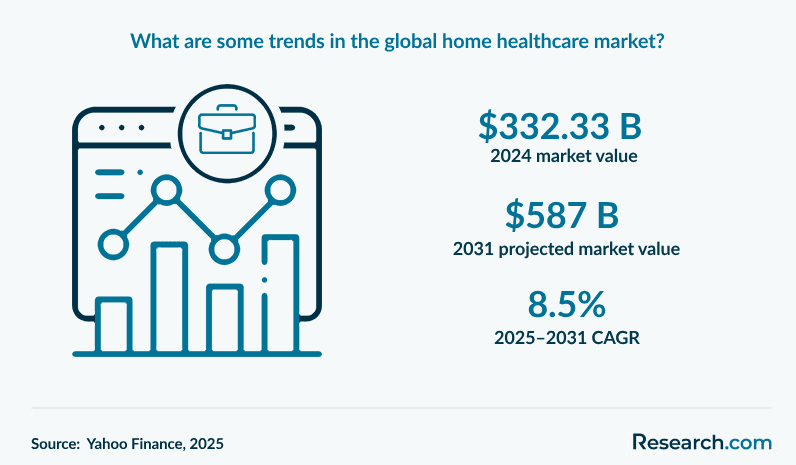
Healthcare labor demand and the growth of home-based care may support long-term opportunities for AG-PCNP graduates, but salary outcomes are not guaranteed. One market projection cited in the source material estimates that the global home healthcare market may grow from US$332.33 billion in 2024 to US$ 587 billion by 2031, with a compound annual growth rate (CAGR) of 8.5%. This broader shift also affects advanced nursing pathways such as accelerated rn to bsn msn online programs.
Home-based care is attractive to many health systems because care delivered at home can be over 30% cheaper than hospital stays. That cost difference can encourage greater use of home health services for chronic disease management and healthy aging.
Technology is also changing the economics and delivery of adult-gerontology care. Telemedicine, remote patient monitoring, and artificial intelligence tools can help clinicians monitor chronic conditions, coordinate care, and improve access, particularly for patients who struggle to travel to clinics. Skilled nursing care and respiratory disease support remain important service segments in the home healthcare market.
What are the financial aid options for an online Adult-Gerontology PCNP graduate certificate?
Post-graduate certificate students may still qualify for several funding sources, but eligibility depends on the school, enrollment level, program approval status, and the type of aid. Nurses who previously completed graduate pathways such as RN to MSN programs should confirm whether additional certificate enrollment qualifies for federal, employer, or institutional assistance.
- Federal Student Aid: Students enrolled at least half-time in an eligible certificate program may be able to use federal Direct Unsubsidized Loans or Grad PLUS Loans after completing the FAFSA.
- Employer Tuition Reimbursement: Hospitals, clinics, and healthcare systems may reimburse part of the cost when advanced education supports staffing needs or clinical service expansion.
- Private Loans: Banks, credit unions, and private lenders may offer student loans, though these often have fewer borrower protections than federal loans.
- Scholarships and Grants: Schools of nursing, professional associations, and healthcare foundations may provide awards for graduate nursing or NP students.
- Loan Forgiveness Programs: Options such as the Nurse Corps Loan Repayment Program may reduce debt for nurses who commit to working in approved critical shortage facilities for a required period.
A practical funding plan should start with the FAFSA, an employer benefits review, and a conversation with the school’s financial aid office. Ask whether certificate students are eligible for scholarships, how half-time status is defined, and whether clinical or residency expenses can be included in the cost of attendance.
What are the prerequisites for enrolling in an online Adult-Gerontology PCNP graduate certificate program?
AG-PCNP graduate certificates are not entry-level nursing programs. They are designed for nurses who already have graduate-level nursing preparation and are ready to add a population-focused NP specialty. Admissions requirements vary, but most schools evaluate academic history, licensure, clinical background, and prerequisite coursework.
- Graduate Nursing Degree: Applicants typically need an MSN or DNP from an accredited institution.
- Active RN License: A current, unencumbered RN license is usually required in the state where the student will complete clinical experiences.
- Clinical Experience: Many programs expect one to two years of full-time RN clinical experience, sometimes in adult care, medical-surgical nursing, or a related setting.
- Minimum GPA: Programs commonly require a graduate nursing GPA of 3.0 or higher on a 4.0 scale.
- Prerequisite Coursework: Some schools require prior graduate courses in advanced pathophysiology, advanced pharmacology, and advanced physical assessment.
Because these certificates build on graduate nursing education, admissions standards can resemble or exceed those used by online nurse practitioner programs. Always compare the school’s published requirements with your transcript before applying, especially if your MSN was completed several years ago or in a non-NP specialty.
What courses are typically in an online Adult-Gerontology PCNP graduate certificate program?
An AG-PCNP certificate focuses on primary care for adults across the lifespan, including older adults with complex chronic conditions. Students who have already explored how to become an adult gerontology nurse practitioner will recognize that the curriculum must combine advanced theory, diagnosis, pharmacology, role preparation, and supervised patient care.
| Common course or requirement | What students usually learn | Why it matters for practice |
| Advanced Pharmacology for AG-PCNP | Medication selection, therapeutic monitoring, and treatment planning for common acute and chronic adult conditions. | Prescribing safely is central to NP practice. |
| Advanced Health and Physical Assessment | Comprehensive assessment, diagnostic reasoning, and recognition of normal and abnormal findings in adults and older adults. | Strong assessment skills support accurate diagnosis and triage. |
| Primary Care of Adults | Management of episodic and chronic health problems commonly seen in adult primary care. | AG-PCNPs often serve as ongoing primary care providers. |
| Primary Care of Older Adults | Geriatric syndromes, frailty, polypharmacy, prevention, and chronic disease management in aging patients. | Older adults often require coordinated, individualized care. |
| Role of the Advanced Practice Nurse | Scope of practice, ethical duties, legal responsibilities, billing basics, and collaboration. | Students must understand the responsibilities that come with APRN practice. |
| Supervised Clinical Practicum | Application of classroom learning in approved primary care settings under supervision. | Programs commonly require 500–600+ supervised clinical hours for practice preparation. |
The strongest curricula connect course content directly to certification competencies and clinical performance. When evaluating programs, ask how clinical hours are distributed, which patient populations qualify, and whether simulation or campus intensives are required.
What types of specializations are available for Adult-Gerontology PCNP graduates?
Adult-gerontology primary care is already a specialty, but many AG-PCNPs develop deeper expertise after certification through clinical practice, continuing education, employer training, or additional credentials. These focus areas can help nurses align their practice with specific patient needs or care settings.
- Cardiology: Care for adults with hypertension, coronary artery disease, heart failure, and related cardiovascular conditions.
- Oncology: Support adult cancer patients through primary care coordination, symptom management, survivorship care, and outpatient follow-up.
- Palliative and Hospice Care: Manage symptoms, support quality of life, and coordinate care for patients with serious or life-limiting illness.
- Endocrinology: Work with patients who have diabetes, thyroid disease, and other metabolic disorders.
- Rural Health: Provide broad primary care services in communities with limited access to physicians and specialty providers.
Subspecialization can increase professional focus, but it does not eliminate the need to understand state scope of practice, employer privileging, and continuing education requirements. The idea is similar to how specialized programs such as an accelerated online master's degree in sports analytics build niche expertise for a specific professional environment.
How do you choose the best among the fastest online Adult-Gerontology PCNP graduate certificate programs?
The best online AG-PCNP certificate is not necessarily the one with the shortest advertised completion time. A program should match your state licensure needs, budget, work schedule, clinical placement reality, and certification goals. Speed only helps if the program also prepares you to complete clinical hours, graduate on time, and sit for the correct exam.
- Confirm accreditation: Look for nursing program accreditation from the Commission on Collegiate Nursing Education (CCNE) or ACEN when applicable. Accreditation is often necessary for certification and licensure. More broadly, accredited online degree programs in the USA must periodically renew their accreditation.
- Check state eligibility before applying: Ask whether the school can enroll students in your state and whether the program meets APRN requirements where you intend to practice.
- Evaluate clinical placement support: Find out whether the school arranges placements, provides leads, approves student-found sites, or leaves most of the search to you.
- Request outcomes data: Ask for graduation rates, certification exam pass rates for ANCC or AANP, and employment outcomes when available.
- Assess faculty access: Strong programs should offer responsive faculty, clinically experienced instructors, and support during role transition.
- Compare learning formats: Decide whether live online sessions, asynchronous modules, campus intensives, and simulation requirements fit your schedule.
| If your priority is... | Look for... | Be careful about... |
| Finishing quickly | Clear course sequencing, frequent start dates, and realistic clinical timelines. | Programs that are fast on paper but difficult to complete because of preceptor delays. |
| Keeping costs low | Lower per-credit tuition, fewer required credits after gap analysis, and limited travel. | Hidden fees, unpaid time away from work, and required campus visits. |
| Strong clinical support | School-arranged placements or a well-defined clinical guidance process. | Policies that make students fully responsible for finding preceptors without support. |
| Certification preparation | Curriculum mapped to AG-PCNP competencies and exam readiness resources. | Programs that do not publish clear certification eligibility information. |
| Working while enrolled | Part-time options, asynchronous coursework, and predictable clinical scheduling. | Compressed tracks that assume major reductions in work hours. |
Before committing, speak with admissions, a program faculty member, financial aid, and ideally an enrolled student or graduate. Ask specific questions and save written responses, especially about licensure, clinical placement, and total cost.
What career paths are available for graduates of online Adult-Gerontology PCNP graduate certificate programs?
Graduates of online AG-PCNP graduate certificates may pursue advanced primary care roles serving adolescents, adults, and older adults. After meeting certification and state licensure requirements, AG-PCNPs may diagnose illness, prescribe medications where authorized, manage chronic conditions, order and interpret tests, and coordinate long-term care.
- Private Practice Provider: Work in physician offices or NP-led primary care practices.
- Hospital-Based Clinician: Serve in internal medicine, hospitalist support, or specialty clinic roles.
- Long-Term Care Provider: Manage complex needs in skilled nursing facilities, assisted living settings, or rehabilitation environments.
- Community Health Center Clinician: Provide primary care in underserved communities and public health settings.
- Home Health and Palliative Care Specialist: Support homebound or seriously ill adults through symptom management, care planning, and quality-of-life services.
Labor data suggest that nurse practitioner employment is concentrated in outpatient and clinic-based environments. Similar to applied fields such as top online management information systems degree programs, career outcomes often depend on whether the graduate can demonstrate practical, role-ready skills.
Based on 2023 employment data from the U.S. Bureau of Labor Statistics, offices of physicians are the largest employer of nurse practitioners, with 122,830 positions. General medical and surgical hospitals employ 58,080 nurse practitioners, which is less than half the number employed by physician offices.
Other major employers include outpatient care centers with 23,760 jobs, offices of other health practitioners with 10,950 jobs, and home health care services with 7,460 jobs. The pattern is clear: many NP jobs are tied to outpatient, ambulatory, and clinic-based care rather than traditional inpatient units.
The graph below illustrates how nurse practitioner employment is centered heavily in physicians' offices and other non-inpatient care settings. For AG-PCNP students, that makes clinical preparation in primary care and ambulatory settings especially important.
How much can I earn with an online Adult-Gerontology PCNP graduate certificate?
AG-PCNP earning potential depends on state, employer type, scope of practice, experience, specialty focus, and local demand. A post-graduate certificate can qualify an MSN-prepared nurse for advanced practice roles, but it does not guarantee a specific salary. For broader context, readers can compare NP earnings with other Gerontology salary paths.
- National Average: According to the U.S. Bureau of Labor Statistics, the median annual salary for nurse practitioners was $128,490 as of May 2023.
- Geographic Location: Pay often differs by region, demand, cost of living, and state practice environment, with examples including California, New Jersey, and Washington.
- Work Setting: Outpatient care centers and hospitals may offer different compensation than educational or office-based roles.
- Years of Experience: Clinical expertise, leadership duties, specialty experience, and employer type can influence pay over time.
When evaluating return on investment, compare expected earnings with tuition, fees, lost work hours, loan interest, certification costs, and the time needed to complete clinical requirements.
The salary data summarized in the source material show a broad healthcare compensation range, from $37,000 for a certified nurse assistant (CNA) to $135,161 for a pediatric nurse practitioner. Caregivers and patient care technicians are shown between $38,000 and $41,000, while licensed practical and vocational nurses (LPNs/LVNs) are listed in the $54,000-$58,000 range.
Registered nurses (RNs), occupational therapists (OTs), and physical therapists (PTs) appear in the $74,500 to $83,000 range. Advanced roles such as clinical practitioner and assistant nurse practitioner are listed from $126,034 to $127,682.
The adult-gerontology nurse practitioner data in the source material show a non-linear pattern: $89,566 at the entry level, $106,197 in early career, $95,501 for experienced professionals, and $82,200 for late-career professionals. Because that trajectory is unusual, applicants should treat it as one dataset rather than a universal career forecast.
Overall, the data support a common labor-market pattern: higher education, licensure, and specialization are often associated with higher earning potential. However, individual outcomes depend on many factors, including employer, state, experience, clinical specialty, and negotiation.
What is the job market like for graduates of an online Adult-Gerontology PCNP graduate certificate?
The job market for AG-PCNP graduates is shaped by primary care access needs, an aging population, chronic disease management, and expanded use of advanced practice providers. Demand may be strong, but graduates still need certification, licensure, clinical readiness, and state-specific authorization to practice.
- Overall NP Growth: The U.S. Bureau of Labor Statistics forecasts a 45% increase in NP employment between 2022 and 2032, much faster than average for all occupations.
- Aging Population: More older adults means greater need for clinicians skilled in chronic disease management, prevention, medication review, and care coordination.
- Physician Shortages: NPs are increasingly used to expand access to primary care, particularly in rural and underserved communities.
- Focus on Preventive Care: Health systems continue to emphasize prevention, population health, and earlier intervention.
- Expanding Scope of Practice: In some states, broader NP practice authority can increase autonomy and employment flexibility.
In 2024, the median pay for nurse anesthetists, nurse midwives, and nurse practitioners was $132,050 per year, or $63.48 per hour. The typical entry-level education for these advanced roles is a master's degree. In 2023, there were 349,600 jobs in the United States for this occupational group.
The occupational outlook from 2023 to 2033 projects 40% growth, categorized as much faster than average. That projection represents an employment change of 141,200 new jobs over the decade.
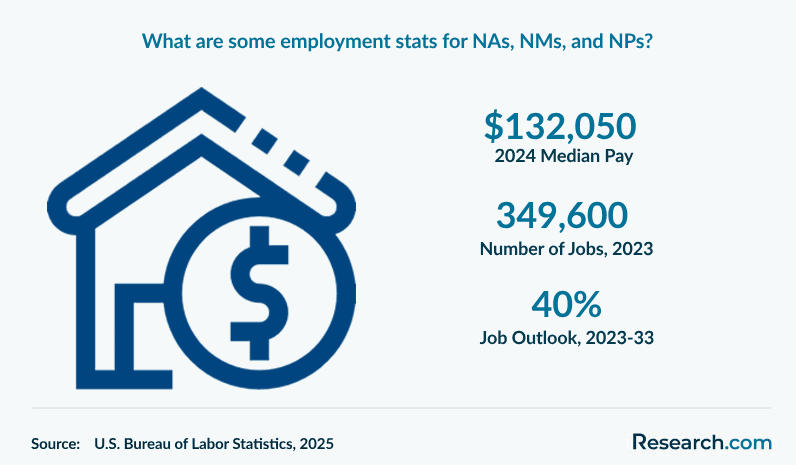
High median pay and rapid projected growth indicate strong demand for advanced practice nurses. Still, AG-PCNP graduates should evaluate local market conditions, state scope of practice, and employer requirements before assuming a specific job outcome.
What are some current and future trends in adult-gerontology primary care?
Adult-gerontology primary care is changing as healthcare systems adjust to older populations, chronic disease burden, technology-enabled care, and value-based payment models. AG-PCNPs who stay current with clinical tools and care models may be better positioned for long-term practice.
- Telehealth Integration: Virtual care is now common for follow-ups, medication management, chronic condition monitoring, and some behavioral health needs.
- Value-Based Care Models: Employers increasingly focus on outcomes, prevention, readmission reduction, and patient experience rather than only visit volume.
- Focus on Social Determinants of Health: Primary care teams increasingly consider housing, food access, income, transportation, and community supports when planning care.
- Interprofessional Collaboration: AG-PCNPs often work with physicians, pharmacists, social workers, therapists, care managers, and family caregivers.
- Genomics and Personalized Medicine: Pharmacogenomics and genetic screening may support more individualized treatment decisions as these tools become more integrated into practice.
Population aging is one of the strongest forces behind demand for adult-gerontology care. In 2020, the number of people aged 60 and older outnumbered children younger than five years old. The proportion of the global population over 60 is projected to nearly double from 12% in 2015 to 22% by 2050.
In absolute terms, the population aged 60 and older is expected to rise from 1 billion in 2020 to 1.4 billion by 2030 and to double to 2.1 billion by 2050. The number of people aged 80 or older is projected to triple, reaching 426 million. Although population aging began earlier in high-income countries, 80% of the world's older population is expected to live in low- and middle-income nations by 2050.
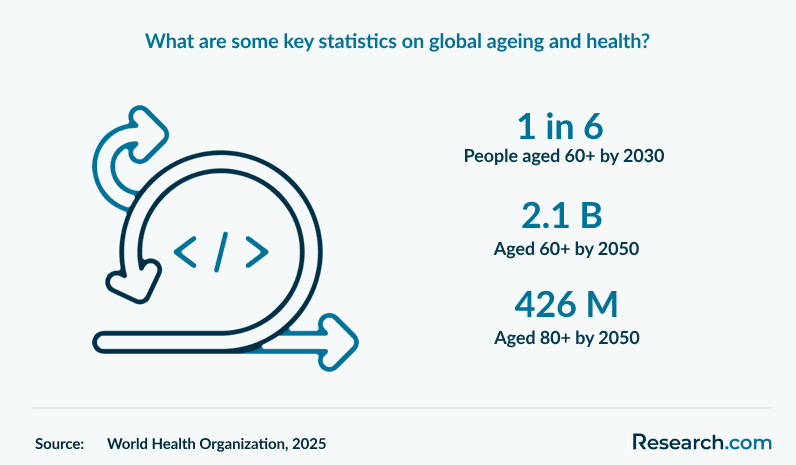
These demographic shifts will place pressure on health and social systems. For AG-PCNPs, the trend reinforces the importance of chronic disease management, prevention, geriatric assessment, home-based care, caregiver support, and interdisciplinary coordination.
How can additional nursing education pathways accelerate my career progression?
An AG-PCNP certificate can expand clinical scope for MSN-prepared nurses, but additional education may still make sense depending on your background and goals. Nurses who need to strengthen leadership, population health, informatics, research, or doctoral-level practice skills may benefit from a targeted academic pathway. For nurses earlier in their education journey, options such as the easiest RN to BSN program can help close foundational academic gaps before graduate-level specialization.
The key is sequencing. Do not pursue extra credentials only because they look impressive. Choose education that solves a specific career problem: meeting admission requirements, qualifying for APRN certification, moving into leadership, changing specialties, or preparing for doctoral study.
How can I verify the academic quality and accreditation of an online AG-PCNP certificate program?
Start by confirming institutional and nursing program accreditation directly through recognized accreditor databases and the school’s official program page. For nursing programs, look for accreditation from the Commission on Collegiate Nursing Education (CCNE) or the Accreditation Commission for Education in Nursing (ACEN), when applicable. Then verify that the program’s curriculum, clinical hours, and population focus align with AG-PCNP certification eligibility and your state’s APRN licensure requirements.
Academic quality also depends on faculty credentials, clinical partnerships, simulation resources, student support, retention, completion rates, and certification exam outcomes. Ask the program for current student outcome data and details about clinical placement processes. If you are comparing accelerated nursing education more broadly, you may also find useful context in online BSN accelerated programs.
Should I explore a DNP program as a next step?
A DNP may be a logical next step if your long-term goals include advanced clinical leadership, healthcare systems improvement, policy, executive roles, academic teaching, or practice innovation. An AG-PCNP certificate focuses on population-specific primary care preparation, while a DNP expands doctoral-level competencies in evidence-based practice, leadership, quality improvement, and systems thinking.
Before applying to a doctoral program, compare the opportunity cost with your career goals. Review program length, tuition, clinical immersion expectations, practicum flexibility, and whether your AG-PCNP coursework can support or transfer into the doctoral plan. Nurses seeking a faster doctoral pathway can compare options through the shortest DNP program online.
Common mistakes to avoid when choosing an online AG-PCNP certificate
- Choosing only by speed: A shorter program can become slower if clinical placement is difficult or the course load is unrealistic.
- Ignoring state authorization: Not every online NP program can enroll students in every state or meet every state’s APRN rules.
- Assuming clinical sites are guaranteed: Some schools provide placement support, while others expect students to find their own preceptors.
- Comparing tuition without fees: Residency travel, technology fees, books, background checks, insurance, and certification exams can change the true cost.
- Skipping certification verification: Confirm whether the program prepares graduates for the ANCC or AANP exam you intend to take.
- Relying only on rankings: A highly ranked program may still be a poor fit if it does not support your schedule, state, or clinical placement needs.
Questions to ask before enrolling
- Is the AG-PCNP certificate accredited and currently in good standing?
- Can the school enroll students from my state?
- Does the curriculum meet APRN licensure requirements where I plan to practice?
- Which national certification exams are graduates eligible to take?
- How many clinical hours are required, and in what settings?
- Who is responsible for finding preceptors?
- Are campus intensives, residencies, or OSCEs required?
- What is the full estimated cost, including fees and travel?
- What are the program’s graduation and certification exam pass rates?
- Can I complete the program while working my current schedule?
Here's What Graduates Say About Their Online Adult-Gerontology PCNP Graduate Certificate Programs
- Erica: "The accelerated structure helped me finish the certificate in 15 months and move into an AGNP position soon after. The pace was demanding, but it gave me a clear path to the next stage of my career."
- Alvin: "I kept working full time as an RN, so online flexibility made the difference. I could plan assignments around my shifts instead of stepping away from my income."
- Sonia: "The faculty support and clinical placement guidance made me feel prepared. By the time I reached certification review, I understood what the NP role would require in real practice."
Key Insights
- Fast online AG-PCNP certificates are designed for MSN- or DNP-prepared nurses who want adult-gerontology primary care NP preparation without completing another full graduate degree.
- The fastest program is not automatically the best program. Accreditation, state authorization, certification eligibility, clinical placement support, and total cost should drive the decision.
- Program lengths in this list range from about one year to six semesters, with some options taking 14–20 months, 1.5 years, about 21 months, or approximately 20 months.
- Clinical requirements are a major planning issue. Some programs require 540 clinical hours, 630 clinical hours, or 500–600+ supervised clinical hours, depending on the school and curriculum.
- Costs vary significantly. Total program tuition can range from approximately $15,000 to over $35,000, and per-credit tuition commonly falls between $500 and $1,200 per credit hour.
- Career opportunities are strongest in settings that need adult and older adult primary care, including physician offices, outpatient centers, long-term care, community health, home health, and palliative care.
- Salary and job outlook data are favorable for nurse practitioners overall, but individual earnings depend on state, employer, experience, scope of practice, and specialty focus.
- Before enrolling, get written answers about licensure alignment, clinical placement responsibility, required campus visits, total costs, and certification exam eligibility.
References
- Payscale. (2025, July 17). Adult-gerontology nurse practitioner (AGNP) salary. Payscale.
- Salary.com. (2025, July 1). Adult gerontology nurse practitioner (AGNP) salary in Seattle, WA. Salary.com.
- ZipRecruiter. (2025, July 17). Geriatric nurse practitioner salary. ZipRecruiter.
- U.S. Bureau of Labor Statistics. (2023, April 25). Nurse practitioners. In Occupational employment and wage statistics. U.S. Bureau of Labor Statistics.
- Yahoo Finance. (2025, April 24). Home healthcare market size is projected to reach US$ 587.00 billion by 2031, at 8.5% CAGR - The Insight Partners. Yahoo Finance.
- World Health Organization. (2025). Ageing and health. World Health Organization.
Other Things You Should Know About the Fastest Online Adult-Gerontology PCNP Graduate Certificates
Most programs require an active RN license, a BSN, and national NP certification if the certificate is for post-master’s study. Some also require one year of recent adult or gerontology nursing experience, a minimum GPA of 3.0, and current BLS or ACLS documentation.
In 2027, online Adult-Gerontology PCNP Graduate Certificate programs typically require 500 to 700 hours of supervised clinical practice. This experience is usually obtained at approved healthcare facilities, ensuring students gain necessary skills under professional supervision.