2027 How to Become an Adult Gerontology Nurse Practitioner (GNP)

Co-Founder and Chief Data Scientist
Becoming an Adult-Gerontology Nurse Practitioner is a major career decision: you are moving from registered nursing into advanced practice care for adults, older adults, and patients with complex chronic or acute conditions. The path requires graduate education, national certification, state APRN licensure, supervised clinical training, and ongoing professional development. This guide explains what AGNPs do, how to qualify in 2027, how primary care and acute care tracks differ, what salaries and job demand look like, and how to choose an education path that fits your goals, budget, and state practice requirements.
Quick answer: How do you become an Adult-Gerontology Nurse Practitioner?
To become an Adult-Gerontology Nurse Practitioner, you typically earn a BSN, pass the NCLEX-RN, obtain RN licensure, gain clinical nursing experience, complete an accredited MSN or DNP program with an adult-gerontology focus, pass a recognized certification exam, and apply for APRN licensure in your state. You must also meet continuing education and renewal requirements throughout your career.
Key things to know before choosing this career
- Degree path: Most candidates start with a Bachelor of Science in Nursing, then complete an MSN or DNP focused on adult-gerontology practice.
- RN license first: You must pass the NCLEX-RN and hold an active registered nurse license before pursuing advanced practice credentials.
- Graduate preparation: Adult-gerontology programs include advanced coursework and supervised clinical rotations with adult and older adult patients.
- Track choice matters: Primary care tracks usually emphasize ongoing outpatient care, prevention, and chronic disease management, while acute care tracks prepare students for urgent, complex, and hospital-based cases.
- Certification: Many AGNPs certify through bodies such as the American Nurses Credentialing Center or the American Association of Critical-Care Nurses, depending on their population focus and practice setting.
- State rules vary: APRN scope of practice, prescribing authority, collaborative agreement rules, and renewal requirements differ by state.
- Continuing education is not optional: AGNPs must keep up with clinical guidelines, medication changes, technology, ethics, and state board requirements.
- Core strengths: Strong assessment, diagnostic reasoning, communication, documentation, leadership, and patient advocacy skills are essential.
- Work settings differ: AGNPs may work in hospitals, clinics, specialty practices, long-term care facilities, community health settings, telehealth, academia, research, or administration.
- Compensation varies: Salaries depend on location, experience, specialty, employer type, and whether the role is primary care, acute care, leadership, or specialty-based.
- Demand is supported by demographics: Longer life expectancy and the need for chronic disease management continue to increase the need for clinicians trained in adult and geriatric care.
- Personal fit matters: Patience, emotional resilience, cultural humility, adaptability, and comfort with complex family conversations are especially important in this specialty.
- Steps to become an Adult-Gerontology Nurse Practitioner in 2027
- What Adult-Gerontology Nurse Practitioners do day to day
- Education requirements and graduate coursework
- Clinical, technical, and interpersonal skills AGNPs need
- Certification and APRN licensing process
- Ethical and legal responsibilities in AGNP practice
- Adult-Gerontology Nurse Practitioner salary expectations
- How to choose the right AGNP education pathway
- Job outlook and hiring market for AGNPs
- Technology, AI, and telehealth trends in AGNP work
- Networking and mentorship for career growth
- Continuing education options for AGNPs
- Subspecialties and advancement paths
- Healthcare policy changes that may affect AGNP careers
- Challenges, risks, and common mistakes to avoid
Steps to become an Adult-Gerontology Nurse Practitioner in 2027
The route to AGNP practice is structured, but students have several options depending on their current nursing background, timeline, and long-term goals. The most common path starts with RN preparation, moves into graduate education, and ends with certification and state APRN licensure.
- Earn a BSN or complete an approved nursing pathway: A BSN gives students a broad foundation in nursing science, clinical care, leadership, and population health.
- Pass the NCLEX-RN: This exam is required to become licensed as a registered nurse.
- Obtain RN licensure: Apply through your state board of nursing and maintain an active, unencumbered license.
- Build relevant clinical experience: Experience in medical-surgical nursing, critical care, primary care, geriatrics, rehabilitation, long-term care, emergency care, or specialty units can strengthen your graduate preparation.
- Choose an adult-gerontology graduate track: Select an MSN or DNP program aligned with either primary care or acute care practice.
- Complete advanced coursework and clinical hours: Graduate programs include advanced assessment, pharmacology, pathophysiology, evidence-based practice, and population-focused clinical rotations.
- Pass the appropriate certification exam: Certification validates your preparation for adult-gerontology advanced practice.
- Apply for APRN licensure: Submit the required documents to your state board, including education records, certification, background checks, and other state-specific materials.
- Maintain credentials: Complete continuing education, renew certification, and follow state practice requirements.
Students comparing advanced nursing with broader healthcare roles may also want to review high-paying public health career options, especially if they are weighing clinical practice against leadership, policy, or population health careers.
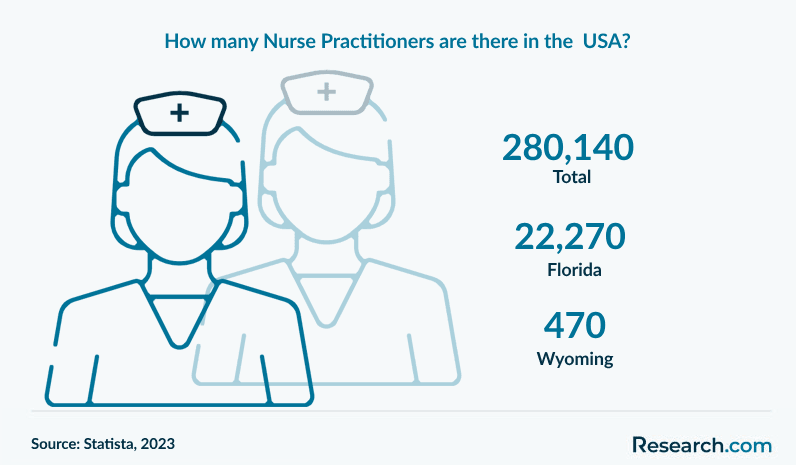
As of May 2023, about 280,140 nurse practitioners were employed in the United States. Florida reported the largest number, with 22,270 nurse practitioners, followed closely by California. Wyoming had the smallest number, with 470 nurse practitioners. These figures show that nurse practitioner employment is not evenly distributed across the country, so location can affect both job access and competition.
Primary care vs. acute care AGNP: which track should you choose?
| Decision point | Adult-Gerontology Primary Care | Adult-Gerontology Acute Care |
| Main patient need | Ongoing adult and older adult care, prevention, and chronic condition management | Rapid assessment and treatment of acute, complex, or unstable conditions |
| Common settings | Clinics, primary care offices, community health, long-term care, telehealth, specialty outpatient practices | Hospitals, intensive care, emergency-related services, specialty inpatient units, procedural or consult teams |
| Best fit for | Nurses who prefer long-term patient relationships and preventive care | Nurses who prefer high-acuity environments and fast clinical decision-making |
| Key caution | Do not assume this track prepares you for hospital-based acute care roles | Do not assume this track is the best match for routine primary care positions |
What Adult-Gerontology Nurse Practitioners do day to day
Adult-Gerontology Nurse Practitioners provide advanced care for adults across the lifespan, including older adults with multiple chronic conditions, functional changes, medication concerns, and complex care needs. Their exact responsibilities depend on state law, certification, employer policy, and practice setting.
- Assess patients: Review health histories, perform physical exams, evaluate symptoms, and order or interpret diagnostic information within scope of practice.
- Diagnose conditions: Use clinical findings, patient reports, exam results, and test data to identify adult and geriatric health problems.
- Create treatment plans: Develop individualized plans that may include medication, lifestyle changes, referrals, follow-up testing, therapy, or care coordination.
- Prescribe and manage medications: Select, monitor, adjust, and educate patients about medications according to state authority and clinical guidelines.
- Manage chronic illness: Support patients with conditions such as diabetes, hypertension, arthritis, cardiovascular disease, and other long-term health concerns.
- Educate patients and caregivers: Explain diagnoses, risk factors, medications, self-management strategies, preventive care, and warning signs that require follow-up.
- Coordinate interdisciplinary care: Work with physicians, nurses, pharmacists, therapists, social workers, specialists, and family caregivers.
- Track progress over time: Monitor outcomes, adjust care plans, and reassess patients when symptoms, function, or treatment response changes.
- Perform approved procedures: Depending on training and scope, AGNPs may provide services such as wound care or joint injections.
- Advocate for patients: Help patients access appropriate care, understand options, protect their rights, and maintain quality of life.
Students interested in patient-centered advanced practice may also compare this pathway with other NP specialties, such as the route described in Research.com's guide on becoming a functional medicine nurse practitioner.
Registered nurse shortages affect the larger healthcare workforce that AGNPs work within. California is projected to have the largest absolute nursing shortage, with a net deficit of 106,310 registered nurses. Georgia follows with a deficit of 34,800 RNs, Texas with 32,100 RNs, North Carolina with 31,350 RNs, and New Jersey with 24,450 RNs. These shortages can increase workload pressure, especially in states already facing high demand for patient care.
Education requirements and graduate coursework for Adult-Gerontology Nurse Practitioners in 2027
AGNP education builds from general nursing preparation into advanced adult and geriatric clinical practice. Prospective students should look beyond the degree title and confirm accreditation, clinical placement support, certification alignment, faculty expertise, and state eligibility.
Typical education sequence
| Stage | Purpose | What to verify |
| BSN or nursing entry pathway | Develops foundational nursing knowledge and prepares students for RN licensure | Program approval, clinical quality, NCLEX preparation, transfer credit rules |
| RN licensure | Authorizes practice as a registered nurse | State board requirements and license maintenance rules |
| Clinical RN experience | Builds patient care judgment before advanced practice training | Whether your target graduate program recommends or requires certain experience |
| MSN or DNP with adult-gerontology focus | Prepares graduates for AGNP certification and APRN licensure | Accreditation, clinical placements, certification pass preparation, state eligibility |
| Certification and APRN licensure | Confirms advanced practice readiness and legal authority to practice | Exam eligibility, state application steps, prescribing authority, renewal requirements |
Common foundational courses
- Anatomy and physiology: Covers body systems and normal function, which supports assessment and clinical reasoning.
- Microbiology: Explains microorganisms, infection processes, and related health implications.
- Chemistry: Provides background for understanding biological and pharmacological processes.
- Nutrition: Examines how diet, aging, disease, and health maintenance interact.
Core graduate courses
- Advanced pathophysiology: Focuses on disease mechanisms and how illness affects adult and older adult patients.
- Advanced pharmacology: Builds competence in medication selection, interactions, adverse effects, and monitoring.
- Advanced health assessment: Develops detailed exam, history-taking, and diagnostic evaluation skills.
- Adult-gerontology clinical management: Covers common and complex health concerns across adult and aging populations.
Helpful electives and specialized study
- Geriatric mental health: Helps clinicians recognize and manage behavioral and psychological needs in older adults. Nurses interested in this area may compare AGNP training with affordable online psychiatric nurse practitioner programs.
- Chronic disease management: Strengthens long-term care planning for patients with ongoing medical conditions.
- Community health: Connects individual care with prevention, access, social risk factors, and public health systems.
Clinical and research requirements
- Clinical practicum: Provides supervised experience with adult and older adult patient populations.
- Evidence-based practice or research methods: Teaches students how to evaluate research and apply findings to patient care.
- Healthcare ethics: Reviews professional duties, legal obligations, consent, privacy, equity, and patient rights.
A strong program should prepare you not only for graduation, but also for certification, state licensure, safe prescribing, clinical documentation, and the realities of working with medically complex adults.
Clinical, technical, and interpersonal skills AGNPs need
Adult-Gerontology Nurse Practitioners need more than advanced clinical knowledge. They must combine diagnostic skill with communication, ethical judgment, technology use, and the ability to coordinate care across fragmented healthcare systems.
| Skill area | Why it matters in AGNP practice |
| Clinical assessment | AGNPs must identify subtle changes in adult and older adult patients, especially when symptoms are atypical. |
| Diagnostic reasoning | Many patients have multiple conditions, medications, and overlapping symptoms that require careful analysis. |
| Pharmacology | Medication decisions must account for interactions, kidney and liver function, adherence, safety, and patient goals. |
| Patient communication | Clear explanations help patients and caregivers understand diagnoses, treatment choices, and warning signs. |
| Critical thinking | Advanced practice nurses often make decisions under time pressure or with incomplete information. |
| Compassion and patience | Older adults and families may face grief, loss of independence, cognitive changes, or end-of-life decisions. |
| Team collaboration | Care frequently involves physicians, pharmacists, therapists, social workers, nurses, specialists, and family caregivers. |
| Cultural competence | Effective care must respect language, beliefs, family roles, financial limits, and patient preferences. |
| Time management | AGNPs often balance patient visits, documentation, follow-up, test results, referrals, and administrative duties. |
| Leadership | Many AGNPs mentor nurses, improve workflows, lead quality initiatives, or manage clinical teams. |
| Technology proficiency | Electronic health records, telehealth, remote monitoring, and decision-support tools are now routine in many settings. |
| Problem-solving | Patients may face barriers such as transportation, cost, caregiver availability, health literacy, or limited access to specialists. |
Certification and APRN licensing process for Adult-Gerontology Nurse Practitioners
Certification and licensure are separate but connected steps. Certification shows that you meet a national professional standard for your population focus. APRN licensure gives you legal authority to practice in a specific state.
- Finish an eligible graduate program: Complete an MSN or DNP adult-gerontology track that meets certification and state requirements. Students comparing doctoral options may review accelerated DNP programs, but they should confirm that any shorter pathway still meets clinical and certification standards.
- Select the correct certification exam: Choose the exam that matches your preparation, such as primary care or acute care adult-gerontology practice.
- Submit certification materials: Provide transcripts, program verification, clinical documentation, and other required materials to the certifying organization.
- Pass the certification exam: The exam evaluates whether you have the clinical knowledge needed for safe adult-gerontology practice.
- Apply for state APRN licensure: Send the state board proof of education, RN license, certification, background checks, and any additional required documents.
- Confirm prescribing authority: Requirements for prescribing and controlled substance authority vary by state.
- Renew credentials on time: Maintain certification, complete continuing education, and meet state license renewal rules.
Some AGNPs later broaden their work into behavioral health, education, leadership, or interdisciplinary care. For example, students exploring terminal degrees outside nursing sometimes compare options such as affordable online PsyD programs, though those programs lead to different professional roles and licensure expectations.
Questions to ask before enrolling in an AGNP program
- Is the program accredited and approved for the certification exam I plan to take?
- Does the curriculum prepare students for adult-gerontology primary care, acute care, or another focus?
- Will the program meet APRN licensure requirements in my state?
- Who arranges clinical placements: the school, the student, or both?
- Are clinical sites available near where I live?
- What support is available for certification exam preparation?
- Can working nurses attend part time, online, hybrid, or in flexible formats?
- What fees, travel costs, clinical compliance costs, and technology costs are not included in tuition?
Ethical and legal responsibilities in AGNP practice
AGNPs care for adults who may be facing chronic illness, disability, cognitive changes, financial strain, family conflict, or end-of-life decisions. Ethical practice protects patients and reduces professional risk.
- Patient privacy: Protect health information and follow HIPAA rules for records, communication, and electronic systems.
- Informed consent: Make sure patients understand proposed care, alternatives, risks, benefits, and the option to decline treatment.
- Professional boundaries: Maintain appropriate relationships and avoid conflicts of interest.
- Equitable care: Provide respectful treatment regardless of age, gender, ethnicity, disability, income, background, or social status.
- Evidence-based practice: Use current clinical guidance, research, and patient preferences when making care decisions.
- Accurate documentation: Record assessments, decisions, patient education, follow-up plans, and communication clearly.
- Scope-of-practice compliance: Follow state law, employer policy, certification standards, and prescribing regulations.
- Patient advocacy: Help patients obtain appropriate services, understand choices, and maintain dignity.
- Ongoing ethics education: Keep current with changing legal expectations, technology issues, privacy concerns, and professional standards.
- Cultural sensitivity: Incorporate patient values, family roles, language needs, and preferences into care planning.
These expectations are not unique to gerontology. Similar principles apply across advanced nursing roles, including the standards discussed in Research.com's women's health nurse practitioner career guide.
Adult-Gerontology Nurse Practitioner salary expectations
AGNP pay depends on the data source, job title, location, specialty, employer, experience level, schedule, and whether the role is outpatient, inpatient, acute care, leadership, or specialty-based. Salary figures should be used as planning benchmarks, not promises of individual earnings.
Salary figures cited in current sources
- General nurse practitioner compensation: In 2023, the median annual salary for nurse anesthetists, nurse midwives, and nurse practitioners was $129,480, with an hourly wage of $62.25, according to the U.S. Bureau of Labor Statistics.
- Common AGNP range: Adult Gerontology Nurse Practitioners are often described as earning between $100,000 and $120,000 annually, though actual pay can be lower or higher.
- Salary.com AGNP averages: Salary.com lists the national average for AGNPs as $109,268, with Colorado at $111,454, Washington at $118,215, and Seattle, WA at $120,251.
- Related roles: Salary.com reports Geriatric Nurse Practitioners at an average of $80,808, Geriatric Nurses at $78,229, and BSN RNs in Seattle, WA at $95,101.
Factors that can raise or lower AGNP pay
| Factor | How it affects salary |
| Location | States and metro areas differ in demand, cost of living, employer budgets, and competition. |
| Practice setting | Hospital-based acute care, specialty care, outpatient clinics, long-term care, and telehealth may pay differently. |
| Experience | New graduates usually earn less than AGNPs with strong clinical experience, leadership history, or specialty expertise. |
| Certification focus | Primary care and acute care credentials align with different roles and employer needs. |
| Schedule | Evening, weekend, on-call, hospital, or high-acuity schedules may affect compensation. |
| Negotiation and benefits | Base pay is only one part of compensation; benefits, retirement, loan repayment, CME support, and malpractice coverage matter. |
Industry trends
How to choose the right AGNP education pathway
The best education route is the one that meets certification and state licensure requirements while fitting your background, finances, schedule, and career target. Do not choose a program only because it is online, fast, inexpensive, or highly advertised.
| Pathway | Who it may fit | Key caution |
| BSN to MSN AGNP | RNs who want advanced practice preparation without immediately pursuing a doctorate | Confirm that the program’s population focus matches your intended certification. |
| BSN to DNP AGNP | RNs who want doctoral-level clinical preparation, leadership training, or future academic and systems roles | Compare total cost, time, clinical expectations, and work-life feasibility. |
| MSN to DNP | Current advanced practice nurses seeking doctoral preparation | Make sure the program supports your desired clinical, leadership, or educational goals. |
| Direct-entry MSN pathway | Non-nurses who already hold a bachelor’s degree and want to enter nursing at the graduate level | Verify RN licensure sequencing, clinical intensity, and whether the pathway leads directly to AGNP preparation. Research.com also reviews online direct-entry MSN programs for non-nurses. |
| Bridge pathway | Nurses moving from one credential level to another before graduate study | Check transfer policies, prerequisites, clinical requirements, and state eligibility. |
Online vs. campus AGNP programs
| Format | Advantages | Trade-offs |
| Online | Can be more flexible for working nurses and students outside major cities | Clinical placement responsibility, travel requirements, and state authorization must be checked carefully. |
| Campus | May offer more direct access to faculty, simulation labs, and local clinical networks | Commuting, fixed schedules, and relocation can increase total cost. |
| Hybrid | Combines online coursework with scheduled campus intensives or local clinicals | Students must plan for in-person sessions, travel, and clinical scheduling. |
Job outlook and hiring market for Adult-Gerontology Nurse Practitioners
The job market for AGNPs is shaped by healthcare access needs, an aging population, chronic disease burden, state practice laws, reimbursement rules, and regional staffing shortages. Demand can be strong, but hiring conditions vary by specialty and location.
- Aging population needs: More adults living longer can increase demand for clinicians skilled in chronic illness, medication management, function, mobility, prevention, and quality-of-life care.
- Broad employment settings: AGNPs may work in hospitals, clinics, primary care practices, specialty offices, long-term care, rehabilitation, home-based care, telehealth, and community health.
- Regional differences: States with shortages, rural access barriers, or high older adult populations may have different hiring needs than saturated metro markets.
- Practice authority matters: State APRN regulations can influence autonomy, job responsibilities, prescribing, and employer expectations.
- Specialty positioning helps: Experience in cardiology, oncology, palliative care, endocrinology, acute care, or long-term care can strengthen job prospects.
Students who are more interested in population health, prevention, policy, or healthcare systems may also compare AGNP practice with the career options discussed in Research.com's overview of Master of Public Health degree opportunities.
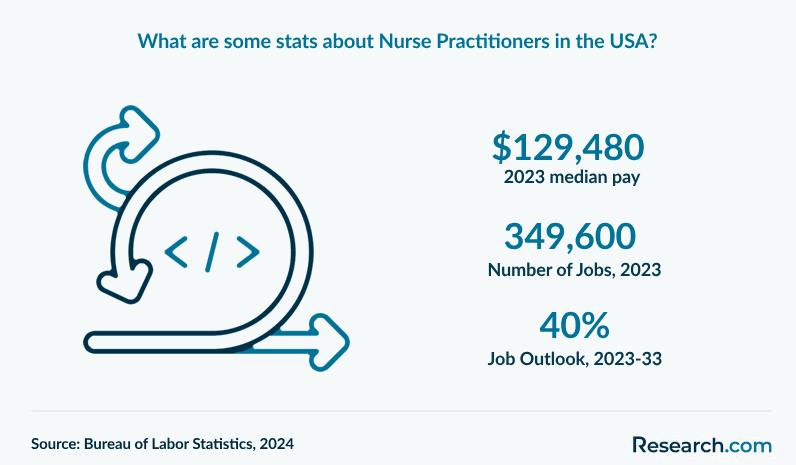
In 2023, the median annual salary for nurse anesthetists, nurse midwives, and nurse practitioners was $129,480, with an hourly wage of $62.25. The field had 349,600 jobs in 2023, and employment is projected to grow by 40% from 2023 to 2033, adding about 141,200 new positions, according to the U.S. Bureau of Labor Statistics. This growth reflects strong demand for advanced practice nurses across healthcare settings.
Technology, AI, and telehealth trends shaping AGNP practice
Digital healthcare is changing how AGNPs assess, monitor, educate, and follow up with patients. Telehealth visits, remote monitoring tools, wearable devices, electronic health records, secure messaging, and AI-supported decision tools can improve access and efficiency when used appropriately. They also create responsibilities around privacy, documentation, equity, clinical judgment, and avoiding overreliance on automated recommendations.
- Telehealth: Virtual visits can improve access for patients with mobility, transportation, rural access, or caregiver barriers.
- Remote monitoring: Home blood pressure, glucose, weight, oxygen, and activity data can support chronic disease management.
- AI-supported decision tools: These systems may help flag risks or organize information, but clinicians remain responsible for assessment and decisions.
- Electronic health records: Accurate documentation, medication reconciliation, and care coordination depend on strong EHR skills.
- Digital equity: AGNPs must consider whether patients have internet access, devices, language support, and the ability to use technology safely.
Nurses building toward advanced practice may start with bridge pathways before graduate education. Research.com’s resource on affordable online LPN to RN bridge programs can help early-career nurses understand one possible step in that larger progression.
Networking and mentorship for AGNP career growth
Mentorship can shorten the learning curve for new AGNPs by helping them understand certification choices, clinical specialty options, job negotiation, documentation expectations, and scope-of-practice realities. A strong network also helps clinicians find preceptors, job openings, leadership opportunities, and professional support.
- Join specialty nursing and nurse practitioner organizations relevant to adult-gerontology care.
- Ask faculty, preceptors, and experienced NPs for guidance before choosing a primary care or acute care track.
- Attend continuing education events, conferences, webinars, and local nursing meetings.
- Seek mentors in your target setting, such as primary care, hospital medicine, cardiology, palliative care, long-term care, or academia.
- Build professional relationships during clinical rotations; many first jobs begin through preceptor or faculty referrals.
Students comparing NP specialties can also review related graduate options, including Research.com's list of accelerated MSN women’s health nurse practitioner programs, to better understand how population-focused NP tracks differ.
Continuing education options that can strengthen AGNP practice
Continuing education helps AGNPs maintain certification and licensure, but it also protects patient safety. The most useful professional development is tied to your actual patient population, prescribing responsibilities, clinical gaps, and career goals.
- Clinical updates: Focus on diabetes, cardiovascular disease, kidney disease, dementia, pain management, falls, polypharmacy, infection prevention, and palliative care.
- Procedural training: Add skills only when they match your scope, employer policy, and patient needs.
- Pharmacology education: Prioritize medication safety, interactions, deprescribing, controlled substances, and older adult prescribing concerns.
- Telehealth and digital care: Build competence in virtual assessment, remote monitoring, privacy, and documentation.
- Leadership and quality improvement: Prepare for roles in care coordination, practice management, clinical education, or systems improvement.
Students still choosing an entry point into nursing may find Research.com's guide to nursing schools with higher acceptance rates useful, but admissions accessibility should always be weighed against accreditation, outcomes, clinical quality, and licensure preparation.
Subspecialties and advancement paths for Adult-Gerontology Nurse Practitioners
AGNPs can shape their careers around population needs, clinical interest, preferred setting, and desired level of leadership. Some remain in direct patient care, while others move into education, administration, research, or specialty practice.
- Primary care: Provide preventive care, routine adult health management, and long-term chronic disease follow-up. Nurses considering broader family-focused preparation may compare AGNP options with affordable online family nurse practitioner programs.
- Geriatric care: Focus on older adults, functional changes, frailty, cognitive issues, fall risk, caregiver support, and quality of life.
- Acute care: Treat complex or unstable adult patients in hospital and specialty inpatient environments.
- Chronic disease management: Support patients with long-term illnesses such as diabetes, hypertension, arthritis, and cardiovascular disease.
- Palliative care: Help patients with serious illness manage symptoms, goals of care, pain, comfort, and family decision-making.
- Oncology: Coordinate cancer care, symptom management, education, treatment monitoring, and survivorship or supportive care.
- Cardiology: Work with patients managing hypertension, heart failure, post-event recovery, and cardiovascular risk.
- Endocrinology: Support patients with diabetes, thyroid disorders, osteoporosis, and other hormone or metabolic conditions.
- Telehealth: Expand access through virtual visits, remote monitoring, chronic care follow-up, and patient education.
- Academic roles: Teach future nurses, supervise clinical learning, develop curriculum, and mentor students. AGNPs interested in doctoral preparation may compare online DNP programs.
- Clinical research: Participate in studies that evaluate treatments, care models, outcomes, safety, and aging-related interventions.
- Administrative leadership: Lead teams, improve clinical operations, manage quality metrics, and support policy implementation. Some clinicians prepare for management by comparing affordable online MHA programs.
Healthcare policy changes that may affect AGNP careers
Healthcare policy can influence where AGNPs work, how they are paid, how independently they practice, and what services they can provide. APRN scope-of-practice rules, reimbursement models, telehealth regulations, workforce funding, Medicare and Medicaid policies, and state board requirements can all affect career planning.
- Scope of practice: State rules may affect autonomy, prescribing, collaboration requirements, and supervision expectations.
- Reimbursement: Payment models can influence hiring, productivity expectations, documentation, and care delivery.
- Telehealth rules: Changes in virtual care policy can affect access, follow-up care, and multi-state practice issues.
- Workforce policy: Programs addressing clinician shortages may influence training opportunities and practice incentives.
- Education standards: Accreditation and certification expectations shape what programs must teach and what graduates must demonstrate.
Students who are early in their nursing journey and want a faster route into RN preparation may explore accelerated BSN programs, while still confirming state approval, clinical quality, and licensure outcomes.
Challenges, risks, and common mistakes to avoid as an Adult-Gerontology Nurse Practitioner
AGNP work can be meaningful, stable, and intellectually challenging, but it is not a low-stress career. Patients often have multiple diagnoses, complex medication lists, family dynamics, functional limitations, and serious illness decisions.
- Heavy caseloads: High patient volume can make time management and follow-up difficult.
- Complex conditions: Adult and older adult patients often have overlapping chronic and acute issues.
- Emotional strain: Serious illness, decline, cognitive impairment, and end-of-life care can contribute to burnout.
- Documentation pressure: Accurate records are essential for safety, billing, continuity, and legal protection.
- Regulatory complexity: AGNPs must track state laws, employer policies, certification rules, and prescribing requirements.
- Insurance and billing barriers: Coverage limits can affect treatment access, referrals, medications, and patient adherence.
- Care coordination challenges: Communication across multiple clinicians and facilities can be difficult but necessary.
- Technology demands: New EHR systems, telehealth platforms, and digital monitoring tools require ongoing adaptation.
- Patient non-adherence: Cost, fear, health literacy, side effects, culture, transportation, and caregiver support can all affect treatment follow-through.
- Work-life balance: Demanding schedules and emotional labor require intentional boundaries and support.
- Continuing education burden: Advanced practice requires constant updating as guidelines, medications, and laws change.
- Resource limitations: Some settings lack staffing, equipment, specialty access, or social services needed for ideal care.
Common mistakes when planning an AGNP career
| Mistake | Better approach |
| Choosing a program without checking accreditation | Confirm accreditation, certification eligibility, and state board acceptance before applying. |
| Focusing only on tuition | Compare total cost, fees, travel, clinical compliance expenses, lost work time, and financing options. |
| Assuming all online programs work in every state | Verify state authorization, clinical placement rules, and APRN licensure eligibility where you plan to practice. |
| Confusing primary care and acute care tracks | Choose the track that matches your target patients, settings, certification, and employer expectations. |
| Relying only on rankings or advertisements | Review accreditation, outcomes, clinical placement support, faculty experience, and student services. |
| Assuming salary outcomes are guaranteed | Use salary data as a benchmark and research local employers, specialties, benefits, and schedules. |
| Ignoring preceptor and clinical placement logistics | Ask early who arranges placements and what happens if a site falls through. |
| Waiting to understand state scope-of-practice rules | Review state APRN regulations before selecting a program or accepting a job. |
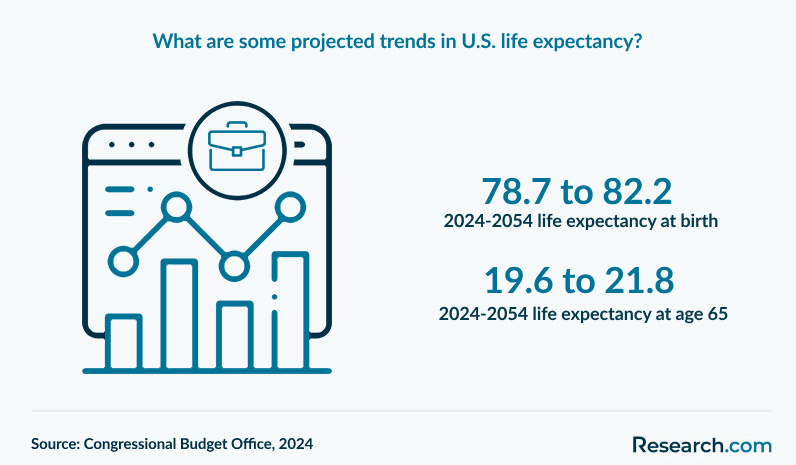
According to the U.S. Congressional Budget Office's projections, mortality rates are expected to decline between 2024 and 2054, increasing life expectancy. Life expectancy at birth is projected to rise from 78.7 years to 82.2 years, while life expectancy at age 65 is expected to increase from 19.6 years to 21.8 years during the same period.
Longer lifespans are directly relevant to AGNP practice. As more adults live into older age, healthcare systems need clinicians who can manage chronic disease, medication complexity, function, prevention, serious illness, and quality-of-life concerns.
Key Insights
- The AGNP path is structured but flexible: Most students move from BSN to RN licensure, then into an MSN or DNP adult-gerontology track, certification, and state APRN licensure.
- Your track choice is one of the most important decisions: Primary care and acute care adult-gerontology roles serve different patient needs and practice settings.
- Accreditation and state eligibility should come before convenience: A fast or online program is only useful if it qualifies you for certification and APRN licensure where you plan to work.
- Salary data varies by source and role: BLS reports a 2023 median annual salary of $129,480 for nurse anesthetists, nurse midwives, and nurse practitioners, while AGNP-specific Salary.com figures include a national average of $109,268.
- Demand is supported by workforce and demographic trends: BLS projects 40% employment growth from 2023 to 2033 for nurse anesthetists, nurse midwives, and nurse practitioners, and CBO projections show longer life expectancy from 2024 to 2054.
- Technology is becoming part of routine care: Telehealth, remote monitoring, EHRs, wearable data, and AI-supported tools can help AGNPs manage patients, but clinical judgment remains essential.
- The best AGNPs combine expertise with patience: This role requires advanced assessment and prescribing knowledge, but also communication, cultural sensitivity, advocacy, and emotional resilience.
References
- American Nurses Association. (2023). APRN practice development and professional challenges. American Nurses Association source.
- Bureau of Health Workforce. (2021). National health workforce planning resource. U.S. Department of Health and Human Services report.
- Congressional Budget Office. (2024, January 18). Demographic outlook for 2024 to 2054. Congressional Budget Office publication.
- National Academy of Medicine. (2023). APRNs and their changing role in primary care. National Academy of Medicine resource.
- National Center for Health Workforce Analysis. (2023). Nurse practitioner employment and specialization trends. National Center for Health Workforce Analysis article.
- National Council of State Boards of Nursing. (2022). RN workforce findings. National Council of State Boards of Nursing page.
- National Institutes of Health. (2023). Registered nurse work hours and overtime trends. Nursing Outlook article.
- New Jersey Collaborating Center for Nursing. (2023). Recover to Rebuild workforce report. New Jersey Collaborating Center for Nursing report.
- Nightingale College. (2024, May 16). State-by-state nursing shortage statistics. Nightingale College analysis.
- Salary.com. (2025). Adult gerontology acute care nurse practitioner compensation data. Salary.com salary page.
- Salary.com. (2025). Geriatric nurse practitioner compensation data. Salary.com salary resource.
- Salary.com. (2025). Adult Gerontology Nurse Practitioner salary data. Salary.com AGNP salary page.
- Salary.com. (2025). Geriatric nurse salary data. Salary.com geriatric nurse salary page.
- Salary.com. (2025). Registered Nurse BSN salary in Seattle, WA. Salary.com Seattle RN BSN page.
- Statista. (2023). Employed nurse practitioners by U.S. state. Statista employment table.
- U.S. Bureau of Labor Statistics. (2024). Nurse anesthetists, nurse midwives, and nurse practitioners occupational outlook. U.S. Department of Labor occupational profile.
- U.S. Bureau of Labor Statistics. (2024). Nurse practitioner workforce projections. U.S. Bureau of Labor Statistics nurse practitioner profile.
- Zang, X., & Wang, Y. (2023). Long-term care nursing workforce shortages in the United States. Healthcare journal article.
Other Things You Should Know About Becoming an Adult Gerontology Nurse Practitioner
In 2027, Adult Gerontology Nurse Practitioners can pursue continuing education opportunities through workshops, online courses, and certification programs focused on geriatrics. These may include updates in patient care, pharmacology, and aging. Continuing education is often required for maintaining certification and improving practice standards.
To become an Adult Gerontology Nurse Practitioner in 2027, complete a BSN and pass the NCLEX-RN. Gain RN experience, then enroll in a Master's or DNP program focusing on Adult Gerontology. Lastly, pass the national certification exam through ANCC or AANP and obtain state licensure. **PAA Question 1** **Question** What qualifications do you need to become a nurse practitioner in adult gerontology? **Answer** To qualify as an Adult Gerontology Nurse Practitioner, you need an accredited Master's or Doctoral degree in nursing with a specialization in adult gerontology. Additionally, achieving certified status by passing exams from ANCC or AANP is essential. **PAA Question 2** **Question** What does an Adult Gerontology Nurse Practitioner do? **Answer** Adult Gerontology Nurse Practitioners focus on providing healthcare for adults throughout their lives, from adolescence to old age. They diagnose and manage chronic and acute conditions, promote health, and emphasize preventative care. **PAA Question 3** **Question** How long does it typically take to become an Adult Gerontology Nurse Practitioner? **Answer** The journey typically takes 6-8 years, including 4 years for a BSN, 1-2 years gaining clinical RN experience, and 2-4 years completing a graduate program. Certification and licensure requirements will add additional time. **PAA Question 4** **Question** What is the role of ANCC and AANP certification for Adult Gerontology Nurse Practitioners? **Answer** Certification from ANCC or AANP validates expertise in adult gerontology for Nurse Practitioners. It is crucial for licensure and often required by employers, confirming that a practitioner meets professional standards and maintains competency.