
2027 What Is a Clinical Informatics Specialist: Salary & Career Paths

Co-Founder and Chief Data Scientist
Clinical informatics is the career path for healthcare professionals who want to improve care by making health data, electronic health records, and clinical technology work better for patients and care teams. If you are a nurse, physician, allied health professional, health IT worker, or data analyst considering this field, the main questions are practical: what does the job involve, what degree or certification do you need, how long does the transition take, and what salary range is realistic?
This guide explains what clinical informatics specialists do, how to enter the field, which credentials matter, what affects salary, and how to compare career paths such as nursing informatics, clinical data analytics, EHR optimization, informatics management, and executive informatics leadership. It also covers common mistakes to avoid when choosing a degree, certification, or employer.
Quick Answer: Is Clinical Informatics a Good Career Path?
Clinical informatics can be a strong career path for professionals who understand healthcare workflows and want to use data and technology to improve care delivery. The role is especially well suited to people who can translate between clinicians, IT teams, administrators, and vendors. Reported compensation varies by background and role, but clinical informatics specialists commonly earn a median annual income of $85,000 to $120,000, with senior roles and advanced credentials potentially exceeding $130,000.
| Question | Short Answer |
| What does a clinical informatics specialist do? | Improves clinical systems, EHR workflows, data quality, reporting, decision support, and technology adoption in healthcare settings. |
| Do you need a master’s degree? | Not always for entry-level roles, but a master’s degree is often expected for advanced, specialized, or leadership positions. |
| Is certification required? | There is no single required certification for every role, but CPHIMS, RN-BC, HCISPP, PMP, and vendor-specific credentials may strengthen job prospects. |
| Who is this career best for? | Clinicians, nurses, health IT professionals, data analysts, and healthcare administrators who enjoy problem-solving across clinical and technical teams. |
Key Things You Should Know About Clinical Informatics Specialist Salary and Career Paths
- A clinical informatics specialist connects clinical practice with healthcare technology. The goal is not simply to install software; it is to improve quality, safety, efficiency, documentation, communication, and decision-making.
- The strongest candidates combine clinical insight with technical fluency. Employers value people who understand patient care, healthcare operations, EHR systems, reporting tools, data governance, privacy, workflow redesign, and project management.
- A bachelor’s degree can support entry into the field, especially for candidates with healthcare or IT experience. However, a master’s degree in clinical informatics, health informatics, nursing informatics, public health informatics, or a related area is commonly preferred for more advanced positions.
- Demand is supported by healthcare’s continued reliance on EHRs, digital health tools, data analytics, regulatory reporting, cybersecurity, and interoperability. Salary growth is strongest for professionals who build specialized expertise and move into management or strategic roles.
- Clinical informatics is not one job. Career options include clinical informatics analyst, EHR specialist, nursing informatics specialist, clinical data analyst, informatics manager, director of clinical informatics, CMIO, CNIO, and CHIO.
- What is a clinical informatics specialist?
- What are the key responsibilities of a clinical informatics specialist?
- What are the steps to become a clinical informatics specialist for 2027?
- What degree do you need to become a clinical informatics specialist?
- How long does it take to become a clinical informatics specialist?
- What is the average salary of a clinical informatics specialist?
- What certifications are required for clinical informatics specialists?
- How can advanced online education accelerate a clinical informatics career?
- What are the emerging trends shaping clinical informatics?
- What challenges do clinical informatics specialists face?
- How do work environment and employer support impact career success?
- What factors influence the salary of a clinical informatics specialist?
- What are the different career paths within clinical informatics?
- What is the job outlook and salary growth potential for clinical informatics specialists? Sources and key insights
What is a clinical informatics specialist?
A clinical informatics specialist is a healthcare technology professional who helps care teams use information systems more effectively. The role sits between clinical operations and information technology, which means the specialist must understand both how clinicians work and how digital systems store, exchange, analyze, and display health data.
Much of the work centers on electronic health records, commonly called EHRs. Clinical informatics specialists may improve order sets, documentation templates, alerts, medication workflows, reporting dashboards, data quality processes, clinical decision support, and user training. They also help ensure that systems support patient privacy, security, compliance, and reliable communication across departments.
Professionals enter the field from several backgrounds. Nurses, physicians, pharmacists, medical technologists, health information managers, healthcare administrators, IT analysts, and data professionals can all move into informatics if they build the right mix of clinical, technical, and analytical skills.
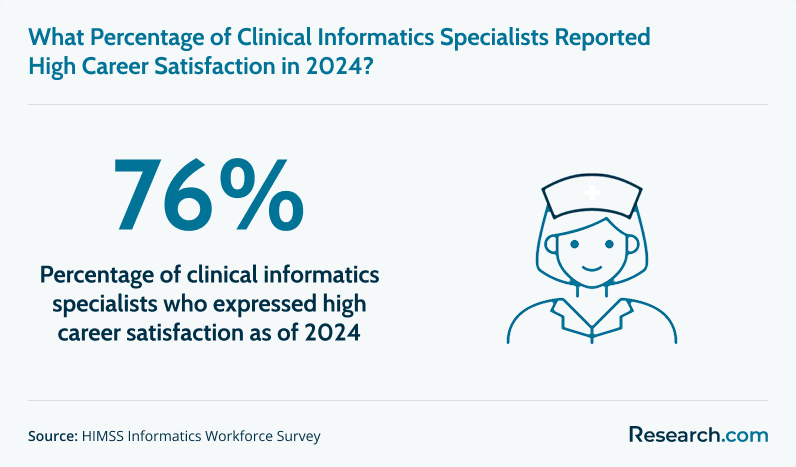
Among clinical informaticists, 39% have over a decade of experience and 76% express high career satisfaction. Salary levels vary by role, employer, education, location, and experience, but clinical informatics specialists earn a median annual income of $85,000 to $120,000. Senior roles or positions requiring advanced degrees and credentials, such as a Master’s in Health Informatics or Certified Professional in Health Informatics (CPHI), can exceed $130,000.
Clinical informatics often intersects with advanced clinical practice. For example, understanding the role and career path of a family nurse practitioner can help explain why informatics specialists must design systems that support frontline providers making patient care decisions.
What are the key responsibilities of a clinical informatics specialist?
Clinical informatics specialists improve how healthcare organizations collect, manage, interpret, protect, and apply clinical information. Among clinical nursing informatics, a sub-group of clinical informatics, 72% are primarily employed in hospitals, which reflects how central EHRs, reporting, quality improvement, and workflow optimization have become in hospital operations.
| Responsibility Area | What It Looks Like in Practice | Why It Matters |
| EHR optimization | Improving templates, alerts, order sets, documentation screens, medication workflows, and user experience. | Reduces friction for clinicians and supports safer, more consistent care. |
| Clinical workflow analysis | Mapping how nurses, physicians, pharmacists, and support staff complete tasks before changing a system. | Prevents technology changes from disrupting care delivery. |
| Data analysis and reporting | Reviewing clinical, operational, quality, and compliance data to identify problems and measure outcomes. | Helps leaders make evidence-informed decisions. |
| Training and change management | Teaching clinicians how to use new tools and explaining why process changes are being made. | Improves adoption and reduces resistance to new systems. |
| Data integrity and privacy | Supporting accurate documentation, reliable data capture, secure access, and protected health information safeguards. | Protects patients and strengthens compliance. |
| Cross-functional communication | Translating clinical needs for IT teams and technical constraints for clinical teams. | Keeps projects aligned with real patient care needs. |
| Technology implementation | Participating in EHR upgrades, decision-support tools, interoperability initiatives, telehealth platforms, and analytics systems. | Ensures systems are usable, safe, and clinically relevant. |
The role is similar in principle to operations-heavy careers where information flow determines performance. For instance, a logistics manager coordinates systems that move goods efficiently; a clinical informatics specialist coordinates systems that move clinical information accurately and securely.
What are the steps to become a clinical informatics specialist for 2027?
There is no single route into clinical informatics, but most professionals build three layers of preparation: healthcare knowledge, technology and data skills, and informatics-specific education or certification. The need for this expertise is visible outside hospitals as well. Only 14% of local health departments in the U.S. had an informatics team in 2023, with urban LHDs slightly higher at 18%, showing that public health organizations also face informatics capacity gaps.
Step 1: Choose a Clinical, Health IT, or Data-Focused Starting Point
Begin with a bachelor’s degree that gives you either healthcare context or technical depth. Common starting points include nursing, health information management, computer science, information technology, healthcare administration, public health, or an allied health field. If you are already a nurse and want a flexible route into informatics, Research.com’s guide to accessible online nursing informatics programs can help you compare options.
Step 2: Get Experience With Real Healthcare Workflows
Employers value informatics professionals who understand what happens in clinics, hospitals, laboratories, pharmacies, public health departments, and administrative offices. Clinical experience is especially useful because it teaches you how documentation, medication administration, care coordination, patient safety, and handoffs actually work.
Step 3: Build Technical and Analytical Skills
Learn how EHR systems, databases, dashboards, reporting tools, privacy controls, and system implementation projects function. You do not always need to be a software developer, but you should be able to communicate with IT teams, interpret data, identify workflow problems, and evaluate whether technology changes are solving the right problem.
Step 4: Consider a Master’s Degree or Graduate Certificate
A master’s degree in health informatics, clinical informatics, nursing informatics, public health informatics, healthcare IT, or a related field can make you more competitive for specialist, analyst, manager, and leadership roles. Based on American Nursing Informatics (ANIA) data, 55% of nurses practicing informatics have a master's degree while 31% completed a bachelors program.
Step 5: Add a Certification That Matches Your Career Direction
Certification is most useful when it supports the type of work you want. Nurses may consider nursing informatics certification, project-focused professionals may pursue project management credentials, and security-focused professionals may consider privacy and security credentials.
Step 6: Target Entry-Level Informatics Roles
Look for job titles such as clinical informatics analyst, EHR analyst, application analyst, health informatics specialist, clinical data analyst, quality informatics analyst, nursing informatics specialist, or implementation specialist. Once you have project experience, you can move toward management, consulting, or executive leadership.
The chart below shows the distribution of educational levels among nurse informaticists as of 2025, which helps illustrate why graduate education is common in this specialty.
What degree do you need to become a clinical informatics specialist?
You do not need one exact degree title to work in clinical informatics. What matters is whether your education helps you understand healthcare delivery, information systems, data, compliance, and organizational change. That said, a master’s degree is often the stronger credential for advanced roles because the field requires both specialized knowledge and cross-functional leadership.
| Degree Option | Best For | Typical Career Direction |
| Master’s in Clinical Informatics | Professionals who want a focused program at the intersection of patient care, data, workflows, and health IT. | Clinical informatics specialist, EHR optimization lead, informatics manager. |
| Master’s in Health Informatics | Students who want broader healthcare technology preparation across clinical, administrative, public health, and analytics settings. | Health informatics analyst, clinical systems analyst, informatics consultant. |
| MSN in Nursing Informatics | Registered nurses who want to improve nursing practice, documentation, care coordination, and patient safety through technology. | Nursing informatics specialist, nurse informatics manager, CNIO pathway. |
| MPH with Informatics Concentration | Professionals interested in public health data, surveillance, population health, and community health systems. | Public health informatics specialist, population health analyst. |
| MHA with Informatics Concentration | Administrators who want to lead healthcare operations with stronger technology and data fluency. | Healthcare IT leader, informatics operations manager, director-level roles. |
| MS in Information Systems with Healthcare Focus | IT professionals who want to apply systems, analytics, and database skills in healthcare environments. | Clinical systems analyst, data analyst, health IT project lead. |
| Master’s in Biomedical Informatics | Students interested in research, computational methods, biomedical data, and advanced analytics. | Biomedical informatics analyst, research informatics specialist. |
The broader field of health informatics includes clinical care, research, public health, administration, analytics, and information systems. Because of that breadth, your best degree depends on your prior background and target role.
At the bachelor’s level, common entry points include nursing, computer science, information technology, health informatics, biomedical informatics, healthcare administration, public health, pharmacy, laboratory science, medical technology, or another allied health field. Nurses comparing cost-conscious pathways can review affordable online nursing programs, while technically oriented students interested in biological data may also explore online bioinformatics degree options.
Who Should Choose a Graduate Degree?
- Choose a graduate degree if you want to compete for specialist, manager, director, consulting, analytics, or executive informatics roles.
- Choose a graduate certificate if you already have strong healthcare or IT experience and need targeted informatics training.
- Choose a bachelor’s-first route if you are early in your career and still need foundational healthcare, IT, or data experience.
How long does it take to become a clinical informatics specialist?
The timeline depends heavily on where you start. A traditional path may take four to six years: about four years for a bachelor’s degree and one to two additional years to gain relevant healthcare, IT, or data experience. If you add a master’s degree, the path can extend by another one to two years, although some students work while enrolled.
| Starting Point | Likely Timeline | What to Focus On |
| High school graduate or early college student | Four to six years or longer | Earn a relevant bachelor’s degree, gain healthcare or IT experience, and build data skills. |
| Registered nurse or clinician | Often shorter if clinical experience is already strong | Add informatics coursework, EHR project exposure, analytics skills, and possibly certification. |
| Healthcare IT professional | Varies by clinical knowledge gap | Learn clinical workflows, regulatory requirements, patient safety priorities, and healthcare operations. |
| Career changer from data or technology | Often requires added healthcare exposure | Develop healthcare domain knowledge and gain experience with clinical systems. |
| Graduate degree seeker | Another one to two years | Use the program to complete projects, internships, capstones, or employer-based informatics work. |
Some healthcare careers can be completed more quickly than the full informatics route, but they may not provide the same preparation for EHR, analytics, and systems work. If you are still comparing healthcare pathways, review medical degree and healthcare programs that can be completed in 2 years or less to understand alternative timelines.
What is the average salary of a clinical informatics specialist?
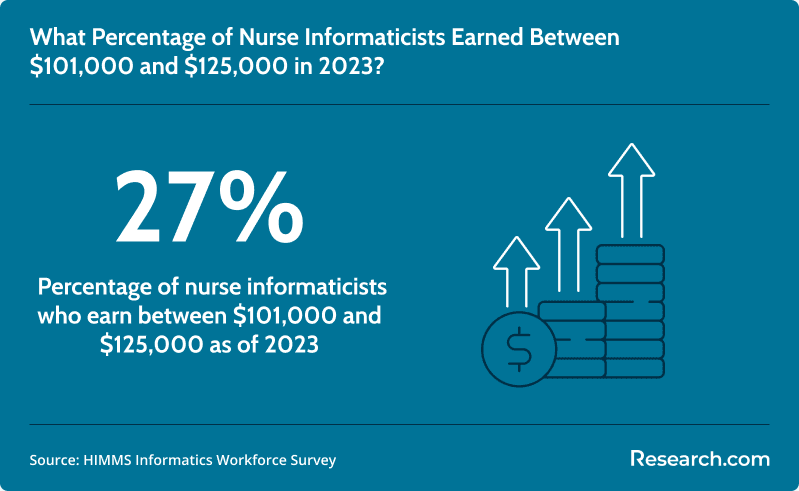
Clinical informatics salary depends on experience, job title, clinical background, technical specialization, location, employer type, and credentials. Salary reports from nurse informaticists show that just over a quarter (27%) earn between $101,000 and $125,000 as of 2023, followed closely by the 24% who report salaries in the $76,000 to $100,000 range.
For clinical informatics specialists more broadly, salary ranges typically fall between $75,000 at the 25th percentile and $115,500 at the 75th percentile. Top earners at the 90th percentile may make as much as $135,500 to $164,000 annually. Entry-level clinical informatics specialists with less than a year of experience may report average total compensation around $71,325.
| Career Stage or Salary Group | Reported Compensation Detail | How to Interpret It |
| Entry-level clinical informatics specialist | Around $71,325 for less than a year of experience | Early roles often involve support, reporting, system build, training, or workflow analysis. |
| 25th to 75th percentile range | $75,000 to $115,500 | This range reflects broad variation by employer, location, credentials, and role complexity. |
| Nurse informaticists reporting common salary bands | 27% earn between $101,000 and $125,000; 24% earn between $76,000 and $100,000 | Nursing background plus informatics specialization can lead to competitive compensation. |
| Top earners | $135,500 to $164,000 annually | Higher earnings are more common in senior, specialized, leadership, consulting, or high-cost markets. |
When comparing salaries, look beyond the base number. Benefits, remote or hybrid flexibility, call expectations, professional development funding, tuition support, certification reimbursement, project scope, and promotion pathways can make two similar salaries feel very different.
Clinical informatics also shares skill overlap with data-heavy fields. For example, reviewing GIS analyst salary and role expectations can help you understand how employers value professionals who manage complex data systems, interpret patterns, and support high-stakes decisions.
What certifications are required for clinical informatics specialists?
No single certification is required for every clinical informatics specialist job in the United States. Requirements vary by employer, role, clinical background, and system environment. However, certifications can improve credibility, especially when they match your job responsibilities. Some employers may prefer or require specific credentials for nursing informatics, health information systems management, privacy and security, project management, or EHR vendor work.
Research.com’s overview of healthcare certifications that can lead to strong pay may be useful if you are comparing shorter credential options before committing to a graduate degree.
Regardless of salary level, nurse informaticists who hold informatics certifications from organizations including ANA, HIMSS, AMIA, and AHIMA generally earn more than uncertified peers. Most clinical informatics specialists with these certifications earn between $76,000 - $125,000 per year.
| Certification | Issuing Organization | Best For | What It Signals |
| Certified Professional in Healthcare Information and Management Systems (CPHIMS) | Healthcare Information and Management Systems Society (HIMSS) | Health IT, informatics, management, and systems professionals. | Broad knowledge of healthcare information systems, leadership, analysis, and system design. |
| Nursing Informatics Certification (RN-BC) | American Nurses Credentialing Center (ANCC) | Registered nurses specializing in informatics. | Expertise in combining nursing science, information management, and analytical sciences. |
| Healthcare Information Security and Privacy Practitioner (HCISPP) | (ISC)² | Professionals working with protected health information and privacy controls. | Competence in healthcare security, privacy, and compliance responsibilities. |
| Project Management Professional (PMP) | Project Management Institute (PMI) | Informatics professionals who lead EHR implementations, upgrades, or technology projects. | Ability to manage project scope, teams, timelines, stakeholders, and delivery risks. |
| Epic, Cerner, and other vendor-specific certifications | EHR and healthcare technology vendors | Professionals working in organizations using specific platforms. | Practical knowledge of modules, configuration, workflows, and system functionality. |
How to Choose the Right Certification
- Choose RN-BC if you are a nurse and want nursing informatics roles.
- Choose CPHIMS if you want broad healthcare information systems credibility.
- Choose HCISPP if privacy, security, risk, and protected health information are central to your work.
- Choose PMP if you lead implementations, upgrades, vendor projects, or cross-functional initiatives.
- Choose vendor-specific credentials if your target employers use a platform such as Epic or Cerner and the role requires system build or optimization.
The following chart shows the percentage of informatics utilization per team within Local Health Departments (LHDs) in the U.S. The data highlights why qualified informatics professionals are important for public health planning, reporting, and technology implementation.
How can advanced online education accelerate a clinical informatics career?
Advanced online education can help working clinicians and health IT professionals move into informatics without leaving the workforce. Online master’s degrees, graduate certificates, and doctoral programs may offer flexibility for professionals who need to keep earning while building skills in clinical data, systems design, leadership, interoperability, privacy, and quality improvement.
The best online option depends on your current credential. A registered nurse may benefit from nursing informatics or RN-to-BSN preparation before graduate study, while a nurse leader may consider advanced clinical leadership programs. For example, Research.com’s guide to the quickest DNP program options can help nurses compare accelerated doctoral pathways when leadership is part of the long-term plan.
Questions to Ask Before Enrolling Online
- Is the institution properly accredited?
- Does the program include informatics coursework, analytics, EHR exposure, privacy, interoperability, and workflow redesign?
- Can you complete projects using real healthcare data or employer-based problems?
- Are there practicum, capstone, internship, or portfolio opportunities?
- Will the program support your intended certification or career path?
- How much transfer credit is accepted?
- What is the total cost after fees, not just tuition?
What are the emerging trends shaping clinical informatics?
Clinical informatics is changing as healthcare organizations increase their reliance on digital records, analytics, artificial intelligence, telehealth, remote monitoring, interoperability, and cybersecurity. These tools can improve access and decision-making, but they also create new risks when data quality, usability, privacy, and workflow design are weak.
| Trend | Impact on Clinical Informatics Specialists |
| Artificial intelligence and machine learning | Specialists need to evaluate how tools affect clinical decision support, documentation, workflow, bias, safety, and governance. |
| Big data analytics | Healthcare organizations need professionals who can turn clinical and operational data into meaningful reports and improvement plans. |
| Interoperability | Specialists help systems exchange information across providers, departments, and organizations. |
| Telehealth and remote monitoring | Informatics teams must support data capture, patient communication, device integration, and follow-up workflows. |
| Cybersecurity and privacy | Protecting sensitive patient information remains central as more care processes become digital. |
| Credential-based advancement | Employers may favor professionals who can document specialized preparation through degrees, certifications, and system experience. |
For nurses who need to strengthen academic credentials before entering informatics, a flexible bridge program such as an online RN to BSN pathway may be a practical step before graduate-level informatics study.
What challenges do clinical informatics specialists face?
Clinical informatics specialists often work in high-pressure environments where technology changes affect patient care, staff workload, compliance, and organizational budgets. The hardest part of the job is rarely the software alone. The challenge is aligning people, processes, data, and systems.
| Common Challenge | Why It Happens | Better Approach |
| Clinician resistance | New systems can feel like extra documentation or a threat to established routines. | Involve users early, explain the clinical purpose, and provide practical training. |
| Poor data quality | Inconsistent documentation, duplicate fields, and unclear workflows create unreliable reports. | Standardize data capture and validate reports with clinical users. |
| Legacy system limitations | Older systems may not integrate easily with newer tools. | Plan interoperability work carefully and identify workflow risks before implementation. |
| Privacy and cybersecurity risks | More digital access points increase exposure for protected health information. | Build security, access control, and compliance review into informatics projects. |
| Unclear project ownership | Clinical teams, IT, vendors, and administrators may define success differently. | Clarify stakeholders, deliverables, timelines, and decision rights at the start. |
Professionals transitioning from hands-on clinical roles should also consider how much additional clinical or academic preparation they need. For example, Research.com’s guide to the best 6 month LPN to RN program online can help practical nurses understand bridge options before pursuing longer-term informatics goals.
How do work environment and employer support impact career success?
The employer you choose can have a major effect on your informatics career. A strong organization gives informatics specialists access to decision-makers, clinical champions, reliable technology resources, training budgets, project management support, and professional development. A weak environment may leave specialists responsible for change without enough authority, data access, or leadership backing.
Signs of a Strong Informatics Employer
- Clinical leaders and IT leaders work together rather than in separate silos.
- The organization funds training, certification, conferences, or tuition support.
- Informatics staff are involved before technology decisions are finalized.
- End users are included in design, testing, implementation, and post-launch feedback.
- Data governance, cybersecurity, and privacy responsibilities are clearly defined.
- Promotion pathways exist for analysts, specialists, managers, directors, and executives.
For nurses moving into informatics, workplace culture matters because clinical credibility is one of their strongest assets. Reviewing Research.com’s analysis of the best places to work as a nurse can help illustrate how employer support, staffing culture, and professional growth opportunities influence career satisfaction.
What factors influence the salary of a clinical informatics specialist?
Clinical informatics salaries vary because the job title can mean different things across employers. A specialist who trains users on documentation templates may be paid differently from a specialist who leads enterprise EHR optimization, manages analytics teams, or directs clinical technology strategy.
| Salary Factor | How It Affects Pay | What Candidates Can Do |
| Education | Graduate degrees in clinical informatics, health informatics, nursing informatics, or related fields often support advancement. | Choose a program aligned with your target role, not just the broadest degree title. |
| Certification | Credentials such as CPHIMS, RN-BC, HCISPP, PMP, or vendor certifications can demonstrate specialized competence. | Select certifications that match your actual job responsibilities and employer market. |
| Experience | Professionals with multiple implementations, optimization projects, analytics initiatives, or leadership experience often command more. | Document project outcomes, system experience, workflow improvements, and measurable contributions. |
| Location | Metropolitan areas and high-cost markets may offer higher pay. Salaries tend to be higher in cities like San Francisco, Washington D.C., and Boston compared to more rural areas. | Compare salary against cost of living, remote flexibility, benefits, and advancement options. |
| Employer type and size | Large hospital systems, academic medical centers, government agencies, clinics, private practices, and healthcare technology firms may use different pay structures. | Ask how the role is graded and whether informatics has a promotion ladder. |
| Technical specialization | Expertise in data analytics, EHR systems such as Epic or Cerner, interoperability, privacy, security, or project leadership may increase earning potential. | Build a portfolio of specific tools, systems, and project examples. |
| Leadership scope | Managers, directors, CMIOs, CNIOs, and CHIOs typically carry broader responsibility and higher compensation potential. | Develop budgeting, stakeholder management, strategic planning, and team leadership skills. |
What are the different career paths within clinical informatics?
Clinical informatics offers multiple routes, so the best path depends on your starting background and preferred work style. Some professionals stay close to patient care and workflow redesign. Others move into analytics, health IT implementation, system administration, privacy, consulting, research, education, or executive leadership.
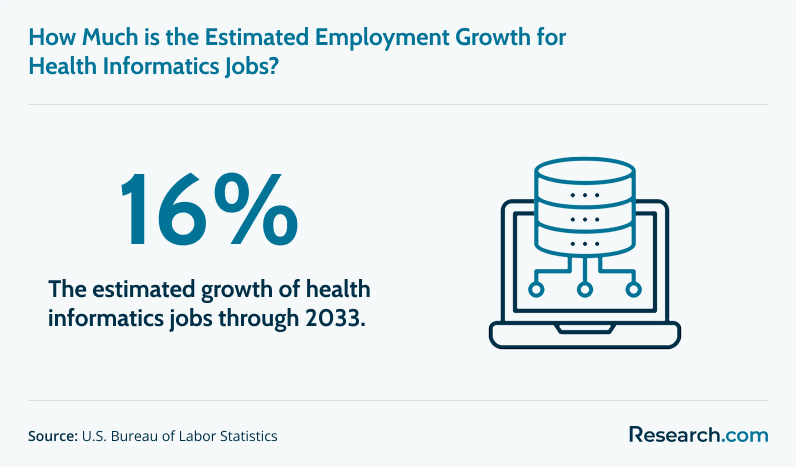
Health informatics is expected to grow faster than the average for all occupations at 16% through 2033. Professionals with a nursing background may strengthen their qualifications through nursing certifications, especially if they want to specialize in nursing informatics or move toward nursing informatics leadership.
| Career Path | Typical Focus | Good Fit For |
| Clinical informatics specialist | EHR workflows, system optimization, training, clinical decision support, and care process improvement. | Clinicians or health IT professionals who like hands-on problem-solving. |
| Clinical informatics analyst | Data extraction, reports, dashboards, system requirements, and performance monitoring. | Analytical professionals who enjoy working with clinical and operational data. |
| Nursing informatics specialist | Nursing documentation, care coordination, medication workflows, patient safety, and nurse training. | Registered nurses who want to influence systems beyond the bedside. |
| EHR application analyst | System build, configuration, testing, troubleshooting, and upgrades. | Professionals who want a technical role tied closely to healthcare operations. |
| Clinical data analyst | Quality metrics, outcomes reporting, population health, utilization patterns, and operational analysis. | Data-oriented candidates with healthcare domain knowledge. |
| Informatics manager or director | Team leadership, project portfolios, governance, budgets, vendor coordination, and strategic planning. | Experienced specialists ready to lead people and programs. |
| CMIO, CNIO, or CHIO | Enterprise-level clinical technology strategy and executive decision-making. | Senior clinicians or informatics leaders with strategic, operational, and technical expertise. |
| Consulting, research, or education | Advising organizations, studying informatics outcomes, or teaching future professionals. | Experienced professionals who want broader influence outside one employer. |
Online education can be credible when the school is accredited, the curriculum fits the profession, and the program provides meaningful applied experience. The same quality questions discussed in Research.com’s guide to whether online psychology degrees are legitimate and respected also apply when evaluating online informatics programs.
What is the job outlook for clinical informatics specialists?
The job outlook for health informatics specialists in the U.S. is positive, supported by healthcare’s ongoing use of EHRs, digital tools, analytics, quality reporting, privacy controls, and interoperability initiatives. Organizations need professionals who can make technology useful, safe, compliant, and aligned with clinical care.
- EHR adoption and optimization: Healthcare organizations continue to maintain, upgrade, and refine electronic health records, creating demand for professionals who can improve usability and clinical value.
- Data-driven quality improvement: Hospitals, clinics, and public health organizations increasingly rely on data to monitor outcomes, reduce errors, support compliance, and improve efficiency.
- Aging population: Greater healthcare utilization increases the need for coordinated, efficient, and data-supported care delivery.
- Technology expansion: Telehealth, remote monitoring, decision support, analytics platforms, and interoperability tools require skilled implementation and governance.
- Cybersecurity and privacy pressure: More digital health information means organizations need professionals who understand both patient care and information protection.
Is Clinical Informatics Worth It?
Clinical informatics is most worthwhile for professionals who want to solve system-level healthcare problems rather than focus only on direct care or pure IT. It can offer strong salary potential, broad career paths, and meaningful impact, but it also requires continuous learning, stakeholder management, and comfort with complex change.
| Choose Clinical Informatics If... | Consider Another Path If... |
| You enjoy improving workflows, systems, and data quality. | You prefer work that is entirely direct patient care with little technology or project work. |
| You can communicate with clinicians, IT teams, administrators, and vendors. | You dislike cross-functional meetings, documentation analysis, and change management. |
| You want a healthcare career with analytics, technology, and leadership potential. | You want a role with highly predictable daily tasks and minimal system complexity. |
| You are willing to keep learning as tools, regulations, and systems evolve. | You do not want to maintain technical, clinical, and compliance knowledge over time. |
Here’s What Clinical Informatics Specialists Have To Say About Their Salary and Career
-
: "
Moving from bedside nursing into clinical informatics gave me a way to improve care at a broader level. I still use my nursing judgment every day, but now I apply it to workflows, documentation, and systems that affect entire units. Melissa
"
-
: "
My master’s in health informatics helped me shift into a role where I lead EHR optimization work. The most valuable part of the job is translating clinical frustrations into practical technology improvements. Carlos
"
-
: "
The work changes constantly, which is one reason I like it. One week may involve data quality, another may focus on safety alerts or training. It feels meaningful because better systems can support safer care. Angela
"
Common Mistakes to Avoid When Entering Clinical Informatics
| Mistake | Why It Can Hurt You | Better Decision |
| Choosing a program without checking accreditation | An unrecognized credential may not support employment, transfer credit, graduate admission, or financial aid goals. | Verify institutional accreditation before enrolling. |
| Focusing only on tuition | Fees, software, travel, practicum requirements, lost work time, and certification costs can change the true cost. | Compare total program cost and expected career value. |
| Assuming any online program will meet your goals | Some programs may be too general, too technical, or not applied enough for clinical informatics roles. | Review courses, faculty expertise, capstones, practicum options, and employer recognition. |
| Ignoring transfer credit and prior learning policies | You may spend more time and money than necessary. | Ask how previous coursework, certifications, and clinical experience are evaluated. |
| Relying only on rankings | A highly ranked program may not fit your schedule, budget, career goal, or certification needs. | Use rankings as one input, then compare outcomes, curriculum, cost, and flexibility. |
| Expecting salary outcomes to be guaranteed | Compensation depends on market, employer, role scope, experience, credentials, and negotiation. | Research local salaries and ask employers about advancement pathways. |
| Underestimating change management | Technical changes fail when clinicians are not trained, heard, or supported. | Build communication, training, facilitation, and stakeholder management skills. |
Sources and Related Research.com Resources
- American Medical Informatics Association. (2025). Nursing informatics.
- American Nursing Informatics Association. (2025). About us: Overview.
- American Nursing Informatics Association. (2025). What is nursing informatics?
- Bureau of Labor Statistics. (2023). Health information technologists and medical registrars. U.S. Department of Labor.
- HIMSS. (2023). HIMSS 2023 NI Workforce Survey: Salary Resource Guide.
- National Association of County and City Health Officials. (2024). 2024 public health informatics profile report.
- ZipRecruiter. (n.d.). Clinical Informatics Specialist Salary.
Key Insights
- Clinical informatics specialists improve healthcare by making clinical data, EHR systems, workflows, reporting, and decision-support tools more useful and safer for care teams.
- The best candidates bring both healthcare context and technical fluency. Clinical experience helps, but IT, data, public health, and administration backgrounds can also lead into the field.
- A bachelor’s degree may support entry-level roles, but a master’s degree is often the stronger choice for specialist, management, consulting, and executive tracks. ANIA data shows that 55% of nurses practicing informatics have a master's degree while 31% completed a bachelors program.
- Certification is not universally required, but credentials such as CPHIMS, RN-BC, HCISPP, PMP, and EHR vendor certifications can improve credibility when they align with your job target.
- Salary varies widely. Reported ranges include $75,000 to $115,500 for the 25th to 75th percentile, with top earners making as much as $135,500 to $164,000 annually.
- Career growth is strongest for professionals who can document project outcomes, lead change, work across departments, and specialize in areas such as EHR optimization, analytics, interoperability, privacy, cybersecurity, or informatics leadership.
- Before choosing a degree or employer, verify accreditation, total cost, applied learning opportunities, certification alignment, employer support, and promotion pathways.
Other Things You Should Know About Clinical Informatics Specialist Salary and Career Paths
To become a clinical informatics specialist in 2027, candidates typically need a bachelor's degree in health informatics, nursing, or a related field. Advanced roles may require a master's degree or certifications in informatics to enhance their expertise and career prospects.
In 2027, certifications such as the Certified Professional in Health Informatics (CPHI) and the Health Information Management Systems (HIMS) can enhance a clinical informatics specialist’s career. These certifications validate expertise and may lead to advanced roles and higher salaries.
Clinical informatics specialists are expected to know EHR workflows, order entry, documentation templates, reporting dashboards, and data quality checks. Many employers also want experience with Epic or Cerner, basic SQL, and training users on system changes tied to HIPAA and patient-safety requirements.




