
2027 What is a CNA: Salary & Career Paths

Co-Founder and Chief Data Scientist
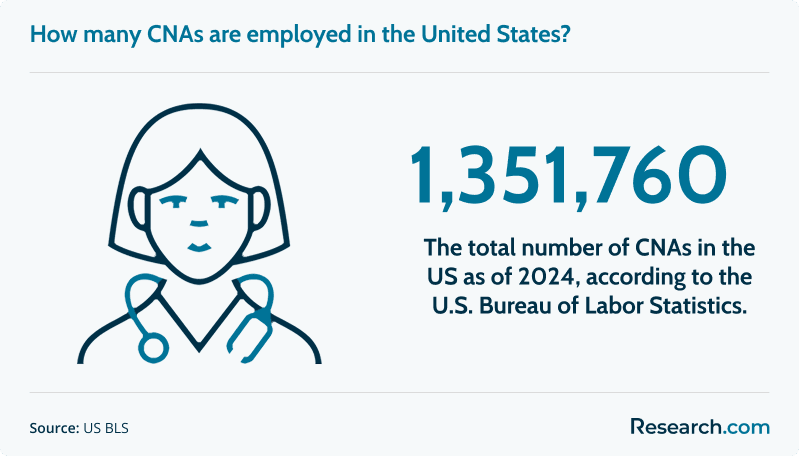
Becoming a Certified Nursing Assistant (CNA) is one of the quickest ways to enter direct patient care, but it is not a job to choose casually. CNAs help patients with basic daily needs, observe changes in condition, support nurses, and often spend more time at the bedside than many other healthcare workers. According to the U.S. Bureau of Labor Statistics, there were approximately 1.4 million CNAs employed in the United States in 2024.
This guide is for students, career changers, military learners, healthcare aides, and future nurses who want a realistic view of CNA work before enrolling in a training program. You will learn what CNAs do, how certification works, how pay varies, how the role compares with nursing and medical assisting, and when CNA experience can help you move toward LPN, RN, BSN, or advanced nursing pathways.
Quick answer: Is CNA a good healthcare entry point?
Yes, becoming a CNA can be a practical first step if you want hands-on healthcare experience quickly. Training is short, usually 4–12 weeks, and the role can help you confirm whether patient care is a good fit before investing in a longer nursing degree. However, CNA work is physically demanding, emotionally intense, and usually pays less than licensed nursing roles, so it is best viewed as either an entry-level patient care career or a bridge into higher-level healthcare training.
Key things you should know about being a Certified Nursing Assistant (CNA)
- CNAs support nurses by helping patients with bathing, dressing, meals, toileting, transfers, mobility, comfort, and basic observation in hospitals, nursing homes, long-term care centers, and home healthcare environments.
- CNA training is relatively short, typically 4–12 weeks, which makes it one of the fastest routes into healthcare for people who want direct patient care experience without first completing a degree.
- The average CNA salary in the U.S. is around $38,130 per year, though earnings can differ by state, employer type, shift, overtime availability, experience, and whether the CNA works in hospitals, long-term care, or home health.
- What does a CNA do during a typical shift?
- How much do CNAs earn?
- How does a CNA compare with a nurse or medical assistant?
- What skills do CNAs need in hospitals and nursing homes?
- What career paths can CNAs move into?
- How long does CNA training and certification take?
- What are the CNA certification requirements in 2027?
- How can CNAs move toward advanced practice nursing?
- What continuing education do CNAs need?
- Are CNAs in demand?
- Is CNA experience useful if you want to become a nurse?
- How can accelerated online RN-to-NP programs support advancement?
- How can online BSN programs shorten the CNA-to-RN pathway?
- How can CNAs explore women’s health nursing?
- How should CNAs compare advanced education programs?
- How can CNAs prepare for mental health nursing?
- How can CNAs pay for advanced education?
- How can CNAs balance work, school, and personal health?
What does a CNA do during a typical shift?
A CNA provides basic bedside care under the supervision of licensed nurses. The exact shift depends on the workplace, but most CNAs spend their time helping patients stay clean, safe, nourished, mobile, and comfortable while reporting changes to the nursing team.
- Personal care and daily living support – CNAs help patients with bathing, grooming, dressing, toileting, oral care, and other essential routines. This is often called support with Activities of Daily Living, and it is especially important for patients who are weak, injured, disabled, recovering from surgery, or unable to move independently.
- Meals, hydration, and nutrition observation – CNAs deliver trays, assist patients who cannot eat safely on their own, encourage fluids when appropriate, and document intake when required by the care plan.
- Transfers, positioning, and mobility help – CNAs move patients from beds to chairs, assist with walking, turn or reposition patients, and use safe lifting techniques to reduce falls, pressure injuries, and staff injuries.
- Vital signs and basic observation – CNAs may measure and record temperature, pulse, respiration, blood pressure, oxygen-related observations when assigned, and other basic information that nurses use to monitor patient status.
- Comfort, communication, and emotional support – CNAs often notice when a patient is anxious, confused, lonely, in pain, or behaving differently. A strong CNA does not diagnose, but they know when to report concerns quickly.
| Common CNA task | Why it matters | Who supervises it |
| Bathing, dressing, and toileting | Protects dignity, hygiene, comfort, and skin health | Licensed nursing staff |
| Repositioning and transfers | Helps prevent falls, pressure injuries, and immobility complications | Licensed nursing staff |
| Mealtime assistance | Supports nutrition, hydration, and patient safety | Licensed nursing staff |
| Vital sign checks | Gives nurses information about possible changes in condition | Licensed nursing staff |
| Patient communication | Helps the care team identify discomfort, confusion, anxiety, or unmet needs | Licensed nursing staff |
How much do CNAs earn?
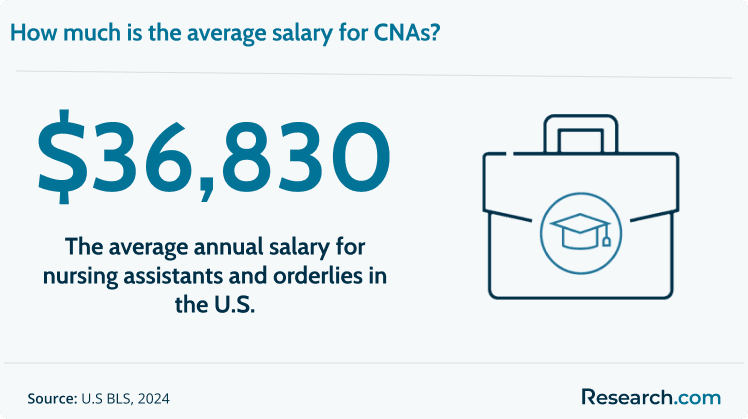
CNA pay varies widely by state, employer, shift, and experience. In the United States, CNA earnings commonly fall between $30,000 and $40,000 per year, with hourly pay often around $14 to $20. Recent data places the national average salary for CNAs at approximately $36,830 annually. That is lower than many licensed nursing roles, including the earnings discussed in this guide to how much a BSN nurse can make, but CNA work can still be a useful starting point for people building a healthcare career.
Work setting is one of the biggest pay drivers. Hospital CNAs may earn more than CNAs in some nursing homes or home healthcare roles because hospital work can involve higher patient acuity, faster turnover, and more complex team coordination. Shift differentials, overtime, weekend work, union contracts, local labor shortages, and extra credentials can also affect total compensation.
| Factor | How it can affect CNA pay | What to ask before accepting a job |
| Location | Pay often rises in areas with higher costs of living or stronger healthcare labor demand. | How does this wage compare with other CNA jobs in the same city or county? |
| Employer type | Hospitals, long-term care facilities, agencies, and home health employers may pay differently. | Are benefits, shift differentials, and overtime policies included in the offer? |
| Shift | Nights, weekends, holidays, and overtime may increase total earnings. | What differentials are paid, and when do they apply? |
| Experience | Experienced CNAs may qualify for lead aide roles, specialty units, or higher starting wages. | Is there a wage ladder for experience or added responsibilities? |
| Additional training | Medication aide, patient care technician, or specialty training may expand job options. | Will the employer pay for additional certification or continuing education? |
How does a CNA compare with a nurse or medical assistant?
CNAs, nurses, and medical assistants all support patient care, but they are not interchangeable roles. CNAs focus mainly on basic bedside care and patient support under nurse supervision. Licensed Practical Nurses and Registered Nurses have broader clinical authority, more formal education, and responsibilities such as medication administration, care planning, assessments, and clinical decision-making. Medical assistants usually work in outpatient offices or clinics and combine front-office duties with basic clinical tasks.
The education timeline is also different. CNA training is short and usually takes 4–12 weeks before a state certification exam. Medical assistant programs often take 9-month to 2-year program and may lead to certification depending on employer expectations. LPN programs take about a year, while RN preparation usually requires two to four years of nursing school plus licensure exams. Students comparing flexible healthcare education options can review what kinds of medical degrees are available online, but they should always confirm clinical, lab, and licensure requirements before enrolling.
| Role | Main focus | Typical training path | Best fit for |
| CNA | Hands-on daily care, mobility, hygiene, vital signs, patient comfort | Short state-approved training plus certification exam | People who want fast entry into bedside care |
| Medical Assistant | Clinic support, scheduling, histories, basic procedures, administrative tasks | 9-month to 2-year program; certification may be optional or preferred | People who want outpatient work with both clinical and office duties |
| LPN | Basic nursing care, medications, wound care, treatment support | About a year of nursing education plus NCLEX-PN | CNAs who want licensed nursing responsibility sooner |
| RN | Assessment, care planning, medications, patient education, coordination, specialization | ADN or BSN plus NCLEX-RN | Students aiming for broader nursing scope and advancement options |
What skills do CNAs need in hospitals and nursing homes?
Strong CNAs combine physical stamina, patient care technique, careful observation, and emotional maturity. In hospitals and nursing homes, the work can change quickly, so CNAs need to stay organized while treating patients with respect.
- Safe patient care technique – CNAs need to bathe, dress, feed, position, transfer, and assist patients without rushing or compromising dignity.
- Accurate vital sign measurement – CNAs must know how to check and document blood pressure, temperature, pulse, and respirations, then report concerning results promptly.
- Infection control and cleanliness – Hand hygiene, proper handling of linens, disinfection, glove use, and isolation precautions help protect patients, staff, and families.
- Clear communication – CNAs speak with patients, families, nurses, therapists, and other staff throughout the day. Strong verbal and nonverbal communication helps prevent errors and improves patient trust.
- Prioritization and time management – A CNA may be responsible for several patients at once, so they must respond to call lights, complete scheduled care, document accurately, and recognize urgent needs.
- Compassion and patience – Many patients are frightened, confused, grieving, in pain, or losing independence. Respectful care matters as much as technical skill.
- Teamwork – CNAs must follow nurse direction, coordinate with other aides, help during procedures, and communicate concerns without delay.
- Basic medical awareness – CNAs do not provide advanced clinical treatment, but they should understand common terms, normal routines, safety risks, and when something needs nurse attention. The role may not rank among the short medical programs that pay well, but it can open the door to better-paying healthcare pathways.
What career paths can CNAs move into?
CNA experience can lead to several next-step healthcare roles. The right path depends on whether you want more clinical authority, a higher salary, less physically demanding work, a specialty area, or a route into nursing school.
- Licensed Practical Nurse (LPN) – CNAs who want a licensed nursing role can complete a one-year nursing program and pass the NCLEX-PN exam. LPNs may administer medications, assist with treatment plans, dress wounds, and provide more advanced nursing support.
- Patient Care Technician (PCT) – PCTs often perform CNA-like duties but may add tasks such as phlebotomy, catheter support, or equipment-related care depending on employer and state rules. Additional training or certification may be needed. Average Salary: $34,782 per year.
- Certified Medication Aide (CMA) – Some CNAs earn medication aide certification so they can administer certain medications under nurse supervision where allowed. Average Salary: $36,931 per year.
- Home Health Aide (HHA) – CNAs who prefer one-on-one care may work in patients’ homes. The role can offer more independence and scheduling flexibility, although pay may be similar to other aide positions. Average Salary: $33,530 per year.
- Medical Assistant (MA) – CNAs interested in outpatient care may move into medical assisting, where duties can include patient histories, scheduling, clinical rooming, and support for minor procedures. Average Salary: $42,000 per year.
- Registered Nurse (RN) – Many CNAs pursue an ADN or BSN and then pass the NCLEX-RN exam. If you are comparing nursing school access points, this overview of nursing schools that may be easier to get into can help you understand admissions flexibility. RNs have broader clinical authority and may specialize in areas such as emergency care, pediatrics, intensive care, public health, or case management. Average Salary: $86,070 per year.
- Hospital Unit Clerk – CNAs who want to remain in healthcare but move away from heavy bedside care may consider unit clerk roles involving records, calls, scheduling, and coordination. Average Salary: $40,1710 per year.
- Physical Therapy Assistant (PTA) – CNAs drawn to mobility, recovery, and rehabilitation can pursue a two-year associate degree to become PTAs, who work with physical therapists to help patients regain strength and movement. Average Salary: $58,740 per year.
The best next step is not always the highest-paying option. CNAs should compare required education, licensure, physical demands, work setting, schedule, and long-term goals before choosing a path.
| If your goal is... | Consider this path | Why it may fit |
| Become a nurse as quickly as possible | LPN | Shorter route to licensed nursing responsibility than many RN pathways |
| Earn broader nursing opportunities | RN through ADN or BSN | Stronger mobility into specialties, leadership, and graduate nursing |
| Stay close to bedside care but add skills | PCT or CMA | Builds on CNA experience with additional clinical tasks |
| Work in clinics instead of inpatient care | Medical Assistant | Combines patient contact with administrative responsibilities |
| Focus on movement and recovery | Physical Therapy Assistant | Connects CNA mobility experience with rehabilitation work |
How long does CNA training and certification take?
CNA training is usually completed in four to 16 weeks. Program length depends on the state, school format, clinical schedule, and whether the program is offered through a community college, vocational school, workforce center, hospital, nursing home, or other approved provider. Most programs include classroom instruction, lab practice, and supervised clinical experience in topics such as infection control, patient rights, safety, vital signs, communication, and basic bedside care.
After finishing the required training, candidates take a state competency exam. This usually includes a written or oral portion and a hands-on skills evaluation. The full process often takes about two to four months, though background checks, testing availability, state processing times, and retesting can extend the timeline. Military students and veterans comparing flexible healthcare education options may also want to review online college options for military students while planning a longer healthcare pathway.
| Stage | What happens | What can slow you down |
| Choose a state-approved program | Confirm the school meets your state’s CNA training rules. | Enrolling in a program that is not approved for certification. |
| Complete classes and labs | Learn safety, patient care, infection control, communication, and basic measurements. | Missed attendance requirements or limited lab availability. |
| Finish clinical training | Practice skills with supervised patients in an approved setting. | Clinical site scheduling delays. |
| Pass the competency exam | Complete written or oral testing plus a skills demonstration. | Limited test dates or needing to retake a section. |
| Get listed or certified by the state | Meet final state registry, background, or documentation requirements. | Processing delays or incomplete paperwork. |
What are the CNA certification requirements in 2027?
CNA certification is regulated at the state level, so requirements are not identical everywhere. In general, candidates must complete a state-approved training program, finish required clinical hours, pass a competency exam, clear any required background check, and be added to the state nurse aide registry or equivalent credentialing system.
Before you enroll, check the state agency that regulates nurse aides where you plan to work. This is especially important if you are moving between states, taking a hybrid program, or considering an employer-sponsored course. A program that is convenient or inexpensive is not useful if it does not qualify you for your state’s certification exam.
Questions to ask before choosing a CNA program
- Is this program approved by the state where I plan to become certified?
- Does the tuition include books, uniforms, background checks, exam fees, CPR training, and supplies?
- Where do clinical rotations take place, and are they guaranteed?
- What percentage of students pass the state competency exam?
- Does the school help graduates apply for the state registry or find entry-level jobs?
- Will the credential transfer if I move, or will I need additional steps in another state?
How can CNAs move toward advanced practice nursing?
CNAs cannot jump directly from aide work into advanced practice without completing the required nursing education and licensure steps. A realistic route usually begins with LPN or RN preparation, followed by a BSN if needed, graduate nursing education, clinical practice, and specialty certification depending on the advanced role. CNAs who already know they want a long-term nursing career should map out the full sequence before choosing their next program.
Bridge and accelerated options may shorten parts of the pathway for qualified students, but they still require clinical training, licensure eligibility, and careful planning. CNAs interested in advanced nursing should compare LPN, ADN, BSN, MSN, and nurse practitioner routes, including programs such as ADN-to-MSN bridge pathways when appropriate. Mentorship from RNs, nurse educators, or unit leaders can also help CNAs understand which specialties match their strengths.
What continuing education do CNAs need?
Continuing education rules for CNAs vary by state. Most states require CNAs to renew their credential on a set schedule and may require continuing education units, contact hours, recent paid work experience, or specific training topics. Some states require 24 hours of continuing education and a minimum number of paid work hours during a certification period.
Common continuing education topics include infection control, resident rights, dementia care, elder abuse, safety, communication, and documentation. CNAs who plan to continue into nursing should treat continuing education as more than a renewal requirement. It can help build stronger study habits and clarify whether the next step should be LPN, RN, BSN, or graduate nursing. Those comparing long-term options may also want to look at online MSN programs with more accessible admissions pathways after completing the required nursing foundation.
Are CNAs in demand?
Yes. CNA jobs remain a steady part of the healthcare workforce, especially in long-term care, hospitals, rehabilitation settings, assisted living, and home healthcare. The U.S. Bureau of Labor Statistics projects employment of nursing assistants to grow by 4% from 2023 to 2033, which matches the average for all occupations. The same projection indicates about 216,200 job openings each year, largely because workers transfer to other occupations or leave the labor force.
Employment projections list 1,419,400 nursing assistants and 50,000 orderlies employed as of 2023. Those numbers are expected to reach 1,481,800 nursing assistants and 52,200 orderlies. This does not mean every local job market is equally strong, but it does show why CNA roles continue to matter in frontline care. Some people comparing long-term healthcare and behavioral health careers also research questions such as how much marriage and family therapists make when deciding whether to stay in nursing-related work or move into another helping profession.
| Trend affecting CNA work | What it means for CNAs |
| Aging population and long-term care needs | More patients need help with daily living, mobility, chronic illness support, and personal care. |
| High turnover in direct care roles | Job openings may be frequent, but workplaces can vary significantly in staffing levels and workload. |
| Technology in healthcare documentation | CNAs may need comfort with electronic charting, mobile devices, and digital care records. |
| Greater focus on infection prevention | Strong hygiene and safety habits remain essential in hospitals, nursing homes, and home care. |
| Interest in career ladders | Employers may use CNA roles as pipelines into LPN, RN, PCT, or medication aide positions. |
Is CNA experience useful if you want to become a nurse?
Yes. CNA work can be a strong foundation for nursing school because it exposes you to real patients, shift work, documentation, care teams, and the physical and emotional demands of healthcare. It also helps you decide whether nursing is truly the right career before committing to a longer program.
- You build direct patient care confidence – CNA work teaches bedside communication, mobility support, hygiene care, vital signs, and comfort measures that future nurses use every day.
- You see what nurses actually do – Working near LPNs and RNs helps you understand medication passes, assessments, care planning, handoff communication, and patient education. If you are ready to compare faster RN options, a 1 year accelerated RN nursing degree program online may be worth reviewing carefully.
- You may strengthen nursing school applications – CNA experience can show commitment, maturity, and familiarity with patient care, although it does not guarantee admission.
- You may access employer support – Some hospitals and healthcare facilities offer tuition reimbursement or career ladder support for CNAs who continue into nursing education.
When becoming a CNA before nursing school makes sense
- You want to test healthcare work before paying for a nursing degree.
- You need income while completing prerequisites.
- You want patient care experience for your application or interview.
- You are considering LPN, ADN, BSN, or specialty nursing but are not sure which environment fits you.
When you might skip CNA training
- You already meet nursing school admission requirements and can start soon.
- Your target nursing program does not value CNA experience enough to justify the extra time and cost.
- You are physically unable to perform heavy patient care tasks safely.
- You prefer healthcare roles with less bedside personal care, such as medical assisting, health information, or administrative support.
How can accelerated online RN-to-NP programs support advancement?
Accelerated RN-to-NP programs are designed for registered nurses who want to move into nurse practitioner preparation more efficiently. For a CNA, this is not the immediate next step; the CNA must first become an RN and meet program admission requirements. Still, understanding the long-term route can help CNAs choose early education options that do not create unnecessary delays later.
Online accelerated pathways may help working nurses balance coursework with employment, but they still include rigorous graduate study and clinical requirements. Students should verify accreditation, clinical placement expectations, state authorization, certification eligibility, and workload before enrolling. For RNs planning advanced practice, accelerated RN to NP programs online can be a strategic option when they align with licensure goals and personal capacity.
How can online BSN programs shorten the CNA-to-RN pathway?
Online BSN programs may help students complete didactic coursework with more scheduling flexibility, but they do not eliminate the need for approved clinical training. For CNAs, the most direct path depends on prior credits, nursing admission requirements, state rules, and whether the student is entering prelicensure nursing or completing an RN-to-BSN after becoming licensed.
Students should be careful with phrases such as “fastest” or “self-paced.” A shorter timeline is only valuable if the program is accredited, accepted for licensure, and realistic alongside work. CNAs comparing options can review the fastest RN to BSN program online information while remembering that RN-to-BSN programs are for nurses who already hold RN licensure.
How can CNAs explore women’s health nursing?
Women’s health nursing may appeal to CNAs who are interested in obstetrics, gynecology, reproductive health, prenatal care, postpartum care, preventive care, or patient education. A CNA does not become a women’s health nurse practitioner directly; the usual progression requires RN licensure, nursing experience, graduate education, and specialty preparation.
CNAs can begin by seeking work or shadowing opportunities in maternity units, clinics, women’s health practices, or related hospital departments where appropriate. Later, nurses who want this specialty can compare graduate options, including an affordable WHNP degree, while checking clinical placement, certification alignment, and state practice rules.
How should CNAs compare advanced education programs?
CNAs should compare programs based on outcomes and fit, not only speed or tuition. Accreditation, state approval, licensure eligibility, clinical placement support, transfer credit policies, faculty access, schedule format, graduation requirements, and total cost all matter. A low tuition number can become expensive if credits do not transfer, clinicals are hard to secure, or the program does not meet career requirements.
Students with non-nursing bachelor’s degrees may also investigate options such as online RN programs for non nurses, but these pathways can be intense and are not the same as CNA-to-RN bridge programs. Always confirm who the program is designed for before applying.
| Program feature | Why it matters | Red flag |
| Accreditation and approval | Supports licensure, transfer, and employer recognition. | The school avoids clear answers about approval or accreditation. |
| Clinical placement | Nursing and advanced practice programs require hands-on experience. | You must find all clinical sites alone with little support. |
| Total cost | Fees, books, exams, travel, and lost work hours affect affordability. | The school advertises tuition but hides required costs. |
| Schedule format | CNAs often need evenings, weekends, online coursework, or part-time pacing. | The workload is described as flexible but requires daytime attendance you cannot meet. |
| Licensure alignment | Your program must meet the rules for the state where you plan to practice. | Advisors cannot confirm state eligibility. |
How can CNAs prepare for mental health nursing?
CNAs interested in behavioral health can start by seeking experience in psychiatric units, residential treatment, geriatric memory care, substance use settings, crisis stabilization, or facilities that serve patients with complex emotional and cognitive needs. The role requires patience, boundaries, trauma-informed communication, and strong teamwork.
To become a mental health nurse or psychiatric-mental health nurse practitioner, CNAs must continue through nursing education and meet licensure requirements. Graduate-level psychiatric nursing pathways include coursework in assessment, psychopharmacology, therapeutic communication, and clinical practice. Students comparing cost-conscious options can review the cheapest PMHNP programs online while verifying accreditation and clinical requirements.
How can CNAs pay for advanced education?
Education costs can become a barrier if CNAs move from short certificate training into nursing degrees or graduate programs. The best approach is to compare total cost, not just tuition, and to combine funding sources when possible. Employer tuition assistance, scholarships, state workforce grants, payment plans, military benefits, federal aid eligibility, and part-time enrollment can all affect affordability.
CNAs should also avoid borrowing for a program that does not clearly connect to licensure, job advancement, or a realistic salary increase. For students planning major career changes, options such as direct entry nurse practitioner programs for non-nurses online should be reviewed carefully because they may have intensive prerequisites, clinical requirements, and state-specific limitations.
How can CNAs balance work, school, and personal health?
CNA work can be physically exhausting, and adding school can increase the risk of burnout. A realistic plan should account for commute time, sleep, clinical schedules, family responsibilities, study hours, and recovery after demanding shifts. Choosing a flexible program helps, but flexibility does not mean the workload is light.
CNAs advancing into nursing should speak with supervisors early about scheduling, ask schools about part-time pacing, and avoid taking on excessive overtime during difficult courses. Some licensed nurses later compare options such as online RN to BSN programs no clinicals, but CNAs should remember that prelicensure nursing programs still require clinical training. Protecting sleep, nutrition, mental health, and relationships is part of making the career path sustainable.
Common mistakes CNAs should avoid
| Mistake | Why it causes problems | Better approach |
| Choosing the cheapest CNA class without checking approval | You may not qualify for the certification exam. | Verify state approval before paying any fees. |
| Looking only at hourly pay | Benefits, shift differentials, staffing ratios, commute, and overtime policies can change the real value of a job. | Compare the full compensation package and work conditions. |
| Assuming online healthcare programs always meet licensure rules | Licensure and clinical requirements are state-specific. | Confirm state eligibility in writing before enrolling. |
| Ignoring physical demands | CNA work involves lifting, standing, repositioning, and fast responses. | Ask about safe lifting equipment, staffing, and injury prevention training. |
| Waiting too long to plan the next step | Prerequisites, admission deadlines, and financial aid timelines can delay advancement. | Map your LPN, RN, BSN, or specialty pathway early. |
| Assuming CNA experience guarantees nursing school admission | Programs still evaluate grades, prerequisites, tests, references, and available seats. | Use CNA experience to strengthen your application while meeting all academic requirements. |
What CNA graduates often say about the role
Jessica described CNA work as the decision that helped her begin a healthcare career with confidence. Her bedside experience, patient interactions, and exposure to nurses helped her move toward nursing school within two years.
David found that CNA work provided stability, purpose, and scheduling flexibility while he took classes toward becoming a Physical Therapy Assistant. He valued the chance to make a visible difference in patients’ daily lives.
Maria entered CNA work without prior healthcare experience and found the environment challenging but formative. She credited the role with helping her develop time management, teamwork, and compassion while preparing for Licensed Practical Nurse training.
Resources
- Indeed. (2025). How Long Does It Take To Become a CNA? Indeed career guidance
- Salary.com. (2025). Patient Care Technician Salary in the United States. Salary.com salary research
- U.S. Bureau of Labor Statistics. (2024). Occupational Outlook Handbook: Nursing Assistants and Orderlies. BLS occupational profile
- ZipRecruiter. (2025). Certified Medication Aide Salary. ZipRecruiter salary information
Key Insights
- CNA is a fast entry point into healthcare, with training commonly completed in 4 to 16 weeks and certification requiring state-approved coursework, clinical practice, and a competency exam.
- The role is hands-on and physically demanding. CNAs help with personal care, meals, transfers, vital signs, comfort, and reporting patient changes to licensed nurses.
- CNA pay commonly falls between $30,000 and $40,000 per year, with variation by location, employer, shift, overtime, experience, and work setting.
- The BLS projects 4% employment growth for nursing assistants from 2023 to 2033, with about 216,200 job openings each year.
- CNA experience can help future nurses build confidence, understand clinical realities, and strengthen applications, but it does not replace nursing prerequisites or guarantee admission.
- CNAs who want advancement should compare LPN, RN, BSN, PCT, CMA, PTA, and specialty pathways based on licensure rules, time, cost, clinical requirements, and long-term career fit.
- The biggest program-selection mistake is enrolling before confirming state approval, accreditation, clinical placement expectations, and whether the credential supports the job or license you want.
Other Things You Should Know About CNA Salary & Career Paths
In 2027, Certified Nursing Assistants typically work in shifts, with many positions requiring evening, overnight, or weekend hours. Shifts can range from 8 to 12 hours, depending on the facility and its needs.
In 2027, Certified Nursing Assistants (CNAs) continue to play a crucial role in healthcare settings, providing essential patient care under the supervision of nursing staff. Their responsibilities include assisting with daily activities like bathing and dressing, monitoring vital signs, and ensuring patient comfort and safety.


