2027 Fastest Online Public Relations Bachelor's Degree Programs You Can Finish in 3 Years or Less

Co-Founder and Chief Data Scientist
If you want to move into public relations quickly, the main question is not simply whether an online bachelor’s degree is available. It is whether the program can help you graduate faster without weakening the value of the credential, limiting transfer credit, or creating an unmanageable course load. For working adults, transfer students, military learners, and career changers, the fastest route often combines short academic terms, year-round enrollment, generous transfer policies, and a realistic weekly study plan.
This guide explains how fast online public relations bachelor’s degree programs work, which options may be completed in three years or less, how transfer credits and competency-based education can shorten your timeline, and what to check before enrolling. It also covers admissions, tuition, financial aid, curriculum expectations, and employer perception so you can compare programs on speed, cost, accreditation, and career value—not just marketing claims.
Key Benefits of the Fastest Online Public Relations Bachelor's Degree Programs
- Flexible online formats allow working professionals to balance jobs and study, often with asynchronous classes and part-time options tailored to busy schedules.
- Accelerated programs leverage prior credits and competency-based learning, enabling faster skill acquisition without compromising academic rigor and accreditation standards.
- Students gain access to global networking opportunities through virtual cohorts and industry partnerships, fostering connections critical for career advancement in public relations.
What Are the Fastest Online Public Relations Bachelor's Degree Programs You Can Complete in 3 Years or Less?
The fastest online public relations bachelor’s degree programs usually help students finish in 36 months or less through accelerated 8-week or 7.5-week terms, year-round course availability, high transfer-credit limits, or competency-based pacing. The actual timeline depends heavily on how many credits you bring in, how many courses you can take at once, and whether the program offers required public relations courses often enough to avoid delays.
Programs currently enrolling students and designed for faster completion include the following options:
- Southern New Hampshire University: SNHU offers an online bachelor’s in communication with a public relations concentration. The program uses 8-week terms year-round and accepts up to 90 transfer credits, which may allow some students to graduate in as few as 15 months. Tuition is about $320 per credit for the 120-credit program.
- Liberty University: Liberty offers a fully online communication degree with a public relations emphasis. Students take accelerated 8-week courses and can choose from six start dates per year. The university accepts up to 75 transfer credits, and students may complete the 120-credit program in roughly 2.5 years. Tuition is near $390 per credit hour.
- Western Governors University: WGU’s competency-based Bachelor of Arts in Communication includes public relations content and lets students progress at a self-paced rate rather than on a traditional semester schedule. Many students complete the degree in 2-3 years. Tuition is a flat rate of $3,625 per six-month term, which can reward students who complete more coursework each term.
- Washington State University Global Campus: WSU Global Campus offers a strategic communication bachelor’s degree with a public relations focus. The program uses 7.5-week year-round sessions, accepts up to 90 transfer credits, and may allow students to complete the 120-credit degree in about 3 years. Tuition varies by residency.
When comparing fast programs, look beyond the advertised completion time. Ask whether upper-division public relations courses are available every term, whether internships or capstones have fixed start dates, and how many credits you can realistically complete while working. The fastest program on paper may not be the fastest program for your schedule.
Students interested in accelerated pathways beyond the bachelor’s level can also review online doctorate degrees to understand how compressed academic formats work at higher levels.
How Does an Accelerated Online Public Relations Bachelor's Degree Save You Money Compared to a Traditional 4-Year Program?
An accelerated online public relations bachelor’s degree can save money in two main ways: it can reduce the number of semesters you pay for, and it can help you enter the workforce sooner. The savings are strongest for students who can maintain a heavier course load, use transfer credits, and avoid paying for repeated or unnecessary courses.
The National Center for Education Statistics (NCES) reports that annual tuition and fees at public institutions average around $9,000 for in-state students. Using that figure, a three-year path can reduce direct tuition and fee costs compared with a traditional four-year timeline.
- 3-Year Program Total Cost: $27,000 tuition and fees + $190 incidental fees = $27,190
- 4-Year Program Total Cost: $36,000 tuition and fees + $250 incidental fees = $36,250
- Estimated Foregone Earnings: 3 years = $0, 4 years = $63,440 (loss of one year's salary)
- Combined Savings: Approximately $72,500 by finishing in 3 years
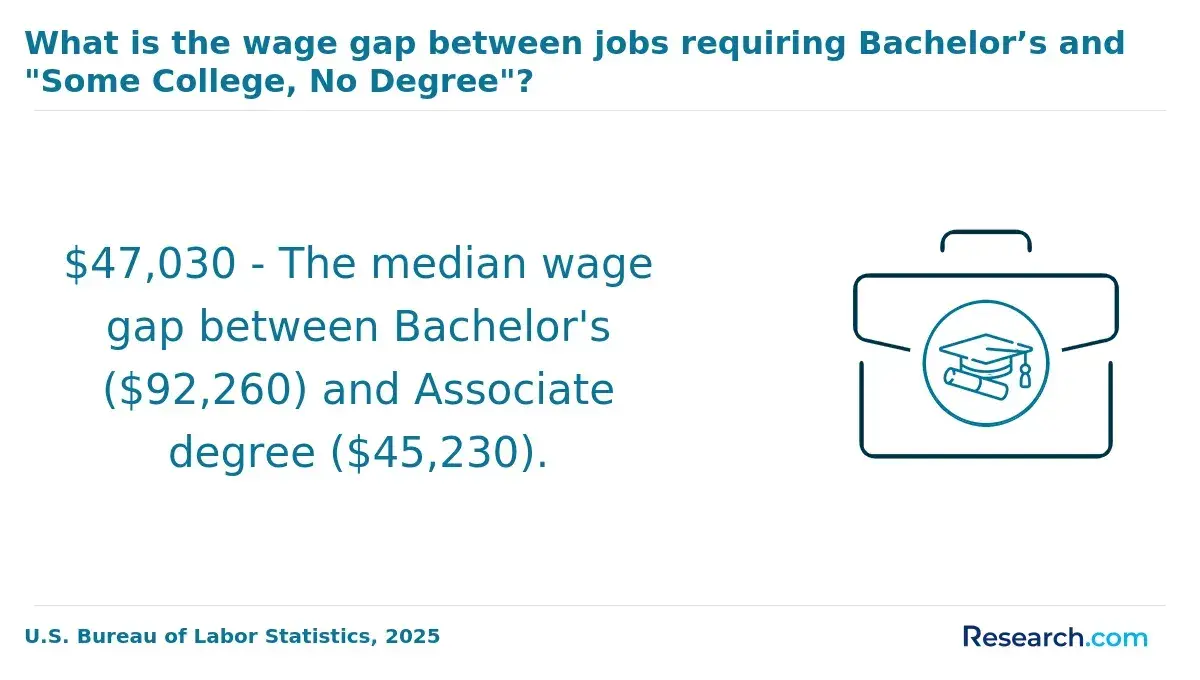
The income effect can be even more important than the tuition difference. According to the U.S. Bureau of Labor Statistics (BLS), the median weekly earnings for bachelor’s degree holders are about $1,220, or roughly $63,440 annually. Finishing one year earlier may allow a graduate to begin earning that bachelor’s-level income sooner rather than remaining enrolled for an additional year.
- Lower tuition exposure: Fewer semesters can mean fewer tuition bills, course fees, and technology charges.
- Reduced incidental expenses: Textbooks, software, commuting, housing, and campus-related fees can accumulate each term, even in online programs.
- Earlier workforce entry: Graduating faster may allow students to start full-time public relations, communications, marketing, or media roles sooner.
- Potential long-term earnings benefit: Entering the job market earlier can create an additional year of experience and earnings over a career.
- Better return on time: A shorter program can be valuable for adults who need a credential quickly for promotion, career change, or graduate school eligibility.
Accelerated programs are not automatically cheaper for every student. If you need to reduce work hours, retake courses, or pay out of pocket because your aid does not cover the pace, the savings may shrink. Before enrolling, compare total program cost, transfer-credit acceptance, financial aid eligibility, and your ability to sustain the required course load. Students comparing affordability across online fields may also find useful cost-planning ideas in guides to the cheapest online LPC programs.
Which Accredited Online Colleges Offer the Cheapest Public Relations Bachelor's Degrees That Can Be Completed in Under 3 Years?
The cheapest fast online public relations bachelor’s degree is usually the one that combines low tuition with strong credit transfer, year-round scheduling, and recognized accreditation. Regional accreditation, which can be verified through the CHEA database, is especially important because it affects employer recognition, graduate school eligibility, and transferability. Programmatic accreditation may add value in some communications fields, but institutional accreditation is the first requirement to confirm.
Several accredited online colleges offer lower-cost or faster public relations-related bachelor’s pathways:
- Western Governors University: WGU uses a competency-based, flat-rate tuition structure costing about $3,920 per six-month term. Students who move quickly through assessments may finish the online public relations degree in roughly two years by using prior learning and self-paced progress. WGU holds regional accreditation from the Northwest Commission on Colleges and Universities.
- Fort Hays State University: Fort Hays State University charges approximately $218 per credit hour, with a total near $32,000 for the entire program. Its schedule may allow motivated students to complete the degree in under three years through accelerated courses. The institution maintains regional accreditation from the Higher Learning Commission.
- University of Florida Online: University of Florida Online offers in-state tuition rates of about $129 per credit hour, with total program costs near $23,000. Some students can complete the accelerated track within three years. The university has regional accreditation by the Southern Association of Colleges and Schools Commission on Colleges (SACSCOC).
- Liberty University Online: Liberty University Online offers a bachelor’s in communication with a public relations emphasis at $390 per credit hour. The program is typically completed in around two and a half years through eight-week courses. Liberty holds regional accreditation from the Southern Association of Colleges and Schools Commission on Colleges.
- Southern New Hampshire University: SNHU charges $320 per credit hour for its public relations-centered communications degree. Students may finish in under three years by using continuous enrollment and generous transfer policies. SNHU is regionally accredited by the New England Commission of Higher Education.
When comparing these programs, calculate your personal cost instead of relying only on the posted tuition rate. A school with a higher per-credit price may be cheaper if it accepts more of your credits. A flat-rate program may be cheaper only if you can complete enough courses within each six-month term. Ask each school for a written transfer evaluation and a degree plan before making a final decision.
What Admissions Requirements Must You Meet for a Fast-Track Online Public Relations Bachelor's Program?
Fast-track online public relations bachelor’s programs generally require the same core admissions materials as other bachelor’s degrees, but they may review transfer credits and academic readiness more closely because the pace is demanding. Common requirements include a high school diploma or GED, official transcripts, and a minimum GPA that often ranges between 2.5 and 3.0 on a 4.0 scale.
Many online programs no longer require SAT or ACT scores, although some schools may still consider them during a holistic review. Transfer applicants typically submit transcripts from every college previously attended. Students with prior credits may receive a faster admissions and degree-planning process if their previous coursework comes from accredited institutions and aligns clearly with general education or communication requirements.
Some programs expect applicants to have completed foundational courses in writing, communications, public speaking, or liberal arts before taking advanced public relations courses. Competency-based and open-enrollment models may have fewer formal prerequisites, often requiring a high school diploma or GED and evidence that the student can handle college-level work.
More selective or career-focused programs may request additional materials, including:
- Personal statement: A short essay explaining your career goals, writing ability, and readiness for accelerated study.
- Recommendation letters: Academic or professional references that can speak to your communication skills and reliability.
- Portfolio samples: Writing, social media, marketing, journalism, or campaign materials that show relevant experience.
- Professional documentation: Certifications, employment history, or training records, especially for applicants seeking prior learning credit.
- Internship-related checks: Some programs may require background checks when internships or field placements are part of the curriculum.
To strengthen your application, request transcripts early, gather course descriptions for transfer evaluation, and complete any missing writing or communication prerequisites before the program starts. Students who want a broader business-focused path with overlapping communication skills may also compare a business administration online degree.
How Many Credit Hours Are Required to Finish an Online Public Relations Bachelor's Degree in 3 Years or Less?
Most online public relations bachelor’s degrees require around 120 credit hours. To finish in three years, students need to average about 40 credits per academic year instead of the more traditional 30-credit pace. That usually means taking 13 to 14 credits in fall and spring, then adding 8 to 10 credits during the summer.
A three-year plan is possible, but it requires careful sequencing. Public relations majors often include general education courses, communication core courses, major requirements, electives, and a capstone or internship. If a required course is offered only once per year, missing it can delay graduation even if you have enough total credits.
- Credit hour requirements: A bachelor’s degree generally requires roughly 120 credits, which equals about 40 credits per year for a three-year finish.
- Transfer and prior learning options: Prior college coursework, CLEP exams, military credit, and prior learning assessments (PLAs) can reduce the number of new credits you must complete.
- Competency-based programs: These programs focus on demonstrated mastery rather than traditional seat time, allowing some students to progress faster than the semester model allows.
- Sample course load: A practical three-year schedule may include 13-14 credits each fall and spring plus 8-10 credits in summer.
- Growing trend: Over 30% of undergraduates enroll in summer courses to accelerate degree completion, according to the National Center for Education Statistics.
Before committing to an accelerated schedule, estimate your weekly workload. A heavier credit load can be manageable for students with flexible work schedules, strong writing skills, and prior experience in communications. It can be difficult for students working full time, caring for family members, or returning to school after a long break. The best plan is the fastest pace you can sustain without withdrawing, failing, or burning out.
Can You Transfer Credits to Finish Your Online Public Relations Bachelor's Degree Faster - and How Does It Work?
Yes. Transfer credit is one of the most effective ways to finish an online public relations bachelor’s degree faster. The process starts when you submit official transcripts from every college you have attended. The school then reviews each course for accreditation, grade requirements, credit value, and fit within the public relations degree plan.
Transfer credit can reduce your timeline only when the credits apply to specific degree requirements. Credits that transfer as general electives may still help, but they may not shorten your path as much as credits that satisfy general education, communication core, or major requirements. For the fastest result, ask for a written transfer evaluation before enrolling.
- College coursework: Credits from accredited colleges usually transfer most directly, especially for general education and lower-division communication courses.
- CLEP exams: Passing CLEP exams may allow students to earn credit for subjects they already know, depending on school policy.
- AP credits: Colleges may award credit for qualifying Advanced Placement exam scores, but score requirements and credit limits vary.
- Prior learning assessments: PLA credit may recognize professional, military, or life experience, but it usually requires documentation and may have stricter limits.
Some online schools accept up to 90 semester credits, which can leave only 30 credits to complete. However, not every accepted credit will necessarily meet a required category. Students typically lose about 13 semester hours in transfer, so it is important to verify exactly how credits will apply before choosing a program.
- Request transcripts early: Delays in transcript processing can postpone admissions and registration.
- Save syllabi and course descriptions: These documents can help departments approve course equivalencies.
- Check maximum transfer limits: A program may accept up to 90 semester hours but still require a minimum number of credits taken at the institution.
- Review major requirements: Upper-division public relations courses may need to be completed at the school granting the degree.
- Confirm articulation agreements: Nearly 70% of online degree students transfer credits, making articulation agreements and transfer evaluations important planning tools.
The safest approach is to compare multiple schools using the same transcripts. A program with a lower advertised tuition rate may cost more if it accepts fewer credits, while a school with a higher tuition rate may save time and money by applying more of your previous coursework.
What Financial Aid Options Are Available for Students Pursuing an Accelerated Online Public Relations Bachelor's Degree?
Students in accredited accelerated online public relations bachelor’s programs may qualify for federal, state, institutional, private, and employer-based aid. The first step is completing the Free Application for Federal Student Aid (FAFSA), which determines eligibility for federal programs such as Pell Grants, subsidized loans, and work-study opportunities.
Accreditation matters for financial aid. Federal aid is generally available only through eligible accredited institutions, and students must meet enrollment and academic progress requirements. Because accelerated programs can involve heavier course loads and shorter terms, you should confirm how the school measures full-time status, satisfactory academic progress, and aid disbursement.
- Federal aid through FAFSA: Completing the FAFSA can open access to Pell Grants, subsidized loans, and work-study options for eligible students in accredited accelerated online public relations programs.
- Enrollment intensity and credit load: Full-time students generally qualify for the maximum federal assistance, while part-time students may receive reduced aid. Accelerated students need to plan credit loads carefully.
- Institutional and merit scholarships: Many colleges offer scholarships and grants for public relations, communications, journalism, media, or high-achieving transfer students.
- Employer tuition reimbursement: Working students should ask whether their employer covers online or accelerated degrees, what grades are required, and whether repayment is required if they leave the company.
- Recent trend: According to the National Center for Education Statistics, over 30% of undergraduates now enroll in online courses, increasing demand for flexible aid policies in online and accelerated formats.
Before enrolling, ask the financial aid office how your aid will be affected if you take courses in short terms, attend year-round, or finish faster than the standard academic calendar. Also ask whether scholarships apply to summer courses, because summer enrollment is often essential for a three-year completion plan.
How Does Competency-Based Education (CBE) Help You Finish an Online Public Relations Bachelor's Degree Faster?
Competency-Based Education (CBE) can shorten an online public relations bachelor’s degree by letting students advance when they prove mastery, not when a traditional semester ends. Instead of completing a fixed number of weekly class meetings, students demonstrate knowledge and skills through assessments, projects, exams, or performance tasks. This model can be especially useful for adults who already have experience in writing, marketing, media, communications, or business.
In a CBE program, students may move quickly through familiar material and spend more time on areas where they need development. For motivated learners with prior credits or professional experience, this can shorten degree completion to as little as 12 to 18 months. However, that pace is not automatic. Students must be self-directed, organized, and comfortable learning without the structure of a traditional weekly class schedule.
Several accredited universities, including Western Governors University and Purdue University Global, offer CBE tracks in public relations or related fields. These programs hold full regional accreditation and qualify for federal financial aid, which helps protect academic credibility and affordability.
- Mastery-based progression: Students advance by demonstrating competency in required skills, allowing them to move faster through material they already understand.
- Flexible scheduling: CBE can work well for students balancing jobs, caregiving, military service, or irregular schedules.
- Accreditation and financial aid: Regionally accredited CBE programs can qualify for federal financial aid and carry recognized academic standing.
- Self-discipline required: Without fixed class meetings, students must set study goals, complete assessments, and maintain momentum on their own.
- Employer perception: Some employers may be less familiar with competency-based credentials, so graduates should be ready to explain how the program measured skills and learning outcomes.
CBE is best for students who are confident independent learners and can commit consistent time each week. If you need frequent instructor interaction, peer discussion, or structured deadlines, a traditional accelerated online format may be a better fit. For more flexible degree ideas for busy learners, review options among the best online degrees for single moms.
What Is the Difference Between an Accelerated Online Public Relations Degree and a Degree-Completion Program?
An accelerated online public relations degree is a full bachelor’s pathway designed to move faster than the traditional four-year schedule. It is usually best for students with little or no prior college credit who want to complete all general education, major, elective, and capstone requirements in three years or less. The trade-off is intensity: students often take more credits per year and must keep pace through short terms or summer enrollment.
A degree-completion program is different. It is built for students who already have college credit, an associate degree, or prior university coursework. These programs often require 30-60 credits to transfer and focus on the remaining upper-division requirements needed to finish the bachelor’s degree. For returning adults, a degree-completion program may be faster than a general accelerated program because it starts from the credits they already earned.
- Choose an accelerated degree if: You are starting with few credits, can study at a full-time or heavier-than-full-time pace, and want a structured path to finish quickly.
- Choose a degree-completion program if: You already have 30+ transferable credits or an associate degree and want to apply those credits toward a public relations or communications bachelor’s degree.
- Compare time commitment: Accelerated programs can require intensive study across the full degree, while degree-completion programs may offer more flexibility for working adults.
- Compare career timeline: New college students may benefit from a three-year accelerated plan, while returning students may finish in one to two years through degree completion.
- Compare cost: Accelerated programs may reduce total time in school, but degree-completion programs can be cheaper if they accept a large block of prior credits.
Degree-completion public relations programs often expect an associates degree online or similar prior coursework. Recent data shows over 40% of bachelor's degree students in the US are returning adults aiming to complete their degrees, reflecting growing interest in degree-completion formats. The most important step is a transfer evaluation: it will show whether your previous credits actually shorten the degree or merely transfer as electives.
What Does a Typical Curriculum Look Like in a Fast-Track Online Public Relations Bachelor's Program?
A fast-track online public relations bachelor’s program covers the same broad academic areas as a traditional program but delivers them in shorter, more intensive terms. Accelerated courses often replace 16-week semesters with 5 to 10 week sessions, requiring students to spend 15 to 20 hours weekly on coursework. That pace can help students finish in three years or less, but it also makes missed deadlines harder to recover from.
Most curricula include general education, communication foundations, public relations major courses, digital media training, electives, and a final applied experience. Students should expect substantial writing, campaign planning, research, editing, and presentation work.
- Foundational general education courses: These courses build skills in writing, critical thinking, research, social sciences, and analytical reasoning.
- Communication core courses: Students often study communication theory, media writing, public speaking, persuasion, ethics, and audience analysis.
- Core public relations coursework: Major classes commonly cover media relations, crisis communication, digital strategy, campaign development, strategic communication, and brand messaging.
- Digital and social media skills: Many programs include content strategy, analytics, multimedia communication, and online reputation management.
- Capstone projects and internships: A capstone or internship may be required to demonstrate applied skills and build professional experience.
Accreditation and quality assurance also matter. Accredited online programs may follow standards from organizations such as the Accrediting Council on Education in Journalism and Mass Communications (ACEJMC), helping ensure that online coursework aligns with expectations for communication and media education. Institutions often provide advising, library access, tutoring, and flexible scheduling to help students manage the pace.
Nearly 25% of undergraduates enrolled in online courses in 2023 chose accelerated formats, underscoring increased demand for shorter degree paths. Still, students should review the course sequence carefully. A fast program is only efficient if required courses, internships, and capstones are available when you need them.
How Does Employer Perception of an Accelerated Online Public Relations Bachelor's Degree Compare to a Traditional Campus Degree?
Employer perception of an accelerated online public relations bachelor’s degree depends largely on accreditation, institutional reputation, and evidence of practical skill. Recent surveys show growing employer trust in online and accelerated bachelor’s degrees, especially when they come from regionally accredited institutions. For many employers, whether the degree was earned online matters less than whether the graduate can write clearly, manage campaigns, understand audiences, and communicate under pressure.
Accreditation is the first point to verify. Students can use the Council for Higher Education Accreditation (CHEA) database to confirm whether a college or university is recognized. A degree from a regionally accredited institution is generally more likely to be accepted by employers, graduate schools, and other colleges.
- Accreditation is critical: Regional accreditation is one of the main indicators employers use to judge whether a degree is legitimate.
- Hands-on experience matters: Internships, campaign projects, writing samples, and client-based work can make an accelerated online degree more competitive.
- Employer acceptance is growing: Online degrees from reputable institutions increasingly carry credibility when the program is rigorous and accredited.
- Industry preferences vary: Some employers may still value campus networking, brand reputation, or traditional internship pipelines.
- Quality supports speed: A faster degree is more credible when it includes strong writing instruction, media training, ethics, research, and applied public relations work.
Students can strengthen employer perception by building a portfolio while enrolled. Include press releases, campaign plans, media pitches, social media strategies, analytics reports, crisis communication plans, and capstone work. If the degree is competency-based or accelerated, be prepared to explain the format clearly in interviews and emphasize the skills, projects, and outcomes you completed.
What Graduates Say About Their Fast Online Public Relations Bachelor's Degree Program
- Azai: "I chose an online public relations bachelor's degree program because it let me balance work and study without sacrificing my income. The affordability was a huge plus since I wanted quality education without drowning in debt. Since graduating, I've seen a significant boost in my professional network and opportunities, which has been invaluable for launching my career."
- Russell: "Going for the fastest online public relations degree was a strategic decision to accelerate my career growth. The cost savings compared to traditional programs impressed me, and the flexibility allowed me to focus on skill-building in real-time projects. Professionally, the degree opened doors to leadership roles I hadn't anticipated so soon after graduation, which has been very rewarding."
- Christian: "Pursuing an online public relations degree was ideal for my busy lifestyle and tight budget. The program's quick pace challenged me but also taught me discipline and time management. After completing the degree, I found my credibility increased significantly in the industry, helping me land higher-level consulting gigs and expanding my client base."
Other Things You Should Know About Public Relations Degrees
Admission requirements for accelerated online public relations bachelor's programs in 2027 generally include a high school diploma or GED, satisfactory SAT/ACT scores, and sometimes relevant work experience. Specific requirements may vary by institution, so it's essential to check each program's criteria.
Students need a reliable computer and high-speed internet to access course materials, participate in video lectures, and submit assignments on time. Familiarity with learning management systems like Blackboard or Canvas is essential, as these platforms host course content and communication tools. Additionally, tools for media creation and editing, such as Adobe Creative Suite or Canva, are often required to complete public relations projects. Effective time-management and digital communication skills also help students thrive in accelerated formats.
The minimum credit hour requirement for completing an accelerated online public relations bachelor's degree by 2027 typically ranges from 120 to 128 credit hours. Programs may allow credit transfers from prior education to help meet this requirement efficiently.
References
- Online Public Relations Degree Programs: Bachelors, Masters, MBA https://www.onlineeducation.com/communication/faqs/online-public-relations-degree-programs
- Competency-based Education. Explained. https://www.rbc.com/en/thought-leadership/explained/competency-based-education-explained-2/
- MSc Public Relations and Strategic Communication (Online) | Find a course | University of Stirling https://www.stir.ac.uk/courses/pg-taught/public-relations-strategic-communication-online/
- Finish Your Bachelor’s Degree Faster: 7 Smart Strategies https://www.transfercredit.org/post/7-smart-ways-to-finish-your-bachelor-s-degree-faster
- Online Bachelor of Arts in Public Relations at William Paterson https://online.wpunj.edu/degrees/undergraduate/bachelor-of-arts-public-relations/
- Online Accelerated Public Relations Degree - Best Programs of 2026 | UniversityHQ https://universityhq.org/degrees/online-accelerated-public-relations-degree/
- 2025 Most Affordable Online Bachelors in Public Relations [100% Unbiased] https://www.collegeranker.com/most-affordable-online-bachelors-in-public-relations/
- Public Relations https://www.uakron.edu/online/degrees/public-relations
- Can You Transfer Credits From a Completed Degree? https://www.edvisorly.com/student-guides/can-you-transfer-credits-from-a-completed-degree
- CBE: Competency-Based Education | East Texas A&M https://www.etamu.edu/cbe/