Research.com is an editorially independent organization with a carefully engineered commission system that’s both transparent and fair. Our primary source of income stems from collaborating with affiliates who compensate us for advertising their services on our site, and we earn a referral fee when prospective clients decided to use those services. We ensure that no affiliates can influence our content or school rankings with their compensations. We also work together with Google AdSense which provides us with a base of revenue that runs independently from our affiliate partnerships. It’s important to us that you understand which content is sponsored and which isn’t, so we’ve implemented clear advertising disclosures throughout our site. Our intention is to make sure you never feel misled, and always know exactly what you’re viewing on our platform. We also maintain a steadfast editorial independence despite operating as a for-profit website. Our core objective is to provide accurate, unbiased, and comprehensive guides and resources to assist our readers in making informed decisions.

2026 Highest Paying Speech Pathology Jobs and Careers

Imed Bouchrika, PhD

by Imed Bouchrika, PhD

Co-Founder and Chief Data Scientist

Table of Contents

How Important Are Internships in Speech Pathology Training?

Internships and clinical practicums are central to SLP preparation because they turn classroom knowledge into supervised clinical judgment. Students learn how to interview clients and families, administer assessments, choose therapy targets, document progress, manage behavior, collaborate with other professionals, and adapt when a treatment plan is not working.

A pediatric placement might involve supporting children with language delays, articulation concerns, social communication needs, or feeding difficulties. Under supervision, students may help prepare therapy activities, observe parent coaching, and learn how to write goals that are measurable and developmentally appropriate.

A hospital or rehabilitation placement can look very different. Students may observe dysphagia evaluations, participate in interdisciplinary care planning, and learn why documentation, patient safety, and medical terminology matter. In some settings, they may shadow procedures such as videofluoroscopic swallow studies while learning how SLPs coordinate with physicians, nurses, dietitians, occupational therapists, and physical therapists.

Students considering other advanced healthcare tracks can compare clinical-training expectations across disciplines. For example, online ACNP programs also illustrate how graduate healthcare education may combine flexible coursework with required clinical experience.

The value of internships is not limited to skill-building. Clinical placements also help students test potential specialties, receive feedback from licensed professionals, build references, and understand the pace and expectations of different work environments. The most common workplaces for speech-language pathologists include nursing and residential care facilities and hospitals. Salaries in top industries for speech pathology careers can range from $79,960 to $105,030.

What Is the Licensing Process for Speech Pathologists?

Licensure protects patients by requiring speech-language pathologists to meet minimum education, examination, and supervised-practice standards. Although each state sets its own rules, the process usually includes the following steps.

  1. Graduate from an accredited program. Most candidates need a master’s degree in speech-language pathology from a program accredited by the Council on Academic Accreditation in Audiology and Speech-Language Pathology (CAA). Accreditation matters because it helps determine whether your degree will satisfy licensure and certification expectations.
  2. Pass the Praxis exam. The Praxis Examination in Speech-Language Pathology tests knowledge across assessment, diagnosis, treatment, professional practice, and communication disorders. Students comparing lower-cost graduate options, including affordable online master’s programs, should ask how the curriculum prepares graduates for the exam.
  3. Complete a clinical fellowship. After graduation and examination, candidates typically complete a supervised clinical fellowship lasting about nine months and involving approximately 1,260 hours of clinical experience. This period helps new clinicians move from student practice to independent professional responsibility.
  4. Apply to the state licensing board. Applicants usually submit transcripts, clinical-hour documentation, exam results, background information, fees, and proof of supervised experience. Requirements can differ significantly by state.
  5. Maintain the license. Licensed SLPs must complete continuing education and follow state rules for renewal, ethics, supervision, documentation, and scope of practice.

Licensure requirements can be very different across healthcare support roles. For example, someone exploring direct care may compare SLP requirements with a home health aide certification online, but these credentials lead to very different scopes of practice, salaries, and responsibilities.

In 2023, the average annual salary for all speech-language pathologists in the US across all industries was $92,630.

How much can I earn as a speech-language pathologist?

What Career Paths Are Available for Speech Pathologists?

Speech-language pathology is broad enough to support several distinct career directions. The best path depends on the population you want to serve, the pace of work you prefer, your tolerance for documentation and caseload pressure, and whether you want clinical, school-based, research, entrepreneurial, or technology-enabled work.

Career pathTypical settingMain responsibilitiesGood choice if you want
School SLPPublic and private schoolsEvaluate students, provide therapy, contribute to IEPs, consult with teachers and familiesA predictable academic calendar and child-focused communication support
Medical SLPHospitals, rehabilitation centers, skilled nursing facilitiesTreat swallowing, speech, language, voice, and cognitive-communication disorders related to illness or injuryInterdisciplinary healthcare work and complex adult cases
Pediatric SLPClinics, early intervention, schools, hospitalsSupport children with developmental delays, autism, articulation, language, feeding, or fluency needsFamily-centered care and child development
Research SLPUniversities, hospitals, research centersStudy communication disorders, treatment outcomes, technology, assessment, and intervention methodsEvidence-based practice, data, publication, and academic inquiry
Private practice SLPIndependent or group practiceProvide assessment, therapy, billing, marketing, scheduling, and client managementAutonomy, entrepreneurship, and specialized service design
Telepractice SLPRemote therapy platforms, schools, clinics, private practiceDeliver services virtually while adapting assessment, therapy, and engagement methods for online careFlexible service delivery and broader geographic reach

School Speech-Language Pathologist

School SLPs support students whose communication needs affect learning, participation, literacy, or social interaction. They may screen students, conduct evaluations, provide individual or group therapy, write IEP goals, attend meetings, and train teachers on classroom strategies. Experienced school SLPs may become lead clinicians, district coordinators, supervisors, or special education administrators.

Medical Speech-Language Pathologist

Medical SLPs work with patients recovering from stroke, traumatic brain injury, surgery, neurological disease, cancer treatment, or other medical events. The role may include swallowing assessment, diet recommendations, cognitive-communication therapy, aphasia treatment, voice care, and discharge planning. Because medical SLPs often work on interdisciplinary teams, strong documentation and clinical reasoning are essential.

Pediatric Speech-Language Pathologist

Pediatric SLPs help children improve communication, feeding, language, articulation, fluency, and social interaction. They often collaborate with parents, caregivers, teachers, pediatricians, occupational therapists, and psychologists. If you are also interested in child development and mental health, you may want to compare this path with guidance on how much it costs to become a child psychologist.

Research Speech-Language Pathologist

Research-focused SLPs investigate communication disorders, swallowing interventions, language development, assistive technology, telepractice outcomes, and clinical assessment methods. Early roles may involve data collection or research coordination; advanced roles can include grant writing, publication, university teaching, and principal investigator responsibilities.

Private Practice Speech-Language Pathologist

Private practice can offer more control over specialty areas, scheduling, service model, and client population. It also adds business responsibilities: billing, compliance, marketing, referral development, hiring, supervision, and financial management. This path is best for clinicians who are comfortable balancing patient care with entrepreneurship.

Telepractice Speech-Language Pathologist

Telepractice allows SLPs to provide therapy through secure digital platforms. It can improve access for rural, underserved, or mobility-limited clients, but it also requires strong technology skills, careful privacy practices, age-appropriate engagement strategies, and awareness of state licensure rules for remote services.

What Is the Job Outlook for Speech Pathologists?

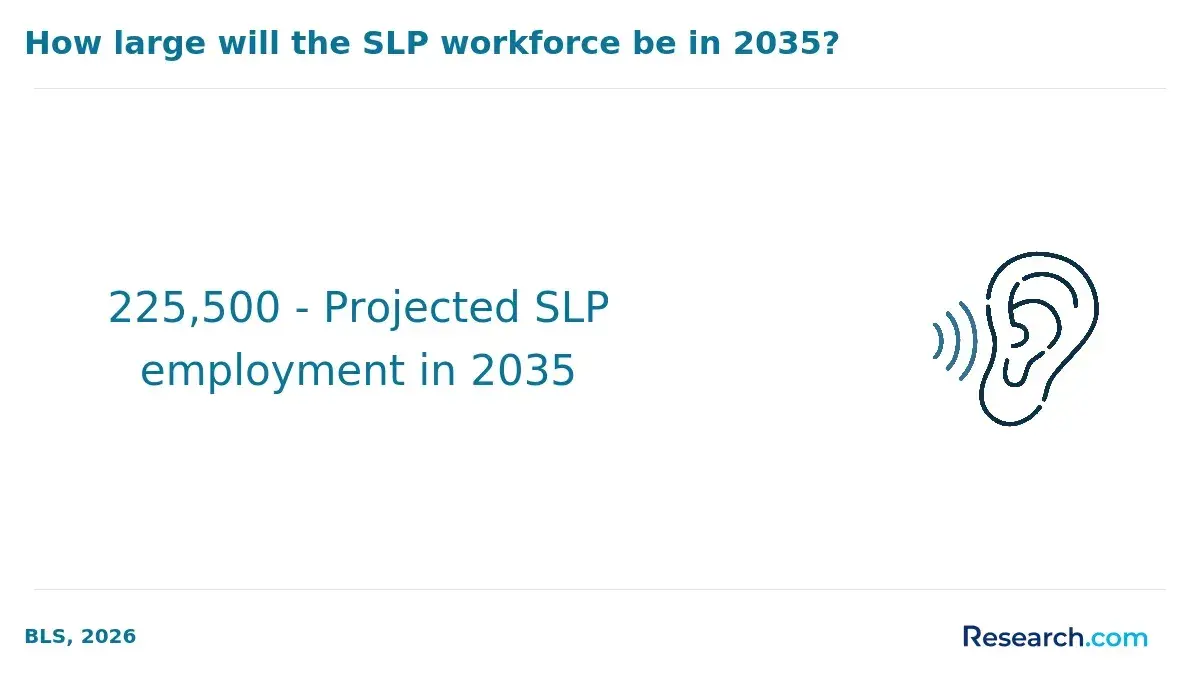
The outlook for speech-language pathologists is strong based on the employment figures provided. As of 2023, approximately 180,800 speech-language pathologists were employed in the United States. By 2033, the field is projected to add 33,300 jobs, with 13,700 job openings expected each year on average. Speech pathology jobs are expected to grow by 18% from 2023 to 2033.

Several forces support demand: more recognition of communication disorders in children, greater need for services among older adults, medical advances that increase survival after neurological events, and continued use of SLPs in schools, rehabilitation, and long-term care. Because the role requires graduate education and licensure, qualified clinicians may have access to opportunities across multiple settings.

For students comparing majors with meaningful healthcare or education outcomes, speech-language pathology can be considered alongside other strong college majors to pursue. If you are comparing shorter allied-health options, you may also want to review how much a medical assistant program costs to understand the trade-off between training length, responsibility, and earning potential.

What is the job outlook for speech-language pathologists?

What Are the Highest-Paying Industries for Speech Pathologists?

Pay for speech-language pathologists varies by employer, geographic area, experience level, work schedule, and specialization. In 2023, the highest-paying industries for speech-language pathologists included civic and social organizations, with an average annual salary of $130,620; home health care services, at $121,410; and management of companies and enterprises, at $112,110. These figures show why work setting can matter as much as job title when evaluating compensation.

How Do I Choose the Right Speech Pathology Specialization?

The right specialization should match the population you want to serve, the clinical problems you want to solve, the environment where you do your best work, and the lifestyle you want. A high-paying setting is not always the right setting if the caseload, documentation burden, schedule, or patient population does not fit you.

SpecializationCommon clientsTypical work settingsChoose it if you enjoy
Pediatric speech pathologyInfants, children, and adolescentsSchools, early intervention, pediatric clinics, hospitalsDevelopmental communication, family coaching, and child-centered therapy
GerontologyOlder adultsNursing homes, hospitals, rehabilitation facilities, home healthSwallowing, cognition, stroke recovery, and quality-of-life support
Fluency disordersPeople who stutter or have related fluency needsClinics, schools, private practice, telepracticeLong-term coaching, confidence-building, and individualized therapy
Voice disordersPatients with vocal strain, injury, or voice lossENT clinics, hospitals, private practice, performance-focused clinicsVocal health, anatomy, performance voice, and rehabilitation
Medical speech pathologyPatients with stroke, traumatic brain injury, dysphagia, or neurological conditionsHospitals, rehabilitation centers, skilled nursing facilitiesComplex cases, interdisciplinary teams, and medical decision-making

Questions to ask before choosing a specialization

  • Which population motivates me most? Children, older adults, performers, stroke survivors, and people with developmental disabilities all require different clinical approaches.
  • What work environment fits my personality? Schools, hospitals, home health, private practice, and telepractice differ in pace, paperwork, autonomy, and collaboration.
  • Am I comfortable with medical complexity? Dysphagia and neurological rehabilitation can be rewarding, but they may require a higher tolerance for acute illness and risk management.
  • Do I want a predictable schedule or higher flexibility? School-based roles may follow academic calendars, while private practice and home health can vary more.
  • What additional training will I need? Some students explore accelerated or focused graduate routes, including 1 year master’s programs, but SLP candidates must still verify accreditation, clinical hours, and licensure fit.

What Certifications or Training Programs Can Improve Speech Pathology Skills?

Certifications and continuing education can help SLPs build specialized competence, remain current with research, and qualify for more advanced responsibilities. Credentials should be chosen strategically; not every certificate will improve your career equally.

  • Certificate of Clinical Competence in Speech-Language Pathology (CCC-SLP): This ASHA credential is widely recognized by employers and reflects graduate education, clinical preparation, examination, and continuing education.
  • Board Certified Specialist credentials: Advanced specialization can support expertise in areas such as fluency, swallowing, and pediatric feeding when aligned with your clinical goals.
  • Continuing Education Units: CEUs help clinicians maintain licensure, learn new therapy methods, track research updates, and stay current with ethical and documentation standards.
  • Telespeech or telepractice training: Remote care requires more than video access. SLPs need training in virtual engagement, privacy, documentation, caregiver involvement, and state practice rules. Students comparing skill-focused credentials can also review online certifications that pay well.
  • Augmentative and Alternative Communication training: AAC training helps clinicians assess and support people who use communication devices, speech-generating tools, visual supports, or other alternative communication systems.
  • Behavioral analysis training: This can be useful for clinicians working with children with autism or developmental conditions, especially when communication goals intersect with behavior, reinforcement, and caregiver coaching.

What Opportunities Exist Beyond Traditional Clinical Practice?

Speech-language pathology skills can transfer into education, research, leadership, policy, product development, assistive technology, health administration, and communication consulting. Some SLPs train future clinicians, write curriculum, manage school or hospital programs, consult for digital therapy tools, work in utilization review, or contribute to accessibility initiatives.

People who enjoy language analysis may also explore careers in linguistics, where knowledge of language structure, acquisition, processing, assessment, and communication can support roles in teaching, research, language technology, policy, or testing.

Can Additional Certifications Accelerate Career Growth in Speech Pathology?

Additional credentials can strengthen a speech pathology career when they document skills that employers or clients actually need. The most useful certifications are tied to a clear goal: dysphagia expertise, pediatric feeding, AAC, fluency, telepractice, supervision, or leadership. Broad, unrelated credentials are less likely to improve your marketability.

If you are comparing credential options across fields, review certifications that pay well and ask whether each credential is recognized by employers, connected to licensure or continuing education, and relevant to the population you serve.

How Can an Accelerated Bachelor’s Program Advance a Speech Pathology Career?

An accelerated bachelor’s program can help students complete undergraduate requirements faster, especially if they already have transfer credits or are changing careers. However, a bachelor’s degree alone does not qualify someone to practice independently as an SLP. It is usually a stepping stone toward graduate admission, prerequisite completion, assistant-level roles, or related communication-disorder work.

Students who want a faster undergraduate route can compare a fast online bachelor’s degree, but they should verify that the program includes the prerequisites required by future SLP master’s programs.

What Are the Benefits and Trade-Offs of Accelerated Speech Pathology Programs?

Accelerated programs can be useful for motivated students who want a shorter route through coursework, but speed should never come at the expense of accreditation, clinical placement quality, licensure eligibility, or learning support.

Potential benefitWhy it mattersRisk to check
Faster completionYou may move toward graduate study or employment soonerThe pace may be difficult for students working full time
Flexible online courseworkOnline delivery can help working adults and caregiversClinical placements still may require in-person attendance
Possible cost efficiencyA shorter timeline can reduce some education-related expensesTotal cost depends on tuition, fees, travel, and lost work time
Focused curriculumCondensed study can keep students immersed in the fieldLess time may be available for remediation or exploration
Specialized tracksSome options align coursework with pediatric, medical, or other interestsSpecializations should match employer demand and licensure requirements

Students considering a faster route can compare accelerated online speech pathology degree programs, but the most important question is whether the program supports the next credential you need.

What Challenges Do Speech Pathologists Face?

Speech pathology can be deeply meaningful, but it is not an easy career. The work requires emotional resilience, precise documentation, clinical flexibility, and strong communication with families, educators, insurers, and healthcare teams.

  • Emotional intensity: SLPs may work with people who are frustrated, medically fragile, developmentally delayed, or facing long-term disability. Compassion is essential, but burnout prevention matters.
  • Highly varied client needs: A single caseload may include articulation, language, swallowing, fluency, voice, AAC, and cognitive-communication needs. Therapy must be individualized.
  • Large caseloads: Schools and healthcare settings may require clinicians to manage many clients while still meeting legal, ethical, and documentation requirements.
  • Administrative workload: Reports, treatment notes, IEPs, billing documentation, progress updates, and insurance requirements can consume significant time.
  • Ongoing learning demands: New research, technology, treatment methods, and regulations require continuing education. Students looking for accessible pathways into the field may compare SLP programs that are easier to get into, while still checking quality and licensure alignment.

How Is Emerging Technology Shaping Speech Pathology?

Technology is changing how SLPs assess, deliver, document, and supplement therapy. AI-supported tools, telepractice platforms, wearable feedback devices, digital home-practice systems, and AAC technologies can extend care, improve data collection, and support clients outside traditional sessions.

AI tools may help analyze speech patterns, identify features for clinician review, generate practice materials, or support documentation. These tools should assist clinical decision-making, not replace professional judgment. SLPs remain responsible for diagnosis, treatment planning, ethics, cultural responsiveness, and patient safety.

Teletherapy continues to expand access for clients who face transportation, geographic, or scheduling barriers. It is especially useful when clients can participate effectively through video-based care and when caregivers or school staff can support implementation. However, SLPs must comply with state licensure rules, privacy requirements, and appropriate service-delivery standards.

AAC technology is also advancing. Speech-generating devices, eye-tracking systems, tablets, apps, and personalized communication tools can help people with complex communication needs participate more fully in school, work, healthcare, and community life.

Professionals interested in the broader human-services context of technology, care coordination, and access may compare related graduate options such as a master’s in human services online from an accredited program.

How Can I Finance Speech Pathology Education Effectively?

Speech pathology education can require several years of study, so financing should be planned before enrollment. Students should compare tuition, fees, clinical placement costs, travel, books, technology requirements, living expenses, and the income they may forgo while studying.

  • Complete financial aid forms early. Federal aid, grants, work-study, and loans may depend on timely applications and school eligibility.
  • Ask about scholarships and assistantships. Graduate departments, state agencies, professional associations, and employers may offer support.
  • Compare total cost, not just tuition. Online programs can still require campus visits, practicum travel, background checks, immunizations, and equipment.
  • Confirm accreditation before borrowing. A cheaper program is not a good investment if it does not support licensure.
  • Talk with financial aid offices. Students needing flexible aid options can review online schools that accept FAFSA.

Is a Speech Pathology Degree a Profitable Investment?

A speech pathology degree can be a strong investment for students who want licensed clinical work, are prepared for graduate study, and choose an accredited path that leads to employability. The return depends on program cost, debt level, state licensure, work setting, salary, location, and whether you enter a high-need specialty.

Students should compare the SLP pathway with alternatives. Some easier online degrees may require less clinical training, but they may not lead to the same licensed healthcare or school-based roles. The best decision is not the easiest degree; it is the degree that fits your career goal and financial reality.

Can Online Education Elevate a Speech Pathology Career?

Online education can make speech pathology and related communication-disorder study more accessible, especially for working adults and students outside major university centers. The key limitation is clinical training: SLP preparation cannot be fully theoretical. Students must complete supervised experiences that meet program, certification, and state requirements.

When reviewing online audiology and speech-language pathology programs, ask whether the program is intended for pre-professional study, assistant preparation, graduate-school prerequisites, or licensure-track SLP training. Those categories are not the same.

What Factors Are Driving Demand for Speech Pathology Professionals?

Demand for speech-language pathologists is influenced by several factors: an aging population needing swallowing and communication rehabilitation, greater awareness of developmental communication disorders, continued school-based service requirements, expansion of telepractice, and the need for specialized care after stroke, brain injury, cancer treatment, and neurological disease.

Students who want a deeper labor-market view can examine trends in the number of speech-language pathologists in the US and compare those patterns with projected openings, specialty demand, and local employer needs.

Can Short-Term Online Programs Fast-Track Entry into Speech Pathology?

Short-term programs can help students build foundational knowledge, complete prerequisites, or prepare for assistant-level work, but they do not replace the accredited graduate education required for independent SLP practice. Be cautious with any program that implies a quick certificate can qualify you as a licensed speech-language pathologist.

Students exploring faster credentials may compare options such as the best associate degree in 6 months online, but they should treat short-term study as a starting point rather than a substitute for the full SLP pathway.

How Can Advanced Certifications Accelerate a Speech Pathology Career?

Advanced certifications can help experienced SLPs move toward specialized clinical roles, supervisory responsibilities, consulting, private practice growth, or stronger salary negotiations. The best credentials are those connected to documented expertise, recognized standards, and a clear patient population or practice area.

Clinicians planning their next step can review SLP certifications and prioritize options that align with their current caseload, future specialty, and employer expectations.

How Does Continued Professional Development Support Career Advancement?

Professional development keeps SLPs current with changing research, ethics, technology, cultural responsiveness, documentation requirements, and treatment approaches. It also helps clinicians avoid stagnation by building new specialties and preparing for leadership.

Development can include workshops, CEUs, mentorship, supervision training, advanced certificates, doctoral study, or management education. Professionals considering broader education options may compare a fast online degree, but in licensed SLP practice, speed should always be weighed against accreditation and clinical quality.

What Regulatory and Reimbursement Challenges Affect Speech Pathology Careers?

SLPs must manage regulations related to licensure, documentation, patient privacy, school services, medical necessity, billing, supervision, telepractice, and continuing education. Reimbursement rules can affect how services are authorized, documented, billed, and paid, especially in healthcare and private practice.

Clinicians moving into leadership or private practice may benefit from training in healthcare administration, compliance, budgeting, and operations. Some professionals compare accelerated online master’s programs when they want management knowledge in addition to clinical expertise.

Does Accreditation Impact Career Success in Speech Pathology?

Accreditation is one of the most important factors in choosing a speech pathology program. It can affect graduate admission, licensure eligibility, certification, employer confidence, and transferability of education. A program that is inexpensive or convenient but not aligned with licensure can become costly if it delays or blocks your career goal.

Students planning for licensed practice should review ASHA-accredited SLP programs and confirm requirements directly with both the program and the state licensing board where they plan to work.

What Skills Are Critical for Success in Speech Pathology Careers?

Successful speech pathology careers require both clinical expertise and human-centered communication. SLPs must understand assessment, anatomy, language development, speech production, swallowing, treatment planning, data collection, and ethical practice. They also need patience, adaptability, cultural awareness, empathy, and the ability to explain complex issues clearly to clients, families, teachers, and medical teams.

Skill areaWhy it mattersHow to build it
Clinical reasoningHelps clinicians choose appropriate assessments and interventionsSupervised practice, case review, mentorship, and continuing education
CommunicationEssential for counseling clients and collaborating with teamsFeedback, role-play, family coaching, and interprofessional training
DocumentationSupports legal, clinical, educational, and reimbursement requirementsPractice with reports, SOAP notes, IEPs, and medical records
Technology fluencySupports telepractice, AAC, data tracking, and digital therapy toolsHands-on training with platforms, devices, and privacy procedures
Emotional resilienceHelps manage difficult cases and prevent burnoutMentorship, workload boundaries, reflective practice, and peer support

Can a Teacher Become a Speech Pathologist?

Yes. Teachers often bring valuable skills to speech-language pathology, including lesson planning, child development knowledge, classroom communication, behavior support, and family collaboration. However, teaching experience does not replace SLP graduate education, clinical training, Praxis preparation, or state licensure.

Educators considering this transition should map their existing credits, identify prerequisite gaps, compare accredited graduate programs, and understand the clinical fellowship process. For a more focused transition plan, review how a teacher can become a speech pathologist.

Is a Doctoral Degree Beneficial for Advancing a Speech Pathology Career?

A doctoral degree is not required for most entry-level SLP roles, but it can support careers in university teaching, research, advanced clinical leadership, administration, policy, and specialized program development. The value depends on your goals: clinicians who want to practice may not need a doctorate, while those seeking academic or high-level leadership roles may benefit from one.

Professionals comparing advanced pathways can review options such as a 1 year doctoral program, while still checking whether the program format, research expectations, accreditation, and career outcomes align with their plans.

Is a Master’s Degree Essential for Advancing a Speech Pathology Career?

For independent practice as a speech-language pathologist, a master’s degree is typically essential because it is tied to licensure, clinical preparation, and professional certification. It also provides the depth of training needed to assess and treat complex communication and swallowing disorders.

Students deciding whether graduate school is worth the cost should compare tuition, debt, clinical placement quality, salary potential, licensure requirements, and preferred work settings. For a deeper evaluation, review whether a master’s degree in SLP is worth it.

What Graduates Say About Speech Pathology Careers

  • Samantha: "Working as a medical speech-language pathologist has shown me how much communication and swallowing care can affect a person’s recovery. The job can be demanding, especially when patients are facing serious health problems, but my training prepared me to stay focused and compassionate. The most meaningful moments come when patients and families see progress they were not sure was possible."
  • Lydia: "Voice therapy became the specialty I did not expect to love. Helping performers recover after vocal injury is both technical and personal because their voices are tied to their identity and livelihood. My coursework gave me the foundation, but my clinical placements helped me understand why this niche mattered to me."
  • Jasper: "In a skilled nursing facility, I see every day how speech therapy supports older adults after stroke and illness. My master’s program taught me the clinical skills, but my patients have taught me the importance of patience, listening, and dignity. Helping someone communicate again is a privilege."

Does Mentorship Accelerate Career Growth in Speech Pathology?

Mentorship can shorten the learning curve for new and experienced SLPs. A strong mentor can help you interpret difficult cases, choose continuing education, prepare for salary discussions, avoid ethical mistakes, manage documentation, and decide whether to specialize, supervise, pursue private practice, or move into leadership.

Students and early-career professionals should seek mentors through graduate programs, clinical fellowship supervisors, professional associations, alumni networks, workplaces, and online communities. Those still building the academic foundation for graduate study can also compare an affordable bachelor’s degree online as part of a longer SLP plan.

Common Mistakes to Avoid When Planning a Speech Pathology Career

  • Choosing a program without checking accreditation. Always confirm whether the program supports licensure and certification in the state where you plan to work.
  • Looking only at tuition. Fees, clinical travel, lost income, exam costs, relocation, and delayed graduation can change the real cost.
  • Assuming online means fully remote. Many online SLP programs still require in-person practicums, clinical placements, labs, or campus visits.
  • Confusing audiology with speech-language pathology. The fields are related, but the training and licensure pathways differ.
  • Ignoring state licensure rules for telepractice. Remote services may require licensure in more than one state depending on where the clinician and client are located.
  • Assuming salary outcomes are guaranteed. Pay varies by setting, specialty, employer, location, schedule, and experience.
  • Picking a specialization too early without clinical exposure. Use internships and practicums to test settings before committing to a niche.

Questions to Ask Before Enrolling in a Speech Pathology Program

  • Is the program accredited for the credential and career I want?
  • Does the curriculum meet prerequisite and licensure requirements in my state?
  • How are clinical placements arranged, and who is responsible for finding them?
  • What are the program’s Praxis preparation supports?
  • What is the total cost, including fees, travel, technology, and living expenses?
  • Can I complete the program while working, or will the clinical schedule make that unrealistic?
  • What settings do graduates typically enter: schools, hospitals, private practice, skilled nursing, telepractice, or research?
  • Does the program offer support for the clinical fellowship process?
  • Are there faculty or supervisors in my preferred specialization?
  • What student support is available if I struggle academically or clinically?

References

  • Salary.com. (2024). Pediatric speech pathologist salary. Retrieved October 2, 2024, from Salary.com.
  • Salary.com. (2024). Speech therapist salary in the United States. Retrieved October 2, 2024, from Salary.com.
  • Salary.com. (2024). Audiologist salary. Retrieved October 2, 2024, from Salary.com.
  • Salary.com. (2024). Medical language specialist salary in the United States. Retrieved October 2, 2024, from Salary.com.
  • Salary.com. (2024). Clinical audiologist salary in the United States. Retrieved October 2, 2024, from Salary.com.
  • Salary.com. (2024). Dispensing audiologist salary in the United States. Retrieved October 2, 2024, from Salary.com.
  • Salary.com. (2024). Educational audiologist salary. Retrieved October 2, 2024, from Salary.com.
  • Salary.com. (2024). Speech and language pathologist salary. Retrieved October 2, 2024, from Salary.com.
  • Salary.com. (2024). Speech therapy assistant salary. Retrieved October 2, 2024, from Salary.com.
  • Talent.com. (2024). Speech pathologist assistant average salary in the USA, 2024. Retrieved October 2, 2024, from Talent.com.
  • U.S. Bureau of Labor Statistics. (2024). Occupational employment and wages, May 2023 - 29-1127 Speech-language pathologists. Retrieved October 2, 2024, from BLS.
  • U.S. Bureau of Labor Statistics. (2024). Speech-language pathologists. Retrieved October 2, 2024, from BLS.

Key Insights

  • The highest salaries in this list are led by audiology-related roles, but audiology and speech-language pathology have different education and licensure pathways.
  • Licensed SLP practice generally requires a master’s degree, supervised clinical experience, Praxis completion, a clinical fellowship of about nine months and approximately 1,260 hours, and state licensure.
  • In 2023, speech-language pathologists earned an average annual salary of $92,630 across all US industries, with projected job growth of 18% from 2023 to 2033.
  • Work setting strongly affects pay. In 2023, civic and social organizations, home health care services, and management of companies and enterprises were among the highest-paying industries listed for SLPs.
  • Online and accelerated programs can improve access, but students must verify accreditation, clinical placement requirements, and state licensure alignment before enrolling.
  • The best specialization is not automatically the highest-paying one. Choose based on patient population, work environment, clinical interests, documentation tolerance, and long-term career goals.
  • Certifications, mentorship, and continuing education can improve career mobility when they are tied to a specific clinical or leadership objective.

Other Things You Should Know About Speech Pathology Jobs and Careers

What advanced certification most significantly boosts a speech pathologist's salary in 2026?

In 2026, obtaining the CCC-SLP (Certificate of Clinical Competence in Speech-Language Pathology) can significantly boost salaries by enhancing credentials and career opportunities within specialized fields like pediatric or geriatric speech pathology.

What advanced specialization in speech pathology offers the highest salary in 2026?

In 2026, specializing in medical speech-language pathology, particularly in areas such as dysphagia management and critical care, often commands the highest salaries. This is due to the complexity of work environments like hospitals or rehabilitation centers, combined with the demand for expertise in treating swallowing disorders.

What advanced certification most significantly boosts a speech pathologist's salary in 2026?

In 2026, obtaining a certification in Pediatric Feeding Disorders can significantly boost a speech pathologist’s salary. This advanced certification is highly specialized and increasingly in demand, thus leading to higher pay scales in clinics and hospitals focusing on pediatric care.

Related Articles
2026 How to Become a Speech Language Pathologist in Pennsylvania: Requirements & Certification thumbnail
2026 How to Become a Speech Language Pathologist in Utah: Requirements & Certification thumbnail
2026 Are Speech Pathologists in Demand? SLP Job Growth & Shortage thumbnail
Careers MAY 19, 2026

2026 Are Speech Pathologists in Demand? SLP Job Growth & Shortage

by Imed Bouchrika, PhD
2026 How to Become a Speech Language Pathologist in Arkansas thumbnail
Careers JUN 17, 2026

2026 How to Become a Speech Language Pathologist in Arkansas

by Imed Bouchrika, PhD
2026 How to Become a Speech Language Pathologist in Virginia: Requirements & Certification thumbnail
2026 How to Become a Speech Language Pathologist in Vermont: Requirements & Certification thumbnail

Recently Published Articles

Newsletter & Conference Alerts

Research.com uses the information to contact you about our relevant content.
For more information, check out our privacy policy.

Newsletter confirmation

Thank you for subscribing!

Confirmation email sent. Please click the link in the email to confirm your subscription.