2027 Best Online General Studies Degrees for Students With Unfinished Bachelor's Credits

Co-Founder and Chief Data Scientist
If you left college with unfinished bachelor's credits, an online general studies degree can turn past coursework into a completed credential. The need is large: the National Student Clearinghouse Research Center reported in 2024 that 36.8 million U. S. adults under 65 had some college credit but no credential. This guide is for returning students comparing flexible completion programs. You'll learn how transfer credits, accreditation, costs, timelines, curriculum, and career outcomes work so you can choose a program that saves time without weakening your long-term options.
Key Things You Should Know
- For students with 60 to 90 usable credits, the best online general studies programs are usually accredited degree-completion programs that maximize transfer credit, offer flexible upper-division courses, and provide adult-student advising.
- Published tuition varies widely, but College Board's 2024 pricing data shows average in-state public four-year tuition and fees at $11,610, making transfer efficiency as important as the per-credit rate.
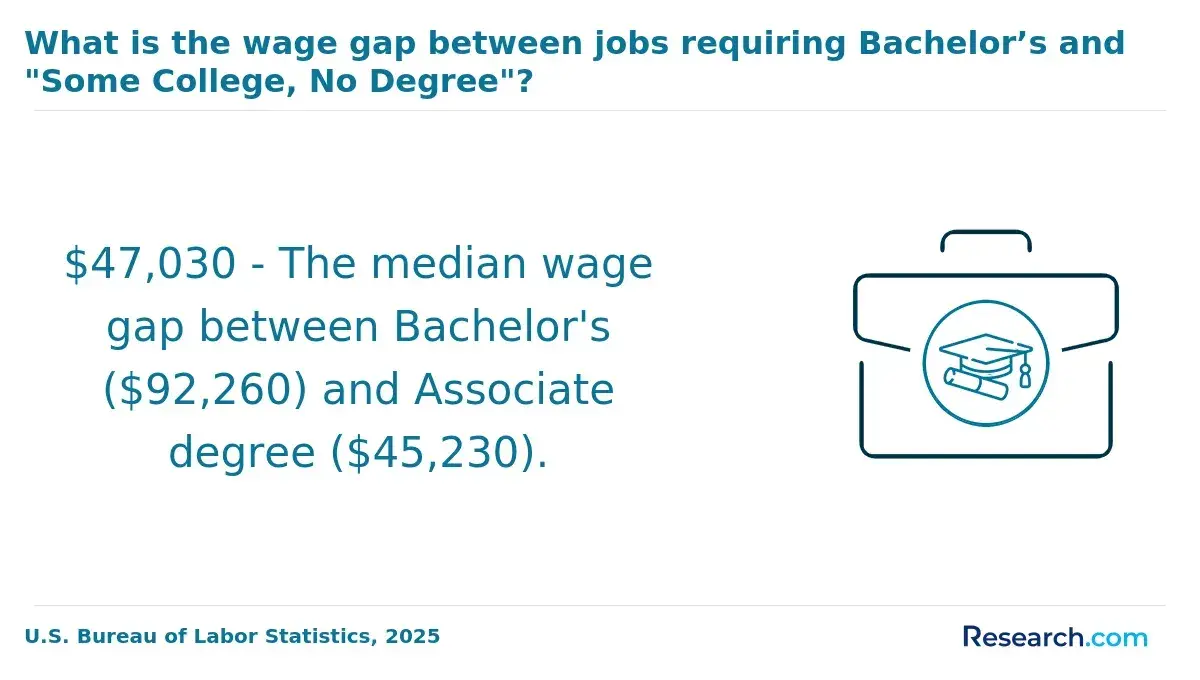
- BLS 2024 education data shows bachelor's degree holders had median weekly earnings of $1,543, compared with $992 for workers with some college but no degree; the degree can matter most when employers use a bachelor's as a screening requirement.
What are online general studies degrees for unfinished bachelor's credits?
Online general studies degrees for unfinished bachelor's credits are bachelor's programs designed to help returning students complete a four-year degree using previously earned college credit. Depending on the school, the credential may be called general studies, liberal studies, interdisciplinary studies, integrated studies, professional studies, or university studies.
The common feature is flexibility. Instead of requiring a tightly sequenced major such as nursing, engineering, or accounting, these programs often let students combine coursework from areas like business, communication, social science, humanities, technology, leadership, and public service. That structure can be especially useful if your old credits come from multiple schools or majors.
A general studies completion program may be a strong fit if you need a bachelor's degree for promotion, graduate school eligibility, public-sector hiring, military advancement, or a career pivot where a broad credential is acceptable. It may be a weaker fit if your goal requires a specific major, licensure pathway, or technical prerequisite sequence. For example, teaching licensure, engineering licensure, CPA eligibility, and many health professions usually require more specialized coursework.
The phrase "best" should mean "best for your credit history and goal," not simply the school with the biggest brand name. Some students need the easiest bachelor degree to get online because they are balancing work and family, while others need a program with stronger career alignment, writing support, or preparation for graduate study.
Before choosing this route, compare the degree name, transfer-credit ceiling, upper-division credit requirement, residency requirement, available concentrations, and whether the program appears on the same transcript as the school's campus degrees. These details affect both completion speed and how confidently you can explain the degree to employers.
How do transfer credits work for degree completion?
Transfer credits determine how much of your old college work still counts toward the new bachelor's degree. Most online completion programs review transcripts course by course, then decide which credits apply to general education, major requirements, electives, or upper-division requirements.
Returning students should understand the main credit categories before applying, because two schools can evaluate the same transcript very differently. The table below summarizes the credit types that commonly affect degree-completion planning.
| Credit type | How it may apply | What to verify |
| General education credits | Often satisfy writing, math, science, humanities, and social science requirements | Whether old courses still meet current general education categories |
| Major or concentration credits | May count toward an interdisciplinary focus area if the content matches | Whether the program requires recent or upper-division coursework |
| Free electives | Can absorb unrelated credits from prior majors or exploratory coursework | How many elective credits the degree allows |
| Military or workforce credit | May be considered through ACE recommendations, prior learning assessment, or portfolio review | Fees, documentation rules, and maximum credit limits |
| Exam-based credit | May include CLEP, DSST, AP, or similar exams if accepted by the school | Minimum scores and whether exam credit counts toward residency limits |
Use a structured process before you enroll. The goal is to avoid paying for courses you do not need and to identify any hidden requirements early.
- Request official transcripts from every college you attended, even if you withdrew or earned low grades.
- Ask each school for an unofficial transfer estimate before committing, then request a formal degree audit after admission.
- Compare how many credits apply to graduation, not just how many credits are accepted by the institution.
- Check the residency requirement, which is the minimum number of credits you must complete at the new school.
- Confirm upper-division requirements, because many bachelor's programs require a set number of junior- and senior-level credits.
- Ask whether old science, technology, business, or professional courses expire for your intended concentration.
A common mistake is assuming that "up to 90 transfer credits" means all 90 will apply to your degree. A school may accept many credits on your record but apply fewer toward the exact degree plan. Another red flag is an admissions conversation that discusses speed but not a written degree audit.
Which schools have accredited online completion programs?
Accredited online completion programs are offered by public universities, private nonprofit universities, and some private for-profit institutions. The most important quality screen is institutional accreditation recognized by the U.S. Department of Education or the Council for Higher Education Accreditation. For general studies, programmatic accreditation is usually not required, but institutional accreditation affects transferability, federal financial aid eligibility, and employer confidence.
The schools below are examples of accredited institutions with online bachelor's completion options that can fit students with mixed or unfinished credits. Availability, transfer policies, tuition, and program names can change, so use this as a comparison starting point rather than a final ranking.
| School | Example online completion option | Best-fit student | Accreditation point to check |
| Arizona State University Online | Interdisciplinary or liberal studies pathways | Students who want a large public university with many online course choices | Institutional accreditation through the Higher Learning Commission |
| Penn State World Campus | Letters, Arts, and Sciences or multidisciplinary options | Students who want a recognizable public university brand and broad electives | Institutional accreditation through the Middle States Commission on Higher Education |
| University of Arizona Online | General studies or applied humanities-style pathways | Students seeking customizable concentrations in an online public university format | Institutional accreditation through WSCUC |
| Southern New Hampshire University | General studies or liberal arts-oriented completion pathways | Students who want frequent start dates and adult-learner advising | Institutional accreditation through NECHE |
| University of North Texas | Applied arts and sciences or integrative studies options | Students with technical, workforce, military, or community college credits | Institutional accreditation through SACSCOC |
| University of Wisconsin system campuses | Liberal studies, professional studies, or flexible completion degrees | Students comparing public options with adult-completion structures | Institutional accreditation through the Higher Learning Commission |
When comparing schools, ask for evidence that the program is built for completion students rather than simply offering online classes. Strong signs include dedicated transfer advising, published credit limits, prior learning assessment policies, career services for online students, and a sample degree plan based on different transfer-credit scenarios.
Be cautious with schools that promise unusually fast completion before reviewing your transcripts, avoid discussing accreditation clearly, or pressure you to enroll before you receive a written cost and credit estimate. A legitimate program should help you understand trade-offs, not just sell convenience.
How do online and campus programs compare?
Online and campus general studies programs can lead to the same bachelor's credential, but the learning experience, schedule, support model, and networking opportunities differ. The right choice depends on your work schedule, location, learning style, and need for in-person services.
The table below compares the most practical differences for returning students who already have college credits and want the shortest responsible path to graduation.
| Factor | Online completion program | Campus program | Best choice when |
| Schedule | Often asynchronous or evening-friendly | More fixed class meeting times | Online is better if you work full time or have caregiving responsibilities |
| Course access | May offer frequent starts and year-round terms | May follow traditional semester sequencing | Online is better if delayed course availability would slow graduation |
| Support | Relies on virtual advising, tutoring, library access, and career services | Offers in-person advising, study spaces, and campus offices | Campus is better if you need face-to-face accountability |
| Networking | Usually built through discussion boards, group projects, and virtual events | Often easier through campus clubs, faculty access, and local employers | Campus is better if local internship networking is central to your plan |
| Cost structure | May reduce commuting, housing, parking, and relocation costs | May offer campus-specific scholarships or local employer partnerships | Compare total cost, not just tuition |
Online programs work best for self-directed students who can manage deadlines without frequent in-person reminders. Campus programs may be better if you struggled with online coursework before, need lab-heavy prerequisites, or want a highly local college experience.
The growth of AI tools has also changed online learning. Many programs now use proctored exams, plagiarism detection, writing-process checks, and project-based assessments. That does not make online learning less legitimate, but it does mean students should expect clearer academic integrity rules and more emphasis on original analysis, communication, and applied projects.
What courses are in a general studies curriculum?
A general studies curriculum usually combines general education, upper-division electives, a concentration or theme, and a capstone course. The exact mix depends on how your transfer credits fit, which is why two students in the same program may have very different schedules.
The table below shows common curriculum areas and how they can support career or graduate-school goals.
| Curriculum area | Common course examples | Why it matters |
| Communication | Professional writing, public speaking, digital communication | Supports management, sales, HR, public service, and graduate study readiness |
| Social science | Psychology, sociology, political science, ethics | Builds people-centered analysis useful in public, nonprofit, and business roles |
| Business and leadership | Management, organizational behavior, project management, entrepreneurship | Helps students connect broad credits to workplace advancement |
| Technology and data literacy | Information systems, data analysis, spreadsheet modeling, cybersecurity basics | Improves employability in roles affected by automation and digital workflows |
| Humanities | History, philosophy, literature, cultural studies | Strengthens writing, critical thinking, and contextual reasoning |
| Capstone or portfolio | Research project, applied project, professional portfolio | Helps explain the value of an interdisciplinary degree to employers |
Choose courses backward from your goal. If you want a promotion, select leadership, communication, and project-based courses that match your current industry. If you want graduate school, prioritize research writing, statistics, and prerequisites for your intended master's program. If you are changing fields, use electives to build a coherent story rather than collecting unrelated easy courses.
A common mistake is treating general studies as a random collection of leftover credits. The stronger approach is to build a theme, such as business communication, public administration, human services, technology management, or organizational leadership. That theme can make the degree easier to explain in interviews and on a resume.
What admission requirements do returning students need?
Admission requirements for returning students are usually more flexible than first-year admissions, but they still vary by school. Many online completion programs ask for a minimum number of prior credits, a minimum GPA, and transcripts from every institution attended.
Prepare these items before contacting admissions so you can get a faster and more accurate credit evaluation.
- Official transcripts from all colleges and universities previously attended
- High school transcript or GED documentation if you have limited college credit
- Government-issued identification and residency information for tuition classification
- Application form and application fee, unless the school offers a waiver
- Personal statement or goal statement if required for adult degree completion admission
- Military transcripts, exam score reports, or professional training records if you want nontraditional credit reviewed
- Financial aid documents, including the FAFSA, if you plan to use federal aid
Students with low prior GPAs should not assume they are out of options. Some schools offer conditional admission, academic renewal, probationary admission, or a pathway through a community college or nondegree term. The key is to ask whether your GPA affects admission only, transfer credit acceptance, financial aid eligibility, or all three.
Returning students should also ask about readmission rules if they plan to return to the same school where they originally started. In some cases, readmission may preserve more old credits or catalog rights. In other cases, a different completion-focused university may apply more credits and offer a clearer route to graduation.
How long does degree completion usually take?
Completion time depends mainly on how many credits apply to the new degree, how many credits you can take each term, and how often required courses are offered. A bachelor's degree typically requires about 120 semester credits, but the number you still need may be much lower if your prior credits transfer well.
Use the examples below as planning scenarios rather than promises. Your actual timeline will depend on the degree audit, course availability, academic performance, and whether you attend full time or part time.
| Usable transfer credits | Credits remaining | Typical full-time path | Typical part-time path |
| 90 credits | About 30 credits | Roughly 1 academic year | About 18 to 24 months |
| 75 credits | About 45 credits | About 15 to 18 months | About 2 to 3 years |
| 60 credits | About 60 credits | About 2 academic years | About 3 to 4 years |
| Fewer than 45 credits | More than 75 credits | Usually closer to a traditional transfer timeline | May take several years unless course load increases |
Accelerated formats can shorten the calendar by using eight-week terms, year-round enrollment, or heavier course loads. They work best for students with stable schedules and strong writing, reading, and time-management skills. If you are comparing accelerated online degrees, look beyond speed and check weekly workload, withdrawal policies, and whether your financial aid covers nontraditional terms.
To estimate your realistic timeline, follow a simple sequence before enrolling.
- Get a written degree audit showing credits remaining by category.
- Ask which remaining courses are offered every term and which are offered only once per year.
- Decide how many hours per week you can study without risking poor grades or withdrawal.
- Check whether summer or winter terms can reduce the calendar without increasing burnout.
- Build a backup plan in case a required course is full, canceled, or unavailable.
The biggest timeline mistake is enrolling full time because it looks faster on paper, then withdrawing because the workload is unrealistic. For adults with demanding jobs, a steady part-time plan can be faster in practice than an overloaded plan that leads to repeated stops.
What costs and financial aid options are available?
Costs vary by institution, residency status, transfer efficiency, fees, books, technology needs, and how many credits you still need. For degree-completion students, the cheapest per-credit rate is not always the cheapest total path. A school with slightly higher tuition may cost less overall if it accepts more of your previous coursework.
College Board's 2024 pricing data reported average published tuition and fees of $11,610 for in-state students at public four-year institutions. Use that figure as a broad benchmark, not as a prediction, because online programs may charge separate rates and returning students often pay by credit.
When comparing prices, request a complete cost estimate that includes the items most likely to affect your final bill.
- Tuition per credit for online students
- Mandatory online, technology, library, transcript, graduation, or course fees
- Books, software, lab kits, testing fees, or proctoring fees
- Prior learning assessment or portfolio evaluation fees
- Transfer-credit limits that may force you to retake courses
- Residency rules that determine whether you qualify for in-state or discounted tuition
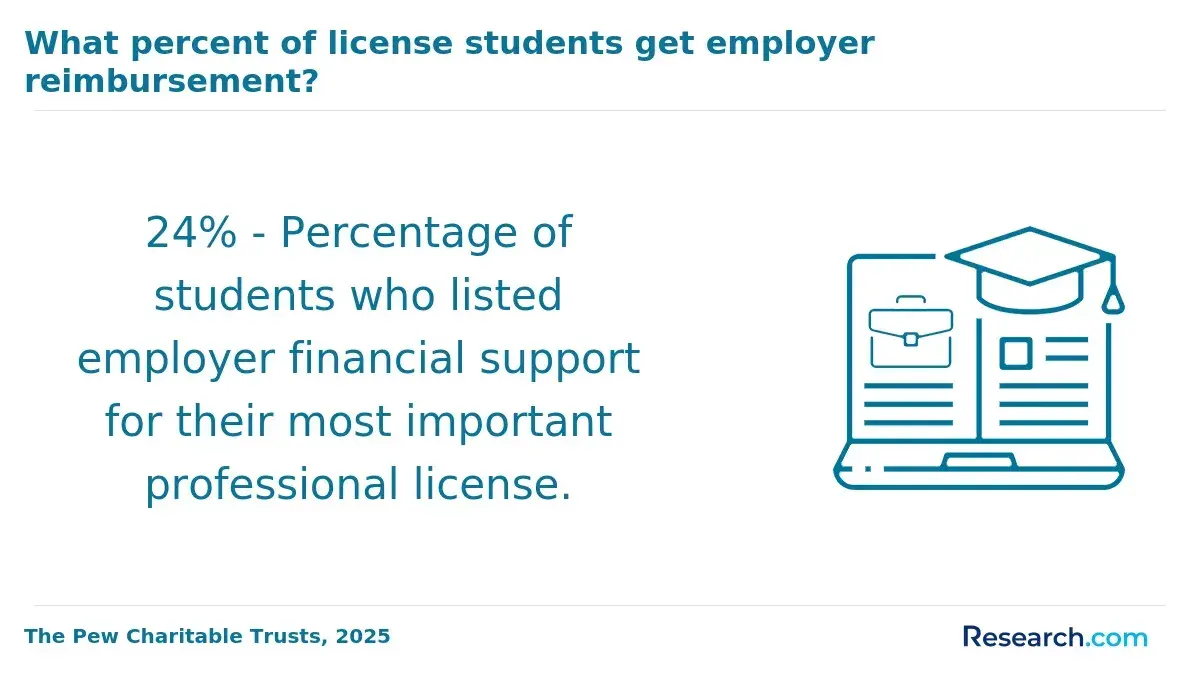
- Employer tuition assistance limits and reimbursement timing
Financial aid may include federal grants, federal student loans, state grants, institutional scholarships, employer tuition assistance, military education benefits, and payment plans. The maximum federal Pell Grant for the 2025-26 award year is $7,395, but eligibility depends on financial need, enrollment intensity, program eligibility, and lifetime usage limits.
If you are deciding between a flexible general studies route and a specialized major, compare both total cost and opportunity cost. For example, reviewing online engineering degree cost can help you see how a more technical program may require more prerequisites but potentially align with different career tracks.
To reduce cost, prioritize schools that provide a no-surprises degree audit, accept community college credit efficiently, offer credit for documented military or professional learning when appropriate, and publish fees clearly. Avoid borrowing based only on expected future income; salary outcomes vary by role, location, experience, and industry.
What jobs can you get with this degree?
A general studies degree can qualify students for roles where employers require or prefer any accredited bachelor's degree, especially when the applicant also has work experience. It is usually most powerful when paired with a clear skill set, such as supervision, communication, data literacy, customer operations, public service, training, or project coordination.
The table below lists common career directions for general studies graduates and the experience or skills that often make the degree more marketable.
| Career direction | Typical responsibilities | Helpful add-on skills |
| Operations coordinator or manager track | Coordinate workflows, schedules, teams, vendors, and process improvements | Project management, spreadsheets, reporting, leadership |
| Human resources support | Assist with recruiting, onboarding, benefits coordination, employee records, and training logistics | Employment law basics, HR software, professional communication |
| Administrative services | Manage office systems, budgets, records, facilities support, and cross-department communication | Budget tracking, procurement, documentation, supervisory skills |
| Training and development support | Create learning materials, coordinate training sessions, and evaluate employee learning needs | Instructional design basics, presentation skills, learning technology |
| Public or nonprofit program support | Support community programs, grants, client services, compliance tasks, and reporting | Grant writing, case documentation, public administration, data tracking |
| Sales, account, or customer success roles | Manage client relationships, solve service issues, prepare proposals, and track performance metrics | CRM software, negotiation, analytics, industry knowledge |
This degree is less suitable as a stand-alone credential for careers with strict major, licensure, or technical requirements. If your target role is engineering, registered nursing, certified public accounting, architecture, or licensed teaching, confirm the exact education pathway before enrolling in a broad degree.
For career planning, compare general studies with more specialized college degrees that pay well. A broad completion degree may be the right investment if it unlocks a promotion or removes a bachelor's requirement quickly, while a specialized major may make more sense if your goal requires technical preparation from the start.
To improve outcomes, build a portfolio while studying. Include writing samples, data projects, presentations, process-improvement examples, training materials, or a capstone project tied to your target field. Employers often respond better when a general studies graduate can show applied skills instead of relying on the degree title alone.
What salary and job outlook does general studies offer?
Salary outcomes for general studies graduates vary widely because the degree can lead into many industries rather than one licensed occupation. The most useful benchmark is the broader labor-market value of completing a bachelor's degree. BLS 2024 education data shows median weekly earnings of $1,543 for workers with a bachelor's degree, compared with $992 for workers with some college but no degree. That difference does not guarantee an individual raise, but it shows why finishing can matter when employers screen for bachelor's completion.
The table below uses BLS May 2024 occupational wage data for selected roles that may be reachable with a bachelor's degree plus relevant experience or skills. These are occupation-level medians, not outcomes specific to general studies graduates.
| Occupation | May 2024 median annual wage | How a general studies graduate can be competitive |
| Project management specialists | $100,750 | Combine the degree with project tools, scheduling experience, budgeting, and industry knowledge |
| General and operations managers | $101,280 | Build supervisory experience and evidence of process improvement or team leadership |
| Market research analysts and marketing specialists | $76,950 | Add statistics, spreadsheet, survey, CRM, or digital analytics coursework |
| Human resources specialists | $72,910 | Pair communication coursework with HR systems, recruiting, compliance, or employee relations experience |
| Training and development specialists | $65,850 | Use courses in communication, adult learning, presentation, and instructional technology |
The job outlook is strongest when the degree is paired with durable workplace skills. AI and automation are changing administrative and entry-level knowledge work, so students should look for courses that build analysis, writing, data interpretation, ethical judgment, collaboration, and technology fluency. Broad degrees remain useful when they help you adapt across roles, but they are weaker when they lack a career story.
Use salary data carefully. Wages depend on region, employer, industry, years of experience, prior work history, and whether the role requires specialized credentials. A smart ROI test is to compare the total remaining cost of the degree with the specific job postings, promotion rules, and pay ranges available in your target labor market.
Other Things You Should Know About General Studies
Completing an unfinished bachelor's degree with an online general studies program in 2027 offers flexibility, allowing students to transfer past credits and focus on varied disciplines. It provides a pathway to enhance career opportunities, enabling faster graduation and reducing tuition costs compared to starting a new degree.
At many accredited universities, the diploma does not state the delivery format, but policies vary. Ask the school what appears on the diploma and transcript before enrolling if this matters to you.
Yes, in many cases, if the degree is from an accredited institution and you meet the graduate program's prerequisites. Some master's programs require specific undergraduate courses, GPA thresholds, test scores, or professional experience.
Many online general studies programs accept up to 90 transfer credits toward a 120-credit bachelor's degree, leaving about 30 credits to finish. Final acceptance depends on the school’s residency rule, course equivalency review, and regional accreditation of the credits being transferred.
References
- I have a degree, now what? https://targetjobs.co.uk/careers-advice/career-ideas/i-have-degree-now-what
- 8 ways to pay for college https://www.citizensbank.com/learning/ways-to-pay-for-college.aspx
- How College Credit Transfer Really Works: A Practical Guide https://www.straighterline.com/blog/transfer-how-college-credit-transfer-really-works-a-practical-guide
- Admission as a Returning Student https://talk.collegeconfidential.com/t/admission-as-a-returning-student/1128010
- Your Guide for College Financial Aid - Finaid https://finaid.org/
- Finish the degree you started (without starting over) https://news.newmanu.edu/finish-the-degree-you-started-without-starting-over/
- What Are University Credits and How Do They Transfer? - Cyprus West University https://www.cwu.edu.tr/what-are-university-credits-and-how-do-they-transfer/
- What Can You Do With a General Studies Degree? https://www.calcoast.edu/news/what-can-you-do-with-a-general-studies-degree
- Online Bachelor's Degree: General Studies https://www.umgc.edu/online-degrees/bachelors/general-studies
- General Studies Undergraduate Degree Courses https://www.whatuni.com/degree-courses/search