2027 Best Online Associate Degrees in General Studies for Career Changers

Co-Founder and Chief Data Scientist
Changing careers often starts with a practical question: what credential helps you move forward without locking you into the wrong path? An online associate degree in general studies can give career changers transferable college credit, broad workplace skills, and a lower-cost route into a bachelor's program.
The timing matters because the Bureau of Labor Statistics reports that workers with an associate degree had lower unemployment than high school graduates in 2024. This guide explains program types, costs, timelines, accreditation, transfer value, and career outcomes so you can decide whether general studies is the right next step.
Key Things You Should Know
- The best online general studies associate degrees for career changers are usually transfer-focused AA or AS programs, workforce-focused AAS programs, or customizable interdisciplinary programs with stackable certificates.
- College Board's 2024 pricing data places average published tuition and fees at $4,050 for public two-year in-district colleges, making community colleges a common low-cost starting point.
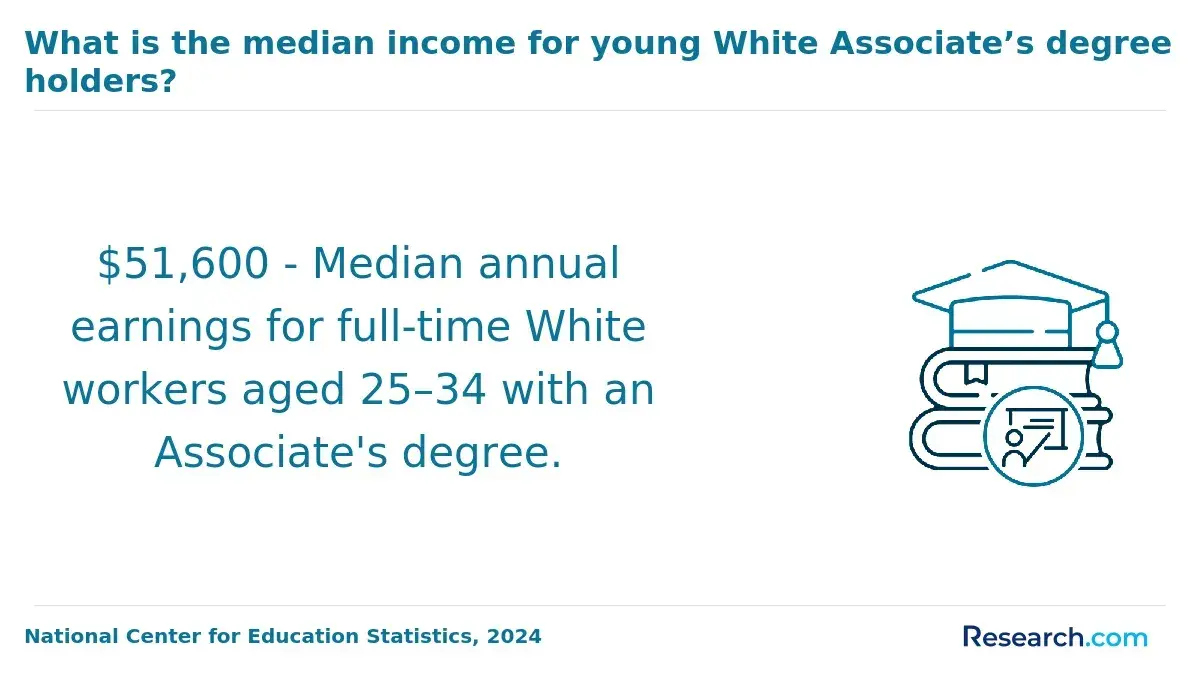
- According to 2024 BLS education data, associate degree holders had median weekly earnings of $1,099, but outcomes vary widely by occupation, transfer plan, employer, region, and added credentials.
What are the best online associate degrees in general studies for career changers?
The best online associate degrees in general studies for career changers are not always the schools with the flashiest marketing. They are programs that match your next move: transfer to a bachelor's degree, qualify for entry-level office or operations roles, add college credit to prior work experience, or explore a new field before committing to a major.
A general studies associate degree is a broad undergraduate credential, typically around 60 semester credits, that combines general education courses with electives. For career changers, its biggest advantage is flexibility.
You can often use electives to sample business, communication, technology, healthcare administration, criminal justice, education, or social science courses before choosing a longer-term path.
The table below compares the main online general studies associate degree formats. Use it to identify which type of program best fits your career-change goal before comparing individual schools:
| Program type | Best fit for career changers | Typical strength | Main limitation |
| Associate of Arts in General Studies | Students planning to transfer into liberal arts, communication, business, education, or social science bachelor's programs | Strong transfer alignment and broad general education | May not include many technical or job-specific courses |
| Associate of Science in General Studies | Students considering business analytics, health science, information technology, or STEM-adjacent bachelor's paths | More math, science, and quantitative coursework | Can be harder if you have been away from math-heavy coursework for years |
| Associate of Applied Science in General Studies | Working adults who want a flexible credential tied to employment or prior technical training | Often accepts career, military, or technical credits | May transfer less cleanly into some bachelor's programs |
| Associate in Individualized or Interdisciplinary Studies | Students with mixed credits from multiple schools or a nontraditional career background | Customizable degree plan and strong credit-recovery potential | Requires careful advising to avoid a scattered transcript |
| General Studies with a concentration | Career changers who already know their target field, such as business, healthcare administration, IT, or human services | Combines flexibility with a clearer career signal | Not all concentrations transfer equally well |
When choosing among these options, focus on fit rather than the degree title alone. A transfer-focused AA may be best if you expect to complete a bachelor's degree later, while an AAS may make more sense if you already have technical credits or want a credential that recognizes prior workplace learning.
Career changers should compare programs using a short, practical checklist. These factors reveal whether the degree is merely convenient or actually useful for your next step:
- Confirm that the school is institutionally accredited and eligible for federal financial aid.
- Ask whether the degree has transfer agreements with public universities in your state.
- Review how many credits you can apply from prior college, military, technical, or workplace learning.
- Choose electives that point toward a realistic target field instead of taking unrelated courses.
- Check whether online students receive the same advising, tutoring, library access, and career services as campus students.
If your long-term goal is a bachelor's degree, compare the associate curriculum against the requirements of your intended major. A general studies program can be a smart starting point, but it should not delay your progress by filling your transcript with credits that do not apply later.
Students who want a smoother four-year plan can also review related pathways such as an easiest bachelor's degree option, especially when transferability and completion speed are priorities.
How do online and campus general studies degrees compare?
Online and campus general studies degrees usually cover the same academic foundation, but the learning experience can feel very different. For career changers, the better format depends on schedule control, access to local services, motivation style, and whether the program requires in-person testing, labs, or advising.
The comparison below shows where online and campus programs tend to differ. These differences matter because many career changers are balancing school with full-time work, family obligations, or a job search:
| Factor | Online general studies degree | Campus general studies degree |
| Schedule | Often asynchronous or evening-friendly, which helps working adults | Usually tied to set meeting times and commuting |
| Peer interaction | Discussion boards, video meetings, group projects, and virtual advising | Face-to-face classes, campus events, and local networking |
| Support services | Virtual tutoring, online library access, remote advising, and digital career services when well designed | In-person tutoring, computer labs, offices, and student activities |
| Cost considerations | May reduce commuting, parking, and relocation costs | May provide easier access to campus resources already covered by fees |
| Best fit | Self-directed adults who need flexibility | Students who learn better with in-person structure |
Online learning has also become more accepted because many colleges now design online courses intentionally rather than treating them as temporary substitutes. The National Center for Education Statistics reported in 2024 that distance education remained a major part of U.S. higher education enrollment, which means online students are no longer a fringe group at many institutions.
The main trade-off is structure. Online programs can be excellent for adults who can manage deadlines independently, but they can be frustrating if the school has weak advising or if the student needs frequent in-person accountability. Campus programs can provide stronger routine, but commuting and fixed schedules can slow completion for working adults.
Before enrolling online, ask admissions or advising staff specific questions. Good answers will tell you whether the program is built for adult learners or simply offered through a learning platform:
- Are classes asynchronous, synchronous, or a mix of both?
- How quickly do online instructors typically respond to student questions?
- Can online students use tutoring, disability services, career advising, and transfer advising remotely?
- Are exams proctored online, on campus, or at approved testing centers?
- Will the transcript or diploma identify the program as online?
Is general studies a good degree for career changes?
General studies can be a good degree for career changes when you need a flexible, lower-risk way to earn college credit, rebuild academic momentum, or qualify for roles that value an associate degree but do not require a narrow major. It is less useful when your target career requires a specific license, technical curriculum, or specialized degree.
The strongest use case is exploration with direction. A career changer who is choosing between business administration, healthcare administration, information technology support, or human services can use general studies electives to test those areas while completing transferable general education credits.
The weakest use case is enrolling without a target. A broad degree with random electives can make your resume look unfocused.
General studies may be the right investment if you recognize one or more of these situations. The goal is to use the degree as a bridge, not as a vague credential:
- You have some prior college credits and need a flexible completion route.
- You plan to transfer into a bachelor's program but are not ready to pick a major immediately.
- You want to qualify for associate-level roles in administration, customer service, operations, sales support, or public service.
- You need a credential to meet employer promotion requirements that specify "some college" or an associate degree.
- You want to combine school with work and cannot attend a rigid campus schedule.
You may want a different program if the new career has a defined academic pipeline. For example, aspiring nurses, licensed counselors, teachers, paralegals, electricians, dental hygienists, and many IT specialists often benefit from more specialized programs.
If your career change depends on bilingual roles, translation-adjacent work, or language teaching support, a targeted option such as a cheapest online Spanish degree may send a clearer signal than a broad general studies credential.
A common mistake is assuming "flexible" means "easy to turn into any career." General studies does not replace employer experience, industry certification, licensure, or a bachelor's degree where those are expected. It works best when paired with a plan: a concentration, a transfer pathway, internships, a certificate, or a resume that translates your past experience into the new field.
What accreditation should an online general studies program have?
An online general studies program should be offered by an institutionally accredited college or university. Institutional accreditation means a recognized accreditor has reviewed the school's overall academic quality, student support, financial stability, and educational processes. This matters for federal financial aid, credit transfer, employer recognition, and future graduate or bachelor's admissions.
In the U.S., institutional accreditation is the key standard for associate degrees in broad fields such as general studies. You do not usually need separate programmatic accreditation for general studies because it is not a licensure-specific major like nursing, dental hygiene, or some allied health programs.
The table below explains the accreditation and recognition terms you are likely to see while researching online programs. Understanding these terms can help you avoid low-value or nontransferable credentials:
| Term | What it means | Why it matters |
| Institutional accreditation | The whole college or university has been reviewed by a recognized accrediting agency | Usually essential for federal aid, transfer credit, and employer confidence |
| Programmatic accreditation | A specific program has field-specific approval | Usually not required for general studies, but important in regulated fields |
| State authorization | The school is approved to offer online education to students in your state | Important because online enrollment rules can vary by state |
| Transfer articulation agreement | A formal agreement showing how credits transfer to another institution | Can reduce wasted credits when moving into a bachelor's program |
| Credit for prior learning policy | A school policy for evaluating military, workplace, exam, or professional training | Can shorten completion time for experienced adults |
Red flags include unclear accreditation language, pressure to enroll immediately, vague transfer promises, and schools that will not put credit evaluations in writing. Be especially careful with phrases such as "accredited by an international board" or "nationally recognized" if the school does not clearly identify a U.S. institutional accreditor recognized by the U.S. Department of Education or the Council for Higher Education Accreditation.
To check accreditation, use the school's official accreditation page, then confirm it through a federal or recognized accreditation database. Do not rely only on an admissions representative's statement, a ranking badge, or a third-party advertisement.
What classes are in an online general studies associate degree?
An online associate degree in general studies usually includes general education courses, electives, and sometimes a capstone or college success course. The curriculum is broad by design, but the best programs let you organize that breadth around a goal.
Most programs require about 60 credits. The course mix below shows the academic areas commonly included in a general studies associate degree and how each can support a career change:
| Course area | Common classes | Career-change value |
| Communication | English composition, public speaking, workplace communication | Builds writing, presentation, and client communication skills used across industries |
| Mathematics and quantitative reasoning | College algebra, statistics, quantitative literacy | Supports business, operations, healthcare administration, and data-informed roles |
| Social sciences | Psychology, sociology, economics, political science | Helps with human services, management, public service, and customer-facing work |
| Natural sciences | Biology, environmental science, physical science | May support health, lab-adjacent, sustainability, or science transfer pathways |
| Humanities | History, ethics, literature, philosophy | Strengthens analysis, writing, cultural awareness, and ethical reasoning |
| Technology and electives | Computer applications, introductory programming, business software, digital literacy | Can help career changers show current technical competence |
Because general studies is flexible, your elective choices matter. A student shifting into office management might choose accounting, business communication, spreadsheet applications, and project management. A student exploring healthcare administration might choose medical terminology, health information systems, ethics, and psychology.
One trend to watch is the growth of stackable credentials. Some colleges allow students to earn a short certificate in business, technology, healthcare support, or communication while completing the associate degree. This can make the degree more career-relevant and give you a smaller milestone before graduation.
What are the admission requirements for online general studies programs?
Admission requirements for online general studies associate degree programs are usually accessible, especially at community colleges and open-admission public institutions. Most applicants need a high school diploma, GED, or state-recognized equivalent.
Selective private or university-based programs may require additional materials, but general studies is rarely as competitive as specialized health or technical programs.
The table below summarizes common requirements. Always confirm details with the college because placement, residency, and financial aid rules can vary:
| Requirement | What applicants may need | Why it matters |
| Proof of high school completion | High school transcript, GED, HiSET, or equivalent documentation | Establishes basic eligibility for undergraduate study |
| College transcripts | Official transcripts from every college previously attended | Allows the school to evaluate transfer credit and academic standing |
| Placement process | Placement test, high school GPA review, or prior college coursework | Determines whether you start in college-level math and English |
| Application form | Online application and identity/residency information | Helps determine admission, tuition category, and state authorization |
| Financial aid documents | FAFSA and any school-specific aid forms | Determines eligibility for grants, loans, and some scholarships |
Career changers with prior college experience should pay special attention to transcript policies. Some schools require all prior transcripts, even if you do not want to use those credits. Others may limit how old certain technical credits can be or require a minimum grade for transfer.
Before applying, gather the materials that can affect both admission and cost. A complete file can speed up credit evaluation and prevent registration delays:
- Request official transcripts from every college you attended, including schools where you earned only a few credits.
- Collect military, professional training, or industry certification records if the college reviews prior learning.
- Complete the FAFSA early if you plan to use federal aid.
- Ask for a preliminary degree audit showing which requirements your prior credits satisfy.
- Confirm whether you must complete orientation before registering for online classes.
Avoid enrolling before you receive a clear answer about transfer credits. For adults with previous coursework, the difference between 12 accepted credits and 30 accepted credits can change the timeline, cost, and value of the program.
How long does an online general studies associate degree take?
An online general studies associate degree typically takes two years of full-time study, but career changers often complete it faster or slower depending on transfer credits, course load, prior learning, and term structure. A standard 60-credit program requires about 15 credits per semester over four semesters.
The table below shows common completion patterns. Use it to estimate a realistic timeline before committing to a program format:
| Study pace | Typical course load | Estimated timeline | Best fit |
| Full-time | 12 to 15 credits per term | About 2 years | Students who can prioritize school and want steady progress |
| Part-time | 6 to 9 credits per term | About 3 to 4 years | Working adults balancing school, family, and employment |
| Accelerated | Short terms, heavier pacing, or year-round enrollment | Potentially less than 2 years with strong planning | Students with transfer credits, high availability, or urgent career goals |
| Credit-completion | Varies based on accepted prior credits | Can be shorter if many credits apply | Students returning after stopping out of college |
Accelerated formats can be appealing, but faster is not always better. Short terms require disciplined weekly study time, and compressed courses can be difficult if you are also changing jobs or caring for family members. The best accelerated programs pair short terms with strong advising and predictable course availability.
If you plan to continue into a bachelor's degree, your associate timeline should fit your transfer timeline. Students who want to move quickly after completing the associate degree may also compare accelerated programs online, but only after confirming that their associate credits will apply cleanly.
To shorten completion time responsibly, focus on verified credit options rather than overload. These steps can help you move faster without creating transfer problems:
- Use transfer credits that satisfy specific degree requirements, not just general electives.
- Ask whether the school awards credit for CLEP, DSST, AP, military training, professional certifications, or portfolio review.
- Take summer or winter courses only if they do not interfere with work performance or family responsibilities.
- Register early for required courses so you are not delayed by limited online availability.
- Meet with an advisor before changing course sequence or dropping a class.
How much does an online general studies degree cost?
The cost of an online general studies associate degree varies by school type, residency status, fees, transfer credits, books, technology requirements, and financial aid. Public community colleges are often the lowest-cost route, especially for in-district students.
College Board's 2024 Trends in College Pricing data lists average published tuition and fees for public two-year in-district students at $4,050 for the academic year. That figure is useful as a benchmark, but your actual cost may be higher if you attend out of district, choose a private college, pay online course fees, or need more than 60 credits to finish.
Common cost categories include tuition, fees, books, supplies, and technology. When schools publish prices, compare the total cost of attendance rather than tuition alone.
The table below highlights cost factors that can change the real price of an online general studies degree. This is especially important for career changers who may already have credits or who are trying to avoid unnecessary student loan debt:
| Cost factor | How it affects price | What to watch |
| Residency status | In-district or in-state students may pay less at public colleges | Some online programs charge a separate distance-learning rate |
| Transfer credit | Accepted credits can reduce the number of courses you must pay for | Credits that transfer as electives may not shorten the degree |
| Course fees | Online, lab, technology, or proctoring fees can raise total cost | Fees may be listed separately from tuition |
| Books and materials | Open educational resources can reduce costs | Some courses require paid access codes or software |
| Financial aid | Grants and scholarships reduce out-of-pocket cost | Loans must be repaid and should be evaluated carefully |
A common mistake is choosing the lowest tuition without checking whether the credits will transfer or whether the school offers the courses you need on a predictable schedule. A slightly higher-cost program that accepts more transfer credits and keeps you on track may be less expensive overall than a cheaper program that adds extra semesters.
Before enrolling, request a written cost estimate and degree plan. It should show accepted transfer credits, remaining courses, tuition, mandatory fees, estimated books, and expected graduation timeline.
What jobs can you get with an online general studies associate degree?
An online general studies associate degree can support entry-level and advancement roles that value communication, organization, digital literacy, customer interaction, and broad problem-solving. It is not a direct pipeline into one occupation, so the jobs you can pursue depend heavily on your electives, prior experience, location, and whether you add certificates or continue to a bachelor's degree.
The table below lists job areas that may fit general studies graduates, especially those who can connect the degree to previous work experience. These are examples, not guaranteed outcomes:
| Career area | Possible roles | Useful electives or add-ons | Career-change fit |
| Administrative and office support | Administrative assistant, office coordinator, records clerk | Business communication, spreadsheets, office software, bookkeeping | Good for career changers with organization, scheduling, or customer service experience |
| Customer service and client support | Customer service representative, client success assistant, call center lead | Communication, psychology, conflict resolution, CRM software | Good for people moving from retail, hospitality, or service industries |
| Sales and business support | Sales support specialist, account coordinator, business development assistant | Marketing, business, data literacy, presentation skills | Good for workers with relationship-building or product knowledge experience |
| Public service and nonprofit support | Program assistant, community outreach assistant, case aide | Sociology, psychology, public administration, ethics | Good for people interested in mission-driven work, though advancement may require a bachelor's degree |
| Technology support pathway | Help desk assistant, technical support trainee, operations support assistant | Computer applications, networking basics, cybersecurity fundamentals, industry certifications | Good when paired with technical coursework or certifications |
AI and automation are changing some of these roles. Routine clerical tasks, basic data entry, scheduling, and simple customer inquiries are increasingly supported by software. That does not make the degree useless, but it raises the importance of human-centered skills such as writing, judgment, customer care, workflow coordination, and the ability to use digital tools well.
Career changers can improve the value of a general studies degree by pairing it with targeted evidence of skill. Employers often respond better when the degree is connected to a clear role:
- For office roles, build spreadsheet, document management, scheduling, and business writing skills.
- For customer success roles, show experience with CRM systems, conflict resolution, and service metrics.
- For nonprofit or human services support roles, add psychology, sociology, ethics, and community service experience.
- For technology support roles, add entry-level IT coursework and recognized industry certifications.
- For management-track roles, use prior supervisory experience and add business, accounting, and communication courses.
If your goal is a regulated helping profession, general studies may be only a starting point. Counseling, clinical social work, school counseling, and many therapy-related roles require specialized bachelor's or graduate education and state licensure.
Students leaning in that direction should compare focused options such as a cheapest online counseling degree rather than assuming general studies will meet professional requirements.
What salary and job outlook can general studies graduates expect?
Salary and job outlook for general studies graduates depend more on the occupation than on the degree title. Because general studies is broad, it is more accurate to evaluate target roles than to look for a single "general studies salary."
The Bureau of Labor Statistics reported in 2024 that associate degree holders had median weekly earnings of $1,099. That figure shows a broad labor-market advantage compared with lower education levels, but it does not mean every associate degree holder earns the same amount. Field, region, experience, industry, and additional credentials can move outcomes up or down.
The table below summarizes several roles that may be relevant to associate-level general studies graduates or career changers using the degree as a bridge. Median pay reflects BLS occupational wage data and should be treated as a labor-market reference, not a promise:
| Occupation | Typical relevance to general studies graduates | Median annual pay context | Outlook considerations |
| Customer service representative | Fits graduates with communication, service, and problem-solving experience | Often near the lower-to-middle range of associate-accessible roles | Automation and self-service tools may limit growth in routine roles |
| Administrative assistant | Fits graduates with office software, scheduling, writing, and coordination skills | Varies by industry and responsibility level | Higher-value roles increasingly require digital workflow and project coordination skills |
| Bookkeeping, accounting, or auditing clerk | Fits graduates who choose accounting, Excel, and business electives | Can be stronger when paired with accounting software skills | Routine bookkeeping is affected by automation, but analytical support skills remain useful |
| Computer support specialist | Fits graduates who add IT coursework or certifications | Often higher than many general office roles | Demand is stronger when workers can troubleshoot systems and support users |
| Human services assistant | Fits graduates with psychology, sociology, and communication coursework | Often mission-driven but may require further education for advancement | Opportunities vary by government, nonprofit, and healthcare funding |
The most important salary lesson is that general studies works best as a platform. If you use it to transfer into business, IT, healthcare administration, education, or another bachelor's pathway, the long-term outlook may look different from stopping at the associate degree. If you stop at the associate level, target roles where your prior work history and electives make you competitive.
To evaluate return on investment, compare the total cost of the degree against realistic local job postings. Look for postings that mention an associate degree, some college, or equivalent experience, then note the software, communication, technical, and industry skills employers repeatedly request.
Avoid assuming that national median wages describe your local market. Pay can differ substantially by metro area, employer type, union status, shift schedule, and industry. Treat national data as a starting point, then validate it with job postings and state labor-market information before enrolling.
Other Things You Should Know About General Studies
Often, yes, if the college is institutionally accredited and the courses match the receiving school's requirements. Transfer is not automatic, so ask for an articulation agreement or written transfer evaluation before you rely on credits applying to a future major.
An associate degree in general studies can open doors to various entry-level positions, such as administrative assistant, sales consultant, and customer service representative. It also serves as a strong foundation for pursuing further education, enabling career changers to explore diverse fields by transferring credits to a bachelor's program.
Some colleges award credit for military training, standardized exams, professional certifications, portfolios, or prior learning assessments. The amount of credit depends on the school's policy and whether the learning matches degree requirements.
Most online associate in general studies programs require about 15 to 18 credits in English composition, college mathematics, communication, and natural or social sciences. Students also complete 12 to 18 credits of electives, and many schools require a minimum 2.0 GPA to graduate.
References
- General Studies | Oakland County, MI | Oakland Community College https://www.oaklandcc.edu/programs/general-studies/
- Online AS Associate of Science in General Studies Degree Program https://www.calcoast.edu/as-associate-of-science-general-studies-degree-online.html
- How much does it cost to get a bachelor's degree? | edX https://www.edx.org/resources/how-much-does-it-cost-to-get-a-bachelors-degree
- General Studies Degree Jobs: 10 Careers + Salaries (2026) | Extern https://www.extern.com/post/general-studies-degree-jobs-career-guide
- Online Bachelor's Degree: General Studies https://www.umgc.edu/online-degrees/bachelors/general-studies
- A General Studies Degree Is a Launchpad for Career Changers https://www.tuw.edu/gen-ed/general-studies-degree-benefits/
- General Studies Associate Degree | Northern State University in South Dakota https://northern.edu/degrees/general-studies-associate-degree-online