2027 Online General Studies Degrees With the Most Flexible Credit Transfer Rules

Co-Founder and Chief Data Scientist
If you have old college credits, military training, exams, or work experience, the right online general studies degree can turn scattered learning into a finished bachelor's degree. That matters because the National Student Clearinghouse Research Center reported in 2024 that 36.8 million adults under 65 had some college credit but no credential.
This guide is for returning students who want maximum transfer flexibility, lower cost, and a practical path to graduation. You'll learn how transfer rules work, which program features to compare, and how to avoid losing credits unnecessarily.
Key Things You Should Know
- The most flexible bachelor's programs in general studies, liberal studies, or interdisciplinary studies often accept up to 90 transfer credits, while a few adult-focused institutions may accept more if residency and upper-division rules are met.
- Transfer generosity is not just a credit cap; the best fit depends on institutional accreditation, residency requirements, age limits on prior credits, ACE military or workplace credit policies, and whether credits apply to graduation requirements.
- College Board's 2024-25 data lists average published tuition and fees at $11,610 for in-state public four-year colleges and $43,350 for private nonprofit four-year colleges, so transfer credits can materially reduce the number of credits you pay for.
What is an online general studies degree and how flexible is credit transfer?
An online general studies degree is a broad undergraduate program that lets students combine credits from several academic areas instead of completing a tightly prescribed major such as accounting, nursing, or engineering. At the bachelor's level, these programs are often called general studies, liberal studies, interdisciplinary studies, professional studies, or university studies.
The main appeal is flexibility. Many students choose this path because they have credits from more than one school, changed majors in the past, completed military training, earned professional certifications, or need a degree for promotion rather than a specific licensed profession. If you are comparing an online degree primarily to finish faster, general studies can be one of the most transfer-friendly options.
Credit transfer usually has several layers. A school may accept your credits, but that does not always mean every credit will count toward the exact degree requirements. The most important distinction is between "accepted credits" and "applied credits." Accepted credits appear on your transfer evaluation; applied credits reduce the number of courses you still need to graduate.
This table summarizes the transfer-credit terms you are likely to see when comparing programs. Understanding these terms helps you spot whether a generous-sounding policy will actually shorten your path.
| Transfer term | What it means | Why it matters |
| Maximum transfer credits | The highest number of outside credits a school may apply to the degree | A 90-credit maximum can leave about 30 credits to complete in a 120-credit bachelor's program |
| Residency requirement | The minimum number of credits you must complete at the degree-granting institution | A lower residency requirement can help returning students finish with fewer new courses |
| General education requirements | Required courses in areas such as writing, math, science, humanities, and social science | Old credits may transfer as electives but still leave missing core requirements |
| Upper-division requirement | A required number of junior- or senior-level credits | Community college credits may not satisfy upper-division credit rules |
| Prior learning assessment | Credit awarded for documented learning from work, training, exams, military education, or portfolios | It can reduce cost, but documentation and fees vary by institution |
The best candidates for this degree are adults who need a regionally accredited bachelor's degree for career mobility, graduate school eligibility, military advancement, or employer screening. Students who want a licensed career, a highly technical role, or a graduate program with strict prerequisites should compare general studies carefully against a more specialized major.
Which accredited online general studies programs offer the most generous transfer policies?
The most generous transfer policies are usually found at adult-serving universities, public online campuses, and degree-completion institutions. However, a high transfer ceiling should not be your only criterion. You also need to verify accreditation, remaining credit requirements, tuition after transfer, and whether your credits apply to the major, electives, or general education.
The following examples are useful starting points because they are known for flexible transfer evaluation in online bachelor's completion pathways. Policies can change, and final credit awards depend on an official transcript review.
| Institution or program type | Common general-studies-related option | Transfer flexibility to check | Best fit |
| Southern New Hampshire University | Online general studies or liberal arts pathways | Often advertises up to 90 transfer credits toward a bachelor's degree | Students who want a widely available online format and a structured advising process |
| University of Maryland Global Campus | General studies and applied bachelor's options | Known for transfer-friendly policies, military credit review, and adult learner support | Military-affiliated students and adults with mixed college, training, and exam credits |
| Liberty University | Interdisciplinary studies and general studies-related options | Often allows transfer of up to 75% of a bachelor's degree, subject to program rules | Students seeking a large online university with many elective and concentration options |
| Franklin University | Individualized or interdisciplinary bachelor's pathways | Advertises high transfer acceptance for bachelor's completion, with applied-credit review | Working adults who want career-aligned elective clusters |
| Excelsior University | Liberal arts or professional studies pathways | Adult-focused model may allow very high credit transfer, with required institutional coursework | Students with substantial prior credit who need maximum degree-completion flexibility |
| Thomas Edison State University | Liberal studies and adult degree-completion programs | Designed for adults with prior learning, exams, military credit, and transfer coursework | Students who want to combine traditional credits with evaluated nontraditional learning |
A school with a 90-credit transfer limit may still be better than one with a higher theoretical limit if its tuition is lower, its course schedule fits your life, or it applies more of your previous credits to degree requirements. Ask for a written degree plan before enrolling, not just a verbal estimate.
When comparing programs, focus on these questions before you submit a deposit or register for classes:
- How many of my credits will apply directly to the bachelor's degree, not just transfer as excess electives?
- What is the minimum number of credits I must complete at this institution?
- Are there limits on old science, technology, business, or professional credits?
- Will community college credits satisfy upper-division requirements, or will I need additional junior- and senior-level courses?
- Does the school evaluate ACE, CLEP, DSST, military, corporate, police academy, fire academy, or healthcare training credits?
- Can I receive an unofficial pre-evaluation before I apply, and when will the official evaluation be completed?
How can I maximize transfer credits from prior college, military, or work experience?
Maximizing transfer credit is partly about choosing the right school and partly about submitting complete evidence. Many students lose usable credit because they forget an old transcript, overlook exam scores, or accept a vague transfer estimate instead of asking how each credit applies to the degree audit.
Use this step-by-step approach before choosing a program. The goal is to make schools compete on your actual remaining credits, not on advertised transfer limits.
- Collect every transcript from every college you attended, including dual-enrollment, community college, closed-school, and military-affiliated coursework.
- Request military training records such as the Joint Services Transcript or Community College of the Air Force transcript if applicable.
- List standardized exams, including CLEP, DSST, AP, IB, and industry certification exams, even if you took them years ago.
- Ask each school for a degree-specific transfer evaluation showing remaining general education, major, upper-division, elective, and residency requirements.
- Compare at least three written degree plans side by side before enrolling.
- Appeal missing or misclassified credits with syllabi, course descriptions, training records, or professional documentation when the school allows it.
Prior learning assessment can be valuable, but it is not automatic. Some schools award credit for ACE-evaluated training or professional credentials; others require a portfolio that proves college-level learning. Portfolio credit can save money, but only if the credit applies to requirements you still need.
A common mistake is taking new courses before the transfer evaluation is final. If you enroll too quickly, you may duplicate a course you already completed or take an elective that does not move you closer to graduation. Another red flag is a school that advertises "life experience credit" without a clear evaluation process tied to recognized academic standards.
What accreditation and institutional quality standards should online general studies programs meet?
For most students, the safest choice is an institution accredited by an agency recognized by the U.S. Department of Education or the Council for Higher Education Accreditation. Institutional accreditation matters for federal financial aid eligibility, credit transfer, employer recognition, graduate school applications, and overall credibility.
General studies programs usually do not have a specialized programmatic accreditor in the way nursing, counseling, education, engineering, or business programs sometimes do. That makes institutional quality even more important. Look closely at student support, faculty access, transfer advising, career services, and graduation planning.
This table outlines quality signals worth checking before you enroll. These indicators do not guarantee a perfect experience, but they help you separate legitimate online degree-completion programs from risky options.
| Quality standard | What to verify | Why it matters |
| Recognized institutional accreditation | The institution is listed by a recognized accreditor | It supports aid eligibility, transferability, and employer confidence |
| Transparent transfer evaluation | The school gives a written degree audit before or soon after admission | It prevents surprises about remaining credits |
| Clear tuition and fees | Tuition, technology fees, portfolio fees, graduation fees, and textbook costs are disclosed | Low tuition can be offset by added fees if you do not compare total cost |
| Adult learner support | Advising, tutoring, library access, technical help, and career services are available online | Flexible transfer rules are less useful if support is weak |
| Graduate school compatibility | Prerequisites, GPA policies, and transcripted credits meet your future academic goals | Some graduate programs may prefer specific prerequisite coursework |
Be careful with schools that pressure you to enroll immediately, refuse to provide clear accreditation information, promise guaranteed employment, or offer unusually large credit awards without documentation. A flexible policy should still be academically defensible.
How do online general studies programs compare with campus options for flexibility and support?
Online general studies programs are usually more flexible for adults who work full time, serve in the military, parent children, or live far from campus. Campus programs may offer stronger face-to-face networking and easier access to in-person resources, but they can be harder to schedule around work and family obligations.
The choice is not simply online versus campus. It is about matching the format to your transfer situation, learning style, support needs, and timeline.
| Factor | Online general studies | Campus general studies | Better choice when |
| Scheduling | Often asynchronous or evening-friendly | Usually tied to class meeting times | Online fits students with unpredictable schedules |
| Transfer advising | May specialize in adult transfer students | Can be strong, but often built around traditional students | Online fits students with many prior credits from several sources |
| Peer interaction | Discussion boards, group projects, virtual meetings | In-person classes, clubs, campus events | Campus fits students who want daily in-person interaction |
| Support services | Virtual tutoring, online library, remote advising | In-person tutoring, labs, advising offices | Online works if services are available after work hours |
| Learning style | Requires self-management and written communication | Provides more physical structure and immediate classroom cues | Campus may be better for students who struggle with independent pacing |
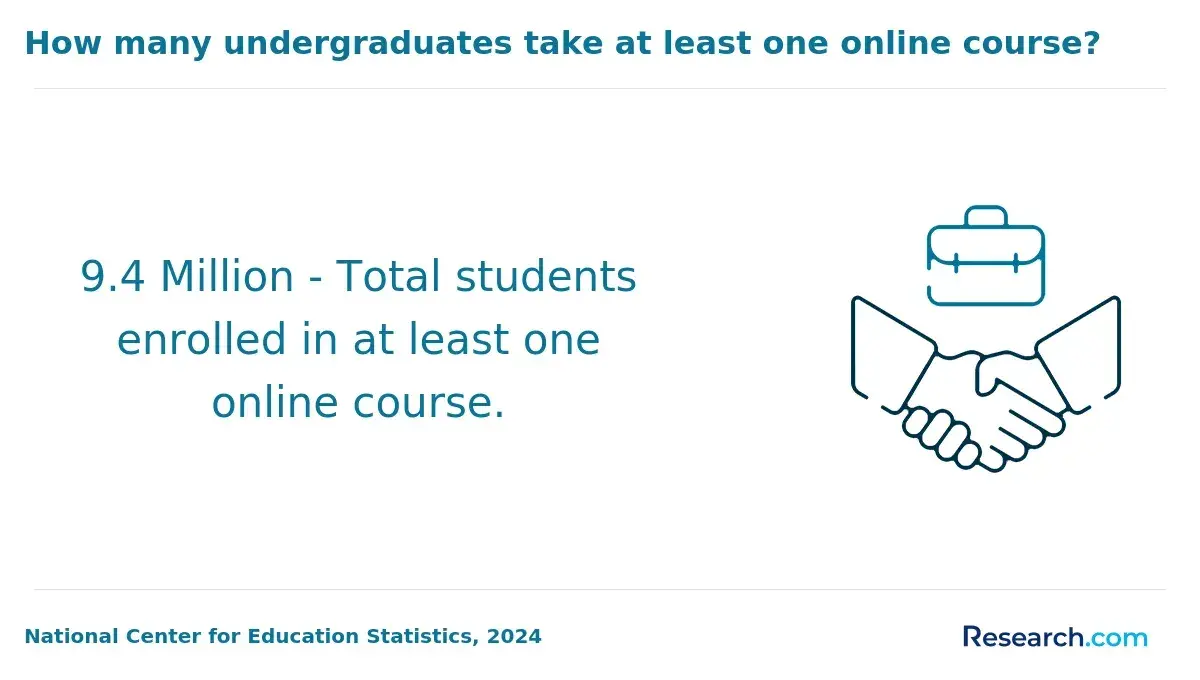
Online learning has become a mainstream pathway rather than a niche option. The National Center for Education Statistics reported in 2024 that distance education remained a major enrollment mode after the pandemic-era surge, which means many schools have expanded online advising, proctoring, tutoring, and course design. For transfer students, this can be an advantage because online divisions often build processes around adults completing unfinished degrees.
A good online program should not leave you on your own. Before enrolling, test the support system: ask how quickly advisors respond, whether tutoring is available in writing and math, whether career services work with online students, and whether courses are offered often enough to avoid delaying graduation.
What courses and concentrations are typical in an online general studies curriculum?
Most online general studies bachelor's degrees require about 120 total credits, including general education courses, electives, upper-division coursework, and sometimes a capstone. The major is intentionally broad, but reputable programs still require academic coherence rather than a random collection of courses.
Typical coursework often includes writing, communication, quantitative reasoning, natural sciences, social sciences, humanities, ethics, technology, leadership, and a senior capstone. Many programs let students organize electives into concentration areas that support career goals.
The table below shows common concentration themes and how they may align with practical goals. Concentration titles vary by school, so compare course lists rather than relying only on the label.
| Concentration theme | Common course areas | Career relevance |
| Business and leadership | Management, organizational behavior, project management, business communication | Useful for supervisors, office managers, operations coordinators, and promotion-focused adults |
| Human services | Psychology, sociology, case management, community services, ethics | Relevant for nonprofit, social service, and community program roles that do not require licensure |
| Communication and media | Professional writing, public speaking, digital communication, media literacy | Useful for administrative, marketing support, training, and public-facing roles |
| Technology and data literacy | Information systems, spreadsheets, analytics basics, cybersecurity awareness | Helpful for business support, operations, and entry-level tech-adjacent roles |
| Global studies or language | Culture, history, international relations, language electives | Relevant for education support, public service, tourism, translation-adjacent, or international business contexts |
If language, culture, and communication are central to your career goal, a specialized path such as an online Spanish degree may be more marketable than a broad general studies plan with only a few language electives. The same logic applies to fields such as accounting, computer science, nursing, education, and counseling.
The best curriculum choice depends on what you need the degree to do. Choose a broad concentration if you need completion speed and career flexibility. Choose a specialized major if your target job, graduate program, or licensure pathway requires specific prerequisites.
What are common admission requirements and application steps for online general studies majors?
Admission requirements for online general studies programs are often designed for adult and transfer students. Many programs require a high school diploma or equivalent, official college transcripts, and an application. Some may require a minimum GPA, a certain number of prior college credits, or proof of English proficiency for certain applicants.
Because transfer credit is the central issue, the application process should be treated as a credit-audit process, not just an admissions form. Your goal is to understand the full path to graduation before committing.
Use these steps to keep the process organized and avoid paying application fees to schools that are unlikely to fit:
- Create a spreadsheet of colleges attended, credits earned, grades, dates, and login details for transcript ordering.
- Request unofficial guidance first when available, then order official transcripts only for schools that appear promising.
- Ask whether the program requires a minimum number of prior credits or accepts first-time college students.
- Confirm whether transfer credits with grades below C will count, because policies vary widely.
- Review financial aid eligibility, employer tuition assistance, military benefits, and payment-plan options before selecting a start date.
- Wait for a written degree audit showing remaining credits, estimated cost, and expected completion timeline.
Admissions teams may focus on getting you accepted, while academic advisors focus on getting you graduated. Make sure you speak with the office responsible for official transfer evaluation. If a school cannot tell you how your credits apply, delay enrollment until it can.
How long does an online general studies degree take and what does it cost?
The timeline depends mostly on how many credits transfer and how many courses you can handle each term. A student entering with 90 applicable credits may need roughly 30 credits to finish, while a student entering with 45 applicable credits may need about 75 credits. Accelerated terms can shorten the calendar, but they also compress weekly workload.
Cost also depends on transfer credit, tuition rate, fees, books, prior learning assessment charges, and whether you qualify for in-state tuition or employer support.
College Board's 2024-25 figures show average published tuition and fees of $11,610 for in-state public four-year institutions, $30,780 for out-of-state public four-year institutions, and $43,350 for private nonprofit four-year institutions. For online transfer students, the practical question is not just the annual price; it is how many credits you still have to buy.
The following table shows how remaining credits affect completion planning. It uses credit load rather than a specific tuition figure because schools price online programs differently.
| Applicable transfer credits | Credits remaining in a 120-credit degree | Likely pace if taking 6 credits per term | Likely pace if taking 12 credits per term |
| 90 | 30 | About 5 terms | About 3 terms |
| 75 | 45 | About 8 terms | About 4 terms |
| 60 | 60 | About 10 terms | About 5 terms |
| 45 | 75 | About 13 terms | About 7 terms |
Students seeking a faster schedule should compare course length, start dates, and workload carefully. The best accelerated bachelor's degree online can be useful when you have strong time-management skills and enough transfer credit, but acceleration is not automatically cheaper if you retake courses, withdraw, or overload yourself.
To estimate total cost, ask each school for a remaining-credit tuition projection and include fees. Then subtract confirmed grants, scholarships, military education benefits, employer reimbursement, or tuition assistance. Avoid comparing schools only by per-credit tuition; a school with slightly higher tuition but more accepted credits may cost less overall.
What careers, industries, and advancement options can a general studies degree support?
A general studies degree is usually best viewed as a degree-completion and career-mobility credential rather than a direct pipeline into one specialized occupation. It can help students meet bachelor's degree requirements for promotions, management trainee roles, public-sector jobs, military advancement, nonprofit positions, and graduate school entry, depending on coursework and experience.
Employers increasingly evaluate skills alongside degrees, especially for roles involving communication, coordination, leadership, customer operations, and technology-supported workflows. AI and automation are also changing office and administrative work, which makes digital literacy, problem-solving, and adaptable communication more important than simply holding a broad credential.
This table shows realistic career directions a general studies graduate might pursue. Actual eligibility depends on experience, location, employer requirements, and the courses completed within the degree.
| Career direction | Common roles | How general studies can help | When a specialized degree may be better |
| Business operations | Operations coordinator, office manager, project assistant | Supports leadership, communication, and cross-functional problem-solving | When the role requires accounting, analytics, supply chain, or finance depth |
| Public administration | Program assistant, government services specialist, community outreach coordinator | Meets bachelor's degree screening requirements and supports writing-heavy work | When the role requires public policy, criminal justice, or emergency management coursework |
| Human services | Case aide, nonprofit coordinator, social services assistant, volunteer manager | Combines psychology, sociology, communication, and ethics coursework | When licensure or clinical practice is the goal |
| Education support | Training coordinator, admissions counselor, student services staff, paraprofessional advancement | Can satisfy degree requirements for some administrative or support roles | When teacher licensure or instructional certification is required |
| Military and veteran advancement | Administrative leadership, training, logistics support, supervisory roles | Can convert military training and prior credit into a completed bachelor's degree | When a technical military-to-civilian pathway requires engineering, IT, or healthcare credentials |
General studies is not the right standalone credential for licensed professions. For example, if your long-term goal is to become a licensed counselor, you will typically need a qualifying graduate program and supervised clinical experience; in that case, researching online clinical mental health counseling programs may be a better next step after the bachelor's degree.
To strengthen employability, pair the degree with a practical skill signal. Good options include project management coursework, data analytics basics, HR fundamentals, bookkeeping, technical writing, nonprofit management, customer success tools, or an industry certification relevant to your target role.
What salary ranges and job outlook can graduates with a general studies degree expect?
Salary outcomes for general studies graduates vary widely because the degree is broad and often builds on prior work experience. A retail supervisor completing a bachelor's degree, a veteran moving into logistics, and a nonprofit coordinator entering human services may all report different outcomes even with the same major name.
The most useful national benchmark is the general labor-market return associated with completing a bachelor's degree. The U.S. Bureau of Labor Statistics reported in 2024 that workers age 25 and older with a bachelor's degree had median usual weekly earnings of $1,543, compared with $1,099 for workers with some college but no degree. This does not prove what any one graduate will earn, but it shows why finishing an unfinished bachelor's can matter for long-term career mobility.
The table below summarizes broad career categories where a general studies degree may be relevant. Use it as a planning guide, then verify local job postings in your target region.
| Career category | Typical degree value | Salary and outlook considerations |
| Management and supervision | Can support promotion into team lead, assistant manager, or operations roles | Experience often matters as much as the major; leadership results and industry knowledge are key |
| Administrative and business support | Can help meet bachelor's requirements for coordinator or analyst-adjacent roles | Digital tools, spreadsheets, reporting, and workflow skills can improve competitiveness |
| Public sector and nonprofit work | Can satisfy degree screens for program, outreach, or administrative roles | Pay varies by agency funding, region, and seniority; advancement may require specialized graduate study |
| Human services support | Can support nonclinical roles in community organizations | Clinical or licensed roles usually require specialized graduate education and supervised hours |
| Training and workforce development | Can combine well with communication, leadership, and subject-matter experience | Portfolio evidence, facilitation skills, and learning technology experience can matter strongly |
Job outlook should be evaluated by target role, not by the general studies major itself. Before enrolling, search current job postings for roles you want and note whether employers ask for any bachelor's degree, a related degree, specific software skills, certifications, or years of experience. That evidence will help you decide whether a flexible general studies program is enough or whether a specialized major is worth the extra time.
Other Things You Should Know About General Studies
Most transfer-friendly online general studies degrees still require a residency minimum of 30 credit hours, with at least 12 earned in upper-division courses at the school awarding the degree. Credits transferred from regionally accredited colleges usually count only after the registrar evaluates course equivalency.
Sometimes. Some schools list concentrations, minors, or focus areas on the transcript, while others list only the major. If the concentration matters for employment or graduate school, ask the registrar how it appears on official records before enrolling.
Yes, many graduate programs accept applicants with a general studies degree if they meet GPA, prerequisite, test, writing, and experience requirements. However, specialized graduate programs may require specific undergraduate courses, so check admissions requirements early.
References
- How to Transfer Credits and Maximize What You’ve Already Done - ReUp Education https://reupeducation.com/blog/how-to-transfer-credits-and-maximize-what-youve-already-done/
- Online Bachelor's Degree: General Studies https://www.umgc.edu/online-degrees/bachelors/general-studies
- How does a college degree improve graduates’ employment and earnings potential? - APLU https://www.aplu.org/our-work/4-policy-and-advocacy/publicuvalues/employment-earnings/
- Online Degree vs. Traditional: Choosing the Right Path https://beal.edu/online-degree-vs-traditional/
- Quality Standards and Accreditation of Distance Education Programs in a Pandemic - OJDLA https://ojdla.com/articles/quality-standards-and-accreditation-of-distance-education-programs-in-a-pandemic
- What are General Education Courses? Its Purpose and Benefits https://www.edvisorly.com/student-guides/general-education-courses-overview
- Best Online Universities With Generous Transfer Credit Policies https://www.collegetransitions.com/blog/best-online-universities-with-generous-transfer-credit-policies/
- 4 Ways Transfer Students Can Maximize College Credits for Prior Experience https://www.umassglobal.edu/blog-news/4-ways-transfer-students-can-maximize-college-credits-prior-experience
- Importance of Accredited Online Degree Programs | TUW https://www.tuw.edu/school-news/importance-of-accredited-online-degree-programs/