2027 Online General Studies Degrees With Career Planning Coursework

Co-Founder and Chief Data Scientist
Choosing a flexible degree is harder when you need both broad academic credit and a clearer career direction. Online general studies degrees with career planning coursework are built for that situation, especially for transfer students, working adults, and undecided learners.
The Bureau of Labor Statistics reported that workers with a bachelor's degree had median weekly earnings of $1,543 in 2024, compared with $930 for high school graduates. This guide explains program structure, cost, accreditation, career paths, and selection criteria so you can judge whether this degree fits your goals.
Key Things You Should Know
- An online general studies degree is usually a flexible associate or bachelor's pathway that combines liberal arts, electives, transfer credits, and career planning courses such as resume development, labor market research, internships, or capstone career projects.
- Cost varies widely; the College Board reported average published 2024-25 tuition and fees of $11,610 for in-state public four-year colleges and $43,350 for private nonprofit four-year colleges, so transfer credits and per-credit online rates can strongly affect ROI.
- Career outcomes depend on how intentionally students build a concentration; BLS May 2024 median pay ranged from $72,910 for human resources specialists to $100,750 for project management specialists, but employers usually look for role-specific skills, experience, and portfolios in addition to the degree.
What is an online general studies degree with integrated career planning coursework?
An online general studies degree with integrated career planning coursework is a broad, customizable degree program delivered primarily through virtual classes. Instead of preparing students for one tightly defined major, it allows them to combine courses in communication, social science, humanities, business, technology, math, and natural science while using career-focused assignments to connect those studies to employment goals.
The "career planning" part matters because general studies can otherwise feel too open-ended. Strong programs usually require students to identify target roles, map transferable skills, prepare job-search materials, analyze labor market data, and complete a capstone, internship, practicum, or portfolio. This structure helps students turn a flexible degree into a coherent career story.
This degree often fits students who have prior college credit, military training, workforce experience, or changing career interests. It can also be useful for adults who need a bachelor's degree for promotion eligibility but do not want to restart in a highly sequenced major. Students comparing broad, flexible majors may also want to review cheap online interdisciplinary studies degree options, since interdisciplinary studies and general studies programs often overlap but may differ in concentration requirements.
The main trade-off is specialization. A general studies degree can be practical when you choose electives around a specific career direction, such as administration, human resources, nonprofit work, sales operations, public service, or communications.
It may be a weaker choice if your target job requires a prescribed major, licensure pathway, clinical training, engineering preparation, teacher certification, or advanced quantitative coursework.
| Program feature | What it usually means | Why it matters |
| General education core | Courses in writing, math, science, humanities, and social science | Builds broad academic foundations and satisfies degree requirements |
| Elective flexibility | Students choose courses across several departments | Allows transfer credits and career interests to shape the degree |
| Career planning coursework | Resume, interview, career research, portfolio, and job-search preparation | Helps students explain the value of a broad degree to employers |
| Concentration or focus area | A cluster of courses in business, communication, public service, technology, or another area | Gives the degree a clearer labor market direction |
How does an online general studies program compare to campus-based options for flexibility and support?
Online and campus-based general studies programs can lead to similar degrees, but the learning experience differs. The best format depends on your schedule, support needs, learning style, and access to internships or campus services.
Online programs usually offer more flexibility for working adults, caregivers, military learners, and students far from campus. Asynchronous courses let students complete weekly assignments without logging in at a fixed time, while synchronous courses provide live class meetings. Campus programs may offer easier access to in-person advising, clubs, tutoring, career fairs, and informal networking.
The National Center for Education Statistics reported that millions of U.S. undergraduates continue to take at least one distance education course, showing that online learning is now a mainstream delivery mode rather than an unusual exception.
For students, the practical question is not whether online learning is legitimate in general; it is whether a specific program provides enough academic and career support.
| Decision factor | Online general studies | Campus-based general studies |
| Scheduling | Often better for full-time workers and students with family responsibilities | Often better for students who want fixed routines and face-to-face classes |
| Career support | May include virtual advising, online resume reviews, webinars, and remote coaching | May include in-person career fairs, employer visits, and campus networking |
| Peer interaction | Usually occurs through discussion boards, group projects, and video meetings | Usually occurs through class meetings, clubs, labs, and campus events |
| Self-management demands | Higher, especially in asynchronous courses | Moderate, because class schedules create more external structure |
| Geographic access | Can expand school choice beyond commuting distance | Best when a strong local institution is accessible and affordable |
Online study makes the most sense if you are comfortable managing deadlines, communicating in writing, and asking for help before problems grow. Campus study may be better if you learn best through live discussion, need structured accountability, or want regular in-person access to faculty and classmates.
A common mistake is assuming "online" means "unsupported." Before enrolling, ask whether online students receive the same academic advising, library access, tutoring, disability services, and career coaching as campus students. If the school cannot clearly explain those services, keep comparing programs.
What are the typical admission requirements for online general studies degrees?
Admission requirements for online general studies degrees are often more flexible than requirements for selective majors, but they still vary by institution and degree level. Associate programs usually focus on high school completion or equivalency, while bachelor's completion programs often emphasize transfer credit review.
Most applicants should be prepared to submit documents that verify prior education and help the school place them in the right courses. Requirements may include the following:
- High school diploma, GED, or recognized equivalent for first-time college students.
- Official transcripts from every college previously attended, even if credits are old or incomplete.
- Minimum GPA requirements for transfer or bachelor's completion admission, depending on the school.
- Placement information for writing or math if prior college coursework does not satisfy prerequisites.
- Application form, fee or fee waiver, and proof of residency for tuition classification.
- English proficiency documentation for applicants whose prior education does not meet the school's language requirements.
Students with prior credits should pay close attention to transfer policies. A generous transfer evaluation can shorten time to graduation and reduce cost, while a restrictive policy may force you to repeat similar courses. Ask whether credits are accepted as direct equivalents, general electives, upper-division credits, or unused credits outside the degree plan.
Adult learners should also ask about credit for prior learning. Some accredited institutions award credit for military training, standardized exams, workplace certifications, professional portfolios, or prior learning assessments. These options can be valuable, but they must be documented and approved under the school's academic policies.
Do not assume open admission means the program is automatically a good fit. Even if admission is easy, you still need to confirm accreditation, total cost, transfer treatment, course availability, graduation requirements, and whether the curriculum supports your career target.
What core subjects and career planning courses are included in general studies curricula?
General studies curricula usually combine a broad academic core with flexible electives and a career development sequence. The strongest programs help students move from "I need a degree" to "I can explain how my coursework, experience, and skills fit a specific job family."
Core subjects commonly include writing, public speaking, quantitative reasoning, natural science, social science, humanities, information literacy, and sometimes introductory business or technology courses. Students may then choose electives around a focus area such as organizational leadership, communication, public administration, psychology, criminal justice, health administration, or digital skills.
Career planning coursework is the differentiator. These classes should not be limited to a one-time resume assignment. A useful sequence may include the following elements:
- Self-assessment of interests, values, work preferences, and transferable skills.
- Career research using occupational data, employer postings, and informational interviews.
- Academic planning that connects electives to target roles or graduate school prerequisites.
- Resume, cover letter, LinkedIn profile, and interview preparation.
- Portfolio development using writing samples, projects, presentations, or workplace evidence.
- Capstone, internship, service-learning project, or applied research project tied to career goals.
Students who already know they want management or operations roles may be better served by a more specialized business management degree online. General studies is usually stronger when you need flexibility, have mixed transfer credits, or want to combine multiple fields into one coherent degree plan.
| Curriculum area | Common courses | Career value |
| Communication | Composition, technical writing, public speaking, interpersonal communication | Supports roles requiring writing, presentations, client contact, and team coordination |
| Social science | Psychology, sociology, political science, economics | Builds understanding of people, organizations, communities, and policy contexts |
| Business and leadership | Management, supervision, organizational behavior, project management basics | Helps students target administrative, coordinator, and entry-level management tracks |
| Technology and data literacy | Computer applications, spreadsheets, data basics, digital communication | Improves employability in office, operations, nonprofit, and customer-facing roles |
| Career planning | Career exploration, portfolio, internship, capstone, professional development | Turns broad coursework into evidence of job readiness |
A red flag is a curriculum made almost entirely of disconnected electives with little advising. Flexibility is useful only when students have guidance on how to assemble courses into a defensible academic and career plan.
How long do online general studies programs take, and what do they cost?
Program length depends on degree level, transfer credits, course load, and term structure. An online associate degree in general studies commonly requires about 60 credits, while a bachelor's degree usually requires about 120 credits. Students entering a bachelor's completion program with substantial transfer credit may finish much faster than first-time college students.
Full-time students often complete an associate degree in about two academic years and a bachelor's degree in about four academic years. Part-time students may need longer, but they may also be able to keep working while studying. Accelerated terms can shorten the calendar, but they increase weekly workload and may not be ideal for students balancing work, caregiving, or difficult prerequisite courses.
The College Board reported average published tuition and fees of $4,050 for public two-year in-district students, $11,610 for in-state public four-year students, and $43,350 for private nonprofit four-year students for 2024-25. These figures are not online-specific prices, but they show why institution type, residency rules, and transfer credits can produce very different total costs.
Students considering a faster route should compare calendar speed with workload and accreditation status; an accelerated bachelor's degree online accredited may be useful for motivated learners, but the cheapest or fastest option is not automatically the best academic fit.
When estimating total cost, look beyond tuition. The major cost categories usually include the following:
- Tuition charged per credit, per term, or by flat-rate enrollment band.
- Mandatory online learning, technology, graduation, transcript, or student service fees.
- Books, course materials, software, testing, and proctoring costs.
- Transfer credit limits that may require additional courses at the new institution.
- Residency requirements that specify how many credits must be completed through the degree-granting school.
- Lost income or reduced work hours if the course load becomes too demanding.
| Student profile | Likely timeline | Cost implication |
| First-time associate student | About two years full time, longer part time | Often lower total tuition if completed at a public community college |
| First-time bachelor's student | About four years full time, longer part time | Total cost depends heavily on public vs. private tuition and aid |
| Bachelor's completion student | Often one to three years, depending on accepted credits | Transfer acceptance can be the biggest cost saver |
| Working adult taking part-time courses | Often extended over several years | May preserve income but increase exposure to annual tuition changes |
| Accelerated student | Shorter calendar time when courses are available year-round | Can reduce time out of the workforce but may require intense weekly study |
Financial aid can change the real price. Complete the FAFSA if eligible, compare grants before loans, ask about employer tuition assistance, and request a degree audit before committing. A program is more affordable when it accepts legitimate prior credit and offers courses reliably enough for you to graduate on schedule.
How can students verify accreditation and institutional quality for online general studies degrees?
Accreditation is one of the most important quality checks for online general studies degrees. In the U.S., students should look for institutional accreditation from an agency recognized by the U.S. Department of Education or the Council for Higher Education Accreditation. Institutional accreditation affects federal financial aid eligibility, transfer credit recognition, employer confidence, and graduate school review.
General studies programs usually do not require specialized programmatic accreditation because they are broad liberal arts or interdisciplinary degrees.
However, if you use electives to pursue a regulated career pathway, such as teaching, counseling, nursing, or social work, you must verify separate licensure and program requirements. A general studies degree alone may not satisfy those requirements.
Use a step-by-step verification process rather than relying only on advertising language. The most practical checks include the following:
- Search the institution in the U.S. Department of Education's Database of Accredited Postsecondary Institutions and Programs.
- Confirm that the school name, campus, and online division match the accredited institution listed.
- Review the accreditor's status and make sure accreditation is current, not expired or only pending.
- Check whether credits are likely to transfer to public universities or graduate schools you may want to attend later.
- Ask the admissions office for graduation rates, retention rates, student loan default information, and career services access for online students.
- Read the catalog for residency requirements, academic policies, complaint procedures, and course rotation schedules.
Quality is broader than accreditation. A reputable online program should have transparent tuition, qualified faculty, clear advising, accessible student support, regular course availability, and honest career language. Be cautious if a school pressures you to enroll immediately, refuses to provide a written cost estimate, promises job placement, or claims that credits will transfer "anywhere."
| Quality signal | Positive sign | Red flag |
| Accreditation | Current institutional accreditation from a recognized accreditor | Vague claims, pending status, or unfamiliar accreditor without recognition |
| Transfer policy | Written degree audit showing accepted credits and remaining requirements | Verbal promises without documentation |
| Career support | Online students can access coaching, resume reviews, and employer resources | Career services are limited to campus students or alumni only |
| Cost transparency | Clear tuition, fees, refund policy, and financial aid information | High-pressure enrollment before costs are disclosed |
| Academic planning | Advisor helps align electives with a career or graduate school goal | Students are left to choose random electives without guidance |
Which careers can an online general studies degree with career planning prepare you for?
An online general studies degree with career planning can prepare students for roles that value broad communication, problem-solving, coordination, and workplace learning skills. It is not a direct license into a regulated profession, but it can support many administrative, business, nonprofit, public service, and customer-facing career paths when paired with relevant electives and experience.
The best career fit depends on how you shape the degree. For example, a student who combines communication, psychology, and human resources electives may target HR assistant or specialist roles.
A student who adds business, data, and project management coursework may pursue coordinator or operations roles. A student interested in recreation or athletics may find that specialized sports degrees online provide a more focused pathway than general studies.
| Career direction | Relevant degree focus | Typical responsibilities |
| Human resources | Communication, psychology, business, employment law basics | Recruiting support, onboarding, employee records, benefits coordination, workplace communication |
| Administrative coordination | Business communication, technology, organization, leadership | Scheduling, office systems, vendor coordination, reporting, process support |
| Project coordination | Project management, spreadsheets, communication, organizational behavior | Tracking tasks, preparing updates, coordinating stakeholders, supporting timelines |
| Nonprofit and community services | Sociology, public administration, writing, grant basics | Program support, outreach, case coordination, volunteer communication, reporting |
| Sales and customer success | Communication, psychology, business, digital tools | Client communication, product support, account coordination, service improvement |
| Public sector support | Political science, public administration, writing, data literacy | Administrative services, constituent communication, records, program assistance |
To make the degree more career-ready, students should deliberately collect evidence of skills. Employers often respond better to specific proof than to a broad degree title alone.
Useful steps include the following:
- Choose a concentration or elective cluster that matches a job family rather than taking unrelated courses.
- Complete at least one internship, practicum, service-learning project, or workplace-based capstone if available.
- Build a portfolio with writing samples, presentations, spreadsheet projects, research briefs, and project plans.
- Use job postings to identify software, communication, data, or industry skills to add through electives or certificates.
- Ask faculty or career advisors to help translate broad coursework into resume bullet points tied to measurable accomplishments.
Students should consider a different degree if they want a career where employers consistently require a specific major. Accounting, engineering, nursing, computer science, education licensure, and many clinical healthcare roles usually call for more prescribed coursework than a general studies program provides.
What salary ranges and advancement opportunities are common for general studies graduates?
Salary outcomes for general studies graduates vary because the degree can lead to many different job families. The degree title alone is rarely the main salary driver. Location, industry, prior experience, internships, technical skills, management responsibility, and graduate education can all affect pay.
BLS May 2024 occupational wage data provides a useful benchmark for roles that may be accessible with a bachelor's degree plus relevant skills or experience. These are national medians for occupations, not guaranteed earnings for general studies graduates.
| Occupation | May 2024 median annual pay | How a general studies student can prepare |
| Human resources specialist | $72,910 | Take courses in communication, psychology, business, and employment-related topics |
| Training and development specialist | $65,850 | Build skills in presentations, instructional design basics, workplace communication, and assessment |
| Market research analyst | $76,950 | Add statistics, research methods, spreadsheets, consumer behavior, and data visualization |
| Project management specialist | $100,750 | Use electives in project management, business systems, team leadership, and data tools |
| Social and community service manager | $78,240 | Combine social science, nonprofit administration, grant writing, and supervised field experience |
Advancement is most realistic when students pair the degree with a clear work history. For example, an administrative assistant may use a bachelor's in general studies to qualify for office manager, operations coordinator, or project coordinator roles.
A military learner may translate leadership and training experience into civilian supervisory paths. A nonprofit worker may use the degree to move from frontline service into program coordination.
Some graduates pursue graduate school, but preparation matters. A general studies degree may satisfy the bachelor's requirement for many master's programs, yet competitive programs may require prerequisites, minimum GPA standards, test scores, work experience, or a more specialized academic background. If graduate school is part of your plan, choose electives early to meet those requirements.
A common salary mistake is reading occupational medians as personal predictions. Use wage data to compare possible directions, then review local job postings to see which skills, certifications, software tools, and experience levels employers actually request in your region.
How do labor market trends affect job prospects for general studies majors?
Labor market trends make career planning especially important for general studies majors. Broad degrees can remain useful when students build adaptable skills, but they are less competitive when students graduate without a defined direction or evidence of applied ability.
One major trend is skills-based hiring. Many employers still use the bachelor's degree as a screening credential, but job postings increasingly emphasize skills such as communication, data literacy, project coordination, customer relationship management, digital collaboration, and problem-solving. For general studies students, this means course selection should be guided by job posting analysis, not just personal interest.
AI and automation are also changing entry-level work. Routine administrative tasks, basic writing drafts, scheduling, and simple data processing can increasingly be supported by software. That does not eliminate the need for human workers, but it raises the value of judgment, relationship management, ethical decision-making, quality control, and the ability to use digital tools productively.
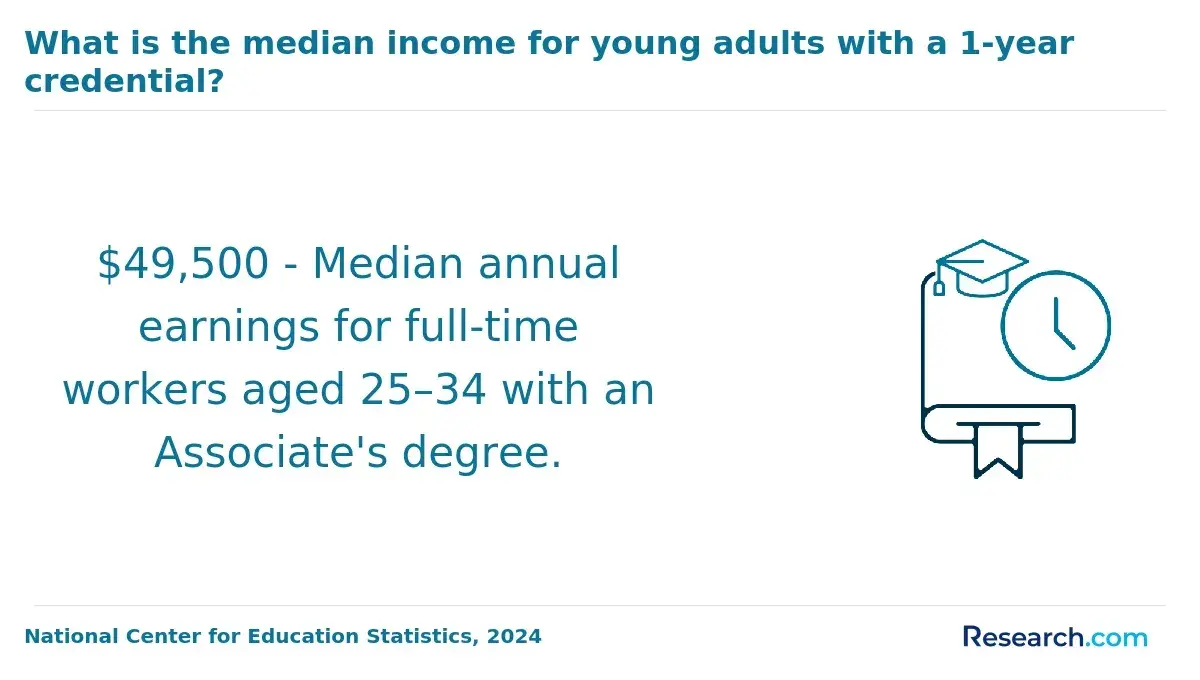
The BLS reported that the median annual wage for all U.S. workers was $49,500 in May 2024. Students should use that baseline carefully: roles connected to management, analysis, HR, and project coordination often report higher medians, but access to those roles usually depends on experience and specialized skills beyond a broad degree.
General studies students can respond to these trends by making the degree more specific. Practical moves include the following:
- Review 20 to 30 job postings for target roles before choosing upper-level electives.
- Add at least one marketable digital skill, such as spreadsheet analysis, presentation software, database basics, CRM tools, or project management platforms.
- Use career planning courses to build a portfolio that shows applied work rather than only listing completed classes.
- Seek work-based learning through internships, volunteer leadership, part-time jobs, military experience, or employer-sponsored projects.
- Consider short credentials only when they match actual job postings, not because they sound impressive.
The labor market rewards clarity. A graduate who can say "I studied general studies with a focus in organizational communication and project coordination, and here is my portfolio" will usually be easier for employers to evaluate than someone who simply says "I have a general studies degree."
What criteria should students use to choose a reputable online general studies program?
Choosing a reputable online general studies program requires more than comparing tuition. The right program should accept appropriate transfer credit, provide career planning, offer reliable course availability, and help you graduate with a coherent academic record.
Before applying, use a structured comparison process. These criteria help separate flexible, student-centered programs from programs that are simply broad and unfocused:
- Confirm institutional accreditation through an official recognized database.
- Request a written transfer credit evaluation before enrolling, especially if you have prior college, military, or professional training.
- Compare total cost, not just tuition, including fees, books, technology, proctoring, and repeated credits.
- Ask whether online students receive dedicated academic advising and career coaching.
- Review the curriculum for a required career planning course, capstone, internship option, or portfolio requirement.
- Check whether courses in your desired focus area are offered often enough to support on-time graduation.
- Ask for outcome indicators such as graduation rates, retention rates, and career services usage, while recognizing that broad majors may not have role-specific placement data.
- Compare the degree plan with real job postings or graduate program prerequisites before committing.
| If your priority is... | Look for... | Be cautious about... |
| Lowest cost | Public institutions, transfer-friendly policies, employer tuition assistance, community college pathways | Programs with low tuition but high fees or poor credit transfer |
| Fast completion | Generous transfer credit, year-round terms, clear course rotation, accelerated sessions | Schedules that are too intense to sustain while working |
| Career change | Career coaching, internship options, portfolio projects, elective clusters tied to target roles | Programs with no applied assignments or employer-facing support |
| Graduate school preparation | Advisor support for prerequisites, writing-intensive courses, research methods, strong GPA planning | Random electives that do not meet admission requirements |
| Maximum flexibility | Multiple concentration options and broad elective acceptance | Too much choice without advising or career structure |
Several mistakes can undermine the value of the degree. Avoid choosing a school before checking accreditation, focusing only on speed, assuming every credit will transfer, ignoring career services, or selecting electives without a target role in mind. A flexible program should still produce a clear plan.
The best next step is to narrow your list to three to five accredited programs and request written information from each one: total estimated cost, transfer evaluation, sample degree plan, online student support, and career planning requirements. Compare those documents side by side before speaking with enrollment staff again.
Other Things You Should Know About General Studies
Yes, if the concentration, focus area, or related coursework is accurately reflected in your transcript or degree plan. On a resume, you might write "Bachelor of General Studies, focus in organizational communication" or list relevant coursework beneath the degree.
Most online general studies degrees require 15 to 30 elective credits in career-planning courses, while the full degree usually totals 120 semester credits. Schools often allow classes such as career exploration, professional development, resume writing, and workplace communication to satisfy those electives.
Sometimes. Many adult-friendly institutions review military transcripts, professional certifications, standardized exams, or prior learning portfolios. Credit is not automatic, so ask for a written evaluation before enrolling.
Most employers focus on whether the institution is accredited and whether your skills match the role. You can make the degree easier to understand by highlighting a focus area, relevant projects, internships, technical skills, and work experience.
References
- The Labor Market for Recent College Graduates https://www.newyorkfed.org/research/college-labor-market
- Online Degree vs. Traditional: Choosing the Right Path https://beal.edu/online-degree-vs-traditional/
- Online General Studies Degree | Programs & Career Options https://www.learnhowtobecome.org/best-online-bachelors-in-general-studies-degree-programs/
- How To Choose General Education Courses In College | Veroniiiica https://veroniiiica.com/how-to-choose-general-education-courses-in-college/
- Are Online Degrees Accredited? How to Identify Quality Distance Learning Programs https://www.umassglobal.edu/blog-news/online-degrees-accredited-identify-quality-distance-learning-programs
- Best Online Colleges for Working Adults [2026] https://www.straighterline.com/blog/degree-completion-best-online-colleges-for-working-adults
- How Changing College Majors Are Reshaping the Future Workforce — The Burning Glass Institute https://www.burningglassinstitute.org/bginsights/how-changing-college-majors-are-reshaping-the-future-workforce
- Online General Studies Degree -BA - Illinois - Aurora University https://online.aurora.edu/online-degrees/general-studies-bachelors/
- General Studies Degree Jobs: 10 Careers + Salaries (2026) | Extern https://www.extern.com/post/general-studies-degree-jobs-career-guide