2027 How to Become an Elementary School Teacher in Washington: Requirements & Certification

Co-Founder and Chief Data Scientist
Becoming an elementary school teacher in Washington is not just a matter of earning a degree and applying for a classroom job. You must complete an approved preparation route, meet assessment and background-check requirements, apply for the correct state certificate, and keep that certificate active through professional learning. The process can feel confusing because Washington combines academic preparation, supervised teaching, endorsement rules, and ongoing renewal expectations.
This guide is for prospective teachers, career changers, paraeducators, substitute teachers, and education students who want a practical roadmap to elementary teaching in Washington. You will learn what credentials are required, how traditional and alternative routes compare, how online programs fit into licensure, what costs to expect, how to evaluate programs, and what career options may open after you enter the classroom.
Quick Answer: How Do You Become an Elementary School Teacher in Washington?
To become an elementary school teacher in Washington, you generally need a bachelor’s degree from an accredited institution, completion of a state-approved teacher preparation program, supervised student teaching, required assessments such as the Washington Educator Skills Test, a background check, and a Washington Residency Teacher Certificate. After becoming certified, teachers must complete 100 clock hours of professional development every five years to maintain their credentials.
The average time to complete the requirements for an elementary teaching license in Washington is approximately 1.5 to 2 years, depending on a candidate’s prior education and program pace. For someone starting college from the beginning, the full pathway commonly takes longer because the bachelor’s degree itself typically takes four years.
Key Things You Should Know About Becoming an Elementary School Teacher in Washington
- Time commitment: The average time to complete the requirements for an elementary teaching license in Washington is approximately 1.5 to 2 years, although candidates beginning with no college degree should plan for the additional time needed to finish a bachelor’s program.
- Licensure demand: In the 2022-2023 academic year, Washington issued over 4,500 initial teaching licenses, showing continued need for qualified educators, including those prepared for elementary classrooms.
- Application and screening costs: Candidates should budget for a $75 application fee, plus background-check expenses that can range from $50 to $100, depending on the provider.
- Ongoing renewal requirement: Washington teachers must complete 100 clock hours of professional development every five years to keep their licenses current.
- Assessment costs: Washington requires candidates to pass the Washington Educator Skills Test (WEST) as part of the licensure process. The cost for this test can be around $200, depending on the specific assessments taken.
- Education requirements for Washington elementary teachers
- Licensure application and renewal process
- Traditional vs. alternative certification routes
- How long the pathway usually takes
- Whether online programs qualify for licensure
- Online vs. on-campus elementary education programs
- Average program costs in Washington
- Teacher support systems in WashingtonCost factors to compare
- How to choose an elementary education program
- Special education training options
- Long-term ROI of an elementary education degree
- Using digital tools in elementary instruction
- Emerging trends in Washington elementary education
- Elementary education specializations
- Preschool education as a career enhancer
- Private school teaching considerations
- Most affordable route to licensure
- Moving from elementary to high school teaching
- Current Washington teaching certificate requirements
- Ways to advance after becoming an elementary teacher
- Career paths for elementary teachers
- Other teaching opportunities in Washington
- Speech and language support in elementary classrooms
- Washington elementary teacher job market
What are the educational requirements for elementary school teachers in Washington?
Washington requires elementary teacher candidates to show both academic preparation and classroom readiness. The path to teacher certification in Washington usually combines college coursework, an approved educator preparation program, supervised practice, assessments, and post-certification professional learning.
| Requirement | What it means for candidates | Why it matters |
| Bachelor’s degree | You need a bachelor’s degree from an accredited institution. Many candidates major in elementary education, but some enter through post-baccalaureate or alternative routes. | Washington uses the degree requirement to confirm broad college-level preparation before licensure. |
| State-approved teacher preparation program | You must complete a program approved for teacher certification. These programs include education theory, instructional methods, classroom management, assessment, and student teaching. | The program connects academic study with supervised classroom practice. |
| Student teaching or field experience | Candidates complete structured classroom placements under the supervision of experienced educators. | Fieldwork helps candidates learn how to plan lessons, manage routines, differentiate instruction, and respond to real student needs. |
| Basic skills and endorsement assessments | Washington uses assessments such as the Washington Educator Skills Test—Basic (WEST-B) and Washington Educator Skills Test—Endorsements (WEST-E). | These assessments are intended to verify basic academic skills and subject-area readiness. |
| Professional development after licensure | Licensed teachers must continue learning throughout their careers. | Washington requires 100 clock hours of professional development every five years to help educators remain current. |
Elementary preparation programs commonly include coursework in child development, literacy instruction, mathematics methods, science and social studies instruction, culturally responsive teaching, classroom assessment, and social-emotional learning. Candidates should review each program’s curriculum carefully because program quality, field placements, advising, and licensure support can vary.
The demand for elementary school teachers remains robust in the state, with projections indicating a need for approximately 1,000 new teachers annually through 2025. A recent study also shows that general elementary teachers are among the top teaching roles in public schools that needed to be filled in the 2023-24 academic year. The chart below provides additional context on public school hiring needs.
What is the licensure application and renewal process for elementary school teachers in Washington?
After completing the required degree, preparation program, student teaching, and assessments, candidates apply for the Washington Residency Teacher Certificate. This credential is required for teaching in Washington public schools and confirms that the candidate has met the state’s entry-level professional standards.
Basic licensure steps
- Finish an accredited bachelor’s degree. Your degree must come from an accredited institution and align with your teacher preparation route.
- Complete a Washington-approved teacher preparation program. The program should recommend you for certification after you meet all requirements.
- Pass required assessments. Candidates generally complete assessments such as the WEST-B and WEST-E, depending on the route and endorsement requirements.
- Complete background-check requirements. Background screening is part of the certification process and should be budgeted for early.
- Submit the certificate application. Candidates pay the required application fee and provide documentation requested by the state or program.
- Meet required training expectations. Washington requires training related to abuse issues, and documentation may be required as part of certification.
Renewal and professional learning
Washington’s renewal system is designed to keep teachers engaged in current instructional practices. Educators must complete a minimum of 100 clock hours of professional learning or equivalent experiences within the validity period of their certificate. These hours may include district training, approved workshops, coursework, conferences, or other qualifying professional learning activities.
Renewal should not be treated as a last-minute paperwork task. Teachers should track clock hours, save certificates of completion, confirm that professional learning activities meet state rules, and check renewal deadlines well before the certificate expires.
Educators interested in roles outside K-12 classrooms can also explore careers in higher education administration, which may appeal to teachers who later want to move into student services, academic advising, program coordination, or institutional leadership.
What is the difference between traditional and alternative teacher certification programs in Washington?
Washington offers more than one route into elementary teaching. The best option depends on your education level, career history, schedule, finances, and how much classroom experience you already have.
| Route | Best for | Typical strengths | Possible drawbacks |
| Traditional teacher preparation | Undergraduate students or candidates who want a structured education degree pathway | Broad coursework, planned field experiences, faculty advising, and a clear sequence toward certification | May take longer and may be less flexible for working adults |
| Post-baccalaureate or Master in Teaching route | People who already have a bachelor’s degree and want to enter teaching | Focused preparation without repeating a full undergraduate degree | Can be intensive and may require significant time for student teaching |
| Alternative route certification | Career changers, paraeducators, or candidates who meet route-specific qualifications | May allow a faster or more work-connected pathway into shortage areas | Can be demanding because candidates may balance teaching responsibilities with certification coursework |
Traditional Teacher Certification Programs
Traditional programs are usually built around a full sequence of education coursework and supervised classroom experience. Candidates study teaching methods, child development, learning assessment, literacy instruction, classroom management, and subject-specific pedagogy before or while completing student teaching. Institutions such as the University of Washington and Washington State University offer traditional teacher preparation programs that lead toward a Washington State Teaching Certificate.
Alternative Teacher Certification Programs
Alternative certification programs are designed for people who already hold a degree or have relevant experience and want a more direct route into teaching. The Washington State Alternative Route Program and Teach for America are examples of pathways that may serve candidates who meet specific eligibility criteria.
How to choose between the two
Choose a traditional route if you want a highly structured program, extensive preparation before full-time teaching, and a campus-based education community. Consider an alternative route if you are a career changer, already work in schools, or need a pathway that recognizes prior professional experience. Either way, do not choose based on speed alone. Elementary teaching requires strong preparation in literacy, classroom routines, family communication, behavior support, and differentiation for learners with varied needs.
How long does it take to become an elementary school teacher in Washington?
The timeline depends mainly on where you are starting. A high school graduate entering college, a bachelor’s degree holder changing careers, and a paraeducator seeking certification may have very different schedules.
| Starting point | Likely pathway | Time considerations |
| No bachelor’s degree yet | Complete a bachelor’s degree with an approved teacher preparation sequence | A bachelor’s degree typically takes four years, and certification requirements are often built into the program. |
| Bachelor’s degree in another field | Enter a post-baccalaureate, Master in Teaching, or alternative route | The average time to complete the requirements for an elementary teaching license in Washington is approximately 1.5 to 2 years, depending on background and program pace. |
| Already working in education | Explore alternative routes or programs designed for school employees | Prior experience may help, but candidates must still meet program, assessment, and certification requirements. |
Most candidates should plan for the following stages: degree completion, teacher preparation coursework, supervised student teaching, licensure exams, background checks, and state application review. Once all education and testing requirements are complete, the application review and approval process can take anywhere from three to twelve weeks, depending on workload and documentation.
In total, aspiring elementary school teachers in Washington can expect the process to take approximately five to seven years from the start of undergraduate education to receiving a teaching license. Candidates comparing pathways in other states may also find it useful to review teacher preparation in Louisiana for a broader view of how state requirements differ.
Are online education programs accepted for teacher licensure in Washington?
Online education programs can be accepted for Washington teacher licensure, but only if they satisfy the state’s certification requirements. The key question is not whether the classes are online. The key question is whether the program is properly approved, includes required field experiences, and prepares candidates for the correct Washington endorsement and certificate.
What to verify before enrolling in an online program
- Accreditation and state approval: Confirm that the institution is accredited and that the teacher preparation program is recognized for certification. Candidates often look for accreditation from a recognized body such as the Council for the Accreditation of Educator Preparation (CAEP).
- Washington licensure alignment: Ask the program directly whether graduates are eligible for Washington elementary teacher certification and what additional steps may be required.
- Student teaching placement: Online coursework does not remove the need for in-person classroom practice. The program must help you complete fieldwork and student teaching in approved school settings.
- Endorsement preparation: Make sure the curriculum prepares you for the elementary endorsement and any tests required for your route.
- Local placement support: If you live in Washington but enroll in an out-of-state online program, ask who arranges your Washington field placement and how supervision is handled.
Online programs can be a strong fit for working adults, parents, rural students, or candidates who need scheduling flexibility. However, the convenience of online learning should not replace careful due diligence. A program that is affordable or flexible but does not lead to Washington licensure can cost more in the long run.
How does an online elementary education program in Washington compare to an on-campus program?
Online and on-campus teacher preparation can both lead to licensure when the program meets Washington requirements. The better choice depends on how you learn, how much structure you need, where you live, and how you will complete fieldwork.
| Factor | Online program | On-campus program |
| Schedule | Often better for students balancing work, caregiving, or long commutes | Usually better for students who want a set weekly routine and face-to-face accountability |
| Classroom practice | Still requires in-person field placements and student teaching | Field placements may be coordinated through established local school partnerships |
| Peer interaction | May rely on discussion boards, video meetings, and virtual collaboration | Offers more immediate in-person discussion, group projects, and campus networking |
| Cost considerations | May reduce commuting or housing costs but can include technology or online learning fees | May involve transportation, housing, parking, or campus-based expenses |
| Best fit | Self-directed learners who can manage deadlines independently | Students who benefit from direct access to faculty, classmates, and campus support services |
Both formats require careful evaluation. Before choosing, ask whether the program has a strong record of placing candidates in Washington schools, whether supervisors observe student teaching effectively, and whether advising staff understand Washington certification rules.
What is the average cost of elementary education programs in Washington?
The cost of becoming an elementary teacher in Washington varies by institution, degree level, residency status, delivery format, and whether you already have a bachelor’s degree. Candidates should budget for more than tuition because certification, testing, materials, and living expenses can add up quickly.
| Cost category | Typical amount stated | What to consider |
| Master in Teaching tuition | Approximately $15,000 to $30,000 for the entire program | Costs may differ between public and private institutions and between in-state and out-of-state students. |
| Room and board | Between $12,000 and $20,000 annually | Housing, meals, transportation, and personal expenses can change the true cost of attendance. |
| Textbooks and supplies | Around $1,000 to $2,000 throughout the program | Used books, digital materials, library reserves, and open educational resources may reduce costs. |
| Credentialing fees | Range from $100 to $300 | These may include costs tied to the Washington Residency Certificate and additional endorsements. |
| Application and background checks | $75 application fee, plus background checks that can range from $50 to $100 | These costs are separate from tuition and should be included in your certification budget. |
| Testing | WEST-related costs can be around $200, depending on the assessments taken | Retakes, preparation materials, and scheduling can increase total testing expenses. |
To control costs, compare total program price rather than tuition alone. Ask schools about scholarships, grants, payment plans, employer partnerships, transfer credits, and whether student teaching is unpaid or compatible with part-time work. Candidates considering advanced education later may also want to explore how doctorate in education career paths differ from classroom teaching and school leadership roles.
What support systems are available for elementary school teachers in Washington?
Support matters because the early teaching years can be demanding. New elementary teachers must learn curriculum expectations, classroom routines, student assessment, family communication, and school procedures while managing a full classroom. Washington offers several support structures that can help teachers build skill and remain in the profession.
Mentorship and induction
The Beginning Educator Support Team (BEST), offered by the Washington State Office of Superintendent of Public Instruction (OSPI), is one example of state-level support for new teachers. These programs can help districts build mentoring systems that connect early-career educators with experienced teachers who provide guidance on planning, classroom management, professional expectations, and reflective practice.
Professional development
Washington emphasizes ongoing educator learning, including professional development connected to social-emotional learning, culturally responsive teaching, student assessment, and inclusive classroom practice. Since teachers must complete 100 clock hours of professional development every five years, it is wise to choose learning opportunities that support both certificate renewal and classroom effectiveness.
Wellness and mental health supports
Many districts offer employee assistance programs, counseling referrals, wellness resources, and stress-management supports. Teachers should ask prospective employers what resources are available, how confidential support is accessed, and whether the district has active workload, planning time, or teacher retention initiatives.
Peer collaboration
Professional learning communities, grade-level teams, instructional coaching, and teacher-led networks can help elementary educators avoid isolation. These groups are especially valuable for new teachers learning how to interpret student data, adapt lessons, and support multilingual learners or students with disabilities.
Union and advocacy resources
Organizations such as the Washington Education Association (WEA) provide educators with information on working conditions, professional rights, training opportunities, and advocacy. For candidates still learning how to become a teacher in Washington, understanding these supports early can help set realistic expectations about the profession.
How to choose the best elementary education program in Washington?
The best elementary education program is the one that gets you to licensure, prepares you for real classrooms, fits your budget, and supports your long-term career goals. Washington has over 2,000 elementary schools, so candidates should evaluate programs not only by reputation but also by how well they prepare teachers for diverse local communities.
| Question to ask | Why it matters | What a strong answer looks like |
| Is the program accredited and approved for Washington licensure? | Licensure eligibility is nonnegotiable. | The school can clearly explain its approval status and certification outcomes. |
| How much supervised classroom experience is included? | Washington requires a minimum of 450 hours of supervised student teaching. | The program has structured placements, trained supervisors, and partnerships with schools. |
| Does the curriculum prepare candidates for elementary literacy and math instruction? | Elementary teachers teach foundational academic skills. | Coursework includes evidence-based literacy, math methods, assessment, and intervention strategies. |
| What support is available for licensure exams and applications? | Testing and paperwork can delay certification if poorly managed. | The program offers advising, exam guidance, and clear application timelines. |
| What are the job placement results? | Placement outcomes can signal employer trust and career support quality. | The program tracks graduate employment and maintains relationships with districts. |
| What will the full cost be? | Tuition is only part of the investment. | The school provides a complete cost estimate including fees, materials, testing, and living expenses. |
| Does the program offer useful specializations? | Endorsements or focused preparation can improve fit for certain roles. | Options may include special education, bilingual education, literacy, STEM, or early childhood education. |
Common mistakes to avoid when choosing a program
- Choosing based only on tuition: A low-cost program can become expensive if it does not provide strong placement support, exam preparation, or licensure guidance.
- Assuming every online program qualifies: Online coursework must still align with Washington teacher certification rules and include approved field experiences.
- Ignoring student teaching logistics: Ask where placements occur, who supervises them, and whether you can complete them near your home.
- Overlooking transfer-credit policies: Candidates with prior college credits should confirm how many credits apply before enrolling.
- Relying only on rankings: Rankings may be useful, but licensure fit, affordability, advising quality, and school partnerships matter more.
- Assuming salary outcomes are guaranteed: Teacher pay varies by district, experience, education level, and location.
How can I pursue specialized training in special education as an elementary teacher in Washington?
Elementary teachers who want to better serve students with disabilities can pursue special education training through endorsements, graduate coursework, district-sponsored professional development, or preparation programs focused on inclusive instruction. This training typically emphasizes individualized education programs, behavior supports, collaboration with families and specialists, differentiated instruction, and evidence-based interventions. For a focused certification roadmap, review how to become a special education teacher in Washington.
What is the long-term return on investment for an elementary education degree in Washington?
The return on investment for an elementary education degree depends on total program cost, financial aid, debt level, district salary schedules, benefits, career stability, and advancement options. A teaching degree can lead to meaningful work and a defined public education career path, but candidates should avoid assuming that every program produces the same financial outcome.
Before enrolling, compare the full cost of attendance with expected starting pay in the districts where you want to work. Also consider whether the program supports endorsements, graduate credits, or pathways into instructional coaching, administration, curriculum work, or special education. If you are comparing helping professions more broadly, our discussion of whether a degree in social work is worth it may help you think through costs, compensation, and long-term fit in a related service-oriented field.
How can digital tools enhance classroom instruction for elementary teachers in Washington?
Digital tools can help elementary teachers organize instruction, personalize practice, track student progress, and make lessons more interactive. Common uses include adaptive reading and math platforms, digital portfolios, classroom communication tools, multimedia projects, and collaborative documents. These tools are most effective when they support learning goals rather than distract from them.
Teachers should evaluate educational technology by asking whether it improves accessibility, supports multilingual learners, protects student privacy, and gives teachers actionable information. Digital tools can also support creative, cross-disciplinary projects. Educators interested in arts-integrated learning may find related ideas in how to become an art teacher in Washington.
What emerging trends are shaping elementary education in Washington?
Several trends are shaping elementary teaching in Washington. Schools continue to emphasize culturally responsive instruction, social-emotional learning, inclusive practices, data-informed intervention, and flexible learning supports. Technology is also changing lesson planning, communication, assessment, and classroom differentiation, especially as teachers learn to use digital tools more intentionally.
Credential flexibility is another important trend. Some educators add endorsements or pursue online coursework to broaden their qualifications. For example, candidates interested in younger learners may compare elementary preparation with an online bachelor’s degree in early childhood education to understand how early learning credentials can fit into a broader teaching career.
What types of specializations are available within elementary education in Washington?
Elementary teachers are often generalists, but many build specialized expertise to serve particular student groups or instructional needs. Specializations can improve classroom effectiveness and may open additional roles within schools or districts.
| Specialization | What it focuses on | When it may be a good fit |
| Special Education | Instructional support for students with disabilities, IEP implementation, accommodations, and inclusive teaching | You want to work closely with students who need individualized support. |
| English Language Learners (ELL) | Language development, culturally responsive instruction, and academic support for multilingual students | You want to teach in linguistically diverse schools and support English acquisition. |
| STEM Education | Science, technology, engineering, and mathematics instruction through inquiry and hands-on learning | You enjoy problem-solving, experiments, and project-based instruction. |
| Early Childhood Education | Developmental needs of younger children, early literacy, early numeracy, and social-emotional foundations | You want to work with young learners or strengthen your understanding of early development. |
| Reading and Literacy | Reading instruction, literacy assessment, intervention, vocabulary, phonics, comprehension, and writing development | You want to help students build the academic foundation used across every subject. |
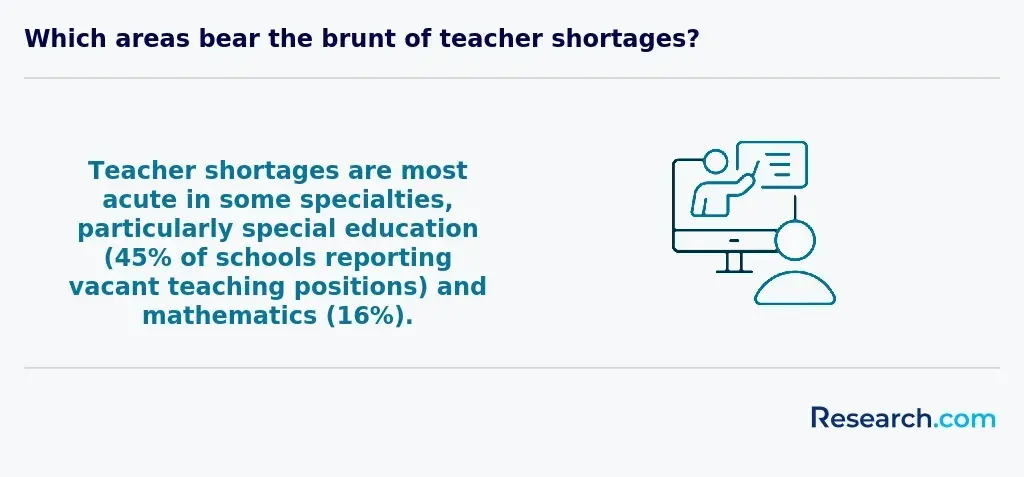
Demand for these skills is shaped by student needs. According to the report cited from the National Center for Education Statistics, approximately 14% of public school students receive special education services. The article also notes that nearly 65% of fourth graders in the U.S. are not reading at a proficient level, underscoring why literacy expertise remains important in elementary classrooms.
Can transitioning to preschool education enhance my elementary teaching career?
Preschool training can strengthen an elementary teacher’s understanding of early development, play-based learning, early literacy, behavior routines, and family engagement. This can be especially useful for teachers working in kindergarten, first grade, intervention roles, or schools with strong early learning partnerships. To understand requirements for that pathway, see how to become a preschool teacher in Washington.
Should I consider private school teaching in Washington?
Private school teaching may appeal to educators who want a different school culture, mission-based environment, smaller community, or alternative curriculum model. However, candidates should compare pay, benefits, certification expectations, class size, planning time, professional development, and long-term advancement before making the move. For more detail, review how to become a private school teacher in Washington.
What is the most cost-effective path to teacher licensure in Washington?
The most affordable pathway depends on your starting point. A current undergraduate student may save money by choosing a public institution with an embedded teacher preparation program. A bachelor’s degree holder may compare post-baccalaureate, Master in Teaching, and alternative route options. Paraeducators or school employees should ask districts about partnerships, tuition assistance, and state-supported routes.
When comparing affordability, include tuition, lost income during student teaching, testing, application fees, books, transportation, and time to completion. A cheaper program is not always the better investment if it delays certification or provides weak field placement support. For a dedicated cost comparison, see the cheapest way to get a teaching credential in Washington.
Can transitioning from elementary to high school teaching boost my career in Washington?
Moving from elementary to high school teaching can expand your options, but it usually requires subject-specific preparation and additional certification steps. Elementary teachers who enjoy advanced content, adolescent learning, or departmental teaching may consider a secondary endorsement. For example, candidates interested in mathematics can review high school math teacher qualifications in Washington to understand how secondary requirements differ.
What are the current teaching certificate requirements in Washington?
Washington’s certificate system requires candidates to complete an approved pathway, meet assessment requirements, finish supervised practice, satisfy background-check rules, and maintain credentials through ongoing professional learning. Because requirements can differ by route and endorsement, candidates should verify details before enrolling in a program. For a broader breakdown, review teaching certificate requirements in Washington.
How Can I Advance My Career After Becoming an Elementary Teacher in Washington?
Elementary teachers can grow their careers through endorsements, graduate study, instructional leadership, mentoring, curriculum design, coaching, administration, or specialized classroom roles. The best next step depends on whether you want to stay close to students, support other teachers, design curriculum, or move into school leadership.
Career advancement usually requires planning. Track your professional development hours, seek feedback from mentors, build evidence of student growth, volunteer for grade-level or curriculum committees, and choose endorsements that match district needs. If you are mapping your professional timeline, the guide on how long it takes to become a teacher in Washington can help you understand how preparation and advancement stages connect.
What career paths are available for elementary school teachers in Washington?
An elementary teaching certificate can lead to more than one type of education career. Many educators remain in classroom roles for the long term, while others move into specialized instruction, coaching, leadership, or education support positions.
| Career path | Main responsibilities | Typical next step |
| Elementary classroom teacher | Plan lessons, teach core subjects, manage classroom routines, assess student progress, and communicate with families | Build classroom experience and maintain certification. |
| Special education teacher | Support students with disabilities, implement IEPs, collaborate with families and specialists, and adapt instruction | Complete special education training or endorsement requirements. |
| Instructional coach | Help teachers improve instruction, analyze student data, model lessons, and support professional learning | Gain strong classroom experience and develop expertise in pedagogy. |
| Curriculum developer | Create, evaluate, or improve instructional materials and learning standards alignment | Develop subject-area expertise and pursue advanced coursework when useful. |
| Educational administrator | Oversee school operations, staff, budgets, instructional improvement, and policy implementation | Often requires graduate study in educational leadership. |
| Higher education faculty | Prepare future teachers through college-level instruction, supervision, or research | Usually requires a master’s degree or higher in education or a related field. |
| Education policy analyst | Study education systems, evaluate policies, and support reforms at district, state, or organizational levels | Build expertise in research, policy, data analysis, or advocacy. |
Washington continues to seek educators who can create inclusive, engaging classrooms and respond to diverse student needs. The chart below shows potential earnings of education majors by industry.
What other teaching opportunities are available in Washington?
Teachers who want to expand beyond elementary classrooms can consider middle school, high school, special education, early childhood education, arts education, private schools, or instructional support roles. Middle school may be a good fit for educators who enjoy working with early adolescents while developing subject-area expertise. For example, candidates interested in math can review how to become a middle school math teacher in Washington.
Can I integrate speech and language support into my elementary teaching practice?
Elementary teachers are often among the first professionals to notice speech, language, vocabulary, fluency, or communication concerns. While teachers do not replace licensed speech-language pathologists, they can use classroom strategies that support oral language development, structured discussion, vocabulary growth, and communication access. Educators who want deeper expertise can explore related training and the pathway described in how to be a speech therapist in Washington.
What is the job market for elementary school teachers in Washington?
The Washington job market for elementary teachers combines steady replacement demand with variation by district, region, endorsement, and school need. Candidates comparing preparation options may also want to review accredited online teaching master’s programs if they already hold a bachelor’s degree and want a graduate-level route into teaching.
Demand and openings
- Overall outlook: Employment of kindergarten and elementary school teachers is projected to show little to no change from 2022 to 2032 at the national level. That means candidates should pay close attention to local district hiring conditions rather than relying only on broad national growth projections.
- Annual openings: Approximately 109,000 job openings are anticipated each year across the United States, primarily because schools need to replace teachers who retire, transfer, or leave the profession.
Salary considerations
- Median pay: As of May 2023, the median annual salary for elementary school teachers in Washington is around $63,680. Actual pay may vary based on district salary schedules, education level, experience, bargaining agreements, and location.
- Regional differences: Urban areas such as Seattle and Bellevue may offer higher wages than some rural regions, but cost of living can also be higher. Spokane may offer a different balance between salary and living costs.
Where opportunities may be stronger
- High-need endorsements: Candidates with preparation in special education, ELL, STEM, or literacy may be more competitive in certain districts.
- Geographic flexibility: Willingness to work outside the most competitive districts can expand job options.
- Strong field placements: Student teaching can function as a hiring bridge if candidates build strong relationships with mentor teachers and administrators.
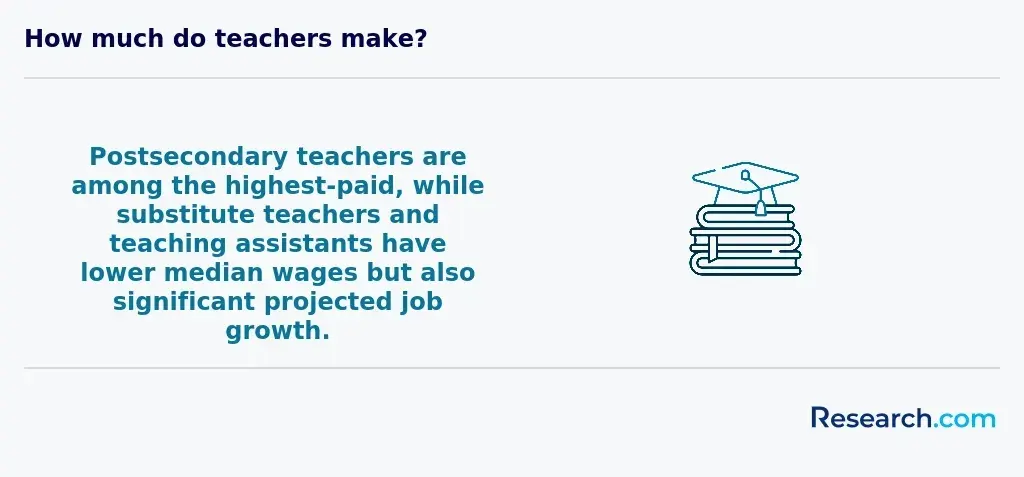
The chart below adds further context for evaluating the teaching labor market.
Here’s What Graduates Have to Say About Becoming an Elementary School Teacher in Washington
-
: "
“My first year in a Washington elementary classroom was challenging, but mentorship made a major difference. Having an experienced teacher to ask about lesson pacing, family communication, and classroom routines helped me move from surviving the day to actually improving my practice.” — April
"
-
: "
“I was drawn to Washington because I wanted to teach in diverse communities. The work requires flexibility and humility, but it is powerful to design lessons that reflect students’ cultures, languages, and experiences.” — Kevin
"
-
: "
“The most meaningful part of teaching here has been the relationships with students and families. Support systems matter, especially when the workload is heavy, but the moments when students realize they can do something new are what keep me committed.” — Daryl
"
Related Articles for Nearby States
- 2027 How to Become an Elementary School Teacher in Oregon: Requirements & Certification
- 2027 How to Become an Elementary School Teacher in Idaho: Requirements & Certification
- 2027 How to Become an Elementary School Teacher in Montana: Requirements & Certification
- 2027 How to Become an Elementary School Teacher in California: Requirements & Certification
- 2027 How to Become an Elementary School Teacher in Nevada: Requirements & Certification
- 2027 How to Become an Elementary School Teacher in Utah: Requirements & Certification
- 2027 How to Become an Elementary School Teacher in Wyoming: Requirements & Certification
- 2027 How to Become an Elementary School Teacher in Colorado: Requirements & Certification
- 2027 How to Become an Elementary School Teacher in New Mexico: Requirements & Certification
- 2027 How to Become an Elementary School Teacher in South Dakota: Requirements & Certification
References:
- BLS. (17 Apr 2024). Kindergarten and Elementary School Teachers. BLS.
- education.uw.edu. (22 Aug 2023). Elementary Teacher Education Program (ELTEP). education.uw.edu.
- ospi.k12.wa.us. (19 Aug 2024). Residency Teacher Renewal. ospi.k12.wa.us.
- teachelementary.org. (26 Feb 2014). Elementary Teaching Certification in Washington. teachelementary.org.
- washingtonea.org. (n.d.). Job Opportunities. washingtonea.org.
Key Insights
- Washington elementary teacher certification requires multiple steps. A bachelor’s degree alone is not enough; candidates also need an approved preparation program, supervised teaching, assessments, background checks, and a Residency Teacher Certificate.
- Program approval matters more than format. Online programs may be acceptable, but only if they align with Washington licensure requirements and include approved in-person field experience.
- Cost comparisons should include more than tuition. Testing, credentialing, background checks, books, living costs, and unpaid student teaching time can change the real price of becoming certified.
- Traditional and alternative routes serve different candidates. Traditional programs may offer more structure, while alternative routes may fit career changers or school employees who need a more flexible pathway.
- Specializations can improve career fit. Special education, ELL, STEM, literacy, and early childhood training can help teachers meet student needs and expand employment options.
- Renewal planning starts early. Washington requires 100 clock hours of professional development every five years, so teachers should track professional learning from the beginning of their careers.
- Job prospects depend on location and preparation. National growth may be limited, but openings continue through replacement needs, and candidates with strong field experience or high-need skills may be more competitive.
Other Things You Should Know About Becoming an Elementary School Teacher in Washington
The Washington Professional Educator Standards Board (PESB) sets teacher certification rules, and the Office of Superintendent of Public Instruction (OSPI) issues the actual certificates. Applicants must meet Washington’s preparation, testing, and background-check requirements before OSPI can grant the initial elementary teaching credential.
Aspiring elementary school teachers in Washington must pass the WEST-B and NES exams for certification in 2027. The WEST-B evaluates basic skills in reading, writing, and mathematics, while the NES focuses on specific subject readiness, ensuring candidates are sufficiently prepared to teach various subjects at the elementary level.
Aspiring elementary school teachers in Washington in 2027 must complete at least a student teaching experience in an accredited institution. This involves a supervised, practical classroom assignment that typically lasts one semester under the mentorship of an experienced teacher.