2027 How to Become a Paralegal in California

Co-Founder and Chief Data Scientist
Becoming a paralegal in California is a practical way to enter the legal field without spending years in law school, but the state has specific rules that make planning important. California has one of the country’s largest paralegal workforces, with employment expected to exceed 44,000 by 2032, and employers often look closely at whether applicants meet the state’s education, experience, and continuing education standards.
This guide explains how to qualify as a paralegal in California, what programs cost, how certification differs from legal eligibility, where jobs are growing, what skills employers value, and how to decide whether this career path fits your goals.
Quick Answer: How to Become a Paralegal in California
- California does not license paralegals, but state law requires paralegals to meet defined education or experience standards before using the title.
- The state’s paralegal job market is projected to grow by 12% through 2032, which is stronger than the national average.
- The median annual salary for paralegals in California is approximately $72,960, though pay varies by region, specialization, employer type, and experience.
- Many paralegal certificate programs in California take 6 to 12 months of full-time study, making this one of the faster routes into legal support work.
- Professional certification is optional, but credentials from NALA, NFPA, or CAPA can help candidates stand out in competitive legal markets.
- What does a paralegal do in California?
- What are the basic requirements to become a paralegal in California?
- What education options are available for paralegals in California?
- How much does it cost to become a paralegal in California?
- How do you get certified as a paralegal in California?
- What is the job outlook for paralegals in California?
- What additional career pathways can paralegals explore in California?
- Should paralegals in California develop accounting expertise?
- How much do paralegals make in California?
- What are the steps to switch careers and become a paralegal in California?
- How do paralegal and law enforcement career paths compare in California?
- What skills do successful paralegals need in California?
- How do I find a paralegal job or internship in California?
- What future trends and challenges will impact paralegal careers in California?
- What financial aid options are available for paralegal students in California? Related sections: future trends and job search strategies.
What does a paralegal do in California?
A paralegal in California supports attorneys by performing substantive legal work under attorney supervision. The role is not clerical only. Paralegals often handle research, organize evidence, prepare documents, track deadlines, communicate with clients, and help attorneys manage cases from intake through trial or settlement.
California paralegals commonly work on:
- Legal document preparation: Drafting discovery requests, interrogatories, deposition summaries, motions, declarations, correspondence, and case-related forms for attorney review.
- Legal research: Reviewing statutes, regulations, case law, court rules, and procedural requirements, then summarizing findings in research notes or memoranda.
- Case organization: Managing files, indexing records, organizing exhibits, maintaining calendars, preparing trial notebooks, and tracking litigation deadlines.
- Client and witness coordination: Gathering facts, scheduling interviews, contacting witnesses, preparing declarations, and helping attorneys prepare for testimony.
- Discovery and evidence support: Reviewing documents, organizing production sets, summarizing depositions, and assisting with electronically stored information.
- Attorney support during hearings or trial: Managing exhibits, taking notes, locating documents quickly, and helping the legal team stay organized in court or arbitration.
California’s legal market is broad, so paralegal duties can look different depending on the employer. A litigation paralegal may spend much of the week on discovery and trial preparation, while a corporate paralegal may maintain entity records, assist with compliance filings, and support transactions. Immigration, family law, intellectual property, environmental law, real estate, employment law, and public interest legal services all require different subject-matter knowledge.
The most important boundary is ethical: paralegals cannot practice law, independently represent clients, set legal fees, or give legal advice. They must work under attorney supervision and follow California’s rules for paralegal conduct and continuing legal education.
What are the basic requirements to become a paralegal in California?
California defines who may work as a paralegal under California Business and Professions Code §6450. Unlike some occupations, there is no state licensing exam for paralegals. Instead, you must qualify through an approved education route or a combination of education and supervised legal experience. In 2023, approximately 1,128 students completed programs from 94 paralegal and legal assistant training programs in California.
California paralegal qualification routes
| Pathway | What it requires | Best fit |
| ABA-approved paralegal program | Completion of a paralegal program approved by the American Bar Association. As of 2024, California has 33 ABA-approved paralegal programs. | Students who want a widely recognized credential and may apply to competitive law firms or corporate legal departments. |
| Accredited certificate or degree program | A certificate or degree from an accredited postsecondary institution that includes at least 24 semester units in law-related courses. | Students seeking flexibility through community colleges, universities, extension programs, or online options that meet California standards. |
| Bachelor’s degree plus supervised experience | A bachelor’s or advanced degree in any field plus at least one year of law-related experience under a California-licensed attorney who has at least three years of active practice. | Career changers who already have a degree and can secure supervised legal work. |
| High school diploma plus experience | A high school diploma or equivalent plus at least three years of law-related experience under a qualified attorney, available only to those who began working as paralegals before December 31, 2003. | Long-time legal support professionals who qualify under the older experience-based provision. |
Continuing legal education requirement
California paralegals must complete eight hours of continuing legal education every two years. The requirement includes four hours in legal ethics and four hours in either general law or specialized law. This requirement matters because paralegals must be able to document compliance if asked by an employer, attorney, or relevant authority.
If you are just starting, the simplest route is usually a qualifying certificate, associate degree, or bachelor’s-level paralegal program. If you already work in a law office, ask the supervising attorney whether your role can help satisfy the experience requirement. Those exploring broader legal roles can also compare paralegal work with other options in a legal studies career path.
What education options are available for paralegals in California?
California offers several ways to prepare for paralegal work. O*NET OnLine reports 103 training programs for paralegals and legal assistants in the state, but the right choice depends on your prior education, schedule, budget, and career goal.
| Education option | Typical purpose | When it makes sense | What to verify |
| Paralegal certificate | Focused legal training without a full degree. | You already have college experience or a degree and want a faster transition into legal work. | Whether the program meets California’s 24 semester units requirement or is ABA-approved. |
| Associate degree in paralegal studies | Combines general education with paralegal coursework. | You do not yet have a college degree and want both academic credit and career preparation. | Transfer policies, internship availability, accreditation, and legal course unit totals. |
| Bachelor’s degree with legal studies or paralegal coursework | Provides broader academic preparation and may support advancement. | You want a four-year degree, plan to work in corporate or government settings, or may pursue graduate legal studies later. | Whether the legal coursework satisfies California paralegal requirements. |
| Specialized certificate or short course | Adds skills in areas such as intellectual property, environmental law, immigration law, litigation, or compliance. | You already qualify as a paralegal and want to move into a more specialized practice area. | Whether the course is respected by employers and eligible for continuing education credit. |
| Online paralegal program | Offers remote or hybrid study for working adults. | You need schedule flexibility or do not live near a campus program. | Accreditation, ABA status if relevant, internship support, access to legal research tools, and California-specific curriculum. |
Program format matters, but compliance matters more. A convenient online program is only useful if it helps you meet California’s legal requirements and prepares you for real legal work. Look for coursework in legal research, civil litigation, legal writing, ethics, contracts, torts, business organizations, and technology used in modern law offices.
Prospective students should also compare whether a program includes internships, Westlaw or LexisNexis training, career services, alumni networks, and instruction in California procedure. For a broader explanation of the profession and national career expectations, review Research.com’s guide on what paralegals do and how to become one.
How much does it cost to become a paralegal in California?
The cost of becoming a paralegal in California depends on the credential, school type, location, residency status, and whether you study online, on campus, full time, or part time. Data USA reports that the median in-state public tuition for paralegal programs in the U.S. is around $4,440, while private out-of-state institutions charge approximately $26,198. Those figures are national benchmarks, so California students should compare actual program pages carefully before enrolling.
Common cost ranges and examples
| Program type or school example | Stated cost information | Planning note |
| Certificate programs | Often range from $2,000 to $8,350, depending on the institution. | Usually the fastest and most targeted option for people who already have prior college credit or a degree. |
| UCLA Extension | Approximately $7,995 for the full program. | Compare included services, materials, career support, and course schedule. |
| UC Davis Continuing and Professional Education | Tuition is $6,995, plus around $800 for materials. | Budget for both tuition and required materials. |
| UC San Diego Extended Studies | Total program cost ranges from $6,340 to $6,635, excluding fees and materials. | Confirm what fees and materials add to the final bill. |
| Cal State LA Downtown | Each course costs $900, totaling $5,400 for six courses. | Check whether additional fees, books, or technology access are separate. |
| CSU East Bay | Tuition is $8,350, including lab fees and Westlaw access. | Included legal research platform access can reduce separate training costs. |
| San Diego Miramar College | $46 per unit for California residents. | Community college programs may be among the lowest-cost options for eligible residents. |
| Associate or bachelor’s degree programs | Tuition typically ranges from $12,000 to $47,000, depending on the school and residency status. | Degree programs take longer but may offer broader career flexibility. |
Costs students often overlook
- Books and materials: Many students should plan for $800 to $1,000.
- Application and certificate fees: Some programs charge a $50 application fee and a $125 certificate fee.
- Technology: Ask whether access to legal research databases, e-discovery tools, or case management software is included.
- Lost income or reduced work hours: Accelerated full-time programs may shorten the timeline but make it harder to keep working.
- Transportation or parking: Campus programs may add commuting costs that online programs avoid.
How to compare value, not just tuition
The cheapest program is not always the best value if it lacks accreditation, California-compliant coursework, career support, or practical training. Before enrolling, ask whether graduates qualify under California Business and Professions Code §6450, whether internships are available, and how the program helps students build resumes and writing samples.
How do you get certified as a paralegal in California?
California does not require state certification to work as a paralegal, but the word “certified” can be confusing. A person may be certificated after completing a paralegal education program, while a certified paralegal usually means someone has passed a professional exam from a paralegal organization.
Professional certification is voluntary. It can still be useful because it signals commitment, tested knowledge, and ongoing professional development. Employers in competitive California markets may view certification favorably, especially for candidates who are new to legal work or applying for specialized roles.
Major certification options
| Credential | Organization | Basic information | When it may help |
| Certified Paralegal | NALA | Candidates must meet eligibility rules, including completion of a paralegal program with at least 15 semester hours or 225 clock hours. The exam covers communications, ethics, legal research, judgment and analytical ability, and the American legal system. | Useful for applicants who want a nationally recognized credential. |
| Registered Paralegal | NFPA | The RP credential requires passing the Paralegal Advanced Competency Exam. | Often best for paralegals who already have experience and want to demonstrate advanced competency. |
| Core Registered Paralegal | NFPA | The CRP credential requires passing the Paralegal CORE Competency Exam. | Can be helpful for early-career paralegals seeking a competency-based credential. |
| California Certified Paralegal | CAPA | CAPA offers the CCP credential for candidates who meet its education and experience standards. | Relevant for paralegals who want a California-focused professional credential. |
Continuing education for certification
Certification bodies have their own continuing education rules. For example, CAPA requires a minimum of 40 hours of continuing legal education every five years to maintain the California Certified Paralegal credential, including 30 hours of general law and 10 hours of legal ethics.
The decision to pursue certification should depend on your career stage. If you are still trying to meet California’s basic qualification requirements, complete that step first. If you already qualify and want to compete for higher-responsibility roles, certification may strengthen your resume.
What is the job outlook for paralegals in California?
The employment outlook for California paralegals is strong. California paralegal and legal assistant employment is projected to grow by 12% between 2022 and 2032, compared with the national average of 1% over the same period. The state is also expected to have about 4,690 annual job openings, including openings from new jobs and replacement needs.
Nationally, about 75% of paralegals work in legal services, and around 10% work in government positions across federal, state, and local agencies. California’s large population, active court systems, corporate legal departments, technology sector, immigration-related legal demand, real estate market, and regulatory environment all support ongoing need for trained legal support professionals.
| Employment setting | Typical paralegal work | Why it may appeal to you |
| Law firms | Litigation support, discovery, client files, trial preparation, legal research, and document drafting. | Good fit if you want exposure to varied cases and attorney teams. |
| Corporate legal departments | Contracts, entity management, compliance, intellectual property support, employment matters, and vendor documentation. | Good fit if you prefer business-focused legal work and internal clients. |
| Government agencies | Administrative law, public records, enforcement files, hearings, investigations, and public sector litigation support. | Good fit if you value public service and structured procedures. |
| Legal aid and nonprofits | Client intake, housing, immigration, benefits, family law, consumer protection, and community advocacy support. | Good fit if mission-driven work matters to you. |
| Specialized practice groups | Environmental, immigration, real estate, intellectual property, entertainment, and employment law support. | Good fit if you want to build niche expertise that may improve advancement options. |
Education and credentials influence job competitiveness. California employers may prefer applicants who completed accredited or ABA-approved programs, understand California court procedures, and can use legal technology from day one. Paralegals considering graduate-level legal education can compare advanced options such as online master’s in legal studies degree programs, especially if they want to move into compliance, contracts, legal operations, or policy roles.
What additional career pathways can paralegals explore in California?
Paralegal experience can lead to several adjacent careers, especially for professionals who develop strong writing, research, compliance, investigation, and client-service skills. Some paralegals stay in law firms and move into senior litigation support roles, while others transition into corporate legal operations, contracts administration, compliance, risk management, claims, government program work, or nonprofit advocacy.
| Career direction | How paralegal skills transfer | Who should consider it |
| Compliance specialist | Regulatory research, documentation, policy tracking, and audit support. | Paralegals who enjoy rules, procedures, and business operations. |
| Contract administrator | Document review, deadline tracking, clause comparison, and communication with internal stakeholders. | Paralegals who prefer transactional work over litigation. |
| Legal operations coordinator | Case management, billing coordination, vendor support, workflow improvement, and technology use. | Paralegals interested in systems, processes, and legal department management. |
| Public interest advocate | Client intake, benefits research, legal aid support, and community resource coordination. | Paralegals motivated by direct service and access-to-justice work. |
| Law school or graduate legal studies | Legal writing, research, procedure, and exposure to attorney work. | Paralegals who want to become attorneys or move into advanced legal-policy roles. |
Some paralegals also consider careers where legal knowledge intersects with social services, public policy, or community advocacy. If that type of work interests you, Research.com’s guide to social worker education requirements in California can help you compare a service-oriented path with paralegal work.
Should paralegals in California develop accounting expertise?
Accounting knowledge is not required for every paralegal role, but it can be valuable in practice areas where financial documents drive the case. Litigation support, corporate compliance, probate, family law, bankruptcy, real estate, tax-adjacent matters, business disputes, and fraud investigations often require paralegals to review financial statements, organize transaction records, track assets, or work with expert witnesses.
Paralegals do not need to become accountants to benefit from financial literacy. Even a practical understanding of balance sheets, ledgers, invoices, payroll records, banking documentation, and spreadsheet analysis can make a paralegal more useful to attorneys handling complex matters.
| Financial skill | How it helps paralegals | Relevant legal areas |
| Spreadsheet proficiency | Organizes damages, timelines, document logs, and production tracking. | Litigation, employment law, business disputes, class actions. |
| Basic accounting concepts | Improves review of financial records and communication with experts. | Corporate law, probate, family law, bankruptcy. |
| Document analysis | Helps identify missing records, inconsistencies, and useful evidence. | Fraud, real estate, contracts, compliance. |
| Financial compliance awareness | Supports regulated industries and internal legal teams. | Corporate compliance, healthcare, financial services. |
If you want to build stronger financial analysis skills, reviewing options among the best accounting schools in California can help you decide whether a course, certificate, or degree is appropriate for your career goals.
How much do paralegals make in California?
Paralegal pay in California depends heavily on geography, employer type, legal specialty, experience, and technology skills. As of May 2023, the median annual wage for paralegals in California was approximately $72,160, higher than the national median of just over $61,000.
Large metropolitan legal markets generally pay more. San Francisco, Los Angeles, and San Jose frequently offer average salaries above $85,000 per year. The San Jose–Sunnyvale–Santa Clara region reports an average salary of $97,740, according to the California Employment Development Department. Fresno averages are lower, around $60,450, showing how much location can affect compensation.
| Salary factor | How it affects pay |
| Location | Major legal and business centers tend to pay more than less urbanized regions, but cost of living is also higher. |
| Experience | Entry-level paralegals usually earn less than paralegals who can manage discovery, draft complex documents, or support trials with limited supervision. |
| Specialization | Fields such as intellectual property, environmental law, immigration, and real estate may pay 10–15% more than the state average. |
| Certification | Credentials from organizations such as NALA or CAPA are linked to salary increases of 10–20% compared with uncertified peers. |
| Employer type | Large law firms and corporate legal departments often offer stronger compensation than small offices, though workload and expectations may also be higher. |
| Technology skills | Experience with e-discovery, legal research platforms, case management systems, and document automation can improve competitiveness. |
California’s minimum wage was $16.00 per hour for large employers as of 2024, but paralegal compensation is generally well above entry-level wage floors. Paralegals also often earn more than legal secretaries, who typically earn between $50,000 and $55,000. Salary outcomes are not guaranteed, so applicants should review local job postings, ask programs about graduate outcomes, and compare expected pay with tuition and living costs.
What are the steps to switch careers and become a paralegal in California?
Career changers often do well in paralegal work because many legal support skills overlap with business, administration, education, journalism, government, customer service, human resources, and compliance. The key is to convert your existing experience into California-compliant qualifications and a legal-focused resume.
Step-by-step career change plan
- Identify your transferable skills. Research, writing, deadline management, interviewing, document organization, customer communication, and project coordination all translate well to paralegal work.
- Confirm the California qualification route you will use. Decide whether you need a paralegal certificate, an associate degree, a qualifying degree program, or a bachelor’s degree plus supervised law-related experience.
- Choose a compliant program. Verify ABA approval or accreditation, confirm the required law-related units, and ask whether the curriculum addresses California practice.
- Build practical experience while studying. Seek internships, externships, legal assistant roles, court volunteer opportunities, or nonprofit legal aid experience.
- Create legal writing and research samples. Employers often value proof that you can summarize law clearly, organize facts, and draft professional documents.
- Learn legal technology. Practice with legal research databases, PDF tools, case management platforms, spreadsheets, and e-discovery basics.
- Consider certification after meeting baseline qualifications. NALA, NFPA, and CAPA credentials may help if you are competing against candidates with prior law office experience.
- Track continuing education. Once working as a paralegal in California, document the eight hours of continuing legal education required every two years.
- Apply strategically. Target roles labeled legal assistant, junior paralegal, litigation assistant, intake specialist, case assistant, or paralegal trainee if you are entering the field for the first time.
Who is a strong fit for a paralegal career change?
- You enjoy detailed reading, writing, and document-heavy work.
- You can manage deadlines without losing accuracy.
- You are comfortable following attorney direction and ethical limits.
- You want legal work but do not want to become an attorney right now.
- You are willing to keep learning as laws, court rules, and technology change.
Who should consider a different path?
- You want to provide independent legal advice or represent clients without attorney supervision.
- You dislike repetitive document review, filing rules, or procedural deadlines.
- You prefer fieldwork, physical activity, or emergency response over office-based legal support.
- You are not comfortable working with confidential or emotionally sensitive information.
How do paralegal and law enforcement career paths compare in California?
Paralegal and law enforcement careers both intersect with the legal system, but they require different strengths and working conditions. Paralegals usually work in offices, courts, legal departments, or remote legal environments, focusing on documents, research, deadlines, and attorney support. Law enforcement roles involve public safety, patrol, investigation, emergency response, physical readiness, and academy-based training.
| Factor | Paralegal path | Law enforcement path |
| Main work focus | Legal research, document preparation, case organization, client communication, and compliance support. | Public safety, patrol, investigations, enforcement, emergency response, and community protection. |
| Work environment | Law firms, corporate offices, courts, agencies, nonprofits, and hybrid or remote legal teams. | Field settings, police departments, correctional environments, patrol areas, and emergency scenes. |
| Training emphasis | Legal procedure, research, writing, ethics, technology, and attorney-supervised practice. | Physical training, tactical skills, legal authority, emergency response, and academy requirements. |
| Best fit | Detail-oriented people who like research, writing, organization, and structured legal processes. | People drawn to public safety, active work, high-pressure decision-making, and community enforcement roles. |
If you are comparing legal support with policing, review California police academy requirements before deciding. The best choice depends on whether you prefer legal analysis and case preparation or direct public safety work.
What skills do successful paralegals need in California?
Successful California paralegals combine legal knowledge, technical ability, and professional judgment. Employers want candidates who can produce accurate work, protect confidentiality, communicate clearly, and handle deadlines without constant correction.
| Skill category | Important skills | Why they matter |
| Legal skills | California civil procedure, legal research, legal writing, discovery, pleadings, motions, court rules, and case analysis. | Paralegals must support attorneys with work that is accurate, organized, and procedurally sound. |
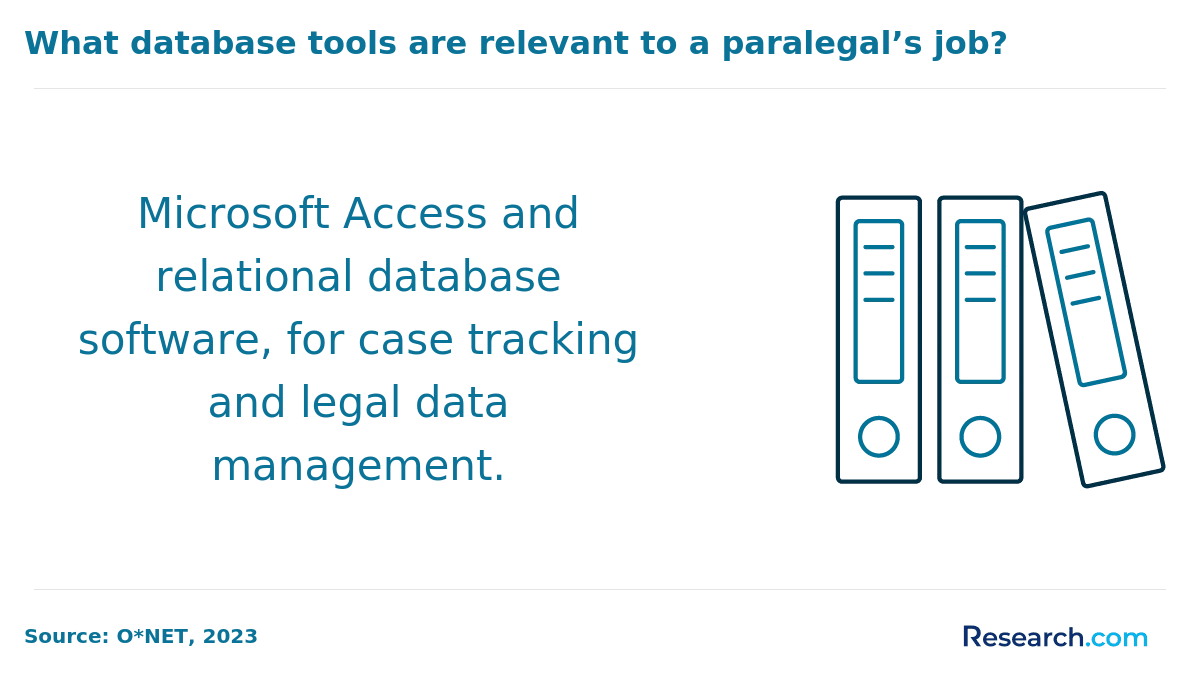
| Technology skills | Westlaw, LexisNexis, Clio, Rocket Matter, Relativity, Microsoft Office Suite, Adobe Acrobat, spreadsheets, and document management tools. | Legal teams increasingly rely on digital workflows, e-discovery, and searchable case files. |
| Communication skills | Client intake, witness coordination, professional email writing, attorney updates, and court staff communication. | Paralegals often serve as information hubs between attorneys, clients, agencies, and vendors. |
| Organizational skills | Deadline tracking, file management, exhibit indexing, calendar control, and prioritization. | Missed deadlines can harm cases, so organization is not optional. |
| Ethical judgment | Confidentiality, avoiding unauthorized practice of law, conflict awareness, and professional boundaries. | California paralegals must work within strict attorney-supervised limits. |
| Specialized knowledge | Entertainment law, environmental law, immigration law, real estate, employment law, or intellectual property. | Niche expertise can improve job prospects in California’s specialized legal markets. |
If you are still comparing education routes, cost should be part of the decision. Research.com’s guide on the cost of getting a paralegal certificate can help you weigh certificate programs against degree options.
How do I find a paralegal job or internship in California?
Finding a first paralegal job in California usually requires more than submitting applications. Employers want proof that you can handle legal documents, use technology, communicate professionally, and understand the limits of the paralegal role. A focused search strategy can help you move from coursework to paid legal experience.
Where to look for paralegal jobs and internships
- Your school’s career services office: Ask about internship referrals, alumni contacts, resume reviews, mock interviews, and employer partnerships.
- Major job boards: Search Indeed, LinkedIn, and Glassdoor using terms such as “entry-level paralegal,” “legal assistant,” “case assistant,” “litigation assistant,” and “paralegal intern.”
- Legal-specific listings: Review Lawjobs.com and California Bar Association postings for legal support roles.
- Legal staffing firms: Robert Half Legal, Special Counsel, and Adams & Martin Group may offer temporary, contract-to-hire, or permanent legal placements.
- Professional associations: California Alliance of Paralegal Associations, Los Angeles Paralegal Association, National Association of Legal Assistants, and National Federation of Paralegal Associations may offer networking, mentorship, and job leads.
- Government and court employers: California Courts, city attorney offices, public defender offices, district attorney offices, and administrative agencies may hire interns or entry-level legal staff.
- Legal aid organizations: Legal Aid Foundation of Los Angeles and Bay Area Legal Aid can provide valuable experience for students interested in public interest law.
How to strengthen your application
- Customize every resume for the practice area, such as litigation, immigration, family law, corporate law, or real estate.
- List relevant coursework, legal research tools, case management software, and writing projects.
- Use action verbs that show legal support work, such as drafted, summarized, indexed, researched, calendared, reviewed, and coordinated.
- Prepare a concise cover letter explaining why you meet California’s paralegal qualification standards or how you are completing them.
- Follow up professionally about a week after applying when appropriate.
- Track applications, contacts, interview dates, and next steps in a spreadsheet.
If you are comparing education costs before applying to programs, review whether online legal studies degree programs are affordable and whether they align with California paralegal requirements.
What future trends and challenges will impact paralegal careers in California?
California paralegals are working in a legal environment shaped by technology, privacy regulation, cost pressure, and specialization. These changes do not eliminate the need for paralegals, but they do raise the bar for skills.
Trends to watch
- Legal technology and automation: Document automation, e-discovery platforms, AI-assisted review tools, and digital case management systems are changing how routine legal tasks are completed.
- Data privacy and compliance: Laws such as the California Consumer Privacy Act have increased demand for legal teams that understand data handling, privacy rights, records, and compliance documentation.
- Remote and hybrid legal work: Many legal teams now expect paralegals to manage digital files, communicate across platforms, and maintain confidentiality outside a traditional office.
- Specialization: Employers may favor paralegals with focused knowledge in areas such as intellectual property, immigration, environmental law, employment law, healthcare, real estate, or corporate compliance.
- Pressure to prove value: Law firms and legal departments continue to seek efficient staffing models, so paralegals who can manage work accurately and reduce attorney workload are well positioned.
Challenges for new paralegals
- Entry-level roles may still ask for prior legal office experience.
- Programs vary in quality, employer recognition, and career support.
- Technology skills can become outdated quickly without continuing education.
- High-paying markets may also have high living costs and strong competition.
- Paralegals must avoid crossing ethical lines into unauthorized practice of law.
Some professionals use paralegal experience as a foundation for broader policy, planning, or regulatory work. If you are interested in careers that combine law, government, land use, and community systems, compare this path with how to become an urban planner in California.
What financial aid options are available for paralegal students in California?
Financial aid options depend on the school, program length, credential type, and whether the institution participates in federal student aid programs. Before enrolling, ask the financial aid office what aid is available for your specific certificate, associate degree, bachelor’s degree, or extension program.
Common funding sources to check
- Federal student aid: Degree programs at eligible institutions may qualify for federal aid. Some short certificate programs may not, so verify before assuming aid is available.
- State and institutional grants: Community colleges and universities may offer aid based on need, residency, enrollment level, or academic program.
- Scholarships: Schools, professional associations, local bar groups, and community organizations may offer awards for legal studies or paralegal students.
- Work-study or campus employment: Eligible students may be able to earn income while gaining office or administrative experience.
- Employer tuition assistance: Some law firms, corporations, courts, and government employers reimburse education costs for employees pursuing job-related training.
- Payment plans: Extension and certificate programs may offer installment options, though payment plans are not the same as financial aid.
Questions to ask before using financial aid
- Does this program meet California paralegal qualification requirements?
- Is the program eligible for federal student aid?
- Are books, materials, legal database access, and certificate fees included?
- What happens to my aid if I study part time?
- Does the program publish job placement or internship support information?
- Will credits transfer if I later pursue an associate or bachelor’s degree?
Students comparing career-focused programs in California may also want to understand how funding works in other professional training paths. Research.com’s guide on how to become a forensic scientist in California offers another example of planning education, training, and career entry costs.
What do paralegals say about their careers in California?
Paralegal career stories often highlight the same themes: strong training in legal research and writing, early exposure to real client matters, and a clear understanding of professional ethics. The experiences below show how different entry points can shape a paralegal’s confidence and career direction.
- Tania: Training through San Francisco State University helped build a practical foundation in research and legal writing, which later became central to supporting attorneys on complex matters.
- Beth: A California State Bar paralegal training experience emphasized ethics and procedure, helping clarify how paralegals contribute meaningfully while staying within professional boundaries.
- Luke: Volunteer work with a nonprofit paralegal initiative in Los Angeles provided direct exposure to client advocacy and reinforced the value of combining technical legal skills with community service.
Common mistakes to avoid when becoming a paralegal in California
| Mistake | Why it can hurt you | Better approach |
| Choosing a program based only on price | A low-cost program may not meet California requirements or may lack employer recognition. | Confirm accreditation, ABA approval if desired, legal course units, career support, and California-specific content. |
| Confusing a certificate with certification | Completing a school program and passing a professional certification exam are different achievements. | Use “certificated” for program completion and “certified” for credentials such as NALA, NFPA, or CAPA. |
| Ignoring continuing education | California paralegals must complete required continuing legal education to maintain legal compliance. | Track ethics and general or specialized law hours every two years. |
| Assuming online always means compliant | Some online programs may not satisfy California’s education requirements. | Ask the school to confirm in writing how the program aligns with California Business and Professions Code §6450. |
| Applying only for jobs titled “paralegal” | Entry-level legal work may use different titles. | Also search for legal assistant, case assistant, litigation assistant, intake specialist, and paralegal trainee roles. |
| Overlooking technology skills | Modern legal employers expect digital research, document management, and case organization skills. | Build familiarity with research databases, PDFs, spreadsheets, case management software, and e-discovery basics. |
| Relying on salary averages as guarantees | Pay varies widely by location, experience, specialization, and employer. | Compare local job postings and calculate whether the program cost fits likely entry-level earnings in your area. |
Key Insights
- California paralegals are not licensed by the state, but they must meet specific education or experience standards under California Business and Professions Code §6450.
- A qualifying paralegal certificate is often the fastest path, but associate and bachelor’s programs may provide broader academic and career flexibility.
- Program quality matters. Before enrolling, verify accreditation, ABA approval if relevant, legal course units, internship access, technology training, and California-specific coursework.
- Certification from NALA, NFPA, or CAPA is optional, but it can help candidates demonstrate professional competence in competitive job markets.
- California’s projected 12% growth between 2022 and 2032 and approximately 4,690 annual job openings point to meaningful opportunity, but entry-level applicants still need practical skills and strong application materials.
- Salary potential is strongest in major legal markets and specialized practice areas, but students should compare tuition against realistic local wages rather than relying on statewide averages.
- The best paralegal candidates combine legal research, writing, ethics, organization, technology, and communication skills with a clear understanding that paralegals support attorneys rather than practice law independently.
Related Articles for Nearby States
- 2027 How to Become a Paralegal in Nevada
- 2027 How to Become a Paralegal in Oregon
- 2027 How to Become a Paralegal in Arizona
- 2027 How to Become a Paralegal in Idaho
- 2027 How to Become a Paralegal in Utah
- 2027 How to Become a Paralegal in Washington
- 2027 How to Become a Paralegal in New Mexico
- 2027 How to Become a Paralegal in Colorado
- 2027 How to Become a Paralegal in Montana
- 2027 How to Become a Paralegal in Wyoming
References:
- American Bar Association. Educational information for paralegals. American Bar Association. Retrieved May 22, 2025.
- California Employment Development Department. 2022-2032 California industry/occupational employment matrix: Paralegals and legal assistants. California Employment Development Department - Labor Market Information Division. Retrieved May 22, 2025.
- Data USA. Paralegal. DataUSA.io. Retrieved May 22, 2025.
- O*NET OnLine. California employment trends: 23-2011.00 - Paralegals and legal assistants. O*NETOnLine.org. Retrieved May 22, 2025.
- O*NET OnLine. California wages: 23-2011.00 - Paralegals and legal assistants. O*NETOnLine.org. Retrieved May 22, 2025.
- O*NET OnLine. California training: 23-2011.00 - Paralegals and legal assistants. O*NETOnLine.org. Retrieved May 22, 2025.
- U.S. Bureau of Labor Statistics. Occupational outlook handbook: Paralegals and legal assistants. U.S. Bureau of Labor Statistics. Retrieved May 22, 2025.
- U.S. Bureau of Labor Statistics. Occupational outlook handbook: Paralegals and legal assistants. U.S. Bureau of Labor Statistics. Retrieved May 22, 2025.
Other Things You Should Know About Becoming a Paralegal in California
In California, paralegals can specialize in areas like family law, corporate law, criminal law, immigration law, and real estate law. Specializing may require additional coursework or certifications, providing paralegals with targeted skills for specific legal fields.
California does not require ABA approval for paralegal education, but some employers prefer it. The state’s Paralegal Alliance does not license paralegals. Instead, California Business and Professions Code § 6450 requires a paralegal to complete a certificate, associate degree, or bachelor’s degree plus specific paralegal coursework.