2027 Online Accounting Bachelor's Degree Programs With No Application Fee

Co-Founder and Chief Data Scientist
Choosing an online accounting bachelor’s program is not just a tuition decision. For many career changers, working adults, transfer students, and first-generation applicants, even the application stage can create friction when several schools charge separate fees before admissions or financial aid decisions are available. Recent data shows that nearly 40% of prospective students consider application fees a significant factor in choosing an online degree program, especially when balancing work and family commitments.
No-application-fee online accounting bachelor’s programs can make it easier to compare accredited options without paying upfront just to be considered. That does not mean every no-fee program is automatically affordable, reputable, or the right fit for CPA preparation. Students still need to evaluate accreditation, transfer credit rules, per-credit tuition, aid eligibility, online learning requirements, and whether the curriculum matches their career goals.
This guide explains what “no application fee” usually means, how to verify legitimacy, which cost factors matter beyond the fee waiver, and how to compare online accounting bachelor’s programs with a practical, budget-aware approach.
Key Benefits of Online Accounting Bachelor's Degree Programs With No Application Fee
- Compare programs by verifying accreditation and curriculum rigor to ensure your online accounting degree meets industry standards and supports CPA exam eligibility.
- Evaluate total costs beyond application fees, including tuition, fees, and financial aid opportunities, to align your budget with long-term educational investment.
- Assess program flexibility and career services to guarantee the degree supports your career change or advancement goals in accounting and finance sectors.
What Does 'No Application Fee' Really Mean for an Online Accounting Bachelor's Program?
A no-application-fee online accounting bachelor’s program lets you submit an admissions application without paying the usual upfront processing charge. The savings can be helpful, but the policy is not always identical from one school to another. Some institutions permanently charge no application fee for all applicants. Others waive the fee only during certain admissions periods, for transfer students, after attending an information session, or when using a promotional code.
According to data from the National Center for Education Statistics (NCES), about 40% of accredited institutions offering online accounting bachelor’s degrees do not charge an application fee, while most schools continue to require fees typically between $25 and $50. The College Scorecard also shows that fee practices vary by school type, public or private status, and the population a college is trying to serve.
Students should treat “no application fee” as one affordability signal, not as proof that the full program is inexpensive. A school can waive the application fee and still charge higher tuition, technology fees, course materials, graduation fees, or transcript evaluation fees. Conversely, a school with a modest application fee may have lower total tuition or stronger transfer-credit policies.
What to confirm before applying
- Is the waiver automatic? Ask whether every online accounting applicant receives it or whether a code, event, deadline, or counselor approval is required.
- Does it apply to transfer students? Some fee policies differ for first-year, transfer, returning, military, or international applicants.
- Are there later enrollment fees? A free application does not always mean there are no deposit, registration, technology, or course-material costs.
- Is the policy current? Application fee rules can change between admissions cycles, so verify the details on the school’s admissions page or with an enrollment advisor.
Examples of reputable institutions with clear no-application-fee policies for their online accounting programs include Southern New Hampshire University, Western Governors University, and Fort Hays State University, all of which promote straightforward fee waivers on their official admissions pages. Students comparing affordable pathways may also want to review related credential options, such as affordable BCBA certification programs, when weighing broader career plans.
Which Nationally and Regionally Accredited Schools Offer Online Accounting Bachelor's Degrees With No Application Fee?
Several accredited schools offer online accounting bachelor’s degrees with no application fee, but accreditation type deserves close attention. Regionally accredited degrees, reviewed by one of the seven regional accrediting bodies in the U.S., are generally the safer choice for students who may transfer credits, apply to graduate school, or pursue CPA eligibility. National accreditation, more common among career-focused or vocational institutions, can still indicate legitimacy, but it may limit transfer options or recognition in some academic and licensing contexts.
When reviewing nationwide accredited online accounting bachelor’s degrees free application options, compare the application policy alongside total tuition, accounting curriculum, transfer-credit limits, financial aid participation, and state board requirements if CPA licensure is part of your plan. The examples below use data from College Scorecard and NCES College Navigator, but students should confirm current fee policies directly with each school because admissions terms can change.
- Western Governors University: Regionally accredited by the Northwest Commission on Colleges and Universities (NWCCU); estimated total tuition approximately $33,000. Its competency-based format can benefit students who already have relevant business, bookkeeping, or accounting knowledge and can progress quickly through mastered material.
- Fort Hays State University: Regionally accredited by the Higher Learning Commission (HLC); estimated total tuition around $27,000. The online program emphasizes practical financial and managerial accounting skills in a public university setting.
- American Public University System: Nationally accredited by the Distance Education Accrediting Commission (DEAC); estimated tuition near $30,000. The program is designed around broad accounting principles for entry-level roles and adult learners.
- Columbia Southern University: Nationally accredited by DEAC; estimated tuition about $25,000. It is known for flexible scheduling and affordability for working adults.
For most students, the best shortlist includes schools that are both no-fee and transparent about total costs. If affordability is the main priority, compare no-application-fee options with the top online accounting programs to see how tuition, delivery format, and program structure line up. Students planning future graduate study can also compare longer-term cost paths through resources on the most affordable online master’s programs.
How Much Money Can Students Save by Choosing an Online Accounting Bachelor's Program With No Application Fee?
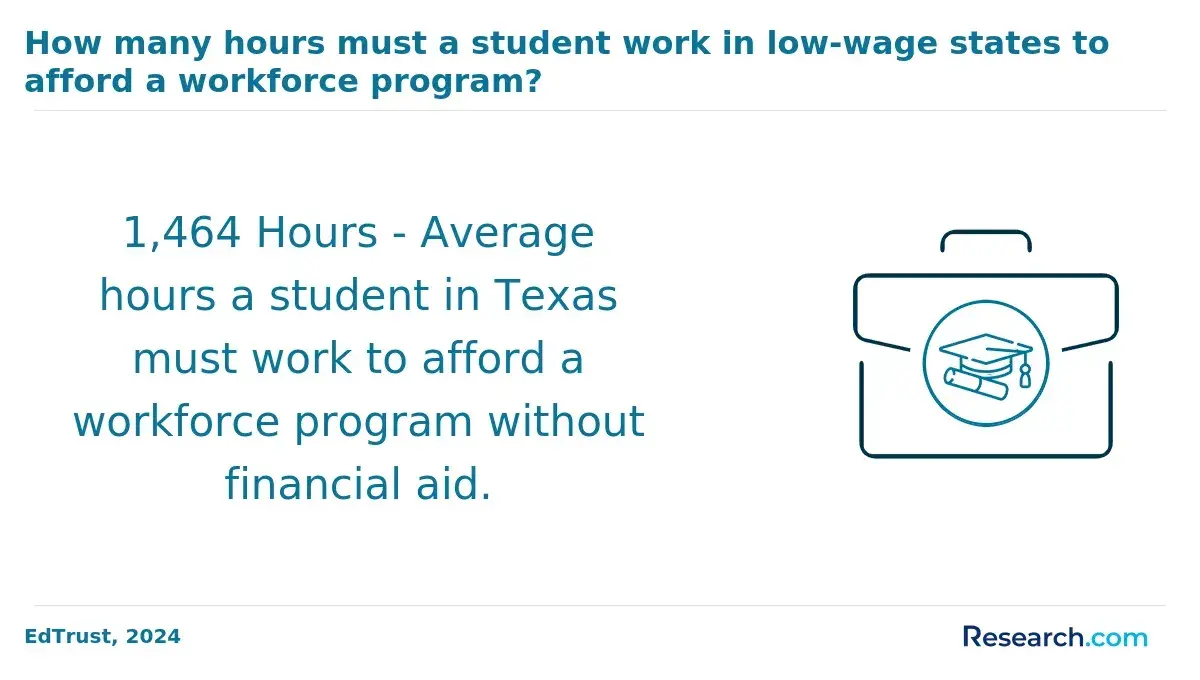
The immediate savings depend on how many schools you apply to. If you apply to eight to ten online accounting bachelor’s programs and each charges $25 to $75, application fees can total $200 to $750. Choosing no-application-fee programs can preserve that money for transcripts, technology, books, course materials, or other enrollment expenses.
These savings are small compared with the full cost of a bachelor’s degree, but they still matter at the decision stage. The Georgetown Center on Education and the Workforce notes that total expenses-including tuition, fees, and living costs-often exceed $100,000. For students who are uncertain about admission, comparing aid packages, or applying while working full time, avoiding several upfront charges can make it easier to explore a wider set of schools.
The key is to avoid overvaluing the waiver. A $0 application fee does not offset a much higher tuition rate, weak transfer-credit policy, or limited financial aid. The best use of no-fee applications is to widen your comparison pool while still focusing on total program cost and academic fit.
- Application Fee Savings: Forgoing fees can conserve $200 to $750 when applying to multiple programs, a meaningful amount for many adult learners and first-generation applicants.
- Reduced Barriers: Eliminating upfront costs allows students with limited cash flow to compare more accounting programs before committing.
- Context Within Total Costs: Although the savings are modest relative to degree expenses often exceeding $100,000, they reduce pressure at the start of the process.
- Part of Financial Planning: Fee waivers should be weighed with tuition per credit, transfer acceptance, financial aid, course materials, and graduation fees.
A professional who enrolled in an online accounting bachelor’s program without an application fee said the waiver reduced stress early in the search: “I was hesitant to apply to several schools because the fees added up quickly, and I wasn’t sure how I’d afford it.” By avoiding application fees, they submitted multiple applications, compared programs more carefully, and focused on finding the right academic and career fit instead of narrowing choices too soon because of upfront costs.
Are Online Accounting Bachelor's Programs That Charge No Application Fee Accredited and Legitimate?
Yes, many legitimate online accounting bachelor’s programs charge no application fee. A waived application fee does not, by itself, say anything negative about academic quality. Colleges may remove the fee to increase access, simplify admissions, compete for adult learners, or encourage more applicants to complete the process.
The real test is accreditation. Many reputable schools offering online accredited accounting bachelor’s programs with no application fee hold accreditation recognized by the Council for Higher Education Accreditation (CHEA) and the U.S. Department of Education. Institutional accreditation is especially important for federal financial aid eligibility, transfer credit, graduate school admission, and employer confidence.
Students should also check whether the business or accounting program has specialized accreditation. Programmatic accreditations-such as those from the Accreditation Council for Business Schools and Programs (ACBSP) or the Association to Advance Collegiate Schools of Business (AACSB)-can signal that the curriculum, faculty qualifications, and assessment practices meet business education standards. Although ABET focuses mainly on engineering and technology, understanding the difference between relevant and irrelevant accreditors helps students avoid misleading claims.
How to verify a no-fee program
- Use CHEA’s Database: Search the institution and confirm that the accreditor is recognized and current.
- Check U.S. Department Tools: Use the Department of Education’s College Navigator to review institutional information, accreditation, costs, and outcomes.
- Confirm Business Accreditation: Look for accounting or business-related accreditors such as ACBSP or AACSB when program-level recognition matters to your goals.
- Review CPA Requirements: If you plan to become a CPA, verify that the program can help satisfy your state board’s education requirements; rules vary by state.
- Avoid Diploma Mills: Be cautious of schools that emphasize easy admission, unusually fast completion, vague accreditation, or pressure to enroll immediately.
Students comparing professional degrees in other fields can see the same principle in areas where accreditation is central to career eligibility, such as APA-accredited online PsyD programs. In accounting, the safest approach is the same: verify recognition independently before enrolling.
What Are the Admission Requirements for Online Accounting Bachelor's Programs That Waive the Application Fee?
Online accounting bachelor’s programs that waive the application fee usually have the same academic admission standards as programs that charge one. The waiver lowers the cost to apply; it does not eliminate transcript review, GPA expectations, prerequisite checks, or documentation requirements. Applicants are generally required to hold a valid high school diploma or GED certificate.
- GPA Expectations: Many online accounting programs expecting no application fee still enforce minimum GPA standards, commonly between 2.5 and 3.0. Transfer applicants may be evaluated on college GPA rather than high school performance.
- SAT/ACT Considerations: Test-optional policies are common, especially for adult learners and transfer students. A no-fee application does not automatically change a school’s testing policy.
- Prerequisite Coursework: Foundational math, business, economics, or introductory accounting courses may be required before upper-division accounting coursework.
- Official Transcripts: Schools typically require transcripts from high school, GED completion, and any prior colleges attended. Transfer applicants should expect a formal credit evaluation.
- Admissions Selectivity: Fee-free application policies appear in both open-admission programs and more selective institutions. A waiver can increase application access without necessarily increasing acceptance rates.
- Rolling Admissions and Start Dates: Multiple entry points throughout the year can help working adults begin when their schedule and finances allow.
- Academic Rigor Maintained: Some programs may still request essays, interviews, placement assessments, or prerequisite verification.
A graduate of a no-application-fee online accounting bachelor’s program described the distinction clearly: “Applying was straightforward with no fee, but preparing my transcripts and prerequisite verifications took real effort.” She said flexible start dates helped her balance work and school, but the coursework itself remained demanding. Her experience underscores an important point: removing the application fee improves access, not academic standards.
How Does Per-Credit-Hour Tuition at Online Accounting Bachelor's Programs Compare When the Application Fee Is Already Waived?
Once the application fee is waived, tuition becomes the most important cost variable. Online bachelor’s degrees in accounting that charge no application fee still vary widely in price. Some use a per-credit model, while others use flat-rate terms that reward students who complete more coursework within a set period.
Western Governors University offers a flat fee of $3,945 per six-month term, covering 120 credits for an estimated total of $31,560. Fort Hays State University charges $218 per credit hour, leading to about $26,160 in total tuition. Columbia College (MO) charges $415 per credit hour, totaling nearly $49,800. The University of Florida offers a comparatively low in-state rate of $129.44 per credit, with total tuition around $15,533. Southern New Hampshire University charges $320 per credit hour, culminating in $38,400 for the degree. All these institutions waive the application fee, removing an upfront barrier for applicants.
Flat-rate tuition can be attractive for highly motivated students who can move quickly, especially in competency-based formats. Per-credit tuition is often easier to understand for part-time students because cost rises more directly with course load. Residency rules also matter: some online programs charge the same rate regardless of location, while others have lower in-state pricing.
Cost factors to compare after the application fee
- Per-credit or term-based pricing: A flat fee may save money only if you complete enough credits during each term.
- Transfer-credit acceptance: Generous transfer policies can reduce the number of credits you must pay for.
- Residency pricing: Out-of-state online students should check whether tuition changes by state of residence.
- Additional fees: Technology, course materials, proctoring, graduation, and transcript fees can affect the total cost.
- Financial aid eligibility: Accreditation and enrollment status can determine access to federal aid and institutional grants.
Waiving the application fee does not always align with lower overall tuition fees. Some no-fee universities have moderate or higher tuition rates, while others combine fee waivers with comparatively low per-credit costs. Nationally, average tuition and fees for public online bachelor’s degrees remain approximately 25% less than traditional on-campus programs, which can make online study cost-effective when paired with careful program comparison.
What Financial Aid and Scholarships Are Available for Online Accounting Bachelor's Students at No-Fee Programs?
Students in accredited no-application-fee online accounting bachelor’s programs may still qualify for the same major aid sources as students at schools that charge an application fee. The fee policy does not determine federal aid eligibility; accreditation, enrollment status, citizenship or eligible noncitizen status, satisfactory academic progress, and program participation are more important.
FAFSA eligibility and federal financial aid options like Pell Grants and subsidized or unsubsidized loans are available at any accredited institution, regardless of whether an application fee is required. According to Federal Student Aid resources, these forms of aid are universally accessible, making application fee policies irrelevant to federal funding.
Accounting students should also search for scholarships through professional associations, school business departments, state accounting organizations, employers, and third-party scholarship databases. Awards from professional groups such as the American Institute of CPAs (AICPA), institution-based grants, and accounting-focused scholarships can help reduce borrowing.
Working adults should ask employers about tuition assistance or reimbursement. Some employers support degrees in accounting, finance, business administration, or related areas because those skills are directly useful in payroll, budgeting, compliance, auditing, and operations. Employer benefits may be combined with federal aid or institutional grants, depending on school and workplace rules.
Smart aid steps for applicants
- Submit the FAFSA early: Institutional and state deadlines vary, and some funds are limited.
- Ask about online student eligibility: Confirm that distance learners qualify for the same institutional grants as campus students.
- Check scholarship renewal rules: Some awards require a minimum GPA, enrollment level, or accounting major status.
- Compare net price, not sticker price: The best value is the amount you pay after grants, scholarships, transfer credits, and employer support.
A National Center for Education Statistics report found that nearly half of undergraduate students received grant aid, emphasizing why online accounting students should explore every available funding source rather than relying only on the application fee waiver.
How Long Does It Take to Complete an Online Accounting Bachelor's Degree at a No-Application-Fee School?
Most online accounting bachelor’s degrees require around 120 credit hours. A full-time student taking 15 credits per semester can typically finish in about four years. That timeline is consistent with NCES data on the average duration for online bachelor’s degree graduates and remains the standard planning benchmark for many students.
The application fee policy does not determine completion time. Your timeline depends on transfer credits, course load, term structure, work schedule, prerequisite needs, and whether the program allows accelerated or competency-based progress.
- Standard Pace: Students who take 15 credit hours each semester generally plan for about four years of study.
- Accelerated Programs: Some no-fee online accounting degree programs use eight-week modules, trimesters, year-round enrollment, or heavier course loads that may allow motivated learners to graduate in three years or less.
- Part-Time Study: Adults balancing work and family may need five or six years, depending on how many credits they complete each term.
- Flexible Delivery: Asynchronous courses allow students to study around work schedules, while competency-based education lets qualified students advance by demonstrating mastery.
- Transfer Credits: Prior college coursework, professional certifications, military training, or exams such as CLEP can reduce remaining credits and shorten the path to graduation.
- Personal Planning: Students should compare semester, trimester, modular, and competency-based calendars before estimating their realistic timeline.
Pursuing a no-application-fee program can support affordability, but understanding how time to complete online accounting bachelor’s degree no application fee programs function is essential for realistic budgeting. Students considering adjacent business paths can also review career options with a project management degree to compare how different business-related credentials align with their goals.
Can Transfer Students Apply for Online Accounting Bachelor's Degrees With No Application Fee?
Yes. Many no-application-fee online accounting bachelor’s programs accept transfer students, and the waiver often applies to them as well. Data from NCES and NC-SARA indicate that the majority of these institutions have policies supporting transfer student eligibility for online accounting bachelor programs. For students with prior credits, the bigger issue is not whether they can apply, but how many credits will count toward the degree.
The transfer process usually begins with official transcripts from every prior college attended. A registrar, admissions office, or academic department then evaluates how completed courses match general education, business core, accounting major, or elective requirements. Community college coursework, previous bachelor’s degree credits, and military training credits are generally accepted at high rates when they come from accredited institutions and align with program requirements. Courses outside accounting or business may transfer only as electives or may not apply if the degree plan has limited elective space.
Articulation agreements are especially useful. These formal partnerships between community colleges and four-year institutions specify which courses will transfer and how they apply. For cost-conscious students, a strong articulation agreement can reduce repeated coursework, shorten time to graduation, and lower total tuition.
- Transfer Acceptance Rates: Most no-application-fee programs accept transfer credits from accredited schools, with NCES data showing acceptance rates above 70% for community college and bachelor’s degree coursework.
- Credit Types Accepted: Accredited community college courses, relevant bachelor’s degree classes, and military training credits often transfer well; unrelated electives and specialized courses may not.
- Articulation Agreements: These agreements can guarantee how specific courses apply, helping students avoid unexpected credit loss.
- Early Evaluation Advised: Request a transfer credit evaluation before enrolling so you can estimate remaining credits, total tuition, and graduation timeline.
- CPA Planning: Transfer students who plan to pursue CPA licensure should confirm whether transferred accounting and business credits satisfy state board education rules.
Transfer policy can have a larger financial impact than the application fee itself. A student who saves $50 on an application but loses a semester of credits may pay far more overall. Students thinking beyond the bachelor’s degree can also review in-demand master’s degree options in the USA when planning long-term return on investment.
Are Online Accounting Bachelor's Degrees With No Application Fee Recognized by Employers?
Employers generally focus on accreditation, school reputation, skills, and experience-not whether a student paid an application fee. An online accounting bachelor’s degree from a properly accredited institution is typically viewed far more favorably than a degree from an unaccredited or unclear provider. According to recent SHRM data, over 70% of hiring managers consider online credentials from properly accredited institutions to be equivalent in quality and rigor.
- Accreditation Focus: Regional accreditation remains the benchmark for employer recognition. Program-specific accreditation from organizations like AACSB or ACBSP can further strengthen credibility.
- Delivery Method: Employers increasingly evaluate what graduates can do: financial reporting, tax preparation, budgeting, auditing support, data analysis, compliance, and accounting software use.
- Licensing Relevance: CPA and other accounting certifications require candidates to complete education that satisfies state board requirements. Students should verify requirements before choosing a program.
- Employer Caution: Degrees from unaccredited or diploma mill schools can raise concerns, even if they are inexpensive or easy to enter.
- Application Fee Impact: A waived application fee lowers upfront costs but does not make a degree more or less recognizable to employers.
Graduates can improve employer confidence by listing the full school name, degree title, relevant accounting coursework, software experience, internships, projects, and any professional certifications or exam progress. If the program is accredited by a recognized body, including that information in a resume or interview can help remove doubts about online delivery.
What Technology Requirements and Online Learning Tools Are Used in No-Fee Online Accounting Bachelor's Programs?
No-application-fee online accounting programs usually use the same learning platforms and digital tools as other online business degrees. Students should expect regular online coursework, document uploads, exams, discussion boards, spreadsheet assignments, video meetings, and accounting software practice.
A reliable high-speed internet connection is essential. Most students also need a modern laptop or desktop, webcam, microphone, updated browser, office productivity software, and the ability to run or access spreadsheet and accounting applications. A phone or tablet may be useful for communication, but it is rarely enough for completing accounting assignments that require spreadsheets, data entry, reports, or proctored exams.
Programs commonly use learning management systems such as Canvas, Blackboard, or D2L. These platforms centralize lectures, assignments, grades, announcements, faculty messages, quizzes, and discussion forums. Some courses may be asynchronous, while others may include scheduled live sessions, group work, or virtual office hours.
Accounting-specific software may include QuickBooks, SAP, advanced Excel tools, or cloud-based accounting simulations. Access may be included through the school, bundled with course materials, or billed separately depending on the program. Students should ask whether software licenses, proctoring fees, calculators, textbooks, and digital access codes are included in tuition or charged separately.
Technology questions to ask before enrolling
- What computer specifications are required? Confirm operating system, memory, webcam, browser, and software compatibility.
- Are accounting software licenses included? If not, ask for estimated costs before budgeting.
- How are exams proctored? Some courses use online proctoring that may require a webcam, quiet testing space, and identity verification.
- Is technical support available after work hours? This matters for adult learners who study evenings or weekends.
- Are courses mobile-friendly? Mobile access can help with reading and communication, but major assignments may still require a computer.
What Graduates Say About Their Online Accounting Bachelor's Degree Programs With No Application Fee
- : "I chose an online accounting bachelor’s program with no application fee mainly because it removed the initial financial barrier, allowing me to explore my options without stress. The overall affordability of the program was a huge factor since I was transitioning careers and needed to keep costs low. Graduating has completely transformed my professional opportunities, opening doors to roles I never thought possible before. —Ryker"
- : "What stood out to me about the online accounting bachelor’s program was the no application fee policy, which felt like a gesture of trust and accessibility. The cost-effective tuition made it easier to commit wholeheartedly while balancing my current job. Reflecting on my experience, it has been instrumental in shifting my career from retail to finance, providing both confidence and practical skills. —Eden"
- : "Deciding on an online accounting bachelor’s degree with no application fee was a strategic move to minimize upfront costs during my career change. The competitive pricing helped me manage my budget while earning a respected credential. Professionally, completing the program enhanced my resume and gave me a competitive edge in securing a higher-level position within the corporate sector. —Benjamin"
Other Things You Should Know About Accounting Degrees
Yes, many online accounting bachelor's programs that waive the application fee offer internship opportunities. These internships provide practical experience and can be crucial for meeting industry-specific requirements and enhancing employability after graduation. It’s advisable to check each program’s specific partnerships and opportunities.
Most accredited online accounting bachelor’s programs accept up to 90 transfer credits toward a 120-credit degree. Schools usually require that at least 30 of the final 36 credits be completed in residence, and accounting major courses often must be taken at the degree-granting institution.
Programs without application fees may still be accredited by recognized bodies such as AACSB, ACBSP, or IACBE. Accreditation ensures the program meets certain educational standards crucial for career prospects and further education. Verify each program's accreditation status to ensure it meets quality standards.
References
- Online College Tuition Comparison: Online vs. In-Person https://www.uagrantham.edu/blog/online-college-tuition-comparison-online-vs-in-person/
- Best Online Accounting Degrees of 2025 | Accounting.com https://www.accounting.com/degrees/accounting/bachelors/best-online-programs/
- Flexible online courses with certificates | edX 2025 https://www.edx.org/courses
- These Colleges & Universities Do Not Charge An Application Fee https://www.aol.com/colleges-universities-not-charge-application-182107432.html
- Online Bachelor's Degree in Accounting | CSU Global | Accredited https://csuglobal.edu/academic-programs/undergraduate-degrees/bachelors-degree-accounting
- What to Know About the Cost of Online vs. In-Person Degrees https://www.dbu.edu/blog/what-to-know-about-the-cost-online-vs-in-person-degrees.html
- 4-year distance (online) Bachelor of Accounting | Study A Flexible Accounting Degree https://www.emeris.ac.za/qualifications/online/bachelor-of-accounting
- Cost of Online Education vs. Traditional Education [2025]: Comparison https://educationdata.org/cost-of-online-education-vs-traditional-education
- Online Colleges That Accept Financial Aid: A Path to Affordable Education https://topcollegeguide.com/online-colleges-that-accept-financial-aid-a-path-to-affordable-education
- Benefits of an Online MBA in Accounting | NMU Global Campus https://online.nmu.edu/online-mba-in-accounting-benefits/