2027 Online BCBA Programs With Practicum Support

Co-Founder and Chief Data Scientist
Choosing an online ABA program is not only a coursework decision. For future Board Certified Behavior Analysts, the bigger risk is whether the program can help you complete supervised fieldwork correctly, on time, and in a way that meets Behavior Analyst Certification Board (BACB) standards.
Practicum support matters because online students are often completing fieldwork far from campus, across different states, employers, schools, clinics, and service settings. A strong program does more than tell students to “find a supervisor.” It helps identify qualified sites, verifies supervisor eligibility, supports documentation, and reduces the chance that hours are delayed, rejected, or poorly aligned with certification requirements.
This guide explains what practicum support usually means in online ABA programs, how university-affiliated and self-arranged placements differ, what fees to expect, and what questions to ask before enrolling. It is intended for students comparing online BCBA pathways, especially those who need flexibility but still want structured support for supervised fieldwork.
Key Things You Should Know About Applied Behavior Analysis Programs
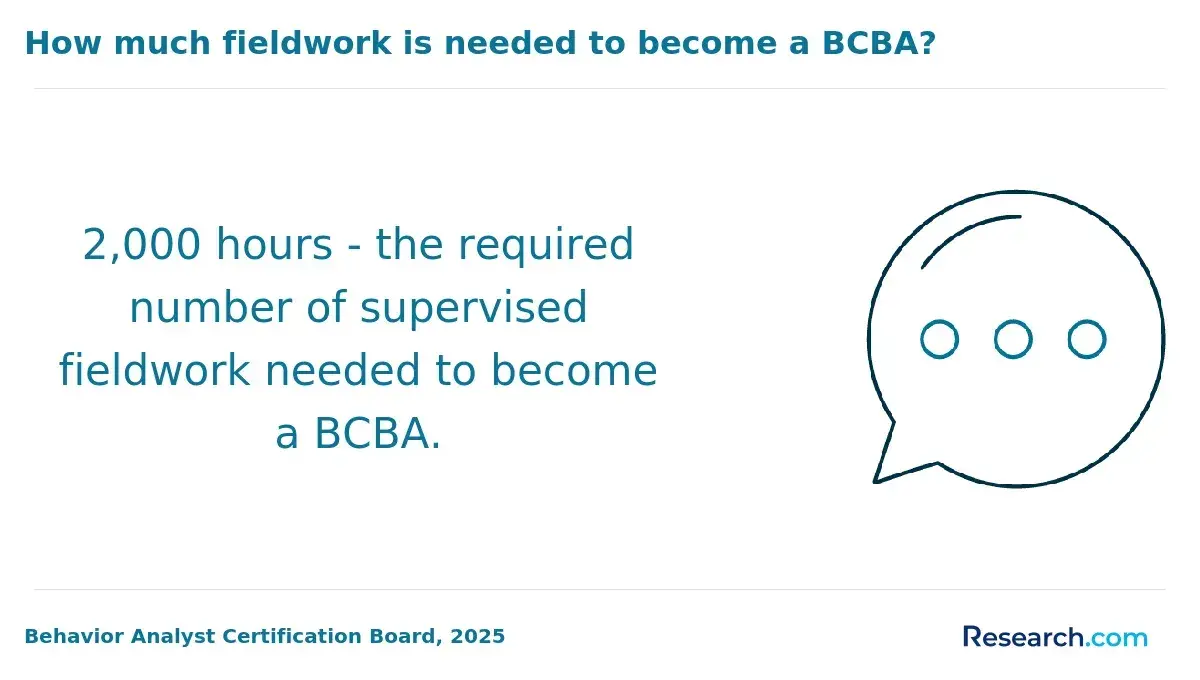
- Online BCBA programs provide vital practicum support to help students meet the BACB's mandatory 2,000 supervised fieldwork hours.
- University-affiliated practicum is a cost-effective, bundled alternative to self-arranged supervision, which can cost students $75-$150 per hour.
- Practicum support includes rigorous supervisor vetting and secure, HIPAA-compliant technology to facilitate high-quality remote supervision and documentation.
How does a university define the term "practicum support" for online ABA students?
For online ABA students, “practicum support” refers to the systems a university uses to help students complete the supervised fieldwork required for BCBA certification. At minimum, this support should help students understand fieldwork rules, identify appropriate supervision options, document hours correctly, and stay aligned with BACB expectations.
The term can mean different things from one university to another. In some programs, practicum support is a full placement service with affiliated sites, vetted supervisors, onboarding help, documentation review, and a practicum coordinator. In others, it may mean lighter guidance, such as advising students on how to find their own supervisor and submit required forms.
For online learners, the quality of this support is especially important. Students may be working in locations where the university has no physical campus, and they may need remote supervision, employer approval, or an outside BCBA supervisor. A well-run practicum system helps reduce administrative confusion so students can focus on developing applied skills in assessment, intervention, data collection, ethics, and client-centered service delivery.
When comparing programs, students should ask the university to define practicum support in writing. The most useful answers explain who finds the placement, who verifies the supervisor, who pays for supervision, what technology is used, how often documentation is reviewed, and what happens if a placement falls through.
What specific services are included in a program's practicum support?
Strong practicum support turns fieldwork from a loosely managed requirement into a structured professional training experience. These services are an important quality marker when comparing BCBA programs, because supervised experience is where students learn to apply ABA concepts in real settings.
Common practicum support services include:
- Placement guidance or matching: The program helps students identify appropriate fieldwork sites based on location, client population, setting, schedule, and professional goals. In stronger models, the school may match students with pre-vetted sites.
- Site vetting: The university reviews whether a proposed site can provide appropriate ABA-related activities, qualified supervision, ethical service conditions, and enough opportunities to build required competencies.
- Supervisor verification: The program checks whether the supervising BCBA meets current BACB eligibility expectations before the student begins counting hours.
- Affiliation agreements and onboarding: The school manages or assists with agreements among the university, fieldwork site, student, and supervisor. This can include legal paperwork, site approval, orientation requirements, and professional conduct expectations.
- Documentation support: Students receive guidance on logging hours, tracking supervision contacts, maintaining forms, and avoiding preventable errors that can create certification delays.
- Progress monitoring: A practicum coordinator, faculty member, or designated advisor may review student progress, address placement problems, and help ensure the experience remains educationally appropriate.
- Remote supervision logistics: Online programs may provide secure video tools, electronic documentation platforms, scheduling support, and technical guidance for distance-based observation or meetings.
The best programs are transparent about what is included and what is not. A student should not assume that “practicum support” means the university will guarantee a nearby placement, pay for supervision, or resolve employer restrictions unless those services are clearly stated in the program materials.
What is a university-affiliated practicum model, and how does it work?
A university-affiliated practicum model uses formal relationships between the school and approved fieldwork sites, supervisors, or partner organizations. Instead of requiring every online student to build a placement from scratch, the university maintains a network of settings that have already gone through some level of review.
In this model, the process usually follows a predictable sequence:
- The student meets with a practicum advisor or coordinator to discuss location, availability, professional interests, and fieldwork needs.
- The university identifies possible affiliated sites or supervisors that fit the student’s circumstances.
- The site and supervisor are reviewed for compliance, scheduling capacity, and fit with the student’s training goals.
- The university, student, and placement site complete any required agreements and onboarding steps.
- The student begins supervised fieldwork while the university monitors progress, documentation, and any placement concerns.
The main advantage is structure. Students usually receive clearer expectations, fewer administrative surprises, and more direct university oversight. This can be especially helpful for students who are new to ABA employment, relocating, changing careers, or unsure how to evaluate whether a site is appropriate.
The trade-off is flexibility. Affiliated options may be limited by geography, capacity, schedule, population served, or start dates. Some students already employed in ABA may prefer to use their workplace if it has an eligible supervisor and the university approves it. Others may find that an affiliated placement costs more but reduces risk and saves time.
A required practicum is built into the academic program. Students must complete it to satisfy degree requirements, and the university typically has a stronger obligation to provide advising, oversight, documentation expectations, and course-based evaluation. An optional practicum course, by contrast, is an added support option for students who want university help with fieldwork but are not required to complete that course for the degree.
The practical difference affects cost, accountability, scheduling, and how much responsibility falls on the student.
- Required practicum: The practicum is a core part of the degree plan. Students enroll in it for academic credit, and completion is tied to graduation requirements. Support and supervision-related structures may be included in tuition or program fees, depending on the university’s model.
- Optional practicum: The practicum is an elective or add-on service. Students may complete fieldwork independently, but they can choose to enroll for additional university support, supervision coordination, or documentation guidance. This may involve extra fees.
A required practicum often provides more structure, but it can reduce flexibility if students already have an approved workplace or supervisor. An optional practicum can be useful for working professionals who want help without changing their entire fieldwork plan, but students should confirm exactly what the optional course covers before paying for it.
Before enrolling, ask whether the practicum is required for graduation, whether it contributes to supervised fieldwork hours, whether a placement is guaranteed or only supported, and whether supervision costs are included in tuition or charged separately.
The cost difference depends on how the program structures supervision, placement services, and fees. This is one of the most important questions to ask when estimating how much does it cost to become a BCBA, because practicum expenses may sit outside standard tuition.
In a university-affiliated model, students often pay a bundled or course-based cost that covers placement coordination, site vetting, administrative work, documentation support, and sometimes supervision. The benefit is predictability. The drawback is that the fee may be required even if the student already has possible fieldwork access.
In a self-arranged model, the student is responsible for finding a fieldwork site and securing a qualified supervisor. This may appear less expensive at first, especially if the student’s employer provides supervision. However, if the student must hire a private BCBA supervisor, typical rates ranging from $75-$150 per hour can make the total cost much less predictable.
Given the BACB's 2,000-hour requirement for Supervised Fieldwork, direct private supervision can become a significant expense. Students should compare the full cost of each model, not just the tuition price listed on the program page.
- University-affiliated practicum may be better for: students who need placement help, want closer university oversight, are unfamiliar with ABA employers, or want a more predictable administrative process.
- Self-arranged placement may be better for: students already working in an ABA setting with an eligible supervisor, students who need maximum geographic flexibility, or students whose employer provides supervision at no added cost.
- Cost mistake to avoid: assuming the lower-tuition program is cheaper overall without checking practicum placement fees, supervision fees, technology fees, and private supervisor costs.
Programs should verify supervisor eligibility before a student begins counting fieldwork hours with an affiliated supervisor. This is not a formality. If the supervisor does not meet BACB standards, the student may risk losing time, delaying certification, or needing to repeat fieldwork activities.
A thorough verification process typically includes several steps. The university collects the supervisor’s BCBA credential information and confirms current certification status through the BACB's Certificant Registry. The program also checks that the supervisor has completed the mandatory 8-hour supervision training and any ongoing Continuing Education (CE) requirements mandated by the BACB.
Beyond credentials, strong programs look at whether the supervisor can actually provide appropriate supervision. That includes availability for the required monthly supervision intensity and frequency, experience in the relevant practice setting, willingness to review documentation, and ability to provide performance-based feedback.
Students should ask how often supervisor eligibility is rechecked. Certification status, employment status, and supervisor availability can change. A responsible program has a process for addressing those changes and for helping students transition if a supervisor becomes unavailable or no longer qualifies.
Online ABA programs rely on technology to make remote supervision practical, secure, and educationally useful. In the best online BCBA programs, technology support is not limited to video calls. It also includes secure documentation, observation tools, scheduling systems, and technical help for students and supervisors.
The core tool is usually a secure, HIPAA-compliant video conferencing platform that supports synchronous meetings, live or recorded observation when appropriate, and confidential communication. High-resolution video and audio matter because supervisors need to observe behavior, environmental variables, implementation quality, and professional interactions with enough clarity to provide meaningful feedback.
Typical remote supervision support includes:
- Secure video conferencing: Students and supervisors can meet, observe sessions, review performance, and discuss clinical decisions while protecting client information.
- Electronic documentation systems: Students can submit fieldwork logs, supervision notes, forms, and supporting documents through a centralized platform.
- Technology training: The university explains how to use required platforms, protect confidentiality, upload documents, and resolve common technical issues.
- Scheduling coordination: A practicum coordinator may help align student, site, and supervisor availability, particularly when students are balancing employment and coursework.
- Technical support: Programs may provide help when video access, file uploads, platform permissions, or documentation systems interfere with supervision.
Students should ask whether remote supervision is allowed for their intended placement, what technology is required, who pays for platform access, and how the program protects client privacy. Technology should support supervision quality, not simply replace in-person observation with a generic video meeting.
Documentation support helps students keep accurate fieldwork records and avoid mistakes that can affect their certification timeline. Because supervised fieldwork involves specific hour categories, supervision contacts, forms, and review requirements, students need more than a spreadsheet and occasional reminders.
Many programs use electronic data collection or documentation platforms where students log hours, track supervision activities, and submit materials for review. These systems may help calculate supervision percentages and monthly requirements, reducing the chance of arithmetic errors or missing information.
Effective compliance support often includes:
- Orientation to fieldwork rules: Students learn how hours are counted, what activities qualify, what records to keep, and what responsibilities belong to the student, supervisor, and university.
- Regular log review: A practicum coordinator or supervisor reviews documentation for completeness, accuracy, and alignment with BACB rules and regulations.
- Form guidance: The program provides templates, reminders, and instructions for completing official BACB Experience Forms for the final certification application.
- Error prevention: Students receive alerts or feedback when logs are incomplete, supervision ratios appear incorrect, signatures are missing, or records do not match the placement timeline.
- Record retention guidance: Students are advised on keeping organized copies of forms, logs, communications, and supporting documentation in case records are needed later.
The strongest programs treat documentation as part of professional training. Accurate records reflect ethical practice, accountability, and readiness for independent work as a behavior analyst.
Comprehensive practicum placement services may be included in tuition, charged as a separate course fee, or billed through multiple itemized fees. Students should review the university’s tuition and fee disclosures carefully because practicum-related costs can materially change the total price of the program.
A dedicated Practicum Placement Fee is common, ranging from $500-$2,000 per course segment. This fee typically covers site vetting, contract management, student-site matching, administrative coordination, and related placement services. It is usually separate from per-credit tuition.
Other possible charges include:
- Supervision Fee: This separate charge ranges from $2,000-$4,000 per semester if the university directly employs the supervising BCBA to cover their professional service time.
- Technology Fee: A program may charge for access to secure documentation, data collection, video supervision, or compliance management platforms.
- Course tuition: If practicum is attached to academic credit, students may pay standard per-credit tuition in addition to any placement or supervision charges.
- Background check or onboarding costs: Some placement sites may require screenings, health records, training modules, or other onboarding steps. Students should ask whether these are included or paid separately.
Before committing, request a written estimate that separates tuition, practicum placement fees, supervision fees, technology fees, and any site-specific costs. Also ask whether these fees are eligible for financial aid, whether they are refundable if placement is delayed, and whether students pay the same amount if they arrange their own approved site.
What career services are integrated with practicum support to aid post-graduation job search?
Practicum support can also function as an early career pipeline. Students in an accelerated ABA program may benefit especially from integrated career services because coursework, fieldwork, certification preparation, and job searching can overlap on a compressed timeline.
Useful career support goes beyond a general resume workshop. It helps students translate supervised fieldwork into evidence of professional readiness: assessment experience, intervention implementation, data-based decision-making, caregiver or staff training, ethical problem-solving, and collaboration across settings.
Career services connected to practicum support may include:
- Resume and portfolio development: Students learn how to describe fieldwork responsibilities, client populations, supervision experience, and ABA competencies clearly and ethically.
- Interview preparation: Programs may coach students on answering questions about clinical judgment, data use, challenging cases, collaboration, and professional boundaries.
- Fieldwork-to-employment pathways: Affiliated practicum sites may become potential employers if the student performs well and the organization has openings.
- Employer networking: Programs may coordinate job fairs, site introductions, alumni connections, or recommendations to partner organizations.
- Licensure assistance: Support may be offered for navigating post-graduation state licensure and regulatory requirements, which helps students understand what may be needed before independent practice or employment in a specific state.
The goal is not merely to finish fieldwork, but to leave the program with documented experience, professional references, and a clearer path into BCBA-level employment after certification requirements are met.
Other Things You Should Know About Applied Behavior Analysis Programs
Candidates must complete 2,000 supervised fieldwork hours or 1,500 concentrated supervised fieldwork hours under the BACB’s current fieldwork standards before applying for the BCBA exam. Programs with practicum support help students document hours, supervision, and restricted versus unrestricted activities correctly.
Students in 2027 online BCBA programs with practicum support can access various financial aid options, including federal student loans, scholarships, and grants. Eligibility criteria and application processes may vary, so it is advisable to check specific program requirements and deadlines.
Students need a reliable computer with internet access, a webcam, and specific software for virtual meetings. Some programs may require access to virtual reality tools for immersive training, so checking specific program requirements is essential for 2027 online BCBA programs with practicum support.
- Behavior Analyst Certification Board. (2024). Fieldwork requirements. Retrieved from https://www.bacb.com/fieldwork-requirements/
- Council for Accreditation of Educator Preparation. (2023). 2023 CAEP accreditation standards. Retrieved from https://caepnet.org/standards/
- U.S. Department of Education. (2024). Accreditation in the United States. Retrieved from https://www2.ed.gov/admins/finaid/accred/index.html
- National Center for Education Statistics. (2024). Digest of education statistics, 2023. Retrieved from https://nces.ed.gov/programs/digest/
- Bureau of Labor Statistics. (2024). Occupational employment and wages, May 2023: Behavioral disorder counselors. Retrieved from https://www.bls.gov/oes/current/oes211018.htm
- Behavior Analyst Certification Board. (2024). BACB Certificant Registry. Retrieved from https://www.bacb.com/verify-certification/
- U.S. Department of Health and Human Services. (2024). HIPAA for professionals. Retrieved from https://www.hhs.gov/hipaa/for-professionals/index.html
- Behavior Analyst Certification Board. (2024). BCBA Task List (5th ed.). Retrieved from https://www.bacb.com/wp-content/uploads/2020/08/BCBA-task-list-5th-ed-240830-a.pdf
- National Center for Education Statistics. (2024). Tuition and fees and room and board rates charged to full-time undergraduate students. Retrieved from https://nces.ed.gov/programs/digest/d23/tables/dt23_331.10.asp
- National Association of Colleges and Employers. (2023). Career services survey highlights, 2023. Retrieved from https://careerdevelopment.siu.edu/_common/documents/2023-nace-job-outlook-spring-update.pdf