2027 First Semester Survival Guide for BCBA Master's Students

Co-Founder and Chief Data Scientist
Choosing a master's program for BCBA preparation is a high-stakes decision because the degree is only one part of the path. Students also have to meet coursework rules, complete supervised fieldwork, prepare for the certification exam, and understand local employment or licensure expectations. For career changers, working professionals, and students without a strong background in psychology or education, the process can feel especially difficult at the start.
This guide explains what a BCBA does, what a master's program typically includes, how long certification can take, what costs to expect, and how to compare accredited online, hybrid, and campus-based options. It is written for students who want a practical roadmap—not just a description of the credential—so they can avoid common mistakes, choose a program with realistic support, and plan for a sustainable career in applied behavior analysis.
Key Things You Should Know
- The 2026 first semester for BCBA master's students emphasizes integrating behavior assessment techniques, essential for meeting the BACB's current certification requirements updated in 2025.
- Time management is critical, as data from the BACB shows 68% of students balance coursework with supervised practical experience during their initial semester.
- Familiarity with ethical guidelines and emerging telehealth practices enhances readiness, reflecting a 20% increase in remote supervision and service delivery since 2024.
What is a BCBA and why pursue a Master's?
A Board Certified Behavior Analyst, or BCBA, is a professional credential for practitioners who use behavior-analytic principles to assess behavior, design interventions, measure outcomes, and supervise behavior-change services. BCBAs often work with individuals with autism spectrum disorder, developmental disabilities, learning needs, or significant behavioral challenges, but the field also extends into schools, healthcare, staff training, and organizational behavior management.
A master's degree matters because BCBA preparation requires advanced study in behavior assessment, intervention design, ethics, data-based decision-making, and research methods. The degree also helps students build the clinical judgment needed to decide when an intervention is appropriate, how to evaluate progress, and how to work responsibly with families, schools, caregivers, and interdisciplinary teams.
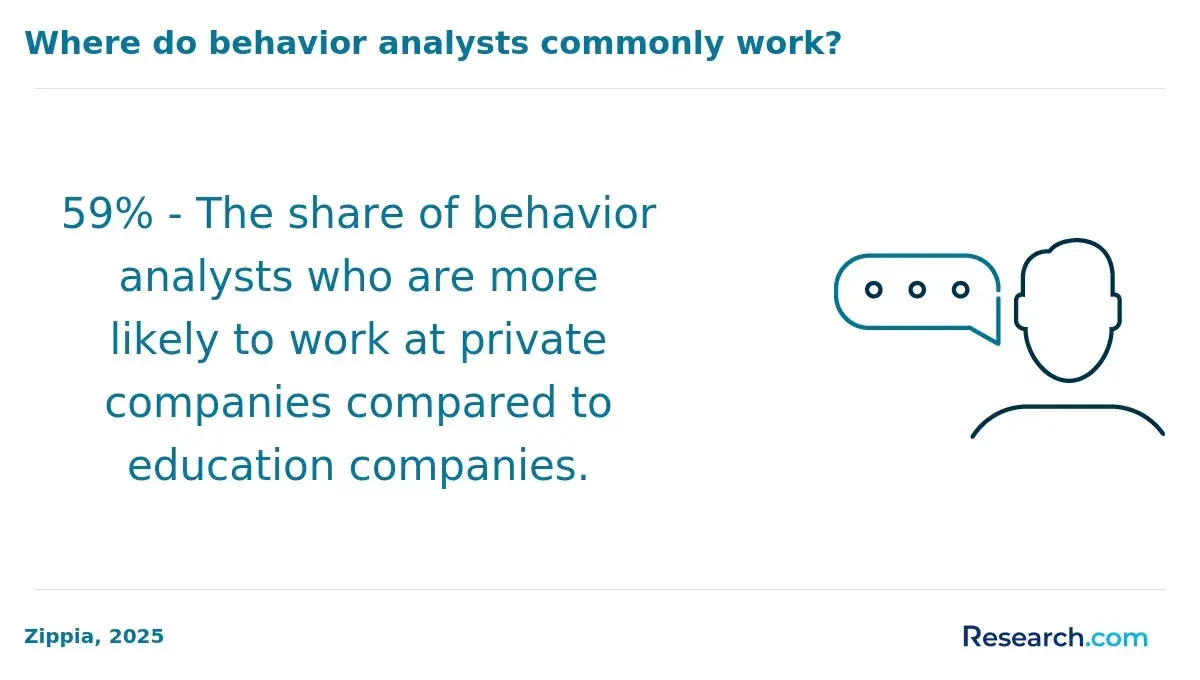
For many students, the biggest reason to pursue a BCBA master's degree is career mobility. Graduates may qualify for roles in school districts, autism service organizations, healthcare programs, private practices, research environments, and consulting settings across North America. If you plan to work in British Columbia or any other jurisdiction, confirm both BACB requirements and any provincial, state, employer, or payer rules that may affect practice.
The degree can be especially valuable for people already working in education, psychology, social services, or direct care who want to move into assessment, program design, supervision, or clinical leadership. It is less suitable for students who want a quick credential with minimal fieldwork; BCBA preparation requires sustained supervision, careful documentation, and strong exam preparation.
Working students should plan for the workload early. Students balancing full-time employment and graduate study often need a weekly schedule that protects study time, fieldwork documentation, and exam review. For example, Reddit r/bcba users report dedicating one weekday exclusively to focused study to keep up with coursework while managing 38-40 hour workweeks.
If cost and flexibility are major concerns, comparing BCBA masters online options can help you identify programs that fit your schedule, budget, and supervised fieldwork needs.
What are BCBA certification requirements?
BCBA certification requirements in 2026 generally include three major components: eligible graduate education, supervised fieldwork, and a passing score on the BCBA examination. Students should verify requirements directly with the Behavior Analyst Certification Board (BACB) and their intended jurisdiction before enrolling, because a program that is convenient or inexpensive is not useful if it does not support certification eligibility.
| Requirement | What it means for students | Common mistake to avoid |
| Graduate education | Complete a master's degree program with coursework that meets BACB standards, including ethics, assessment, intervention, data analysis, and experimental design. | Assuming every psychology, counseling, or education master's degree automatically meets BCBA coursework rules. |
| Supervised fieldwork | Complete qualifying hours under appropriate supervision and document them according to BACB guidelines. | Starting fieldwork without confirming that the supervisor, setting, activities, and documentation process are acceptable. |
| Certification exam | Pass the BCBA exam, which tests behavior-analytic concepts, ethics, assessment, intervention, supervision, and applied decision-making. | Waiting until graduation to begin exam preparation or choosing a program with weak exam support. |
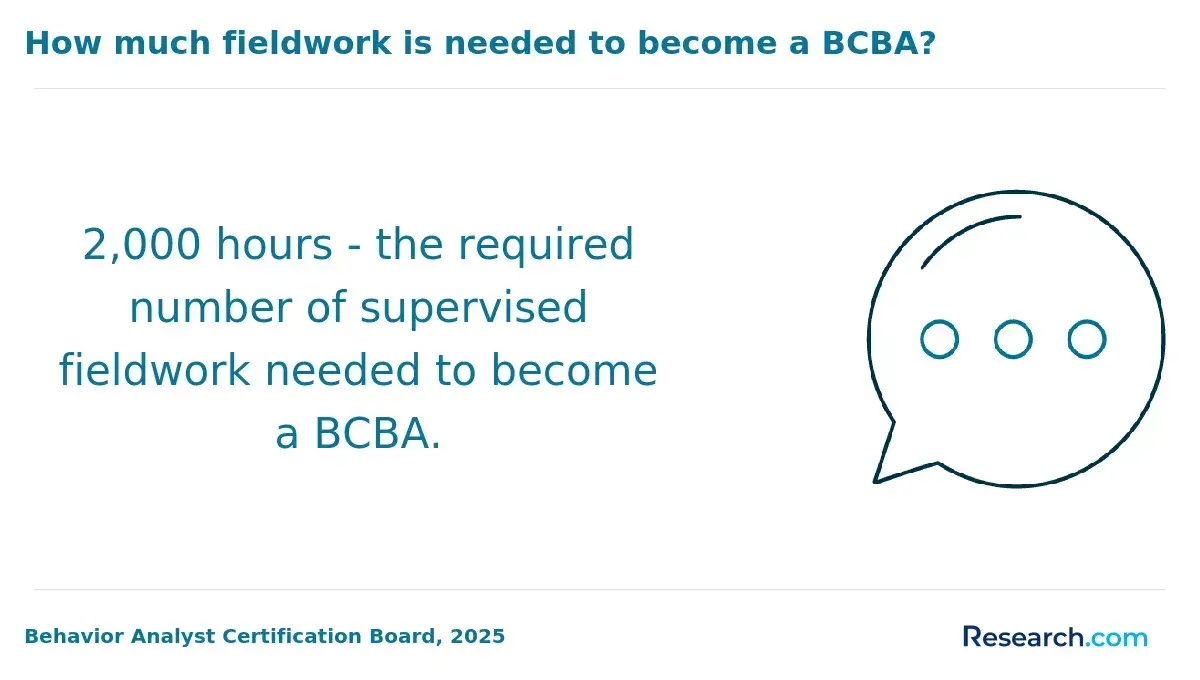
The supervised fieldwork requirement can follow different paths. Standard supervised independent fieldwork requires 2,000 hours over at least 12 months, while concentrated fieldwork requires 1,500 hours completed in 9 months. The shorter option is not automatically easier; it usually requires more intensive supervision and a setting that can provide enough qualifying experience within a compressed timeline.
Documentation is one of the most important parts of certification planning. Students should keep organized records of supervision meetings, unrestricted and restricted activities, supervisor qualifications, and monthly verification forms. A missing signature or poorly tracked hour can create delays even when the student has done the work.
The BCBA exam is the final certification hurdle. It evaluates both technical knowledge and applied judgment, including how to interpret assessment data, select ethical interventions, supervise staff, and make decisions when treatment is not producing expected results. Strong programs prepare students gradually through coursework, assignments, mock exams, and feedback on applied cases.
Students comparing programs can review BCBA certification schools to understand how different formats support certification. For example, William James College's ABA Master's program on campus has demonstrated a 100% graduation rate within 150% of program length, averaging 15 months, showing how program structure and support can affect timely completion.
How long does a BCBA Master's program take?
A BCBA master's program typically takes 1.5 to 3 years, depending on whether the student enrolls full time or part time, how the program schedules courses, and how quickly supervised fieldwork can be completed. Full-time students often finish within two years, while part-time students balancing work or family obligations may take closer to three years. Some accelerated programs advertise completion in 12 to 18 months, but those options usually require heavier course loads and disciplined weekly planning.
The degree timeline and certification timeline are related but not identical. A student may finish coursework before completing fieldwork, or complete many fieldwork hours while still enrolled. The best timeline is the one that allows you to complete coursework, accumulate valid hours, and prepare for the exam without sacrificing quality or burning out.
| Timeline factor | How it can speed up completion | How it can slow completion |
| Enrollment status | Full-time enrollment can move students through courses faster. | Part-time enrollment may extend the program but can be more manageable for working adults. |
| Fieldwork access | A job or practicum site with qualified supervision can help students build hours steadily. | Limited supervision, low client contact, or poor documentation can delay eligibility. |
| Program format | Online or hybrid formats can reduce commuting and make scheduling easier. | Flexible formats require strong self-management and proactive communication. |
| Exam readiness | Programs with strong assessment and review structures may reduce the chance of retakes. | Weak preparation can add months if the student must retake the exam. |
Supervised experience is a major timing variable. Students usually must complete 1,500 to 2,000 hours under board-certified supervisors before qualifying for the BCBA exam. A student working in an ABA-related role may be able to build hours consistently, while a student without a qualifying placement may need additional time to find an approved setting.
Exam preparation also affects the overall timeline. Data shows university programs with first-time BCBA exam pass rates above 75-80% provide stronger preparation, helping students avoid delays caused by retakes. When reviewing schools, ask how students are prepared for the exam, whether faculty provide practice assessments, and how recent graduates perform.
If you are comparing accelerated, standard, and part-time options, review how long does it take to get a masters in ABA to understand how program length, course load, and supervised fieldwork interact.
A BCBA master's curriculum is designed to move students from theory to applied decision-making. Students learn how behavior is shaped by environmental variables, how to assess the function of behavior, how to design interventions, and how to evaluate whether those interventions are working. The curriculum also emphasizes ethics because behavior analysts often work with vulnerable clients, families, schools, and service teams.
| Curriculum area | What students learn | Why it matters in practice |
| Behavior assessment | How to conduct interviews, observations, functional behavior assessments, and data reviews. | Interventions are more effective when they are based on the function of behavior rather than assumptions. |
| Intervention design | How to build behavior-change plans using reinforcement, antecedent strategies, skill acquisition, and behavior-reduction procedures. | BCBAs must select strategies that are ethical, individualized, and measurable. |
| Data analysis | How to collect, graph, interpret, and use data to make treatment decisions. | Data help determine whether to continue, revise, or discontinue an intervention. |
| Ethics and supervision | How to protect clients, manage consent and confidentiality, train staff, and supervise behavior technicians. | Ethical supervision directly affects client safety and treatment quality. |
| Research and experimental design | How to understand single-subject research designs and evaluate evidence. | Practitioners need to distinguish evidence-based practice from unsupported methods. |
Core courses for BCBA graduate students in Canada and other locations commonly include behavior assessment, behavioral intervention strategies, experimental design, ethics, verbal behavior, stimulus control, skill acquisition, and behavior-change procedures. Some programs also offer electives in autism spectrum disorders, trauma-informed care, organizational behavior management, or technology applications in behavior analysis.
Supervised fieldwork connects the curriculum to real cases. Students may complete hours in schools, clinics, homes, community agencies, or other service settings, depending on the program and local opportunities. Strong fieldwork gives students practice writing behavior plans, training implementers, analyzing data, communicating with caregivers, and adjusting interventions when progress stalls.
BACB recommends evaluating programs carefully since the average first-time BCBA exam pass rate is about 60%. Prospective students should look beyond course titles and ask about faculty qualifications, exam preparation, practicum coordination, student advising, and access to supervisors. Students who need more foundational preparation before graduate study may also explore ABA undergraduate programs online.
Admission requirements for BCBA master's programs usually include a bachelor's degree from an accredited institution, academic transcripts, a statement of purpose, letters of recommendation, and sometimes prerequisite coursework. Many programs prefer applicants with backgrounds in psychology, education, special education, human services, social work, or a related field, but career changers may be admitted if they can show academic readiness and relevant experience.
Many programs expect a minimum GPA of 3.0. Competitive programs may look for stronger grades, especially in research methods, statistics, psychology, or behavior-related coursework. Applicants who do not meet the preferred background may need leveling courses before taking graduate-level ABA classes.
Standardized tests such as the GRE are sometimes requested, but this requirement has become less common. If a program does require test scores, applicants should confirm whether the scores are used as a strict cutoff or as one part of a broader review.
| Application component | What admissions committees look for | How to strengthen it |
| Transcripts | Evidence of graduate-level readiness and relevant coursework. | Explain grade trends or complete prerequisite courses if your background is unrelated. |
| Statement of purpose | Clear reasons for pursuing behavior analysis and realistic career goals. | Connect your experience to ABA work, ethics, supervision, and client outcomes. |
| Recommendations | Academic or professional evidence that you can handle rigorous study and applied work. | Choose recommenders who can discuss reliability, communication, and work with clients or students. |
| Experience | Exposure to developmental disabilities, education, behavioral services, or human services. | Gain experience through volunteering, internships, direct support work, classrooms, or clinics. |
Experience with individuals with developmental disabilities or in behavioral settings is preferred or required by some programs. This experience helps applicants understand the realities of the field, including documentation, family collaboration, challenging behavior, and ethical boundaries.
Applicants should also verify that the program's coursework aligns with BACB expectations. Admission to a master's program does not automatically guarantee certification eligibility, so students should ask direct questions about the course sequence, supervised fieldwork support, and exam preparation.
According to data from William James College, 93% of their ABA Master's alumni from 2017 to 2021 secured employment within one year of graduating. Outcomes like this can be useful when comparing programs, but applicants should still ask what types of jobs graduates obtained and whether those roles align with their own goals.
BCBA master's program costs vary widely, typically ranging from $15,000 to over $40,000 depending on the institution, program format, credit load, residency status, and whether supervision is included. Public universities may be less expensive for in-state students, sometimes under $20,000 for the full program, while private institutions can exceed $35,000.
Online and hybrid programs often charge by the credit hour. Rates commonly average between $600 and $1,200 per credit, with most requiring 30 to 40 credit hours total. A lower advertised tuition rate is helpful, but students should calculate the full cost of attendance before enrolling.
| Cost category | Typical amount stated | What to ask before enrolling |
| Tuition | $15,000 to over $40,000 | Is the quoted cost for the full degree or only tuition before fees? |
| Public university tuition | Sometimes under $20,000 for in-state students | Do out-of-state or international students pay a different rate? |
| Private institution tuition | Can exceed $35,000 | Are scholarships, assistantships, or employer partnerships available? |
| Online credit-hour tuition | Between $600 and $1,200 per credit | How many credits are required, and are fees charged each term? |
| Books, materials, and supervision-related costs | $1,000 to $3,000 | Does the program help students find supervision, or must students pay separately? |
| Exam and study costs | Exam fees around $245; study materials between $100 and $500 | Does the program include exam preparation resources? |
Supervision can be a hidden cost. Some students obtain qualifying supervision through paid employment or a university-arranged practicum, while others pay certified supervisors separately. Before choosing a program, ask whether supervision is included, whether local placements are available, and what happens if a placement falls through.
Financial aid may include federal loans, institutional scholarships, employer tuition reimbursement, payment plans, or limited assistantship opportunities. Students should compare net cost rather than sticker price and consider how part-time versus full-time enrollment affects income, debt, and fieldwork progress.
The Behavior Analyst Certification Board (BACB) reported 9,955 first-time BCBA exam candidates recently, reflecting high demand and growing competition. Applying early for scholarships, confirming total costs, and selecting a program with clear fieldwork support can help reduce financial surprises.
Yes. Online BCBA master's programs are available and can be a strong option for students who need flexibility because of work, caregiving, location, or commuting constraints. The key issue is not whether the program is online; it is whether the program meets BACB coursework expectations, provides adequate academic support, and helps students complete valid supervised fieldwork.
Online programs may use synchronous classes, asynchronous coursework, or a mix of both. Synchronous classes provide live interaction with faculty and classmates, while asynchronous courses allow students to complete lectures and assignments on a more flexible schedule. The best format depends on your learning style, work schedule, and need for accountability.
| Online format feature | Potential advantage | Potential drawback |
| Asynchronous coursework | Useful for students with variable work hours or family responsibilities. | Requires strong self-discipline and consistent weekly planning. |
| Live online classes | Offers discussion, structure, and immediate faculty interaction. | May be difficult for students in different time zones or with evening work schedules. |
| Local fieldwork | Allows students to gain experience near home or through current employment. | Students may need to find qualified supervisors independently. |
| Remote advising | Can support students across regions without relocation. | Quality varies; some programs offer more proactive support than others. |
Supervised fieldwork remains an in-person or site-based requirement even when coursework is online. Students should confirm how the program helps identify supervisors, what documentation system it uses, and whether faculty can intervene if a placement or supervision arrangement becomes unsuitable.
When evaluating online BCBA master's programs, prioritize the following:
- Accreditation status and BACB verification.
- The balance of live instruction versus independent study.
- Support systems for organizing supervised fieldwork.
- Recent BCBA exam first-time pass rates and alumni outcomes as reported in the BACB's performance data.
- Faculty accessibility, advising quality, and response time.
- Clear policies for students who move, change jobs, or need a new supervisor.
Online study can be effective, but it is not a shortcut. Students who succeed usually build a weekly routine, communicate early with advisors, track fieldwork carefully, and begin exam preparation before the final term.
Choosing an accredited BCBA program starts with one nonnegotiable step: verify that the coursework supports BCBA eligibility under BACB rules. A program may be well known, affordable, or convenient, but if it does not meet certification requirements, it can delay or prevent your path to the exam.
Students should also distinguish between institutional accreditation and BACB-related coursework verification. Institutional accreditation relates to the school as a degree-granting institution, while BACB-aligned coursework relates to whether the content can satisfy certification education requirements. You may need both for a practical and credible credential path.
| Selection factor | Why it matters | Question to ask |
| BACB alignment | Determines whether coursework supports certification eligibility. | Does the program's course sequence meet current BACB requirements? |
| Fieldwork support | Supervised experience is required and can be difficult to arrange alone. | Does the program place students, approve sites, or provide supervisor lists? |
| Exam outcomes | Pass rates can indicate how well students are prepared. | What are the recent first-time BCBA exam pass rates? |
| Faculty expertise | Experienced faculty can connect theory to real clinical and educational decisions. | Who teaches the core ABA courses, and what is their applied experience? |
| Format and schedule | The program must fit your work, caregiving, and fieldwork commitments. | Are classes synchronous, asynchronous, hybrid, full time, or part time? |
| Cost and aid | Total cost affects debt and career return on investment. | What is the full cost, including fees, materials, and supervision-related expenses? |
| Career outcomes | Employment support can help students transition from training to practice. | Does the school report job placement within 6-12 months post-graduation? |
Review graduation rates and employment outcomes, but do not rely on a single metric. A high graduation rate is encouraging, but students should also examine exam pass rates, practicum quality, supervision access, and whether graduates work in roles similar to the student's goals.
With a projected workforce decline due to retirements amid growing demand in the ABA field (ABA International, 2025), enrolling in an accredited program can position students for career stability. Still, demand does not replace due diligence. Employers may prefer candidates with strong supervision experience, clear documentation skills, and proven ability to collaborate with families and teams.
Additional factors to consider include:
- Availability of faculty mentorship and advising.
- Access to practicum sites or supervised fieldwork.
- Curriculum updates reflecting the latest BACB standards.
- Support for students who are working full time.
- Transparent policies for transfer credits, leaves of absence, and fieldwork disruptions.
A good BCBA program should make the path to certification understandable from the beginning. If admissions staff cannot clearly explain coursework, supervision, exam preparation, and student outcomes, keep asking questions before you commit.
BCBA certification can lead to careers in clinical services, education, early intervention, healthcare, consulting, supervision, and organizational behavior management. The right path depends on the population you want to serve, your tolerance for direct clinical work, your interest in supervision, and the type of setting where you work best.
| Career path | Typical responsibilities | Best fit for students who want to |
| Clinical behavior analyst | Assess behavior, design treatment plans, monitor data, train caregivers, and supervise staff. | Work directly with clients and families in ABA service settings. |
| Special education consultant | Partner with teachers and school teams to create behavior supports and improve student participation. | Apply ABA in classrooms and collaborate with educators. |
| Early intervention specialist | Support young children through skill-building, caregiver coaching, and developmental programming. | Focus on early learning, communication, and family-centered services. |
| Organizational behavior management consultant | Use behavioral principles to improve employee performance, safety, training, and systems. | Apply behavior analysis outside traditional clinical settings. |
| Research assistant in behavior analysis | Support data collection, intervention studies, literature reviews, and program evaluation. | Contribute to research or prepare for doctoral-level study. |
Many BCBAs work with individuals with autism spectrum disorder (ASD), developmental disabilities, or other behavioral challenges. In these roles, they commonly conduct assessments, design intervention plans, review data, supervise behavior technicians, and coordinate with caregivers, educators, and other professionals.
Schools are another major setting. BCBAs may help design behavior intervention plans, train classroom staff, support individualized education teams, and improve student access to instruction. In healthcare settings, BCBAs may collaborate with psychiatry, neurology, rehabilitation, or developmental medicine teams when behavior analysis is part of a broader treatment plan.
Organizational behavior management (OBM) offers a different route. In OBM roles, BCBAs apply behavioral principles to staff performance, safety procedures, training systems, and operational improvement. This path may appeal to students who like data and systems but do not want a primarily clinical caseload.
The BACB's 2023 BCBA pass rates PDF highlights notable differences in first-time exam success across universities. Higher pass rates often reflect stronger clinical training and well-rounded curricula, which can influence early job competitiveness. Regional demand also varies, with some states prioritizing BCBAs in school districts and Medicaid-funded programs, influencing employment opportunities and salary levels.
Students can improve career prospects by seeking varied supervised experience, learning to write clear clinical documentation, developing supervision skills, and building competence with the populations they plan to serve. Specialty training in areas such as verbal behavior or autism may also help graduates compete for focused roles.
What is BCBA salary and job outlook?
BCBA salary depends on location, experience, setting, caseload, supervisory responsibility, and specialization. Board Certified Behavior Analysts earn an average salary ranging from $60,000 to $90,000 annually. Entry-level salaries begin around $55,000, while BCBAs in specialized clinical roles or supervisory positions can exceed $100,000.
Urban markets and high-demand regions may offer higher pay, especially where ABA services are widely funded or where employers compete for certified practitioners. Urban centers like California and New York tend to offer salaries at the higher end due to demand. However, higher salaries may come with higher living costs, heavier caseloads, more travel, or greater supervisory expectations.
| Factor | How it can affect salary |
| Experience level | New BCBAs often start lower, while experienced analysts may move into supervision, clinical direction, or consulting. |
| Work setting | Schools, clinics, hospitals, private practices, and consulting firms may use different pay structures. |
| Location | Demand, funding, payer systems, and cost of living can change compensation significantly. |
| Specialization | Experience in pediatric intervention, severe behavior, autism services, or organizational behavior management may support stronger opportunities. |
| Licensure and employer requirements | Some jurisdictions or employers may require additional credentials beyond BCBA certification. |
The job outlook is strong, with employment growth for BCBAs exceeding 20% over the next decade. Demand is driven by greater recognition of autism spectrum disorders, increased use of applied behavior analysis services, and ongoing needs in schools, healthcare, and private practices.
Program quality can influence how quickly graduates enter the field. Instagram analysis of leading online ABA master's programs shows variable first-time BCBA exam pass rates, highlighting the importance of selecting quality programs to improve certification success and job prospects. Passing the exam sooner can help graduates move into BCBA-level roles faster and avoid the cost and delay of retesting.
Students who want to improve their earning potential should seek strong supervision, build experience with high-need populations, learn to lead teams ethically, and stay current on state licensure requirements and employer expectations. Relocating to underserved areas may also increase job opportunities and compensation, but students should compare salary offers with cost of living, caseload expectations, and supervision responsibilities.
Other Things You Should Know About Applied Behavior Analysis
Only supervised fieldwork approved under the BACB pathway counts, and every monthly period needs at least one supervision contact and documented behavior-analytic activities. BCBA candidates must complete 1,500 concentrated hours or 2,000 standard hours before the exam application, under an eligible supervisor who meets BACB requirements.
Data collection is a fundamental component of applied behavior analysis. Practitioners gather and analyze data to evaluate the effectiveness of interventions and make data-driven decisions. Continuous monitoring helps ensure that treatment plans are adjusted as needed to achieve desired behavior outcomes.
Ethics play a critical role in applied behavior analysis practice. Behavior analysts must follow the Behavior Analyst Certification Board's (BACB) Professional and Ethical Compliance Code, which covers client dignity, confidentiality, and informed consent. Ensuring interventions are humane and evidence-based is essential to maintaining ethical standards.
Supervision is required during BCBA training to ensure students develop competency in behavior analytic interventions. Trainees typically complete supervised fieldwork hours under a qualified BCBA who provides guidance, feedback, and evaluation. This process helps prepare students for independent professional practice and certification exams.
- BCBA master's programs | edX https://www.edx.org/masters/psychology/online-aba-programs/bcba-programs-online
- Survival Guide for the First Year at University | Teach Me 2 https://www.teachme2.com/blog
- BCBA Programs & Schools | Sunray ABA https://www.sunrayaba.com/post/bcba-programs-schools
- BCBA Career Path To Take | Advanced Therapy Clinic https://www.advancedtherapyclinic.com/blog/bcba-career-path-to-take
- BCBA Job Opportunities: Career Paths, Growth, and Impact https://championsaba.com/bcba-job-opportunities/
- BCBA Career Path to Take https://www.besteveraba.com/blog/bcba-career-path-to-take
- Career Types in Applied Behavior Analysis | Regency ABA https://regencyaba.com/career-types-in-applied-behavior-analysis/
- Is Becoming a BCBA a Good Career in 2026? Salary, Growth, and What to Expect https://mindfulsproutsaba.com/blog/is-becoming-a-bcba-a-good-career-in-2026-salary-growth-and-what-to-expect/
- Applied Behavior Analysis (ABA)—Board Certified Behavior Analyst (BCBA) Certification - University of Mount Saint Vincent https://mountsaintvincent.edu/graduate-adult/graduate-programs/applied-behavior-analysis-aba-board-certified-behavior-analyst-bcba-certification/
- What Is A Board Certified Behavioral Analyst (BCBA)? https://www.psychology.org/resources/bcba-meaning-career-overview/