2027 Questions to Ask During a BCBA Program Admissions Call

Co-Founder and Chief Data Scientist
A BCBA program is not just another graduate-school choice. It affects whether you can meet certification requirements, complete supervised fieldwork on time, prepare for the BCBA exam, and realistically balance school with work or family obligations. An admissions call is your best chance to test whether a program’s promises match your needs before you commit tuition, time, and fieldwork hours.
This guide explains what to ask during a BCBA program admissions call and how to interpret the answers. It covers accreditation and BACB alignment, admission requirements, curriculum, online study options, fieldwork, certification and licensing issues, career outcomes, salary expectations, and practical ways to compare programs. Use it as a checklist so you can leave the call with clear evidence—not just marketing language—about whether the program is a good fit.
Key Things You Should Know
- Ask about program accreditation and alignment with the Behavior Analyst Certification Board (BACB) 2025 requirements to ensure eligibility for BCBA certification.
- Inquire about supervised fieldwork opportunities; 2024 data shows 85% of successful BCBA candidates completed programs offering comprehensive practicum experiences.
- Clarify tuition costs and funding options, as median BCBA program fees range from $15,000 to $30,000, impacting accessibility for working professionals and graduates.
What is a BCBA program admissions call?
A BCBA program admissions call is a structured conversation with a school representative about whether the program can help you meet your academic, fieldwork, certification, and career goals. It is not only a chance for the school to explain its program; it is also your opportunity to verify details that may be unclear on the website.
The most useful admissions calls cover curriculum requirements, BACB alignment, supervised fieldwork, faculty qualifications, student support, exam preparation, tuition, fees, and scheduling options. If you are comparing several programs, ask the same core questions in each call so you can evaluate them consistently.
Questions to prepare before the call
- How does the curriculum align with the current BACB exam content and task list expectations?
- Does the program include supervised fieldwork, help students find placements, or require students to arrange fieldwork independently?
- Are fieldwork opportunities local, remote, hybrid, or dependent on the student’s location?
- What is the historical first-time BCBA exam pass rate for program graduates?
- What academic support, advising, remediation, or fieldwork support is available if a student struggles?
- Can students enroll part time or full time, and how does that affect the expected completion timeline?
- What are the total tuition, required fees, refund policies, and payment options?
The BCBA credentialing process is demanding. Recent BACB data indicates only about half of first-time candidates pass the BCBA exam, so the quality of coursework, supervision, exam preparation, and advising matters. Ask admissions staff to support claims with current program data whenever possible.
If affordability is a major factor, compare tuition and program structure carefully. A lower-cost program may still be a strong option if it provides solid BACB-aligned coursework, transparent fieldwork guidance, and adequate student support. Reviewing affordable online BCBA programs can help you identify options to discuss during admissions calls.
Why should you ask questions during BCBA admissions?
You should ask detailed questions during BCBA admissions because program differences can affect your eligibility, exam readiness, fieldwork timeline, and total cost. Two programs may both describe themselves as flexible or BACB-aligned, but one may provide strong fieldwork support and exam preparation while another may leave students to manage those pieces mostly on their own.
Admissions conversations also help you identify risk. If a representative cannot clearly explain fieldwork expectations, recent pass rates, faculty credentials, or total costs, that is a sign to investigate further before enrolling.
What your questions should reveal
| Topic to ask about | Why it matters | What to listen for |
| Coursework and BACB alignment | Determines whether the academic path supports certification preparation. | Clear explanation of required courses, sequencing, and current standards. |
| Supervised fieldwork | Fieldwork is often the most complicated part of the process. | Specific guidance on placements, supervisors, documentation, and student responsibilities. |
| Faculty qualifications | Faculty expertise affects instruction, mentorship, and professional preparation. | Instructors with relevant certification, practice experience, research, or supervision background. |
| Pass rates and outcomes | Outcomes provide context for exam preparation and graduate success. | Recent, program-specific data rather than broad claims. |
| Cost and financial policies | Tuition is only part of the total investment. | Transparent tuition, fees, payment plans, scholarships, and refund terms. |
Pass rates can reveal large differences in preparation quality. According to certifyndaba.com, 33 university training programs reported BCBA first-time pass rates between 80-100%, while 57 programs scored below 50%. A high pass rate is not the only measure of quality, but asking about recent results helps you understand how effectively the program prepares students for certification.
You should also ask about alumni outcomes, employer connections, networking opportunities, and job search support. Programs with active alumni networks or strong relationships with clinics, schools, and agencies may give students better access to fieldwork and employment opportunities. For an initial list of options to compare, review BCBA accredited programs.
What accreditation should I verify for BCBA programs?
For a BCBA program, verify three things: the institution’s accreditation, the program’s behavior-analytic coursework status, and whether the fieldwork structure supports current BACB requirements. Do not rely only on phrases like “certification track” or “BCBA pathway.” Ask admissions staff to identify exactly how the program meets the standards students need for certification eligibility.
The Behavior Analyst Certification Board (BACB) sets the credentialing requirements for BCBA certification. Programs should be able to explain how their coursework aligns with the BACB’s current Task List and educational requirements. If a program claims BACB-approved, BACB-aligned, ABAI-recognized, or verified coursework, ask where that status is documented and whether it applies to your intended start date and catalog year.
Accreditation and approval questions to ask
- Is the university institutionally accredited by a recognized regional or national accreditor?
- Does the program’s coursework meet current BACB coursework requirements for BCBA eligibility?
- Is the coursework sequence verified, recognized, or otherwise documented by the appropriate behavior-analysis authority?
- Does the program align with the current BACB Task List?
- How often is the curriculum reviewed when BACB standards change?
- Does the program include supervised fieldwork, or must students secure fieldwork separately?
- Who confirms that supervision arrangements meet BACB criteria?
Fieldwork should be treated as part of accreditation due diligence, even when it is not the same as institutional accreditation. Ask whether supervision meets BACB criteria, what documentation students must maintain, and whether required hours and supervision formats are clearly explained before enrollment.
The BCBA certificant population has grown significantly, reflecting increased demand and strict educational standards, according to certifyndaba.com. Because requirements can change, confirm current information directly with the program and the BACB before making an enrollment decision. You can also explore applied behavior analysis master programs as you compare pathways that support BCBA preparation.
Typical BCBA program admission requirements include prior college coursework, official transcripts, a minimum GPA, recommendation letters, a personal statement, and sometimes relevant work experience or standardized test scores. Requirements vary by school and by whether the program is a full master’s degree, a graduate certificate, or another certification-focused pathway.
Applicants commonly need a bachelor’s or master’s degree in psychology, education, behavior analysis, or a related field. Some programs accept students from other backgrounds but may require prerequisite coursework. Many schools request official transcripts showing a minimum GPA, commonly around 3.0, though some schools set higher thresholds.
Relevant work, internship, or volunteer experience in education, autism services, developmental disabilities, mental health, or clinical settings can strengthen an application. It shows that the applicant understands the type of client-facing, data-driven work involved in applied behavior analysis. GRE requirements vary: some programs require scores, while others waive them based on academic history or no longer use them.
Common application materials
- Completed application form
- Official transcripts from prior colleges or universities
- Minimum GPA documentation, commonly around 3.0
- Resume or CV showing relevant academic, professional, or volunteer experience
- Letters of recommendation addressing professionalism, academic readiness, and service experience
- Personal statement explaining career goals and fit with the program
- GRE scores, if required by the school
Florida State University's BCBA program notably achieves over 90% first-time pass rates, reflecting its rigorous academic and experiential preparation. While pass rates should not be the only basis for choosing a program, they can help you judge whether admissions standards, curriculum design, and support systems are producing strong exam outcomes.
Questions to ask about admissions fit
- What prerequisite courses are required if my degree is not in behavior analysis?
- Can I apply before completing all prerequisites?
- Is supervised fieldwork included in the curriculum or completed separately?
- Are clinical, school-based, or community-based experience opportunities available?
- How flexible is the schedule for working professionals?
- What support is available for BACB exam preparation?
For a broader comparison of program types and formats, review online ABA programs that may fit different academic backgrounds and career goals.
BCBA programs generally take 1 to 2 years to complete, depending on the format, course load, fieldwork plan, and whether the student enrolls full time or part time. Full-time students often finish between 12 and 18 months. Part-time students, especially working professionals, may take up to 24 months or more.
The program timeline is not only about coursework. Supervised fieldwork can be the factor that extends the path to certification. Students should confirm whether fieldwork can be completed while taking classes or only after certain courses are finished. They should also ask whether the program helps students locate supervisors and track hours correctly.
Timeline factors to clarify
- Total number of required credit hours
- Minimum and maximum time allowed for completion
- Whether courses are offered every term or only in a fixed sequence
- Whether students can pause enrollment without losing progress
- Whether supervised hours can be completed during coursework
- Whether the program supports part-time, full-time, or accelerated pacing
- How long students typically take from enrollment to BCBA exam eligibility
| Enrollment option | Typical completion pattern | Best for |
| Full time | Often 12 to 18 months | Students who can prioritize coursework and fieldwork with fewer outside obligations. |
| Part time | May take up to 24 months or more | Working professionals or students balancing family, employment, and supervision hours. |
| Accelerated or flexible online | Depends on course sequencing and fieldwork availability | Self-directed students who can manage deadlines and maintain steady progress. |
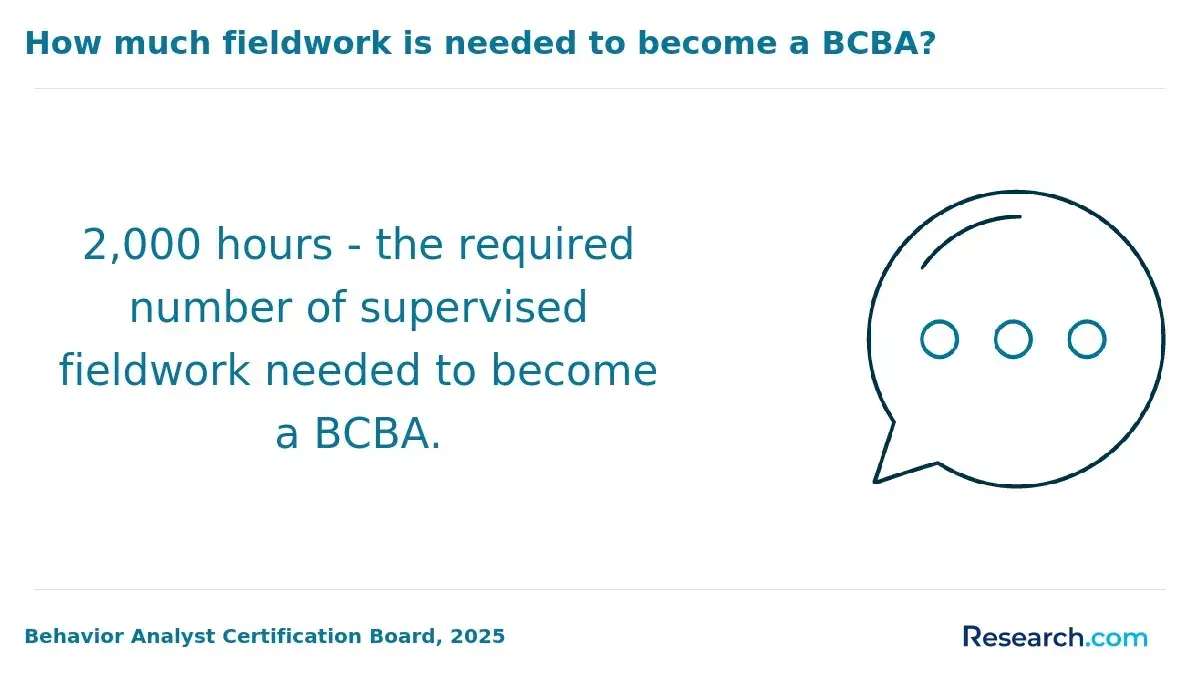
Students should confirm the number of supervised fieldwork hours required, typically between 1,500 and 2,000 hours. If hours can overlap with coursework, the total timeline may be shorter. If fieldwork begins late or requires an external placement search, completion may take longer.
Program format also matters. Traditional campus programs often follow fixed semester schedules, while online programs may offer more flexibility. For example, Simmons University's asynchronous online BCBA program, known for an 86% first-time pass rate, allows students to advance at their own pace within structured guidelines.
A BCBA program curriculum covers the principles, assessment methods, intervention strategies, ethics, research designs, and data-based decision-making skills used in applied behavior analysis. The goal is to prepare students to assess behavior, design interventions, monitor progress, supervise services, and practice within professional and ethical standards.
Most curricula include behavior assessment, behavior change procedures, data collection and analysis, experimental design, ethics, verbal behavior, skill acquisition, and behavior reduction. Strong programs connect these topics to realistic practice settings such as clinics, schools, homes, community programs, and organizational environments.
Core curriculum areas
- Functional behavior assessment methods and behavior reduction strategies
- Verbal behavior and language development interventions
- Single-subject experimental designs for evaluating interventions
- Ethics established by the BACB
- Data collection, analysis, and interpretation techniques
- Skill acquisition planning and measurement
- Supervision, consultation, and professional communication
- Behavior intervention planning for diverse client needs
Many programs incorporate supervised fieldwork or practicum experiences so students can apply classroom concepts in clinical, educational, or organizational settings. This practical component is important because BCBA work requires more than passing exams. Students must learn to make decisions from data, adapt interventions responsibly, collaborate with families and teams, and document services accurately.
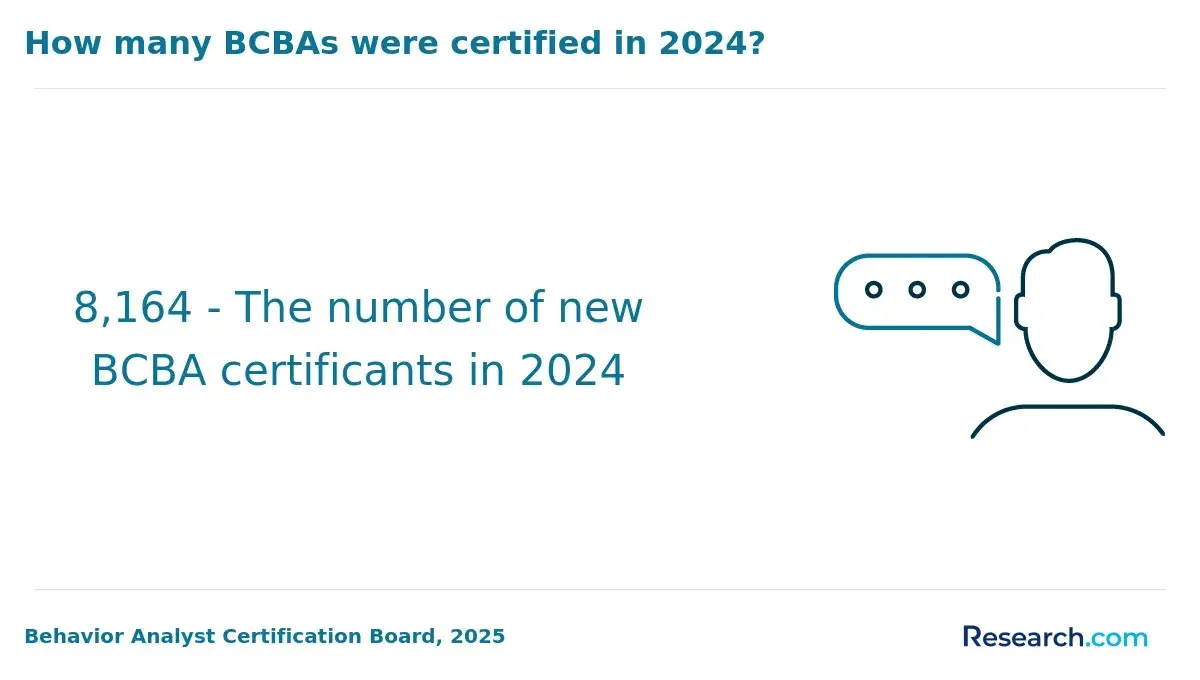
Prospective students should verify that the curriculum aligns with current BACB standards and ask whether the program addresses emerging practice needs such as telehealth delivery of ABA services and cultural competence. The profession is expanding rapidly, with certificants rising 50% from 54,223 in 2021 to 81,566 in 2025.
Curriculum questions for admissions
- Which courses map directly to BACB content requirements?
- How are ethics taught across the program?
- How much practice do students get with data collection and graph interpretation?
- Are case studies, simulations, or practicum experiences built into coursework?
- Does the program include preparation for supervision and consultation responsibilities?
- How does the curriculum prepare students for the BCBA exam?
Yes. Many universities offer fully online or hybrid M.S. in Applied Behavior Analysis programs that are designed to align with Behavior Analyst Certification Board (BACB) course sequence requirements. Online options can be especially useful for working professionals, career changers, military students, caregivers, and students who do not live near a campus-based ABA program.
Online does not automatically mean easier or lower quality. A strong online BCBA program should provide clear course sequencing, regular faculty access, academic advising, reliable technology support, and a realistic plan for supervised fieldwork. The biggest issue to clarify is how fieldwork works in your location.
Online program features to compare
| Feature | Why it matters |
| Asynchronous coursework | Allows students to complete lectures and assignments around work schedules, but requires self-discipline. |
| Synchronous sessions | Provides live interaction with faculty and classmates, but may be difficult across time zones. |
| Hybrid requirements | May include campus visits, live intensives, or local practicum expectations. |
| Fieldwork support | Helps students secure supervision and avoid delays in meeting certification requirements. |
| Online student services | Can affect advising access, exam preparation, networking, and career support. |
It is essential to confirm how supervised fieldwork, a BACB certification requirement, is arranged. Online programs may help students identify local supervisors, maintain placement partnerships, or provide guidance for remote supervision when allowed. Ask how hours are tracked, who reviews documentation, and what happens if a placement falls through.
Program effectiveness should also be evaluated through outcomes. For instance, Arizona State University's on-campus M.S. in ABA reported a 75% first-time BCBA exam pass rate in 2024, which can serve as a benchmark when comparing online offerings.
Questions to ask about online BCBA programs
- Are all required BACB coursework and assessments delivered online?
- Are any campus visits, live sessions, or synchronous meetings required?
- What technology platforms and technical support are provided?
- How does the program help online students secure supervised fieldwork?
- Does the program offer online student networking or career placement services?
- What is the faculty-to-student ratio in online classes?
- Are faculty licensed or certified BCBAs currently practicing professionally?
Before enrolling, verify accreditation, coursework status, fieldwork logistics, and measurable outcomes. Requirements can change, and students should confirm current certification and licensure rules directly with the relevant authorities and their state licensing board.
BCBA certification requires candidates to meet education, supervised experience, and examination requirements set by the Behavior Analyst Certification Board (BACB). In general, candidates complete graduate-level education, finish approved supervised fieldwork, document that experience under qualified supervision, and pass the BCBA examination.
Candidates are typically required to hold a relevant graduate degree, such as a master's or higher, in behavior analysis or a closely related field. They are then required to complete 1,500 to 2,000 hours of approved supervised experience aligned with BACB competency standards. This experience must be documented under qualified supervision.
After meeting these prerequisites, applicants must pass the BCBA examination, which covers behavior analytic principles, ethical standards, assessment, intervention, measurement, and professional practice concepts outlined in the BACB Task List.
Licensing is separate from certification and differs by state. Many states require BCBA certification for independent practice, but they may also require background checks, state applications, fees, jurisprudence exams, continuing education, or additional documentation. Admissions staff should be able to explain how the program supports certification preparation, but students should verify licensure rules directly with the state where they plan to practice.
Certification versus licensure
| Requirement | What it means | Who sets it |
| BCBA certification | National professional credential based on education, supervised experience, and exam requirements. | Behavior Analyst Certification Board (BACB) |
| State licensure | Legal permission to practice in a specific state, often tied to BCBA certification plus state-specific requirements. | State licensing board or regulatory agency |
| Continuing education | Ongoing professional learning required to maintain credentials or licenses. | BACB and/or state regulators |
Key program performance indicators include first-time BCBA exam pass rates and the availability of supervised fieldwork support. For instance, Assumption University's hybrid ABAI-recognized M.A. program reported a 67% first-time pass rate, according to Applied Behavior Analysis Edu.
Questions to ask programs about certification and licensing
- Does the curriculum meet current BACB educational requirements for the cohort I would enter?
- Does the program help students document supervised fieldwork correctly?
- Are supervisors provided, recommended, or entirely the student’s responsibility?
- What is the program’s most recent first-time BCBA exam pass rate?
- How does the program support students who do not pass the exam on the first attempt?
- Does the program provide guidance on state licensure requirements?
- Are there states where graduates may need additional coursework, documentation, or approvals?
BCBA certification can lead to roles in clinical services, schools, autism service agencies, hospitals, residential programs, early intervention, consulting, and organizational settings. Common job titles include behavior analyst, behavior specialist, clinical supervisor, autism program supervisor, program director, and consultant analyst.
Salaries for BCBA-certified professionals vary by location, employer, experience, caseload, specialty, and supervisory responsibility. Median annual wages range from $50,000 to $85,000. Some specialized or managerial positions can exceed $100,000.
Common BCBA career paths
| Career setting | Typical responsibilities | What to ask a program |
| Clinical ABA services | Conduct assessments, design treatment plans, supervise technicians, and monitor client progress. | Does the program connect students with clinical fieldwork sites? |
| Schools and education | Support behavior intervention plans, collaborate with educators, and help students with behavioral needs. | Are school-based practicum or internship opportunities available? |
| Autism services | Develop skill acquisition and behavior reduction programs for children or adults with autism spectrum disorder. | Does coursework include autism-focused applications and family collaboration? |
| Program leadership | Supervise staff, oversee service quality, manage compliance, and train teams. | Does the program prepare students for supervision and administration? |
| Consulting or organizational work | Apply behavior analytic principles to systems, staff performance, or organizational behavior. | Are electives or projects available in organizational behavior management? |
Entry-level BCBAs often provide direct or supervised services to individuals with developmental disabilities or behavioral challenges. In schools, they may help develop intervention plans and support educators. In healthcare and clinical agencies, they may design, monitor, and adjust therapy programs. With experience, BCBAs may move into supervisory, administrative, training, or consulting roles, which usually offer higher salaries.
Demand for BCBAs remains strong despite certification challenges. The retake pass rate for the BCBA exam was 25% in 2024, a slight improvement over previous years, highlighting the importance of thorough preparation and practical experience. Ask admissions representatives about graduate employment outcomes, employer partnerships, internship opportunities, and support for students preparing for the exam.
Salary trends differ by state, with BCBAs in California and New York generally earning more than those in rural regions. Students should ask whether the program provides career advising, interview preparation, salary negotiation guidance, and alumni connections that can support career advancement.
How do I choose the best BCBA program?
To choose the best BCBA program, compare programs on certification alignment, fieldwork support, exam outcomes, faculty expertise, flexibility, cost, student services, and career outcomes. The best program is not automatically the cheapest, fastest, or most famous option. It is the one that gives you a realistic path to meet BCBA requirements and succeed in the type of practice you want.
Step-by-step BCBA program comparison checklist
- Verify accreditation and coursework status. Confirm institutional accreditation and ask how the program meets current BACB educational requirements.
- Clarify supervised fieldwork. Ask whether the program provides placements, helps locate supervisors, or expects students to arrange fieldwork independently.
- Request exam outcome data. Program outcomes, including first-time BCBA exam pass rates, provide insight into preparation quality. With over 23,151 candidates taking the exam across 192 programs, results vary widely, according to certifyndaba.com.
- Evaluate faculty expertise. Look for instructors with active BCBA certification, relevant practice experience, supervision experience, and research or professional contributions.
- Assess curriculum depth. Strong programs cover behavior assessment, intervention methods, ethics, data analysis, supervision, and applied practice thoroughly.
- Match the format to your life. Online, hybrid, evening, accelerated, and part-time options can help working students, but flexibility should not come at the expense of support.
- Calculate total cost. Include tuition, fees, textbooks, technology costs, campus visit expenses, supervision-related costs, and exam preparation costs.
- Review student support. Ask about advising, tutoring, remediation, exam prep, disability services, fieldwork troubleshooting, and career placement.
- Compare career fit. Look for electives, practicum sites, alumni networks, or employer connections in the settings where you want to work.
Red flags to watch for
- Admissions staff cannot clearly explain BACB alignment or fieldwork requirements.
- The program will not provide recent pass-rate or outcome information.
- Students are responsible for finding all supervision with little guidance.
- Total costs are unclear or fees are disclosed late.
- The program promises guaranteed certification, licensure, or employment.
- Course sequencing makes it difficult to finish within your target timeline.
When possible, speak with current students or alumni before enrolling. Ask what support actually looks like after admission, how responsive faculty are, whether fieldwork guidance is practical, and whether the workload is manageable alongside employment. A strong BCBA program should be transparent before you apply and supportive after you enroll.
Other Things You Should Know About Applied Behavior Analysis
When considering a BCBA program in 2027, inquire about the curriculum's integration of the latest research, faculty expertise, and opportunities for hands-on experience. These factors can significantly enhance learning and prepare students for diverse and evolving career paths in applied behavior analysis.
Ask whether the program provides the BACB-required 5% monthly supervision for supervised fieldwork and how many supervised hours are scheduled in each 8-week term. Confirm who can serve as a supervisor, how contacts are documented, and whether any embedded practicum meets current BACB fieldwork standards.
Data collection and analysis are fundamental components of applied behavior analysis. BCBAs systematically gather data on client behavior to assess effectiveness, make informed decisions, and modify intervention strategies as needed. This continuous measurement ensures programs are tailored to individual progress and supports objective evaluation of treatment outcomes.
Yes, applied behavior analysis can be effectively integrated with other therapies such as speech therapy, occupational therapy, and psychological counseling. Collaboration between professionals enhances comprehensive care, addressing multiple facets of an individual's development. BCBAs often coordinate with interdisciplinary teams to optimize treatment planning and implementation.
- Appliedbehavioranalysisedu https://appliedbehavioranalysisedu.org
- Master of Science in Applied Behavior Analysis (ABA) https://tsengcollege.csun.edu/programs/ABA/curriculum
- Top BCBA Interview Questions and How to Prepare https://www.abaresourcecenter.com/post/bcba-interview-questions-and-how-to-prepare
- The 10 Best ABA Masters Programs [updated for 2025] https://abamastersprograms.org/best-aba-masters-programs/
- How Long Does It Take to Become a BCBA? https://bluegemsaba.com/how-long-does-it-take-to-become-a-bcba/
- What Does a Behavior Analyst Do? - How to Become a BCBA | UMass Global https://www.umassglobal.edu/blog-news/what-does-a-behavior-analyst-do
- Understanding Certification and Licensure in Behavior Analysis Practice https://www.abatechnologies.com/blog/understanding-certification-and-licensure-in-behavior-analysis-practice
- BCBA® Certification and Licensure by State https://www.thebehavioracademy.com/blog/bcba-certification-and-licensure-by-state
- LBA vs. BCBA – What’s the Difference? https://onlinecounselingprograms.com/mental-health-careers/how-to-become-behavior-analyst-bcba/lba-vs-bcba/
- How Long Does It Take to Become a BCBA? | Timeline Guide https://www.appliedbehavioranalysisedu.org/2026/04/how-long-does-it-take-to-become-a-bcba/