2027 Online ABA Programs With Evening Classes

Co-Founder and Chief Data Scientist
Choosing an ABA program is often less about interest in the field and more about logistics: Can you complete graduate-level coursework, supervised fieldwork, and certification preparation without leaving your job or disrupting family responsibilities? For many future behavior analysts, evening online programs make that path more realistic.
Online applied behavior analysis programs with evening classes are designed for working adults, registered behavior technicians, educators, and career changers who need structured instruction outside standard daytime hours. The best options combine accessible scheduling with coursework aligned to certification goals, clear fieldwork support, qualified faculty, and transparent costs.
This guide explains what evening online ABA programs are, how they work, what to check before applying, and how to compare programs based on accreditation, admissions, curriculum, cost, certification outcomes, and career value.
Key Things You Should Know
- Online ABA programs with evening classes in 2026 offer flexible scheduling for working professionals seeking certification or graduate qualifications without disrupting daytime commitments.
- Recent data shows a 15% increase in enrollment for online evening ABA courses from 2024 to 2025, reflecting growing demand for accessible continuing education.
- Most accredited programs align with BACB requirements, enabling graduates to fulfill coursework towards Board Certified Behavior Analyst (BCBA) eligibility efficiently through evening study options.
What are online ABA programs with evening classes?
Online ABA programs with evening classes are applied behavior analysis programs that deliver some or all required coursework outside typical daytime hours. They are built for students who work full time, provide care for family members, or need a predictable schedule while preparing for ABA-related roles or Board Certified Behavior Analyst eligibility.
These programs usually use one of three formats:
- Live evening classes: Students meet online at scheduled times for lectures, discussion, case review, or faculty-led activities.
- Asynchronous coursework: Students complete recorded lectures, readings, assignments, and quizzes on their own schedule.
- Hybrid online pacing: Programs combine self-paced work with occasional required evening meetings, supervision check-ins, or group projects.
The best evening classes for online applied behavior analysis programs do more than shift lectures to a later hour. They give working students access to instructors, classmates, advising, exam preparation, and fieldwork guidance at times that are actually usable. Before enrolling, confirm whether “flexible” means true evening availability or simply recorded coursework with daytime office hours.
Curricula commonly cover behavior assessment, intervention design, ethics, research methods, data-based decision-making, and behavior-change procedures. Students pursuing BCBA eligibility should make sure the coursework aligns with current Behavior Analyst Certification Board requirements and that the program clearly explains how supervised fieldwork is completed.
Evening formats are especially useful for adult learners who cannot attend daytime classes. However, fieldwork can be harder to schedule entirely at night because many ABA service settings operate during school, clinic, or business hours. Applicants should ask how the program supports students who need evening, weekend, or local practicum options.
Demand for qualified BCBAs is expected to grow by 18% nationwide through 2033, fueled by increasing autism service needs, according to Ball State University. That growth makes flexible pathways important, but students should still compare programs carefully. Prospective students can explore BCBA online programs that fit their schedule, budget, and certification goals.
Which universities offer accredited online ABA programs with evening classes?
Several accredited universities offer online ABA programs with evening-friendly schedules for working professionals. The strongest programs combine recognized institutional accreditation, coursework that supports BACB certification pathways, qualified behavior-analysis faculty, and practical fieldwork guidance.
Institutions such as the University of Cincinnati, Capella University, and Ball State University provide online ABA coursework that may include asynchronous lectures, scheduled evening discussions, supervision-related meetings, or live class sessions. For example, the University of Cincinnati offers evening webinars aligned to various time zones, Capella University delivers personalized weekly planning with evening practicum options, and Ball State University holds synchronous evening classes twice weekly.
Students should look beyond the phrase “online” when comparing programs. A program may be fully online but still require daytime meetings, daytime supervision, or fieldwork placements that do not match a working student’s schedule. Typical workload can also be substantial: two 3-credit courses may require 20-25 hours weekly, plus 10-20 hours of supervised fieldwork.
What to verify before choosing a university
- Institutional accreditation: Confirm that the university is accredited by a recognized accrediting agency.
- Certification alignment: Verify that the coursework meets current BACB requirements for the credential you plan to pursue.
- ABAI or verified coursework status, when applicable: Check the program’s official documentation rather than relying on marketing language.
- Evening schedule details: Ask which classes are live, which are recorded, and whether attendance is required at specific times.
- Fieldwork support: Confirm whether the university helps students identify local practicum sites or supervisors.
- Time zone fit: Evening classes may be convenient in one time zone and impractical in another.
Supervised fieldwork is often the deciding factor. Many employers and service settings require observation during typical business hours, which can limit evening-only options. Students who work full time should ask whether fieldwork can be completed through a current employer, weekend services, school-based placements, or approved local partnerships.
Aspiring behavior analysts seeking flexible scheduling and certification-focused programs can compare options among BCBA certification schools.
What are admission requirements for online ABA evening programs?
Admission requirements for online ABA evening programs usually depend on whether the program is a graduate certificate, master’s degree, or post-master’s certification pathway. Most graduate-level options require a bachelor's degree from an accredited institution, official transcripts, and a minimum GPA around 3.0. Psychology, education, special education, human services, social work, and related backgrounds are common, but some programs admit career changers from other fields.
Applicants are often asked to submit a personal statement, resume, and letters of recommendation from academic, professional, or clinical supervisors. Programs may also value experience with children, individuals with disabilities, schools, clinics, behavioral health organizations, or registered behavior technician work.
Common application materials
- Completed online application
- Official transcripts and degree verification
- Minimum GPA around 3.0, depending on the institution
- Resume or curriculum vitae
- Personal statement explaining career goals in ABA
- Letters of recommendation
- Proof of relevant work, volunteer, or clinical experience, when required
- Background check, immunization records, or site clearance for fieldwork settings
Programs preparing students for BCBA certification must align coursework and supervised fieldwork with Behavior Analyst Certification Board standards. Evening programs often provide more scheduling flexibility, but students still need a realistic plan for completing the BACB-required 1,500 hours of supervised experience. That requirement can be manageable for working students who already work in ABA settings, but more difficult for students who need to secure a new practicum site.
Students without prior behavior-analytic coursework should ask whether prerequisite courses are available and whether they will add time or cost. Applicants should also confirm whether the program is intended for BCBA, BCaBA, or another professional pathway because the degree level and supervised experience expectations differ.
Given the strong job market, with over 8,000 new BCBA certifications recently earned, admission requirements reflect both graduate-level academic expectations and the field’s need for prepared practitioners. Students seeking faster routes can review BCBA master's programs online to compare accelerated study options.
Online ABA programs with evening classes generally take 12 to 24 months to complete, depending on credential level, course load, fieldwork pace, and whether the student enrolls full time or part time. Evening scheduling improves access, but it does not automatically shorten the program because ABA training includes both academic coursework and supervised experience.
Master's-level ABA programs typically require 36 to 45 credit hours and around 1,500 supervised fieldwork hours. Students who take fewer courses each term or complete fieldwork only during evenings and weekends may need more time. Certificate programs designed for BCBA eligibility usually take 12 to 18 months online with flexible evening schedules.
| Program type | Typical completion time | Key timing issue |
| Graduate certificate | 12 to 18 months | Coursework may move quickly, but fieldwork planning remains essential. |
| Master’s degree | 12 to 24 months | Students must balance 36 to 45 credit hours with supervised experience. |
| Part-time evening format | Up to two years | Work, family obligations, and limited practicum hours can extend the timeline. |
The main reason evening students take longer is not the coursework itself; it is the practicum schedule. Some ABA work occurs after school or in home-based settings, but many supervision opportunities are tied to daytime clinics, schools, or agency operations. Before enrolling, ask how many students complete fieldwork while employed full time and whether the program permits approved supervision through a current workplace.
Students should also ask whether asynchronous coursework is available alongside evening practicums. Programs that combine recorded content, live evening sessions, and flexible advising often make it easier to stay on track.
Salary prospects after certification can make timely completion valuable. The BACB Employment Data Report shows median BCBA salaries reaching $98,000 annually, with top earners exceeding $120,000 in competitive regions. Students comparing timelines and degree levels can review ABA undergraduate programs online to find programs that match their scheduling and career goals.
Online ABA evening programs cover the same core behavior-analysis content as comparable daytime or on-campus programs. The difference is delivery: courses are scheduled or structured so students can complete them after work, during weekends, or through a mix of live and asynchronous learning.
The curriculum typically prepares students to understand behavior scientifically, assess why behavior occurs, design ethical interventions, collect and interpret data, and adjust treatment plans based on measurable outcomes. Students also learn how ABA principles apply in schools, clinics, homes, community programs, and organizational settings.
Common curriculum areas
- Behavior assessment: Functional behavior assessment, behavior observation, measurement, and data collection.
- Intervention strategies: Behavior reduction, reinforcement systems, skill acquisition, prompting, shaping, and generalization.
- Ethics and professional conduct: Client rights, consent, supervision, documentation, scope of competence, and professional decision-making.
- Research methods: Experimental design, single-case research, data interpretation, and evidence-based practice.
- Autism and developmental disabilities: ABA applications for children with autism spectrum disorder and individuals with developmental disabilities.
- Verbal behavior and communication: Language-related interventions and functional communication training.
- Behavior intervention plans: Development, implementation, monitoring, and revision of BIPs.
- Supervision and consultation: Working with families, teachers, registered behavior technicians, and interdisciplinary teams.
Advanced coursework may include verbal behavior analysis, parent and caregiver training, organizational behavior management, and technology-supported behavior tracking. Case studies, video modeling, simulated decision-making, and field-based assignments help students connect theory with real practice.
Evening programs should still provide meaningful interaction. Students should look for faculty feedback, live case discussion, supervision preparation, peer collaboration, and exam support rather than a course sequence that relies only on recorded lectures.
Affordability remains a key benefit for some programs, with many online ABA master's programs starting under $16,000 total-significantly below the national average tuition of $19,950 per year, according to Ball State University. Students should compare that figure with fees, textbooks, supervision-related expenses, and the total number of required credits.
The cost of online ABA programs with evening classes varies by institution, credential level, credit requirements, and whether the student is pursuing a certificate or full graduate degree. Evening scheduling itself usually does not increase tuition, but total cost can rise if students need extra prerequisite courses, supervision support, exam preparation materials, or additional terms to complete fieldwork.
Full certification courses typically range from $6,000 to $20,000. Certificate-only programs aimed at board certification requirements generally cost between $8,000 and $12,000. Graduate ABA master's programs may exceed $18,000 in total tuition, with some charging per credit hour at rates of $500 to $1,200.
Additional costs can include application fees, technology fees, textbooks, background checks, liability insurance, exam preparation, and supervision-related expenses. These fees can add $500 to $1,000.
Cost factors to compare
- Total tuition: Look at the full program price, not only the per-credit rate.
- Required credits: A lower per-credit cost may not be cheaper if the program requires more credits.
- Fees and materials: Ask for a complete fee list before committing.
- Fieldwork costs: Confirm whether supervision is included, arranged separately, or paid out of pocket.
- Financial aid eligibility: Degree programs may have different aid options than stand-alone certificates.
- Employer support: Healthcare, education, and behavioral service employers may offer tuition reimbursement.
Students should also weigh cost against certification outcomes. Pass rates for the BCBA exam provide useful insight into program effectiveness. First-time pass rates averaged 51%, with a 23% retake success rate requiring at least a 76% score, according to Pepperdine University. A program with stronger advising, exam preparation, and faculty support may justify a higher price if it improves a student’s chance of finishing and passing the exam.
Before enrolling, ask whether the program is eligible for federal student loans, scholarships, military benefits, or employer tuition assistance. Accreditation and program type often determine which financial aid options are available.
An online ABA degree can prepare graduates for careers in behavior analysis, autism services, special education, behavioral health, early intervention, community services, and organizational performance. The specific roles available depend on the degree level, certification status, supervised experience, and state licensure rules.
The most common goal is becoming a Board Certified Behavior Analyst. BCBAs assess behavior, design intervention plans, supervise staff, review data, consult with families and schools, and monitor treatment outcomes for clients with autism, developmental disabilities, and behavioral challenges.
Common career paths
- Board Certified Behavior Analyst: Designs, supervises, and evaluates behavior intervention programs.
- Behavior technician or assistant: Supports treatment delivery under the supervision of a qualified behavior analyst.
- Early intervention specialist: Works with young children and families to build communication, social, and adaptive skills.
- Special education professional or consultant: Applies ABA strategies in classroom and school-based settings.
- Clinical ABA practitioner: Works in autism centers, behavioral clinics, home-based services, or community agencies.
- Organizational behavior management specialist: Applies behavioral principles to workplace performance, training, safety, and systems improvement.
- Research or policy professional: Uses ABA knowledge in academic, government, or program-evaluation settings.
Clinical practice generally requires certification and supervised experience. Some education or consulting roles may also require a teaching license, state ABA license, or other credential depending on the state and employer. Students should check requirements early, especially if they plan to work across state lines or provide services remotely.
According to Lightcast Economic Modeling, BCBAs typically recoup their education costs within 1.5 years after certification, earning starting salaries about 40% higher than general master's degree holders. That potential return is one reason many registered behavior technicians and educators use evening programs to advance while staying employed.
The salary outlook for ABA professionals is strong, especially for those who complete graduate education, supervised fieldwork, and certification. Earnings vary by role, credential, location, employer, specialization, and experience level, so students should treat salary figures as planning estimates rather than guarantees.
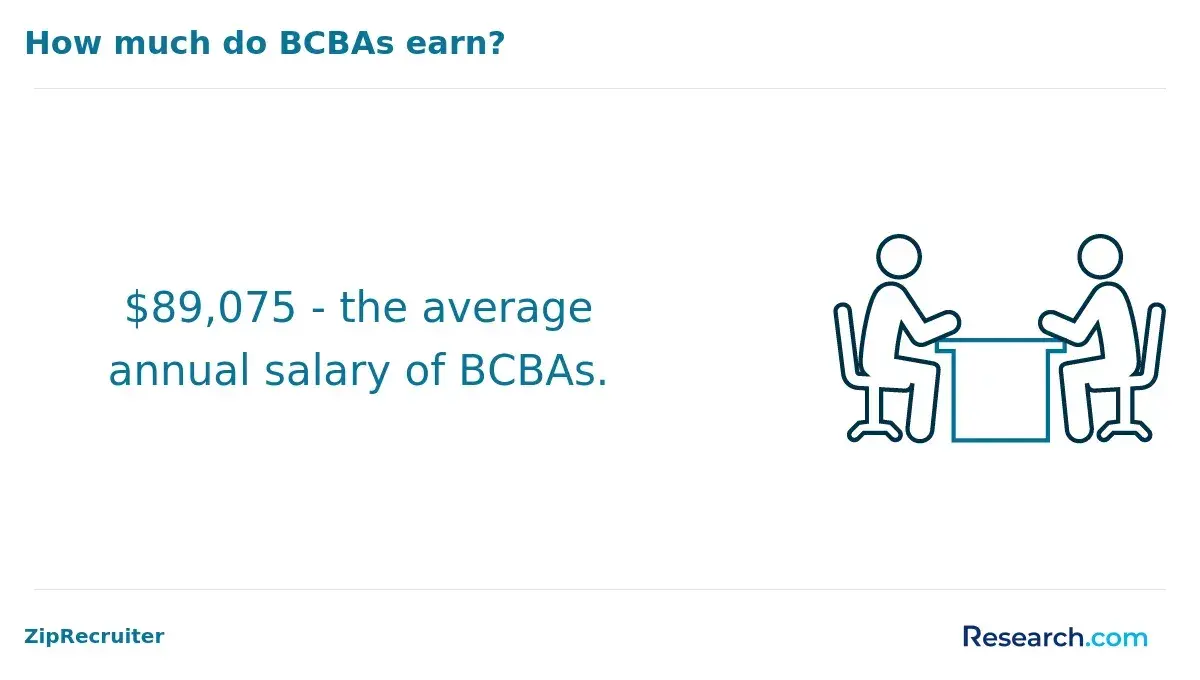
Entry-level board-certified behavior analysts usually earn between $55,000 and $70,000 annually. Experienced practitioners and those with advanced credentials, such as BCBA-D, can earn over $90,000 per year, sometimes increasing their income by 15-25% compared to standard BCBA holders.
School-based BCBAs may earn less than professionals in clinical, private practice, or high-demand service settings. Salary can also differ based on state funding, Medicaid reimbursement, local autism service demand, supervisory responsibilities, and whether the role includes billable clinical hours.
Factors that can improve earning potential
- Certification level: BCBA and BCBA-D credentials generally support higher-level roles than assistant or technician positions.
- Specialization: Expertise in autism spectrum disorder, severe behavior, early intervention, or underserved populations may increase demand.
- Setting: Private practice, clinics, and multi-site service organizations may offer different compensation structures than schools.
- Supervisory responsibility: Roles involving staff supervision, program leadership, or clinical direction often pay more.
- Geography: State funding, regional shortages, and cost of living affect compensation.
Program quality can influence long-term outcomes by affecting exam preparation, fieldwork readiness, and persistence. The University of Washington's ABA online program reported zero attrition in recent cohorts, reflecting strong preparation that supports long-term employment success.
Students comparing online ABA programs should look at certification pass rates, career support, practicum quality, and alumni outcomes alongside tuition. A lower-cost program may not be the best value if it provides weak advising or limited preparation for certification.
The main certification for independent professional practice in applied behavior analysis is the Board Certified Behavior Analyst credential from the Behavior Analyst Certification Board. To pursue the BCBA, candidates generally need a master's degree in an approved or related discipline, qualifying behavior-analytic coursework, supervised fieldwork, and a passing score on the certification exam.
For entry-level or assistant-level practice, the Board Certified Assistant Behavior Analyst credential may be appropriate. The BCaBA requires a bachelor's degree, approved coursework, supervised experience, and a passing exam. BCaBAs work under supervision and do not have the same independent practice authority as BCBAs.
Certification is not the only requirement. Many states regulate ABA practice through licensure, registration, or state-specific rules. Some states require a separate license through a health, behavioral health, or education department. Students should check state requirements before choosing a program, especially if they plan to practice remotely or move after graduation.
Typical steps after completing an online ABA program
- Confirm that the coursework meets current BACB requirements for the credential sought.
- Complete the required supervised fieldwork hours.
- Document supervision and experience according to BACB rules.
- Apply for the BCBA or BCaBA exam.
- Pass the required certification exam.
- Meet state licensure requirements where applicable.
- Complete continuing education to maintain certification.
Students should be careful with the word “accredited.” Universities may be institutionally accredited, and some ABA programs may hold field-specific recognition, but candidates still need to verify current BACB eligibility rules directly. Requirements can change, and responsibility for meeting certification standards ultimately rests with the applicant.
Cost can also affect certification planning. The University of South Florida offers out-of-state online ABA students in-state tuition rates, reducing expenses significantly. Students should compare tuition policies, supervision costs, and exam-related expenses before committing to a program.
How to choose the best online ABA program with evening classes?
The best online ABA program with evening classes is the one that fits your certification goal, schedule, fieldwork access, budget, and learning style. A program should not be chosen only because it is online or marketed as flexible. Students need evidence that the schedule, faculty support, coursework, and supervision model will work for their actual life.
Use this checklist when comparing programs
- Certification fit: Confirm whether the program is designed for BCBA, BCaBA, master’s degree, certificate-only, or professional development goals.
- Accreditation and recognition: Verify institutional accreditation and whether the ABA coursework aligns with current BACB requirements.
- Evening availability: Ask for a sample schedule showing live class times, office hours, advising availability, and required meetings.
- Fieldwork plan: Determine how students find supervisors, whether current employment can count, and whether evening or weekend supervision is realistic.
- Faculty qualifications: Look for instructors with active BCBA credentials and relevant clinical, educational, or research experience.
- Student support: Prioritize programs with academic advising, exam preparation, writing support, career services, and responsive faculty.
- Format: Decide whether you need live interaction, asynchronous flexibility, or a mix of both.
- Cost transparency: Compare total tuition, fees, textbooks, supervision expenses, and available financial aid.
- Outcomes: Review graduation rates, attrition, BCBA exam pass rates, and alumni feedback where available.
Demand for evening ABA programs continues to grow. According to ABA Masters Programs, 2026, applications increased 20% between 2024 and 2025, reflecting the needs of RBTs advancing toward BCBA roles seeking flexible scheduling.
Students should also be realistic about workload. Evening classes can solve a scheduling problem, but they do not reduce the academic rigor of ABA training or the time needed for supervised fieldwork. If you work full time, ask current students or alumni how they managed weekly assignments, practicum hours, and exam preparation.
A strong program will answer detailed questions clearly. If a school cannot explain certification alignment, supervision expectations, evening attendance requirements, or total cost, keep looking. The right online ABA evening program should make certification planning clearer—not leave you guessing after enrollment.
Other Things You Should Know About Applied Behavior Analysis
Successful practitioners in applied behavior analysis need strong analytical and observational skills. They must be able to assess behavior patterns accurately and develop effective intervention strategies. Good communication skills are also vital for collaborating with clients, families, and other professionals.
Enrolling in 2027 Online ABA Programs with evening classes offers flexibility, allowing students to balance professional commitments and study. These programs enable access to a wider range of schools and experts, accommodate varying time zones, and provide interactive learning environments. Evening classes also facilitate a more diverse student group, enhancing peer interactions.
Most ABA master’s programs require 36 to 48 credit hours, including behavior assessment, measurement, ethics, and intervention design. Students pursuing BCBA preparation must also complete the verified course sequence approved by the Association for Behavior Analysis International, plus supervised fieldwork hours under BACB rules.
Yes, most certified behavior analysts must complete ongoing continuing education to maintain their certification. These requirements typically include coursework, workshops, or seminars to stay current with the latest research and best practices. Continuing education helps ensure high-quality care and professional growth in the field of applied behavior analysis.
- ABA Therapy Curriculum | Grateful Care ABA https://www.gratefulcareaba.com/blog/aba-therapy-curriculum
- Applied Behavior Analysis (M.Ed.) | York College of Pennsylvania https://www.ycp.edu/academics/programs/applied-behavior-analysis-master-ed
- ABA Therapy Job Outlook | Advanced Autism Services https://www.advancedautism.com/post/aba-therapy-job-outlook
- ABA Therapy Job Outlook Brightens Up | Links https://linksaba.com/aba-therapy-job-outlook/
- BCBA and ABA Salaries by State https://www.appliedbehavioranalysisedu.org/salaries/
- How Long Does It Take to Become an ABA Therapist? Our Guide https://championsaba.com/how-long-does-it-take-to-become-an-aba-therapist/
- Applied Behavior Analysis Online - Niagara University https://www.niagara.edu/programs/applied-behavior-analysis-online/
- ABA Therapy Job Outlook | Autism Therapy Services https://www.hiddengemsaba.com/articles/aba-therapy-job-outlook
- Aba therapy online programs: Top 10 Best Picks 2025 https://bedrockaba.com/blog/aba-therapy-online-programs/
- How School-Based ABA Therapy Can Be Integrated into After-School Programs | SoaringHigh ABA https://www.soaringhighaba.com/post/how-school-based-aba-therapy-can-be-integrated-into-after-school-programs