2027 ABA Coursework Requirements for BCBA Certification: Full Checklist

Co-Founder and Chief Data Scientist
Planning for BCBA certification is mostly a sequencing problem: you need the right graduate degree, the right ABA coursework, and the right supervised fieldwork completed under BACB rules. If you choose a program that does not match those requirements, you can lose time, money, and exam eligibility.
The stakes are practical as well as academic. Demand for Board Certified Behavior Analysts continues to rise; a report from the BACB revealed a 10% increase in demand for BCBAs in just a single year. That growth makes the credential valuable, but it also means candidates need to understand the requirements before enrolling in a degree program or course sequence.
This guide explains the 2025 ABA coursework requirements for BCBA candidates, including required instructional hours, approved coursework pathways, degree expectations, online options, fieldwork connections, and what to do after coursework is complete.
Key Benefits of Completing the ABA Coursework Requirements
- Completing the ABA coursework establishes a strong professional foundation by covering 315 graduate-level hours of content, ensuring every candidate meets the BACB's high standards for ethical and effective practice.
- Finishing your coursework is the critical prerequisite for beginning the required 2,000 hours of supervised fieldwork, directly linking your academic knowledge to the hands-on skills required for certification.
- Successfully finishing the curriculum is your entry ticket into a high-demand profession, with the BACB reporting a 10% increase in the need for BCBAs in a single year.
What are the 2025 ABA coursework requirements?
The 2025 ABA coursework requirements for BCBA certification include 315 graduate-level instructional hours across six required content areas. These hours are set by the BACB to ensure candidates develop a shared foundation in behavior-analytic concepts, ethics, assessment, intervention, supervision, and data-based decision-making.
In practical terms, the coursework is designed to prepare you to understand behavior, measure it accurately, select appropriate interventions, evaluate outcomes, and practice within professional and ethical standards.
- BACB Ethics Code and Professionalism: 45 hours
- Concepts and Principles of Behavior Analysis: 90 hours
- Measurement, Data Display, Interpretation, and Experimental Design: 45 hours
- Behavior Assessment: 45 hours
- Behavior-Change Procedures and Selecting/Implementing Interventions: 60 hours
- Personnel Supervision and Management: 30 hours
The largest requirement is in concepts and principles of behavior analysis, which reflects how important the scientific foundation is to later clinical and educational decision-making. Ethics, measurement, assessment, intervention, and supervision requirements then translate that foundation into responsible practice.
Before enrolling, confirm that the program’s course sequence maps clearly to these areas. A course title alone is not enough; the program should be able to show how its curriculum satisfies the required content categories and hours.
Do you need a specific degree to start your coursework?
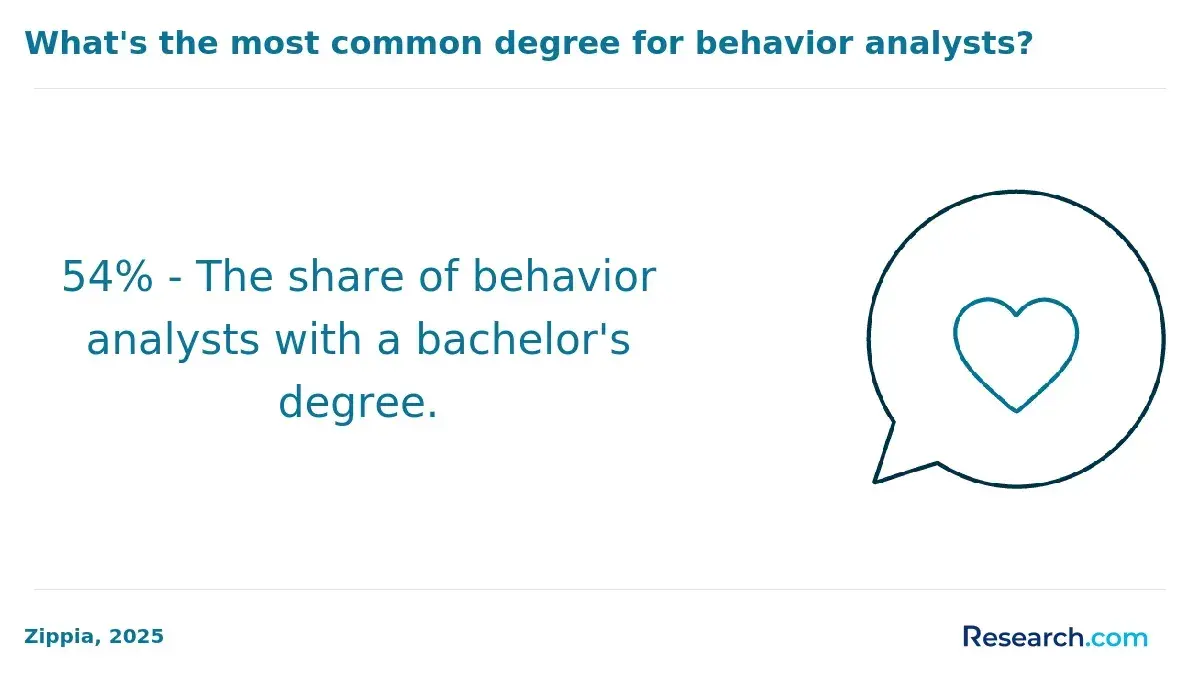
For BCBA certification, you must hold an acceptable graduate degree from an accredited university. According to the BACB, the degree must be at the master's level or higher in behavior analysis, education, or psychology. Coursework may be completed as part of that degree or, in some cases, separately, but the degree requirement itself matters when you apply for certification.
The best path depends on where you are starting:
- If you do not yet have a graduate degree, an ABA-focused master’s program may be the most efficient option because the degree and coursework can be planned together.
- If you already have a qualifying graduate degree, you may not need a second degree. A verified graduate-level ABA course sequence may be enough to satisfy the coursework requirement.
- If your degree is in a related field, check eligibility carefully before enrolling in standalone coursework. Do not assume every counseling, special education, or psychology degree automatically meets BCBA degree rules.
A masters degree in behavioral science can be a direct route when the curriculum is intentionally aligned with BACB educational standards. The key is not the program label alone, but whether the degree and coursework are recognized for certification purposes.
What are the two main pathways for completing coursework?
There are two main approved ways to complete BCBA coursework: an ABAI-accredited degree program or a Verified Course Sequence. Both can satisfy the coursework requirement when properly approved, but they serve different types of students.
Pathway 1: ABAI-Accredited Programs
An ABAI-accredited program is typically the most streamlined option for students who are choosing a graduate program specifically to become BCBAs. These accredited BCBA programs have been reviewed for alignment with the profession’s academic standards.
This pathway is often a strong fit if you want one program to cover both the graduate degree and the ABA coursework. It can reduce uncertainty because the curriculum has already been evaluated through the accreditation process.
Pathway 2: Verified Course Sequence (VCS)
A Verified Course Sequence is a set of graduate-level courses verified by ABAI as meeting BACB coursework requirements. It is especially useful for candidates who already hold an acceptable master’s degree or higher in a qualifying field but still need ABA-specific coursework.
This pathway can be more flexible than completing another full degree. However, candidates should confirm that their existing degree satisfies BACB rules before relying on a VCS alone.
How to choose between the two pathways
- Choose an ABAI-accredited degree program if you are starting graduate study and want the most integrated route.
- Choose a VCS if you already have a qualifying graduate degree and only need the ABA coursework.
- Avoid choosing based only on cost or speed. A shorter or cheaper option is not helpful if it does not meet certification requirements.
The safest way to find an approved ABA program is to check the official ABAI directories for accredited degree programs and Verified Course Sequences. Do this before applying, paying a deposit, or registering for courses.
When reviewing ABA graduate programs, look beyond marketing language. Terms such as “ABA-focused,” “behavioral studies,” or “BCBA preparation” can be useful signals, but they are not the same as official approval.
Use this checklist before enrolling:
- Confirm the program type: Determine whether it is an ABAI-accredited degree program or a Verified Course Sequence.
- Verify directly with ABAI: Do not rely only on a school webpage, brochure, or admissions representative.
- Ask how coursework maps to BACB content areas: The program should clearly explain how its courses satisfy required hours.
- Check the delivery format: If the program is online, hybrid, or campus-based, make sure the approved status applies to the format you plan to complete.
- Document everything: Keep syllabi, course descriptions, transcripts, and program verification information for your certification application.
This verification step protects your investment. If a program is not properly recognized, you may have to repeat coursework later.
The "10-Year Rule" is a BACB policy stating that all coursework and the required degree must have been completed within a 10-year period before you submit your BCBA application. The purpose is to ensure candidates apply with current training in behavior analysis, ethics, assessment, intervention, and supervision.
This rule is especially important for career changers and professionals returning to certification plans after several years. If you completed a graduate degree or ABA coursework in the past, check the completion dates before assuming the work still counts.
Practical steps include:
- Review transcript dates for both your graduate degree and ABA coursework.
- Build a realistic timeline for finishing any remaining coursework, fieldwork, and the exam application.
- Ask the program for guidance if your older coursework may fall outside the 10-year window.
- Avoid delaying fieldwork planning because coursework, supervision, documentation, and application review can take time.
The rule can affect whether older academic work remains usable, so it should be checked early rather than after you are ready to apply for the exam.
ABA coursework gives you the conceptual, ethical, and technical foundation for practice. Supervised fieldwork is where you learn to apply that foundation with clients, teams, data systems, intervention plans, and real-world constraints.
The BACB requires candidates to complete ABA coursework before or during the period in which they accrue supervised experience. That sequencing matters because fieldwork is not meant to be unstructured job experience. It should be guided by behavior-analytic principles and supervised by a qualified BCBA supervisor.
Coursework and fieldwork reinforce each other in several ways:
- Ethics coursework supports appropriate decision-making with clients, families, schools, and employers.
- Measurement and data training helps you collect, graph, interpret, and act on behavioral data.
- Assessment coursework prepares you to identify behavior functions and relevant environmental variables.
- Intervention coursework helps you select behavior-change procedures that are appropriate and defensible.
- Supervision coursework prepares you to manage staff performance and support implementation quality.
A common mistake is treating coursework as a box to check and fieldwork as a separate requirement. The stronger approach is to use fieldwork settings to practice what you are learning in class and to discuss those applications with your supervisor.
After completing your coursework, the next major requirement is supervised fieldwork. The BACB requires candidates to complete either 2,000 hours of Supervised Fieldwork or 1,500 hours of Concentrated Supervised Fieldwork.
This stage should be planned carefully. You need an appropriate placement, a qualified supervisor, proper documentation, and experience that reflects the responsibilities of a future BCBA. Do not wait until the end to organize records; missing or incomplete documentation can delay your application.
A practical post-coursework plan looks like this:
- Confirm coursework completion and keep official transcripts or program documentation.
- Secure qualified supervision that meets BACB expectations.
- Track fieldwork hours accurately from the beginning.
- Review progress regularly with your supervisor to ensure the experience supports BCBA-level competencies.
- Apply for the BCBA certification exam once coursework and fieldwork are complete and documented.
Passing the BCBA exam demonstrates that you have mastered the required knowledge base and are prepared to practice as a certified professional.
Yes. You can complete ABA coursework online if the program is properly approved. Online delivery does not automatically make a program less rigorous, but approval status matters more than convenience.
Many universities now offer ABAI-accredited degrees and Verified Course Sequences in online formats. These options can be especially useful for working professionals, rural students, military-connected learners, and candidates who cannot relocate for graduate study.
When comparing BCBA programs online, evaluate them the same way you would evaluate an in-person program:
- Approval status: Confirm the program is listed through the appropriate ABAI directory.
- Faculty expertise: Look for instructors with behavior-analytic credentials and relevant professional experience.
- Course sequencing: Make sure required courses are offered often enough for your timeline.
- Fieldwork support: Ask whether the program helps students understand supervision requirements, even if it does not place students directly.
- Student support: Consider advising, exam preparation, technical support, and access to faculty.
The main risk with online coursework is not the format itself; it is enrolling in a program that sounds relevant but does not meet certification requirements. Always verify before committing.
The job outlook for Board Certified Behavior Analysts is strong. Demand is supported by broader awareness of autism spectrum disorder, expanded insurance coverage for ABA services, and the use of behavior analysis in schools, clinics, healthcare settings, and organizations.
According to the U.S. Bureau of Labor Statistics, employment for behavioral disorder counselors, a closely related field, is projected to grow an impressive 18% by 2032. While this is not a BCBA-only category, it reflects strong labor-market demand in related behavioral health services.
BCBAs may work in several settings, each with different responsibilities and career trade-offs:
- Clinical Settings: Providing assessment and intervention services, often for children with autism, in clinics or early intervention centers.
- School Systems: Supporting students, consulting with teachers, developing behavior plans, and helping teams use data.
- Healthcare: Working in hospitals, residential programs, or interdisciplinary care settings to address challenging behavior.
- Private Practice: Serving families or organizations directly, often with more autonomy but also more business responsibility.
- Organizational Behavior Management (OBM): Applying behavioral principles to improve workplace performance, safety, training, and efficiency.
The credential can lead to different career models: direct clinical leadership, school consultation, program supervision, independent consulting, or organizational performance work. Your best option depends on your interests, tolerance for administrative duties, preferred population, and local demand.
What is the expected salary for a BCBA?
The expected salary for a Board Certified Behavior Analyst typically ranges from approximately $75,000 to over $100,000 annually. According to a 2023 salary report from a leading ABA industry data aggregator, this earning potential reflects the training, responsibility, and demand associated with the credential.
Actual pay can vary widely. Before choosing a program or job setting, consider the factors that most often influence compensation:
- Work Setting: Private practice, hospital settings, clinics, schools, and residential programs may offer different salary structures and workloads.
- Geographic Location: Pay is often higher in metropolitan areas with a high cost of living and in states with strong insurance mandates for ABA services.
- Years of Experience: New BCBAs generally earn less than senior BCBAs who supervise teams, manage programs, or hold administrative roles.
- Supervisory Responsibility: Roles that include staff training, case oversight, compliance, and program leadership may command higher compensation.
- Employment Model: Salaried employment, contract work, and private practice can differ in benefits, stability, tax responsibilities, and income variability.
Salary should be evaluated alongside workload, billable-hour expectations, supervision duties, benefits, caseload size, and ethical support. A higher salary is less attractive if the role creates unsustainable caseloads or weak clinical oversight.
Other Things You Should Know About ABA Coursework Requirements
Programs should retain syllabi, course outlines, faculty qualifications, student transcripts, and a course-content mapping to the BACB task list or coursework standards. These records support audits, verify that required credits were taught, and show which courses satisfied each required content area for BCBA eligibility.
ABA coursework for BCBA certification in 2027 must cover specific content areas including ethical and professional conduct, behavior assessment, behavior-change procedures, and supervision. Each content area has designated credit hours as specified by the Behavior Analyst Certification Board (BACB).
- Association for Behavior Analysis International. (n.d.). Find a verified course sequence. Retrieved November 7, 2025, from https://www.abainternational.org/vcs/directory.aspx
- Behavior Analyst Certification Board. (2020). Professional and ethical compliance code for behavior analysts. https://www.bacb.com/wp-content/uploads/2022/01/BCBA-Compliance-Code-and-Code-Enforcement-System_230720.pdf
- Behavior Analyst Certification Board. (2023). Board Certified Behavior Analyst® handbook. https://www.bacb.com/wp-content/uploads/2022/01/BCBA-Handbook_231128-a.pdf
- Behavior Analyst Certification Board. (2023). US employment demand for behavior analysts: 2010-2022. https://www.bacb.com/wp-content/uploads/2023/02/BACB_US_Demand_Report_230227.pdf
- U.S. Bureau of Labor Statistics. (2024, September 4). Substance abuse, behavioral disorder, and mental health counselors. Occupational Outlook Handbook. https://www.bls.gov/ooh/community-and-social-service/substance-abuse-behavioral-disorder-and-mental-health-counselors.htm