
2027 Best Medical Assistant to LPN Programs Online

Co-Founder and Chief Data Scientist
Are you a medical assistant looking to advance your career but struggling to find the right program? I know how challenging it can be to balance work, family, and education. This article is here to help. We will explore the best online medical assistant to LPN programs available this year.
These programs offer flexible schedules and comprehensive training to help you transition smoothly into a nursing role. Statistics show that LPNs earn an average annual wage of $77,870, with job growth projected at 5% from 2022 to 2032. Let's find the right program for you!
What are the benefits of getting an online nursing degree?
- Online nursing programs allow students to study at their own pace, making it easier to balance education with work or family commitments.
- These programs combine online coursework with hands-on clinical experiences, ensuring that students gain both theoretical knowledge and practical skills needed for nursing.
- Completing an online medical assistant to LPN program helps medical assistants transition to higher-level nursing roles, increasing job opportunities and potential for career growth.
What can I expect from online medical assistant to LPN programs?
Online medical assistant to LPN programs help medical assistants become Licensed Practical Nurses (LPNs). These programs offer flexible schedules, letting you study at your own pace while balancing work or family commitments. You'll learn essential nursing skills, such as patient care, medication administration, and basic medical procedures. Expect a mix of online coursework, virtual simulations, and hands-on clinical experiences. Most programs take about one to two years to complete. By the end, you'll be ready to take the NCLEX-PN exam and start your career as an LPN.
Where can I work with an online medical assistant to LPN programs?
You can work with online medical assistant to LPN programs in various healthcare settings. LPNs are most commonly employed in nursing care facilities, hospitals, and physicians' offices. They play a crucial role in providing basic nursing care under the supervision of registered nurses and doctors.
Here are some specific figures and statistics from the Bureau of Labor Statistics to give you a clearer picture:
- Nursing care facilities employ about 35% of all LPNs.
- Hospitals account for approximately 15% of LPN employment.
- Around 13% of LPNs work in home healthcare services.
Certain states have higher concentrations of LPNs. For example, California, Texas, New York have the largest number of LPNs employed, while Louisiana, West Virgina, and Askansas have the highest concentration of LPN jobs relative to their population size.
These online programs make it easier for medical assistants to transition to LPN roles, helping to fill gaps in areas with high demand for healthcare services.
How much can I make with an online medical assistant to LPN program?
You can make a substantial income after completing an online medical assistant to LPN program. LPNs typically earn an average annual wage of around $60,790 as of May 2023. However, salaries can vary significantly depending on the industry and location.
Regarding industry, LPNs working in government positions tend to earn the most, with an average annual salary of approximately $57,060. Those in nursing care facilities also earn competitive wages, averaging about $52,450 annually.
The top-paying states for LPNs are:
- California: $76,580
- Rhode Island: $75,470
- Washington: $75,410
- Alaska: $74,260
- Massachusetts: $73,400
By enrolling in online medical assistant to LPN programs, you can increase your earning potential and take advantage of job opportunities in high-paying states and industries. This path offers financial benefits and opens doors to diverse healthcare roles.
- 2027 Best Online Medical Assistant to LPN Programs Best Programs
- How long does it take to complete a online medical assistant to LPN programs? Completion Time
- How does an online medical assistant to LPN programs compare to an on-campus program? How does an online medical assistant to LPN programs compare to an on-campus program?
- What is the average cost of a online medical assistant to LPN programs? Average Cost
- What are the key tools and resources to succeed in online medical assistant to LPN programs? What are the key tools and resources to succeed in online medical assistant to LPN programs?
- What are the financial aid options for students enrolling in a online medical assistant to LPN programs? Financial Aid
- What are the prerequisites for enrolling in online medical assistant to LPN programs? Requirements
- What courses are typically in a online medical assistant to LPN programs? What courses are typically in a online medical assistant to LPN programs?
- What types of specializations are available in online medical assistant to LPN programs? What types of specializations are available in online medical assistant to LPN programs?
- How to Choose the Best Online Medical Assistant to LPN Programs How to Choose the Best Online Medical Assistant to LPN Programs
- How Does Accreditation Influence the Quality of Online Medical Assistant to LPN Programs? How Does Accreditation Influence the Quality of Online Medical Assistant to LPN Programs?
- Can Advanced Nursing Degrees Further Enhance My Career Beyond LPN? Can Advanced Nursing Degrees Further Enhance My Career Beyond LPN?
- How can you ensure the quality and accreditation of your online program? How can you ensure the quality and accreditation of your online program?
- What Are the Common Challenges in Online Medical Assistant to LPN Programs? What Are the Common Challenges in Online Medical Assistant to LPN Programs?
- How Can LPN Credentials Serve as a Stepping Stone to RN and Beyond? How Can LPN Credentials Serve as a Stepping Stone to RN and Beyond?
Key Insights
- Online medical assistant to LPN programs are usually hybrid. Coursework may be online, but labs and clinical rotations must be completed in person.
- Program length commonly falls between 12 to 18 months. Transfer credits, clinical availability, and prerequisite completion can shorten or extend the timeline.
- Accreditation and state approval are nonnegotiable. They affect licensure eligibility, financial aid, employer recognition, and future nursing bridge options.
- Costs vary widely. The average cost of an LPN program is about $23,999 for undergraduates and about $18,035 for vocational programs, while listed bridge examples range from $4,143 to $12,000/year depending on school and residency.
- Clinical placement is one of the most important questions to ask. A flexible online schedule is less useful if clinical requirements are unclear or difficult to complete.
- The LPN credential can be a career step, not the final destination. Graduates may later pursue LPN to RN, LPN to BSN, specialty certifications, or advanced nursing pathways after meeting additional requirements.
Best Online Medical Assistant to LPN Programs
Medical assistants who want more clinical responsibility often look at Licensed Practical Nurse pathways because LPN roles can expand patient-care duties, create access to nursing bridge programs, and improve long-term mobility in healthcare. The challenge is choosing a program that is truly built for working medical assistants, not simply a standard practical nursing program with a few online classes.
This guide explains how online and hybrid medical assistant to LPN programs work, which programs stand out, what they cost, how long they take, what admissions requirements to expect, and how to judge whether a bridge pathway is worth your time and money. It also covers accreditation, clinical training, financial aid, career outcomes, and the common mistakes applicants should avoid before enrolling.
If you are still building your healthcare foundation, review the core medical assistant skills that can help you prepare for a practical nursing transition.
Quick Answer: Is an Online Medical Assistant to LPN Program Worth It?
An online medical assistant to LPN program can be worth it if it is accredited, includes approved in-person clinical training, prepares graduates for LPN/LVN licensure, and recognizes some of your prior medical assistant education or experience. Most bridge-style programs still require labs, simulations, and clinical rotations because practical nursing cannot be learned fully online.
These programs are best for certified medical assistants who want to move into direct nursing care faster than starting from scratch. They are not ideal for students who cannot attend required campus labs or clinical placements, or for applicants who have not verified that the program meets their state board of nursing requirements.
How We Identify Programs
Research.com evaluates schools using institutional data, program information, accreditation indicators, and publicly available education datasets. You can review our broader process in the Research.com methodology section. Sources used to inform program evaluation include:
- IPEDS database
- Peterson’s database
- Distance Learning Licensed Data Set and College Scorecard database
- National Center for Education Statistics and NCES institutional data resources
Top Online and Hybrid Medical Assistant to LPN Programs
The programs below are designed for students with healthcare training or medical assisting backgrounds. Because LPN education requires hands-on skill validation, most “online” options are actually hybrid programs: academic coursework may be online, while labs, simulations, and clinical rotations are completed in person.
| Program | Format | Program Length | Estimated Program Tuition | Accreditation | Best For |
| Allegany College of Maryland | Online and hybrid coursework | 12 to 18 months | In-county: $5,000/year; Out-of-county: $9,000/year; Out-of-state: $12,000/year | Middle States Commission on Higher Education | Certified medical assistants comparing CMA to LPN and CMA to Nursing pathways |
| Herzing University | Hybrid practical nursing diploma | As few as 12 months | Approximately $8725/semester | Higher Learning Commission | Students who want a 37- to 48-credit Practical Nursing Program with possible transfer credit |
| Northeast WI Technical College | Medical Assistant to Practical Nursing Bridge | 3 semesters and a summer course | $4,143 | Higher Learning Commission | Medical assistant graduates who want a technical diploma and potential credits toward an associate degree in nursing |
1. Allegany College of Maryland
Allegany College of Maryland offers a CMA to Nursing option for students with active certifications who want to build on prior healthcare preparation. Depending on admissions requirements and seat availability, students may pursue CMA to LPN or CMA to Nursing pathways. The curriculum includes nursing foundations such as anatomy, pharmacology, and patient care, with online and hybrid delivery supporting students who need more schedule flexibility.
- Program Length: 12 to 18 months
- Estimated Program Tuition: In-county: $5,000/year; Out-of-county: $9,000/year; Out-of-state: $12,000/year
- Accreditation: Middle States Commission on Higher Education
2. Herzing University
Herzing University offers a hybrid Practical Nursing Program structured around career-focused preparation. The diploma requires 37- to 48-credit coursework, with online general education classes combined with core on-campus nursing requirements. Students may be able to transfer up to 27 approved transfer credits, which can make the pathway more efficient for applicants who have already completed relevant healthcare or college coursework.
- Program Length: As few as 12 months
- Estimated Program Tuition: Approximately $8725/semester
- Accreditation: Higher Learning Commission
3. Northeast WI Technical College
Northeast WI Technical College provides a Medical Assistant to Practical Nursing Bridge for students moving from medical assisting into nursing practice. Graduates earn a technical diploma and may qualify for roles in settings such as acute care, long-term care, physician’s offices, home health agencies, and insurance providers. Credits from the bridge may also apply toward an associate degree in nursing.
- Program Length: 3 semesters and a summer course
- Estimated Program Tuition: $4,143
- Accreditation: Higher Learning Commission
How Long Does an Online Medical Assistant to LPN Program Take?
Most online or hybrid medical assistant to LPN programs take 12 to 18 months, depending on transfer credits, clinical scheduling, course load, and whether the student attends full time or part time. Bridge programs may be shorter than traditional practical nursing pathways when they give credit for prior medical assistant training, but they still must cover required nursing competencies.
Allegany College of Maryland lists a 12 to 18 months CMA to Nursing program, while Northeast WI Technical College structures its Medical Assistant to Practical Nursing Bridge across 3 semesters and a summer course. Students looking for the quickest way to become a nurse should compare program length with clinical placement availability, not just advertised completion time.
| Timeline Factor | How It Can Affect Completion | What to Ask Before Applying |
| Transfer credits | Approved prior coursework may reduce the number of classes you need. | How many credits can be transferred, and which courses qualify? |
| Clinical placement timing | Limited clinical sites can delay graduation even when online classes are available. | Does the school arrange clinicals, or must students find sites? |
| Full-time or part-time enrollment | Full-time students usually finish faster, while part-time students may balance work more easily. | Can the program be completed while working as a medical assistant? |
| Prerequisite gaps | Missing anatomy, physiology, or medical terminology can add extra terms. | Which prerequisites must be completed before admission? |
Online vs. On-Campus Medical Assistant to LPN Programs
Employers generally care more about licensure eligibility, accreditation, clinical competence, and school reputation than whether some coursework was completed online. However, online LPN programs are not fully remote. Practical nursing education requires in-person skills practice and supervised clinical experience.
A hybrid program can be a strong option for working medical assistants, but only if the online schedule does not create hidden problems with labs, exams, or clinical placements.
| Factor | Online or Hybrid Program | On-Campus Program |
| Flexibility | Better for students balancing work, family, or irregular shifts. | More structured weekly schedule with fixed campus attendance. |
| Clinical training | Still completed in person through approved sites or campus labs. | Usually integrated into the local campus schedule. |
| Peer and instructor access | May rely on video meetings, discussion boards, virtual office hours, and scheduled labs. | More face-to-face interaction and immediate access to campus resources. |
| Best fit | Self-directed students who can manage deadlines and travel for clinicals. | Students who prefer direct supervision and a predictable routine. |
| Potential risk | Clinical placement logistics may be harder if the school is far from your location. | Less flexible for students who need to keep working full time. |
How Much Does an Online Medical Assistant to LPN Program Cost?
The average cost of an LPN program is about $23,999 for undergraduates and about $18,035 for vocational programs, according to College Tuition Compare. Bridge programs for medical assistants may cost less when they require fewer credits or recognize previous training, but the total price depends on tuition rate, residency status, fees, books, uniforms, supplies, testing costs, and clinical requirements.
Examples show how much costs can vary. Allegany College of Maryland estimates tuition at $5,000/year for in-county students, $9,000/year for out-of-county students, and $12,000/year for out-of-state students. Green River College’s program costs approximately $4,896.90 for resident tuition, while Northeast WI Technical College lists about $4,143 for its bridge program.
| Cost Item | Why It Matters | How to Reduce the Risk of Overpaying |
| Tuition | This is the largest published cost, but it is not the full cost of attendance. | Compare in-county, out-of-county, and out-of-state tuition before applying. |
| Fees and supplies | Lab fees, uniforms, equipment, background checks, and testing fees can add up. | Ask for a written program cost sheet, not just a tuition estimate. |
| Clinical travel | Students may need transportation, parking, or time away from paid work. | Confirm clinical locations and schedules early. |
| Transfer credit policies | Accepted credits can lower both cost and time in school. | Request a transfer evaluation before committing. |
| Licensure preparation | Exam preparation may be included or billed separately. | Ask whether NCLEX-PN preparation resources are part of tuition. |
The chart below helps compare program costs.
Tools and Resources You Need to Succeed Online
Online coursework can make a nursing bridge program more accessible, but it also shifts more responsibility to the student. Successful learners plan for technology, clinical preparation, time management, and academic support before classes begin.
- Reliable internet access: Online lectures, exams, learning platforms, and video meetings require a stable connection.
- Updated computer or tablet: Students need a device that can run course software, upload assignments, and support virtual communication.
- Clinical practice equipment: Some programs may require basic tools such as a stethoscope, blood pressure cuff, or other practice supplies.
- Simulation and virtual lab access: Digital lab tools can support concept review, but they do not replace required in-person clinical training.
- Dedicated study space: A quiet place to read, watch lectures, and complete care-plan assignments can improve consistency.
- Calendar and task-management system: Use a planner, Google Calendar, Trello, or a similar tool to track exams, clinical hours, and assignment deadlines.
- Academic and career support: Advising, tutoring, technical help, and career services can be especially important for working adults.
Financial Aid Options for Online Medical Assistant to LPN Students
Students in eligible online medical assistant to LPN programs may be able to use scholarships, grants, loans, and nursing-focused aid. Financial aid availability depends on the school, program eligibility, student status, and accreditation. Students pursuing nursing degree pathways should confirm aid eligibility before enrolling, especially if the program is a certificate or diploma rather than a degree.
- Federal Pell Grants: Need-based grants for eligible undergraduate students.
- Federal Direct Loans: Student loans with federal repayment options.
- Nursing Scholarships: Awards may be available through organizations such as the American Association of Colleges of Nursing (AACN) and the National Student Nurses' Association (NSNA).
- Work-Study Programs: Eligible students may access part-time employment connected to financial aid.
- State-Specific Grants: Some states provide aid for nursing students or healthcare workforce training.
Before borrowing, ask the school for total program cost, graduation requirements, licensure exam costs, and job placement support. A lower tuition price is helpful, but a program that does not lead to licensure eligibility can become far more expensive in the long run.
Admissions Requirements for Medical Assistant to LPN Programs
If you are researching how to become a LPN, start with admissions requirements. Bridge programs are selective because they must verify that applicants have the academic preparation, clinical readiness, and professional background to move into practical nursing coursework.
| Requirement | What It Usually Means | Why It Matters |
| High School Diploma or GED | Applicants must prove completion of secondary education. | This is a baseline requirement for most practical nursing pathways. |
| MA Certification | Programs may require an active and unencumbered MA certification. | Certification helps verify prior healthcare training and professional readiness. |
| Prerequisite Courses | Anatomy, physiology, and medical terminology are common prerequisites. | These courses support success in pharmacology, nursing fundamentals, and clinical care. |
| Work Experience | Some programs require verified medical assistant employment hours. | Experience can show that applicants understand patient care environments. |
| Minimum GPA | Programs often expect a minimum GPA in previous coursework, often around 2.5 or higher. | GPA requirements help schools assess academic readiness. |
Courses Commonly Found in Online Medical Assistant to LPN Programs
Medical assistant to LPN programs build from basic healthcare knowledge toward practical nursing judgment, medication safety, patient assessment, and supervised clinical care. Course names vary by school, but many programs include the following subjects:
- Anatomy and Physiology: Study of body structures, systems, and normal function.
- Pharmacology: Medication administration principles, dosage safety, and drug interactions.
- Nursing Fundamentals: Foundational nursing care, patient assessment, hygiene, documentation, and safety.
- Medical-Surgical Nursing: Care for patients with acute and chronic medical conditions.
- Pediatric Nursing: Nursing care for infants, children, and adolescents.
- Geriatric Nursing: Care planning for older adults and age-related health concerns.
- Clinical Practicum: Supervised hands-on experience in approved healthcare settings.
Students who later want to continue their education can compare these courses with the expectations in online LPN to RN programs.
Specializations and Focus Areas in Medical Assistant to LPN Programs
Most practical nursing programs do not function like advanced nursing degrees with formal majors. Instead, students may encounter clinical focus areas, electives, or practicum experiences that help them explore different patient populations and work settings.
- Pediatric Nursing: Focused care for infants, children, and adolescents.
- Geriatric Nursing: Care for older patients, including chronic conditions and mobility concerns.
- Surgical Nursing: Support before and after procedures, depending on scope of practice and clinical setting.
- Home Health Nursing: Care for patients at home, often involving chronic illness, disability, or recovery support.
- Rehabilitation Nursing: Assistance for patients recovering from injury, surgery, or functional decline.
How to Choose the Best Online Medical Assistant to LPN Program
The best program is not always the fastest or cheapest one. It is the program that fits your schedule, meets licensure requirements, provides real clinical training, and gives you a credible path to employment or further nursing education.
- Accreditation: Confirm institutional accreditation and nursing program approval. One OJDLA recruiter perception study reported that 91% of recruiters look into accreditation.
- Institutional reputation: A recognizable school with a credible nursing department can matter. In the same OJDLA study, 76% of recruiters emphasized institutional reputation.
- Clinical training: Verify the number, location, and scheduling of required clinical hours. The OJDLA study reported that 83% of recruiters consider clinical experience a very critical hiring factor.
- Licensure alignment: Ask whether the program meets the requirements for the state where you plan to work.
- Flexibility: Look beyond online coursework and confirm lab dates, exam requirements, and clinical schedules.
- Student support: Prioritize programs with advising, tutoring, technical support, and career services.
- Total cost: Compare tuition, fees, supplies, testing expenses, and lost work time.
How Does Accreditation Influence Program Quality?
Accreditation and state nursing approval are essential because they affect financial aid, licensure eligibility, transfer options, and employer confidence. A program can advertise online convenience, but if it is not properly recognized, graduates may face serious barriers when applying for licensure or continuing into RN programs.
Accredited programs are expected to follow academic quality standards, use qualified instructors, maintain appropriate clinical expectations, and prepare students for licensure exams. Applicants comparing admissions standards can also review what is the easiest LPN program to get into? to understand how selectivity and quality may differ across schools.
How to Verify Quality and Accreditation Before Enrolling
Do not rely only on a school’s marketing page. Confirm program quality through independent checks and direct questions.
- Check institutional accreditation: Confirm the college or university is recognized by an accepted accrediting body.
- Verify state board approval: Make sure the practical nursing program is approved for LPN/LVN preparation in the state where you plan to seek licensure.
- Ask about licensure exam preparation: Review how the program supports NCLEX-PN readiness.
- Review clinical placement policies: Confirm whether the school places students or requires students to find their own sites.
- Compare cost against outcomes: Use resources such as the average cost of LPN program guide to judge whether tuition is reasonable for the credential offered.
Student Support Services to Look For
Support services can make the difference between finishing on time and falling behind, especially for students who work while enrolled. Strong online medical assistant to LPN programs should offer more than recorded lectures.
- Academic advising: Helps students sequence courses, register correctly, and stay on track for graduation.
- Tutoring: Useful for pharmacology, dosage calculations, anatomy, and nursing fundamentals.
- Technical support: Important for learning platforms, online testing tools, and virtual simulations.
- Clinical coordination: Helps students understand site requirements, documentation, immunization records, and scheduling.
- Career counseling: Supports resume preparation, interview practice, and job search planning.
Students comparing long-term nursing pathways can also review support expectations in online FNP programs affordable, particularly if they eventually plan to pursue graduate nursing education.
Career Paths After an Online Medical Assistant to LPN Program
Graduates who pass licensure requirements can pursue practical nursing roles across long-term care, outpatient care, home health, physician practices, and other healthcare settings. Salary varies by state, employer, experience, shift, and specialty area.
| Role | Annual Salary Stated | Typical Work Focus |
| LVN (Licensed Vocational Nurse) | $73,186 | Provides basic nursing care under the supervision of registered nurses and doctors. |
| Medical Spa Nurse LPN | $62,140 annually | Supports patient care and aesthetic procedures in medical spa settings. |
| LPN Home Health | $61,849 per year | Delivers in-home care for patients with chronic illness, disability, or recovery needs. |
| Telecommute LPN | $58,953 annually | May provide remote patient education, telehealth support, or care coordination. |
Licensed Practical Nurses (LPNs) earn an average annual wage of $60,790, with top earners making over $70,000. For context, a medical assistant salary around $42k is close to a CNA salary, while moving into licensed practical nursing can improve career options and earning potential. Some sources also describe licensed practical nurse earnings as close to $79k, but students should always compare pay by state and employer before making salary assumptions.
Students interested in adjacent healthcare skills may also explore a medical coding career path. If you decide that nursing is not the right direction, compare unrelated alternatives carefully, such as accredited paralegal programs online, before changing fields. LPNs who want to keep advancing can consider a 6 month LPN to RN program online accredited after meeting eligibility requirements.
The chart below compares salary figures for selected roles.
Job Market for Medical Assistant to LPN Graduates
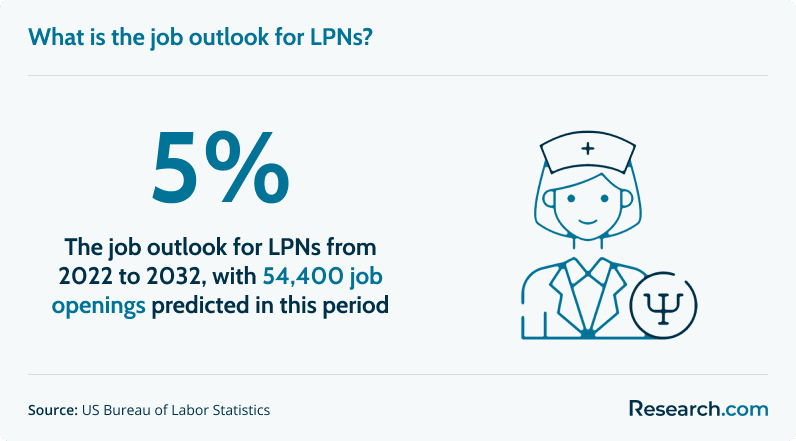
The Bureau of Labor Statistics projects employment for LPNs to grow 5% from 2022 to 2032, faster than the average for all occupations. Demand is connected to healthcare needs, long-term care, outpatient services, and an aging population.
Graduates may find opportunities in long-term care facilities, home health care, outpatient care centers, and physician practices. Job availability still varies by state, local employer demand, work schedule, and experience. Students who want broader nursing options can later compare LPN to BSN bridge programs online as part of a longer-term advancement plan.
Advancement Options After Completing a Medical Assistant to LPN Program
An LPN credential can be a stepping stone rather than an endpoint. Many graduates use practical nursing experience to move toward RN, BSN, and advanced nursing pathways. The right next step depends on your career goal, state scope-of-practice rules, finances, and academic readiness.
- LPN to RN: A common pathway for practical nurses who want more responsibility and a broader scope of practice.
- LPN to BSN: A longer route that may support leadership roles and future graduate study.
- Specialty certifications: Wound care, gerontology, pediatric nursing, and related credentials may strengthen expertise.
- Management preparation: Additional education can support supervisory and administrative roles in healthcare organizations.
- Graduate nursing: Advanced options come later, after meeting RN and degree requirements. Programs such as MSN to DNP online pathways may be relevant for nurses pursuing advanced practice or leadership roles.
Some students eventually explore advanced bridge routes such as RN to FNP programs, but these are not immediate next steps after becoming an LPN. They usually require additional nursing education and licensure milestones first.
Advancement Opportunities for Medical Assistants
Medical assistant jobs can lead to several advancement routes, including practical nursing, registered nursing, medical coding, office management, specialty clinic roles, and allied health training. Moving from medical assistant to LPN is a logical option for people who want more direct patient-care responsibility and are willing to complete nursing coursework, clinicals, and licensure requirements.
Fast-Track Options for Moving From Medical Assistant to LPN
Fast-track medical assistant to LPN programs are designed to shorten the transition by recognizing prior healthcare preparation. These pathways may use compressed schedules, transfer credit, bridge courses, or credit for completed prerequisites. Some students can finish in under a year, but accelerated does not mean easier.
Before choosing a fast-track option, ask whether the schedule is realistic with your work hours, whether clinicals are guaranteed, and whether the program meets state nursing board requirements. Students still preparing for the medical assisting field may review accelerated entry options such as a medical assistant degree online in as little as 6 weeks, but LPN training requires a separate licensure-focused nursing program.
Questions to Ask Graduates Before Enrolling
Instead of relying on polished testimonials, ask recent graduates specific questions about workload, clinical placements, instructor access, and licensure preparation.
- : "Ask whether the online classes matched the exams and clinical expectations, and whether instructors responded quickly when students struggled."
- : "Ask how the program handled labs, simulations, and in-person clinical rotations, especially for students who were working while enrolled."
- : "Ask whether graduates felt prepared for practical nursing responsibilities and what they wish they had known before starting."
Common Challenges in Online Medical Assistant to LPN Programs
Online bridge programs can be convenient, but they are demanding. Students must manage virtual coursework while preparing for hands-on clinical performance. The most common problems are not usually about the online format itself; they are about planning, time, and program fit.
| Common Mistake | Why It Creates Problems | Better Approach |
| Choosing only by speed | A short program may have an intense schedule or limited clinical flexibility. | Compare completion time with workload, clinical schedule, and licensure outcomes. |
| Ignoring accreditation | Unrecognized programs can create financial aid, transfer, employment, or licensure barriers. | Verify accreditation and state board approval before applying. |
| Assuming online means fully remote | LPN training requires in-person skills and clinical practice. | Ask for exact lab and clinical attendance requirements. |
| Looking only at tuition | Fees, supplies, exams, background checks, and travel can change the real cost. | Request a full cost breakdown from the school. |
| Failing to plan around work | Clinical rotations may conflict with job schedules. | Discuss work obligations with advisors before enrolling. |
| Relying only on rankings | A highly ranked program may not fit your state, schedule, or budget. | Use rankings as a starting point, then verify program-specific fit. |
Applicants comparing nursing access points can also review resources on an easy nursing school to get into, but lower admissions barriers should never replace accreditation and licensure checks.
How LPN Credentials Can Lead to RN, BSN, and Beyond
An LPN credential can support future advancement because it gives students nursing experience, clinical exposure, and a licensure foundation. Many schools offer bridge programs that evaluate previous nursing coursework and clinical experience, helping practical nurses move into RN or BSN study without repeating unnecessary content.
Before enrolling in any bridge program, compare accreditation, transfer policies, clinical requirements, and state licensure alignment. If your long-term plan includes a bachelor’s degree, review how demanding bridge coursework can be through resources such as Is RN to BSN program hard?.
References
- Are LPNs Being Phased Out? (2024, March 26). Achievetestprep.com.
- Gross, L. (2022). Online versus Face-to-Face Nursing Degrees: A Study of Recruiters’ Perceptions - OJDLA. OJDLA.
- Licensed Practical and Licensed Vocational Nurses. (2023, April 25). Bureau of Labor Statistics.
- Licensed Practical and Licensed Vocational Nurses : Occupational Outlook Handbook: : U.S. Bureau of Labor Statistics. (2024, April 17). Bureau of Labor Statistics.
- Lpn Nurse. (2024). ZipRecruiter; ZipRecruiter.
- Troyer, M. (2021, April 26). NursingEducation. NursingEducation.
Other Things You Should Know About Medical Assistant to LPN Programs Online
State Boards of Nursing approve LPN bridge programs and set the clinical and theory requirements for licensure eligibility. A program must also hold institutional accreditation and often programmatic approval from the state where the school operates before graduates can sit for the NCLEX-PN.
A valid Certified Medical Assistant (CMA) credential, issued by a recognized body like the AAMA, is often required for enrollment in 2027 Medical Assistant to LPN online programs. Some programs might also need current CPR certification.





