2027 Best Accredited Online Data Science Degree Programs: Compare Tuition, Admissions, and Career Outcomes

Co-Founder and Chief Data Scientist
Choosing an online data science degree is a high-stakes cost, time, and career decision. The field is expanding quickly: the U.S. Bureau of Labor Statistics reported a May 2024 median annual wage of $112,590 for data scientists, well above the national median for all occupations. This guide is for working adults, transfer students, career changers, and first-time graduate applicants who want a practical way to compare accredited programs. You will learn how to evaluate tuition, admissions, accreditation, flexibility, support, and career outcomes before committing.
Key Things You Should Know
- Institutional accreditation is the baseline requirement; specialized accreditation is useful in adjacent areas such as computer science, engineering, business, or statistics but is not always available for data science itself.
- The strongest value programs usually combine moderate total tuition, verified accreditation, flexible online delivery, transparent admissions, transfer-credit options, and credible career support rather than the lowest advertised price alone.
- Career ROI depends on skills and experience as much as the credential; BLS May 2024 wage data places the median annual wage for data scientists at $112,590, but outcomes vary by role, location, industry, portfolio quality, and prior work history.
Which Accredited Online Data Science Degree Programs Offer the Best Overall Value?
The best overall value in an accredited online data science degree is not simply the cheapest program. A strong-value program gives students a credible credential, rigorous training in statistics and computing, reasonable total cost, enough flexibility to finish, and career support that helps translate coursework into employment or advancement.
For most students, the highest-value choices fall into three groups: low-cost public master's programs, flexible performance-based programs, and reputable university programs with stronger employer recognition. The table below shows examples of accredited U.S. online programs commonly considered by data science applicants and the kinds of trade-offs students should compare before applying.
| Program example | Degree type | Value profile | Best fit | Main trade-off to review |
| University of Texas at Austin Online MS in Data Science | Master's | Low published total tuition relative to many peer master's programs | Students seeking a selective, quantitative public-university option | Admissions expects strong preparation in math, statistics, and programming |
| Georgia Institute of Technology Online MS in Analytics | Master's | Very low tuition for a nationally recognized analytics degree | Students who want analytics, modeling, and computing from a highly ranked technical university | The program is analytics-branded rather than titled data science |
| University of Colorado Boulder Online MS in Data Science | Master's | Performance-based pathway with flexible online pacing | Applicants who want to prove readiness through coursework rather than rely only on traditional admissions screening | Self-direction is essential because flexibility can reduce external structure |
| University of Illinois Urbana-Champaign Online MCS in Data Science | Master's | Strong computer science foundation with data science specialization | Students targeting technical data science, machine learning, or software-adjacent roles | Applicants should be comfortable with programming-intensive graduate coursework |
| University of Michigan Online Master of Applied Data Science | Master's | Strong brand recognition and applied project orientation | Students prioritizing a well-known university network and applied learning | Total cost may be higher than several public low-cost alternatives |
| Western Governors University BS in Data Analytics | Bachelor's | Competency-based tuition model that can reduce cost for fast-moving students | Working adults completing a first bachelor's degree | The model works best for highly independent learners |
Students comparing these options should weigh tuition against completion probability. A lower-cost program can be a poor investment if its format does not fit your schedule, while a more expensive program may be reasonable if it provides stronger academic structure, employer recognition, or portfolio-building opportunities that match your goals.
A common mistake is assuming that private, nonprofit, public, and for-profit labels automatically predict quality or ROI. Institution type matters, but accreditation, curriculum depth, completion support, employer alignment, and total net price matter more than category alone.
What Accreditation Should Students Look for in an Online Data Science Degree Program?
Accreditation is the first filter students should apply because it affects federal financial aid eligibility, credit transfer, graduate school options, and employer confidence. For an online data science degree, the most important credential is institutional accreditation from an agency recognized by the U.S. Department of Education or the Council for Higher Education Accreditation.
Data science is interdisciplinary, so programmatic accreditation is less standardized than in nursing, counseling, or engineering. Some related programs may sit inside accredited business, engineering, computer science, or statistics units, but many legitimate data science degrees do not have a separate programmatic accreditor.
Use this checklist to avoid weak or misleading credentials when reviewing a school's website or speaking with admissions staff:
- Confirm that the institution itself is accredited by a recognized U.S. accreditor, not only "approved," "licensed," or "authorized" to operate.
- Check whether the online degree transcript and diploma are equivalent to the campus version, especially at universities offering both formats.
- Ask whether credits can transfer to other accredited institutions if you later change programs.
- Look for evidence that the curriculum includes statistics, programming, databases, machine learning, ethics, and applied projects.
- Be cautious if a school emphasizes vague "international accreditation" without clear U.S. institutional recognition.
The practical rule is simple: do not enroll until you can verify accreditation independently through recognized databases or official accreditor records. This is especially important for online students because polished marketing pages can make unaccredited or minimally vetted programs look comparable to established universities.
How Do Tuition Costs Compare Across Accredited Online Data Science Degree Programs?
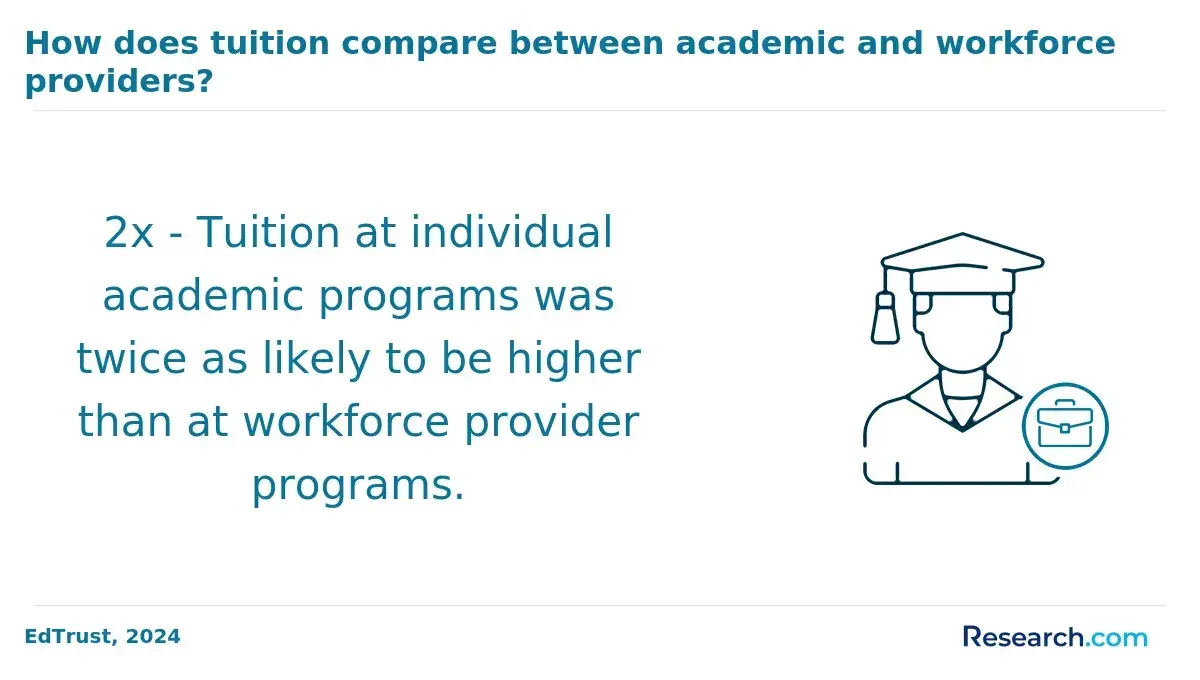
Tuition varies widely because online data science degrees include bachelor's completion programs, professional master's programs, public university options, private nonprofit programs, and competency-based formats. Students should compare total estimated cost rather than only per-credit tuition because fees, required software, textbooks, immersion experiences, and repeated courses can change the real price.
The table below summarizes common cost patterns students will see when comparing accredited online data science degrees. It is designed to help you identify whether a program is genuinely affordable or only appears inexpensive at first glance.
| Cost category | Typical program examples | How the pricing usually works | What to verify before applying |
| Low-cost public online master's | Online MS Data Science or MS Analytics at large public universities | Often uses a fixed total program price or relatively low per-credit tuition | Whether tuition excludes technology fees, distance-learning fees, or course materials |
| Mid-range public or nonprofit master's | Applied data science, analytics, or computer science programs with data science tracks | Usually priced per credit with 30 to 36 credits required | Whether nonresident online students pay the same rate as in-state students |
| Private nonprofit online master's | University-branded applied data science programs | Often has higher per-credit tuition but may offer stronger advising or brand recognition | Whether scholarships meaningfully reduce the net price |
| Competency-based bachelor's | Online BS Data Analytics or similar programs | Charges by term rather than credit, rewarding students who complete courses quickly | Whether your work schedule allows fast progress each term |
| Bachelor's completion programs | Online data analytics, information systems, or statistics-focused degrees | Total cost depends heavily on accepted transfer credits | How many credits transfer before you enroll, not after you start |
A strong cost comparison should include net price after aid, number of required credits, tuition increases, required prerequisites, and the cost of taking extra time to graduate. A program with slightly higher tuition may be less expensive overall if it accepts more transfer credits or offers stronger course sequencing that helps you finish on time.
For graduate applicants considering speed as part of value, it can also help to compare data science timelines with other accelerated graduate formats, including 1 year online masters programs, so you understand whether a shorter timeline is realistic for your workload.
How Competitive Is Admission to Accredited Online Data Science Degree Programs?
Admissions competitiveness depends on degree level and program design. Bachelor's programs may focus on high school records, prior college credits, placement readiness, and transfer eligibility, while master's programs usually evaluate quantitative preparation, programming experience, academic history, and professional goals.
Many online data science master's programs no longer require the GRE, but that does not mean they are easy. Selective programs may expect prior coursework in calculus, linear algebra, statistics, computer science, or programming. More flexible programs may offer bridge courses, performance-based admissions, or conditional pathways for applicants who can demonstrate readiness after enrollment.
The table below explains how different admissions models affect applicants. This matters because admissions flexibility can be an advantage, but only if the program still provides enough academic support for students who need to strengthen prerequisites.
| Admissions model | Common requirements | Who benefits most | Risk to consider |
| Selective holistic review | Transcripts, resume, statement, recommendations, prerequisite coursework, sometimes coding or math background | Applicants with strong academic preparation and clear data science goals | Application preparation takes more time and may require prerequisite completion |
| Test-optional or no-GRE review | Academic record, quantitative background, work experience, statement of purpose | Working adults whose professional experience is stronger than standardized test performance | No-GRE does not remove the need for math and programming readiness |
| Performance-based admission | Successful completion of designated gateway courses | Applicants with nontraditional backgrounds who want to prove readiness | Students must be disciplined enough to succeed before formal degree momentum is established |
| Open or transfer-friendly bachelor's admission | High school diploma or prior college credits, placement requirements, transfer evaluation | Adult learners, associate degree holders, and students changing fields | Transfer-credit limits can extend time to degree if reviewed too late |
Before applying, ask admissions staff whether your prior coursework satisfies prerequisites and whether the program offers bridge courses. Students exploring accelerated online study in other fields, such as a fast track psychology degree online, should note that speed is only useful when the program's academic demands match the student's preparation.
Which Learning Formats Offer the Greatest Flexibility in Online Data Science Degree Programs?
The most flexible online data science programs are usually asynchronous, part-time friendly, and structured around multiple start dates. However, maximum flexibility is not always the best fit. Data science is cumulative, so students often need consistent pacing in statistics, programming, machine learning, and capstone work.
When comparing online formats, focus on how the schedule affects your ability to finish, not just whether lectures are available online. The following format differences are the ones most likely to affect working adults and students with caregiving responsibilities:
- Asynchronous courses work best for students with unpredictable schedules, but they require strong self-management and comfort learning technical material independently.
- Synchronous evening or weekend sessions provide structure and live interaction, but they can be difficult for students in changing work shifts or different time zones.
- Hybrid formats may improve networking and hands-on learning, but travel requirements can add cost and reduce accessibility.
- Competency-based formats can shorten the timeline for experienced learners, but students who need more instructor feedback may find them isolating.
- Cohort-based programs build peer support, but they may offer less flexibility if you need to pause or reduce your course load.
A useful test is to ask for a sample weekly schedule from a current course. If the program expects heavy coding assignments, group projects, proctored exams, or live labs, you need to know that before enrollment rather than after the add-drop deadline.
Students comparing online delivery across disciplines may also find it helpful to review how format expectations differ in studio-based or design-heavy programs, such as a best online architecture degree, where online flexibility must be balanced against portfolio and project requirements.
What Student Support Services Improve Success in Online Data Science Degree Programs?
Student support matters more in data science than in many other online degrees because the coursework is technical, sequential, and project-heavy. Strong support can reduce the risk of stopping out when students hit difficult topics such as probability, algorithms, database design, or model evaluation.
Look for support services that match the actual challenges of online technical learning. General advising is helpful, but data science students usually need more specialized resources:
- Technical tutoring in statistics, Python, R, SQL, machine learning, and data visualization.
- Responsive faculty or teaching assistant support with clear turnaround times for coding and project questions.
- Career coaching tailored to analytics resumes, GitHub portfolios, case interviews, and technical assessments.
- Capstone or practicum guidance that helps students produce employer-readable project work.
- Library access, cloud-computing resources, software licenses, and virtual labs for hands-on assignments.
- Online peer communities, study groups, and alumni networks that reduce isolation.
A red flag is a program that advertises career preparation but cannot explain what students actually receive. Ask whether career services include mock technical interviews, portfolio reviews, employer events, or only general resume advice. For students who want a lower-math, administrative pathway before committing to a technical degree, online office administration courses may offer a more practical starting point.
Which Financial Aid Options Are Available for Accredited Online Data Science Degree Students?
Students in accredited online data science degree programs may qualify for many of the same aid options as campus students, provided the school participates in federal student aid programs and the student meets eligibility requirements. The key is to compare net cost after grants, scholarships, employer support, and loans rather than relying on sticker price.
Financial aid availability varies by degree level. Bachelor's students are more likely to qualify for need-based grants, while graduate students more often rely on employer tuition assistance, scholarships, assistantships when available, and federal loans.
Use this sequence to compare aid offers across schools without overlooking hidden costs:
- Complete the FAFSA if you are eligible and confirm that the institution participates in federal student aid.
- Request a written cost of attendance that includes tuition, fees, books, software, technology requirements, and any required campus visits.
- Ask whether scholarships are renewable and whether they require a minimum GPA or course load.
- Compare employer tuition reimbursement rules, especially grade requirements, annual caps, and repayment obligations if you leave your job.
- Calculate loan payments conservatively before enrolling, using expected entry-level or advancement outcomes rather than best-case salaries.
Graduate students should be especially careful with borrowing because unsubsidized and graduate PLUS loans can accumulate interest quickly. If you are comparing long-term graduate investments across fields, reviewing cost-conscious options such as affordable online EdD programs can help frame how tuition, professional goals, and repayment risk differ by discipline.
Which Career Outcomes Are Associated With Accredited Online Data Science Degree Programs?
Accredited online data science degrees can support roles in data analysis, business intelligence, machine learning, data engineering, analytics management, and applied research. The degree alone is rarely enough; employers usually evaluate a combination of education, technical skill, domain knowledge, project evidence, and communication ability.
BLS May 2024 wage data reported a median annual wage of $112,590 for data scientists. Students should treat that figure as labor-market context rather than a personal salary prediction because compensation varies widely by region, industry, experience, degree level, and whether the role is closer to analytics, engineering, machine learning, or management.
The table below connects common data science career paths with the skills and credentials that are most relevant. It can help students choose electives and projects that align with specific job targets.
| Career path | Typical responsibilities | Helpful degree focus | Portfolio evidence employers may value |
| Data analyst | Clean data, build dashboards, summarize trends, support business decisions | Bachelor's or master's with statistics, SQL, and visualization | Dashboard projects, SQL queries, business case analyses |
| Data scientist | Build predictive models, test hypotheses, communicate findings, evaluate model performance | Master's or strong bachelor's with machine learning and statistics | End-to-end modeling projects with clear explanation and validation |
| Machine learning engineer | Deploy models, build data pipelines, monitor production systems | Computer science-heavy data science or analytics program | Code repositories, model deployment examples, software engineering projects |
| Business intelligence analyst | Translate operational data into reports, metrics, and executive dashboards | Analytics, business data, or applied data science concentration | BI dashboards, KPI design, stakeholder-facing reports |
| Data engineer | Design pipelines, manage databases, prepare data infrastructure | Computer science, cloud, databases, and distributed systems coursework | ETL projects, database schemas, cloud data workflow examples |
The biggest career mistake is choosing a program without reviewing whether it produces portfolio-ready work. A transcript shows coursework, but a portfolio shows whether you can use data to solve problems, explain trade-offs, and communicate results to technical and nontechnical audiences.
How Do Online and Campus-Based Data Science Degree Programs Compare?
Accredited online and campus-based data science programs can cover similar academic content, especially when taught by the same faculty and governed by the same university standards. The difference is usually not academic legitimacy but learning experience, networking style, scheduling, and access to in-person resources.
Online programs are often better for working adults who need to study around employment, family responsibilities, or relocation limits. Campus programs may be better for students who want daily in-person interaction, research assistantships, on-campus recruiting, or access to specialized labs.
| Comparison factor | Online data science degree | Campus-based data science degree | Decision guidance |
| Schedule | More likely to offer asynchronous or part-time options | More likely to require fixed class times | Choose online if schedule control is essential |
| Networking | Often relies on virtual cohorts, online events, and alumni platforms | Provides more spontaneous peer and faculty interaction | Choose campus if in-person recruiting and community are priorities |
| Cost | May reduce relocation and commuting costs | May provide campus assistantships or local employer access | Compare total net cost, not delivery mode alone |
| Learning style | Requires self-direction and comfort with digital tools | Provides more immediate classroom structure | Choose the format that matches how you handle difficult technical material |
| Career access | Can work well for students already employed in a relevant field | May offer stronger local internship pipelines | Ask each program for career services available specifically to your format |
Do not assume online is easier. High-quality online data science programs can be as rigorous as campus programs, and the reduced commuting time may be offset by the need for more independent problem-solving.
How Should Students Choose the Best Accredited Online Data Science Degree Program?
The best accredited online data science degree is the one that fits your career target, academic preparation, budget, learning style, and completion timeline. A program can be excellent in general and still be the wrong choice if it does not match your math background, work schedule, or desired role.
Use the following process to narrow your shortlist from many options to a few realistic applications:
- Define your target role first, such as data analyst, data scientist, machine learning engineer, business intelligence analyst, or analytics manager.
- Verify institutional accreditation before comparing rankings, tuition, or marketing claims.
- Map the curriculum against your target skills, including statistics, Python or R, SQL, machine learning, data visualization, databases, ethics, and capstone work.
- Request a transfer-credit or prerequisite review before enrolling, especially if you have prior college credits or a nontechnical bachelor's degree.
- Compare total net cost after scholarships, employer support, fees, and likely time to completion.
- Ask for career outcome information specific to the online program, not only the university as a whole.
- Evaluate whether the delivery format matches your weekly availability and need for structure.
- Review student support in technical tutoring, advising, career services, and portfolio development.
- Choose the program with the strongest combined fit, not the one with only the lowest tuition or most recognizable name.
Some students should consider a different path. If you dislike quantitative work, cannot commit time to programming practice, or need a faster entry into a less technical role, a certificate, analytics bootcamp, business degree, or administrative technology program may be more practical before pursuing a full data science degree.
The final decision should balance affordability, academic quality, and long-term usefulness. Rankings can help you discover programs, but your own checklist should decide whether a degree is worth the investment.
Other Things You Should Know About Data Science
You do not always need advanced math before admission, but you should be ready to learn statistics, probability, linear algebra, and some calculus depending on the program. Applicants with weaker math backgrounds should look for bridge courses or preparatory modules.
Python is widely used for machine learning, automation, and production workflows, while R remains strong in statistics, research, and visualization. Many programs teach one deeply and expose students to the other, so the better choice depends on your career target.
A certificate can help with targeted skills, especially for professionals who already have a degree and relevant experience. A full degree is usually stronger for students who need a broader academic foundation, career change credibility, or preparation for graduate-level roles.
Yes. A portfolio can show employers how you clean data, choose methods, evaluate models, and explain results. Strong projects are specific, well-documented, ethical, and connected to real business, scientific, or public-interest questions.
References
- 2026 Best Online Data Science Degrees https://www.onlineu.com/degrees/data-science
- Data Science Degree Career Outcomes: Jobs, Salaries & Growth https://hakia.com/degrees/data-science/career-outcomes/
- J Multimed Inf Syst: An Analysis of Curricula for Data Science Undergraduate Programs https://www.jmis.org/archive/view_article
- Specializations https://www.mastersindatascience.org/data-science/masters/specializations/
- What is a Good Master’s in Data Science Salary? | Elmhurst University Blog https://www.elmhurst.edu/blog/masters-in-data-science-salary/
- Best Data Science Programs in 2026 https://www.dataquest.io/blog/best-data-science-programs/
- Data Analytics Master’s Programs: What Do They Want in Applicants? https://blog.accepted.com/data-analytics-masters-programs-what-do-they-want-in-applicants/
- Career Outcomes by Major: What the Data Really Says https://myls.ai/blog/career-outcomes-by-major-what-the-data-really-says/
- THE GLOBAL STANDARD IN DATA SCIENCE & AI EDUCATION https://www.dasca.org/data-science-accreditation-program
- Guide to Computer Science Degree and Program Accreditation https://www.computerscience.org/resources/college-accreditation/