2027 Online Data Science Degree Programs With No Application Fee and Rolling Admissions

Co-Founder and Chief Data Scientist
Choosing an online data science degree is harder when application fees, start dates, and total tuition all vary by school. The stakes are real: the U. S. Bureau of Labor Statistics reported a May 2024 median annual wage of $112,590 for data scientists, making program selection a career and financial decision.
This guide is for working adults, transfer students, and career changers who want flexible admissions without overpaying. You will learn how no-fee applications and rolling admissions work, what to verify, and how to compare programs beyond the marketing claims.
Key Things You Should Know
- No application fee can reduce upfront risk, but it is usually small compared with tuition, technology fees, books, transfer-credit limits, and loan interest.
- Rolling admissions means applications are reviewed continuously, not that every start date, course, scholarship, or seat remains available year-round.
- Career value depends more on accreditation, curriculum depth, portfolio support, employer alignment, and total cost than on a waived application fee alone; BLS reported a May 2024 median wage of $112,590 for data scientists.
Which Online Data Science Degree Programs Have No Application Fee and Rolling Admissions?
The best candidates for this search are accredited online data science or closely related analytics programs that publish a $0 application fee and review applications on a rolling or frequent-start basis. Because fee waivers and admissions calendars can change by term, students should treat any list as a starting point and confirm details directly with the school before submitting materials.
The table below shows examples of online programs and program types that students commonly compare when looking for no-fee applications and rolling or flexible admissions. Use it to organize your shortlist, then verify the current application fee, next start date, and aid deadlines on the institution's official admissions page.
| Program or school example | Degree level | Online data science fit | Application-fee and admissions notes to verify | Best fit |
| Eastern University online MS in Data Science | Master's | Data science-focused graduate curriculum | Confirm current $0 application-fee policy, rolling review, and term start options | Career changers and working adults seeking a graduate credential |
| Maryville University online data science or analytics programs | Bachelor's or master's, depending on offering | Data science-adjacent analytics and technical coursework | Confirm fee waiver, application timeline, and start-date availability by program | Students wanting flexible online enrollment and broad analytics preparation |
| Bellevue University online data science or analytics programs | Bachelor's or master's, depending on offering | Applied analytics, database, statistics, and programming emphasis | Confirm whether the application is currently free and whether admissions are reviewed continuously | Adult learners with transfer credits or prior college coursework |
| Southern New Hampshire University online data analytics programs | Bachelor's or master's, depending on offering | Data analytics pathway with relevance to data science roles | Confirm program-specific application fee, term calendar, and rolling review process | Students prioritizing frequent start dates and structured online support |
| Western Governors University data analytics pathway | Bachelor's or master's, depending on offering | Competency-based analytics and technical preparation | Confirm current application-fee waiver availability, monthly starts, and admission steps | Self-paced learners who can progress through competency-based coursework |
Students who want a faster graduate path should compare start dates, workload, and completion time rather than focusing only on the free application. If speed is a major factor, reviewing broader 1 year online masters options can help clarify how intensive accelerated online programs are typically structured.
A useful rule is to separate "easy to apply" from "good to enroll in." A program with no application fee and rolling admissions may be worth applying to, but it should still pass the same checks as any other degree: institutional accreditation, rigorous statistics and programming courses, transparent tuition, career support, and a realistic path to completion.
How Does Rolling Admission Work for Online Data Science Degree Programs?
Rolling admission means a school reviews applications as they arrive instead of waiting for one fixed deadline. For online data science degrees, this can be especially helpful because many programs offer several annual start dates, allowing students to enter in fall, spring, summer, or shorter accelerated terms.
The table below compares rolling admissions with fixed-deadline admissions. This distinction matters because rolling review can make applying easier, but it does not remove every deadline that affects enrollment.
| Feature | Rolling admissions | Fixed-deadline admissions | What it means for students |
| Application review | Reviewed as completed applications arrive | Reviewed after a published deadline | Rolling review can produce faster decisions if documents are complete |
| Start dates | Often multiple annual starts | Usually tied to one or two terms | More starts can help working adults avoid waiting several months |
| Seat availability | May become limited as terms fill | Usually evaluated after the deadline | Applying early can still matter |
| Financial aid timing | May have separate priority dates | Often aligned with admission cycles | Students must track aid and scholarship deadlines separately |
| Course access | Not every course may run every start | More predictable cohort sequencing | Students should ask whether required data science courses are available in their first term |
Students should not assume rolling admission means unlimited flexibility. The most common mistake is waiting too long because the program appears to accept applications year-round; by then, a preferred start date, scholarship review period, or prerequisite course may no longer be available.
A practical approach is to ask admissions staff three direct questions before applying. These questions help separate genuine rolling admissions from a general inquiry pipeline.
- Is my application reviewed as soon as all documents arrive, or only after a batch review date?
- What is the last date to submit transcripts, recommendations, test scores, or prerequisite documentation for my intended start term?
- Are financial aid, employer tuition reimbursement, and course-registration deadlines earlier than the admission deadline?
Rolling admissions are not unique to data science; many online fields use flexible calendars to serve adult learners. Students comparing flexibility across disciplines, such as a fast track psychology degree online, should apply the same rule: confirm the review process, not just the advertised start dates.
How Much Can Students Save by Choosing an Online Data Science Degree With No Application Fee?
A no-application-fee policy saves money immediately, but the savings are usually modest compared with tuition and other enrollment costs. The real value is that students can compare more than one legitimate program without paying to submit each application.
The table below uses simple scenarios to show how application-fee savings work. These examples are calculations, not claims about a specific school's current fee.
| Application strategy | Fee charged by each alternative program | Number of applications | Potential upfront savings if all selected programs have no application fee |
| Small shortlist | $50 | 3 | $150 |
| Broader comparison | $75 | 4 | $300 |
| Highly cautious applicant | $90 | 5 | $450 |
Those savings are useful, especially for students applying while managing transcripts, test reports, or credential evaluations. However, the application fee should never outweigh the total cost of attendance. A program with a free application but substantially higher tuition, lower transfer-credit acceptance, or required synchronous attendance that disrupts work can be more expensive in the long run.
Use the waived fee strategically rather than emotionally. A good comparison should include these cost items before you decide where to enroll.
- Tuition per credit or per term, plus the number of credits required to graduate
- Online program fees, technology fees, graduation fees, textbooks, software, and proctoring charges
- Transfer-credit limits and whether prior statistics, calculus, programming, or database courses reduce total credits
- Whether undergraduate or graduate federal loan interest applies if borrowing is needed
- Lost income or schedule constraints if required live sessions conflict with work
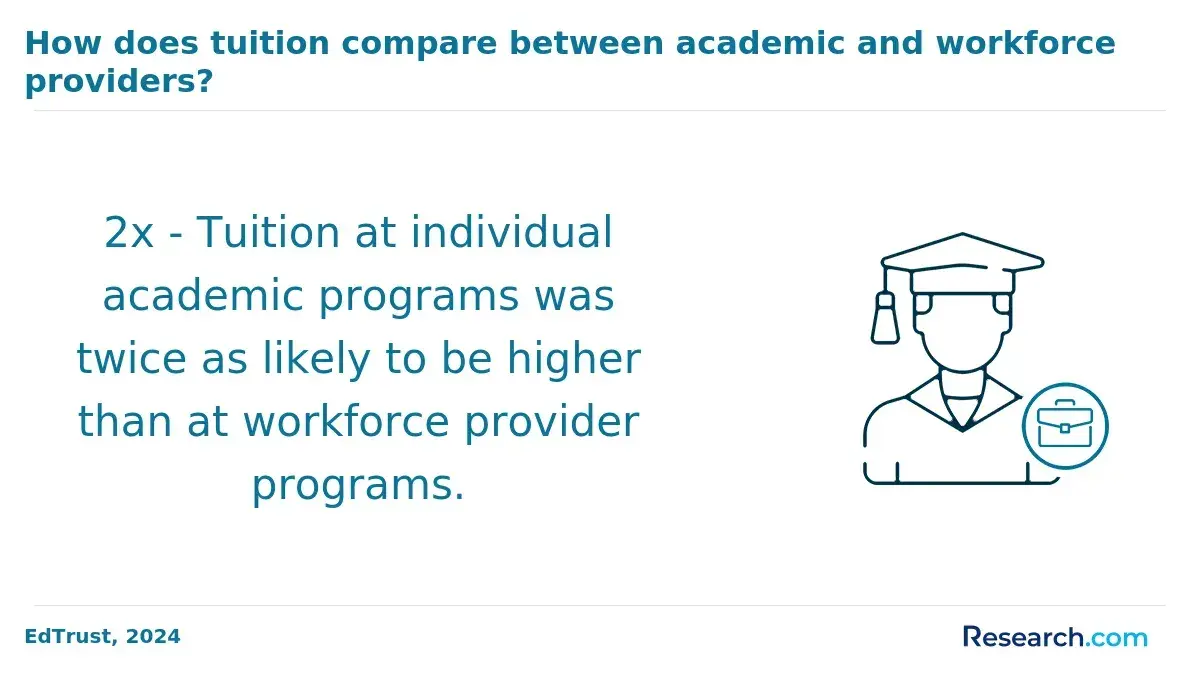
The College Board's 2024 Trends in College Pricing and Student Aid reported average published tuition and fees for 2024-25 of $11,610 for in-state public four-year institutions and $43,350 for private nonprofit four-year institutions. That gap shows why a waived $50 or $75 application fee should be treated as a convenience, not proof of affordability.
What Are the Admission Requirements for No-Fee Online Data Science Degree Programs?
No-fee online data science programs usually have the same academic admissions standards as programs that charge an application fee. A free application lowers the cost of applying; it does not remove the need to show readiness for statistics, programming, databases, and quantitative problem-solving.
The table below summarizes common requirements by degree level. Exact requirements vary by institution, so students should check whether the program is designed for beginners, experienced analysts, or applicants with a technical background.
| Requirement area | Bachelor's programs | Master's programs | Why it matters |
| Prior education | High school diploma, GED, or transfer credits | Accredited bachelor's degree | Determines eligibility and transfer pathway |
| Math preparation | College algebra, precalculus, or statistics may be expected | Statistics, calculus, linear algebra, or quantitative coursework may be preferred | Data science requires comfort with mathematical reasoning |
| Programming background | Often taught from the beginning, depending on program | Python, R, SQL, or prior coding experience may be expected or recommended | Programming readiness can affect first-term success |
| Application materials | Transcripts, application form, ID or residency documents | Transcripts, resume, statement of purpose, recommendations, and sometimes prerequisite proof | Rolling review usually starts only after all materials arrive |
| Test scores | SAT or ACT often optional for adult online learners | GRE or GMAT often waived or not required, but policies vary | Test policies can affect preparation time |
Applicants without a technical background should not automatically avoid data science, but they should look closely at bridge courses and support. A well-designed program will make prerequisite expectations clear and explain whether students can take introductory programming, statistics, or database courses before advanced machine learning classes.
Before applying, gather materials in the order that most often delays applications. This reduces the risk of missing a start date even when the school advertises rolling admissions.
- Request official transcripts from every college previously attended.
- Check whether international transcripts require a course-by-course evaluation.
- Update your resume to highlight technical, analytical, research, operations, business, or quantitative work.
- Draft a short statement explaining why data science fits your career goal and how you plan to handle the online workload.
- Ask recommenders early if the program requires letters, especially for graduate admission.
A common red flag is a program that says "no prerequisites" but offers little support for students new to coding or statistics. Flexibility is valuable, but students should still know what skills are expected before the first advanced course begins.
When Should Students Apply to Online Data Science Degree Programs With Rolling Admissions?
Students should apply as soon as they can submit a complete, accurate application for the start term they actually want. In rolling admissions, early applicants may have more time to resolve transcript issues, compare aid packages, register for preferred courses, and complete orientation.
The timeline below works for many online data science programs with rolling or frequent admissions. It is especially useful for working adults who need to coordinate tuition reimbursement, childcare, workload, or military benefits.
- Six months before the target start date, identify accredited programs, confirm whether the application is currently free, and compare required prerequisites.
- Four months before the target start date, request transcripts, ask about transfer credits, and estimate total program cost.
- Three months before the target start date, submit the application if all materials are ready and ask when a decision is expected.
- Two months before the target start date, review financial aid, employer reimbursement, payment plans, and scholarship deadlines.
- One month before the target start date, complete orientation, register for first-term courses, and confirm software or hardware requirements.
Applying late can still work, but it increases risk. Some online programs allow last-minute admission but may not guarantee that all courses, aid processing, or onboarding steps can be completed in time for the nearest term.
Students comparing data science with other online career paths should also think about time-to-completion and schedule intensity. For example, people evaluating flexible professional degrees such as office administration courses may need a different timeline than students preparing for graduate-level machine learning, statistics, and programming coursework.
How Can Students Strengthen an Online Data Science Degree Application?
A strong online data science application shows that the student can handle quantitative coursework and complete a structured online program. Even when admission is rolling and the application is free, competitive or capacity-limited programs may still look for evidence of academic readiness and professional direction.
Applicants can strengthen their file by focusing on proof, not exaggeration. The steps below help admissions reviewers see both preparation and fit.
- Highlight completed coursework in statistics, calculus, computer science, information systems, economics, engineering, business analytics, or research methods.
- Include practical tools such as Python, R, SQL, Tableau, Power BI, Excel, cloud platforms, or database experience when they are accurate.
- Build a small portfolio with projects such as data cleaning, exploratory analysis, visualization, predictive modeling, or business reporting.
- Use the statement of purpose to connect the degree to a specific goal, such as healthcare analytics, business intelligence, machine learning, public policy analysis, or operations analytics.
- Address weak grades briefly and constructively by pointing to later coursework, certifications, work experience, or completed quantitative projects.
Current employer expectations make applied evidence more important. As AI tools become more common, students benefit from showing they understand data quality, model limitations, ethics, documentation, and communication, not just automated output.
Avoid submitting a generic application just because the school accepts applications continuously. Rolling admissions can make the process feel informal, but incomplete transcripts, vague career goals, or unsupported claims about technical skills can still weaken the file.
Are Online Data Science Degree Programs With No Application Fees Accredited and Legitimate?
Many legitimate online data science degrees have no application fee, rolling admissions, or both. These features are not warning signs by themselves; they are often used to reduce barriers for adult learners and online students. The key is to verify accreditation, transparency, and academic substance.
The table below outlines the checks that matter most. Use these before sharing personal information, paying enrollment deposits, or accepting loans.
| Quality check | What to look for | Why it matters |
| Institutional accreditation | Recognition by an accreditor accepted by the U.S. Department of Education or CHEA | Accreditation affects federal aid eligibility, transfer credit, and employer recognition |
| Program curriculum | Statistics, programming, databases, machine learning, visualization, ethics, and capstone or applied projects | Data science roles require both technical and communication skills |
| Faculty and support | Qualified instructors, advising, tutoring, library access, and career services | Online students need accessible academic and professional support |
| Cost transparency | Published tuition, fees, refund policy, and technology requirements | A free application does not prevent unexpected enrollment costs |
| Online format details | Asynchronous, synchronous, hybrid, residency, exam proctoring, and attendance requirements | Format can determine whether the program fits a working adult's schedule |
Red flags include unclear accreditation language, pressure to enroll immediately, missing tuition details, promises of guaranteed jobs, or admissions representatives who cannot explain prerequisites and course sequencing. A legitimate program should make it easy to confirm who grants the degree, how the curriculum is delivered, and what students must pay.
Students exploring other online fields should use the same verification habits. Whether comparing data science or a design-focused path such as the best online architecture degree, accreditation and total program fit matter more than a convenient application process.
How Do Financial Aid and Total Costs Compare Among Online Data Science Degree Programs?
Financial aid and total costs can vary more than application policies. Two programs may both offer free applications and rolling admissions, yet differ sharply in tuition, fee structure, credit requirements, transfer policies, and aid eligibility.
The table below shows the cost categories students should compare side by side. It is designed to prevent the common mistake of treating "no application fee" as the same thing as "low cost."
| Cost or aid category | What to compare | Decision impact |
| Tuition model | Per credit, per course, per term, or competency-based subscription | Affects cost for part-time, full-time, and accelerated students |
| Required credits | Total credits after transfer evaluation or prerequisite review | More required credits can erase application-fee savings quickly |
| Program fees | Technology, online learning, graduation, proctoring, lab, or software charges | Fees can change the true cost beyond posted tuition |
| Financial aid eligibility | Federal aid, scholarships, employer benefits, military benefits, and payment plans | Aid access can be more important than the application fee |
| Timing rules | FAFSA, scholarship, tuition reimbursement, and registration deadlines | Rolling admissions may not align with aid priority dates |
Federal loan costs also matter. For loans first disbursed during the 2024-25 award year, Federal Student Aid listed interest rates of 6.53% for Direct Subsidized and Unsubsidized Loans for undergraduate borrowers and 8.08% for Direct Unsubsidized Loans for graduate or professional borrowers. That means borrowing even a modest additional amount can matter more financially than saving an application fee.
When comparing aid, ask for a written cost estimate after transfer credits and prerequisites are evaluated. If a school cannot provide a clear breakdown of tuition, required fees, and expected remaining credits, keep shopping.
The same total-cost logic applies across online graduate programs, including professional doctorates such as affordable online EdD programs. The most affordable option is rarely determined by one waived fee; it depends on the full path to completion.
Which Students Benefit Most From No-Fee, Rolling-Admission Online Data Science Degrees?
No-fee, rolling-admission online data science degrees are most useful for students who need flexibility but still want a recognized credential. They can be especially helpful for applicants comparing several programs, working adults who cannot wait for one annual deadline, and students who need to align enrollment with employer tuition benefits.
The table below shows which students tend to benefit most and when a different admissions model may be better. This can help readers decide whether the feature is genuinely valuable for their situation.
| Student type | Why no-fee rolling admission helps | What to watch |
| Working adults | Can apply around work schedules and enter at a convenient start date | Synchronous sessions or heavy weekly workloads may still create conflicts |
| Career changers | Can apply to multiple programs while comparing bridge coursework | Prerequisites may add time and cost |
| Transfer students | Can seek multiple transcript evaluations without paying repeated application fees | Transfer-credit limits can differ widely |
| Graduate applicants | Can move quickly once transcripts, resume, and recommendations are ready | Scholarship and assistantship deadlines may not be rolling |
| Students with urgent start-date needs | May avoid waiting for the next annual admissions cycle | Late applicants may have fewer first-term course choices |
Students should be cautious if they are choosing a program only because it is easy to apply. A traditional-deadline program may be better if it offers stronger faculty alignment, lower total cost, better employer recognition, deeper machine learning coursework, or stronger career services.
How Should Students Choose Among No-Fee Online Data Science Degree Programs?
Students should choose among no-fee online data science programs by ranking the factors that affect completion, cost, and career relevance. The application process matters, but the degree's value comes from what happens after admission.
A practical decision process keeps the waived fee in perspective. Use these steps to compare programs before enrolling.
- Confirm the current application fee in writing or on the official program page, because waivers can change by term.
- Ask whether admissions are truly rolling, when completed files are reviewed, and which start dates are still open.
- Verify institutional accreditation through recognized accreditation databases, not only marketing language.
- Compare total cost after transfer credits, required prerequisites, fees, software, and expected time to completion.
- Review the curriculum for statistics, programming, databases, machine learning, visualization, ethics, and a capstone or portfolio project.
- Ask how online courses are delivered, including live attendance, group work, exams, proctoring, and residency requirements.
- Compare career support, employer partnerships, internship options, portfolio coaching, and alumni outcomes when available.
- Check whether the program prepares you for the role you actually want, such as data analyst, data scientist, machine learning specialist, business intelligence analyst, or analytics manager.
The strongest choice is usually the program that balances admissions flexibility with credible academics and manageable cost. If a no-fee program has higher tuition, weak support, limited technical depth, or unclear accreditation, the free application is not enough reason to enroll.
Other Things You Should Know About Data Science
Usually, students need a reliable computer, stable internet, and enough memory to run programming tools, notebooks, databases, and visualization software. Some advanced work may use cloud platforms, virtual labs, or school-provided environments, so ask for hardware and software requirements before enrolling.
It depends on the role you want. Data science programs usually place more emphasis on statistics, programming, machine learning, and modeling, while data analytics programs may focus more on reporting, visualization, business intelligence, and decision support. Review course titles and projects rather than relying only on the degree name.
Yes, but beginners should choose a program with clear introductory pathways in statistics, Python or R, databases, and data visualization. If the program assumes prior coding or calculus experience, ask whether bridge courses are available before advanced classes begin.
Employers usually focus on the institution, skills, projects, experience, and ability to solve real data problems. An accredited online degree paired with a strong portfolio, clear technical skills, and relevant experience can be competitive, but employer preferences vary by industry and role.
References
- Online Master’s Programs with Rolling Admissions 2025 https://mastergradschools.com/master-admissions/online-masters-programs-rolling-admissions
- Universities in USA Without Application Fee (2026 Guide) https://northcypruseducation.com/blog/universities-in-usa-without-application-fee-study-abroad-without-application-fee/
- Program Details https://www.eastern.edu/academics/graduate-programs/ms-data-science
- College Graduation Rates and How ACE Compares | ACE Blog https://ace.edu/blog/college-graduation-rates-and-how-ace-compares/
- Top 6 Universities Offering a Fully Online MSc in Data Science - Toolshero https://www.toolshero.com/featured-posts/top-6-universities-data-science/
- MS in Data Science | The American College of Greece https://globalcampus.aug.edu/programs/graduate-programs/ms-in-data-science/
- Affordable Online Courses for Data Science Careers https://shecancode.io/kick-start-your-data-science-career-with-these-4-affordable-online-courses/
- Data Science Course vs. University – Which path is better in 2026? https://www.wbscodingschool.com/blog/data-science-course-vs-university/