2027 School Nursing vs Pediatric Clinic Nursing: Schedule, Autonomy, and Qualifications
Audited and Verified:
Our Editorial and Data Verification Process
Research.com uses government datasets, official education statistics and primary institutional information to support its career and degree guides. Our review process checks factual accuracy, occupational definitions, source dates and the requirements associated with the credentials discussed.
How This Article Was Fact-Checked
Our editorial team verifies salary estimates, employment projections, education requirements and program information against original data providers and official organizations. Salary figures are checked against the relevant occupational definitions and reporting periods. Information about licensure, accreditation and required in-person training is reviewed separately.
Fact-checked and verified on:

Co-Founder and Chief Data Scientist
A school nurse may work when students are in class, while a pediatric clinic nurse may have access to a larger clinical team. Neither description tells you enough to choose a job. For nursing students, new graduates, and RNs considering a change, the consequential differences are who is available when a child needs help, what happens outside regular hours, and which credentials the employer accepts. This comparison explains those trade-offs and shows what to verify before investing in another degree or accepting an offer.
Key Things You Should Know
- School nurses often follow a school-year calendar; pediatric clinic nurses generally follow the clinic's operating hours, which may include evenings or weekends. Neither schedule is guaranteed.
- A school nurse may be the only nurse on site, but must still work within nursing scope, school policy, and referral arrangements. Clinic nurses usually have closer access to a care team, not necessarily less responsibility.
- Both paths commonly recruit RNs. An approved associate degree or BSN can lead toward RN licensure; school-specific credentials, BSN preferences, and experience requirements vary by state and employer.
How Do School Nursing and Pediatric Clinic Nursing Differ?
School nursing serves students across a school day and often emphasizes chronic-condition support, medication administration under applicable orders and policy, urgent assessment, health education, and coordination with families and school staff. Pediatric clinic nursing serves children and families during outpatient visits and between-visit contacts. Duties can include intake, immunizations, telephone triage under protocol, patient education, and follow-up, depending on the position.
The comparison below describes typical RN roles, not a universal staffing model. A small school district, specialty clinic, and large pediatric practice can organize the same work differently.
| Decision factor | School nursing | Pediatric clinic nursing |
| Primary setting | School campus or district | Outpatient practice or health system |
| Continuity | Students over a school year or longer | Patients across visits and follow-up |
| Closest collaborators | Families, educators, administrators, outside clinicians | Clinicians, medical assistants, other nurses, scheduling staff |
| Key pressure | Managing competing needs with limited on-site clinical backup | Maintaining safe care and communication across a busy visit schedule |
Neither RN position is the same as diagnosing and treating patients as a nurse practitioner. If that is the intended career change, family NP programs organized by duration address a different educational pathway.
What Schedules Do School Nurses and Pediatric Clinic Nurses Work?
A district-employed school nurse often works around student attendance, with school holidays and summer break affecting the calendar. Check whether the position is paid over the school year or across 12 months, whether summer work is available or required, and whether the nurse covers multiple campuses. Before- and after-school duties can extend the day.
Clinic nurses commonly work scheduled daytime shifts, but evening hours, Saturday clinics, telephone coverage, and rotating assignments are possible. For either offer, ask for the actual weekly roster, weekend and holiday expectations, on-call rules, and paid hours - not just a description such as "family-friendly."
Graduate study for a later specialty change has its own schedule. For example, online MSN-PMHNP completion timelines describe education, not the working hours of a pediatric clinic RN.
How Does Autonomy Compare Between School and Pediatric Clinic Nurses?
School nurses often make initial nursing assessments without another clinician in the room. They must know when to contact a parent, seek an authorized order, activate an emergency response, or refer a student. Working alone increases the importance of written protocols and dependable backup; it does not expand an RN's legal scope.
Clinic nurses may be able to confer quickly with a prescribing clinician, yet still exercise independent nursing judgment in assessment, prioritization, education, documentation, and escalation. Ask each employer who answers urgent clinical questions, who covers breaks and absences, and how new hires demonstrate competence before working alone.
If the autonomy you want includes diagnosing or prescribing, evaluate APRN preparation separately; affordable online advanced practice nursing routes do not substitute for the required population-focused education, certification, and state authorization.
Start with the job's exact title. RN school-nurse positions generally call for an active RN license, and some states or districts impose additional education, certification, or school-service requirements. A district may also employ an LPN/LVN in a defined role with RN oversight; that is not automatically interchangeable with its school-nurse position.
Pediatric clinics may hire RNs or LPNs/LVNs for different duties. Employers can prefer pediatric experience, immunization knowledge, telephone-triage experience, or a BSN. New graduates should ask whether the posting includes supervised specialty orientation rather than assuming that classroom pediatric exposure qualifies them to manage a full assignment.
These RN qualifications differ from those for an NP providing pediatric or family primary care. An already-qualified APRN considering a population-focus change can investigate FNP certificate routes for changing advanced practice focus; prior RN work alone does not establish eligibility.
For someone who is not yet an RN, the direct route is a state-board-approved prelicensure ADN/ASN or BSN program, followed by the steps required for RN licensure. An associate program often takes about two academic years after prerequisites; a traditional BSN commonly takes about four years. Actual time depends on admission, prerequisites, course sequencing, and clinical placement. Neither degree alone grants a license or a school-nurse job.
For an RN who already meets the target employer's requirements, a new degree may be unnecessary. A BSN or RN-to-BSN route becomes more relevant when a state credential or desired district requires it, or when it materially improves hiring options. If a longer-term graduate goal also matters, compare the award and entry requirements of ADN-to-MSN bridge programs rather than assuming an MSN automatically supplies every school-specific qualification.
Both RN paths require an active license where the nurse practices. Graduating from a nursing program, becoming eligible to take the NCLEX-RN, passing it, and receiving a license are separate steps. Confirm the hiring state's rules with its board of nursing.
For school roles, check the state education agency and district as well as the nursing board: a school-service credential or other condition may apply. Employers may request CPR or other emergency-response training. A pediatric nursing specialty certification can demonstrate experience but does not replace licensure, required school credentials, or employer competency checks.
Likewise, accelerated psychiatric NP certificate options concern preparation for a distinct advanced practice role, not a certification needed for ordinary school or pediatric clinic RN work.
There is usually no separate prelicensure "school nursing" or "pediatric clinic nursing" degree. RN programs teach assessment, pharmacology, clinical judgment, family-centered care, safety, and supervised care across populations. Pediatric and community-health experiences can build a foundation, but their length and setting vary by program.
After hiring, preparation becomes setting-specific. A school nurse needs orientation to district medication procedures, emergency plans, student privacy, documentation, and coordination for students with ongoing health needs. A clinic nurse needs training in its immunization workflows, electronic records, telephone protocols, escalation routes, and patient-education practices. Request a written orientation plan and ask who evaluates readiness.
For licensed RNs considering additional study, understanding clinical expectations in BSN completion helps distinguish an RN-to-BSN program's assignments from the supervised onboarding a new workplace must provide.
Costs depend on the school, residency status, credits still needed, and clinical travel. Compare a written total - not tuition alone - including mandatory fees, books, equipment, background checks, transportation, examination and licensing charges, and any income lost while studying. An RN-to-BSN program may avoid repeating initial RN preparation, but its price and duration depend on accepted credits and enrollment pace.
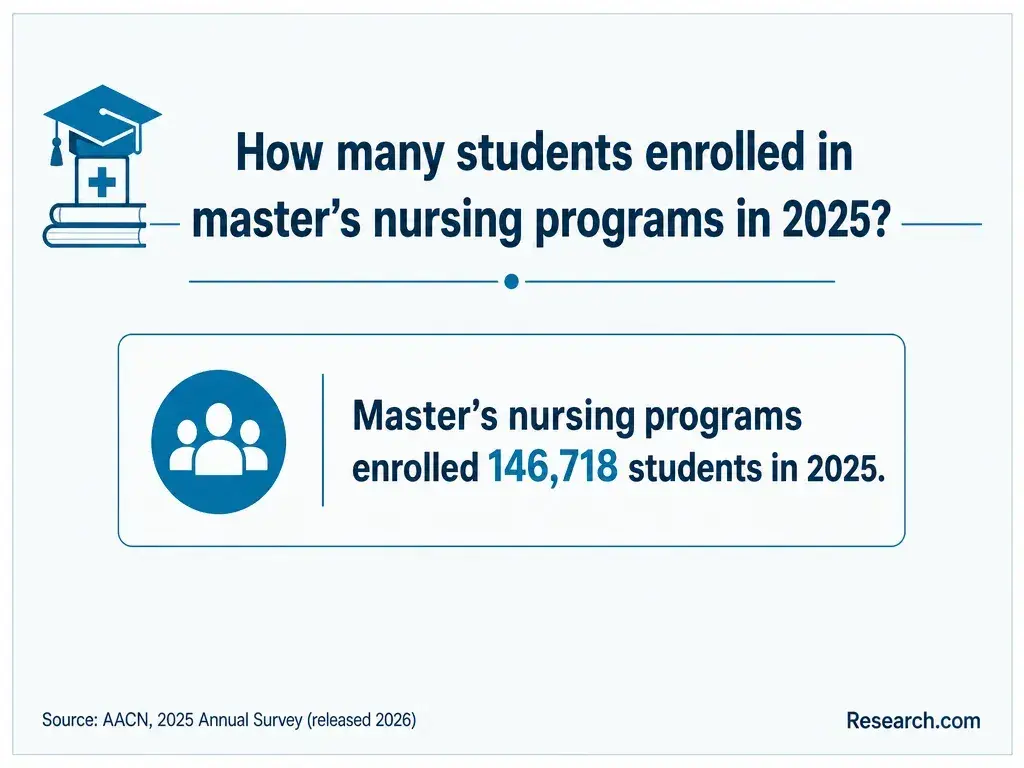
If you already hold an RN license, first price the gap between your current qualifications and actual job postings. Employer orientation, targeted continuing education, or an employer-supported BSN may cost less than an unrelated graduate degree. A BSN-prepared RN exploring graduate study can separately assess master's nursing education on a BSN graduate's budget, but should not treat it as a routine expense of entering either RN role.
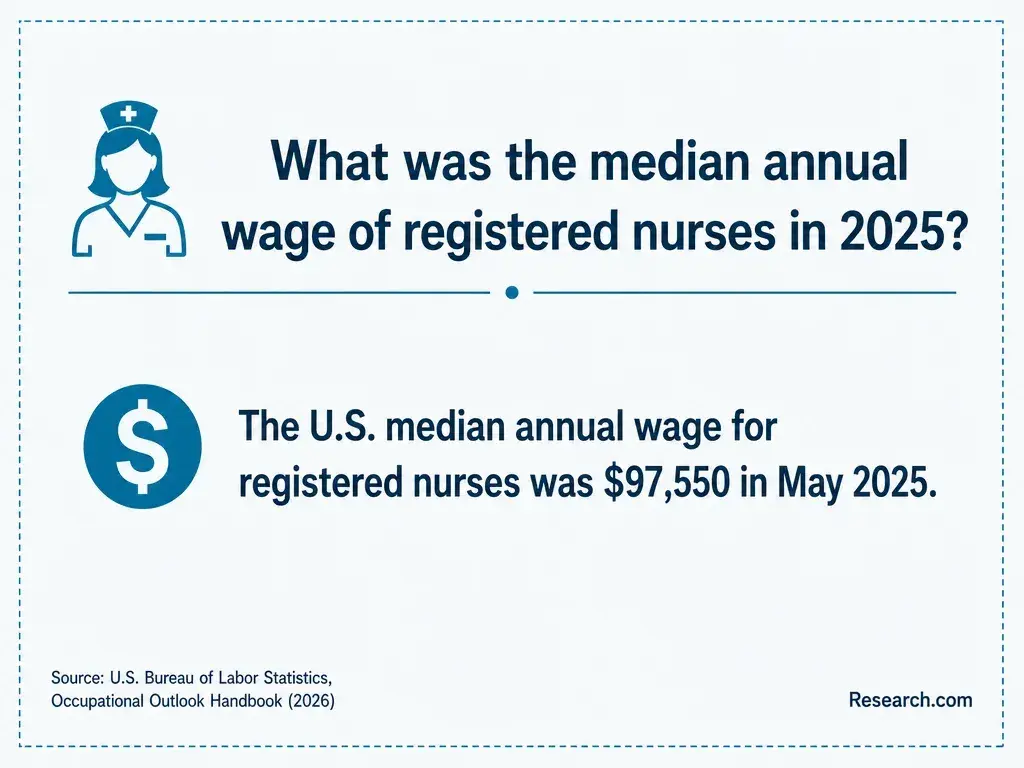
Neither "school nurse" nor "pediatric clinic nurse" has a single dependable national pay figure. Both RN jobs sit within the broader registered-nurse occupation reported by the U.S. Bureau of Labor Statistics; its occupation-wide median and employment projections cannot predict a particular district salary or clinic offer. Public-school pay may follow a district schedule, while clinic pay may reflect health-system rates, experience, hours, and benefits.
Compare offers using annual paid hours and the full package. A school-year salary can look lower than a year-round clinic salary even when the hourly value is competitive. Include health coverage, retirement contributions, paid leave, summer income needs, commute, and any unpaid time. School experience can support school-health coordination or district leadership; clinic experience can support ambulatory specialty or care-coordination work, subject to hiring requirements.
A DNP is not a standard promotion requirement for either RN job. Shorter routes to a DNP degree are worth considering only against a separately defined advanced practice, leadership, or other graduate goal.
How Can You Choose an Accredited Nursing Program for Either Path?
If you need initial RN preparation, verify institutional accreditation, the nursing program's applicable accreditation, state-board approval, and whether its graduates can pursue licensure in your intended state. These are distinct checks. Ask about pediatric and community-health learning, supervised clinical arrangements, total cost, and published completion and NCLEX outcomes with their reporting years.
Then work backward from local jobs. Obtain the district's school-nurse credential requirements or the clinic's RN hiring criteria in writing before paying for extra education. If you are already licensed, compare the cost of a new program with targeted training and an employer's orientation. For a later doctoral goal, comparing DNP admission criteria is a separate decision - not a way to establish eligibility for these entry-level RN positions.
Other Things You Should Know About Nursing
Often, yes, within applicable law, consent rules, orders, and school policy. Ask the district how it handles routine visits, medication authorization, and emergencies.
No. Pediatric practices may care for adolescents too. Confirm the practice's age range and services before accepting a position.
Yes, if the nurse meets the clinic's license and hiring requirements. Expect orientation to its workflows and an assessment of any skills not used recently.
Both can provide continuity. A school nurse sees students within the school community; a clinic nurse follows patients across visits. Ask how each employer assigns caseloads and follow-up work.
- Health Care for Children and Youth - NCBI - NIH https://www.ncbi.nlm.nih.gov/books/NBK610729/
- Chapter 2: School Health Services | mo.gov https://health.mo.gov/book/export/html/5331
- What Is Nursing Autonomy and Its Importance | ACE Blog https://ace.edu/blog/what-is-autonomy-in-nursing/
- How to Become a School Nurse [Guide] | Bay Path University https://www.baypath.edu/news/bay-path-university-blogs/post/how-to-become-a-school-nurse-guide/
- Mapping the policy landscape of school nurse practice laws in the United States - ScienceDirect https://www.sciencedirect.com/science/article/pii/S0029655426000850
- Autonomy in Nursing: Why Does It Matter? | Nevada State University https://nevadastate.edu/son/rn-bsn/autonomy-in-nursing-why-does-it-matter/
- How Many Hours Do Nurses Work? | fortis.edu https://www.fortis.edu/blog/nursing/nursing-hours-how-long-do-nurses-work.html
- School Nurse Basics - Colorado Department of Education https://ed.cde.state.co.us/shs/snh-home/snh-ofcmgmt
- State Laws on School Nursing Outline Copious Responsibilities for Nurses | Child Trends https://www.childtrends.org/publications/state-laws-on-school-nursing-outline-copious-responsibilities-for-nurses
- How to Become a Registered Nurse (RN): 2026-27 Career Guide | Nursing License Map https://nursinglicensemap.com/nursing-specialties/registered-nurse/