2027 Accredited Online Data Science Degree Programs for Working Adults: Flexible, Part-Time, and Self-Paced Options

Co-Founder and Chief Data Scientist
Choosing an online data science degree while working full time comes down to accreditation, schedule control, cost, and career payoff. The field is expanding quickly: the U.S. Bureau of Labor Statistics projects data scientist employment to grow 34% from 2024 to 2034, far faster than average.
This guide is for adults comparing accredited online bachelor's and master's options, including part-time, asynchronous, and self-paced formats. You'll learn how to judge program quality, estimate workload, control costs, use transfer credits, and choose a format that fits your job, family, and long-term goals.
Key Things You Should Know
- Choose a school recognized by a U.S. Department of Education- or CHEA-recognized accreditor, and check whether the online program is eligible for federal aid, employer tuition benefits, and transfer credit.
- Part-time online data science programs commonly take about 2 to 6 years depending on degree level and transfer credits; using the standard credit-hour workload rule, 6 credits may require roughly 12 to 18 study hours per week.
- College Board's 2024 published tuition and fee averages were $11,610 for in-state public four-year colleges and $43,350 for private nonprofit four-year colleges, while transfer-friendly bachelor's programs may accept substantial prior credits and reduce total cost.
What Is an Accredited Online Data Science Degree Program and Why Does Accreditation Matter?
An accredited online data science degree is a bachelor's or master's program delivered mostly or fully online by a college or university that has been reviewed by a recognized accrediting agency. Data science programs usually combine statistics, programming, databases, machine learning, data visualization, ethics, and applied analytics projects. At the bachelor's level, the degree can prepare students for entry-level analytics or junior data roles. At the master's level, it often serves working professionals moving into advanced analytics, machine learning, business intelligence, or leadership roles.
Accreditation matters because it is the main quality-control signal in U.S. higher education. It affects whether you can access federal financial aid, transfer credits, receive employer tuition reimbursement, apply to graduate school, and present the credential confidently to employers. For working adults, accreditation is also a risk-management issue: an inexpensive or highly flexible program is not a good deal if the credential is not widely recognized.
There are two main accreditation layers to understand. Institutional accreditation applies to the college or university as a whole. Programmatic accreditation applies to specific programs and is less universal in data science than in fields such as nursing, engineering, or education. Some computing-related programs may have ABET accreditation, but many legitimate data science degrees do not. The key is to verify institutional accreditation first, then review program-level quality signals such as curriculum depth, faculty expertise, employer partnerships, capstone work, and career outcomes.
Before applying, use this short verification process so you do not rely only on marketing language from the school.
- Search the school's accreditation page and identify the institutional accreditor by name.
- Confirm that the accreditor is recognized by the U.S. Department of Education or the Council for Higher Education Accreditation.
- Ask whether the online version of the data science program is covered under the institution's accreditation and state authorization policies.
- Confirm Title IV federal aid eligibility if you plan to use the FAFSA, federal loans, or Pell Grants for undergraduate study.
- Ask admissions which credits transfer in, which do not, and whether transferred courses satisfy major requirements or only electives.
Which Flexible Data Science Degree Formats Are Best for Working Adults: Part-Time, Full-Time, or Self-Paced?
The best format depends on how predictable your schedule is, how quickly you need the credential, and how much weekly study time you can realistically protect. "Online" does not automatically mean "self-paced," and "flexible" may still include weekly deadlines, group projects, exams, live sessions, or fixed term dates.
The table below compares common online data science formats for working adults. Use it to match the structure of the program to your work hours, family responsibilities, and urgency to graduate.
| Format | Best Fit | Typical Workload Pattern | Main Trade-Off |
| Part-time asynchronous | Adults with full-time jobs and predictable weekly study blocks. | Often 1 to 2 courses per term with weekly deadlines | Slower completion, but easier to sustain |
| Full-time online | Students who can reduce work hours or study as a primary commitment. | Often 3 to 5 courses per term | Faster progress, but high time pressure |
| Self-paced or competency-based | Experienced learners who can study independently and move quickly through familiar material. | Progress depends on assessments, term limits, and personal discipline | Maximum control, but less external structure |
| Live online cohort | Learners who want scheduled interaction, accountability, and peer networking. | Set class meetings plus assignments and team projects | Stronger structure, but less schedule freedom |
| Accelerated 7- or 8-week courses | Adults who want shorter terms and can handle compressed deadlines. | Fewer weeks per course, often faster assignment cycles | Convenient calendar, but intense pacing |
Part-time asynchronous study is often the safest choice for adults working full time because it spreads the workload across a longer calendar. Self-paced study can be excellent if you already know programming, statistics, or SQL, but it can become stressful if you need instructor feedback, fixed milestones, or regular peer interaction.
Ask each school to define flexibility in concrete terms. The most important details are not always obvious on the program page.
- Whether lectures are recorded, live, or both.
- Whether exams require proctoring at specific times.
- How often assignments are due.
- Whether group projects require evening or weekend meetings.
- Whether students can pause, reduce course load, or skip a term without penalty.
- Whether self-paced courses have maximum completion windows.
What Are the Admission Requirements for Accredited Online Data Science Degree Programs?
Admission requirements vary by degree level. Bachelor's programs usually focus on high school completion, prior college credits, placement readiness, and general education requirements. Master's programs typically evaluate your undergraduate record, quantitative preparation, programming background, professional experience, and readiness for graduate-level statistics or computing.
Working adults should pay close attention to prerequisite policies. A program that looks flexible may still require calculus, statistics, Python, R, or database coursework before you can begin major classes. If you are changing careers from administrative, business, or operations roles, prior coursework such as office administration courses may help with general education or elective credit, but it may not replace technical prerequisites.
Common admission materials include the following. Review them early so you can estimate both application time and any bridge coursework you may need.
- Official transcripts from high school, community college, or previous colleges.
- Minimum GPA requirement, often with separate rules for transfer or graduate applicants.
- Prerequisite coursework in mathematics, statistics, computer science, or programming.
- Resume or professional statement, especially for master's applicants.
- Letters of recommendation for some graduate programs.
- GRE or GMAT scores only when required; many online data science programs have test-optional or waiver policies.
- English proficiency documentation for applicants whose prior education was not in English.
For adult learners, the most important admissions question is not simply "Can I get in?" It is "Will I start at the right level?" If you have not taken math or programming recently, a bridge course, certificate, or noncredit Python refresher may prevent you from falling behind in the first term.
How Much Does an Online Data Science Degree Cost, and What Financial Aid Options Are Available?
Online data science degree costs depend on degree level, public or private status, residency rules, per-credit tuition, technology fees, textbooks, software, proctoring, and the number of credits you need after transfer evaluation. The College Board's 2024 pricing data shows why school type matters for budget planning.
- Public four-year in-state published tuition and fees: $11,610 for one academic year.
- Public four-year out-of-state published tuition and fees: $30,780 for one academic year.
- Private nonprofit four-year published tuition and fees: $43,350 for one academic year.
Those figures are broad national averages, not data science-specific prices. Still, they are useful because they show the scale of the decision: choosing an in-state public online program, a flat-rate tuition model, or a transfer-friendly pathway can significantly change your total cost.
Cost comparison should include more than tuition. The table below summarizes common cost drivers that working adults often overlook when comparing online programs.
| Cost Factor | Why It Matters | What to Ask |
| Per-credit tuition | Most online degrees charge by credit, so total credits remaining drive total price. | What is the total estimated tuition after transfer evaluation? |
| Residency pricing | Some public universities charge different rates for in-state and out-of-state online students. | Do online students pay in-state, out-of-state, or special online tuition? |
| Technology and course fees | Data science courses may require cloud platforms, proctoring, or specialized tools. | Which fees are mandatory each term? |
| Books and software | Some programs use open-source tools; others require paid materials. | Are Python, R, SQL, Tableau, cloud, or analytics tools included? |
| Repeat-course policies | Compressed online courses can be expensive to repeat. | What happens financially if I withdraw or fail a course? |
Financial aid may include federal grants for eligible undergraduate students, federal loans, scholarships, employer tuition assistance, military education benefits, payment plans, and institutional discounts. For federal loans first disbursed in the 2024-25 award year, the fixed interest rate was 6.53% for undergraduate Direct Subsidized and Unsubsidized Loans and 8.08% for graduate Direct Unsubsidized Loans. That difference matters because graduate borrowing can become expensive if you extend enrollment without a completion plan.
If affordability is your top priority, compare total program cost rather than headline tuition. The same logic applies across online graduate education, including fields outside analytics such as affordable online EdD programs, where fees, transfer rules, and course load can change the real price.
How Long Does It Take to Complete an Online Data Science Degree, and Can Transfer Credits Help You Graduate Faster?
Completion time depends on degree level, credits required, course load, term length, prerequisites, and whether you transfer previous college credits. A first-time bachelor's student usually needs more time than a transfer student who has already completed general education courses. A master's student with strong technical preparation may finish faster than someone who needs bridge coursework.
The table below gives a practical comparison of common completion patterns. These are general planning ranges, so always confirm the exact curriculum map with the school.
| Program Type | Common Credit Structure | Part-Time Planning Range | What Can Speed It Up |
| Bachelor's in data science | Often about 120 total credits | About 4 to 6 years for first-time students; less for transfers | Community college credits, prior learning credit, summer courses, generous elective transfer. |
| Bachelor's completion program | Upper-division major plus remaining general education credits | About 2 to 4 years depending on credits accepted | Associate degree transfer, articulation agreements, block transfer policies. |
| Master's in data science | Often about 30 to 36 graduate credits | About 2 to 3 years part time | Taking 2 courses in some terms, waiving prerequisites, choosing an accelerated calendar. |
| Accelerated master's | Compressed graduate sequence | About 1 to 2 years depending on load | Strong math and coding background, full-time or near-full-time study availability. |
Transfer credit can be one of the biggest advantages for working adults. Some online bachelor's programs accept large blocks of community college credit, military training, professional certifications, standardized exams, or prior learning assessments. However, accepted credits do not always reduce time equally. A school may accept credits as electives while still requiring you to complete most data science major courses.
Accelerated graduate pathways can be attractive, but speed should not come at the expense of comprehension. If you are comparing a data science master's with a 1 year online masters in another field, check whether the faster timeline assumes full-time enrollment, continuous terms, prior technical coursework, or reduced electives.
To avoid surprises, ask for a written degree audit before enrolling. It should show how each transfer course applies, how many credits remain, which prerequisites are unresolved, and the earliest realistic graduation date based on your intended course load.
What Should You Look for When Comparing Accredited Online Data Science Degree Programs?
A strong online data science program should be accredited, technically current, flexible enough for adult learners, and transparent about cost, outcomes, and support. Do not choose based on convenience alone. A program that fits your calendar but lacks applied projects, advising, or career support may not deliver the professional value you expect.
Use the comparison below to separate meaningful quality signals from surface-level marketing claims. This is especially useful when two programs appear similar on tuition and schedule.
| Program Feature | Strong Signal | Potential Red Flag |
| Accreditation | Institutional accreditation is easy to verify through recognized databases. | The school uses vague phrases such as "licensed," "approved," or "internationally recognized" without recognized accreditation. |
| Curriculum | Includes statistics, Python or R, SQL, machine learning, databases, visualization, ethics, and capstone work. | Focuses only on business software tools without core analytical foundations. |
| Flexibility | Clearly states live-session requirements, deadlines, term lengths, and pause policies. | Advertises "study anytime" but includes frequent fixed meetings or unclear exam windows. |
| Faculty | Faculty have academic credentials, industry experience, or active analytics research. | Instructor information is missing or difficult to verify. |
| Career relevance | Students build a portfolio through projects, case studies, or applied capstones. | Graduation depends mainly on exams with little evidence of applied work. |
| Student support | Advising, tutoring, technical help, library access, and career services are available online. | Support is designed mainly for campus students. |
Program comparison should also account for your learning style. For example, evaluating the best online architecture degree requires close attention to studios and portfolios, while data science requires equal attention to coding practice, statistical depth, datasets, and reproducible project work.
Before you submit an application fee, ask admissions and academic advising these specific questions. The answers will reveal whether the program is truly built for working adults.
- How many hours per week should I expect for each course at my planned load?
- Are courses asynchronous, synchronous, self-paced, cohort-based, or mixed?
- Are there required campus visits, residencies, live labs, or proctored exams?
- Which programming languages and tools are used in the core curriculum?
- Can I see a sample course schedule for part-time students working full time?
- What career services are available to fully online students?
- What happens if I need to stop out for one term because of work or family obligations?
Common mistakes include enrolling before verifying accreditation, assuming "online" means "no deadlines," choosing the cheapest option without calculating fees, and ignoring prerequisite gaps. A better approach is to compare accredited programs using a written checklist that includes total cost, weekly workload, transfer credit, support services, technical curriculum, and career alignment.
What Career Opportunities and Salary Potential Can You Expect With a Data Science Degree?
A data science degree can support careers in analytics, machine learning, business intelligence, database work, decision science, and applied AI. It is not a guaranteed path to a specific salary, but it can help you build the quantitative, programming, and project skills employers often request for data-focused roles.
The BLS reported a 2024 median annual wage of $112,590 for data scientists. For working adults, this figure is useful as a labor-market benchmark, not a promise. Salary varies by experience, location, industry, degree level, portfolio strength, technical specialization, and whether the role is closer to reporting, analytics engineering, machine learning, or research.
The table below summarizes common career paths connected to data science education. It focuses on role focus rather than promising exact outcomes.
| Role | Typical Responsibilities | Helpful Skills |
| Data analyst | Clean data, create dashboards, analyze trends, and communicate findings. | SQL, Excel, Python or R, visualization, business communication. |
| Data scientist | Build models, analyze complex datasets, test hypotheses, and support decisions. | Statistics, machine learning, Python, experimentation, storytelling with data. |
| Business intelligence analyst | Design reports, define metrics, and support operational decision-making. | SQL, dashboard tools, data modeling, stakeholder communication. |
| Machine learning engineer | Develop, deploy, and monitor predictive models or AI systems. | Python, ML frameworks, software engineering, cloud platforms, MLOps. |
| Analytics manager | Lead analytics teams, set data strategy, and translate business problems into projects. | Leadership, data governance, statistical literacy, project management. |
Current trends are raising expectations for data science graduates. Employers increasingly value AI literacy, responsible data use, cloud-based workflows, model monitoring, and the ability to explain results to nontechnical teams. A degree program that still treats data science as isolated coding exercises may be less useful than one that includes real datasets, team projects, ethics, deployment concepts, and business context.
The degree is usually a good fit if you enjoy problem-solving, quantitative reasoning, coding, and continuous learning. It may not be the best fit if you want a low-math business credential, dislike troubleshooting technical problems, or need an immediate career change faster than a degree timeline allows. In that case, a shorter certificate or analytics bootcamp may be a lower-risk first step before committing to a full degree.
How Can Working Adults Balance a Data Science Degree With Full-Time Work and Family Responsibilities?
Balancing a data science degree with work and family requires more than motivation. Because programming and statistics assignments often take longer than expected, the most successful adult learners plan around weekly capacity, not idealized free time. A realistic schedule is especially important in accelerated or self-paced formats, where deadlines can arrive quickly or disappear until you are behind.
Use the steps below to test whether a program's workload is sustainable before you enroll. This process helps you avoid overcommitting in your first term.
- Estimate your weekly study capacity by blocking work hours, commute time, caregiving, sleep, and recurring responsibilities first.
- Start with one technical course if you are returning to school after a long break or learning programming for the first time.
- Ask for sample syllabi and compare assignment deadlines with your busiest work periods.
- Create separate study blocks for reading, coding practice, statistics problems, and project work instead of treating all coursework as one task.
- Use school breaks or lighter work seasons for prerequisites, portfolio polishing, or certification preparation.
- Tell family members or household partners which nights are protected study times before the term begins.
- Reassess course load after the first term rather than assuming the original plan must remain fixed.
Accelerated programs can work well for adults with strong time-management habits, but compression raises the stakes. The same is true in other accelerated online pathways, such as a fast track psychology degree online, where shorter terms may reduce calendar time but increase weekly intensity.
One common mistake is choosing self-paced study because it sounds easier. In reality, self-paced formats often require more discipline because there are fewer external reminders. If your job has unpredictable overtime, a part-time asynchronous program with weekly deadlines may provide a better balance of flexibility and accountability.
What Student Support Services and Online Learning Resources Should You Expect From a Data Science Degree Program?
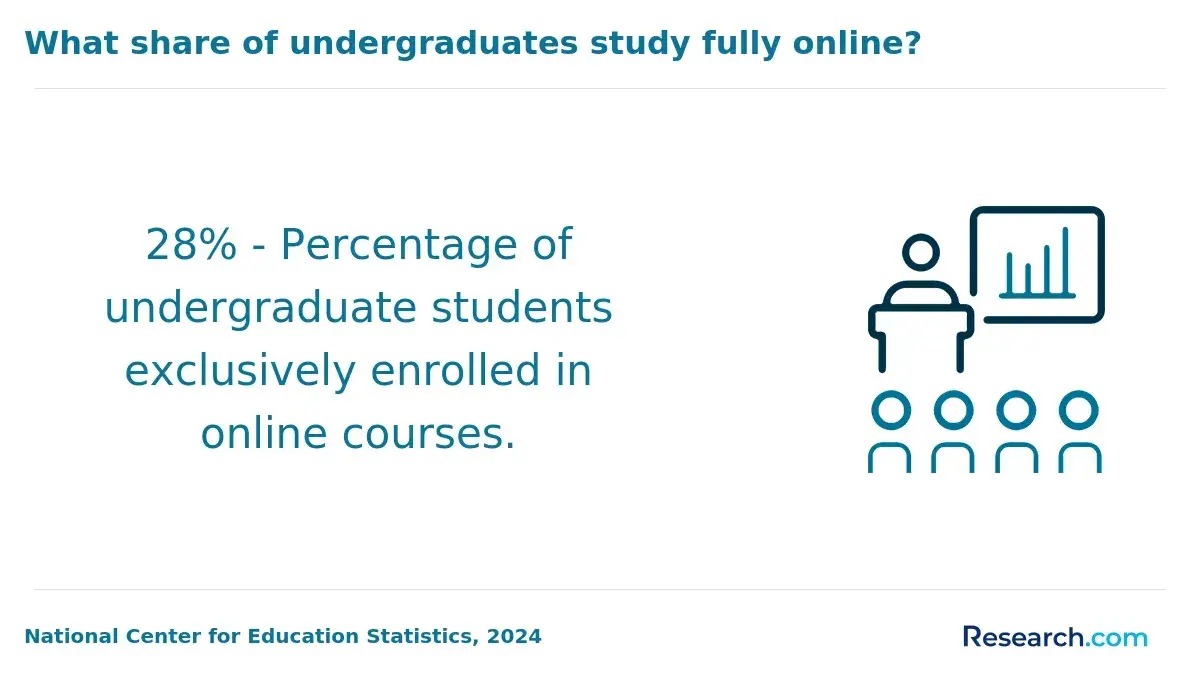
Online students need the same core support as campus students, plus fast remote access to technical help. NCES distance education tables updated in 2024 show that online learning is now a mainstream part of U.S. higher education, which means schools should be able to explain clearly how advising, tutoring, library access, disability accommodations, and career services work for fully online learners.
For data science students, support quality can directly affect persistence. Coding errors, statistics gaps, software setup problems, and unclear project requirements can quickly derail adult learners who have limited study windows.
Look for support services that are available during evenings, weekends, or extended hours when working adults are most likely to study.
- Academic advising that understands part-time degree maps and prerequisite sequencing.
- Online tutoring for statistics, calculus, programming, SQL, and writing.
- Technical support for learning platforms, coding environments, cloud tools, and proctoring software.
- Digital library access to journals, datasets, citation tools, and research databases.
- Career services for resume reviews, mock interviews, portfolio feedback, and employer connections.
- Disability services and accessibility accommodations for online courses and exams.
- Faculty office hours offered remotely or through flexible appointment scheduling.
Also ask whether online students can access the same career fairs, alumni networks, research opportunities, and employer events as campus students. If the answer is vague, request examples of recent services offered specifically to online data science students.
Do Online Data Science Degree Programs Include Internships, Practicums, or Other Hands-On Learning Requirements?
Many online data science programs include hands-on learning, but the format varies. Some require a capstone project, applied analytics practicum, internship, consulting project, research project, or portfolio sequence. Others embed applied work inside individual courses through case studies, public datasets, simulations, and team-based analysis.
Hands-on learning matters because employers often want evidence that you can move beyond theory. A strong project should show that you can define a problem, gather or clean data, choose an appropriate method, explain limitations, visualize results, and communicate recommendations clearly.
When evaluating experiential learning, ask how projects are structured and assessed. These questions help you determine whether the program will produce portfolio-ready work.
- Is a capstone, internship, practicum, or applied project required for graduation?
- Can working students complete internship requirements at their current employer if the work is relevant?
- Are projects individual, team-based, or both?
- Do students use real datasets, simulated datasets, employer-sponsored problems, or faculty-designed assignments?
- Will the final work be suitable for a portfolio, GitHub repository, presentation, or interview discussion?
- Are there policies for students who cannot complete daytime internships because they work full time?
Be cautious if a program has no applied projects, no portfolio guidance, and no explanation of how students practice with realistic data. Data science is an applied field, and hands-on evidence can be especially important for career changers who do not yet have analytics experience on their resume.
Other Things You Should Know About Data Science
You do not need to be a mathematician, but you should be ready for statistics, probability, algebra, and sometimes calculus or linear algebra. If you have been away from math for years, take a refresher before your first technical term.
Most students need a reliable computer, high-speed internet, webcam, and enough memory to run coding tools. Many programs use Python, R, SQL, Jupyter notebooks, cloud platforms, or virtual labs, so ask for technical specifications before buying equipment.
Certificates can be useful for filling a specific skill gap, such as Python, SQL, cloud analytics, or machine learning. They work best when they complement the degree rather than replace the deeper statistical and project-based training of an accredited program.
Yes, many adults transition internally by volunteering for reporting, analytics, automation, or dashboard projects. If your employer offers tuition assistance, ask whether data science coursework can support a formal role change or promotion pathway.
References
- What Data Science Degrees Don’t Teach (But Employers Expect in 2026) https://bitspilani-digital.edu.in/blogs/what-they-dont-teach-in-data-science-degrees
- Best Data Science Bachelor's Degrees Online https://www.computerscience.org/degrees/best-online-bachelors-data-science/
- How to Upskill and Reskill Your Data Analytics and AI Teams? https://candf.com/our-insights/articles/how-to-upskill-and-reskill-your-data-analytics-and-ai-employees/
- Master of Science in Data Science (MSDS) Fees and Financing - Asian Institute of Management https://aim.edu/data-science-fulltime-fees-and-financing/
- Best Online Degree Programs for Working Adults https://www.scholaro.com/db/News/best-online-degree-programs-256
- Online Data Science Course: 7 Ways to Transform Your Career https://www.manoramahorizon.com/blogs/article/7-ways-an-online-data-science-course-transforms-your-career
- Top 6 Universities Offering a Fully Online MSc in Data Science - Toolshero https://www.toolshero.com/featured-posts/top-6-universities-data-science/
- Best Self-Paced Online Master’s Programs https://www.onlinemastersdegrees.org/best-programs/self-paced/
- The Rise of Online Certifications: Are They the Future of Professional Learning? | Adding Value Consulting https://www.addingvalue.nu/post/the-rise-of-online-certifications-are-they-the-future-of-professional-learning-018
- Best Online Data Science Masters Programs (2026 Guide) https://skillifysolutions.com/blogs/data-science/best-online-data-science-masters/