2027 Part-Time Online Speech Pathology Programs for Working Adults

Co-Founder and Chief Data Scientist

Reviewed by Rhea Paul, PhD
SLP Education & Research Expert
Choosing a part-time online speech-language pathology program is a practical decision about time, cost, accreditation, and clinical training—not just convenience. To become a speech-language pathologist, students must complete graduate-level coursework, supervised clinical experience, and the certification or licensure steps required for practice. For working adults, the main challenge is finding a program that can fit around employment and family responsibilities without weakening professional preparation.
Part-time online SLP programs are designed for students who need a slower pace than a traditional full-time campus program. Coursework is usually delivered online, while clinical experiences are completed in approved settings such as schools, clinics, hospitals, and rehabilitation centers. The best option is not always the fastest or cheapest one; it is the accredited program that offers the right schedule, clinical placement support, admissions pathway, and total cost for your situation.
This guide explains how part-time online speech pathology programs work, which programs may fit working adults, how they compare with full-time options, what qualifications you need, how clinical placements are arranged, and what to check before enrolling.
What are the benefits of pursuing a part-time online speech pathology degree program as a working adult?
- Flexible Scheduling: Part-time online programs allow students to balance coursework with work and family responsibilities, making it easier to progress toward a degree without disrupting their current routine.
- Career Advancement Without Pause: Working adults can continue gaining professional experience while earning their degree—enhancing their skills and credentials simultaneously.
- Cost-Effective Learning: Online formats often reduce commuting, housing, and other campus-related expenses, helping students manage tuition costs more efficiently.
- Personalized Learning Pace: Students can take fewer courses per term and move through the program at a comfortable speed, ensuring they fully absorb complex speech-language concepts.
What are the part-time online speech pathology programs for working adults?
Part-time online SLP programs give students a way to complete graduate speech-language pathology training over a longer timeline while continuing to work. The programs below include online coursework and part-time study options, but students should confirm current admissions requirements, tuition, state authorization, clinical placement policies, and accreditation status directly with each university before applying.
1. Pepperdine University – Online Master of Science in Speech-Language Pathology
Pepperdine University offers an online Master of Science in Speech-Language Pathology grounded in Christian values. The program combines online coursework with three required short on-campus experiences. Students may choose a part-time pace of eight trimesters and complete 400 supervised clinical hours locally. Applicants should review the program catalog for detailed policies.
- Program length: 8 trimesters (approx. 3 years)
- Credits required: 53 units
- Cost per credit: $1,800
- Accreditation: Council on Academic Accreditation in Audiology and Speech‑Language Pathology (CAA) / American Speech‑Language‑Hearing Association (ASHA).
2. University of Cincinnati – Online MA in Speech-Language Pathology
University of Cincinnati offers an online MA in Speech-Language Pathology through a collaborative program with the University of Akron. It is designed for working adults, with academic courses delivered online and clinical practicum beginning part-time while students continue employment in the early semesters.
- Program length: 3 years (8 semesters)
- Cost per credit: $662
- Accreditation: CAA-accredited and prepares for ASHA certification/licensure.
3. James Madison University – Online MS in Speech-Language Pathology (DLVE-SLP)
James Madison University offers an online MS in Speech-Language Pathology through its DLVE-SLP format. The program has been offered since 2006 and uses a part-time, cohort-based schedule for working professionals, typically with 2-3 courses per semester. It also includes clinical placement support.
- Program length: Approximately 3 years (nine semesters)
- Credits required: Minimum ~45–54 credits
- Cost per credit: $499 in-state and $1,231 out-of-state
- Accreditation: Accredited by the CAA of ASHA
4. Ithaca College – Online MS-SLP (Leveling Pathway)
Ithaca College offers an online MS-SLP for students who do not already have an undergraduate major in communication sciences and disorders. The pathway includes leveling coursework, uses fully online coursework with no campus residency required outside clinical placements, and is built for working adults who need flexibility. Students can compare requirements on the online MS-SLP leveling pathway page.
- Program length: 11 semesters (about 3.7 years) for the part-time leveling pathway
- Credits required: 71 credits
- Program cost: $74,834
- Accreditation: Accredited by the CAA of ASHA
5. Pennsylvania Western University (PennWest) – Online MS in Speech-Language Pathology
Pennsylvania Western University offers an MS in Speech-Language Pathology with 100% online coursework and a part-time option. Students may complete the program in ~29 months (part-time) while completing online modules and local clinical placements.
- Program length: ~29 months (~7 semesters plus intersession)
- Credits required: 60 credits
- Per credit cost: $534
- Accreditation: Program is designed to meet ASHA/CAA certification requirements
What is the difference between a full-time and part-time online SLP program?
The main difference is pace. A full-time online SLP program usually moves students through coursework and clinical training more quickly, often in about two years. A part-time online SLP program spreads the same type of graduate preparation over a longer period, often three or more years, so students can manage school alongside work, caregiving, and other responsibilities.
Both formats can lead to the same professional goal when the program is properly accredited: eligibility to pursue certification and state licensure. The part-time format does not remove clinical expectations or reduce academic rigor. Instead, it changes how the workload is distributed across semesters.
Full-time online SLP programs may be a better fit if:
- You can reduce work hours or study as your main commitment.
- You want to enter the workforce as an SLP as quickly as possible.
- You can handle heavier course loads and earlier clinical scheduling.
- You prefer a faster, more structured graduate school experience.
Part-time online SLP programs may be a better fit if:
- You need to keep working while enrolled.
- You want fewer courses per term and a more manageable weekly workload.
- You are changing careers and need more time to adjust to graduate-level clinical training.
- You need flexibility for family responsibilities or geographic constraints.
Students comparing options should look beyond the label “online.” Some programs are mostly asynchronous, while others require live class sessions, campus visits, fixed clinical schedules, or daytime practicum hours. If you are looking for a speech language pathologist degree online, confirm exactly how many hours per week the program expects during coursework and clinical terms.
What qualifications do you need to enroll in a part-time online SLP program?
Most part-time online SLP programs require a bachelor’s degree, prerequisite preparation in communication sciences and disorders or related subjects, strong academic records, recommendations, and a clear explanation of career goals. Requirements vary by school, and students without a CSD background may need to complete leveling coursework before or during the graduate sequence.
- Bachelor’s degree: Applicants generally need a completed undergraduate degree. A degree in communication sciences and disorders (CSD) is common, but some programs also consider applicants from fields such as psychology, linguistics, education, or related areas.
- Prerequisite or leveling courses: Students without a CSD background may need coursework in areas such as phonetics, anatomy and physiology of speech, audiology, and language development.
- Minimum GPA: Most programs require at least a 3.0 GPA on a 4.0 scale, though some may review applicants with slightly lower GPAs if other parts of the application are strong.
- Letters of recommendation: Programs typically request two to three academic or professional references who can speak to the applicant’s readiness for graduate study and clinical training.
- Personal statement or essay: Applicants usually explain their academic goals, career motivation, relevant experience, and reasons for pursuing speech-language pathology.
- GRE scores: Some universities may still ask for GRE results, but many online programs have made them optional.
- Relevant experience: Volunteer, observation, or work experience in schools, healthcare, disability services, communication support, or related settings can strengthen an application.
- Accreditation check: Students should verify that the program is accredited by the Council on Academic Accreditation (CAA) if they plan to pursue ASHA certification and state licensure after graduation.
Application tip for career changers
If your bachelor’s degree is outside CSD, do not assume you are ineligible. Instead, compare programs by how they handle prerequisites. Some require leveling courses before admission, while others build them into the pathway. The right choice depends on your academic background, timeline, and budget.
Is a part-time online SLP program cheaper than a full-time on-campus SLP program?
A part-time online SLP program can be cheaper in some ways, but it is not automatically less expensive. Online students may save on relocation, commuting, housing, and some campus-based costs. Part-time students may also be able to keep earning income while enrolled, which can reduce borrowing. However, a longer program timeline can add extra terms of fees, and tuition depends heavily on the university and number of required credits.
The best way to compare cost is to calculate the full program price, not just the per-credit rate. Include tuition, university fees, books and materials, technology requirements, travel for any campus experiences, clinical placement costs, background checks, immunizations, and licensure or certification expenses after graduation.
Cost factors to compare before enrolling
- Total credits required: A lower per-credit price may not mean a lower total cost if the program requires more credits.
- Part-time fees: Longer enrollment can mean paying student, technology, or administrative fees across more terms.
- Residency or campus requirements: Short on-campus experiences may add travel, lodging, and time away from work.
- Clinical placement expenses: Students may need to budget for transportation, background checks, health records, or schedule changes at work.
- Lost income versus continued income: Part-time study may let you keep working, while full-time study may require reduced hours.
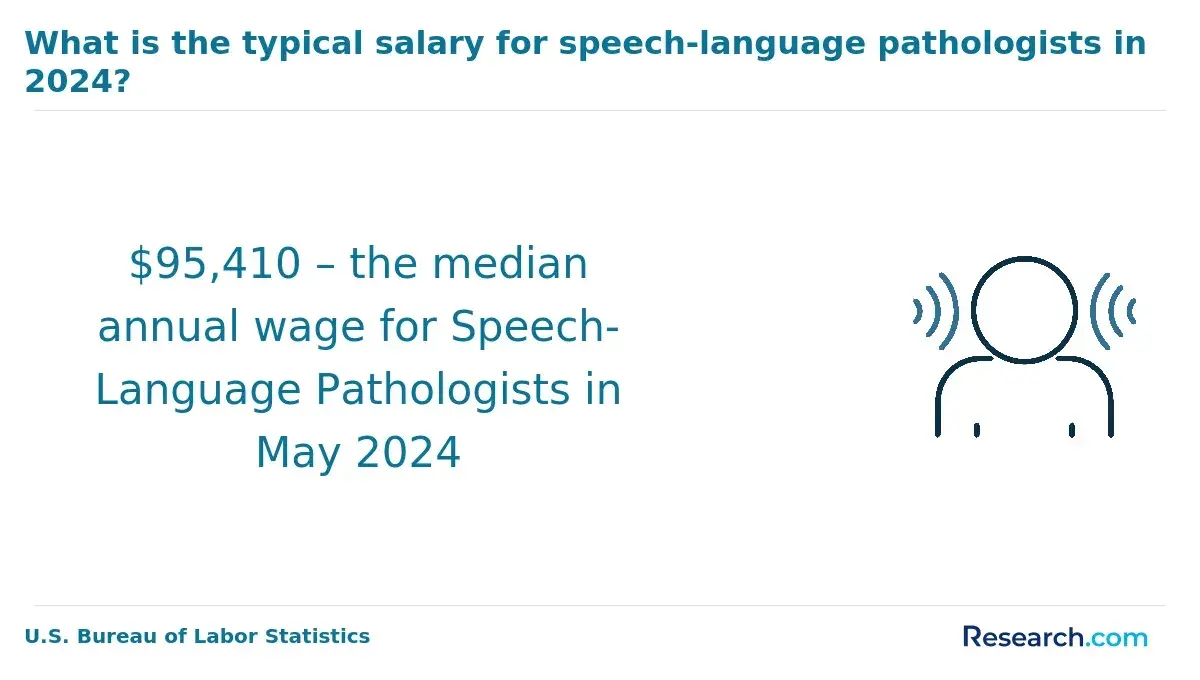
Return on investment also matters. According to the U.S. Bureau of Labor Statistics, the median annual pay for speech-language pathologists was about $97,870 in 2026. That figure can help frame the long-term value of the degree, but individual earnings vary by setting, location, experience, and licensure status. If you are comparing cost with potential earnings, review how much do speech language pathologists make and consider whether your preferred work setting aligns with your financial goals.
Are financial aid and scholarships available for part-time online SLP students?
Yes. Many part-time online SLP students can access financial aid, but eligibility depends on the school, program structure, enrollment level, and whether courses count toward a degree. Students should confirm aid rules before enrolling, especially if they plan to take a reduced course load or need leveling coursework.
Common financial aid options
- Federal financial aid: Graduate students in eligible online SLP programs can apply for federal financial aid, including student loans, by submitting the Free Application for Federal Student Aid (FAFSA). Pepperdine University, for example, states that online students are eligible for the same federal programs as on-campus students.
- Institutional scholarships: Some universities offer merit-based scholarships for admitted students. Pepperdine’s School of Speech-Language Pathology automatically considers admitted students for merit scholarships.
- External scholarships: Professional and nonprofit organizations may offer awards for SLP students. Bilingual Therapies, for instance, offers scholarships up to US $7,000–9,000 for bilingual speech-language pathology students working with culturally and linguistically diverse populations.
- Departmental or donor-funded aid: Universities may offer departmental awards, donor-funded scholarships, assistantships, or work-study options, though these may be more limited for online students. The online MA SLP program at University of Northern Colorado references scholarships and donor‐funded aid.
Important considerations for working adults
- Enrollment status matters: Federal aid often requires at least half-time enrollment. Pepperdine defines “half-time status” as 3 units per term, even for online students.
- Graduate scholarships may be limited: Full-ride scholarships are less common at the graduate level, so students should prepare for a mix of loans, savings, employer support, and smaller awards.
- Leveling courses may be treated differently: Some aid may not apply to non-degree or prerequisite coursework. Ask the financial aid office how your exact course sequence will be classified.
- Online students should verify eligibility: Some scholarships, assistantships, or campus jobs may be limited to on-campus students.
- Apply early: Submit the FAFSA as soon as possible and track priority deadlines for institutional and external awards.
Before accepting admission, ask for a written estimate of tuition, fees, expected aid eligibility, and annual borrowing limits for your specific part-time plan.
Is a part-time online SLP program easier than a full-time on-campus SLP program?
No. A part-time online SLP program is not easier; it is paced differently. Students still complete graduate-level coursework, supervised clinical training, and professional preparation aligned with the expectations for speech-language pathology practice. The flexibility can make the workload more manageable week to week, but it does not lower the standards.
The biggest advantage of part-time study is that students usually take fewer courses per term and have more time to absorb material. That can be helpful for working adults, caregivers, and career changers. The trade-off is that the program lasts longer, and students must sustain motivation and organization over several years.
Why part-time online study can feel manageable
- Fewer courses may be taken at one time.
- Students may be able to continue working while enrolled.
- The extended timeline can reduce academic overload.
- Online delivery can reduce commuting and relocation barriers.
Why it can still be difficult
- Clinical placements may require daytime availability.
- Online learning requires self-discipline and consistent participation.
- Students must manage school deadlines without the same daily campus routine.
- The longer timeline can make burnout and competing responsibilities more likely.
Students comparing speech language pathology programs should avoid choosing based only on perceived ease. A better question is whether the program’s schedule, support model, clinical expectations, and admissions requirements match your life and learning style.
Are part-time online SLP degrees accredited and respected by employers?
Part-time online SLP degrees can be respected by employers when they come from properly accredited programs and lead to the certification and licensure pathway required for practice. Accreditation is more important than whether coursework was completed online, on campus, full time, or part time.
For students in the United States, the key programmatic accreditor to verify is the Council on Academic Accreditation in Audiology and Speech-Language Pathology (CAA), which is connected to the professional standards recognized by the American Speech-Language-Hearing Association (ASHA). Graduating from a CAA-accredited program supports eligibility for ASHA certification and state licensure, both of which are central to professional practice.
What employers usually care about
- Licensure eligibility: Employers need candidates who can meet state practice requirements.
- Clinical competence: Supervised experience, documentation, and readiness to work with clients matter heavily.
- Accredited education: A degree from a properly accredited program signals that the curriculum and clinical training meet professional standards.
- Professional skills: Communication, documentation, collaboration, ethics, and cultural responsiveness are essential in SLP roles.
Completing a part-time online program while working can also show persistence, time management, and adaptability. Still, students should verify accreditation before applying and confirm that the program meets licensure expectations in the state where they plan to work.
How do clinical placements work in part-time online SLP programs?
Clinical placements give online SLP students supervised, hands-on experience with clients. Even when coursework is online, students must complete in-person clinical training under qualified supervision. These experiences are essential for developing assessment, treatment planning, documentation, counseling, and interprofessional collaboration skills.
Most part-time online programs arrange or approve placements in the student’s region. Settings may include schools, hospitals, private clinics, rehabilitation centers, early intervention programs, and other approved sites. Some universities have clinical coordinators who help identify placements, while others expect students to take a more active role in finding potential sites that meet program standards.
Students must complete a minimum of 400 supervised clinical hours, as required by the American Speech-Language-Hearing Association (ASHA). In a part-time program, those hours are often distributed across multiple semesters, but clinical terms may still require substantial weekly availability.
Questions to ask about clinical placements
- Does the university find placements, or does the student identify sites?
- Can placements be completed near your home?
- Are evening or weekend placements available, or are most hours during the workday?
- What happens if a placement site falls through?
- Are there extra costs for background checks, immunizations, travel, or placement onboarding?
- Does the program meet licensure requirements in the state where you plan to practice?
Working adults should discuss clinical scheduling with employers early. Coursework may be flexible, but clinical placements often depend on client schedules, supervisor availability, and site requirements.
How do you choose a part-time online SPL program?
To choose a part-time online SPL program, start with accreditation and licensure fit, then compare schedule, clinical support, admissions pathway, cost, and student services. Convenience matters, but it should not outweigh whether the program can actually lead to your intended career outcome.
- Accreditation: Confirm that the program is accredited by the Council on Academic Accreditation in Audiology and Speech-Language Pathology (CAA) if your goal is ASHA certification and state licensure.
- State authorization and licensure alignment: Make sure the school can enroll students from your state and that the curriculum supports licensure where you plan to work.
- Program structure and flexibility: Compare course load, live class expectations, asynchronous work, cohort requirements, start dates, and any campus visits.
- Clinical placement support: Ask whether the program coordinates placements or expects students to locate sites. This is one of the most important factors for online learners.
- Admissions pathway: If you do not have a CSD background, look closely at prerequisite or leveling requirements and how they affect cost and graduation time.
- Faculty expertise and student support: Review faculty credentials, advising availability, tutoring, mentorship, technical support, and access to career guidance.
- Technology and learning format: Choose a program with a reliable online platform, clear communication expectations, recorded or live learning options, and opportunities to practice clinical reasoning.
- Total cost and aid: Compare tuition per credit, total credits, fees, travel costs, financial aid, and scholarship availability for part-time students.
- Graduate outcomes: Ask about completion rates, Praxis preparation, clinical placement success, licensure preparation, and employment support.
Red flags to watch for
- The program is vague about accreditation or licensure eligibility.
- Clinical placement responsibility is unclear.
- Total cost is difficult to estimate.
- Required live sessions conflict with your work schedule.
- The program cannot clearly explain how online students are supported.
The right program should make it clear how you will progress from admission to coursework, clinical training, graduation, certification, and licensure preparation.
What are the challenges of pursuing a part-time speech pathology program?
A part-time speech pathology program can make graduate school possible for working adults, but it also creates challenges that students should plan for before enrolling. The most successful students treat the program like a long-term professional commitment rather than a side project.
- Time management: Balancing coursework, clinical hours, employment, and family responsibilities can be demanding. Students need a weekly schedule that protects study time and assignment deadlines.
- Longer completion time: Part-time programs usually take three to four years to complete, which may delay entry into full professional SLP roles compared with faster full-time pathways.
- Maintaining motivation: Staying engaged over an extended timeline can be difficult, especially during demanding clinical terms or major life changes.
- Limited peer interaction: Online and part-time formats may offer fewer informal networking, study group, and mentorship opportunities than traditional campus programs.
- Clinical placement scheduling: Practicum hours may be difficult to fit around full-time work because many client services occur during regular business or school hours.
- Technology and self-directed learning: Students must be comfortable with online platforms, virtual communication, independent reading, and remote collaboration.
- Financial planning: A longer timeline can spread out tuition payments, but it may also extend fees and delay higher post-graduation earnings.
These challenges are manageable with planning. Before applying, estimate your weekly availability, talk with your employer about future clinical schedule needs, compare placement support carefully, and choose a program that matches your capacity—not just your ambition.
References
- U.S. Bureau of Labor Statistics - Speech-Language Pathologists https://www.bls.gov/ooh/healthcare/speech-language-pathologists.htm
- ASHA EdFind - Accredited Speech-Language Pathology Programs https://find.asha.org/ed/
- Audiology and Speech-Language Pathology Interstate Compact https://aslpcompact.com/compact-map/
- California State University-Northridge - Master of Science in Communicative Disorders (Online) https://tsengcollege.csun.edu/programs/CDS
- Baylor University - Master of Science in Speech-Language Pathology (Online) https://csd.robbins.baylor.edu/graduate/online-csd-graduate-program
- Maryville University - Master of Science in Speech-Language Pathology https://www.maryville.edu/masters/speech-language-pathology/
- Pepperdine University - Master of Science in Speech-Language Pathology https://healthscience.pepperdine.edu/online-masters-in-speech-language-pathology/
- California State University-East Bay - Online Master of Science in Speech-Language Pathology https://ce.csueastbay.edu/programs/speech-language-pathology/