2027 Most Affordable Online Electrician Trade School Programs

Co-Founder and Chief Data Scientist
Choosing an electrician training program is not just about finding the cheapest tuition. The bigger question is whether the program will help you build enough electrical knowledge to qualify for an apprenticeship, prepare for licensing steps in your state, and enter the field without taking on unnecessary debt.
Online electrician trade school programs can be a practical starting point for adults who need flexible training, career changers who cannot attend campus full time, and students who want to learn electrical theory before applying for apprenticeships. These programs usually teach classroom-based topics such as electrical theory, wiring methods, safety, blueprint reading, and the National Electrical Code, while hands-on experience must still be completed through an apprenticeship, employer training, or another supervised local option.
This guide explains how affordable online electrician trade school programs work, what they cost, how long they take, which schools offer lower-cost options, and what to check before enrolling. It also covers salary expectations, licensing realities, career paths, financial aid, common mistakes, and the questions you should ask before choosing a program.
Quick Answer: Are Online Electrician Trade School Programs Worth It?
Online electrician trade school programs can be worth it if you use them for the right purpose: building foundational knowledge before or during an apprenticeship. They are usually not a complete replacement for hands-on training, and they do not automatically make you a licensed electrician. For many students, however, they offer a lower-cost and more flexible way to study electrical basics before pursuing supervised work experience.
- Graduates may use this training to pursue entry-level paths such as apprentice electrician, residential electrician helper, electrical technician, maintenance electrician trainee, or commercial electrician apprentice.
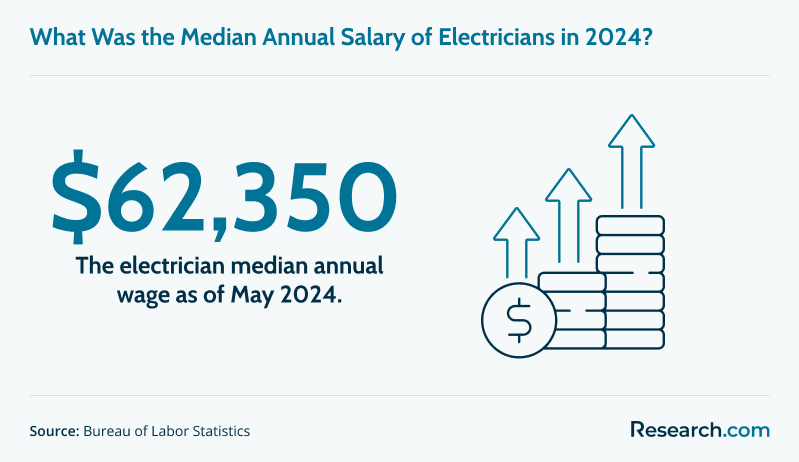
- According to the U.S. Bureau of Labor Statistics, electricians earn a median annual salary of around $62,350, while top earners make over $99,000.
- Affordable online programs can reduce commuting, housing, and scheduling barriers, but students still need a plan for hands-on training and state licensing requirements.
What can I expect from an online electrician trade school program?
An online electrician trade school program teaches the classroom portion of electrician preparation. Students typically study electrical theory, circuits, conductors, wiring methods, safety rules, construction drawings, residential and commercial systems, and the National Electrical Code. Some programs also include virtual simulations, interactive lessons, online exams, and career-preparation modules.
The most important limitation is hands-on training. Electrical work is a physical trade, so students must eventually learn how to install wiring, use meters, bend conduit, troubleshoot systems, and work safely around energized equipment under supervision. A fully online program can introduce these concepts, but it cannot replace the field hours required by most licensing boards.
For working adults and career changers, the online format can be helpful because many programs are self-paced. You may be able to study in the evenings, on weekends, or between work shifts. Still, before enrolling, confirm whether the school helps students connect with apprenticeships, employers, unions, or local training partners.
| Program feature | What it usually means for students | What to verify before enrolling |
| Online coursework | You complete lessons, readings, videos, quizzes, and exams through a learning platform. | Ask whether instructor support is included or if the program is entirely self-guided. |
| Self-paced schedule | You can often move faster or slower depending on your availability. | Check the maximum time allowed for completion and whether extensions cost extra. |
| Electrical code training | You learn how the National Electrical Code applies to safe installation practices. | Confirm which NEC edition the program uses and how often the curriculum is updated. |
| Hands-on experience | This is usually completed outside the online program through an apprenticeship or job placement. | Ask whether the school has apprenticeship guidance, employer contacts, or placement support. |
| Credential | You may receive a certificate, diploma, CEUs, or completion certificate. | Confirm whether the credential is recognized by employers or licensing authorities in your state. |
Where can I work with an online electrician trade school program?
After completing an online electrician program, most students look for entry-level work or apprenticeship opportunities where they can gain supervised field experience. Electricians are needed in construction, facilities maintenance, manufacturing, utilities, renewable energy, telecommunications, and public-sector infrastructure.
Possible work settings include:
- Electrical contractors and subcontractors
- Residential construction and remodeling companies
- Commercial building and facilities maintenance teams
- Manufacturing plants and industrial facilities
- Hospitals, schools, warehouses, and office buildings
- Utility companies and energy providers
- Solar, wind, and other renewable energy companies
- Telecommunications, low-voltage, and data cabling firms
- Municipal agencies and government departments
Some electricians eventually become self-employed, but that route usually requires licensing, field experience, business knowledge, insurance, and compliance with local regulations. If you enjoy hands-on troubleshooting but want to compare another technical pathway, affordable online appliance repair trade school programs may also be worth reviewing.
How much can I make with an online electrician trade school program?
Electrician pay depends heavily on location, licensing level, union status, overtime, employer type, and specialization. Completing an online program may help you qualify for entry-level opportunities, but wages typically rise as you gain supervised experience, complete an apprenticeship, pass licensing exams, and move into journeyman or master electrician roles.
In the U.S., entry-level electricians often start between $38,000 and $45,000. Journeymen with several years of experience commonly earn $60,000 to $70,000 annually. The U.S. Bureau of Labor Statistics reports a national median salary of $62,350, with the top 25% earning over $80,000 and the highest-paid professionals reaching more than $100,000 per year.
Location also matters. Electricians in California, Washington, Hawaii, and the District of Columbia frequently earn between $85,000 and $89,000. Overtime, union benefits, industrial work, renewable energy projects, and advanced troubleshooting skills can also affect total compensation.
| Career stage | Typical role | Pay context from available figures |
| Entry level | Helper, trainee, or apprentice applicant | Often starts between $38,000 and $45,000 |
| Apprentice | Works under a licensed electrician while completing required hours | Pay usually increases as training progresses |
| Journeyman | Licensed electrician who can work more independently | Commonly makes $60,000 to $70,000 annually |
| Experienced or specialized electrician | Industrial, union, renewable energy, contractor, or advanced service work | Top 25% earn over $80,000; top earners may exceed $99,000 or more than $100,000 per year |
- Affordable Online Electrician Trade School Programs for 2027
- How long does it take to complete an affordable online electrician trade school program?
- How does an affordable online electrician trade school program compare with an on-campus program?
- What is the average cost of an affordable online electrician trade school program?
- What financial aid options are available for affordable online electrician trade school students?
- What are the prerequisites for affordable online electrician trade school programs?
- What courses are included in affordable online electrician trade school programs?
- What specializations can affordable online electrician trade school programs prepare you for?
- What industry credentials and certifications can I earn through an affordable online electrician trade school program?
- Can further education elevate an electrician's career trajectory?
- What challenges should you consider with affordable online electrician trade school programs?
- Can further academic advancement transform your electrician career?
- How do I choose the best affordable online electrician trade school program?
- What career paths are available after affordable online electrician trade school?
- What is the job market like for graduates of affordable online electrician trade school programs?
Affordable Online Electrician Trade School Programs for 2027
How do we rank schools?
Affordability matters, but it should not be the only factor in choosing electrician training. A low-cost program is only useful if it teaches relevant electrical fundamentals, has credible oversight, clearly explains its credential, and helps students understand the next step toward apprenticeship or licensure.
Research.com evaluates programs using a transparent methodology and data from sources such as the Integrated Postsecondary Education Data System (IPEDS), Peterson's databases, including their Distance Learning Licensed Data Set, and the College Scorecard database from the National Center for Education Statistics. These sources help compare cost, delivery format, institutional information, and other factors students should review before enrolling.
1. SkillCat
SkillCat offers an online Electrician Trade School program built for students who want an introductory, flexible route into the electrical field. The program is especially relevant for learners preparing to apply for apprentice-level roles and for those who want a low-cost way to study basic electrical concepts before committing to longer training.
The program is 100% online and self-paced. Coursework covers electrical theory, safety, blueprint reading, the National Electrical Code, wiring diagrams, electrical troubleshooting, trade math, and electricity fundamentals. SkillCat also uses virtual simulations to help students connect theory with workplace scenarios.
- Program Length: 60 hours (self-paced)
- Tracks/concentrations: Electrician Apprentice preparation, including trade math, electricity fundamentals, wiring diagrams, electrical troubleshooting, NEC, and safety basics
- Cost per Credit: Monthly or annual subscription model; $10/month or $96/year
- Required Credits to Graduate: Not applicable
- Accreditation: International Accreditors for Continuing Education and Training (IACET)
2. U.S. Career Institute
U.S. Career Institute provides a 100% online Electrician program designed to help students prepare for apprenticeship opportunities. The school has offered distance education for over 40 years, since 1981, and its format is aimed at learners who need an affordable, self-paced starting point.
Students study online without fixed class meeting times. The curriculum introduces electrical theory, safety, the National Electrical Code, residential wiring, and other topics commonly expected of apprentice candidates.
- Program Length: Self-paced; average completion time is typically around 4-6 months
- Tracks/concentrations: General Electrician Program
- Cost per Credit: Total program cost is $1,239 (with a $300 saving) or $1,539 (with payment plan)
- Required Credits to Graduate: Not applicable
- Accreditation: Distance Education Accrediting Commission (DEAC)
3. Penn Foster
Penn Foster offers a Residential Electrician Career Diploma for students seeking entry-level preparation in residential electrical work. The program suits learners who want flexible career training and are interested in home wiring, electrical drawings, safety, troubleshooting, and code-based installation practices.
The program is delivered online and is self-paced. It focuses on residential electrician skills, including electrical fundamentals, blueprint reading, troubleshooting, electrical contracting concepts, and detailed National Electrical Code coverage.
- Program Length: Estimated completion time is 7 to 11 months, self-paced
- Tracks/concentrations: Residential Electrician skills, including electrical systems, electrical drawings, electrical contracting, and the National Electrical Code® (NEC)
- Cost per Credit: Not applicable; total program cost of $939 (paid in full) or $1,139 (with payment plan)
- Required Credits to Graduate: 37.7 continuing education units (CEUs)
- Accreditation: Distance Education Accrediting Commission (DEAC), Commission on Secondary Schools of the Middle States Association of Colleges and Schools
4. Preppy
Preppy, through a partnership with Auburn University, offers an online Electrical Technician Certification Program. This option is designed for students who want a structured introduction to electrical systems and technician-level concepts, especially in settings such as manufacturing and industrial support.
The program is entirely online and self-paced. It covers electrical systems, automation, motor controls, quality management, electrical theory, installation planning, and National Electrical Code concepts.
- Program Length: 4-6 months
- Tracks/concentrations: Electrical Technician, covering electrical system planning and installation in residential and commercial dwellings, electrical theory, and the National Electrical Code (NEC)
- Cost per Credit: Not applicable; total program price of $2,499.00
- Required Credits to Graduate: Not applicable
- Accreditation: Provides an accredited university completion certificate from partner Auburn University; Auburn University is a regionally accredited institution
5. 360training
360training offers online electrical training courses rather than one single electrician diploma pathway. Since the company was established in 1997, its course offerings have expanded across areas such as industrial skills, electrical systems, safety, motor control, transformers, circuit protection, and variable frequency drives.
This option may work best for learners who need targeted training, continuing education, or a focused skills refresher. It may be less appropriate for students looking for a single comprehensive trade school program that guides them from beginner level to apprenticeship readiness.
- Program Length: 8 to 17 hours, depending on the specific course
- Tracks/concentrations: Specialized electrical training courses at different knowledge levels, including industrial electrical and electronics, basic electricity, and safety courses
- Cost per Credit: Starts at $20; courses are priced individually
- Required Credits to Graduate: Not applicable
- Accreditation: Occupational Safety and Health Administration (OSHA)
6. Ashworth College
Ashworth College offers an online Electrician Training Diploma for students seeking foundational preparation for entry-level residential electrical work. It is designed for beginners, career changers, and working adults who need the flexibility of online study.
Students complete lessons, reading assignments, and online exams at their own pace. The curriculum emphasizes residential and small commercial systems, electrical fundamentals, plans and drawings, schematics, conduits, cables, conductors, and National Electric Code content.
- Program Length: Can be completed in as little as four months, with up to one year allowed for completion (self-paced)
- Tracks/concentrations: Residential and small commercial electrical systems, electrical fundamentals, plans, drawings, schematics, conduits, cables, and conductors, with emphasis on the National Electric Code (NEC)
- Cost per Credit: Total program cost of $1,199 (paid in full) or $59/month (with payment plan)
- Required Credits to Graduate: Not applicable
- Accreditation: Nationally accredited by the Distance Education Accrediting Commission (DEAC)
How long does it take to complete an affordable online electrician trade school program?
Most affordable online electrician trade school programs take four months to one year to complete. The actual timeline depends on the program length, whether it is self-paced, how many hours you can study each week, and whether the program includes only introductory coursework or a broader diploma-style curriculum.
Electrician training is often considered one of the good trades to learn because students can begin with relatively short classroom preparation and then continue into paid supervised training. However, the full path to licensure is longer than the online program itself.
| Training stage | Typical length | Best for | Important limitation |
| Short online certificate | 4–6 months | Beginners who want electrical basics before applying for an apprenticeship | Usually does not include enough hands-on experience for licensure |
| Online diploma or career program | 6–12 months | Students who want broader coverage of residential, commercial, code, safety, and blueprint topics | May still require local apprenticeship or fieldwork after completion |
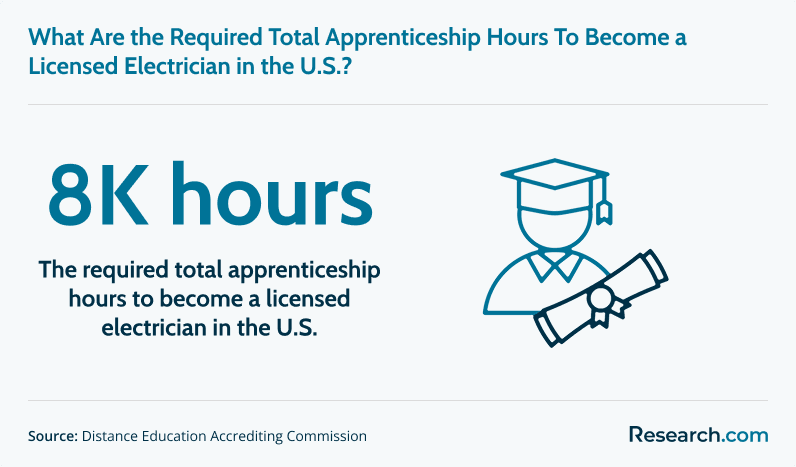
| Apprenticeship and licensing path | Around four years | Students who want to become licensed electricians | Most states require over 8,000 hours of supervised hands-on experience and a licensing exam |
Completing an online program alone does not make you a licensed electrician. In most states, you must complete an apprenticeship, document supervised work hours, and pass a licensing exam before working independently.
How does an affordable online electrician trade school program compare with an on-campus program?
Affordable online electrician trade school programs are usually more flexible than campus-based programs. Students can often complete lessons on their own schedule, which is useful for those balancing work, caregiving, or other commitments. Many electrician trade schools now use online or blended formats for theory-based instruction.
The trade-off is hands-on practice. Online programs can teach electrical theory, safety, codes, drawings, and troubleshooting concepts through videos, readings, simulations, and interactive assignments. On-campus programs can provide supervised lab practice with wiring, conduit bending, tools, panels, and equipment.
This online-versus-campus trade-off is not unique to electrician training. Other skill-based programs, including the cheapest dog obedience training online programs, may also teach theory remotely while requiring students to find real-world practice opportunities.
| Factor | Online electrician program | On-campus electrician program |
| Flexibility | Often self-paced and easier to fit around work or family obligations | Usually follows fixed class and lab schedules |
| Cost | Can be less expensive because students avoid commuting, housing, and some campus fees | May cost more, especially if relocation or transportation is required |
| Hands-on training | Usually must be arranged through apprenticeships, internships, employers, or local partners | Often includes supervised lab practice as part of the program |
| Instructor feedback | May depend on email, chat, online office hours, or automated assessments | Can include immediate feedback during lab work |
| Best fit | Independent learners who already have a plan for field experience | Students who learn best through direct supervision and structured practice |
What is the average cost of an affordable online electrician trade school program?
The average cost of an affordable online electrician trade school program typically ranges from $750 to $3,000. Lower-cost options may be best for students who need introductory training, while higher-cost programs may include broader curriculum coverage, instructor support, career services, or apprenticeship preparation.
This cost range should be evaluated against the long-term requirements of becoming licensed. Like a mechanic school, an electrician program may not include every expense needed to begin working in the field. Students should budget for tools, exam fees, books or code materials, transportation to apprenticeship sites, and any local licensing expenses.
The field’s growth outlook is one reason students consider this investment. Electrician employment is associated with 11% projected growth through 2034, and demand is tied to infrastructure upgrades, building maintenance, clean energy projects, and ongoing electrical system needs.
| Cost item | What to ask before enrolling |
| Tuition | Is the full program price listed clearly, including payment-plan totals? |
| Books and code materials | Are NEC materials, textbooks, or digital resources included? |
| Tools and equipment | Will I need to buy meters, hand tools, PPE, or practice kits separately? |
| Exam and licensing fees | Does the program include licensing exam preparation, or are exam fees separate? |
| Hands-on training | Does tuition include labs, externships, or apprenticeship placement support? |
| Payment plans | Does the payment plan increase the total price compared with paying in full? |
The demand for electricians is expected to grow steadily over the next decade, driven by infrastructure upgrades and clean energy projects. This chart compares the projected employment growth of electricians to that of other construction trades workers through 2034.
What financial aid options are available for affordable online electrician trade school students?
Financial aid options vary widely because online electrician programs differ in accreditation, school type, credential level, and eligibility for federal aid. Some programs are short career-training courses that do not participate in federal student aid, while others may be offered by institutions that qualify for broader aid programs.
- Federal Financial Aid (FAFSA): Students may qualify for Pell Grants, federal student loans, or work-study only if the school is eligible and participates in Title IV funding. This is more common at community colleges and technical schools than at short private online programs.
- Scholarships and Grants: Some schools, trade associations, unions, employers, and workforce organizations offer funding for students entering skilled trades. Availability may depend on need, location, veteran status, career goals, or underrepresented groups in trades.
- Payment Plans: Many online programs let students divide tuition into monthly payments. Compare the paid-in-full price with the payment-plan price because the total cost may differ.
- Employer or Union Sponsorships: If you already work in maintenance, construction, facilities, or a related field, ask whether your employer or union offers tuition reimbursement or apprenticeship sponsorship.
- State Workforce Programs: Some state workforce agencies fund vocational training for eligible students, especially when the program aligns with local labor demand.
What are the prerequisites for affordable online electrician trade school programs?
Most affordable online electrician trade school programs have low entry barriers. That accessibility is one reason skilled trades are gaining renewed attention among students, parents, and career changers. Electrician training is often compared with other practical technical paths, including highest paying trade jobs in HVAC and related fields.
Unlike advanced graduate programs such as accredited speech pathology graduate programs, electrician training usually does not require a college degree. Most programs are designed for beginners.
- High School Diploma or GED: Many schools require applicants to have completed high school or earned an equivalent credential. Some may accept students who are still working toward a GED.
- Minimum Age Requirement: Applicants are often expected to be at least 18 years old by the time they begin an apprenticeship or job-site training phase.
- Basic Math and Reading Skills: Electrical work uses measurements, formulas, diagrams, and technical instructions, so students should be comfortable with basic algebra, fractions, decimals, and reading comprehension.
- Computer and Internet Access: Online students need reliable internet access, email skills, and the ability to navigate a learning platform.
- Physical and Safety Readiness: While online coursework is academic, future fieldwork may require working with tools, ladders, confined spaces, PPE, and strict safety procedures.
Prior electrical experience is usually not required, but students should be prepared to pursue supervised hands-on training after completing the online portion.
What courses are included in affordable online electrician trade school programs?
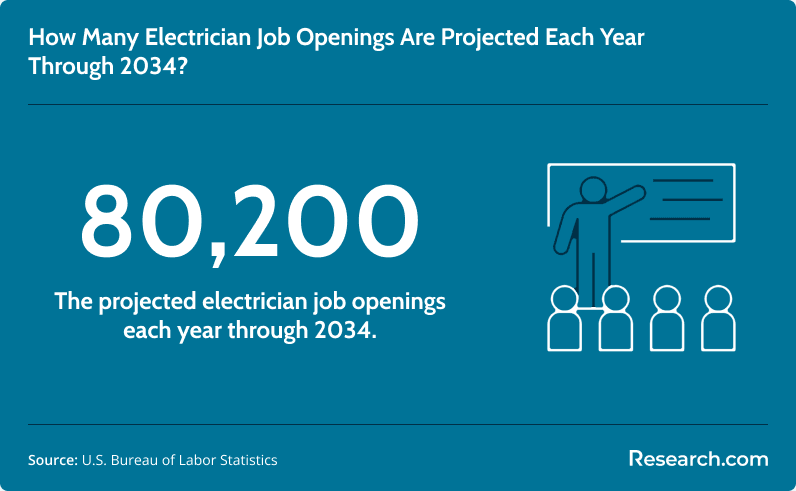
Affordable online electrician programs cover the technical concepts students need before hands-on training. As with other online trade courses, the goal is to build a practical foundation rather than replace all field experience. With 80,200 projected openings each year, these core topics can help students prepare for apprenticeship applications and entry-level electrical work.
| Course area | What students learn | Why it matters on the job |
| Electrical Theory | Voltage, current, resistance, circuits, Ohm’s Law, and power relationships | Helps students understand how systems work before troubleshooting or installation |
| National Electrical Code (NEC) | Code rules for safe electrical installation | Code knowledge is essential for compliant work and licensing preparation |
| Residential Wiring | Outlets, switches, panels, circuit breakers, lighting, and home wiring layouts | Prepares students for common entry-level residential tasks |
| Commercial and Industrial Wiring | Larger electrical systems, motor circuits, controls, and facility wiring concepts | Introduces the systems used in offices, schools, plants, and warehouses |
| Blueprint Reading | Electrical plans, symbols, diagrams, and construction drawings | Electricians must follow plans accurately on job sites |
| Safety and OSHA Standards | Hazard recognition, PPE, lockout/tagout concepts, and workplace safety rules | Electrical safety is central to preventing injury, fire, and code violations |
| Electrical Tools and Equipment | Use and maintenance of tools such as multimeters, pliers, conduit benders, and testing equipment | Students need tool familiarity before supervised field training |
| Motor Controls and Electrical Devices | Motors, transformers, relays, and control systems | Useful for commercial, industrial, and maintenance roles |
What specializations can affordable online electrician trade school programs prepare you for?
Most online electrician trade school programs introduce several specialization areas but do not fully train students for advanced specialty work. Specialization usually develops during apprenticeship, employer training, continuing education, or post-certificate credentials. These pathways can lead to trades that pay well, especially when combined with licensure and experience.
- Residential Electrician: Focuses on home wiring, service panels, lighting, outlets, switches, and household electrical systems.
- Commercial Electrician: Works on electrical systems in offices, retail spaces, schools, and other commercial buildings, often involving larger wiring and control systems.
- Industrial Electrician: Handles motors, machinery, automation equipment, controls, and electrical systems in manufacturing or plant environments.
- Maintenance Electrician: Troubleshoots, repairs, and maintains existing systems in buildings, warehouses, factories, and facilities.
- Solar Energy Technician: Works with photovoltaic systems, renewable energy wiring, and solar installation support; some students pursue NABCEP-related preparation later.
- Electrical Technician or Installer: Supports low-voltage systems such as alarms, security equipment, fire systems, telecommunications, and network cabling.
What industry credentials and certifications can I earn through an affordable online electrician trade school program?
Depending on the school, students may earn a certificate, career diploma, continuing education units, or a completion certificate. These credentials can strengthen an apprenticeship application or show employers that you have studied electrical fundamentals, but they are not the same as a state electrician license.
Some students later continue into broader academic or technical credentials, including associate-level pathways. For students comparing faster credential options, a 6 month associate degree guide can help explain how short academic programs differ from trade certificates and diplomas.
| Credential type | What it may show | What it does not guarantee |
| Certificate of completion | You finished a defined online training sequence | It does not automatically qualify you for licensure |
| Career diploma | You completed a more structured trade-school curriculum | It may not include required apprenticeship hours |
| CEUs | You completed continuing education units through a recognized provider | CEUs may or may not count toward state or employer requirements |
| OSHA-related training | You studied workplace safety topics relevant to job sites | It does not replace electrical licensing requirements |
| Apprenticeship completion | You completed supervised work and related instruction | You may still need to pass a state exam |
Can further education elevate an electrician's career trajectory?
Yes, further education can help electricians move into higher-responsibility roles, but the best option depends on the career goal. A technician who wants to become a journeyman should focus on apprenticeship completion and licensing. A licensed electrician who wants to supervise crews, estimate projects, manage a business, or move into technical leadership may benefit from additional coursework in project management, electrical technology, business, safety, or renewable energy systems.
Some experienced trades professionals also explore broader academic options, including a bachelor's degree online fast program, when they want to develop management, operations, or business skills. This route makes the most sense when the degree supports a clear goal, such as contracting, facilities management, energy management, or construction leadership.
What challenges should you consider with affordable online electrician trade school programs?
Online electrician programs are convenient, but they require careful evaluation. The biggest risk is assuming an online certificate is enough to work independently. In reality, electrical licensing is regulated, hands-on experience is essential, and requirements vary by state and locality.
Students should also think about whether the program provides meaningful support after enrollment. A low price is less valuable if the curriculum is outdated, instructor access is limited, apprenticeship guidance is weak, or the credential is not recognized by local employers. Additional credentials, including certifications for best paying jobs, can be useful only when they match actual employer demand and licensing rules.
Common mistakes to avoid
| Mistake | Why it can hurt you | Better approach |
| Choosing only by lowest tuition | The cheapest program may offer limited support, outdated content, or no apprenticeship guidance | Compare cost, curriculum, accreditation, employer relevance, and support services together |
| Assuming online training equals licensure | Most states require supervised hours and a licensing exam | Check your state licensing board before enrolling |
| Ignoring hands-on requirements | You may finish coursework but still lack job-site experience | Ask how graduates find apprenticeships, internships, or employer placements |
| Overlooking total cost | Tools, books, exam fees, and payment-plan charges can add up | Request a full cost breakdown in writing |
| Not checking accreditation or recognition | Some credentials may have limited value with employers or aid programs | Verify accreditation, state acceptance, and employer recognition |
| Relying only on rankings | A highly ranked program may not fit your state, schedule, or apprenticeship plan | Use rankings as a starting point, then confirm local requirements |
Can further academic advancement transform your electrician career?
Further academic study can expand an electrician’s options, especially for professionals who want to move beyond installation and repair into supervision, estimating, project management, energy systems, safety management, or business ownership. The key is choosing education that directly supports the next role, not adding credentials without a purpose.
Advanced academic programs may be useful for electricians moving toward construction management, engineering technology support, operations, or leadership roles. If you are comparing accelerated graduate options for long-term advancement, the best 1 year masters programs can provide context on faster academic pathways, though many electricians will not need a master’s degree unless it aligns with a specific career transition.
How do I choose the best affordable online electrician trade school program?
The best affordable online electrician trade school program is the one that fits your state requirements, budget, schedule, learning style, and apprenticeship plan. A program with strong classroom content but no path to hands-on experience may leave you stuck after graduation.
Some students prefer programs that connect to apprenticeships because supervised work can help them progress faster toward technician-level or licensed roles. One resource explaining the value of a program with apprenticeship notes the importance of combining classroom instruction with job-based learning; the cited technician-level salary is $75,720 annually.
Step-by-step program selection checklist
- Check state licensing rules first. Visit your state licensing board or labor department website to confirm age, education, apprenticeship, work-hour, and exam requirements.
- Verify accreditation and institutional recognition. Look for credible accreditation or recognized continuing education oversight, and ask whether the program is accepted by employers or apprenticeship sponsors in your area.
- Review the curriculum carefully. Prioritize programs that teach electrical theory, NEC, safety, residential wiring, blueprint reading, troubleshooting, and tools.
- Ask about hands-on training. Find out whether the school helps students locate apprenticeships, externships, labs, employer partners, or union opportunities.
- Compare the full cost, not just tuition. Include books, tools, exam prep, payment-plan charges, extension fees, and licensing expenses.
- Evaluate student support. Ask whether instructors answer questions, whether tutoring is available, and whether career support is included.
- Look for outcome evidence. Ask about completion rates, apprenticeship placement support, graduate testimonials, and employer relationships, but avoid assuming any salary or job outcome is guaranteed.
Questions to ask before enrolling
- Does this program meet or support requirements in my state?
- Is the program designed for apprenticeship preparation, continuing education, or technician training?
- What credential will I receive when I finish?
- Will I have access to instructors or only automated lessons?
- Which edition of the National Electrical Code is used?
- Are tools, books, and exams included in the tuition?
- Does the school help students find apprenticeships or employers?
- Can I pause, extend, or accelerate the program if my schedule changes?
- What is the total cost if I choose a payment plan?
Electrician salaries vary widely based on experience, with higher levels of expertise leading to significantly greater earning potential. The chart below shows the average annual salary for electricians at different stages of their careers.
What career paths are available after affordable online electrician trade school?
As of 2024, there were 779,800 electricians employed across the U.S., and the median annual wage was $62,350. The high demand for electricians is tied to construction, infrastructure, energy, building maintenance, and technology-related electrical needs.
Graduates of online electrician programs usually begin by applying for apprentice, helper, trainee, or technician roles. Some also compare related technical options, such as the cheapest electrical lineworker program online, which prepares students for another in-demand electrical infrastructure pathway.
| Career path | What the role involves | Typical next step |
| Apprentice Electrician | Works under a licensed electrician while learning installation, repair, safety, and code practices | Complete required supervised hours and prepare for journeyman licensing |
| Journeyman Electrician | Works more independently on residential, commercial, or industrial electrical projects | Gain experience, specialize, or pursue master electrician status where available |
| Residential Electrician | Installs and repairs home wiring, lighting, outlets, panels, and related systems | Build licensing experience and customer-service skills |
| Commercial Electrician | Works on offices, stores, schools, and other commercial buildings | Develop skills in larger systems, controls, and code compliance |
| Industrial Electrician | Maintains motors, machinery, control systems, and electrical equipment in plants or factories | Learn automation, troubleshooting, and specialized industrial systems |
| Maintenance Electrician | Diagnoses and repairs electrical problems in facilities, warehouses, and manufacturing sites | Strengthen troubleshooting, preventive maintenance, and equipment skills |
| Electrical Technician or Installer | Installs and supports low-voltage systems, alarms, security equipment, telecommunications, or networking infrastructure | Pursue specialized credentials or employer training |
| Solar Installer or Renewable Energy Technician | Supports solar energy system installation and renewable energy electrical work | Consider additional solar training or NABCEP-related preparation |
| Electrical Contractor or Business Owner | Runs an electrical services business and may hire other electricians | Obtain the required experience, licensing, insurance, and business knowledge |
What is the job market like for graduates of affordable online electrician trade school programs?
The job market for electricians is strong, but graduates should understand that employers usually look for a mix of classroom knowledge, safety awareness, reliability, and hands-on training. An online program can help with the classroom portion, while apprenticeships and supervised work build the field experience employers and licensing boards require.
The U.S. Bureau of Labor Statistics projects 11% job growth for electricians from 2023 to 2033, nearly triple the average growth rate across all occupations, with about 80,000 openings annually. The median annual wage is $62,350, and the top 10% earn over $104,000.
Current trends affecting electrician demand
- Data centers and AI infrastructure: Expanding technology infrastructure is increasing demand for electrical installation, maintenance, and power-distribution expertise.
- Renewable energy and EV rollout: Solar, wind, EV charging, and grid modernization projects require electricians who understand new equipment, codes, and installation environments.
- Infrastructure upgrades: Aging buildings, public infrastructure, and electrical systems create ongoing repair, replacement, and modernization work.
- Workforce replacement needs: Annual openings are influenced not only by new jobs but also by retirements and workers moving into other occupations.
- Changing views of skilled trades: More students are reconsidering trade careers for stability, income potential, and alternatives to traditional college routes.
What do students say about online electrician trade school?
- The online format made it possible for me to keep working while preparing for a new trade. I could review videos when I needed extra time, and the simulations helped me understand concepts that were new to me. Carlos
- I was unsure about learning electrical topics online, but the program gave me a clear introduction to circuits, wiring, and safety. Being able to replay lessons made difficult material easier to study. Melvin
- Studying online helped me move from warehouse work toward an electrical apprenticeship in under six months. The course structure kept me organized and gave me the confidence to apply for hands-on training. Derrick
Key Insights
- Online electrician trade school is best used as classroom preparation, not as a complete substitute for apprenticeship or licensing.
- Affordable online programs typically cost $750 to $3,000, but students should also budget for tools, books, exam fees, licensing costs, and hands-on training expenses.
- The full path to becoming a licensed electrician usually includes a four-year apprenticeship, over 8,000 hours of supervised experience, and a state licensing exam.
- Program quality depends on more than price. Check accreditation, curriculum depth, NEC coverage, instructor access, student support, and apprenticeship guidance.
- The electrician labor market is favorable, with 11% projected growth from 2023 to 2033 and about 80,200 annual openings, but salaries and job options vary by state, experience, specialization, and licensure level.
- Before enrolling, confirm your state’s requirements. Do not assume that an online certificate alone will qualify you to work independently.
References:
- Bureau of Labor Statistics. (2023). Apprenticeships: outlook and wages update. U.S. Department of Labor.
- Bureau of Labor Statistics. (2024). Electricians. U.S. Department of Labor.
- Electrical Training Alliance. (n.d.). Blended learning resources.
- Explore the Trades. (n.d.). Career posters for classrooms.
- Explore the Trades. (n.d.). Resources for parents and educators.
- Explore the Trades. (n.d.). Skilled trades resources.
Other Things You Should Know About the Most Affordable Online Electrician Trade School Programs
In 2027, the cost of enrolling in the most affordable online electrician trade school programs ranges from $1,000 to $3,000. These programs typically cover basic theory and safety training but require additional hands-on apprenticeships or work experience for licensing.
Yes, if the school is accredited and participates in the U.S. Department of Education’s Title IV program, students may use FAFSA for grants, loans, or work-study. Eligible programs must also meet federal clock-hour or credit-hour standards set by the school’s accreditor and state regulators.