
2027 Most Affordable Online Dog Obedience Training Trade School Programs

Co-Founder and Chief Data Scientist
Choosing an online dog obedience training program is a practical career decision, not just a way to spend more time with dogs. You are weighing tuition, credibility, hands-on practice, certification value, and whether training dogs can support a stable income. The right program can help you move from informal experience with pets to professional work with clients, shelters, veterinary teams, retail pet businesses, or your own training practice.
This guide is designed for career changers, pet care workers, shelter volunteers, groomers, dog walkers, and animal lovers who want an affordable route into professional dog training. You will learn what online dog obedience programs teach, how much they cost, how long they take, how to compare online and campus formats, what career paths are realistic, and what questions to ask before enrolling.
The goal is simple: help you choose a program that fits your budget, learning style, and career goals without overpaying for a credential that does not match your needs.
Quick answer: Are affordable online dog obedience training programs worth it?
Affordable online dog obedience training programs can be worth it if they teach science-based training methods, include meaningful practice with dogs, provide instructor feedback, and prepare you for credible industry recognition. They are especially useful for students who need flexible scheduling, want to start a small training business, or already work in pet care and want to add professional training services.
They are not all equal. Before enrolling, confirm the program’s training philosophy, instructor qualifications, practical requirements, student support, refund policy, total cost, and whether the credential is understood by employers or clients in your area.
Key benefits of affordable online dog obedience training trade school programs
- A structured certification program can help you move beyond informal dog-handling experience and learn how to work professionally with both dogs and owners.
- Graduates may pursue roles in private training, shelters, rescues, pet retail services, dog daycare facilities, veterinary settings, or related animal care businesses.
- The field can offer meaningful work for people who want to improve animal welfare, reduce behavior-related surrender, and help families communicate more effectively with their pets.
- Online study can make training more accessible for working adults because lessons, assignments, and video-based practice can often be completed around existing responsibilities.
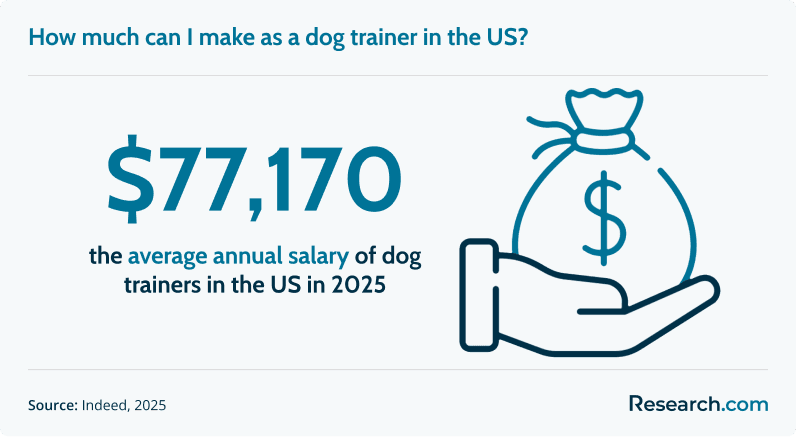
- Dog trainers in the United States have an average annual salary of $77,170, though actual earnings vary by location, niche, experience, employment type, and business success.
What can I expect from an affordable online dog obedience training trade school program?
An affordable online dog obedience training program should give you more than a list of commands. A strong curriculum introduces canine learning, body language, behavior assessment, humane training methods, client coaching, class planning, and the business side of pet services.
Most programs combine online lessons with applied work. You may watch demonstrations, read case materials, complete exams, record training sessions, submit videos for review, participate in mentorship, or practice with dogs in your household, community, shelter, or local network.
The best programs are clear about how hands-on skills are evaluated. Since dog training is a practical profession, look for assignments that require you to demonstrate timing, reinforcement delivery, leash handling, observation, safety awareness, and communication with owners.
| What you should learn | Why it matters in practice |
| Canine learning theory | Helps you understand how dogs acquire, repeat, and generalize behaviors. |
| Dog body language and behavior | Helps you identify stress, fear, arousal, confidence, and risk before problems escalate. |
| Obedience training mechanics | Builds the practical skills needed to teach cues, reward behavior, and improve reliability. |
| Client instruction | Prepares you to coach owners clearly because most dog training success depends on human follow-through. |
| Ethics and safety | Helps you use humane, appropriate methods and recognize when a case needs referral. |
| Business basics | Supports pricing, scheduling, marketing, intake forms, liability planning, and client retention. |
Where can I work after graduating from an affordable online dog obedience training trade school program?
Graduates can work in several animal care settings, but the right path depends on your experience level, confidence with clients, and willingness to run a business. Many new trainers begin with basic obedience, puppy manners, group classes, or assistant roles before moving into behavior consulting or specialty niches.
Entrepreneurship is a common route. Private trainers may offer in-home lessons, virtual coaching, group classes, puppy programs, leash-walking help, or customized behavior plans. This path offers independence, but it also requires marketing, scheduling, insurance, client screening, and consistent service quality.
Graduates who prefer a structured workplace may look at shelters, rescue organizations, dog daycare businesses, boarding facilities, veterinary clinics, pet supply retailers, or grooming businesses that offer training as an added service. Existing pet care workers can also use dog training education to expand their services and work more confidently with challenging behaviors.
How much can I make after graduating from an affordable online dog obedience training trade school programs?
The average annual salary for a dog trainer in the United States is approximately $77,170. That number is useful as a benchmark, but it should not be treated as a guaranteed outcome. Earnings can differ widely based on market demand, region, specialization, employer type, reputation, client volume, pricing, and whether you work independently or for an organization.
Self-employed trainers may have higher income potential if they build a strong local brand, but they also carry business expenses such as insurance, software, taxes, advertising, website costs, travel, equipment, and unpaid administrative time. Employed trainers may have more predictable schedules and income but less control over pricing and services.
- How long does it take to finish an affordable online dog obedience training trade school program?
- Online vs. on-campus dog obedience training: Which format fits you?
- How much do affordable online dog obedience training programs cost?
- What financial aid options can help pay for online dog obedience training?
- What prerequisites do online dog obedience training programs usually require?
- What courses are included in an online dog obedience training curriculum?
- What dog training specializations can you pursue?
- What additional academic credentials can support a dog training career?
- How can you check accreditation and industry recognition?
- What post-graduation support should a program offer?
- Why do instructor credentials and industry partnerships matter?
- How should you choose the best affordable online dog obedience training program?
- What careers are available after online dog obedience training?
- What is the job market for dog obedience training graduates?
Most Affordable Online Dog Obedience Training Trade School Programs for 2027
How do we rank schools?
Research.com evaluates affordable online dog obedience training options by looking at cost, program structure, delivery format, institutional information, and available outcome-related data. Our rankings are built to help readers compare programs more efficiently, but they should be used alongside your own review of curriculum, instructor support, training philosophy, and career fit.
Our research process follows our published methodology. We reference education and institutional data sources such as the IPEDS database from the National Center for Education Statistics, Peterson's database, including distance learning data, the College Scorecard, and the National Center for Education Statistics.
Because dog training programs vary widely in tuition, format, recognition, and hands-on requirements, students should verify current pricing, policies, and credential details directly with each provider before enrolling.
1. Penn Foster – Dog Obedience Trainer/Instructor
Penn Foster offers a self-paced Dog Obedience Trainer/Instructor program for students who want a lower-cost entry point into canine training education. The program introduces dog behavior, communication, training methods, and basic business concepts for learners preparing for entry-level work or independent service building.
- Program Length: 5–11 months
- Curriculum: 5 courses, 15 exams, 1 final project
- Tuition: $779–$855
- Accreditation: Distance Education Accrediting Commission (DEAC)
- Best For: Beginners who want an accessible and budget-conscious starting point
2. CATCH Canine Trainers Academy – Master Class Certification (CCDT)
CATCH Canine Trainers Academy provides a mentor-supported Master Class Certification pathway for students seeking a more structured professional training experience. The program combines theory, obedience instruction, behavior work, client communication, and business preparation.
- Program Length: Self-paced; typically 6–18 months
- Curriculum: 10 phases including training, behavior, and client communication
- Tuition: $5,487 (paid in full); payment plans available
- Accreditation: International Association for Continuing Education and Training (IACET)
- Best For: Students who want deeper guidance, mentorship, and a comprehensive professional structure
3. Dunbar Academy – SIRIUS Dog Trainer Academy (4-Day Intensive)
Dunbar Academy offers the SIRIUS Dog Trainer Academy as a short intensive option for current and aspiring trainers. It focuses on class design, behavior counseling, promotion, and tools that can help students quickly refine or launch training services.
- Program Length: 4 days (intensive)
- Curriculum: Lectures, assignments, class templates, behavior strategies
- Tuition: Varies (check website)
- Accreditation: Certification Council for Professional Dog Trainers (CCPDT)
- Best For: Learners who want a fast, immersive format rather than a long certificate sequence
4. The Academy for Dog Trainers – Certificate in Training and Counseling (CTC)
The Academy for Dog Trainers offers the Certificate in Training and Counseling (CTC), a rigorous part-time online program focused on evidence-based training, learning theory, behavior modification, counseling, and case management. It is designed for learners who want a demanding professional preparation route.
- Program Length: 2 years (part-time, online)
- Curriculum: 4 progressive levels; specialties include training, behavior, and counseling
- Tuition: See website for current rates
- Accreditation: Accrediting Council for Continuing Education & Training (ACCET)
- Best For: Serious students seeking a more advanced, science-centered training education
5. Fenzi Dog Sports Academy – Bridging the Gap: Reducing Reinforcers, Proofing, and Generalization Course
Fenzi Dog Sports Academy offers a six-week Bridging the Gap course for trainers and handlers focused on performance reliability. The course addresses reinforcement reduction, proofing, and generalizing behaviors across settings, which are important skills in dog sports and competition preparation.
- Program Length: 6 weeks
- Curriculum: Video modules, practical tasks, instructor feedback
- Tuition: Varies (Gold, Silver, Bronze levels)
- Accreditation: International Association of Animal Behavior Consultants (IAABC)
- Best For: Trainers and handlers working toward competition readiness and higher-performance behavior reliability
6. Animal Behavior College – Dog Obedience Instructor Program
Animal Behavior College combines online coursework with a local externship in its Dog Obedience Instructor Program. Students study obedience, behavior, training practices, and business topics while also gaining applied experience outside the online classroom.
- Program Length: Typically 6–12 months
- Curriculum: 11-stage program including behavior, obedience, and business topics
- Tuition: $2,899–$5,647 (varies by payment plan)
- Accreditation: Distance Education Accrediting Commission (DEAC)
- Best For: Students who want online study with a local practical component
7. International School for Certified Dog Trainers – Certified Dog Trainer Course
The Certified Dog Trainer Course from ICSDT is a self-paced program built around marker-based training, practical assignments, video examples, and instructor feedback. It is one of the lower-cost options for students who want flexibility and guided skill development.
- Program Length: Self-paced (typically 6–12 months)
- Curriculum: 18 lessons with video instruction and instructor-reviewed assignments
- Tuition: Starting at $399
- Accreditation: International Association of Animal Behavior Consultants (IAABC)
- Best For: Budget-focused learners who still want mentorship and assignment review
| Program | Best fit | Important decision point |
| Penn Foster | Entry-level learners seeking a low-cost, self-paced option | Confirm whether the level of hands-on feedback matches your career goals. |
| CATCH Canine Trainers Academy | Students who want mentorship and a more extensive pathway | Compare the higher tuition against the depth of support and structure. |
| Dunbar Academy | Current or aspiring trainers wanting a short intensive | Decide whether a 4-day format is enough for your current skill level. |
| The Academy for Dog Trainers | Professionals seeking a rigorous evidence-based program | Be prepared for a longer part-time commitment. |
| Fenzi Dog Sports Academy | Dog sports and competition-focused trainers | This is specialized training rather than a broad beginner credential. |
| Animal Behavior College | Students who want online coursework plus externship experience | Ask how the local externship is arranged in your area. |
| ICSDT | Cost-conscious students wanting self-paced instruction | Review how much instructor interaction and practical evaluation you receive. |
How long does it take to complete an affordable online dog obedience training trade school program?
Completion time depends on the program’s depth, pacing, and required practice. Short workshops may last only a few days, while broader certificate programs may take several months. More intensive professional programs can extend up to two years when they include advanced coursework, case review, and part-time study.
Many online dog obedience programs are shorter than traditional degree or trade school routes. For example, an affordable electrical lineworker program online may require more extended hands-on components and state-related requirements, while dog training programs often focus on flexible online lessons and community-based practice.
Age should not be a barrier. The average age of an animal trainer in the US is about 38 years old, which shows that many people enter or continue in this field after gaining work and life experience elsewhere.
| Program type | Typical time frame | Best for |
| Short intensive | 4 days | People who already have experience and want concentrated instruction. |
| Focused online course | 6 weeks | Trainers looking to build a specific skill, such as competition proofing. |
| Career diploma or certificate | 5–11 months or typically 6–12 months | Beginners who want structured preparation for entry-level training work. |
| Mentor-supported professional program | Typically 6–18 months | Students who want guided development and broader career preparation. |
| Advanced part-time program | 2 years | Professionals seeking deeper behavior, counseling, and case management training. |
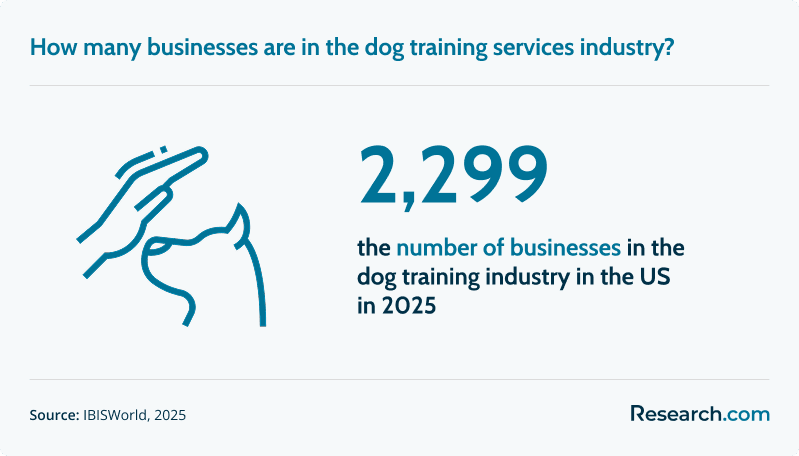
How does an online dog obedience training trade school compare to an on-campus program?
Online dog obedience training can work well when the program includes practice, feedback, and clear skill assessment. The question is not whether online learning is automatically better or worse than campus study. The better question is which format gives you the right balance of flexibility, cost, feedback, and hands-on exposure.
Online programs usually appeal to working adults, rural students, career changers, and people who need to study around family or employment obligations. Campus programs may be better for students who want scheduled in-person practice, immediate instructor observation, and a local peer network.
| Factor | Online dog obedience program | On-campus dog obedience program |
| Schedule | Often self-paced or flexible | Usually follows fixed class times |
| Hands-on learning | May use video submissions, local practice, externships, or mentor review | Usually provides in-person practice and direct observation |
| Cost | Often lower because there is no daily campus requirement | May include higher tuition, commuting, parking, or relocation costs |
| Feedback | Depends heavily on video review, instructor access, and assignment design | Can be immediate during live sessions |
| Networking | May connect students across regions | May build stronger local professional contacts |
| Best fit | Independent learners who can practice consistently with dogs | Students who learn best through live, supervised instruction |
Hands-on fields increasingly use online and hybrid formats when skill demonstration can be reviewed through video, projects, or local practice. Similar shifts have affected other practice-based programs, including students comparing the cheapest cinematography degree online.
Before choosing an online program, ask exactly how you will practice with dogs, how instructors will evaluate your timing and handling, and whether you will receive feedback detailed enough to improve.
What is the average cost of an affordable online dog obedience training trade school program?
Affordable online dog obedience training programs can range from a few hundred dollars to several thousand dollars. Based on the programs listed in this guide, tuition examples include starting at $399, $779–$855, $2,899–$5,647, and $5,487 when paid in full. Some programs list tuition as variable or direct students to the provider’s website for current pricing.
Compared with many longer vocational or degree programs, online dog obedience training can be a relatively low-cost way to enter a service-based career. Students comparing animal training with other hands-on fields may also look at options such as the cheapest online baking and pastry arts programs to understand how tuition, supplies, and practice requirements differ across trades.
Price vs. value: what should you actually pay for?
The cheapest program is not always the best choice, and the most expensive program is not automatically the strongest. A good value program is transparent, teaches humane and evidence-based methods, includes practical assignments, provides qualified instruction, and gives you a credential or preparation pathway that supports your goals.
When comparing tuition, look at what is included. A lower-cost course may be enough if you already have experience and need formal structure. A higher-cost program may be more appropriate if you need mentorship, externship support, business preparation, or advanced behavior training.
Costs beyond tuition
- Training tools: Clickers, treat pouches, leashes, long lines, harnesses, mats, crates, enrichment tools, and other basic supplies may be needed.
- Books and digital materials: Some schools include these, while others require separate purchases.
- Certification exam fees: A school certificate may be different from an independent industry certification, and outside exams can carry additional costs.
- Insurance and business setup: Independent trainers should budget for liability coverage, website costs, booking tools, marketing materials, and business registration needs.
- Travel or externship expenses: If a program requires local practice, mentorship, shelter work, or in-person evaluation, transportation may add to the total cost.
Is the investment financially reasonable?
The average annual salary for a dog trainer in the US is $77,170, but program ROI depends on how quickly you can turn training into paid work, how much you charge, your local market, and your ability to retain clients. A certification can support earning potential, but it does not replace business development, client communication, ethical practice, or continued learning.
What are the financial aid options for students enrolling in an affordable online dog obedience training trade school program?
Financial aid for dog obedience training varies by school and program type. Some options may not qualify for the same aid available to degree-seeking students, so it is important to ask each provider what payment options are available before you apply.
Students researching funding may see similarities with other career-focused online programs, including some affordable online environmental engineering degree pathways, where employer support, private financing, and credential-related funding can differ by institution and student status.
- School payment plans: Many providers allow students to divide tuition into smaller payments. Ask whether fees or interest apply.
- Private loans: Some students use private financing, but you should compare interest rates, repayment timelines, and total repayment cost carefully.
- Scholarships or grants: Animal welfare groups, schools, breed organizations, or community groups may offer limited funding opportunities.
- Employer reimbursement: If you work at a shelter, veterinary clinic, grooming salon, dog daycare, or pet retailer, your employer may help pay for training that expands your job skills.
- Military or veteran benefits: Eligible service members or veterans may be able to use benefits such as the GI Bill® for approved vocational training programs.
| Funding option | Questions to ask before relying on it |
| Payment plan | What is due upfront, and are there added fees? |
| Private loan | What will the total repayment cost be after interest? |
| Scholarship or grant | Who is eligible, and when is the deadline? |
| Employer assistance | Do you need to stay employed for a certain period after reimbursement? |
| Military or veteran benefits | Is the specific program approved for your benefit type? |
What are the prerequisites for enrolling in an affordable online dog obedience training trade school program?
Most affordable online dog obedience training programs have accessible entry requirements. A high school diploma or equivalent is commonly enough for enrollment, and many programs are designed for beginners. This accessibility is similar to some broad-entry online programs, such as the cheapest Christian studies online programs, where students may come from many academic and professional backgrounds.
However, being eligible to enroll is different from being ready to succeed. Dog training is a people-facing profession. You need to understand animals, but you also need to coach owners, manage expectations, communicate clearly, and remain calm when progress is slow.
Traits and skills that matter most
- Patience: Dogs and owners learn at different speeds, and frustration can damage trust.
- Empathy: Clients often seek help when they feel embarrassed, overwhelmed, or worried about their dog’s behavior.
- Observation: Trainers must notice body language, environmental triggers, handler mistakes, and subtle changes in behavior.
- Communication: Your success depends on whether owners understand and repeat the training plan correctly.
- Physical readiness: Training can involve standing, walking, handling equipment, and working around energetic dogs.
- Business mindset: Independent trainers need basic skills in pricing, scheduling, marketing, recordkeeping, and client policies.
- Commitment to humane methods: Ethical trainers keep learning and use approaches that prioritize safety and welfare.
Unlike a field such as a stenography career, where technical speed and accuracy requirements are central from the start, dog training programs often emphasize learnable professional skills, animal handling judgment, and consistent practice.
What courses are typically in an affordable online dog obedience training trade school program?
A well-designed online dog obedience program should build both technical and professional competence. You should learn why dogs behave the way they do, how to teach new behaviors, how to address common problems, how to communicate with owners, and how to operate safely and ethically.
Look for programs that teach science-based, humane training principles, including approaches aligned with LIMA, or Least Intrusive, Minimally Aversive. The program should also explain when a trainer should refer cases to veterinarians, veterinary behaviorists, or other qualified professionals.
| Course area | Typical topics | Career relevance |
| Canine behavior | Body language, social behavior, development, stress signals, breed and individual differences | Helps you assess dogs more accurately and prevent unsafe handling decisions. |
| Learning theory | Reinforcement, consequences, cues, timing, motivation, generalization | Forms the foundation for effective and humane training plans. |
| Obedience instruction | Sit, stay, recall, loose-leash walking, impulse control, manners | Prepares you for common client requests and group class instruction. |
| Behavior problem solving | Leash reactivity, fear, separation-related concerns, resource guarding, barking | Supports more complex client work, with appropriate limits and referrals. |
| Client coaching | Lesson planning, demonstrations, owner education, homework, progress tracking | Improves client compliance and training outcomes. |
| Business and marketing | Pricing, policies, intake forms, service packages, promotion, client management | Essential for private trainers and useful for managers in pet service settings. |
Business training is especially important for students who plan to become self-employed. Service-based fields often require operational skills, whether someone is building a training company or pursuing a restaurant manager career where customer service, staffing, and revenue decisions affect success.
Employment opportunities can appear in local pet service markets. For example, the “Other Miscellaneous Retailers” sector, which includes businesses such as pet supply stores, employs over 3,650 trainers.
What types of specializations are available in affordable online dog obedience training trade school programs?
General obedience is often the starting point, but specialization can help trainers stand out. A niche can make your services easier to market, help you serve a defined client group, and support stronger pricing when your skills match local demand.
- Puppy training and socialization: Helps owners with early manners, handling, house training, bite inhibition, confidence building, and age-appropriate exposure.
- Behavior modification: Focuses on challenges such as fear, anxiety, reactivity, resource guarding, or aggression-related concerns and often requires advanced education and referral judgment.
- Dog sports and competition: Supports agility, scent work, obedience trials, flyball, rally, and other performance activities.
- Service and therapy dog preparation: Involves training dogs for assistance or comfort-related roles, often with strict standards and ethical responsibilities.
- Shelter and rescue behavior support: Helps improve adoptability, transition planning, enrichment, and post-adoption success.
- Training business leadership: Supports trainers who want to hire staff, manage a facility, or learn how do you become a manager in a pet service organization.
Specialization can affect income. Trainers who work in the Motion Picture and Video Industries earn an average annual salary of $87,630, showing how niche expertise can create different earning opportunities.
What additional academic credentials can elevate my dog training career?
A dog training certificate may be enough for many entry-level and independent training goals, but additional academic credentials can be useful if you want to move into animal behavior, business management, shelter leadership, education, research support, or broader animal care administration.
Some trainers strengthen their profile with coursework in animal science, psychology, business, communications, nonprofit management, or entrepreneurship. If you want a fast academic add-on, you might compare options such as what degree can I get online in 6 months while remembering that short programs vary widely in purpose, transferability, and career value.
Is the program accredited and industry recognized?
Accreditation and industry recognition are not the same thing, and students should understand both. Institutional accreditation evaluates the school or education provider. Industry certification or recognition signals whether a credential is meaningful to employers, clients, or professional organizations in dog training.
Ask whether the provider is accredited by a recognized education body, whether the program prepares students for respected independent credentials, and whether local employers or shelters know the credential. If you plan to continue your education later, an accelerated online bachelor's program may be worth researching, but verify transfer rules before assuming credits or certificates will count toward a degree.
What post-graduation support opportunities can drive long-term success?
Post-graduation support can be a major difference between programs. New trainers often need help turning coursework into paid services, handling difficult client conversations, building referral relationships, and continuing education after their first credential.
Useful support may include alumni groups, instructor Q&A, mentorship, job boards, externship connections, business templates, advanced workshops, webinars, and continuing education recommendations. Students comparing career-focused credentials may also explore certification programs for well paying jobs to understand how different certificate paths connect to labor market opportunities.
What expert credentials and industry partnerships underpin these programs?
Instructor quality matters because dog training methods, ethics, and behavior science continue to evolve. Look for programs taught by professionals with credible field experience, current knowledge of humane training practices, and a record of working with both dogs and clients.
Partnerships can also matter when they create externship access, shelter practice opportunities, continuing education pathways, or professional networking. For students considering long-term academic growth beyond dog training, a 12 month master's degree online may be part of a broader education plan, but it should be evaluated separately from vocational dog training credentials.
How to choose the best affordable online dog obedience training trade school program?
The best affordable online dog obedience training program is the one that matches your career goal, budget, learning style, and ethical standards. Do not choose based on tuition alone. Choose based on whether the program can actually help you become competent with dogs and effective with clients.
Decision checklist before enrolling
| What to check | Why it matters | Question to ask |
| Training philosophy | Ethical methods affect animal welfare and client trust. | Does the curriculum teach science-based, humane methods such as LIMA? |
| Hands-on requirements | Dog training cannot be mastered through reading alone. | Will I submit videos, complete casework, or practice with dogs under review? |
| Instructor qualifications | Your feedback is only as strong as the person giving it. | Who teaches the courses, and what field credentials do they hold? |
| Credential value | Clients and employers may not recognize every certificate. | Is this certificate known in the dog training industry or my local market? |
| Total cost | Tuition may not include supplies, books, exam fees, or business setup. | What will I pay from enrollment through graduation and certification? |
| Student support | Online learners need access to help when skills are difficult to apply. | Can I contact instructors, mentors, or an active student community? |
| Career support | A certificate is only useful if you can translate it into work. | Does the program provide business guidance, externships, referrals, or alumni resources? |
Who should choose an online dog obedience training program?
- Working adults who need flexible coursework.
- Pet care workers who want to add training services.
- Shelter or rescue volunteers who want stronger behavior knowledge.
- Career changers who want a lower-cost path than a degree program.
- Self-directed learners who can practice consistently and seek feedback.
Who may need a different path?
- Students who need constant in-person supervision may prefer campus or apprenticeship-style learning.
- People who want to treat serious aggression or complex anxiety cases may need advanced education, mentorship, and referral relationships beyond a basic certificate.
- Students seeking college credit should confirm transferability before enrolling in a non-degree certificate.
- Anyone expecting guaranteed income immediately after graduation should first research local demand, pricing, and business requirements.
Common mistakes to avoid
- Choosing only by price: A low tuition program may still be a poor value if it lacks feedback or practical skill evaluation.
- Ignoring accreditation and recognition: A certificate may look official but have limited market value.
- Assuming online means no practice: Strong online programs still require hands-on work with dogs.
- Overlooking business costs: Independent trainers need insurance, marketing, scheduling systems, and policies.
- Skipping the refund policy: Know withdrawal deadlines and payment obligations before enrolling.
- Expecting a certificate to replace experience: Clients trust trainers who combine education, practice, results, and professionalism.
What career paths are available for graduates of affordable online dog obedience training trade school programs?
Graduates can use online dog obedience training credentials in several ways. Some build independent businesses, while others use the training to qualify for roles in animal care organizations or to expand services they already provide.
| Career path | Typical work | Best fit |
| Private dog trainer | One-on-one lessons, in-home training, behavior plans, virtual coaching | Entrepreneurial trainers who want control over services and schedule |
| Group class instructor | Puppy classes, obedience courses, manners workshops, specialty classes | Trainers who enjoy teaching people in a structured setting |
| Shelter or rescue behavior assistant | Enrichment, adoptability support, behavior notes, adopter education | Mission-driven graduates focused on animal welfare |
| Dog daycare or boarding trainer | Training add-ons, enrichment programs, staff guidance, behavior monitoring | Students who prefer an established workplace |
| Pet retail training specialist | Classes, customer education, product guidance, basic obedience support | Trainers who like public-facing service environments |
| Canine sports coach | Agility, scent work, obedience competition, handler coaching | Trainers interested in performance and competition |
| K9-related pathway | Law enforcement-oriented canine work and specialized handling preparation | Students interested in public safety can research how to become a K9 officer. |
Certificate-based training can be a direct career route in many fields. For example, students interested in healthcare often research medical assistant jobs because a focused diploma or certificate can lead to employment without a four-year degree. Dog obedience training can serve a similar function for animal care careers, provided the credential is practical and respected.
Location also affects income. In a high-demand city like Miami, the average annual salary for a dog trainer can exceed $122,000, showing why local market research is important before setting prices or choosing a business model.
What is the job market for graduates with an affordable online dog obedience training trade school?
The job market for dog obedience training graduates is connected to the broader animal care and service field. Demand is supported by pet ownership, shelter and rescue needs, pet service businesses, and owners seeking help with manners, behavior, socialization, and enrichment.
The broader animal care and service worker field is projected to have about 84,500 job openings each year over the next decade. The sector is expected to grow by 15%, compared with 4% for all occupations. Those figures suggest a strong employment environment, but individual outcomes still depend on local competition, training quality, experience, reputation, and specialization.
Graduates who want the strongest start should combine education with practical experience. Volunteer at shelters, assist established trainers, document case experience, ask for feedback, develop a professional referral network, and continue studying behavior and client communication.
Here’s What Graduates Have to Say About Their Affordable Online Dog Obedience Training Trade School Program
-
: "
"Before enrolling, I assumed dog training was mostly about teaching commands. The coursework helped me understand the science behind learning, behavior, and humane methods. That foundation made me feel much more prepared when clients came to me with complicated challenges." - Derek
"
-
: "
"Campus programs were more expensive than I could manage. An online option let me spread out the cost and keep working while I studied. It made the career change possible without taking on a large loan." - Marianne
"
-
: "
"I started later than many people expect, and I worried that would hold me back. Instead, my previous life and work experience helped me communicate with frustrated owners. The online format gave me room to learn at my pace." - Coleen
"
Key Insights
- Affordable online dog obedience training can be a practical career pathway when the program includes humane methods, real practice, instructor feedback, and a credential that clients or employers understand.
- Program costs vary widely, from starting at $399 to several thousand dollars, so students should compare total cost rather than tuition alone.
- Most programs are accessible to beginners and commonly require only a high school diploma or equivalent, but professional success depends heavily on patience, observation, communication, and business skills.
- The average annual salary for dog trainers in the United States is $77,170, but income is not guaranteed and depends on location, experience, niche, employment type, and client demand.
- The animal care and service worker field is projected to grow by 15%, compared with 4% for all occupations, with about 84,500 job openings each year over the next decade.
- Specialization can improve career focus. Trainers in the Motion Picture and Video Industries earn an average annual salary of $87,630, while dog trainers in Miami can exceed $122,000 on average.
- The strongest online programs do not skip hands-on learning. They use video review, externships, mentorship, case assignments, or local practice to evaluate real training skills.
- Before enrolling, ask about accreditation, industry recognition, practical requirements, instructor qualifications, refund policies, payment plans, and post-graduation support.
References:
- CATCH Canine Trainers Academy. (2024). Master Class (Become a Certified Professional Dog Trainer). catchdogtrainers.com
- Certification Council for Professional Dog Trainers. (2024). Our certifications. ccpdt.org
- Data USA. (2025). Animal trainers. datausa.io
- IBISWorld. (2025, April). Dog training services in the US - Market research report (2015-2030). ibisworld.com
- Penn Foster. (2024). Dog obedience trainer/instructor career diploma. pennfoster.edu
- U.S. Bureau of Labor Statistics. (2025). Occupational Outlook Handbook: Animal Care and Service Workers. bls.gov
Other Things You Should Know About Online Dog Obedience Training Trade School Programs
In 2027, schools like Animal Behavior College and Penn Foster offer some of the most affordable online dog obedience training programs. These programs provide comprehensive curriculum while maintaining budget-friendly tuition options, allowing students to gain valuable knowledge and skills without excessive financial burden.
In 2027, the Certification Council for Professional Dog Trainers (CCPDT) is highly respected for dog obedience training. Their programs are widely recognized for maintaining high standards, providing comprehensive coverage of essential skills, and offering a credential that can greatly enhance a trainer’s credibility.
Affordable online dog obedience training programs in 2027 often utilize digital resources like video modules, interactive quizzes, and community forums to minimize costs. They leverage technology to reduce overhead while ensuring structured learning at a fraction of the price of in-person programs.


