
2027 Best Online CDL Training for Truck Drivers – Top Trade School Programs

Co-Founder and Chief Data Scientist
Feeling financially stuck is a heavy weight, especially when you need a career with real stability. With the average truck driver's age being close to 48, it's clear this is a field that values maturity, yet choosing the right training path is more critical than ever.
This isn't just a list of schools; it's a strategic guide built by career planning experts with over 10 years of experience. We've created a roadmap to help you select the best online CDL training for truck drivers and launch a resilient career you can depend on for years to come.
What are the benefits of getting a CDL?
- A CDL gives you direct access to stable jobs in a high-demand, essential industry that forms the backbone of the U.S. economy.
- You can earn a reliable income with a solid starting point, as the median salary for truck drivers is between $57k and $60k.
- Modern hybrid programs offer the flexibility to complete your theory coursework online before you begin the required in-person, behind-the-wheel training.
What can I expect from a CDL?
When people ask about getting a CDL online, the first thing to know is that all legitimate programs are actually hybrid. You can’t learn to drive a 40-ton truck entirely from a computer, and for good reason. The "online" part of your training gives you the flexibility to learn the rules of the road, safety regulations, and trucking theory on your own schedule. This is a huge advantage for anyone balancing work or family obligations.
Once you’ve mastered the coursework, you’ll move to the second, mandatory part of your education: intensive, in-person training behind the wheel. This is where you develop the real-world skills you need to be a safe and confident professional driver. Think of it as the best of both worlds—flexible learning for the theory and hands-on practice for the skills. Finding the right online CDL training for truck drivers means finding a program that excels at both.
Where can I work with a CDL?
With a CDL, your workplace is the open road, but that doesn't always mean being thousands of miles from home. The most common entry point is with a large for-hire carrier doing Over-the-Road (OTR) work, which involves cross-country trips. This is where many new drivers gain invaluable experience.
However, that's just the beginning. Many drivers transition to regional jobs, which keep them closer to home, or local jobs, which often allow them to be home every night. These local roles are becoming more common thanks to the growth in e-commerce and package delivery.
You can also work for a private fleet, hauling goods for a single company like a major retailer or food supplier. The key is that a CDL gives you options, and many drivers build a career that starts with OTR experience and evolves into a more predictable, local route.
How much can I make with a CDL?
Let's talk about the most important question: how much you can earn. The median pay for heavy and tractor-trailer truck drivers is between $57,000 and $60,000 a year. It's best to think of this as the reliable "income floor" of the profession—a solid wage that provides real stability.
The "income ceiling," however, is much higher. Top-tier drivers with specialized skills and owner-operators who run their own businesses can push their earnings well over $100,000. Your CDL is the starting point for both a stable paycheck now and significant financial growth in the future.
- List of the Best Online CDL Training for Truck Drivers for 2027 List of Programs
- How long does it take to complete a CDL program? Program Duration
- How does an online CDL program compare to an on-campus program? How does an online CDL program compare to an on-campus program?
- What is the average cost of a CDL program? Program Cost
- What are the financial aid options for students enrolling in a CDL program? Financial Aid
- What are the prerequisites for enrolling in a CDL program? Requirements
- What courses are typically in a CDL program? What courses are typically in a CDL program?
- What types of specializations are available in a CDL program? Specialization
- How to Choose the Best CDL Program How to Choose the Best CDL Program
- What career paths are available for graduates of a CDL program? Career Paths
- What is the job market like for graduates of a CDL program? Job Market
- Which additional certifications should I pursue to maximize my CDL career? Which additional certifications should I pursue to maximize my CDL career?
- What post-graduation support services can enhance my CDL career? What post-graduation support services can enhance my CDL career?
- Is the CDL Program Accredited and Recognized by Industry Leaders? Is the CDL Program Accredited and Recognized by Industry Leaders?
Best Online CDL Training for Truck Drivers in 2027
Choosing CDL training is not just about finding the cheapest online course. To earn a commercial driver’s license, you need to complete the required theory instruction, pass permit exams, and receive in-person behind-the-wheel training from a qualified provider. Online CDL training can make the classroom portion faster and more flexible, but it cannot replace supervised driving practice.
This guide is for future truck drivers comparing online CDL theory courses, hybrid CDL programs, permit prep options, and career-focused training providers. You will learn which programs meet Entry-Level Driver Training expectations, how online and in-person training fit together, what costs to expect, which endorsements can improve your career options, and how to avoid choosing a weak program.
Quick Answer: Can You Complete CDL Training Online?
You can complete the CDL theory portion online through an eligible training provider, but you cannot earn a CDL entirely online. Federal CDL training rules require classroom or theory instruction plus behind-the-wheel training. Online courses are useful for preparing for the Commercial Learner’s Permit, completing ELDT theory, and studying endorsements such as HAZMAT, but driving skills must be learned and tested in person.
The best option for most students is a hybrid path: finish online theory first, then complete supervised range and road training through a school, employer-sponsored program, community college, or private CDL provider.
What Online CDL Training Usually Includes
Online CDL programs generally focus on theory rather than driving. That means you may study safety regulations, vehicle inspection procedures, basic control systems, shifting, hazard awareness, hours-of-service rules, trip planning, and endorsement-specific material. Some programs also include permit prep for general knowledge, air brakes, and combination vehicle exams.
Before enrolling, confirm whether the course is only for study support or whether it reports required ELDT completion to the Federal Motor Carrier Safety Administration. A low-cost course may be helpful, but it will not satisfy federal training requirements unless it is offered by a provider listed on the FMCSA Training Provider Registry.
How We Rank CDL Training Options
Because CDL training can affect your finances, licensing timeline, and first job opportunities, we evaluate programs using transparent, decision-focused criteria. Our ranking review considers publicly available education and training data from sources such as the IPEDS database, Peterson's database, the College Scorecard database, and The National Center for Education Statistics.
For CDL-specific programs, we also look for practical indicators that matter to students: FMCSA Training Provider Registry status, training format, total listed tuition, time commitment, whether the course is theory-only or includes hands-on training, and how clearly the provider explains next steps. To learn more about our broader evaluation process, visit Research.com’s methodology page.
Best Online and Hybrid CDL Training Programs
The programs below are not identical. Some are affordable online ELDT theory courses, while others are hybrid or in-person CDL schools that include driving instruction. Use the table to match the program type to your immediate goal: permit prep, ELDT theory completion, endorsement study, or full CDL training.
| Program | Best fit | Program length | Training type | Tuition | Recognition or accreditation |
| Midwest Truck Driving School — Class A CDL ELDT Theory | Students who want a short Class A theory course before permit and driving training | 3–4 hours, self-paced | Non-credit theory course | $109 | Listed on the Federal Motor Carrier Safety Administration (FMCSA) Training Provider Registry |
| CDL Online — ELDT Theory for CDL Permits & Endorsements | Drivers who need a flexible online option for CDL theory or endorsements | Self-paced with 180-day course access | Non-credit theory course | $60 – $225, depending on the course | Listed on the Federal Motor Carrier Safety Administration (FMCSA) Training Provider Registry |
| ProDriverU — Online ELDT for Class A & B | Learners who prefer short interactive modules and progress checks | Self-paced | Non-credit theory course | $199 – $299, depending on the course | Listed on the Federal Motor Carrier Safety Administration (FMCSA) Training Provider Registry |
| Roadmaster Drivers School — Class A CDL Training | Students seeking a full hybrid CDL program with hands-on driving and carrier connections | 3–6 weeks, depending on location | 180 hours | $6,000 – $8,000 | Listed on the Federal Motor Carrier Safety Administration (FMCSA) Training Provider Registry |
| 360 OSHA Campus — CDL Behind-the-Wheel Prep | Students who want online visual reinforcement before or during practical driving instruction | 3 hours | Non-credit supplemental course | $110 | Listed on the Federal Motor Carrier Safety Administration (FMCSA) Training Provider Registry |
| Global CDL Driver Training School — ELDT Theory for Class A & Hazmat | Students who want online theory with the possibility of continuing into in-person training | Self-paced (theory portion) | Non-credit theory course | $100 | Licensed by the Pennsylvania Department of Education; Listed on the Federal Motor Carrier Safety Administration (FMCSA) Training Provider Registry |
| OnlineCDLCourse.com — ELDT Theory Modules | Budget-conscious students and auditory learners who want audio-supported lessons | Self-paced | Non-credit theory course | $75 – $125, depending on the course | Listed on the Federal Motor Carrier Safety Administration (FMCSA) Training Provider Registry |
| Cape Fear Community College — CDL Permit Prep | Students who want focused permit exam preparation from a community college | Self-paced | Non-credit prep course | $75 | Southern Association of Colleges and Schools Commission on Colleges (SACSCOC) |
| ELDT Nation — Class A CDL Theory | Students who want a video-and-quiz format for Class A theory completion | Self-paced (average 4 hours) | Non-credit theory course | $149 | Listed on the Federal Motor Carrier Safety Administration (FMCSA) Training Provider Registry |
| ELDT.com — ELDT Video MasterCourse™ | Visual learners who want video-based CDL theory instruction | Self-paced | Non-credit theory course | $75 | Listed on the Federal Motor Carrier Safety Administration (FMCSA) Training Provider Registry |
How Long Does It Take to Complete a CDL Program?
Most full-time CDL training programs take between three and six months to complete, although theory-only online courses can often be finished much faster. Your actual timeline depends on the license class, school schedule, state testing availability, driving practice requirements, and whether you study full-time or part-time.
Be careful with programs that advertise speed but do not clearly explain driving hours, equipment access, instructor support, or job placement. Getting licensed quickly is useful only if you can pass the skills test and handle real commercial driving conditions safely. CDL training can also become the first step into broader careers in logistics, especially for drivers who later move into dispatch, safety, fleet, or operations roles.
Online CDL Training vs. On-Campus CDL Training
The real choice is not “online or campus.” For CDL students, the better question is: which parts of training can be completed online, and which parts must be done in person? Theory can be delivered online when the provider meets applicable requirements. Behind-the-wheel instruction, range practice, road training, and skills testing must happen in person.
This same quality-first thinking applies across online education. Whether you are comparing CDL programs or researching an aerospace engineering degree online, format alone does not prove quality. Instructor experience, learning outcomes, hands-on requirements, student support, and employer recognition matter more.
| Factor | Online CDL theory | On-campus or hybrid CDL training |
| Best use | Learning regulations, safety concepts, permit material, and ELDT theory | Practicing inspections, backing, coupling, shifting, turning, and road driving |
| Flexibility | Usually self-paced and available from home | Requires scheduled attendance and access to training vehicles |
| Licensing value | May satisfy theory requirements if offered by a qualified provider | Required for building the driving skills needed for the CDL skills test |
| Cost pattern | Often lower cost for theory-only courses | Usually higher because it includes trucks, facilities, fuel, instructors, and road practice |
| Main risk | Choosing a prep course that does not meet ELDT reporting requirements | Paying more for a school with limited driving time or weak employer connections |
What Is the Average Cost of a CDL Program?
A CDL program typically costs $3,000 to $10,000. Lower-cost online courses usually cover theory, permit prep, or endorsements; full CDL schools cost more because they include trucks, instructors, insurance, range access, and road training.
Students usually choose between two payment models. Private CDL schools require more upfront funding but may give you more freedom to choose an employer after graduation. Company-sponsored training can reduce or eliminate the initial cost, but it often requires you to work for that carrier for a set period.
The trade-off is similar to decisions students make when comparing career-focused education, including an applied psychology degree online: the cheapest route is not always the most flexible, and the most flexible route is not always the lowest-cost option.
CDL training can pay off over time, but income is not guaranteed. Experience, route type, region, carrier, safety record, endorsements, and schedule all affect earnings. Available salary data cited for this guide shows pay increasing from around $53,000 in your first year to over $67,000 after ten years.
What Financial Aid Options Are Available for CDL Students?
CDL students may be able to use grants, loans, veterans benefits, workforce funding, employer reimbursement, or school payment plans. Eligibility depends on the school, program length, accreditation or approval status, and the funding source. Not every short online CDL course qualifies for federal student aid, so ask the provider directly before assuming aid is available.
It can still be worth completing the Free Application for Federal Student Aid (FAFSA) if you are considering a trade school, community college, or eligible training institution. Students comparing aid options for CDL training may find that the same research habits used for an online anthropology degree apply here as well: check eligibility, ask about total costs, and confirm whether funding covers fees, materials, exams, and required training.
Funding Sources to Ask About
- Federal or state grants, if the school and program are eligible
- Workforce Innovation and Opportunity Act funding through local workforce agencies
- GI Bill benefits for veterans and eligible military-connected students
- Employer-sponsored CDL training or tuition reimbursement
- Private loans from banks, credit unions, or training lenders
- Payment plans offered directly by the school
If you see CDL training as the start of a longer transportation career, keep future education in mind. Some drivers later pursue a logistics degree online to qualify for supervisory, dispatch, fleet, or supply chain roles.
What Are the Prerequisites for Enrolling in a CDL Program?
CDL program entry requirements are usually straightforward. You do not need a four-year logistics degree to start training, but you must meet licensing, health, and safety standards before you can drive commercially.
- You must be at least 18 years old to drive commercially within your state.
- You must be 21 to drive across state lines.
- You need a valid non-commercial driver’s license.
- You generally need a high school diploma or GED.
- You should have a relatively clean driving record.
- You must be able to pass a Department of Transportation (DOT) physical.
- You must pass a drug screening.
Age and Career Fit
Trucking attracts many career changers, veterans, displaced workers, and adults who want a practical path into steady employment. Age alone should not discourage you. The field includes many experienced workers, and well over half of all professional truck drivers in the U.S. are over the age of 45.
What Courses Are Typically Included in a CDL Program?
CDL coursework is designed to prepare you for both licensing exams and real-world driving. A strong program teaches the rules, but it also helps you develop safe habits under pressure: inspecting equipment, managing space, controlling speed, communicating with other drivers, and responding to hazards.
Common topics include pre-trip inspection, basic vehicle control, backing, turning, coupling and uncoupling, shifting, railroad crossings, mountain driving, emergency maneuvers, cargo securement, trip planning, and federal safety regulations. Like a medical assistant to RN bridge program online, CDL training is built around applied skills that lead directly to job readiness.
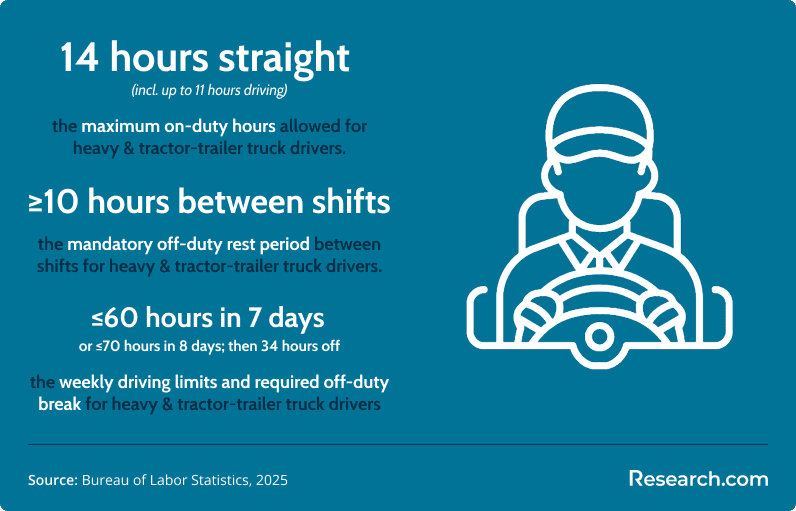
You will also study Hours of Service rules, which determine when drivers may drive, when they must rest, and how they document duty status. Understanding these rules is essential because compliance affects safety, employer trust, and your ability to stay on the road legally.
Why Mechanical Awareness Matters
CDL drivers are not expected to be full mechanics, but they do need to recognize equipment problems before they become safety issues. Drivers who enjoy the technical side of vehicles sometimes explore related paths such as how to become an auto mechanic, especially in diesel, fleet, or heavy-vehicle service environments.
What CDL Specializations and Endorsements Are Available?
A CDL gives you access to commercial driving work, but endorsements can expand the types of freight, vehicles, and routes you are allowed to handle. Endorsements are especially important if you want to move beyond basic entry-level driving and compete for specialized roles.
| Endorsement or specialization | What it can allow you to do | When it may make sense |
| Tanker | Haul liquids or bulk materials in tank vehicles | Useful for fuel, food-grade liquid, chemical, or bulk transport opportunities |
| Doubles/Triples | Pull more than one trailer where legally permitted | Helpful for linehaul, LTL, and certain high-volume freight operations |
| HAZMAT | Transport regulated hazardous materials | Valuable for drivers who can meet background, testing, and safety requirements |
| LTL experience | Handle less-than-truckload freight with multiple stops or terminals | Can support more specialized freight work and route variety |
How Specialization Can Affect Pay
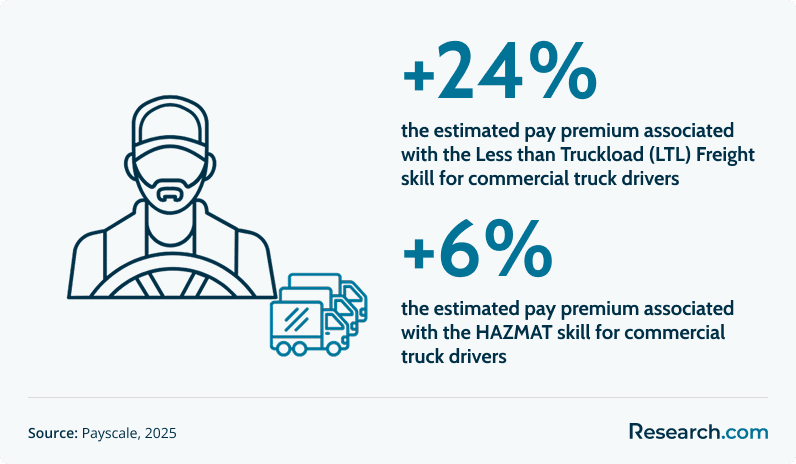
Endorsements do not automatically guarantee higher earnings, but they can make you eligible for roles with more responsibility. The article’s cited data notes that drivers with Less-Than-Truckload (LTL) experience and a HAZMAT endorsement can earn a pay premium of 24% or more. The strongest long-term strategy is to combine safe driving experience, a clean record, and endorsements that match the freight employers in your region actually need.
How to Choose the Best CDL Program
The best CDL program is the one that gets you licensed safely, prepares you for the kind of driving job you want, and gives you clear information before you pay. Do not choose based only on advertising, speed, or a low tuition number.
Checklist Before You Enroll
- Confirm FMCSA Training Provider Registry status if you need ELDT completion reported.
- Ask whether the course is theory-only, permit prep, supplemental training, or a full CDL program.
- Verify how much behind-the-wheel time is included.
- Ask what trucks and trailers students train on.
- Find out the student-to-instructor ratio during driving practice.
- Request written details on tuition, fees, testing costs, retest costs, and refund policies.
- Ask which employers recruit graduates and whether job placement support is available.
- Check whether company-sponsored training requires a work contract.
- Talk to recent graduates if possible.
Questions to Ask the School
| Question | Why it matters |
| Are you listed on the FMCSA Training Provider Registry? | Registry status is essential when the program is meant to satisfy ELDT requirements. |
| How many hours are spent driving, not just observing? | Behind-the-wheel time is one of the strongest indicators of practical preparation. |
| What happens if I fail the skills test? | Retesting fees, extra practice costs, and scheduling delays can affect your total cost. |
| Do you provide job placement help? | Employer relationships can make the transition from training to first job easier. |
| Will I owe money or be under contract after sponsored training? | Company-paid programs can be useful, but contract terms may limit flexibility. |
Common Mistakes to Avoid
| Mistake | Better approach |
| Assuming every online CDL course satisfies federal training rules | Check the provider’s FMCSA status before enrolling. |
| Comparing only tuition | Compare total cost, fees, driving hours, testing support, and job placement. |
| Choosing the shortest program without checking outcomes | Prioritize competence, safety, and test readiness over speed. |
| Ignoring contract terms in company-sponsored training | Read repayment, employment, and early-exit clauses before signing. |
| Waiting until graduation to think about endorsements | Plan endorsements around local employer demand and career goals. |
What Career Paths Are Available After a CDL Program?
A CDL can lead to several different transportation careers. Many drivers begin as company drivers, often in Over-the-Road (OTR) roles, because these jobs can provide broad road experience. After gaining experience, some drivers move into regional or local routes for a schedule that better fits family life or personal routines.
With a strong safety record and several years of experience, some drivers become owner-operators. This path offers more business control but also adds expenses, maintenance responsibilities, insurance decisions, customer relationships, and financial risk.
| Career path | Typical focus | Good fit for |
| OTR company driver | Long-distance freight across multiple regions | New drivers who want experience and are comfortable being away from home |
| Regional driver | Routes within a defined region | Drivers who want road experience with somewhat more predictable time at home |
| Local driver | Shorter routes, deliveries, or daily return schedules | Drivers who value home time and can manage frequent stops or city driving |
| Specialized freight driver | Tanker, HAZMAT, oversized, refrigerated, or LTL freight | Drivers with endorsements, strong safety habits, and attention to compliance |
| Owner-operator | Independent trucking business operations | Experienced drivers prepared for business costs and risk management |
| Fleet, dispatch, or training role | Operations, driver support, safety, or supervision | Experienced drivers who want to advance beyond the cab |
Long-Term Advancement Beyond Driving
CDL experience can become the foundation for a broader transportation career. With over 2.2 million heavy truck driving jobs in the economy, experienced drivers may move into dispatch, safety, driver training, fleet supervision, or logistics operations. If you want a longer-term plan, compare driving roles with a broader logistics career path.
What Is the Job Market for CDL Graduates?
The job market for truck drivers remains strong, with projections showing 5% growth and over 102,000 new jobs opening up over the next decade. However, the best opportunities usually go to drivers who are reliable, safe, experienced, and qualified for the freight employers need most.
The phrase “driver shortage” can be misleading if students assume every CDL graduate gets an ideal job immediately. New drivers still need to prove themselves, and employers may screen closely for safety history, professionalism, schedule flexibility, and endorsement fit. Over time, strong drivers can use their operational experience to move into leadership. If that path interests you, it is worth learning what is a logistics manager and how frontline transportation experience can support that transition.
Which Additional Certifications Can Strengthen a CDL Career?
The most useful added credentials depend on your target freight type, region, and employer. For many drivers, endorsements such as HAZMAT, Tanker, or Doubles/Triples are more directly useful than broad certificates. Drivers who want to move toward safety, training, dispatch, or fleet work may also benefit from credentials tied to compliance, operations, or transportation management.
Before paying for an additional certification, ask employers whether they value it, whether it leads to a higher-paying route or role, and whether your company will reimburse the cost. You can also compare broader career credential options through Research.com’s guide to the best licenses to get to make money.
What Post-Graduation Support Should a CDL Program Provide?
A strong CDL school should help students move from training into employment. Look for job placement support, carrier introductions, interview preparation, help with applications, resume guidance, and coaching on what to expect in the first months of driving. Mentorship from instructors or alumni can also be valuable because the early career stage often involves route adjustments, lifestyle changes, and learning employer expectations.
If a school promotes career support, ask for specifics. Which carriers hire graduates? Does the school help with local, regional, and OTR options? Are alumni able to return for guidance? Are there continuing education options? Students comparing eligible training and financial aid resources may also want to review online colleges that accept FAFSA if they plan to continue into broader education later.
How Do You Verify a CDL Program’s Accreditation or Industry Recognition?
For CDL training, the most important verification step is confirming whether the provider is listed on the FMCSA Training Provider Registry when ELDT reporting is required. Traditional accreditation may matter for community colleges or broader education institutions, but CDL students should distinguish between institutional accreditation, state licensing, FMCSA registry listing, and employer recognition.
Ask the program to explain exactly what its approval means. A school may be state licensed, institutionally accredited, listed on the FMCSA registry, connected to employers, or some combination of these. Each category serves a different purpose. If affordability and aid eligibility are part of your decision, resources such as online colleges that accept FAFSA can help you understand how institutional eligibility differs from short workforce training approval.
What CDL Graduates Say About Their Training Experience
- : "After leaving the military, I wanted work that still required discipline, accountability, and structure. Using my GI Bill for CDL training gave me a practical transition plan. The online theory lessons let me study at my own pace, and by the time I started driving practice, the rules and procedures already felt familiar. — Kevin"
- : "When I lost my job, I needed a career path that could get me earning again without spending years in school. Studying the regulations online at night helped me keep working during the day while preparing for training. Three months after finishing the road portion, I had steady work with a company I trusted. — David"
- : "I was worried about being one of the few women in my class, but the online lessons helped me build confidence before I ever climbed into the truck. I showed up for driving practice already knowing the terminology and safety concepts. That preparation made a real difference. — Jess"
References:
- Bureau of Labor Statistics. (2025). Truck Transportation: NAICS 484. Retrieved August 8, 2025.
- Bureau of Labor Statistics. (2025, August). Heavy and Tractor-Trailer Truck Drivers. Occupational Outlook Handbook. Retrieved August 8, 2025.
- Data USA. (2025). Data USA. Retrieved August 8, 2025.
- Indeed. (2025, August 4). Truck driver salary in United States. Retrieved August 8, 2025.
- ONET OnLine. (2025). ONET OnLine. Retrieved August 8, 2025.
- PayScale. (2025, May 3). Commercial Truck Driver Hourly Pay. Retrieved August 8, 2025.
- Projections Central. (2025). Long-Term Occupational Projections. Retrieved August 8, 2025.
- U.S. Bureau of Labor Statistics. (2025). Occupational Employment and Wage Statistics. Retrieved August 8, 2025.
- U.S. Bureau of Labor Statistics. (2025). Occupational Employment and Wage Statistics Maps. Retrieved August 8, 2025.
- U.S. Bureau of Labor Statistics. (2025). Occupational Outlook Handbook. Retrieved August 8, 2025.
- Zippia. (2025). Zippia Truck Driver Jobs overview. Retrieved August 8, 2025.
- ZipRecruiter. (2025, August 4). Truck Driver Salary: Hourly Rate August 2025 USA. Retrieved August 8, 2025.
- ZipRecruiter Marketplace Research Team. (2025). Truck Driver Resume Skills & Keywords. ZipRecruiter. Retrieved August 8, 2025.
Key Insights
- CDL training cannot be completed fully online. Online courses can cover theory, permit prep, and some endorsement study, but behind-the-wheel training must be completed in person.
- For ELDT requirements, do not rely on price or marketing claims. Confirm that the provider is listed on the Federal Motor Carrier Safety Administration (FMCSA) Training Provider Registry.
- CDL program costs vary widely. Full programs typically cost $3,000 to $10,000, while online theory-only courses are much cheaper but do not replace driving instruction.
- Company-sponsored training can reduce upfront cost, but it may require an employment contract. Private training usually costs more initially but can offer more employer flexibility.
- Endorsements such as HAZMAT, Tanker, and Doubles/Triples can improve access to specialized freight roles, especially when paired with experience and a strong safety record.
- The best CDL program is not necessarily the fastest one. Prioritize supervised driving time, equipment quality, instructor support, transparent costs, and job placement help.
- CDL experience can lead beyond driving into dispatch, driver training, safety, fleet management, logistics operations, or owner-operator work.
Other Things You Should Know About CDL Programs
Entry-level truck drivers must complete the ELDT theory curriculum and hands-on range and road training before testing. Federal rules set the theory content under FMCSA, but the exact behind-the-wheel hours are not federally fixed; schools set them, and states require skills testing at an approved CDL testing site.
To enroll in an online CDL training program in 2027, you typically need a valid driver's license, be at least 18 years old (21 for interstate licenses), and pass a medical examination. Some programs may also require a background check and proof of residency.


