
2027 Best Online Pet Grooming Trade School Programs

Co-Founder and Chief Data Scientist
With nearly 94 million U.S. households now owning a pet, the demand for skilled animal care has never been higher. Yet, for many who love animals, the path from passion to a professional career feels unclear. It's easy to question if grooming can be more than a hobby and become a viable trade.
That’s where a quality online pet grooming program changes everything. To help you find the right one, our career planning experts, with over 10 years of experience, built this comprehensive guide. Think of it as a clear roadmap to a rewarding and stable career.
What are the benefits of getting an online pet grooming certificate?
- An online pet grooming certificate provides a direct path to a professional career in a growing field where you can become a key part of a pet's wellness team.
- Earning this certificate opens the door to strong earning potential, with certified groomers often charging between $75 and $200 per service.
- Getting your online pet grooming certificate offers the flexibility to learn from anywhere, making a career change more accessible than ever before.
What can I expect from an online pet grooming program?
Online students can expect a program built on a hybrid model, which combines flexible online theory with structured, hands-on practice. First, you'll learn the essential knowledge through online videos and interactive modules. This covers crucial topics like canine anatomy, tool safety, and breed-specific standards.
Then comes the practical application. You'll apply what you've learned on a model or even your own pet, recording your work to submit to your instructors. They review your technique and provide personalized, expert feedback. This mentorship is key, as it allows you to build real-world skills and confidence from your own home.
Where can I work with an online pet grooming program?
Once you have your certificate, you'll find that your skills are in demand across a variety of professional settings. The most common environments where you can build your career include:
- Grooming Salons: These are specialized businesses dedicated entirely to pet styling, offering a focused environment to hone your craft.
- Veterinary Clinics and Kennels: Many vet offices and boarding facilities have in-house groomers to provide comprehensive animal care in one location.
- Mobile Grooming Vans: This popular entrepreneurial path allows you to take your business on the road, offering convenient service directly at your clients' homes.
- Home-Based Salons: Another option for business owners is to set up a dedicated, professional grooming space right in your own home.
This variety lets you choose a work environment that matches your career goals, from joining an established health team to building your own independent business.
How much can I make with an online pet grooming program?
While the median annual salary for animal caretakers is around $34,760, most professional groomers base their income on a per-service model. These fees typically range from $75 to $200 for a full groom, depending on the dog's size, breed, and coat condition. This means your earning potential grows directly with your skill and client base.
For those who go on to start their own mobile or salon business, a six-figure income is a very achievable goal. This is a skilled trade with real financial upside for dedicated professionals.
- Best Online Pet Grooming Trade School Programs for 2027 List of Programs
- How long does it take to complete an online pet grooming program? Completion Time
- How does an online pet grooming program compare to an on-campus program? How does an online pet grooming program compare to an on-campus program?
- What is the average cost of an online pet grooming program? Average Cost
- What are the financial aid options for students enrolling in an online pet grooming program? Financial Aid
- What are the prerequisites for enrolling in an online pet grooming program? Requirements
- What courses are typically in an online pet grooming program? What courses are typically in an online pet grooming program?
- What types of specializations are available in an online pet grooming program? What types of specializations are available in an online pet grooming program?
- How to Choose the Best Online Pet Grooming Program How to Choose the Best Online Pet Grooming Program
- What career paths are available for graduates of an online pet grooming program? Career Paths
- What is the job market for graduates of an online pet grooming program? Job Market
- Is Accreditation Essential for a Top-Tier Online Pet Grooming Program? Is Accreditation Essential for a Top-Tier Online Pet Grooming Program?
- How Can Additional Certifications Enhance My Pet Grooming Career? How Can Additional Certifications Enhance My Pet Grooming Career?
Best Online Pet Grooming Trade School Programs for 2027
Choosing an online pet grooming school is not just about finding the cheapest certificate or the fastest completion time. You are preparing for a hands-on trade where animal safety, coat care, sanitation, client communication, and business judgment all matter. A strong program should teach grooming techniques, but it should also help you practice correctly, receive feedback, understand animal behavior, and build confidence before working with paying clients.
This guide is for aspiring groomers, animal care workers who want to add grooming services, pet business owners, and career changers comparing online and hybrid training options. You will learn which programs stand out, how long training usually takes, what online grooming school costs, what to ask before enrolling, and how to judge whether a certificate is likely to support your career goals.
Quick Answer: What is the best online pet grooming school?
The best online pet grooming program depends on your goal. If you want a structured online certificate with mentor feedback, Paragon School of Pet Grooming is a strong option. If affordability matters most, Penn Foster and Groomers University offer lower-cost routes. If you want substantial in-person practice, Animal Behavior College, Merryfield Academy, and Nash Academy use hybrid formats with externship or campus training. Students who want a feline-only specialization should compare the National Cat Groomers Institute.
Before enrolling, check four things: whether the program includes hands-on evaluation, whether tools are included or must be purchased separately, whether the credential is accredited, licensed, or industry-recognized, and whether the program’s training model fits how you learn practical skills.
How We Evaluate Online Pet Grooming Programs
Because career training requires a real financial commitment, Research.com evaluates programs with an emphasis on transparency, student value, training structure, and practical career relevance. For school and education data, our methodology uses established sources such as the IPEDS database, Peterson's database, the College Scorecard database, and the National Center for Education Statistics.
Pet grooming programs vary widely because many are career certificates, private training programs, or industry-recognized credentials rather than traditional degree programs. For that reason, readers should use rankings as a starting point, then verify tuition, program format, hands-on requirements, refund policies, tool costs, and credential recognition directly with each school. You can review Research.com’s broader evaluation standards on our methodology page.
Comparison of Featured Online and Hybrid Pet Grooming Programs
| Program | Best For | Format | Tuition or Cost Information | Credential or Oversight |
| Paragon School of Pet Grooming | Students who want mentor-guided online training with multiple levels | Self-paced online | $1,299–$2,365, depending on the program level | State licensed in Michigan; certificate recognized through long-standing industry reputation |
| Professional Dog Grooming Academy | Learners seeking an internationally accredited course pathway | Self-paced online | Varies by course | International Council for Online Educational Standards (ICOES) |
| Penn Foster | Budget-conscious students who want an accredited certificate | Self-paced online | Approximately $519 | Distance Education Accrediting Commission (DEAC) |
| American Grooming Academy | Students who may want to move from online study into campus-based practice | Self-paced online with optional in-person continuation | Approximately $999 per level | Licensed by the California Bureau for Private Postsecondary Education (BPPE) |
| Animal Behavior College | Students who want required local externship experience | Hybrid | Approximately $3,499 | Licensed by the California Bureau for Private Postsecondary Education (BPPE) |
| Merryfield Academy | Learners seeking extensive hands-on externship hours and federal financial aid eligibility | Hybrid | $10,800 plus fees | Accrediting Commission of Career Schools and Colleges (ACCSC) |
| Nash Academy | Students pursuing a more intensive diploma-style grooming education | Hybrid | Approximately $7,900, plus tools and uniform | Kentucky Commission on Proprietary Education (KCPE) |
| Whole Pet Academy | Groomers interested in humane, behavior-aware handling | Self-paced online with hands-on practice requirements | $2,000–$3,000 | Industry-recognized for humane grooming practices |
| National Cat Groomers Institute | Professionals who want a feline grooming specialization | Self-paced online | Core programs range from $997–$1,297 | Leading industry organization for cat grooming certification |
| Groomers University | Students who prefer a subscription-based, lower-cost online model | 100% online, self-paced | Approximately $47/month | Industry-recognized certificate upon completion |
1. Paragon School of Pet Grooming - Professional Groomer Certification
Paragon School of Pet Grooming offers a level-based home study program designed around video instruction, photo-based skill submissions, and mentor support. Its structure is useful for students who want online flexibility but still need guided feedback as they build technique.
- Program Length: Self-paced
- Levels: Groom Tech Certification; Pet Groomer Certification; and Pet Stylist Certification
- Total Tuition: $1,299–$2,365, depending on the program level
- Accreditation: State licensed in Michigan; their certificate is recognized based on a long-standing industry reputation.
2. Professional Dog Grooming Academy - International Certificate in Dog Grooming
Professional Dog Grooming Academy provides a progression of online courses that move from basic safety and handling into more advanced styling concepts. The program may suit beginners who want a staged curriculum as well as working groomers who want a more formal credential.
- Program Length: Self-paced
- Levels: Entry; Intermediate; and Advanced
- Total Tuition: Varies by course
- Accreditation: International Council for Online Educational Standards (ICOES)
3. Penn Foster - Pet Grooming Certificate
Penn Foster offers an online pet grooming certificate with a relatively low listed cost and a self-paced format. The curriculum covers practical grooming foundations, animal care concepts, and business topics, making it a common choice for students who want an accessible starting point.
- Program Length: As few as 2 months
- Total Tuition: Approximately $519
- Accreditation: Distance Education Accrediting Commission (DEAC)
4. American Grooming Academy - Online Program
American Grooming Academy uses tiered online training that lets students work from bather-level skills toward more advanced styling. A key advantage is the option to continue into in-person training, which can be valuable for learners who discover they need more direct practice.
- Program Length: Self-paced
- Levels: Bather Program; Pet Stylist Program; and Advanced Pet Stylist Program
- Total Tuition: Approximately $999 per level
- Accreditation: Licensed by the California Bureau for Private Postsecondary Education (BPPE)
5. Animal Behavior College - Dog Grooming Program
Animal Behavior College combines online lessons with a required 150-hour externship at a local grooming site. This format is especially useful for students who want online coursework but do not want to rely only on independent practice.
- Program Length: Self-paced online portion, plus a 150-hour local externship
- Total Tuition: Approximately $3,499
- Accreditation: Licensed by the California Bureau for Private Postsecondary Education (BPPE)
6. Merryfield Academy - Professional Grooming Program
Merryfield Academy offers a hybrid professional grooming route that pairs online modules with a 600-to-900-hour hands-on externship. Its higher cost reflects a more intensive training model, and it is notable among grooming schools for eligibility for federal financial aid.
- Program Length: Online modules plus a 600–900 hour externship
- Total Tuition: $10,800 plus fees
- Accreditation: Accrediting Commission of Career Schools and Colleges (ACCSC)
7. Nash Academy - Diploma Program
Nash Academy provides a hybrid diploma pathway that includes detailed online study and required hands-on work at its Kentucky campus. The program is designed for students who want broader preparation in styling, breed patterns, and salon management rather than a short introductory certificate.
- Program Length: 600–640 hours (hybrid format)
- Total Tuition: Approximately $7,900 (plus tools and uniform)
- Accreditation: Kentucky Commission on Proprietary Education (KCPE)
8. Whole Pet Academy - Humane Grooming Specialist Program
Whole Pet Academy focuses on humane grooming, low-stress handling, and behavior-informed care. Its mix of self-paced content, live Zoom discussions, and apprenticeship opportunities may appeal to groomers who want to work with anxious, senior, or behaviorally sensitive pets.
- Program Length: Self-paced online, plus hands-on practice requirements
- Levels: Grooming Specialist; and Master/Behavior Specialist
- Total Tuition: $2,000–$3,000
- Accreditation: Industry-recognized for its focus on humane grooming practices
9. National Cat Groomers Institute - Certified Feline Master Groomer Program
The National Cat Groomers Institute is built for groomers who want to specialize in cats rather than general dog grooming. Its coursework emphasizes feline anatomy, temperament, safe handling, and business preparation for cat-focused services.
- Program Length: Self-paced
- Specialization: Exclusively focused on cat grooming
- Total Tuition: Core programs range from $997–$1,297
- Accreditation: The leading industry organization for cat grooming certification
10. Groomers University - Professional Groomer Certification
Groomers University uses a subscription-based online model with more than 120 hours of HD video content and mentor support. It may be a practical starting point for students who need a lower monthly cost and are disciplined enough to manage self-paced learning.
- Program Length: Self-paced (over 120 hours of video content)
- Total Tuition: Subscription-based at approximately $47/month
- Accreditation: Provides an industry-recognized certificate upon completion
How Long Does It Take to Complete an Online Pet Grooming Program?
Most online pet grooming programs are self-paced, and many students finish in three to nine months. Shorter programs can introduce foundational grooming skills quickly, while hybrid or diploma-style programs take longer because they include externship hours, campus practice, or more advanced styling instruction.
Speed should not be the only measure of value. A grooming certificate may be completed quickly, but employable skill takes repetition. Students comparing grooming with other accelerated online options, such as accelerated online graphic design degrees, should remember that grooming requires physical technique, safe animal handling, and confidence with live pets.
Completion Time vs. Job-Ready Skill
Finishing the lessons is only the first step. Groomers become more capable as they repeat bathing, drying, clipping, brushing, scissoring, nail care, coat assessment, and client communication under real conditions. A program that gives you feedback and requires practice may be more valuable than one that simply lets you move through videos quickly.
A useful way to think about your certificate is this: it can show that you completed structured training, but your long-term reputation will depend on safe work, clean finishes, consistent results, and how well you handle pets with different temperaments.
How Does an Online Pet Grooming Program Compare to an On-Campus Program?
Online grooming programs work best for students who need flexible scheduling, can practice independently, and are comfortable learning techniques through video demonstrations and remote feedback. Campus programs are better for students who want immediate instructor correction, access to school-provided animals or equipment, and a fixed training environment.
Neither format is automatically better. The right choice depends on how much structure you need, whether you already have access to safe practice opportunities, and how comfortable you are evaluating your own technique between instructor reviews. Students who are exploring short-format education in other fields can also compare the structure of 4-week college courses online, but grooming students should be cautious about valuing speed over supervised practice.
Online vs. On-Campus Pet Grooming School
| Factor | Online Program | On-Campus Program |
| Schedule | Usually more flexible and self-paced | Typically follows set class hours |
| Instructor feedback | Often provided through photos, videos, assignments, or mentor review | Available in person during demonstrations and practice |
| Hands-on practice | Depends on home practice, externship, apprenticeship, or required submissions | Usually built into the daily training environment |
| Best fit | Working adults, parents, rural students, and self-directed learners | Students who need live correction and a structured classroom setting |
| Main risk | Practicing incorrectly without enough feedback | Less flexibility and potentially higher time or travel costs |
The Advantage of Rewatchable Demonstrations
One clear benefit of online grooming education is replay access. A student can pause, slow down, and rewatch demonstrations of scissoring angles, clipper direction, drying technique, or coat preparation as often as needed. In a classroom, a live demonstration may happen once, and students must absorb the details in real time.
That replay feature is valuable, but it is not a substitute for feedback. The strongest online programs combine video lessons with instructor review, externship requirements, or guided practice so students do not build bad habits in isolation.
What Is the Average Cost of an Online Pet Grooming Program?
Many online pet grooming programs cost between $500 and $2,500, although some hybrid and intensive programs cost more. Tuition is only part of the total investment. Students may also need to budget for clippers, shears, brushes, combs, dryers, grooming loops, shampoos, sanitation supplies, uniforms, externship travel, and replacement blades.
Based on the programs reviewed here, costs range from approximately $47/month for a subscription-based program to $10,800 plus fees for a more intensive hybrid option. The best value is not always the lowest tuition. A higher-cost program may be worthwhile if it includes extensive hands-on practice, strong instructor feedback, recognized oversight, or financial aid access.
Cost Factors to Compare Before Enrolling
| Cost Factor | Why It Matters | Question to Ask |
| Tuition | This is the advertised program price, but it may not include everything needed to practice. | What exactly is included in tuition? |
| Tools and supplies | Some programs include starter tools; others require separate purchases. | Do I need to buy clippers, shears, blades, brushes, or grooming tables separately? |
| Externship or campus travel | Hybrid programs may require transportation, time away from work, or local site coordination. | Where will my hands-on training happen, and who arranges it? |
| Payment plan or aid | Payment structure can affect affordability more than sticker price alone. | Are payment plans, private financing, military benefits, or federal aid available? |
| Retakes and extensions | Self-paced programs may charge for extra time or course access. | What happens if I need more time to finish? |
Why Tool Quality Matters
Professional tools affect speed, safety, finish quality, and physical comfort. Low-quality clippers and shears can slow you down, leave uneven results, and increase strain on your hands, wrists, shoulders, and back. If you plan to groom professionally, tools should be treated as business equipment rather than optional accessories.
The median salary for animal caretakers is around $34,760, so students should evaluate training costs realistically and avoid assuming that any certificate will automatically lead to high earnings. Groomers who plan to operate independently may also need basic pricing, bookkeeping, and client management knowledge, which overlaps with practical business administration subjects.
What Financial Aid Options Are Available for Online Pet Grooming Students?
Federal financial aid through FAFSA usually does not apply to short, non-degree career certificates. However, some longer or accredited programs may have different eligibility rules, and Merryfield Academy is described as one of the few grooming schools eligible for federal financial aid. Students should confirm aid eligibility directly with the school and avoid assuming that every certificate program qualifies.
Common funding options include school payment plans, private loans, personal savings, employer reimbursement, military benefits when available, or phased enrollment by program level. Ask for the total cost in writing, including fees, tools, extension charges, and refund deadlines.
How to Reduce the Cost of Pet Grooming Training
- Compare total cost, not just tuition. A low-cost program can become more expensive if tools, supplies, and extensions are not included.
- Ask about payment plans. Monthly plans may make training more manageable without requiring the full amount upfront.
- Choose the right intensity level. A full hybrid diploma may be unnecessary if you only need basic grooming skills to support an existing pet care business.
- Use local practice opportunities carefully. Apprenticeships, externships, or supervised salon practice can add value, but safety and liability should be clear.
- Build marketing skills early. New groomers who work independently need client acquisition skills, not only grooming technique.
Budget-Friendly Marketing for New Groomers
Pet grooming is a visual service, so new professionals can often market themselves through before-and-after photos, short care tips, client education posts, and local referral relationships. Social media can help, but it should never replace quality, safety, and professionalism. If you want formal marketing training, you can compare the shortest online social media programs and decide whether additional coursework fits your business plan.
What Are the Prerequisites for Enrolling in an Online Pet Grooming Program?
Most online pet grooming programs have simple entry requirements and typically expect applicants to have a high school diploma or GED. This makes grooming more accessible than many animal-related careers with more extensive education or field requirements, such as the steps to becoming a fish and game warden.
Practical requirements vary by school. Some programs provide a starter toolkit, while others require students to purchase tools separately. Some begin with mannequins or controlled practice assignments before students work with live animals. Others require an externship or apprenticeship site. Always ask exactly what you need before the first lesson begins.
Who Should Consider Online Pet Grooming School?
- Career changers who want a trade that can be learned without a college degree
- Animal care workers who want to add grooming to their service offerings
- Dog walkers, sitters, kennel workers, or trainers who already have client relationships
- Students who need flexible training because of work, caregiving, or location
- Aspiring small business owners who want to operate a home-based, mobile, or salon grooming service
Who May Be Better Off Choosing a Different Path?
- Students who dislike physically demanding work, repetitive hand motions, or standing for long periods
- People who are uncomfortable handling anxious, elderly, large, or uncooperative animals
- Learners who need immediate in-person correction and do not have access to safe practice opportunities
- Students who expect a certificate alone to guarantee high earnings
- Those who prefer public service animal careers with different standards, such as roles that involve K9 officer education requirements
Why a Certificate Can Still Matter in a Low-Barrier Field
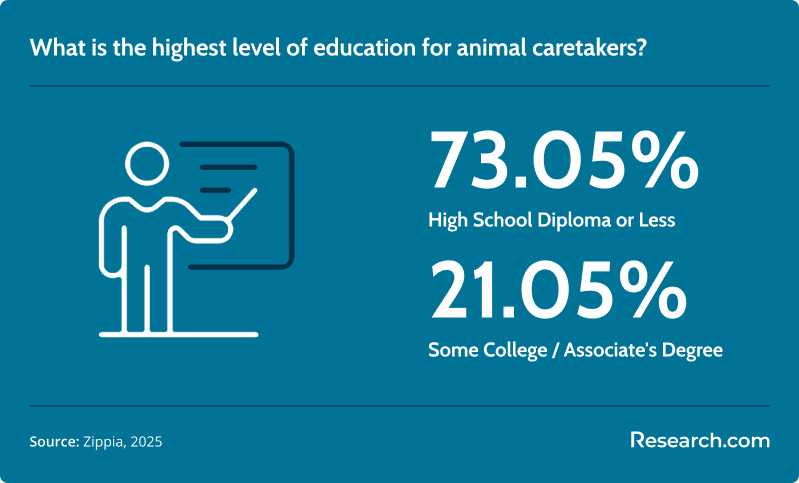
Pet grooming does not usually require a college degree, which makes formal training a way to stand out. More than 73% of animal caretakers have a high school diploma or less. A certificate can help show employers and clients that you studied sanitation, handling, safety, coat care, and grooming technique in a structured way.
Students who eventually want to run their own shop may also benefit from learning client communication and digital promotion. For a broader marketing pathway, compare whether a social media marketing degree online would support your long-term business goals.
What Courses Are Typically Included in an Online Pet Grooming Program?
A quality pet grooming curriculum should cover more than clipping and bathing. Groomers work close to an animal’s skin, ears, nails, coat, and body condition, so training should connect styling with health awareness and safe handling.
- Animal safety and handling: Students learn how to manage pets on the table, reduce stress, prevent injury, and recognize when a grooming session should pause.
- Canine anatomy and basic health awareness: Coursework may address skin problems, parasites, ear issues, coat condition, and signs that should be referred to a veterinarian. Students interested in working dogs can also review K9 office education requirements for a different animal-related career path.
- Bathing, drying, and coat preparation: Proper prep work affects the final finish and the comfort of the pet.
- Clipper and shear technique: Students practice tool control, blade selection, scissoring, blending, and safe use of sharp equipment.
- Breed-specific grooming: Programs may teach common patterns for different coat types and breeds.
- Sanitation and tool maintenance: Groomers must know how to clean, disinfect, sharpen, and maintain equipment.
- Business basics: Some programs include pricing, scheduling, client communication, recordkeeping, and basic marketing.
What Specializations Are Available in Online Pet Grooming Programs?
Specialization can help groomers compete on expertise instead of price. Once the fundamentals are solid, a niche can make it easier to attract specific clients and build a reputation in a local market.
- Cat grooming: Feline grooming requires different restraint, behavior awareness, coat knowledge, and safety procedures than dog grooming.
- Creative grooming: This area uses pet-safe coloring and advanced styling for artistic results.
- Breed-specific styling: Groomers may focus on complex patterns for breeds such as poodles, schnauzers, or terriers.
- Low-stress, senior, or special-needs grooming: This niche emphasizes gentle handling, shorter sessions, and comfort-focused service.
- Show grooming: This specialization prepares dogs according to strict breed standards for competition.
Some animal enthusiasts ultimately choose a different academic or career direction, including reptile-focused work. Students interested in that route can compare grooming with the typical herpetologist qualifications expected in that field.
For groomers, the best specialization is usually the one that matches local demand, personal temperament, and training access. A cat-only specialist, for example, may serve a different market than a mobile groomer focused on senior dogs.
How to Choose the Best Online Pet Grooming Program
To choose the right online pet grooming program, look for proof that the school can teach a hands-on skill remotely. Strong programs do not rely only on passive videos. They require practice, photo or video submissions, instructor critique, externship experience, live discussion, or another method of verifying technique.
Also compare the school’s credential type. In pet grooming, terms such as accredited, licensed, certified, and industry-recognized do not all mean the same thing. Accreditation usually refers to review by an accrediting organization. State licensing may mean the school is approved to operate in that state. Industry recognition may be valuable, but it is not the same as institutional accreditation.
Questions to Ask Before Enrolling
| Question | Why It Matters |
| How will instructors evaluate my grooming technique? | You need feedback on actual hands-on work, not only quizzes. |
| Does the program include tools, or must I buy them separately? | Tool costs can change the true price of training. |
| Is there an externship, apprenticeship, or in-person option? | Hands-on practice is critical for confidence and employability. |
| What credential will I receive, and who recognizes it? | Employers may value some certificates more than others. |
| What happens if I need more time? | Self-paced programs may have access limits or extension fees. |
| Can I speak with graduates or see recent outcomes? | Graduate feedback can reveal whether the training translates into real work. |
| What is the refund policy? | Career programs can be expensive, and policies vary widely. |
Common Mistakes When Choosing a Pet Grooming School
- Choosing only by price. The cheapest course may not provide enough feedback, hands-on practice, or career support.
- Assuming all certificates are equal. Compare accreditation, state licensing, and industry recognition carefully.
- Ignoring tool costs. Grooming equipment can be a major part of the startup investment.
- Skipping hands-on practice. Grooming cannot be mastered through video watching alone.
- Overlooking business training. Independent groomers need pricing, scheduling, customer service, and marketing skills.
- Relying only on rankings. Rankings help narrow the field, but the best program is the one that fits your budget, schedule, learning style, and career plan.
If you are comparing grooming with other certificate-based career paths, you may also find it useful to review what are the easiest IT certifications to get. The comparison can clarify whether you prefer hands-on animal care, technical work, or business-focused training.
What Career Paths Are Available After an Online Pet Grooming Program?
Graduates of pet grooming programs usually move into one of three broad paths: employment, entrepreneurship, or service expansion. Your best option depends on your risk tolerance, experience level, local market, and whether you want to manage clients and operations.
Career Path Comparison for New Groomers
| Path | Where You Might Work | Best For | Main Trade-Off |
| Employee groomer | Salon, pet store, boarding facility, veterinary clinic, or grooming chain | New graduates who want steady practice and less business responsibility | Less control over schedule, pricing, and service menu |
| Mobile or independent groomer | Mobile van, home-based business, rented grooming space, or independent salon | Groomers who want autonomy and are willing to handle marketing and operations | Higher startup responsibility and client acquisition pressure |
| Add-on service provider | Dog walking, pet sitting, training, boarding, or animal care business | Existing pet care professionals who want a higher-value service | Requires careful scheduling, tool investment, and service boundaries |
The Employee Path: Building Speed and Confidence
Many new groomers begin by working for an established salon, pet retailer, veterinary clinic, or boarding facility. This path lets you focus on technique, timing, client communication, and handling a wider range of coat types before taking on the full responsibility of running a business.
The Entrepreneurial Path: Starting Your Own Grooming Business
Independent grooming can offer more control over services, scheduling, branding, and income structure. It also requires more responsibility. You may need to manage insurance, equipment, appointment software, client records, sanitation procedures, marketing, taxes, and local business rules.
The Integration Path: Adding Grooming to an Existing Pet Business
Dog walkers, sitters, trainers, and boarding providers may use grooming as an additional service for clients who already trust them. This can strengthen retention and increase revenue per client, but it should be added only when training, safety procedures, tools, and scheduling capacity are in place.
These roles differ from public safety or law enforcement careers involving animals. For comparison, review K9 officer education requirements, where selection standards, training goals, and job duties are very different.
Location also affects opportunity. Grooming demand can vary by state, local pet ownership patterns, household income, and competition. The chart below shows U.S. states where animal caretakers are in high demand.
What Is the Job Market for Online Pet Grooming Program Graduates?
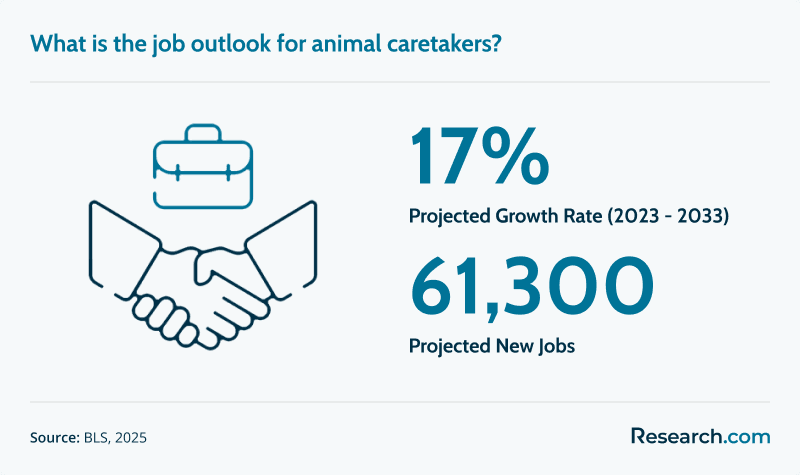
The U.S. Bureau of Labor Statistics projects 17% growth for animal caretakers, a category that includes groomers, between 2023 and 2033. That projected growth is much faster than the average for all occupations. Indeed also reports over 7,000 job openings for pet groomers nationwide.
Demand is supported by the continued humanization of pets. Many owners now treat grooming as part of routine care rather than an occasional cosmetic service. This does not guarantee employment or income for every graduate, but it does indicate a broad labor market for groomers who are skilled, safe, reliable, and client-focused.
Current Trends Affecting Pet Grooming Careers
- Pet wellness expectations are rising. Clients increasingly expect groomers to notice coat, skin, nail, ear, and comfort issues and to recommend veterinary follow-up when appropriate.
- Low-stress handling is becoming more important. Groomers who can work safely with anxious, senior, or special-needs pets may have a competitive advantage.
- Mobile and appointment-based models are popular. Convenience matters to pet owners, but mobile grooming requires business planning and equipment investment.
- Technology is changing operations. Scheduling tools, digital payments, automated reminders, online reviews, and social media portfolios now shape how many groomers attract and retain clients.
- Specialization can improve positioning. Cat grooming, breed-specific styling, and senior pet services can help groomers stand out in crowded markets.
What Graduates of Online Pet Grooming Trade School Programs Say About Their Training
- Anna: "I was nervous about learning grooming outside a classroom, but the video critiques helped more than I expected. I filmed myself working with my golden retriever, submitted the recording, and my instructor responded with specific notes about my grip, angle, and positioning. It felt surprisingly individualized."
- Pamela: "The animal health lessons made a real difference for me. In my first salon job, I noticed a serious ear problem on a cocker spaniel that the owner had missed. I was able to recommend a vet visit with confidence, and that made me feel like I was contributing to the pet’s well-being, not just doing a haircut."
- Jenny: "I already had a dog walking business, but I wanted to give clients more reasons to stay with me. After earning my grooming certificate, I added a premium service for people who already trusted me with their pets. My income nearly doubled within the first year because I could offer a fuller care package."
Is Accreditation Essential for an Online Pet Grooming Program?
Accreditation is helpful, but it is not the only sign of quality in pet grooming education. Because grooming programs are often offered by private career schools or industry organizations, students should understand the difference between institutional accreditation, state licensing, professional certification, and informal industry reputation.
An accredited or state-licensed program may offer stronger consumer protections, clearer policies, or more structured training. Industry-recognized certificates can also be valuable, especially when employers or clients know the organization. The key is to verify what the credential actually means before paying tuition. This is similar to reviewing accreditation, aid eligibility, and student protections when comparing online colleges.
How to Verify Program Quality
- Confirm the accrediting or licensing organization named by the school.
- Ask whether the credential is accepted or preferred by employers in your area.
- Review how the program evaluates hands-on technique.
- Read recent graduate feedback, not only testimonials posted by the school.
- Ask whether tuition includes tools, externship support, and instructor feedback.
- Check refund, cancellation, extension, and transfer policies before enrolling.
How Can Additional Certifications Improve a Pet Grooming Career?
Additional certifications can help groomers move beyond entry-level services and build a more specialized reputation. Useful areas may include feline grooming, humane handling, breed-specific styling, creative grooming, salon management, pet first aid, or animal behavior. These credentials are most valuable when they support a clear business or employment goal.
Do not collect certificates simply to fill a résumé. Choose credentials that help you serve a specific client need, qualify for a better role, or increase the quality and safety of your work. If you are comparing broader credential options, Research.com’s guide to certificates that make money can help you think through cost, market value, and career fit.
Key Insights
- The best online pet grooming program depends on your career goal. Low-cost online certificates may be enough for beginners exploring the field, while hybrid programs with externships are stronger for students who want more supervised practice.
- Hands-on feedback is the most important quality marker. A grooming program should evaluate your actual technique through videos, photos, externships, or in-person practice.
- Total cost is more than tuition. Tools, supplies, fees, travel, extensions, and business startup expenses can significantly affect your real investment.
- Accreditation and licensing should be verified, not assumed. Pet grooming credentials vary, so ask what the certificate means and who recognizes it.
- Online learning can work for grooming, but only with disciplined practice. Video lessons are useful because they can be replayed, but they must be paired with safe hands-on repetition.
- The job outlook is favorable, but outcomes are not guaranteed. BLS projects 17% growth for animal caretakers from 2023 to 2033, and Indeed reports over 7,000 pet groomer job openings nationwide, but employment depends on skill, location, reliability, and client service.
- Specialization can strengthen earning potential and market position. Cat grooming, low-stress handling, breed-specific styling, and senior pet grooming can help trained groomers stand out.
References:
- American Pet Products Association. (2024, March 20). The American Pet Products Association (APPA) releases 2024 state of the industry report. Retrieved August 19, 2025, from https://americanpetproducts.org/news/the-american-pet-products-association-appa-releases-2024-state-of-the-industry-report
- CareerExplorer. (2024, August 29). Dog groomer demographics and statistics in the US. Retrieved August 19, 2025, from https://www.careerexplorer.com/careers/dog-groomer/demographics/
- College Board. (n.d.). Nonfarm animal caretaker: Education. BigFuture. Retrieved August 19, 2025, from https://bigfuture.collegeboard.org/careers/nonfarm-animal-caretaker/education
- MoeGo. (2024, May 15). How much is dog grooming? [2024 price list & factors]. MoeGo Blog. Retrieved August 19, 2025, from https://www.moego.pet/blog/how-much-is-dog-grooming
- U.S. Bureau of Labor Statistics. (2024, April 17). Occupational employment and wage statistics. Retrieved August 19, 2025, from https://data.bls.gov/oes/#/industry/000000
- U.S. Bureau of Labor Statistics. (2024, September 4). Occupational outlook handbook: Animal care and service workers. Retrieved August 19, 2025, from https://www.bls.gov/ooh/personal-care-and-service/animal-care-and-service-workers.htm
Other Things You Should Know About Pet Grooming Programs
Yes. Strong 2027 online pet grooming trade school programs require supervised hands-on practice, often 100 to 300 hours, in a salon, clinic, or approved lab. Many schools also require students to submit grooming log sheets, photos, or instructor sign-offs before graduation.
Graduates of 2027 online pet grooming trade school programs can obtain certifications such as Certified Professional Pet Groomer (CPPG) or National Certified Master Groomer (NCMG) from recognized bodies like the National Dog Groomers Association of America, enhancing their professional credibility and career prospects.
Most 2027 online pet grooming programs require applicants to have a high school diploma or GED. Some may ask for basic handling skills with pets or a short introductory course. Always check specific program prerequisites before applying.


