
2027 Most Affordable Online Landscaping Technology Trade School Programs

Co-Founder and Chief Data Scientist
Choosing a landscaping technology trade school is a practical career decision: you want training that teaches plant care, design, irrigation, maintenance, safety, and business basics without requiring you to quit your job or relocate. Online landscaping programs can help, but they vary widely in cost, credibility, hands-on expectations, and career usefulness.
This guide explains how affordable online landscaping technology trade school programs work, what they cost, how long they take, what skills they teach, and which careers they can support. It is designed for career changers, working adults, recent high school graduates, small business owners, and anyone comparing online trade school options in the green industry.
Quick answer: Are affordable online landscaping technology trade school programs worth it?
An affordable online landscaping technology trade school program can be worth it if you need flexible training for entry-level landscaping, grounds maintenance, irrigation support, plant care, or landscape business work. These programs are strongest for learning theory, plant science, design principles, estimating, safety, and business operations. They are less complete than campus-based programs when it comes to supervised equipment use, hardscape installation, and field labs, so students should plan to gain local hands-on experience while studying.
What are the main benefits of an affordable online landscaping technology trade school program?
- Career flexibility: Graduates may qualify for roles such as landscape technician, groundskeeper, irrigation technician, lawn care specialist, hardscape assistant, horticulture technician, or sustainable landscaping assistant. Some programs also introduce business planning for students who want to start a landscaping company.
- Accessible entry into a skilled trade: The median annual wage for grounds maintenance workers was around $38,800 in 2023, while experienced workers and those with specialized skills, certifications, or business ownership may earn more depending on location, employer, and services offered.
- Schedule-friendly learning: Online programs are useful for adults balancing work, family, seasonal employment, or rural access limitations. They often cost less than campus-based programs because students avoid commuting, housing, and relocation expenses.
What can I expect from an affordable online landscaping technology trade school program?
An online landscaping technology trade school program usually combines horticulture, landscape design, turf care, soil science, irrigation basics, pest management, safety, and business fundamentals. The goal is to prepare students for entry-level work or to strengthen the skills of people already working in landscaping, lawn care, nursery operations, grounds maintenance, or related trades.
Most programs are delivered through reading assignments, videos, online exams, design projects, plant identification exercises, and instructor-reviewed assignments. Some are self-paced, while others follow weekly modules. Because landscaping is a physical trade, the best online programs clearly explain how students can practice locally through internships, employer projects, home landscape assignments, community gardens, or supervised field work.
Expect online training to be strongest in planning, technical knowledge, and decision-making. It can teach you why a plant fails in the wrong soil, how drainage affects a site, how irrigation systems are organized, and how to estimate a basic job. It cannot fully replace the experience of operating equipment, installing pavers, grading soil, pruning under supervision, or troubleshooting a real irrigation system in the field.
Where can I work after completing an affordable online landscaping technology trade school program?
Graduates can work in residential landscaping, commercial grounds maintenance, lawn care, irrigation service, nurseries, greenhouses, parks, school grounds, municipal properties, golf courses, corporate campuses, and public gardens. The best fit depends on the program’s emphasis and the student’s hands-on experience.
| Work setting | Typical tasks | Best fit for students interested in |
| Residential landscaping companies | Planting, mulching, mowing, pruning, cleanup, small installations | Hands-on outdoor work and client-facing services |
| Commercial grounds maintenance | Turf care, seasonal maintenance, irrigation checks, property upkeep | Stable crew-based work on larger properties |
| Irrigation service companies | System inspection, repair support, controller setup, water-use troubleshooting | Technical systems and water management |
| Nurseries and greenhouses | Plant propagation, plant care, pest monitoring, inventory support | Plant science and horticulture |
| Municipal parks and institutions | Groundskeeping, tree and shrub care, equipment operation, seasonal projects | Public-sector or institutional maintenance roles |
| Self-employment | Estimating, marketing, client service, lawn care, maintenance contracts | Entrepreneurship and small business ownership |
How much can I make with an affordable online landscaping technology trade school program?
Earnings depend on location, employer type, seasonality, specialization, experience, and whether you work for an employer or operate your own business. For entry-level landscaping and groundskeeping workers, the median annual wage in the U.S. was around $38,800 as of May 2023, with hourly wages often falling between $15-$20.
Specialized roles can pay more. Irrigation technicians, for example, may see average salaries around $45,000 to $46,000 annually. Experienced landscape technicians or workers with relevant certifications may earn upwards of $40,000 to $50,000 or more per year. Self-employed landscapers can also earn substantial incomes, but revenue depends heavily on pricing, client volume, equipment costs, insurance, seasonality, and business management.
- Most Affordable Online Landscaping Technology Trade School Programs for 2027
- How long does an online landscaping technology trade school program take?
- Online vs. on-campus landscaping technology programs: Which is better?
- How much does an online landscaping technology trade school program cost?
- What financial aid is available for online landscaping technology students?
- What are the admission requirements for online landscaping technology trade school?
- What courses are included in an online landscaping technology program?
- What landscaping technology specializations can you study online?
- What education options are available after trade school?
- Which advanced pathways pair well with landscaping technology?
- How can online students get hands-on landscaping experience?
- Can more education improve landscaping career growth?
- How do you choose the best online landscaping technology trade school?
- What jobs can graduates pursue?
- What is the job market for landscaping technology graduates?
Most Affordable Online Landscaping Technology Trade School Programs for 2027
How do we rank schools?
Research.com evaluates affordable online landscaping technology trade school programs with an emphasis on cost, accessibility, program structure, and available institutional data. Because trade school students often compare programs based on price, time to completion, accreditation, and career relevance, rankings should be used as a starting point rather than the only factor in your decision.
Our ranking process follows a transparent methodology and uses data sources such as the Integrated Postsecondary Education Data System (IPEDS), Peterson's databases including the Distance Learning Licensed Data Set, and the College Scorecard from the National Center for Education Statistics. These sources help students compare programs using available education data, but applicants should still confirm current tuition, accreditation, transfer policies, and hands-on requirements directly with each school.
1. Penn Foster Career School
Penn Foster Career School offers an online Landscaping Technology Career Diploma for students who want a broad introduction to the field. The program covers landscape design, construction, installation, maintenance, and introductory business concepts for students considering employment or self-employment.
The program is fully online and self-paced, which makes it suitable for working adults or students who need flexibility. Rather than offering separate concentrations, it provides a general foundation in landscaping technology, including a business-focused module.
- Program Length: 6 to 12 months
- Tracks/Concentrations: General foundation in landscaping technology
- Program Cost: $59 per month
- Required Credits to Graduate: The curriculum consists of 8 courses, 2 submitted projects, and 20 exams.
- Accreditation: Distance Education Accrediting Commission (DEAC).
2. International Association of Professions Career College (IAP Career College)
International Association of Professions Career College offers a Landscape Company Owner certificate course for students focused on launching or managing a landscaping business. The course has been available since as early as November 2014 and is aimed more at entrepreneurship than field technique.
Because the program is fully online and self-directed, students can use it to learn business planning, marketing, and client acquisition fundamentals. It is not the best option for someone whose main goal is hands-on plant installation, equipment operation, or hardscaping practice.
- Program Length: Self-directed, can be completed in as little as 4 weeks or as long as 12 weeks.
- Tracks/Concentrations: Focused certificate specifically for aspiring landscape company owners
- Program Cost: $149
- Required Credits to Graduate: Completion is based on successfully finishing the course material and typically a final exam.
- Accreditation: International Association of Private Career Colleges (IAPCC).
3. Oregon State University (OSU)
Oregon State University's Continuing Education department offers an online sustainable landscape design course within its Master Gardener Series. The course is useful for homeowners, gardeners, and professionals who want to understand environmentally responsible design and maintenance practices.
The asynchronous format allows students to study on their own schedule. Coursework emphasizes site assessment, resilient plant selection, resource conservation, and environmentally conscious design, with particular relevance to Pacific Northwest growing conditions.
- Program Length: This specific course is typically 10 weeks long and is asynchronous
- Tracks/Concentrations: Continuing Education Master Gardener Series, specializes in sustainable landscape design principles.
- Program Cost: $150
- Required Credits to Graduate: Not applicable for certificate programs
- Accreditation: Northwest Commission on Colleges and Universities (NWCCU).
4. International Career Institute (ICI)
International Career Institute provides an online landscaping diploma for students seeking a flexible, career-oriented distance learning option. The curriculum covers landscape design, planning, maintenance, cost estimating, urban forestry, erosion control, and related professional topics.
This program may fit students who want broader coverage than a short certificate but still need a self-paced online format. As with other distance programs, students should plan their own local practice opportunities for equipment, installation, and field work.
- Program Length: Typically completed within 24 weeks (around 6 months). Students are allowed up to 3 years to complete the program.
- Tracks/Concentrations: Comprehensive diploma covering general landscaping, including design, planning, maintenance, and cost estimating.
- Program Cost: $39 per week
- Required Credits to Graduate: Not applicable for certificate programs
- Accreditation: International Association of Private Career Colleges (IAPCC).
5. North Carolina State University (NC State)
North Carolina State University offers an Undergraduate Certificate in Horticultural Science with online course options. As a land-grant institution with a strong horticultural background, NC State’s certificate may appeal to students who want a more academically grounded plant science pathway.
The program is flexible and allows students to select electives after completing foundational coursework. Students can shape their studies toward areas such as landscape design, plant propagation, plant nutrition, or soil science.
- Program Length: Flexible, the overall time depends on how many courses are taken per semester.
- Tracks/Concentrations: After two required foundational courses (6 credits), students select the remaining 9 hours from a range of horticultural science electives based on their interests, effectively allowing for informal concentration in areas like landscape design, plant propagation, or soil science.
- Cost per Credit: $337 per credit hour
- Required Credits to Graduate: 15 credit hours, with a minimum grade of C (2.0) in all courses.
- Accreditation: Southern Association of Colleges and Schools Commission on Colleges (SACSCOC).
How long does it take to complete an online landscaping technology trade school program?
Completion time depends on the credential, course load, school calendar, and whether the program is self-paced or instructor-led. Students comparing online trade school options should look beyond advertised program length and ask how many hours per week are realistic.
| Program type | Typical length | Best for |
| Short course or focused certificate | 4 weeks to 3 months | Students learning one skill area, such as sustainable gardening or landscape business ownership |
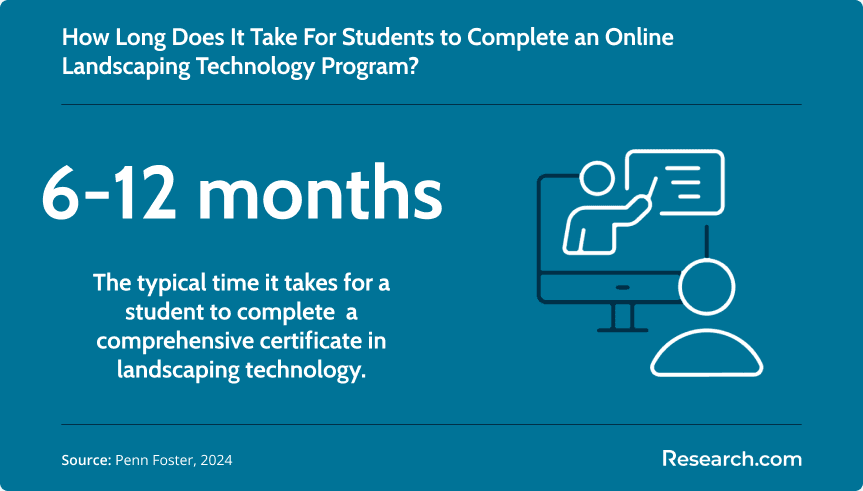
| Career diploma or comprehensive certificate | 6 to 12 months | Students preparing for entry-level landscaping, groundskeeping, or technician roles |
| Associate degree in horticulture, landscape design, or a related field | Generally 2 years full-time | Students who want broader academic training, possible transfer options, or deeper horticulture study |
What affects program length?
- Self-paced versus scheduled format: Self-paced programs let motivated students finish faster, while structured programs may require weekly deadlines.
- Weekly study time: Students who can study consistently often complete programs more quickly than those fitting coursework around seasonal work or family obligations.
- Prior experience: Students with gardening, nursery, lawn care, construction, or maintenance experience may understand concepts faster.
- Program depth: A broad program covering design, irrigation, plant care, business, and hardscaping will usually take longer than a single-topic course.
- Credit or course requirements: Degree and credit-bearing certificate programs generally take longer than noncredit professional courses.
How does an online landscaping technology trade school program compare to an on-campus program?
Online and campus-based landscaping programs serve different learners. Online programs are convenient, often less expensive, and easier to fit around work or family. Campus programs usually provide stronger supervised practice with tools, equipment, plants, irrigation systems, grading, and construction materials.
This difference matters because landscaping is a hands-on trade, similar to many trade school careers. A student can learn the theory of drainage or pruning online, but employers often want proof that the student can apply those concepts safely and efficiently in the field.
| Factor | Online program | On-campus program |
| Flexibility | Usually stronger; many programs are self-paced or asynchronous | Often limited by class schedules, lab times, and campus location |
| Hands-on training | Requires local practice, employer experience, or independent projects | Typically includes supervised labs, equipment access, and instructor feedback |
| Cost | Often lower because commuting and housing are reduced | May include higher tuition, transportation, supplies, or campus fees |
| Networking | Depends on instructor access, online community, and career services | Often stronger through classmates, faculty, local employers, and field projects |
| Best fit | Working adults, rural students, career changers, business owners | Students who need structured practice and direct supervision |
When should you choose online landscaping training?
- You already work in landscaping or a related field and need formal knowledge.
- You cannot commute to a campus program.
- You need a lower-cost or self-paced option.
- You can arrange hands-on practice through an employer, internship, volunteer project, or personal landscape project.
When is an on-campus program the better choice?
- You are new to tools, equipment, construction materials, and field safety.
- You want supervised labs in pruning, irrigation, hardscaping, or equipment operation.
- You learn best through in-person demonstration and correction.
- You want stronger local employer connections through a campus program.
What is the average cost of an online landscaping technology trade school program?
Costs vary by credential level, institution type, program length, and whether the program is credit-bearing. Students should compare the total price, not just monthly payments, and should include technology fees, books, software, supplies, tools, exam fees, and any required in-person practice.
One reason students consider landscaping training is the possibility of moving into better-paying settings over time. Federal, state, and local government work is listed at $58,290 annually, although wages vary by role, location, and hiring requirements.
Certificate programs
Online certificate programs are typically the lowest-cost option. They may focus on plant care, sustainable design, landscape business ownership, or a specific technical skill. These shorter options may appeal to students comparing easy trades to learn that pay well, but students should confirm that the program teaches skills employers actually request.
Online certificate programs may range from around $700 to $2,000. Some shorter specialized courses cost less, while broader certificates may cost more. For example, some National Association of Landscape Professionals (NALP) training courses are priced at around $729, while broader landscape technician certificates may be around $1,729.
Diploma programs
Diploma programs generally provide broader preparation than short certificates. They may cover design, installation, maintenance, business operations, plant science, and safety. Online landscaping technology diploma programs often fall between $800 and $2,500. Penn Foster’s Landscaping Technology Career Diploma lists tuition as low as $839 to $1,039, depending on the payment plan.
Associate degrees
Fully online associate degrees specifically in landscaping technology are less common because labs and fieldwork are important. However, some schools offer online or hybrid associate degrees in horticulture, landscape design, or related areas.
For public community colleges, the average cost per credit hour for online classes for in-state students is around $337 as of 2024. Since an associate degree usually requires 60 credit hours, tuition can total roughly $20,000 to $25,000 for the full program. Out-of-state tuition at public colleges can be significantly higher.
| Cost item | Why it matters | Question to ask |
| Tuition | The advertised price may not include all required costs | Is the quoted price the full program cost? |
| Books and materials | Plant guides, design texts, and workbooks may be separate | Are required materials included? |
| Software | Design courses may require CAD, SketchUp, or other tools | Do students need paid software? |
| Tools and field supplies | Practice projects may require basic equipment or materials | What hands-on supplies should I budget for? |
| Certification exams | Some programs prepare students for optional industry credentials | Are exam fees included or separate? |
For students evaluating earning potential, industry wage differences matter. The chart below highlights top-paying industries for landscaping and groundskeeping workers in the U.S. and can help you think about where specialized skills may be most valuable.
What financial aid options are available for online landscaping technology trade school students?
Financial aid depends on the school, program type, accreditation, and whether the program participates in federal aid programs. Before enrolling, confirm aid eligibility directly with the school’s financial aid office rather than assuming that every online trade program qualifies.
Federal Student Aid (FAFSA)
Federal aid may be available at accredited trade and vocational schools, not only four-year colleges. This is true across multiple skilled training areas, including programs such as trade schools for automotive. To check eligibility, students should complete the Free Application for Federal Student Aid (FAFSA).
The school must be accredited and have a federal school code for students to access federal aid. If the program is noncredit, very short, or offered by a provider that does not participate in federal aid, FAFSA-based aid may not apply.
Federal grants
- Pell Grants: These grants support undergraduate students with exceptional financial need. Award amounts can change each year and depend on financial need, cost of attendance, and enrollment status.
- Federal Supplemental Educational Opportunity Grants (FSEOG): These grants are awarded by participating schools to students with high financial need, often prioritizing Pell Grant recipients, based on institutional funding availability.
Scholarships
- Industry scholarships: Landscaping and horticulture organizations may offer awards for students entering the green industry. Examples include the National Association of Landscape Professionals (NALP) Foundation, the Horticulture Research Institute (HRI), the Landscape Architecture Foundation (LAF), and state nursery or landscape associations.
- Trade school scholarships: Some private foundations and scholarship platforms list awards for vocational students, including those in landscaping and horticulture.
- School scholarships: Ask the school whether it offers institutional scholarships, tuition discounts, payment plans, or employer partnership funding.
Student loans
- Federal student loans: Federal loans usually offer borrower protections, income-driven repayment options, and deferment or forbearance possibilities.
- Private student loans: Private loans are issued by banks, credit unions, and other lenders. They often have fewer protections and may carry higher interest rates, so students should compare terms carefully and generally review federal options first.
Cost-saving strategies
- Choose a shorter certificate if you only need one skill, such as irrigation basics or business startup planning.
- Ask whether prior coursework or experience can reduce requirements.
- Look for employer reimbursement if you already work for a landscaping company.
- Compare payment plans against pay-in-full discounts.
- Avoid borrowing more than the credential is likely to justify in your local job market.
What are the prerequisites for enrolling in an online landscaping technology trade school program?
Admission requirements are usually more accessible than four-year college requirements because trade schools focus on career preparation. For students comparing landscaping technology with design-oriented options such as the fastest online architecture degree programs, landscaping technology is typically a faster, more field-focused route into outdoor work.
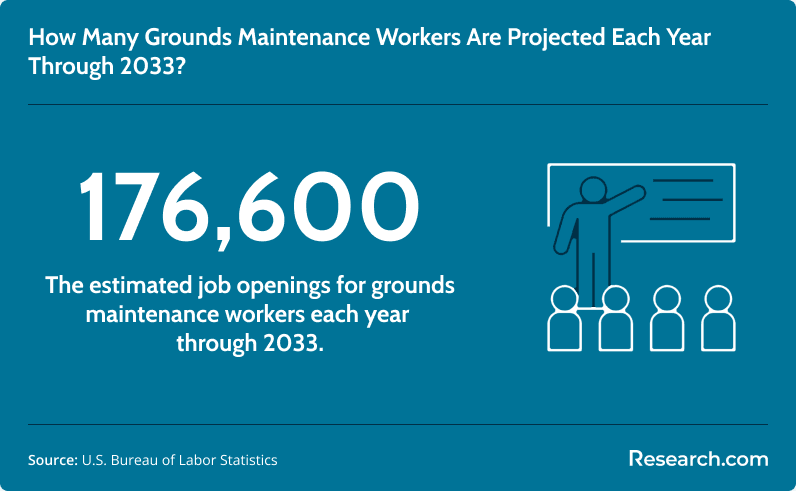
From 2023 to 2033, the BLS projects about 176,600 openings for grounds maintenance workers each year. Common enrollment requirements include the following.
High school diploma or GED equivalent
Most programs require a high school diploma or GED. This shows that students have the reading, writing, and math foundation needed for coursework in measurements, estimating, plant science, and safety. Students interested in nearby construction trades may also compare affordable carpentry programs online, which often use similar baseline admission standards.
Some programs may allow high school students to enroll with parental permission, but they may still require a diploma or GED before completion or credential issuance.
Minimum age
Many online trade schools require students to be at least 17 or 18 years old. Students under 18 may need approval from a parent or guardian, depending on the school and state rules.
Technology requirements
- Computer and internet access: Students generally need a reliable desktop or laptop computer and stable high-speed internet for lessons, exams, uploads, and communication.
- Basic computer skills: Students should be comfortable using email, online learning platforms, word processing tools, and file uploads.
- Program-specific software: Some design-oriented programs may require software such as AutoCAD, Adobe Creative Suite, SketchUp, plant identification tools, or project management platforms. Always ask whether software is included in tuition.
English language proficiency
Students whose first language is not English may need to show English proficiency through a test such as TOEFL or IELTS, depending on the school. This helps ensure students can understand safety instructions, technical lessons, and client communication assignments.
Placement testing
Trade schools rarely require SAT or ACT scores, but some may use internal placement tests in reading, writing, or math. These tests help determine whether a student needs extra preparation before beginning technical coursework.
What courses are typically in an online landscaping technology trade school program?
Coursework usually blends plant science, design, maintenance, safety, installation concepts, and business operations. The exact mix depends on whether the program is a short certificate, career diploma, undergraduate certificate, or degree pathway.
Horticulture and plant science
- Plant identification and selection: Students learn to recognize trees, shrubs, perennials, annuals, and groundcovers and match plants to light, soil, water, and climate conditions.
- Soil science and plant nutrition: Coursework covers soil texture, drainage, amendments, fertility, composting, and sustainable soil practices.
- Pest and disease management: Students study common landscape pests and diseases and learn integrated pest management strategies that reduce unnecessary chemical use.
- Turfgrass management: Lessons may include lawn establishment, mowing, fertilization, irrigation, weed control, and pest troubleshooting.
- Plant propagation: Students may learn propagation methods such as seeds, cuttings, division, and basic nursery practices.
Landscape design and planning
- Design principles: Students study balance, proportion, rhythm, color, texture, line, and form as they apply to outdoor spaces.
- Site analysis: Coursework may cover sunlight, drainage, existing structures, traffic flow, client needs, and site limitations.
- Drafting and graphics: Students may learn basic plan drawing, presentation techniques, and computer-aided design tools.
- Sustainable landscape practices: Topics may include xeriscaping, native plant selection, stormwater management, ecological design, and low-impact maintenance. Students interested in related site-planning skills may also compare the cheapest floor installer training online, where measurement, materials, and layout concepts can overlap.
Landscape installation and construction
- Hardscaping basics: Students learn concepts behind patios, walkways, retaining walls, edging, steps, pavers, stone, concrete, and wood landscape features.
- Irrigation systems: Coursework may cover sprinklers, drip systems, controllers, valves, water efficiency, basic design, installation concepts, and troubleshooting.
- Plant installation: Students learn correct planting depth, spacing, root preparation, mulching, watering, and establishment practices.
- Drainage solutions: Lessons may include grading, erosion control, French drains, and strategies to prevent waterlogging.
- Equipment operation and safety: Online courses usually teach safety concepts for mowers, trimmers, blowers, chainsaws, and other tools, though hands-on supervision must be gained locally. Safety fundamentals may overlap with topics in the cheapest online home security technician programs, especially where property systems and basic electrical awareness are involved.
Landscape maintenance and management
- Seasonal maintenance: Students learn when and how to prune, fertilize, weed, mulch, mow, and prepare landscapes for seasonal changes.
- Tree and shrub care: Coursework may introduce pruning techniques, health monitoring, and structural care for woody plants.
- Integrated pest management in maintenance: Students apply pest and disease strategies to ongoing property care.
Business and professional skills
- Starting and running a landscaping business: Topics may include business planning, pricing, estimating, bidding, marketing, financial records, and client management.
- Customer service and communication: Students learn how to clarify client expectations, explain recommendations, and handle service issues professionally.
- Workplace safety and first aid: Programs may introduce jobsite hazards, personal protective equipment, heat safety, tool safety, and basic injury response.
What types of specializations are available in online landscaping technology trade school programs?
Specializations help students move beyond general landscaping knowledge and build a clearer career direction. Not every online program offers formal tracks, but many allow students to focus through electives, projects, certificates, or continuing education courses.
| Specialization | What you study | Career direction |
| Landscape design | Design principles, site analysis, plant selection, drafting, CAD, client presentations | Design assistant, residential design support, sales/design roles |
| Horticulture and plant care | Plant science, pest diagnosis, propagation, nursery production, plant health | Nursery worker, horticulture technician, greenhouse assistant |
| Irrigation technology | Sprinklers, drip systems, controllers, hydraulics, water auditing, troubleshooting | Irrigation technician or irrigation service assistant |
| Hardscaping and construction | Pavers, retaining walls, patios, grading, drainage, materials, safety | Hardscape installer assistant or construction crew member |
| Sustainable landscaping | Xeriscaping, native plants, stormwater, ecological design, low-water maintenance | Sustainable landscape technician or design support |
| Arboriculture and tree care | Tree identification, pruning concepts, tree health, urban forestry, safety | Tree care technician or arborist assistant |
| Landscape business management | Estimating, marketing, client service, operations, finance, legal basics | Crew leader, supervisor, or self-employed contractor |
Landscape design
This focus combines creativity with technical planning. Students learn design principles, site assessment, plant selection, drafting, CAD basics, and client presentation. Some programs cover residential, commercial, or public-space design. Grounds maintenance worker, which is part of landscape design, earned 420.87 per hour in 2024.
Horticulture and plant care
This specialization is best for students who want to work closely with plants. It may include advanced plant identification, plant health, propagation, pest and disease management, greenhouse work, nursery management, or floriculture.
Irrigation technology
Irrigation is important because water efficiency and system performance affect both cost and plant health. Students may study sprinkler and drip systems, controllers, valves, hydraulics, installation planning, repairs, and water audits.
Hardscaping and construction
This focus introduces the built features of landscapes, including patios, walkways, retaining walls, outdoor kitchens, fire pits, and masonry or carpentry elements. Online courses can teach planning and materials, but students need field practice to build speed, accuracy, and safety.
Sustainable landscaping and ecological design
This track emphasizes lower-impact landscapes that conserve resources and support biodiversity. Topics may include low-water landscapes, native plants, stormwater management, organic practices, and permaculture principles.
Arboriculture and tree care
Arboriculture focuses on trees and woody plants. Students may learn tree identification, pruning concepts, tree health, pathology, urban forestry, and safe support practices for certified arborists.
Landscape business management
This specialization is useful for aspiring owners, crew leaders, and supervisors. Coursework may cover estimating, bidding, marketing, scheduling, financial management, hiring, customer service, and legal basics.
The following chart shows median hourly wages for grounds maintenance workers across different U.S. industries, helping students see how employer type can affect earning potential.
What are my options for advancing my education after completing an online landscaping technology trade school program?
After trade school, students can build credentials through industry certifications, undergraduate certificates, associate degrees, bachelor’s degrees, or targeted business training. Some schools may accept transfer credit from prior coursework, though noncredit trade school courses do not always transfer. Students seeking a faster academic credential may compare options such as an associate's degree online in 6 months, but they should verify credit transfer policies before enrolling.
What advanced education pathways can complement a landscaping technology trade school program?
Advanced education can help landscaping workers move toward design, supervision, horticulture, operations, or business ownership. A student who starts with a trade certificate might later pursue horticultural science, landscape design, construction management, business administration, or environmental studies. Those who want a faster route to a broader credential can review a fast track bachelor's degree online, especially if they want management or long-term advancement options.
How can I gain hands-on practical experience while studying online?
Online students should create a field experience plan before classes begin. Good options include working part-time for a landscaping company, volunteering at a community garden, helping with municipal beautification projects, shadowing an irrigation technician, completing supervised projects at home, or asking a local nursery about seasonal work. Students can also strengthen their resumes with targeted credentials, including easy certifications for high paying jobs, when those certifications match employer needs.
Can advanced education boost my landscaping career growth?
Additional education can support advancement, especially for workers aiming at crew leadership, design support, sustainability consulting, operations management, or business ownership. Advanced academic programs may build skills in leadership, budgeting, project management, environmental planning, and strategic decision-making. Some experienced professionals may eventually consider one year master programs, although this level of education is usually more relevant to management, design, research, or specialized environmental roles than entry-level field work.
How to choose the best online landscaping technology trade school program
The best program is the one that matches your career goal, budget, schedule, and need for hands-on practice. Do not choose a program based only on a low monthly payment or a short completion timeline. Landscaping employers care about reliability, safety, practical skill, plant knowledge, and the ability to work outdoors in real conditions.
Step 1: Define your target job
- Choose a likely role: landscape technician, groundskeeper, irrigation technician, hardscape assistant, nursery worker, design assistant, or business owner.
- Decide whether you need broad training or a focused certificate.
- Check job postings in your local area to see what employers request.
Step 2: Review the curriculum carefully
- Look for plant identification, soil science, pest management, turf care, design fundamentals, safety, and irrigation basics.
- If you want a specialization, confirm that the program includes enough depth, not just one short lesson.
- Ask whether design software, exams, or textbooks cost extra.
Step 3: Verify accreditation and recognition
- Confirm that the institution is accredited by a recognized agency when accreditation matters for aid, transfer credit, or employer recognition.
- Ask whether the program prepares students for industry certifications from organizations such as NALP or irrigation-related credentialing bodies.
- Read student reviews, but do not rely only on testimonials. Ask for completion, support, and job-placement information when available.
Step 4: Compare total cost and financial aid
- Request a complete cost breakdown, including tuition, books, materials, software, technology fees, and exam fees.
- Ask whether the program is FAFSA-eligible.
- Compare payment plans carefully because monthly pricing can sometimes cost more overall than paying upfront.
Step 5: Evaluate flexibility and student support
- Decide whether you prefer self-paced lessons or instructor-led deadlines.
- Ask how instructors provide feedback on projects.
- Check whether the school offers technical support, academic advising, and career services for online students.
Step 6: Confirm hands-on learning expectations
- Ask whether the school requires field projects, local internships, or practical assignments.
- Find out whether instructors review photos, videos, plans, or project documentation.
- Look for programs that explain how online students can build a portfolio or prove practical ability.
Common mistakes to avoid
| Mistake | Why it can hurt you | Better approach |
| Choosing only by the lowest price | A cheap program may lack depth, support, or employer value | Compare curriculum, accreditation, hands-on expectations, and total cost |
| Ignoring accreditation | It may affect federal aid, transfer credit, and credential recognition | Confirm accreditation and aid eligibility before enrolling |
| Assuming online training replaces field practice | Employers may still expect tool, equipment, and jobsite experience | Arrange local work, volunteering, internships, or home projects |
| Overlooking software and supply costs | Extra costs can make an affordable program less affordable | Ask for a full list of required materials and tools |
| Relying only on rankings | A ranked program may not match your local job goals | Use rankings as a shortlist, then compare outcomes and fit |
What career paths are available for graduates of online landscaping technology trade school programs?
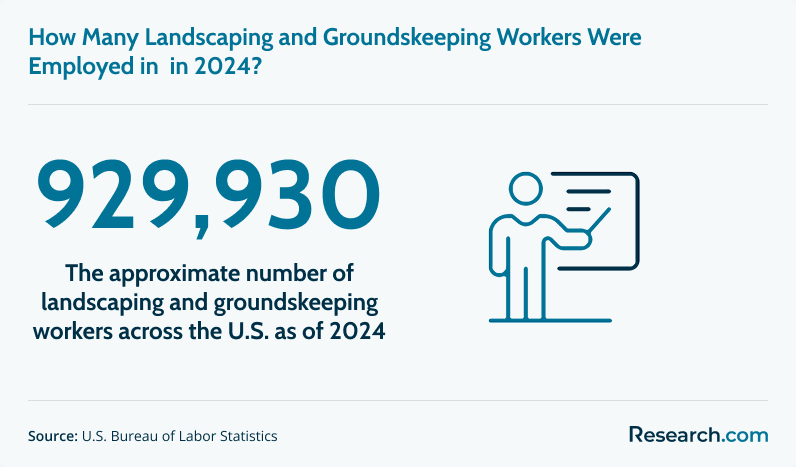
As of 2024, there were 929,930 landscaping and groundskeeping workers across the U.S. Online landscaping technology graduates most commonly enter entry-level and technician roles, then build experience through field work, certifications, specialization, or business ownership.
Landscape technician or landscaper
Landscape technicians install and maintain outdoor spaces for homes, businesses, and public properties. Duties may include planting, mulching, pruning, mowing, weeding, basic irrigation work, and cleanup.
Groundskeeper
Groundskeepers maintain larger properties such as parks, schools, corporate campuses, athletic fields, golf courses, and public facilities. They often handle turf management, seasonal maintenance, equipment operation, and tree or shrub care.
Irrigation technician
Irrigation technicians install, inspect, troubleshoot, and repair irrigation systems. They may work with sprinkler heads, drip lines, valves, controllers, and water-efficiency audits. The irrigation technician receives an annual pay that is nearly equivalent to the range of a trade school electrician's salary.
Horticulture technician or nursery and greenhouse worker
These roles focus on plant production and plant health. Workers may assist with propagation, watering, fertilizing, pest monitoring, inventory, and preparing plants for sale or installation.
Landscape design assistant
Design assistants support landscape designers or landscape architects. They may help draft plans, prepare presentations, research plants and materials, take site notes, and organize project details. Full landscape architect roles typically require a bachelor’s degree and additional licensure steps.
Hardscape installer
Hardscape installers build patios, walkways, retaining walls, outdoor kitchens, and other non-plant features. Online coursework can introduce concepts, but this path requires substantial field practice.
Lawn care specialist
Lawn care specialists focus on turfgrass health. Duties may include fertilization, weed control, aeration, overseeding, pest management, and lawn diagnostics for residential or commercial clients.
Tree care technician or arborist assistant
Students with tree care training may assist certified arborists with pruning, planting, disease identification, equipment setup, and jobsite safety.
Self-employed landscaping contractor
Some graduates start their own landscaping businesses. This path offers independence but requires pricing discipline, insurance awareness, customer service, marketing, equipment investment, and reliable scheduling.
What is the job market for graduates with an online landscaping technology trade school program?
The job market is generally favorable for students who combine online training with practical experience. Demand is supported by residential lawn care, commercial property maintenance, outdoor living projects, municipal grounds work, and growing interest in sustainable landscaping.
- Large industry base: The U.S. landscaping market was valued at over $150 billion in 2024 and is projected to reach higher figures in the coming years. Some students compare landscaping with fields such as highest paying trade jobs, but local wages and advancement paths vary by trade.
- Need for skilled workers: Many landscaping employers report difficulty finding qualified employees, especially workers who are reliable, safety-conscious, and able to apply plant, irrigation, and maintenance knowledge in the field.
- Residential and commercial demand: Homeowners invest in lawns, gardens, and outdoor living spaces, while businesses, schools, municipalities, and institutions need regular grounds maintenance.
- Technology shift: Smart irrigation, automated equipment, AI-driven lawn care technology, water-use monitoring, and digital design tools are creating opportunities for workers who understand both field work and technology.
Questions to ask before enrolling
- Is the institution accredited, and does that accreditation support financial aid or transfer goals?
- What is the full program cost, including books, software, supplies, and exam fees?
- How does the program help online students gain hands-on experience?
- Does the curriculum match the job I want: maintenance, design, irrigation, hardscaping, plant care, or business ownership?
- Are instructors available for feedback, or is the program mostly self-study?
- Does the school provide career services, resume help, employer connections, or job boards?
- Will any credits transfer to a certificate, associate degree, or bachelor’s program later?
- What do local employers think of the credential?
Here’s what graduates say about affordable online landscaping technology trade school programs
- “Online landscaping training helped me change careers without leaving my full-time job. I learned plant care, soil basics, and design concepts on a schedule I could manage, then practiced locally until I was ready to take on client projects.” Sarah
- “I had gardening experience but needed structure. The irrigation modules gave me the confidence to understand controllers, system problems, and water efficiency. Studying from home made the career shift realistic.” Michael
- “The online lessons were useful, but the real difference came when I applied them in my own yard and volunteer projects. That mix of coursework and practice helped me start a small landscaping business.” Jessica
Key Insights
- Affordable online landscaping technology programs are best for flexible, lower-cost training in plant science, design basics, irrigation concepts, maintenance planning, safety, and business fundamentals.
- Hands-on practice is still essential. Students should plan for local field experience through work, volunteering, internships, community projects, or supervised personal projects.
- Program length varies widely: short courses may take 4 weeks to 3 months, while comprehensive certificates or diplomas often take 6 to 12 months.
- Online certificate programs commonly range from $700 to $2,000, while broader diploma and degree pathways can cost more depending on institution type and credit requirements.
- The U.S. landscaping market was valued at over $150 billion in 2024, and as of 2024 there were 929,930 landscaping and groundskeeping workers across the country.
- The BLS projects about 176,600 openings for grounds maintenance workers each year from 2023 to 2033, but individual outcomes depend on location, experience, specialization, and employer demand.
- The strongest program choice is not always the cheapest one. Compare accreditation, curriculum depth, hands-on expectations, instructor feedback, career support, and total cost before enrolling.
References:
- National Association of Landscape Professionals. (n.d.). Landscape industry statistics.
- National Association of Landscape Professionals. (2025). 2025 Landscape industry report.
- Outdoor Power Equipment Institute. (2023). State of the industry report. Landscape Trades.
- Sodja, D. (n.d.). State of the industry report. Lawn & Landscape.
- U.S. Bureau of Labor Statistics. (2024). Occupational employment and wages, May 2023: 37-3011 Grounds Maintenance Workers.
- U.S. Bureau of Labor Statistics. (2024). Grounds maintenance workers: Job outlook. In Occupational outlook handbook.
Other Things You Should Know About Online Landscaping Technology Trade School Programs
In 2027, online landscaping technology trade school programs typically cover subjects like plant science, landscape design principles, soil management, and sustainable landscaping practices. These programs offer practical knowledge essential for skilled landscaping professionals, ensuring comprehensive training in areas crucial for the industry's evolving needs.
In 2027, students may consider federal financial aid, scholarships, and payment plans as more affordable options compared to private student loans for online landscaping technology trade schools. Additionally, checking for any industry-specific scholarships or grants could help reduce tuition costs.
Costs for online landscaping technology trade school programs in 2027 typically include tuition, technology fees, and materials for practical assignments. Institutions may offer installment plans, and qualifying students can access federal financial aid to ease the burden. Accurate cost assessments ensure students are fully prepared for all financial commitments.


