
2027 Most Affordable Online Mechanic and Engine Technician Trade School Programs

Co-Founder and Chief Data Scientist
Choosing an affordable online mechanic and engine technician program is not just a tuition decision. You need to know whether the training is credible, whether it includes enough hands-on practice, whether it prepares you for ASE-related credentials, and whether the total cost makes sense for the kind of job you want. This guide is for students, career changers, military learners, working adults, and mechanically minded beginners who want a practical path into automotive, diesel, fleet, small engine, or related service careers.
Online mechanic training can be useful, but it has limits. You can learn theory, diagnostics, electrical systems, service procedures, and test preparation online; however, employers still care about real repair experience. The strongest programs combine online coursework with labs, externships, shop practice, at-home projects, or local work-based learning.
This guide explains what online mechanic and engine technician programs cover, how much they may cost, which affordable programs stand out, what employers look for, how ASE certification fits into the career path, and how to decide whether this training is worth the investment.
Quick answer: Are online mechanic and engine technician programs worth considering?
Yes, an online mechanic or engine technician program can be worth it if it is credible, affordable, aligned with ASE-related skill areas, and paired with hands-on practice. It is best for learners who need flexibility and want to build foundational knowledge before entering a shop, apprenticeship, dealership, fleet operation, or specialty training program. It is not a complete substitute for real-world repair experience.
| Best fit | What to look for | Potential concern |
| Beginners seeking entry-level automotive knowledge | Introductory engine, brake, electrical, steering, suspension, and diagnostics courses | A fully online program may not provide enough hands-on practice by itself |
| Working adults who need flexible study | Self-paced lessons, instructor access, digital textbooks, and career support | Completion speed depends heavily on schedule and self-discipline |
| Students targeting dealership, diesel, EV, or fleet roles | Programs with labs, externships, ASE preparation, or manufacturer-specific options | Specialized jobs may require additional credentials and shop experience |
| Cost-conscious learners | Transparent tuition, tool and fee disclosures, financial aid eligibility, and payment plans | The lowest tuition is not always the best value if support and practical training are weak |
What are the benefits of getting an online mechanic and engine technician trade school qualification?
- A structured entry point into technical work: A mechanic qualification can help you prepare for roles such as automotive service technician, diesel mechanic, fleet maintenance technician, parts specialist, or service advisor.
- Career-focused earning potential: According to the Bureau of Labor Statistics, the median annual salary for automotive service technicians and mechanics was $47,770 in May 2023, with higher earnings possible for experienced technicians and those who specialize.
- Flexible study: Online coursework lets students learn repair theory, diagnostic logic, service procedures, and safety concepts around work or family obligations.
- Preparation for further credentials: A strong program can help students review topics that appear in ASE-related certification areas, although certification requirements and work experience rules still matter.
- Lower opportunity cost: Shorter certificate and diploma options may help learners enter the field faster than a multi-year degree, especially when combined with shop experience.
What can I expect from an online mechanic and engine technician trade school program?
Online mechanic programs usually teach the technical knowledge behind vehicle systems before asking students to apply that knowledge in a lab, workplace, simulated environment, or supervised hands-on setting. The exact format varies widely, so students should confirm whether a program is fully online, hybrid, campus-based with online theory courses, or online with required local practice.
- Focused technical coursework: Common subjects include engine operation, electrical systems, brakes, steering, suspension, transmissions, HVAC, diagnostics, and preventive maintenance.
- Digital learning tools: Students may use videos, interactive lessons, online assessments, simulation software, service manuals, and digital textbooks.
- Hands-on expectations: Some programs require campus labs, local shop hours, externships, work-based learning, or at-home lab activities. This is one of the most important details to verify before enrolling.
- Shorter timelines than many degree programs: Career diplomas and certificates can be completed more quickly than associate or bachelor’s programs, although deeper programs may take longer.
- ASE-oriented preparation: Many programs align coursework with automotive service areas tested by ASE, but completing a program is not the same thing as becoming ASE certified.
- Support resources: Better programs provide instructor access, technical help, academic advising, career services, and guidance on next steps after graduation.
Where can I work with an online mechanic and engine technician trade school qualification?
Graduates may qualify for entry-level or trainee positions in several automotive and equipment service settings. The most realistic first job depends on hands-on ability, tool familiarity, certifications, local employer demand, and whether the graduate has completed shop practice or an externship.
- Dealerships and independent repair shops: Many technicians begin in service bays handling inspections, maintenance, diagnostics, and repairs.
- Fleet maintenance employers: Delivery companies, corporate fleets, construction firms, rental agencies, and transportation providers need technicians to keep vehicles operational.
- Government and municipal garages: Public agencies maintain police vehicles, buses, utility trucks, public works vehicles, and other service fleets.
- Parts suppliers and service counters: Technical knowledge can support roles in parts identification, customer assistance, warranty support, and service writing.
- Mobile repair and specialty shops: Some technicians move into mobile service, performance tuning, powersports, marine, diesel, or small engine repair after building experience.
- Specialized growth areas: Diesel, hybrid, electric vehicle, advanced diagnostics, and manufacturer-specific service pathways can expand long-term options.
How much can I make with an online mechanic and engine technician trade school qualification?
Income varies by location, employer, skill level, certification status, specialization, and experience. An online qualification can help open the door, but pay usually rises when technicians gain real shop experience, earn certifications, and specialize in harder-to-fill areas.
- Entry-level roles: Automotive Technician I typically earns from $43,000 to $55,000 annually.
- Certified technicians: With ASE certifications and experience, salaries can increase to a range of $55,000-$75,000.
- Master technicians: Specialists in fields like diesel or EV repair may exceed $80,000 per year.
- Most Affordable Online Mechanic and Engine Technician Trade School Programs for 2027
- What are mechanics and engine technicians and what do they do?
- What is the average cost of an online mechanic and engine technician program?
- What are the financial aid options for online mechanic and engine technician programs?
- What are the prerequisites for enrolling in an online mechanic and engine technician program?
- What courses are typically in an online mechanic and engine technician program?
- What types of specializations are available for mechanics and engine technicians?
- How do you choose the best online mechanic and engine technician program?
- What career paths are available for graduates of online mechanic and engine technician programs?
- How much can I earn with an online mechanic and engine technician qualification?
- What is the job market for graduates with an online mechanic and engine technician qualification?
- Is the Investment in an Online Mechanic Program Worth the Cost?
- Do Employers Value Online Mechanic and Engine Technician Qualifications?
- How Do Online Mechanic Programs Prepare You for ASE Certification?
- How Can Additional Certifications Elevate Your Automotive Career? See also ASE preparation, employer views, and job market details.
Most Affordable Online Mechanic and Engine Technician Trade School Programs for 2027
The programs below include online, hybrid, partly online, or flexible training options relevant to mechanic and engine technician careers. Because automotive training is skill-based, students should pay close attention to the practical component, not just the online delivery format. A low-cost program can be a strong choice if it is credible, transparent about fees, and connected to industry expectations.
When comparing programs, accreditation matters. Students should understand what online schools are nationally accredited, but they should also look beyond institutional accreditation. Automotive programs may also carry industry recognition, ASE Education Foundation alignment, manufacturer relationships, or other credentials that affect employer confidence.
Research.com rankings are developed using a documented methodology that combines program research and data analysis. Data sources include the National Center for Education Statistics’ IPEDS database, Peterson’s database and its Distance Learning dataset, and outcome and cost information from the College Scorecard database.
| Program | Best for | Format note | Key decision factor |
| Bates Technical College | Diesel and heavy equipment training | Hands-on sequence with live shop components | Strong fit for students targeting diesel service rather than general auto repair only |
| College of Lake County | Master automotive service technician preparation | In-person and hybrid online format | About 60% lab time supports practical skill development |
| Parkland College | Affordable AAS automotive technology training | Campus-based technical training with flexible academic pathways | Transfer pathway and motorsport option may appeal to students seeking advancement |
| Penn Foster Career School | Fully online, self-paced entry-level study | Fully online career diploma | Affordable and flexible, but students should plan for hands-on practice separately |
| Universal Technical Institute | Blended automotive technology training | Online instruction paired with lab experience | Manufacturer-specific advanced training may be valuable for dealership goals |
| New England Institute of Technology | Automotive service management | Online and hybrid courses within a 10-week quarter system | Best suited for students moving toward management, service operations, or entrepreneurship |
| University of Northwestern Ohio | Diploma, associate, and bachelor’s automotive pathways | Partly online through the College of Applied Technologies | 70% hands-on coursework is important for applied skill development |
| Weber State University | Automotive technology degree with advanced vehicle exposure | In-person and online options | Useful for students interested in service, engineering, management, hybrid, or EV technologies |
1. Bates Technical College
The Diesel and Heavy Equipment Technology program at Bates Technical College prepares students for diesel and heavy equipment service roles through a sequence built around Electrical Systems, Engines and Brakes, Powertrains, and Hydraulics and Steering/Suspension. The six-quarter structure moves from foundational concepts into advanced service work, with later courses involving live shop application.
Students can pursue internships, apprenticeships, and work-based learning opportunities that connect classroom instruction to real service environments. The Associate of Applied Science option includes both general education and technical coursework, while the certificate options provide shorter, more focused preparation.
- Program Length: AAS program: 6 Quarters; Certificate of Competency: 4 Quarters; Certificate of Training: 1 Quarter
- Tracks/Concentrations: AAS: Diesel and Heavy Equipment Technician; Certificate of Competency: Diesel Service Technician; Certificate of Training: Multiple Options; CIP: 47.0605 (Diesel Mechanics Technology/Technician)
- Tuition Cost: Resident: $148.22/credit; Non-Resident: $348.76/credit
- Required Credits to Graduate: 103 credits (AAS); 15 credits (Certificate of Training); 90 credits (Certificate of Competency)
- Accreditation: Northwest Commission on Colleges and Universities (NWCCU)
2. College of Lake County
The Master Automotive Service Technician Associate in Applied Science at College of Lake County is intended for students who want broad automotive systems training with substantial lab experience. Offered in-person and in a hybrid online format, the program emphasizes diagnostics, repair procedures, and use of industry-standard equipment. Students spend about 60% of their time in lab environments.
The curriculum covers major automotive systems and supports preparation for ASE certification areas. Students may also add certificates in selected automotive technology areas, which can help build targeted skills before or alongside the AAS.
- Program Length: 4 semesters (approximately 2 years)
- Tracks/Concentrations: Master Automotive Service Technician AAS; additional certificates available
- Tuition Cost: In-district residents: 137.96/credit; Out-of-district residents: $355.14/credit; Out-of-state & international residents: $481.25/credit
- Required Credits to Graduate: 67 credits (AAS)
- Accreditation: Higher Learning Commission (HLC); Master Certified by the National Institute for Automotive Service Excellence (ASE)
3. Parkland College
Parkland College offers an Associate in Applied Science in Automotive Technology that combines affordability with training in the Parkhill Applied Technology Center. The program prepares students for entry-level work in dealerships and independent service centers and allows learners to take individual courses, complete the AAS, or pursue motorsport technology interests.
Students who want to continue their education can use the transfer pathway to Southern Illinois University Carbondale. Full-time students usually take 16–17 credit hours per semester, and eligible out-of-district learners may access in-district tuition through a Career Agreement process.
- Program Length: Typically 2 years (AAS)
- Tracks/Concentrations: Automotive Technology (AAS)
- Tuition Cost: Tuition & Fees, Fall and Spring semesters - Full-time/In-district: $4,464; Full-time/Out-of-district: $10,056
- Required Credits to Graduate: 71-73 credits (AAS)
- Accreditation: Higher Learning Commission (HLC)
4. Penn Foster Career School
Penn Foster offers an Automotive Repair Technician Career Diploma built for self-paced online study. Students can complete the program in as little as four months, with mobile-friendly coursework covering basic diagnostics, maintenance, and repair concepts for domestic and foreign vehicles.
Digital textbooks and study materials are included, and students receive practice test vouchers for ASE exams. This option may work well for learners seeking a flexible introduction to the field, but students should still plan how they will gain hands-on repair experience before applying for technician roles.
- Program Length: Fast track = 4 months; Average time = 12 months
- Tracks/Concentrations: Automotive Repair Technician (Career Diploma)
- Tuition Cost: $939 (pay in full); $1,139 (monthly payments); taxes may apply based on location
- Required Credits to Graduate: 12 courses; 49.4 continuing education units (CEUs); 31 exams
- Accreditation: Distance Education Accrediting Commission (DEAC)
5. Universal Technical Institute (UTI)
Universal Technical Institute uses a blended approach in its Automotive Technology program, pairing instructor-led online training with hands-on lab work. Topics include driveability, transmissions, steering, suspension, and braking systems.
Students may also pursue manufacturer-specific advanced training with brands such as Ford, BMW, and Toyota, along with NASCAR-endorsed training. Graduates are prepared for ASE certification pathways, and the program may be used to substitute for part of the required experience. The core program is designed for completion in less than a year.
- Program Length: 51 weeks (core program)
- Tracks/Concentrations: Automotive Technology, Manufacturer-Specific Advanced Training
- Tuition Cost: Not specified
- Required Credits to Graduate: Not specified
- Accreditation: ASE Education Foundation, a division of the National Institute for Automotive Service Excellence (ASE)
6. New England Institute of Technology
The Bachelor of Science in Automotive Service Management at New England Institute of Technology is designed for students who want to move beyond technician work into service leadership, business operations, or transportation management. The program serves high school graduates as well as students continuing from an associate degree and uses online and hybrid courses on a 10-week quarter schedule.
Coursework covers leadership, finance, marketing, operations, project management, labs, and simulations tied to automotive and transportation workplaces. Graduates may pursue roles such as general service manager, parts manager, service writer, fleet manager, entrepreneur, or related marine services positions.
- Program Length: 18–24 months
- Tracks/Concentrations: Automotive Service Management
- Tuition Cost: $35,925 (2025-2026)
- Required Credits to Graduate: 90 semester credits
- Accreditation: New England Commission of Higher Education (NECHE); ASE Education Foundation, a division of the National Institute for Automotive Service Excellence (ASE)
7. University of Northwestern Ohio
The University of Northwestern Ohio offers diploma, associate, and bachelor’s programs in Automotive Technology, with partly online options through its College of Applied Technologies. The program combines technical theory with applied training, and 70% of coursework is hands-on.
Students train with current equipment and vehicles from major automakers. Instruction is delivered by ASE and Master ASE Certified instructors, and the curriculum is updated to reflect industry standards. UNOH covers the cost of up to two ASE tests for each student.
- Program Length: Diploma (1 year), Associate degree (2 years), Bachelor’s degree (4 years)
- Tracks/Concentrations: Automotive Technology (Diploma, Associate, Bachelor)
- Tuition & Fees: $14,100 2025/2026 Total Cost
- Required Credits to Graduate: Not specified
- Accreditation: Higher Learning Commission (HLC)
8. Weber State University
Weber State University offers a Bachelor of Science in Automotive Technology for students interested in automotive service, engineering-related roles, or management. The program includes in-person and online options and covers both conventional mechanical systems and newer hybrid, electric, and advanced vehicle technologies.
Students train in modern facilities and participate in applied experiences such as field trips and competitions. The program also emphasizes communication skills, which are important for service advising, team leadership, and customer-facing technical roles.
- Program Length: 4 years
- Tracks/Concentrations: Automotive Technology (BS, AAS)
- Tuition Cost: Resident/Online Only: $512.72/credit; Non-Resident: $1,501.81/credit
- Required Credits to Graduate: 125-126 credit hours (including at least 40 upper-division credits)
- Accreditation: Northwest Commission on Colleges and Universities (NWCCU)
What are mechanics and engine technicians and what do they do?
Mechanics and engine technicians inspect, maintain, diagnose, and repair vehicles, engines, and related mechanical systems. The role has become more technology-driven as vehicles now rely heavily on sensors, software, advanced electronics, emissions systems, driver-assistance features, hybrid components, and electric powertrains.
- Find the problem: Technicians use scan tools, diagnostic equipment, inspection procedures, service information, and test results to identify mechanical or electrical failures.
- Perform preventive maintenance: Routine work includes oil service, tire rotation, fluid replacement, filter changes, brake inspections, battery checks, and manufacturer-recommended service.
- Repair or replace components: Work can range from belts and sensors to brake assemblies, wiring, transmissions, suspension parts, and engines.
- Interpret technical information: Modern technicians must read service bulletins, wiring diagrams, repair databases, diagnostic flowcharts, and software-based instructions.
- Communicate clearly: Many roles require explaining repairs, documenting findings, preparing estimates, and advising customers or fleet managers.
- Keep vehicles safe and reliable: The central purpose of the job is to return vehicles and equipment to safe, efficient operating condition.
Employment data for automotive technicians shows that the field is concentrated in two major sectors. Automobile dealers account for 32% of all jobs, while independent automotive, mechanical, and electrical repair and maintenance shops employ another 26%. Self-employed workers represent 14% of the profession, which shows that entrepreneurship is a realistic long-term path for experienced technicians.
Some technicians later move into logistics, parts distribution, or transportation coordination. Learners interested in combining vehicle knowledge with freight or supply chain work may also compare mechanic training with affordable online freight broker training.
The employment distribution shown below suggests a field with both stable employer-based roles and room for independent business ownership.
What is the average cost of an online mechanic and engine technician program?
Costs vary widely because programs differ in length, credential level, equipment requirements, accreditation, and hands-on training model. A short online career diploma is usually much less expensive than a degree or intensive blended technical program, but a higher-cost option may include labs, career services, equipment access, or industry-aligned training.
- Certificate and diploma range: Self-paced certificate or diploma programs typically cost between $1,000 and $5,000.
- Comprehensive program range: More in-depth programs from established career schools can range from $15,000 to $25,000. These programs differ from MBA programs under 10k because automotive training may require specialized tools, labs, equipment, and technical instruction.
- Common tuition inclusions: Some schools include digital textbooks, online learning platforms, service simulations, and study resources.
- Possible added costs: Students should ask about tools, uniforms, lab fees, testing fees, software access, technology fees, travel for labs, and certification exam vouchers.
| Cost item | Why it matters | Question to ask before enrolling |
| Tuition | This is the published price, but not always the full cost | Is the listed tuition the total program price or only the instructional cost? |
| Tools and equipment | Technician training may require tools, safety gear, or shop materials | Are tools included, rented, purchased separately, or provided only on campus? |
| Hands-on training | Practical experience is essential for employability | Does the program include labs, externships, local placements, or at-home projects? |
| Certification preparation | ASE-related preparation can support career progress | Are practice exams, exam vouchers, or ASE guidance included? |
| Travel or campus visits | Hybrid programs may require in-person attendance | Will I need to travel for labs, testing, orientation, or shop training? |
Before committing, request a written cost breakdown that separates tuition, fees, tools, materials, exam costs, and any required in-person expenses.
What are the financial aid options for online mechanic and engine technician programs?
Financial aid depends on the school, program type, accreditation, and student eligibility. Not every online trade program qualifies for federal aid, so students should verify aid options directly with the school’s financial aid office before signing an enrollment agreement.
- Federal aid through FAFSA: Students in eligible accredited programs may complete the Free Application for Federal Student Aid to be considered for federal grants and student loans.
- Scholarships: Schools, trade organizations, foundations, employers, and local workforce groups may offer scholarships for skilled trades students.
- Payment plans: Some schools allow monthly payments, including interest-free options. These payment structures are also common at many nationally accredited online colleges.
- Employer assistance: Current employers, dealerships, fleet operators, or repair businesses may help pay for training if it supports business needs.
- Military and veteran education benefits: Eligible service members and veterans may be able to use the GI Bill® for approved programs.
- Workforce development funding: Local or state workforce agencies may support training for in-demand trades, especially when students are unemployed, underemployed, or changing careers.
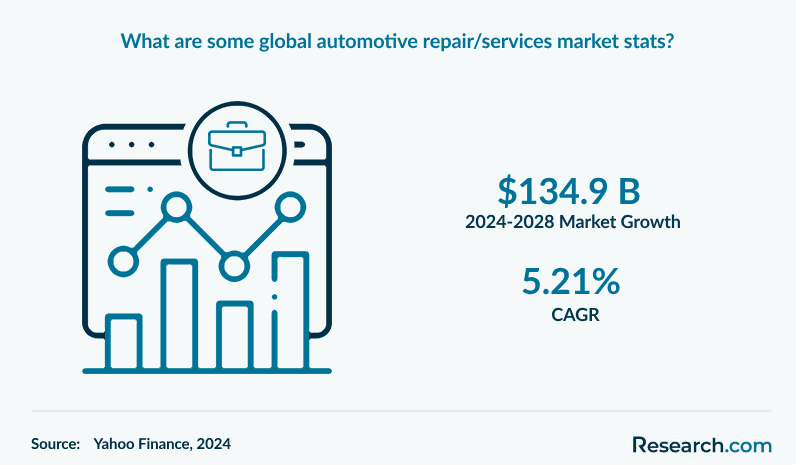
A 2024 market analysis in Yahoo! Finance indicates that the global automotive repair and maintenance services market is projected to grow by $134.9 billion between 2024 and 2028, with a compound annual growth rate (CAGR) of over 5.21%. The analysis points to increased preference for road transportation and mobile repair services as growth factors, while rising public transport usage remains a challenge.
What are the prerequisites for enrolling in an online mechanic and engine technician program?
Most entry-level mechanic and engine technician programs are designed for broad access. Requirements are usually simpler than those for academic degree programs, but students should still review admissions policies carefully.
- Education requirement: A high school diploma or GED certificate is the most common requirement. Advanced credentials such as easy masters degrees are not needed to begin mechanic training.
- Age requirement: Many programs require students to be at least 18 years old.
- Technology requirement: Online learners need a dependable computer, internet access, and the ability to use learning platforms, videos, documents, and online exams.
- Mechanical aptitude: Prior experience is not always required, but curiosity, patience, attention to detail, and comfort with tools are helpful.
- Physical and safety readiness: Hands-on mechanic work may involve standing, lifting, bending, using tools, following safety rules, and working around fluids, batteries, and moving parts.
Students who have never worked on vehicles should not be discouraged, but they should choose a program with strong beginner support and a clear plan for practical experience.
What courses are typically in an online mechanic and engine technician program?
A good online mechanic curriculum teaches how vehicle systems work, how failures are diagnosed, and how repairs are safely planned. The strongest programs connect theory to diagnostic reasoning rather than simply memorizing parts.
- Engine fundamentals: Students learn internal combustion engine operation, major components, lubrication, cooling, fuel systems, and basic repair concepts.
- Automotive electrical systems: Coursework covers circuits, batteries, charging systems, starting systems, sensors, wiring diagrams, and electrical testing.
- Brake systems: Students study hydraulic brakes, disc and drum brakes, anti-lock braking systems, inspections, and service procedures.
- Steering and suspension: Lessons address steering components, suspension geometry, shocks, struts, alignment concepts, and ride quality concerns.
- Heating and air conditioning: HVAC courses explain climate control operation, refrigerant handling concepts, and service procedures.
- Drivetrains and transmissions: Students are introduced to manual and automatic transmissions, axles, driveshafts, differentials, and power transfer.
- Diagnostics and service information: Modern programs increasingly emphasize scan tools, service databases, fault codes, and systematic troubleshooting.
These topics support entry-level readiness and ASE-related exam preparation. Students who want additional stackable credentials may also compare automotive training with online certifications that pay well, especially when planning a broader career strategy.
What types of specializations are available for mechanics and engine technicians?
Specialization is often the difference between general repair work and higher-value technical roles. After learning the basics, technicians can focus on systems, vehicle types, manufacturers, or work environments that match their interests and local labor market.
| Specialization | Typical work | Best for students who want |
| Diesel and heavy equipment | Service trucks, buses, agricultural equipment, construction vehicles, and heavy machinery | Work with larger engines, fleets, and commercial equipment |
| High-performance and motorsport | Tune engines, upgrade systems, and support performance or racing applications | Specialized work involving power, speed, and precision |
| Electric vehicle and hybrid technology | Service high-voltage batteries, electric motors, regenerative braking, and hybrid systems | A role connected to newer vehicle technologies |
| Manufacturer-specific service | Train on systems, repair procedures, tools, and standards for a specific brand | Dealership or brand-focused career pathways |
| Small engine and powersports repair | Work on motorcycles, marine engines, ATVs, lawn equipment, and compact engines | Hands-on mechanical work in smaller or recreational equipment markets |
- Diesel and Heavy Equipment Technology: This path focuses on trucks, buses, construction equipment, and agricultural machinery.
- High-Performance and Motorsport Tuning: Technicians modify and tune systems for power, speed, handling, and competition.
- Electric Vehicle (EV) and Hybrid Technology: EV and hybrid specialists work with high-voltage systems, battery packs, electric motors, regenerative braking, and safety procedures.
- Manufacturer-Specific Certification: Brand-focused training can prepare students to service Ford, BMW, Toyota, or other manufacturer systems.
- Small Engine and Powersports Repair: This specialization includes motorcycles, marine engines, ATVs, lawn equipment, and similar machines. Students who enjoy precision mechanical work may also be interested in affordable gunsmith training online, although that field has different safety, legal, and occupational requirements.
The global electric vehicle market demonstrated strong momentum in 2023, with growth of 26.8%, sales surpassing 13 million vehicles, and total revenue of $769.3 billion. Forecasts indicate a compound annual growth rate (CAGR) of 26.1% for revenue across the decade from 2019 to 2029.

China led the global EV market in 2023, with sales nearly six times higher than those in the United States. The U.S. market grew by 40% in 2023, while Europe increased by 19%. These regional trends point to growing demand for technicians who understand electric and hybrid vehicle systems, although job availability will still vary by location and employer.
How do you choose the best online mechanic and engine technician program?
The best program is not automatically the cheapest, fastest, or most heavily advertised. It is the one that matches your target job, budget, schedule, learning style, and need for hands-on training. Students interested in dealership operations, parts distribution, or transportation management may also compare technical training with the fastest online bachelor's degree in supply chain management.
| Decision factor | Why it matters | What a strong answer looks like |
| Accreditation and recognition | Affects credibility, transfer options, and sometimes financial aid | The school clearly identifies institutional accreditation and any automotive industry recognition |
| Hands-on training | Mechanic work cannot be learned by theory alone | The program explains labs, externships, shop partnerships, or practical assignments |
| ASE preparation | ASE credentials can support advancement | Course topics align with common ASE service areas and include study resources |
| Total cost | Tuition alone can hide tools, fees, travel, and exams | The school provides a written estimate of all expected costs |
| Career support | First technician jobs often depend on local connections | Students receive resume help, interview preparation, employer contacts, or externship support |
| Schedule and format | Online, hybrid, and campus requirements differ | The program states exactly which parts are online and which require in-person attendance |
- Verify accreditation: Confirm that the school is accredited by an appropriate agency and check whether the program has industry recognition relevant to automotive training.
- Review the curriculum: Make sure the program covers major vehicle systems and does not skip diagnostics, electrical fundamentals, and safety.
- Ask how practical skills are taught: Look for externships, labs, at-home projects, local shop partnerships, or documented work-based learning.
- Demand clear pricing: Ask whether tools, software, books, exams, fees, and lab access are included.
- Check student support: Strong programs provide instructors, advisors, tutoring, technical support, and career services.
- Match the credential to your goal: A short diploma may work for entry-level preparation, while an associate or bachelor’s degree may better support management, advanced technology, or long-term advancement goals.
Questions to ask before enrolling
- Is the program fully online, hybrid, or partly online with required campus labs?
- What specific hands-on work will I complete before graduating?
- Does the program prepare for ASE exams, and are exam vouchers included?
- What is the total cost after tools, technology fees, books, travel, and testing?
- Can I speak with an advisor about job placement, externships, and local employer relationships?
- Will credits transfer if I later pursue an associate or bachelor’s degree?
- Are there refund policies, completion time limits, or required minimum grades?
What career paths are available for graduates of online mechanic and engine technician programs?
Mechanic and engine technician training can support several career paths. Some are hands-on repair jobs, while others use technical knowledge in customer service, parts, fleet coordination, or operations.
- Automotive Service Technician: The most common path, involving diagnostics, maintenance, and repairs in dealerships or independent shops.
- Fleet Technician: These technicians maintain vehicles for businesses, rental agencies, delivery services, construction companies, or public agencies.
- Service Advisor or Writer: This role translates customer concerns into repair orders, explains service recommendations, and coordinates workflow between customers and technicians.
- Automotive Parts Specialist: Parts roles use technical knowledge to identify, source, and recommend correct components.
- Mobile Mechanic: Experienced technicians may build an independent service business that performs on-site repairs and maintenance.
- Diesel, EV, or specialty technician: Additional training can lead to higher-skill roles in heavy equipment, hybrid vehicles, electric vehicles, performance work, or manufacturer-specific service.
Technical training can also support adjacent transportation careers. For example, mechanics who understand parts, maintenance schedules, and fleet needs may explore careers in logistics, especially in parts distribution, fleet operations, or service network coordination.
How much can I earn with an online mechanic and engine technician qualification?
Salary outcomes are not guaranteed by completing an online program. Pay depends on your location, experience, employer, certifications, specialization, productivity, and ability to perform repairs safely and accurately. Still, published salary data gives students a useful benchmark.
- Entry-Level and Apprentice Pay: The typical starting salary range is between $38,000 and $48,000 per year.
- Experienced Technician Pay: With a few years of experience, a general service technician can expect to earn a median salary of $50,000 to $65,000. NASCAR automotive techs earn around $56,500.
- Master Technician Pay: Achieving ASE Master Technician status can command a salary ranging from $65,000 to over $85,000.
- Specialist Pay: Technicians specializing in high-demand fields like diesel or EV technology often earn annual salaries well over $90,000.
PayScale.com data shows that specialization can meaningfully affect earnings. General automotive service technicians earn around $48,360, while small engine roles for motorcycles or boats often fall between $40,000 and $49,000. Heavy-duty and commercial equipment paths generally pay more, with diesel mechanics averaging $61,586 and truck or heavy equipment mechanics earning around $59,000.
Maintenance and field roles also show competitive pay. Fleet mechanics earn $54,000, and field service technicians make $56,000. Supervisory and advanced technical paths can pay more: shop foremen and service managers earn approximately $67,000 to $68,000, lead and master technicians average $65,000, aircraft mechanics earn $69,000, and senior diesel mechanic technicians report the highest average salary listed here at $71,000.
The graph below shows how earnings differ by specialization and responsibility level. The main takeaway is that a trade school credential can help you enter the field, but long-term income growth usually depends on experience, certifications, and specialization.
Continuous training, ASE-related credentials, and experience with advanced diagnostics, diesel systems, EVs, or supervisory responsibilities are among the most practical ways to improve long-term earning potential.
What is the job market for graduates with an online mechanic and engine technician qualification?
The automotive technician field is large, stable, and accessible to students who complete relevant postsecondary training and gain practical experience. Demand is shaped by vehicle complexity, repair needs, technician retirements, regional transportation patterns, and employer expectations for diagnostic and electronic skills.
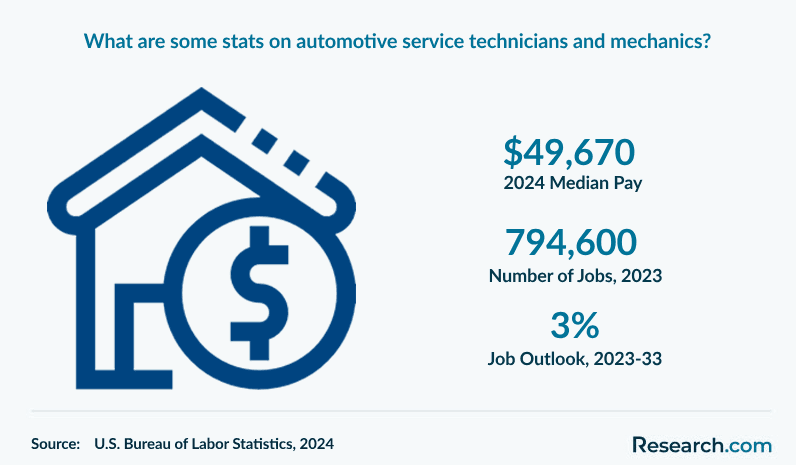
- Large employment base: According to 2024 U.S. Bureau of Labor Statistics data, there were 794,600 jobs in this occupation in 2023.
- Accessible entry path: The typical entry-level education is a postsecondary nondegree award, and new technicians generally do not need related work experience before entering the occupation.
- Short-term on-the-job training: New hires usually receive short-term on-the-job training as they build shop familiarity.
- Moderate projected growth: Employment is projected to grow 3% from 2023 to 2033, which is as fast as the average for all occupations.
- Projected job change: The field is expected to add 21,200 new jobs during that period.
- Skills in demand: Advanced diagnostics, electronics, hybrid and EV systems, diesel service, and digital service information are increasingly important.
Some technicians use additional education to move from repair roles into fleet management, parts distribution, or service operations. One option for those targeting broader operations work is an accelerated graduate certificate in supply chain and logistics management online.
According to 2024 data from the U.S. Bureau of Labor Statistics, the median pay for automotive service technicians and mechanics is $49,670 per year, or $23.88 per hour. The typical path to entry-level employment is a postsecondary nondegree award, and new technicians generally do not need prior related work experience.
The job outlook shown below reflects a large occupation with steady demand and a practical entry route for students who complete relevant training and gain hands-on ability.
Is the Investment in an Online Mechanic Program Worth the Cost?
An online mechanic program is most likely to be worth the cost when it helps you reach a specific job goal at a reasonable price and gives you a clear path to hands-on experience. The return on investment is weaker when a program is expensive, vague about practical training, unclear about accreditation, or disconnected from local employer expectations.
| Program choice | When it makes sense | When to be cautious |
| Low-cost online diploma | You need flexible beginner training and can arrange hands-on practice separately | You expect it to replace shop experience entirely |
| Hybrid trade school program | You want online theory plus supervised lab work | Travel, lab schedules, and fees make the total cost too high |
| Associate degree | You want deeper training, transfer options, or broader career mobility | You need the fastest possible path into entry-level employment |
| Bachelor’s or management-focused program | You are targeting service management, operations, or leadership roles | Your immediate goal is basic entry-level repair work only |
Compare tuition, completion time, tool costs, financial aid, hands-on access, and expected entry-level pay before deciding. It may also help to compare trade training with other accelerated education paths, such as one year master's programs online, if your broader goal is career change rather than automotive work specifically.
Do Employers Value Online Mechanic and Engine Technician Qualifications?
Employers may value online mechanic training when it comes from a credible school and the graduate can demonstrate practical ability. In hiring, a certificate or diploma is usually only one part of the evaluation. Employers also look for tool familiarity, diagnostic thinking, safety habits, communication skills, reliability, and willingness to keep learning.
- More employer confidence: Programs with accreditation, ASE alignment, lab work, externships, or recognized industry connections are generally easier for employers to evaluate.
- Hands-on proof matters: Graduates should be ready to discuss projects, shop hours, externships, personal repair work, or supervised practice.
- Entry-level expectations are realistic: Many new technicians start with maintenance, inspections, basic repair, parts, or assistant technician duties before moving into complex diagnostics.
- Stackable credentials help: Students who later complete additional training, including fast associate degree programs online when relevant, may strengthen advancement options.
How Do Online Mechanic Programs Prepare You for ASE Certification?
Online mechanic programs can support ASE preparation by teaching the systems, terminology, safety procedures, and diagnostic logic covered in automotive service areas. However, students should understand that ASE certification is a separate process, and program completion alone does not automatically make someone certified.
- Content alignment: Strong programs cover engines, brakes, electrical systems, steering, suspension, HVAC, drivetrains, and diagnostics.
- Practice assessments: Some schools provide quizzes, study guides, or practice tests to help students identify weak areas.
- Simulation-based learning: Digital labs can reinforce diagnostic steps, although they should be paired with real repair practice whenever possible.
- Instructor guidance: Experienced instructors can help students understand how classroom topics connect to repair scenarios and certification preparation.
Students who want to continue beyond trade training may eventually consider broader academic options such as the fastest bachelor's degree online, especially if they are moving toward management, technical education, or operations roles.
How Can Additional Certifications Elevate Your Automotive Career?
Additional certifications can help technicians document specialized skills, compete for better roles, and keep pace with changing vehicle technology. The most useful credentials are those connected to your target employer, vehicle type, and specialization.
- ASE-related credentials: These can support advancement from entry-level service work into more complex diagnostic or master technician roles.
- Manufacturer-specific training: Dealerships may prefer technicians trained on the systems and service procedures of a particular brand.
- Diesel, EV, and hybrid credentials: Specialized technical training can make technicians more competitive in growing or hard-to-staff areas.
- Safety and environmental credentials: Some roles require training in refrigerants, high-voltage safety, hazardous materials, or shop safety procedures.
Short, targeted credentials can also complement a mechanic qualification. Students comparing credential options may find value in fast certificates for high paying jobs, provided the certificate matches a real employer need.
Common mistakes to avoid when choosing an online mechanic program
- Choosing only by price: The cheapest program may cost more in the long run if it lacks instructor access, practical training, or employer credibility.
- Ignoring hands-on requirements: Automotive work is physical and diagnostic. Online theory must be paired with real practice.
- Assuming all programs qualify for financial aid: Aid eligibility depends on the school and program, so verify before enrolling.
- Confusing program completion with certification: ASE preparation is not the same as earning ASE certification.
- Overlooking total cost: Tools, uniforms, fees, travel, software, and exam costs can change affordability.
- Relying only on rankings: Rankings are useful starting points, but your best program depends on location, goals, schedule, and hands-on access.
- Not checking local employer expectations: A program may be credible nationally but still less useful if nearby employers prefer a different credential or more shop experience.
Key Insights
- Online mechanic training can be valuable, but hands-on practice is essential: Use online coursework to build theory and diagnostic knowledge, then strengthen employability with labs, externships, shop work, or supervised practice.
- Affordability means total cost, not just tuition: Ask about tools, software, lab access, exam vouchers, fees, travel, and payment terms before enrolling.
- The labor market is large and stable: According to 2024 U.S. Bureau of Labor Statistics data, automotive service technicians and mechanics had median pay of $49,670 per year, with 794,600 jobs in 2023 and projected 3% growth from 2023 to 2033.
- Most jobs are in dealerships and repair shops: Automobile dealers employ 32% of technicians, independent automotive, mechanical, and electrical repair and maintenance shops employ 26%, and 14% are self-employed.
- Specialization drives advancement: PayScale.com data shows general service technicians earn around $48,360, while diesel mechanics average $61,586, shop foremen earn around $68,000, and senior diesel mechanic technicians report an average salary of $71,000.
- EV and hybrid skills are becoming more important: The EV market grew 26.8% in 2023, surpassed 13 million vehicles sold, and generated $769.3 billion in revenue, creating a stronger case for training in high-voltage and advanced vehicle systems.
- ASE preparation matters, but certification is separate: Look for programs that align with ASE service areas, provide practice resources, and explain how graduates can pursue certification after training.
- The best program is the one aligned with your goal: A fully online diploma may fit a beginner seeking flexibility, while hybrid labs, associate degrees, or bachelor’s programs may be better for students targeting advanced technician, management, or specialized roles.
References:
- PayScale. (2025). Average automotive service technician / mechanic hourly pay. PayScale.
- PayScale. (2025). Automotive technician hourly pay in 2025. PayScale.
- PayScale. (2025). Salary for certification: Cummins diesel engine technician. PayScale.
- PayScale. (2025). Small engine mechanic hourly pay in 2025. PayScale.
- PayScale. (2025). Engine mechanic salary. PayScale.
- PayScale. (2025). Maintenance mechanic salary. PayScale.
- PayScale. (2025). Fleet mechanic salary. PayScale.
- PayScale. (2025). Heavy equipment mechanic salary. PayScale.
- PayScale. (2025). Truck mechanic salary. PayScale.
- PayScale. (2025). Field service technician salary. PayScale.
- PayScale. (2025). Shop foreman (automotive) salary. PayScale.
- PayScale. (2025). Service manager (automotive) salary. PayScale.
- PayScale. (2025). Lead mechanic salary. PayScale.
- PayScale. (2025). Master automotive technician salary. PayScale.
- PayScale. (2025). Automotive electrician salary. PayScale.
- PayScale. (2025). Boat mechanic / marine technician salary. PayScale.
- PayScale. (2025). Motorcycle mechanic salary. PayScale.
- PayScale. (2025). Aircraft mechanic salary. PayScale.
- PayScale. (2025). Bus mechanic salary. PayScale.
- PayScale. (2025). Industrial machinery mechanic salary. PayScale.
- PayScale. (2025). Preventive maintenance technician salary. PayScale.
- PayScale. (2025). Automotive maintenance technician salary. PayScale.
- PayScale. (2025). Senior diesel mechanic technician salary. PayScale.
- PayScale. (2025). Power generation technician salary. PayScale.
- Statista. (2024, November). Electric vehicles: Market data & analysis. Statista.
- U.S. Bureau of Labor Statistics. (2024, August 29). Automotive service technicians and mechanics. Occupational Outlook Handbook. U.S. Bureau of Labor Statistics.
- ZipRecruiter. (2025, June). Nascar technician salary. ZipRecruiter.
Other Things You Should Know About Online Mechanic and Engine Technician Trade School Programs
After finishing an online mechanic trade program in 2027, students typically need ASE certification for engine technicians. Additional state-specific licensing may be required based on local regulations. These certifications ensure that technicians meet industry standards and are essential for employment in many garages.
Yes, but only courses from regionally accredited schools are usually accepted. Most community colleges require a minimum grade of C and review syllabi before awarding transfer credit. ASE-aligned technical courses transfer less often, while general education classes like math and English are more commonly accepted.


