
2027 Best Online Wind Turbine Technician Certificate Programs

Co-Founder and Chief Data Scientist
Choosing a wind turbine technician certificate is not just about finding the fastest program. It is about deciding whether this hands-on trade fits your body, schedule, budget, risk tolerance, and long-term career goals. Wind turbine technicians maintain and repair the equipment that keeps wind energy systems operating, often outdoors, at height, and in remote locations.
For students who want a shorter alternative to a four-year degree, an online wind turbine technician certificate can provide a focused route into renewable energy maintenance. The field is also drawing attention because employment of wind turbine technicians is projected to grow 60% from 2023 to 2033, with about 2,100 openings expected each year. As of May 2024, the median annual wage was $62,580.
This guide explains what online wind turbine technician certificate programs cover, how much they cost, how online and campus formats compare, which programs stand out for 2027, and how to choose a certificate that supports real employment goals rather than just adding another credential to your resume.
Quick Answer: Is an Online Wind Turbine Technician Certificate Worth It?
An online wind turbine technician certificate can be worth it if you want a faster, lower-cost path into a skilled trade connected to renewable energy. It is best for students who are comfortable with mechanical systems, electrical troubleshooting, safety procedures, physical work, and heights. However, online training should not be judged by convenience alone. The strongest programs include safety preparation, technical labs or simulations, employer-relevant curriculum, and a clear plan for gaining hands-on experience.
What are the main benefits of a wind turbine technician certificate?
- A certificate can prepare students for entry-level roles such as wind turbine technician, windtech, field service technician, or wind energy maintenance specialist.
- The occupation offers a median annual salary of $62,580, and employment is projected to grow 60% from 2023 to 2033.
- Online certificate options can make training more accessible for working adults, career changers, and students who do not live near a wind energy training center.
- Compared with a four-year degree, certificate training may allow students to enter the workforce faster, especially if they already have mechanical, electrical, military, construction, or industrial maintenance experience.
What can I expect from a wind turbine technician certificate?
A wind turbine technician certificate usually focuses on the systems technicians service in the field: electrical components, hydraulic systems, turbine mechanics, safety procedures, basic diagnostics, and maintenance documentation. Online programs often use video instruction, interactive lessons, simulations, and 3D visual tools to explain turbine systems before students move into practical training.
Because this career involves physical and safety-sensitive work, students should look closely at how a program handles hands-on preparation. Some certificates include a capstone, local practical requirement, short campus residency, or optional bootcamp. Others rely more heavily on simulations and expect students to gain field experience after completing coursework. Many programs also address climbing safety, rescue procedures, personal protective equipment, and workplace compliance.
Tuition varies by provider and format. Programs may cost from around $1,000 to $10,000, while some modular online options let students pay for one section at a time. Many online classes are asynchronous, which means students can complete assignments on their own schedule while still using instructor support, tutorials, and course platforms.
| Program Feature | What It Usually Means for Students | Why It Matters |
| Electrical and mechanical coursework | Lessons on circuits, controls, hydraulics, gears, brakes, and turbine components | These are the core systems technicians inspect and repair |
| Safety training | Instruction in PPE, hazard recognition, climbing safety, and emergency response | Wind technicians work in high-risk environments where safety discipline is essential |
| Online simulations | Virtual labs, 3D models, and troubleshooting exercises | Useful for learning concepts, but not always a substitute for physical practice |
| Hands-on component | Bootcamp, capstone, local lab, internship, or field-based experience | Employers often value proof that students can apply skills beyond a screen |
| Career preparation | Resume help, employer connections, externship options, or job-search guidance | Technical training is more valuable when it connects to hiring pathways |
Where can I work with a wind turbine technician certificate?
Graduates with wind turbine training may work for wind farms, utility companies, turbine manufacturers, construction firms, service contractors, and industrial maintenance employers. About 28% of technicians work in wind electric power generation, while 21% work in commercial and industrial machinery repair. Others are employed in construction, wholesale trade, or self-employment.
The work environment is different from many indoor technical jobs. Wind turbine technicians often travel to rural sites, offshore installations, or remote facilities. They may work outdoors in changing weather, climb towers that often exceed 200 feet, and respond to equipment problems that affect production. Students should be realistic: this career can be rewarding, but it is not a desk-based renewable energy job.
How much can I make with a wind turbine technician certificate?
According to the U.S. Bureau of Labor Statistics, wind turbine technicians earned a median annual wage of $62,580 in May 2024. Entry-level workers may start around $49,000, while experienced technicians in higher-paying industries may earn over $88,000. Actual pay depends on location, employer, overtime, travel expectations, union status, certifications, and experience.
- Merchant wholesalers: $66,710
- Wind electric power generation: $64,170
- Construction-related roles: $63,070
Some technicians increase earnings through overtime, on-call assignments, travel work, specialized maintenance responsibilities, or promotion into lead technician and site management roles. A certificate can help open the door, but it does not guarantee a specific salary.
- Best Wind Turbine Technician Certificate Programs for 2027
- How long does it take to complete a wind turbine technician certificate program?
- Online vs. on-campus wind turbine technician certificates
- Average cost of a wind turbine technician certificate program
- Financial aid options for wind turbine technician certificate students
- Prerequisites for enrolling in a wind turbine technician certificate program
- Common courses in a wind turbine technician certificate program
- Specializations and focus areas in wind turbine technician training
- How to choose the best wind turbine technician certificate program
- Career paths after a wind turbine technician certificate
- Job market for wind turbine technician certificate graduates
Best Wind Turbine Technician Certificate Programs for 2027
How do we rank the programs?
Research.com rankings are intended to help students compare programs with clearer information about quality, affordability, and outcomes. For wind turbine technician certificate programs, we review data from the IPEDS database, Peterson's database, the College Scorecard database, and the National Center for Education Statistics. These sources help verify institutional information and support comparisons across schools. You can review the broader ranking process on Research.com's methodology page.
1. University of Houston-Downtown
The online Wind Turbine Technician Certificate from University of Houston-Downtown is designed for students who want flexible, job-focused preparation for renewable energy maintenance. The program uses self-paced modules, interactive simulations, and 3D learning tools to introduce turbine installation, troubleshooting, repair, and diagnostics.
- Required Credits to Graduate: 14 modules
- Cost: $1,750 for full access or pay-as-you-go starting at $580
- Accreditation: Southern Association of Colleges and Schools Commission on Colleges (SACSCOC)
2. Farmingdale State College
Farmingdale State College offers a Sustainable Energy Certificate with distance learning options for students interested in a broader clean energy curriculum. The program covers wind, solar, geothermal, energy storage, sustainability policy, and environmental impact, making it a stronger fit for students who want renewable energy knowledge beyond turbine maintenance alone.
- Required Credits to Graduate: 18 credit hours
- Cost: ~$3,300 total for in-state SUNY students ($275/credit)
- Accreditation: Middle States Commission on Higher Education (MSCHE)
3. University of Massachusetts Amherst
The Offshore Wind Professional Certificate at UMass Amherst is a fully online, one-year graduate certificate for professionals who want a broad understanding of offshore wind. Its curriculum includes technical, environmental, legal, and financial topics, so it may be better suited to working professionals than entry-level students seeking a technician-only pathway.
- Required Credits to Graduate: Graduate certificate (typically 4–5 courses)
- Cost: ~$750 per credit (graduate online tuition estimate)
- Accreditation: New England Commission of Higher Education (NECHE)
4. Texas State Technical College
Texas State Technical College provides Wind Energy training for students preparing for turbine construction, installation, and maintenance roles. The hybrid curriculum includes SCADA systems, PLCs, turbine materials, and practical training opportunities at sites in Harlingen and Sweetwater.
- Required Credits to Graduate: Varies by credential (certificate or associate)
- Cost: $8,352–$13,920
- Accreditation: Southern Association of Colleges and Schools Commission on Colleges (SACSCOC)
5. North Carolina State University
North Carolina State University offers a fully online Undergraduate Certificate in Renewable Energy Assessment. Rather than training students only for turbine service work, the certificate focuses on evaluating land and facilities for renewable energy use through courses in technology, policy, and energy systems.
- Required Credits to Graduate: 12 credit hours
- Cost: $416 per credit (in-state); $1,294 per credit (out-of-state, 2024–25 rates)
- Accreditation: Southern Association of Colleges and Schools Commission on Colleges (SACSCOC)
6. Arizona State University
The B.S. in Electrical Engineering (Electric Power and Energy Systems) at ASU includes coursework connected to wind and renewable energy systems. This is not a short certificate route; it is an ABET-accredited bachelor’s program available on campus and online for students who want deeper preparation in power generation, transmission, and energy systems integration.
- Required Credits to Graduate: 120 credit hours
- Cost: ~$13,000/year (in-state); ~$32,000/year (out-of-state)
- Accreditation: Engineering Accreditation Commission of ABET
7. Tarrant County College
Tarrant County College offers a Renewable Energy Technology pathway in Dallas with on-campus and online access. Students study wind energy, blueprint reading, PLCs, and sustainable energy systems, making it a practical option for learners seeking an affordable clean energy credential.
- Required Credits to Graduate: Varies by certificate or degree
- Cost: $3,402–$8,235
- Accreditation: Southern Association of Colleges and Schools Commission on Colleges (SACSCOC)
8. Colby Community College
Colby Community College offers fully online Small Wind Technology and Wind Technology Certificates for students interested in turbine service careers. Optional on-campus bootcamps every eight weeks allow students to apply online coursework to real energy systems and lab equipment.
- Required Credits to Graduate: Varies by certificate
- Cost: $147 per credit hour (in-state); $204 per credit hour (out-of-state)
- Accreditation: Higher Learning Commission (HLC)
| Program Type | Best For | Watch For |
| Short online wind technician certificate | Students who want quick technical preparation for entry-level work | Confirm how the program handles climbing, rescue, and hands-on practice |
| Community college certificate or associate pathway | Students who want more lab access, transfer options, or a longer technical foundation | Check commute, schedule, and total fees beyond tuition |
| Renewable energy assessment certificate | Students interested in planning, sustainability, or energy evaluation roles | It may not be enough by itself for turbine service jobs |
| Graduate offshore wind certificate | Working professionals moving into offshore wind policy, finance, engineering, or management | It may assume prior academic or industry experience |
| Electrical engineering degree with energy systems focus | Students seeking engineering-level preparation and broader power systems careers | It requires a much longer and more expensive commitment than a certificate |
How long does it take to complete a wind turbine technician certificate program?
Completion time depends on the program’s depth, delivery format, and the student’s prior technical background. Some online wind turbine technician certificate programs can be completed in a few weeks, while others take close to a year.
Fast-track certificates
- Some programs can take 2–24 weeks, especially for students who already understand mechanical systems, electrical basics, or industrial maintenance.
- These options may work well for career changers, military veterans, electricians, HVAC workers, or maintenance employees who need targeted wind energy training.
Standard certificate timelines
- Many beginner-friendly programs take 40 weeks to 1 year because they include more foundational instruction.
- This longer format may be better for students who need structured preparation in safety, electrical theory, hydraulics, and troubleshooting.
Self-paced online study
- Many online certificates let students move through lessons based on their work and family schedules.
- Students with more availability may finish faster, while part-time learners may spread modules across several months.
When comparing timelines, do not choose only the shortest program. A faster certificate is useful only if it still teaches the skills employers expect and gives you a realistic way to build practical competence.
Online vs. on-campus wind turbine technician certificates
Online and on-campus wind turbine technician programs can both be valuable, but they serve different learners. Online formats are usually stronger for flexibility and access, while campus-based options typically provide more direct exposure to tools, equipment, labs, instructors, and classmates.
| Factor | Online Certificate | On-Campus or Hybrid Certificate |
| Schedule | Often asynchronous and self-paced | Usually follows a set class and lab schedule |
| Cost | May reduce commuting, housing, and campus fees | May include additional travel, housing, or lab-related costs |
| Hands-on practice | May rely on simulations, local arrangements, short residencies, or optional bootcamps | Usually offers more direct access to equipment and supervised labs |
| Instructor access | Often through email, forums, webinars, or scheduled support | More immediate in-person feedback may be available |
| Best fit | Working adults, rural students, and career changers who need flexibility | Hands-on learners who benefit from structure and direct practice |
Online learning can be a smart choice if you are disciplined, comfortable with technology, and able to arrange practical experience. On-campus training may be better if you learn best by doing and want regular lab access. Students comparing trade options may also want to review top ranked online HVAC certifications, since HVAC and wind energy programs share some technical themes, including electrical systems, safety, diagnostics, and mechanical repair.
Average cost of a wind turbine technician certificate program
The cost of a wind turbine technician certificate can vary widely by school, credential level, delivery format, and included materials. Some online programs use a simple full-program price, while others charge by module or credit hour.
Common pricing models
- Full certificate pricing: Some complete online certificate packages cost around $1,750 and may include tuition, course materials, and platform access.
- Pay-as-you-go modules: Some programs let students begin with a module and learning tools starting at $580, which can help spread costs over time.
- À la carte learning tools: An Interactive Learning Package may cost $490 on its own, while individual module prices vary by subject and length.
Students should compare total program cost, not just advertised tuition. Ask whether the price includes software, safety equipment, textbooks, exams, lab access, travel to bootcamps, certification fees, and career services. For students thinking about longer-term advancement in safety or compliance, related career research such as environmental health and safety manager salary can help clarify whether additional education may be useful later.
Financial aid options for wind turbine technician certificate students
Financial aid depends on the school, program type, accreditation status, student eligibility, and whether the certificate qualifies for federal aid. Before enrolling, students should ask the program directly which aid options apply to that specific credential.
Grants
- Pell Grants may help eligible students pay for tuition and fees when the program qualifies.
- Some state, regional, or local workforce programs support vocational training connected to renewable energy and skilled trades.
Scholarships
- Private foundations, nonprofits, employers, and clean energy organizations may offer scholarships for technical training.
- Students should apply early because deadlines, eligibility rules, and award amounts vary.
Loans
- Federal Direct Subsidized and Unsubsidized Loans may be available for eligible programs and students.
- Private loans can cover gaps, but students should compare interest rates, repayment terms, and total borrowing costs carefully.
Employer, veteran, and workforce funding
- Some employers offer tuition reimbursement or sponsorship when training supports a current or future role.
- Veteran education benefits, including the GI Bill, may apply to approved training programs.
- Adult learners may qualify for reduced tuition or support through vocational training initiatives.
- Financial aid calculators can help estimate eligibility before students commit to a program.
If affordability is your main concern, compare wind energy certificates with other compact credentials and degree routes, including options such as shortest human services programs online, to understand how program length and aid eligibility affect total cost.
Prerequisites for enrolling in a wind turbine technician certificate program
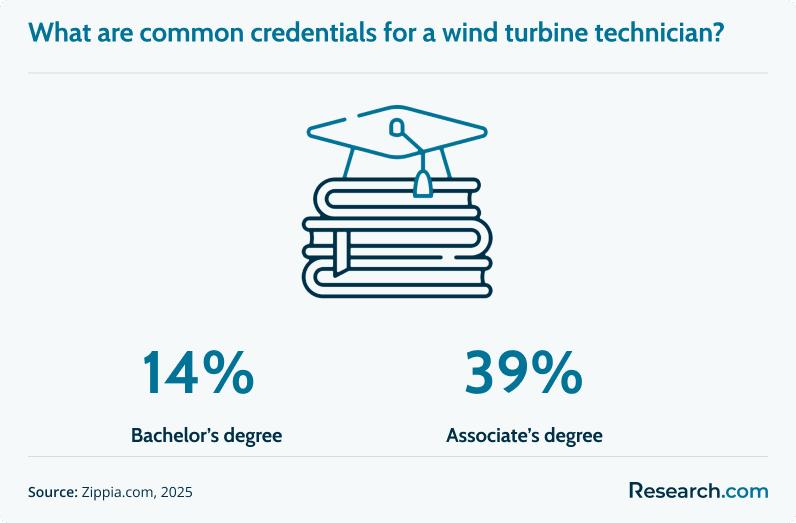
Most wind turbine technician certificate programs require a high school diploma or GED. Some schools also admit mature students aged 19+ without a traditional diploma, depending on institutional policy. Prior experience in electronics, mechanics, electrical work, construction, industrial maintenance, or the military can be helpful, but it is not always required.
Typical admission requirements
- High school diploma or GED
- Mature student status, often age 19+, when allowed by the program
- Basic comfort with math, tools, computers, and technical reading
- Interest in mechanical systems, electrical troubleshooting, and outdoor fieldwork
Common technology requirements
Online programs may require students to use Windows-based course software. Requirements can include:
- Processor: Intel Core i3 or AMD Ryzen 3 (or better)
- Memory: 4 GB RAM minimum
- Storage: 500 MB free disk space
- Operating System: Windows 7 through 11 (32 or 64 bit)
- Internet and email access: Required for course communication, assignments, and platform use
Students interested in specialized safety credentials can also review the National Fire Protection Association wind turbine technician certification program as part of their longer-term training plan.
Common courses in a wind turbine technician certificate program
Wind turbine technician programs are built around the equipment, systems, and safety practices technicians use on the job. The strongest curricula connect theory to troubleshooting and maintenance tasks rather than treating renewable energy as a purely academic subject.
- Electrical Theory and Systems: Covers voltage, current, wiring, circuits, controls, and basic diagnostic methods for turbine electrical systems.
- Mechanical and Hydraulic Systems: Explains gears, brakes, hydraulic controls, moving parts, and how mechanical failures affect turbine performance.
- Workplace Safety and Compliance: Introduces OSHA-related practices, hazard recognition, PPE, climbing procedures, rescue protocols, and emergency response.
- Technical Communication: Builds skill in reading schematics, following manuals, documenting service tasks, and communicating findings to supervisors or team members.
- Wind Energy Fundamentals: Explains how wind is converted into usable power and how turbines connect to broader energy systems.
Online programs often deliver these subjects through recorded lessons, virtual labs, simulations, and interactive training modules. Students should still ask how the program evaluates practical skills and whether employers in their region recognize the credential.
Specializations and focus areas in wind turbine technician training
Some certificates include focus areas that help students build more specific technical knowledge. These may not appear as formal “specializations” in every program, but they can signal whether a curriculum is geared toward field service, safety, maintenance, or broader renewable energy work.
Common focus areas
- Fundamentals of Electricity: Introduces electrical principles, safe work practices, and troubleshooting methods used in turbine systems.
- Alternative Energy Systems: Places wind power in the larger renewable energy landscape, including solar and hydro systems.
- Industrial Safety: Emphasizes OSHA standards, climbing safety, hazard identification, and safe work habits in industrial environments.
- Fundamentals of Hydraulics: Covers fluid mechanics and hydraulic systems commonly used in turbine controls and braking.
- Principles of Wind Energy: Explains the technical foundations of wind power generation and conversion.
- Wind Physics, Operations, and Maintenance: Focuses on aerodynamics, wind behavior, inspection routines, and maintenance best practices.
Some skills developed in wind energy training, such as field safety, equipment inspection, documentation, and environmental awareness, may also be useful when exploring outdoor technical careers. Students comparing options can review related guides such as forest ranger salary to understand how different field-based careers compare.
How to choose the best wind turbine technician certificate program
The best program is not automatically the cheapest, fastest, or most convenient. It is the one that matches your career target, teaches employer-relevant skills, fits your schedule, and gives you a credible way to demonstrate competence.
Key factors to compare
- Accreditation: Confirm whether the school is institutionally accredited or otherwise recognized by relevant education or industry bodies.
- Curriculum depth: Look for coverage of turbine maintenance, electrical systems, hydraulics, safety, troubleshooting, and wind energy principles.
- Hands-on learning: Ask whether the program offers labs, simulations, local partnerships, bootcamps, externships, or other practical training options.
- Technology requirements: Make sure your computer can run required software and that you are comfortable using online learning platforms.
- Program length and pacing: Choose a timeline that works with your life, whether that means 2 weeks, 12 months, or something in between.
- Total cost: Compare tuition, fees, materials, equipment, travel, certification exams, and any financing costs.
- Career support: Ask whether the school provides resume help, employer introductions, interview preparation, or job placement assistance.
The U.S. Department of Energy’s Career Map: Wind Technician is a useful tool for understanding the skills, duties, and progression options connected to this occupation.
Questions to ask before enrolling
- Does the program prepare students specifically for wind turbine technician jobs, or is it a general renewable energy certificate?
- How are climbing safety, rescue procedures, and field hazards taught?
- Will I complete any hands-on training, bootcamp, capstone, internship, or externship?
- Do employers in my region recognize this certificate?
- What percentage of students complete the program, and what career support is available after graduation?
- Are all costs listed up front, including software, materials, exams, and travel?
- Can credits transfer into a related associate or bachelor’s degree later?
| Common Mistake | Why It Can Hurt You | Better Approach |
| Choosing only by lowest tuition | The cheapest program may lack hands-on training, employer recognition, or support services | Compare total value, not just sticker price |
| Ignoring accreditation | Unrecognized programs may limit aid eligibility or transfer options | Verify institutional accreditation before applying |
| Assuming online training is enough by itself | Technician roles require physical, safety-sensitive skills | Look for practical training, bootcamps, simulations, or local field experience |
| Overlooking physical job demands | Wind technicians climb, work outdoors, and handle demanding conditions | Assess comfort with heights, travel, weather, and physical labor before enrolling |
| Relying only on rankings | A highly ranked program may not fit your location, schedule, or career goal | Use rankings as a starting point, then evaluate fit and outcomes |
Career paths after a wind turbine technician certificate
A wind turbine technician certificate most directly prepares students for turbine maintenance and field service roles, but the same technical foundation can also support adjacent jobs in renewable energy, industrial maintenance, safety, and equipment inspection.
Entry-level roles
- Wind Turbine Technician: Installs, inspects, maintains, and repairs wind turbines. Employers may include companies such as Vestas, Siemens Gamesa, BHI Energy, and Nordex USA.
- Field Service Technician: Travels between wind sites to inspect systems, troubleshoot faults, perform updates, and document maintenance work.
- Renewable Energy Installer: Works with wind, hybrid, or solar-related systems depending on employer needs and additional training.
Advancement opportunities
- Wind Site Manager: Coordinates daily wind farm operations, schedules maintenance, supervises technicians, and helps maintain safety compliance.
- Tank Compliance Technician: Uses inspection and compliance skills in energy storage or related industrial settings, which may appeal to students who want technical work with less climbing.
What the work is like day to day
- Inspect turbine blades, towers, nacelles, electrical systems, and mechanical components
- Diagnose faults, replace parts, perform preventive maintenance, and document service activity
- Climb towers regularly and follow strict safety procedures
- Work as part of a team to reduce downtime and keep equipment operating reliably
If you are interested in sustainability but less certain about hands-on turbine maintenance, compare this path with related green careers such as how to become an environmental scientist.
Job market for wind turbine technician certificate graduates
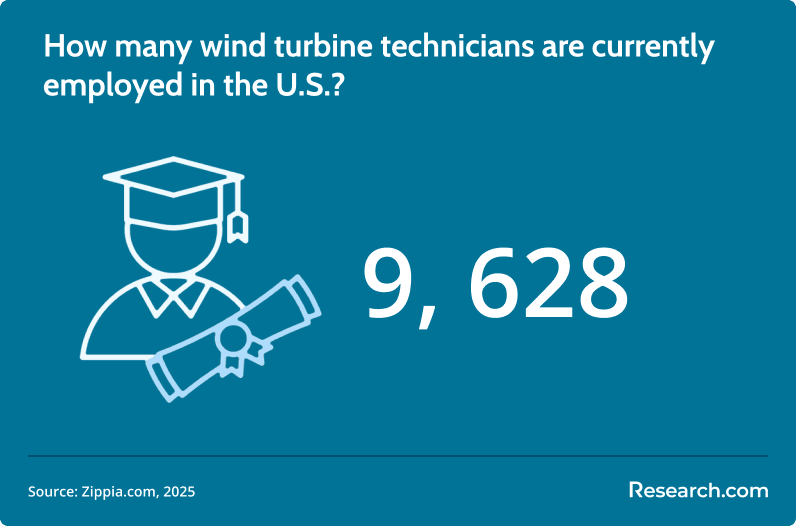
The labor market outlook for wind turbine technicians is strong. The U.S. Bureau of Labor Statistics projects employment in this occupation to grow 60% from 2023 to 2033, far faster than the average for all occupations. About 2,100 openings are expected each year, reflecting both growth and replacement needs as workers retire or move into other roles.
Certificate graduates may pursue entry-level openings with wind farm operators, energy contractors, utility companies, turbine manufacturers, and service providers. Because the occupation can require less formal education than many technical careers, it may offer a relatively direct route into renewable energy work. However, hiring still depends on location, employer demand, physical readiness, safety training, and practical skills.
Students who succeed in this field usually enjoy troubleshooting, outdoor work, teamwork, mechanical systems, and structured safety procedures. Over time, experienced technicians may move into lead technician, site management, safety coordination, training, or specialized maintenance roles.
Current trends affecting wind turbine technician training
- Renewable energy expansion is increasing attention on wind careers. Strong projected employment growth is one reason students are considering certificates as an alternative to longer degree pathways.
- Employers continue to value hands-on readiness. Online coursework can teach theory efficiently, but students still need safe, practical exposure to tools, components, climbing procedures, and maintenance workflows.
- Technology skills are becoming more important. Programs that introduce diagnostics, SCADA systems, PLCs, remote monitoring, and technical documentation may better reflect modern wind operations.
- Safety training remains central. Working at height, in remote environments, and around electrical and mechanical systems makes safety culture a core employability factor.
- Stackable credentials can improve flexibility. Students may start with a certificate, then add manufacturer training, safety credentials, an associate degree, or a bachelor’s degree depending on career goals.
Who should choose a wind turbine technician certificate?
A wind turbine technician certificate may be a strong fit if you want a practical trade, prefer mechanical and electrical problem-solving, and are willing to work outdoors at height. It can also be a good option for students who want to enter the workforce faster than a traditional four-year degree pathway allows.
This path may fit you if:
- You are comfortable with physical work and climbing towers that often exceed 200 feet.
- You want a technical role tied to renewable energy rather than an office-based sustainability job.
- You can follow detailed safety procedures every day.
- You enjoy troubleshooting equipment and working with tools.
- You are open to rural, remote, travel-based, or offshore work environments.
You may want a different path if:
- You are uncomfortable with heights, outdoor work, confined spaces, or frequent travel.
- You prefer policy, research, environmental science, engineering design, or energy finance over equipment maintenance.
- You need a career with predictable indoor hours.
- You want a credential that automatically leads to licensure or a guaranteed salary.
- You are not willing to complete safety training and practical skill development beyond online lessons.
Key Insights
- Wind turbine technician certificates can offer a faster route into renewable energy maintenance than a four-year degree, but students should verify hands-on training and employer relevance before enrolling.
- The occupation has a strong outlook: employment is projected to grow 60% from 2023 to 2033, with about 2,100 openings expected each year.
- Median pay was $62,580 in May 2024, but actual earnings depend on experience, location, industry, overtime, travel, and advancement.
- Program timelines vary widely. Experienced students may finish in 2–24 weeks, while beginner-focused programs often take 40 weeks to 1 year.
- Costs can range from around $1,000 to $10,000, with some full online certificates costing around $1,750 and modular options starting at $580.
- Online programs are best for flexibility; campus and hybrid programs may provide stronger direct practice with tools, labs, and equipment.
- Before choosing a program, confirm accreditation, total cost, safety training, practical learning options, technology requirements, career support, and whether credits can transfer.
- This career is best for students who want hands-on technical work and are comfortable with heights, outdoor conditions, teamwork, and strict safety procedures.
References:
- U.S. Bureau of Labor Statistics. Wind turbine technicians. Occupational Outlook Handbook.
- U.S. Department of Energy. Wind energy training. Wind Exchange.
- Online Schools Guide. Top online schools for wind energy.
- BestColleges. How to become a wind turbine technician.
- PCI Training. Wind turbine technician program.
- Indeed Career Guide. Pros and cons of being a wind turbine technician.
- Zippia. Wind turbine technician demographics and statistics.
Other Things You Should Know about Wind Turbine Technician Certificate Programs
Many programs do not require OSHA training before enrollment, but employers often expect it before field work. The most common credential is OSHA 10 or OSHA 30, and tower-climbing or rescue training may be added before an externship or job placement.
Most online wind turbine technician certificate programs in 2027 take approximately 6 to 12 months to complete. The duration may vary depending on the program's structure and whether it is pursued part-time or full-time.
Enrollment requirements for the top online wind turbine technician certificate programs in 2027 generally include a high school diploma or GED. Some programs may require prerequisite courses in math and physics, and others may necessitate passing a standardized test or technical skills assessment.


