
2027 Best Online Freight Broker Trade School Programs

Co-Founder and Chief Data Scientist
The logistics industry is in a state of rapid transformation, leaving many aspiring brokers asking a critical question: is this career future-proof, or will technology make it obsolete? The fear that you might invest in a career path that's shrinking is completely valid.
The reality is that while low-skill roles are at risk, demand for high-skill, consultative brokers is stronger than ever. To help you prepare for this resilient path, our career planning experts, with over 10 years of experience, built this guide. It goes beyond a simple list of online freight broker trade school programs to give you the strategic insights needed to choose a training program for a high-earning, long-term career.
What are the benefits of getting an online freight broker trade school?
- It prepares you to enter a high-demand field with numerous job opportunities, connecting carriers with the essential goods that keep our economy moving.
- The program gives you access to a career with significant income potential, with top-performing freight brokers earning over $95,000 a year.
- You gain valuable career skills through a flexible online format that allows you to learn around your current work and life commitments.
What can I expect from an online freight broker trade school?
You can expect a hands-on, simulated learning experience. Forget the idea of passively watching videos. The best programs operate like a "virtual office," designed to make you feel like you're on the job from day one.
Your curriculum will focus on the practical skills you'll use every day. This means working with industry-standard software like Transportation Management Systems (TMS) and load boards. It also involves deep dives into shipping regulations, contracts, and insurance requirements.
Most importantly, top-tier schools emphasize active skill-building. You’ll engage in role-playing exercises to sharpen your sales and negotiation tactics. This approach ensures that when you graduate, you have not just knowledge, but practical experience that gives you a significant advantage in the job market.
Where can I work with an online freight broker trade school?
With this training, you have a few key career paths open to you. Most graduates start by working for an established freight brokerage. This could be a large, national firm with thousands of employees or a smaller, independent office with a more specialized focus. Both are excellent places to gain hands-on experience and build your network.
The long-term goal for many, however, is entrepreneurship. After gaining a few years of experience and building a solid book of clients, you can launch your own independent brokerage.
This potential for business ownership is one of the most powerful draws of the profession. The industry has a relatively low barrier to entry for starting your own company, offering a direct path to building your own business and controlling your financial future.
How much can I make with an online freight broker trade school?
The honest answer is that your earnings are highly variable, mainly because the pay structure is heavily based on commission. It's crucial to look past any single "average salary" figure.
Most entry-level positions offer a modest base salary, but your real income potential is uncapped and tied directly to your performance. While you build your skills and client list, your income will grow.
Top-performing brokers who are skilled negotiators and excellent relationship builders can earn well over six figures. The key is to see this as a career where your hard work and results directly determine your paycheck.
- List of the Best Online Freight Broker Trade School Programs for 2027 List of Programs
- How long does it take to complete an online freight broker trade school program? Program Duration
- How does an online freight broker trade school program compare to an on-campus program? Online vs Campus
- What is the average cost of an online freight broker trade school program? Program Cost
- What are the financial aid options for students enrolling in an online freight broker trade school program? Financial Aid
- What are the prerequisites for enrolling in an online freight broker trade school program? Requirements
- What courses are typically in an online freight broker trade school program? What courses are typically in an online freight broker trade school program?
- What types of specializations are available in an online freight broker trade school program? Specialization
- How to Choose the Best Online Freight Broker Trade School Program How to Choose the Best Online Freight Broker Trade School Program
- What career paths are available for graduates of an online freight broker trade school program? Career Paths
- What is the job market for graduates of an online freight broker trade school program? Job Outlook
- Should I Consider Additional Certifications to Enhance My Freight Brokerage Career? Should I Consider Additional Certifications to Enhance My Freight Brokerage Career?
- Do online freight broker trade schools offer ongoing career support? Do online freight broker trade schools offer ongoing career support?
- Do Employers Value Online Freight Broker Credentials? Do Employers Value Online Freight Broker Credentials?
Best Online Freight Broker Trade School Programs for 2027
Choosing an online freight broker trade school is different from choosing a traditional degree program. Most options are short, non-credit career training courses, and the value depends less on a college name and more on whether the program teaches licensing, carrier sourcing, shipper sales, load boards, transportation management software, compliance, and negotiation in a practical way.
This guide is for adults who want to enter freight brokerage, truck drivers considering a transition off the road, logistics workers looking for advancement, and career changers who want a faster route into the transportation industry than a full degree. You will learn how online freight broker programs compare, what they cost, how long they take, what skills they teach, what employers look for, and how to avoid choosing a weak program.
Quick Answer: What Is the Best Online Freight Broker Trade School?
The best online freight broker trade school is the one that combines current brokerage training, realistic software practice, licensing guidance, sales and negotiation instruction, instructor access, and career support. Most programs take between one and six months, are usually non-credit, and generally do not qualify for federal student aid. Before enrolling, compare tuition, training depth, instructor background, alumni support, and whether the program explains how to obtain broker authority through the FMCSA.
How We Rank Schools
Because freight broker training can require a meaningful out-of-pocket investment, our ranking process emphasizes transparent information that helps learners compare programs before they commit. We consider program structure, delivery format, tuition, institutional accreditation, career relevance, and the quality of available public data.
Our review draws from established education data sources, including the IPEDS database, Peterson's database, the College Scorecard database, and The National Center for Education Statistics. To understand how Research.com evaluates schools and programs, visit Research.com’s methodology page.
| School | Program | Length | Tuition | Best Fit |
| Texas A&M University–Corpus Christi | Online Freight Broker Training | 6 months, self-paced | $2,185 | Learners who want broad brokerage training plus post-completion resource access |
| Borough of Manhattan Community College | Online Freight Broker/Agent Training | Self-paced, approximately 3 months | $124 – $374 | Budget-conscious students who want a low-cost introduction |
| University of Central Missouri | Online Freight Broker Training Certificate | Self-paced, up to 6 months | $1,895 | Students who want a certificate with 100 contact hours of continuing education units |
| San Diego State University | Online Freight Broker/Agent Training | 6 months | $1,895 | Students seeking practical online training from a large public university |
| Rutgers, The State University of New Jersey | Certified Supply Chain Professional + Freight Broker/Agent Training | 12 months, self-paced | $4,555 | Learners who want freight broker training combined with ASCM CSCP exam preparation |
Texas A&M University–Corpus Christi - Online Freight Broker Training
Texas A&M University–Corpus Christi offers a self-paced freight broker course that walks students through the brokerage business from startup planning to daily operations. The course is designed to cover business formation, industry terminology, carrier and shipper relationships, and the back-office systems brokers rely on. Graduates also receive access to a monthly virtual resource day where they can connect with brokers and learn about possible agent opportunities.
- Program Length: 6 months (self-paced)
- Program Credits: Non-credit program
- Total Tuition: $2,185
- Accreditation: Southern Association of Colleges and Schools Commission on Colleges (SACSCOC)
Borough of Manhattan Community College (CUNY BMCC) - Online Freight Broker/Agent Training
Borough of Manhattan Community College provides a fully online, self-paced option for learners who want to understand how freight brokerage works before investing heavily. The course uses practical examples to introduce licensing, daily operations, customer acquisition, sales, and marketing fundamentals.
- Program Length: Self-paced (approximately 3 months)
- Program Credits: Non-credit program
- Total Tuition: $124 – $374
- Accreditation: Middle States Commission on Higher Education (MSCHE)
University of Central Missouri - Online Freight Broker Training Certificate
The University of Central Missouri offers online training for students who want a structured entry point into freight brokerage and logistics. Students who complete the course receive a certificate and 100 contact hours of continuing education units, making it a practical option for learners who want documentation of training completion.
- Program Length: Self-paced (up to 6 months)
- Program Credits: Non-credit program
- Total Tuition: $1,895
- Accreditation: Higher Learning Commission (HLC)
San Diego State University (Global Campus) - Online Freight Broker/Agent Training
San Diego State University offers online freight broker and agent training focused on the operational steps required to enter the field. The program is especially relevant for students who want to understand licensing, brokerage workflows, and the business side of moving freight in a competitive logistics environment.
- Program Length: 6 months
- Program Credits: Non-credit program
- Total Tuition: $1,895
- Accreditation: WASC Senior College and University Commission (WSCUC)
Florida A & M University - Online Freight Broker/Agent Training
Florida A & M University provides a self-paced certificate course for students preparing for freight broker or freight agent roles. The curriculum introduces transportation law, brokerage processes, customer communication, pricing, and negotiation skills.
- Program Length: 6 months
- Program Credits: Non-credit program
- Total Tuition: $1,895
- Accreditation: Southern Association of Colleges and Schools Commission on Colleges (SACSCOC)
Santa Fe College - Freight Broker/Agent Training
Santa Fe College offers an online course that covers the freight brokerage process from core regulations and terminology to professional tools and business setup. The program also includes a monthly virtual resource day intended to help graduates connect with industry professionals after completing the course.
- Program Length: Self-paced (up to 6 months)
- Program Credits: Non-credit program
- Total Tuition: $2,395
- Accreditation: Southern Association of Colleges and Schools Commission on Colleges (SACSCOC)
University of West Florida - Freight Broker/Agent Training
The University of West Florida provides a self-paced online freight broker and agent program that emphasizes licensing, brokerage operations, and business startup preparation. The course is a fit for learners who want practical instruction tied to freight movement, customer service, and carrier coordination.
- Program Length: Self-paced (up to 6 months)
- Program Credits: Non-credit program
- Total Tuition: $1,895
- Accreditation: Southern Association of Colleges and Schools Commission on Colleges (SACSCOC)
University of Houston - Online Freight Broker/Agent Training
The University of Houston offers a self-paced online course that explains how to pursue a broker license and build the operational foundation for a brokerage business. The curriculum covers essentials such as business processes, freight operations, customer development, and marketing.
- Program Length: 6 months
- Program Credits: Non-credit program
- Total Tuition: Contact institution
- Accreditation: Southern Association of Colleges and Schools Commission on Colleges (SACSCOC)
Rutgers, The State University of New Jersey - Certified Supply Chain Professional + Freight Broker/Agent Training
Rutgers University offers a broader online option that combines freight broker and agent training with preparation for the ASCM CSCP certification exam. This makes it better suited for learners who want exposure to freight brokerage as well as wider supply chain management concepts.
- Program Length: 12 months (self-paced)
- Program Credits: 22 Continuing Education Units
- Total Tuition: $4,555
- Accreditation: Middle States Commission on Higher Education (MSCHE)
Mississippi State University - Freight Broker / Agent Training
Mississippi State University offers an online course written by industry specialists for students who want to understand freight brokerage as a potential home-based business. The program introduces the resources, workflows, and industry knowledge needed to begin pursuing brokerage or agent work.
- Program Length: 6 months
- Program Credits: Non-credit program
- Total Tuition: $2,045
- Accreditation: Southern Association of Colleges and Schools Commission on Colleges (SACSCOC)
How Long Does It Take to Complete an Online Freight Broker Trade School Program?
Most online freight broker programs are built for quick completion, often taking between one and six months. That training window is only part of the real timeline, however. Students should also plan for the period after training when they learn to quote freight accurately, communicate with shippers and carriers, manage problems in transit, and build a consistent book of business.
The better question is not simply “How fast can I finish?” but “How long until I can perform confidently?” Similar to CISSP online training, freight broker training is most useful when it converts concepts into job-ready skill. A certificate has limited value if you leave the program without practice using tools, scripts, workflows, and real brokerage scenarios.
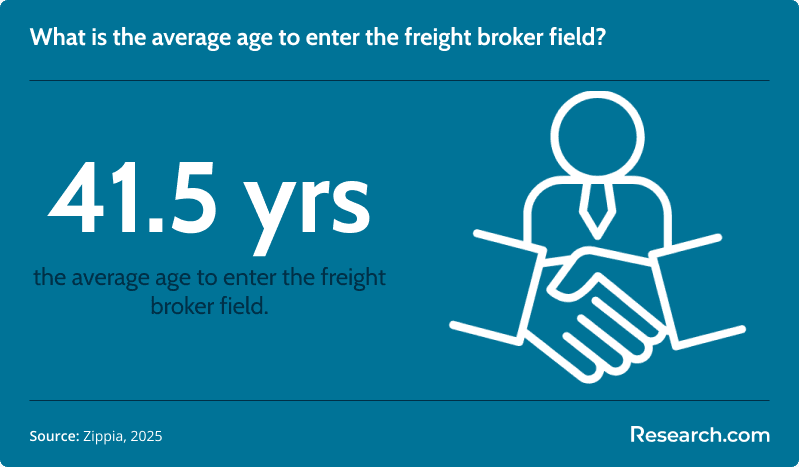
For many new brokers, it can take about three to six months to build a working foundation and begin earning steadier commission. The field also attracts many mid-career workers; the average entry age for freight agents is around 41.5 years old, so career changers are common in this occupation.
Training Timeline: From Enrollment to Job Readiness
| Stage | Typical Focus | What to Watch For |
| Program enrollment | Industry overview, licensing steps, freight terminology | Confirm whether the course is self-paced and how long you retain access |
| Core training | Load boards, carrier sourcing, pricing, shipper outreach, compliance | Look for assignments that resemble real brokerage work |
| Completion | Certificate, career resources, instructor support, alumni access | Ask whether support continues after the course ends |
| Early career ramp-up | Sales calls, negotiation, account building, problem resolution | Expect a learning curve even after formal training |
A strong program should shorten the early-career learning curve by giving students realistic exposure before they apply for freight broker or agent roles. The goal is not just to complete modules; it is to leave with enough practice to handle common brokerage tasks without starting from zero.
Online vs. On-Campus Freight Broker Training: Which Format Makes More Sense?
For freight brokerage, online training often matches the work environment better than a traditional classroom. Freight brokers spend most of their day on phones, email, load boards, transportation management systems, spreadsheets, and customer relationship tools. A well-designed online course can mirror that digital workflow more closely than a lecture-based campus course.
This is similar to how students in a human services bachelor's degree online may practice case management and digital communication in virtual settings. Freight broker students need the same kind of applied online practice, but with logistics tools, carrier databases, compliance documents, and shipper communication.
| Format | Advantages | Limitations | Best For |
| Online freight broker training | Flexible schedule, mirrors digital brokerage work, accessible from anywhere | Requires self-discipline and careful review of training quality | Working adults, career changers, truck drivers, remote learners |
| On-campus training | Face-to-face interaction and set class times | Less common for this niche and may not reflect remote brokerage workflows | Students who need in-person accountability |
| Full logistics degree | Broader supply chain, operations, and management foundation | Longer and usually more expensive than short career training | Learners aiming for management or corporate logistics roles |
Trade School Training vs. Logistics Degree
Freight broker trade school is targeted vocational training. It is meant to teach a narrow set of practical skills for entering brokerage or agency work as directly as possible. By contrast, an online logistics degree covers a wider supply chain curriculum, including transportation, procurement, warehousing, analytics, operations, and management.
Choose freight broker training if your near-term goal is to work as a broker or agent. Consider a logistics degree if you want broader career mobility across supply chain management, corporate operations, or logistics leadership.
How Much Does an Online Freight Broker Trade School Program Cost?
Online freight broker programs can cost anywhere from a few hundred dollars to several thousand dollars. The listed tuition matters, but it should not be the only factor. A low-cost course may be useful for exploration, while a higher-cost program may be worthwhile if it includes stronger simulations, instructor access, career support, or preparation for related credentials.
The key is to judge cost against practical value. Ask what the tuition includes: software demonstrations, load board practice, licensing guidance, sales scripts, templates, instructor feedback, alumni networking, and career services. A cheap course that leaves you unprepared can cost more in lost time than a more complete program.
Cost Comparison of Featured Programs
| Program | Tuition | Length | Cost Consideration |
| Borough of Manhattan Community College | $124 – $374 | Self-paced, approximately 3 months | Lowest listed tuition among featured options |
| University of Central Missouri | $1,895 | Self-paced, up to 6 months | Includes certificate and 100 contact hours of continuing education units |
| San Diego State University | $1,895 | 6 months | Comparable cost to several university-based training options |
| Texas A&M University–Corpus Christi | $2,185 | 6 months, self-paced | Includes access to a monthly virtual resource day |
| Rutgers University | $4,555 | 12 months, self-paced | Combines freight broker training with ASCM CSCP exam preparation |
Freight Broker Earning Potential
Freight broker income varies by experience, sales ability, employer, commission structure, market conditions, and specialization. Available data shows that entry-level salaries might start around $44,000, while the average income for established brokers is closer to $65,000. High performers who build strong shipper relationships and negotiate effectively can reach over $95,000 annually.
These figures should be viewed as a range, not a promise. Freight brokerage is performance-driven, and earnings can rise or fall based on account development, margin discipline, customer retention, and freight market cycles.
What Financial Aid Options Are Available for Online Freight Broker Trade School?
Because many freight broker programs are non-credit career training courses, students usually need to look beyond traditional federal financial aid. Common funding options may include school payment plans, employer reimbursement, GI Bill® benefits for eligible veterans, and state workforce development support such as Workforce Innovation and Opportunity Act (WIOA) funding.
This funding pattern is common in short professional training programs. Students comparing freight broker training with online CISM training or other certification-focused programs may see similar payment structures, where schools offer flexible payment options but federal aid is not always available.
What to Know Before You Rely on Financial Aid
Most online freight broker trade school programs are non-credit vocational programs, so they typically do not qualify for Pell Grants or FAFSA-backed federal student loans. This does not automatically mean the training is poor. It means students should verify payment options directly instead of assuming traditional college aid applies.
| Funding Option | How It May Help | Question to Ask |
| School payment plan | Spreads tuition over multiple payments | Are there fees, interest, or deadlines? |
| GI Bill® benefits | May help eligible veterans pay for approved training | Is this specific program approved for GI Bill® funding? |
| WIOA funding | May support eligible residents training for in-demand work | Is the program listed with my local workforce board? |
| Employer reimbursement | May reduce out-of-pocket cost for current logistics workers | Will my employer cover non-credit training? |
If you are comparing funding options across online schools, resources on online colleges that offer financial aid can help you understand how traditional aid differs from vocational training financing.
What Are the Prerequisites for Online Freight Broker Trade School?
Most programs have simple admissions requirements. A high school diploma or GED is typically enough, and students usually do not need previous logistics experience or a college degree. This makes freight broker training accessible to career changers, truck drivers, administrative professionals, sales workers, and people already working in transportation.
Some students arrive with advanced education in unrelated fields, such as an environmental engineering degree online, and may bring useful transferable skills in analysis, systems thinking, documentation, and compliance. Still, prior education alone does not replace brokerage-specific practice.
The Real Prerequisites: Skills and Traits
Getting accepted into a program is usually easier than succeeding in the job. Freight brokerage rewards people who can stay organized under pressure, communicate clearly, handle rejection, solve problems quickly, and remain disciplined in a remote or fast-moving work environment.
- Communication: Brokers must build trust with shippers and carriers quickly.
- Sales persistence: New brokers often face rejection before building a customer base.
- Attention to detail: Errors in rates, pickup times, or paperwork can damage relationships.
- Problem-solving: Delays, missed appointments, rate changes, and capacity shortages are common.
- Self-management: Online training and brokerage work both require consistent follow-through.
This differs from an online supply chain management degree, where admissions, coursework, and academic progression are usually more extensive. Freight broker training has fewer academic barriers, but the career itself demands resilience.
What Courses Are Usually Included in an Online Freight Broker Program?
A good online freight broker curriculum should do more than define industry terms. It should teach how brokerage work actually happens: finding freight, matching loads with carriers, pricing shipments, communicating with customers, managing documents, and resolving problems before they become costly.
Core Curriculum Areas
| Course Area | What Students Learn | Why It Matters |
| Regulations and licensing | Broker authority, transportation law, compliance responsibilities, required documentation | Students need to understand the legal framework before operating |
| Business setup | Brokerage structure, startup steps, back-office systems, operating procedures | Helps students understand how brokerages function as businesses |
| Load boards and software | Freight matching, carrier sourcing, posting loads, tracking activity | Digital tools are central to day-to-day brokerage work |
| Sales and marketing | Prospecting, shipper outreach, account development, customer retention | Freight brokerage is heavily relationship- and revenue-driven |
| Negotiation and pricing | Rate discussion, margin protection, carrier negotiation, service expectations | Strong negotiation can directly affect profitability |
| Documentation and claims | Bills of lading, invoices, carrier packets, issue resolution | Accurate paperwork reduces disputes and service failures |
The strongest programs place heavy emphasis on sales, negotiation, relationship management, and problem-solving. Job posting data shows employers value skills such as “Relationship Management” and “Innovation,” not just basic task completion. As automation takes over more routine tracking and data entry, consultative skills become more important.
How This Training Fits the Larger Logistics Field
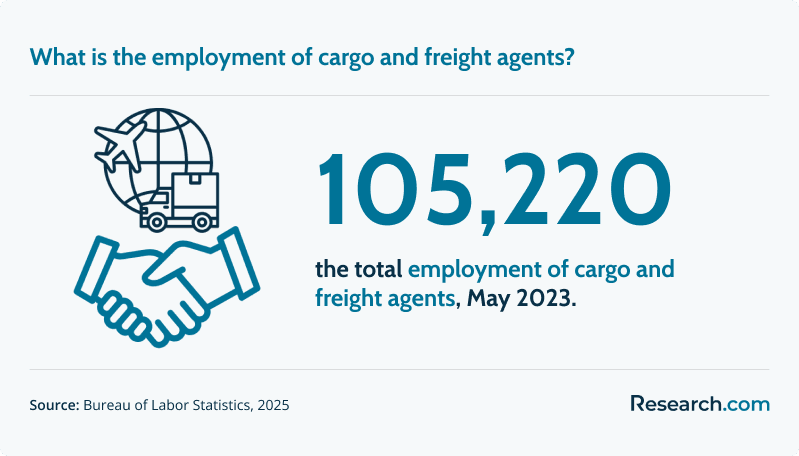
Freight broker training can also serve as an entry point into the broader logistics industry, which employs over 105,000 cargo and freight agents nationwide. Skills in documentation, communication, carrier coordination, and compliance can support future moves into dispatch, operations, account management, or logistics leadership. If you want to understand the next step up, review what does a logistics manager do and how broker experience can connect to management work.
What Specializations Are Available in Freight Brokerage?
Many new brokers begin with general freight, but specialization can make a broker more valuable. Specialized freight often requires deeper knowledge of equipment, regulations, customer needs, and risk management. That complexity can create stronger client relationships and better margins for brokers who know how to manage it well.
Common Freight Broker Specializations
| Specialization | Typical Freight | Why It Requires Extra Skill |
| Refrigerated freight | Perishable food, pharmaceuticals, temperature-sensitive products | Requires temperature control, careful timing, and carrier reliability |
| Flatbed freight | Machinery, construction materials, oversized equipment | May involve securement, permits, and specialized carriers |
| Hazardous materials | Regulated chemicals or dangerous goods | Requires stronger compliance knowledge and risk awareness |
| High-volume shipper accounts | Repeat loads for manufacturers, distributors, or retailers | Requires service consistency, pricing discipline, and relationship management |
How Skills and Experience Affect Pay
Experience can change earning potential. A broker with less than one year of experience earns an average of around $39,600, while brokers with 10-19 years of experience see average earnings rise to $58,000. Skill depth also matters. Expertise in Operations Management can increase pay by as much as 34%, and Contract Negotiation can add another 10%.
Specialized freight broker training can also help students decide whether they eventually want a broader academic path, such as a supply chain management degree, especially if they plan to move into operations leadership or corporate logistics.
How to Choose the Best Online Freight Broker Trade School Program
The best program is not automatically the cheapest, fastest, or most recognizable. The right choice depends on your goals, budget, schedule, and how much support you need to move from training into real brokerage work.
Program Selection Checklist
- Confirm what the curriculum teaches. Look for licensing, load boards, TMS workflows, carrier sourcing, shipper sales, pricing, documentation, claims, and negotiation.
- Ask who teaches the course. Prioritize instructors with recent freight brokerage, transportation, or agency ownership experience.
- Evaluate hands-on practice. Ask whether the course includes simulations, sample calls, load board exercises, templates, or real-world scenarios.
- Review career support. Look for resume help, interview preparation, brokerage connections, alumni access, mentoring, or resource days.
- Check total cost. Include tuition, materials, software access, exam preparation, payment fees, and any optional add-ons.
- Verify institutional accreditation. Accreditation of the college does not always mean the non-credit course itself is accredited, but it can signal institutional oversight.
- Ask about completion access. Find out whether you keep course materials after finishing and whether support continues.
Questions to Ask Before Enrolling
| Question | Why It Matters |
| Is this a credit or non-credit program? | It affects financial aid, transferability, and how employers interpret the credential. |
| Does the course explain FMCSA licensing steps? | Students need to understand the process for broker authority and compliance. |
| Will I practice with load boards or TMS-style workflows? | Software comfort is essential in freight brokerage. |
| Who provides career support after completion? | Job search help can be important for first-time brokers. |
| Are there refund policies or access limits? | Self-paced programs can still have deadlines and restrictions. |
Common Mistakes to Avoid
- Choosing only by price. A lower tuition can be appealing, but weak training may leave you unprepared.
- Assuming a certificate equals a license. Training completion is not the same as obtaining broker authority.
- Ignoring sales training. Freight brokerage is not only operations; customer acquisition is central to success.
- Skipping accreditation checks. Verify the institution and understand whether the specific course is credit-bearing or non-credit.
- Expecting guaranteed income. Earnings depend on performance, employer structure, market demand, and experience.
What Career Paths Are Available After Online Freight Broker Training?
Most graduates start by pursuing freight broker, freight agent, logistics coordinator, or brokerage operations roles. Some work for established brokerage firms, while others join as agents under a licensed brokerage. Starting under an established company can help new brokers gain experience before considering independent brokerage ownership.
Career Options After Training
| Role | Typical Work | Best For |
| Freight broker | Connects shippers with carriers, negotiates rates, manages freight movement | People who want sales, logistics, and customer management responsibilities |
| Freight agent | Works under a brokerage, often focusing on building accounts and moving freight | New entrants who want support without immediately starting a brokerage |
| Logistics coordinator | Tracks shipments, communicates with carriers, updates customers, manages documents | Students who prefer operations support before moving into sales-heavy work |
| Brokerage operations specialist | Supports compliance, carrier onboarding, load tracking, and internal processes | Detail-oriented learners who enjoy systems and coordination |
| Independent brokerage owner | Builds and manages a brokerage business after gaining experience | Experienced brokers with capital, customer relationships, and risk tolerance |
Students should also understand the demands of the work. The role has a high-stress rating of 7 out of 10 and a documented poor work-life balance of 4 out of 10. Freight issues do not always happen on a convenient schedule, and brokers may need to respond quickly when pickups fail, appointments change, or customers need urgent updates. At the same time, the field is becoming more diverse, with women now making up over 35% of freight brokers.
Long-Term Growth in Logistics
Freight brokerage can be a gateway into a larger logistics career. Brokers build knowledge of capacity, pricing, customer expectations, carrier performance, and supply chain disruption. Those skills can support future moves into account management, transportation management, logistics consulting, or operations leadership. To explore related long-term options, review broader careers in logistics.
What Is the Job Market for Online Freight Broker Graduates?
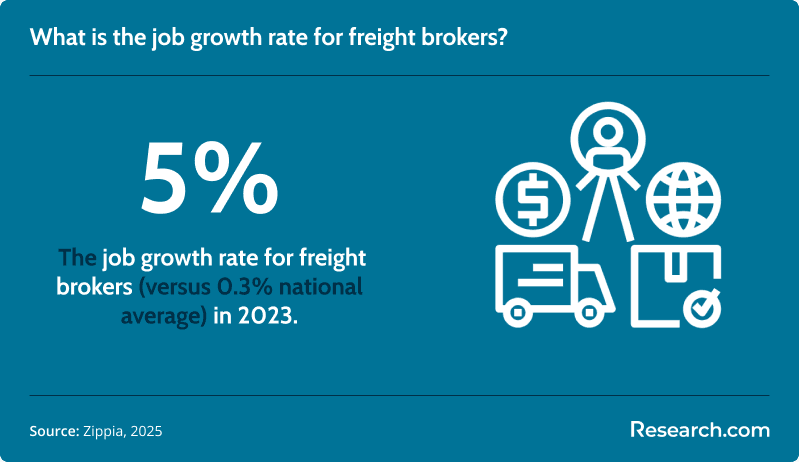
The job market for freight broker graduates is changing rather than disappearing. Some sources, including the World Economic Forum, project a decline for logistics specialists, while other data shows a steady 5% job growth rate for freight brokers. The difference often comes down to the type of work being discussed.
Routine transactional tasks are increasingly supported by automation, AI tools, digital freight platforms, and improved tracking systems. Brokers who only post loads, check status, or enter data may face more competition from technology. Brokers who can solve complex shipping problems, maintain shipper relationships, negotiate under pressure, and manage exceptions are better positioned.
AI and Automation: Threat or Tool?
AI and automation are changing freight brokerage by handling more repetitive work, such as tracking updates, data entry, rate comparisons, and basic communication. This does not remove the need for skilled brokers. It raises the bar. The strongest brokers use technology to work faster while spending more time on negotiation, strategy, relationship management, and problem-solving.
Students who want a resilient career should choose training that goes beyond basic brokerage mechanics. Programs that emphasize consultative selling, customer retention, data-informed pricing, and complex freight scenarios can better prepare learners for the next version of the job. This same long-term mindset is useful for anyone exploring how to become a supply chain manager.
What Graduates Say About Online Freight Broker Training
- Alex: "The biggest value for me was learning the technology before I entered the job. Freight brokerage happens through digital systems, so I wanted training that felt like the work itself. By the time I started my first role, the load boards and transportation management tools were familiar instead of overwhelming."
- Luis: "I had spent 15 years driving, so I understood freight from the road. What I needed was the business side: licensing, software, pricing, and broker communication. Online training let me keep working while I prepared for a different role in the same industry."
- Milly: "I enrolled because I wanted a business path, not just a job change. The most useful parts were the operations, financial basics, and negotiation practice. The simulated sales work helped me feel prepared to speak with real customers."
Should You Add Certifications After Freight Broker Training?
Additional certifications are not always required to start in freight brokerage, but they can help if your goal is long-term advancement. A short freight broker program can teach core brokerage operations, while later credentials may support deeper knowledge in supply chain management, compliance, analytics, or transportation operations.
Students should be strategic. Do not collect credentials without a plan. Choose certifications that match a specific goal, such as moving into supply chain management, strengthening compliance knowledge, or preparing for leadership. If you want to compare credential options across fields, review career certifications that pay well and evaluate which ones align with logistics roles.
Do Online Freight Broker Trade Schools Offer Career Support?
Some online freight broker programs provide support after coursework ends, but the level of help varies widely. Useful support may include resume reviews, interview preparation, access to brokers, resource days, mentoring, alumni communities, job leads, or guidance on becoming a freight agent.
Before enrolling, ask for specifics. “Career support” can mean anything from a downloadable resume guide to direct networking opportunities. If financing is also part of your decision, compare vocational payment options with resources on online colleges that offer financial aid, since non-credit training and degree programs often follow different aid rules.
Do Employers Value Online Freight Broker Credentials?
Employers generally care most about whether a candidate can perform. A certificate from an online freight broker program may help show initiative and basic preparation, but it will usually be strongest when paired with practical skills: load board familiarity, clear communication, carrier vetting, rate negotiation, customer service, and problem-solving.
When comparing programs, look for evidence that the training reflects current employer expectations. Ask about alumni outcomes, employer relationships, instructor industry experience, and whether students complete practical exercises. Students who need a lower-cost online education path may also compare broader options through online colleges that offer financial aid, while remembering that many freight broker courses remain non-credit programs.
References
- American Trucking Associations. (2025). Economics and industry data. Accessed August 7, 2025.
- American Trucking Associations. (2025, January 16). ATA U.S. freight transportation forecast to 2035. Accessed August 7, 2025.
- American Trucking Associations. (2025, July 24). ATA American trucking trends 2024. Accessed August 7, 2025.
- Indeed. (2025, July 28). Freight broker salary in United States. Accessed August 7, 2025.
- Indeed. (2025, July 28). Truck driver salary in United States. Accessed August 7, 2025.
- PayScale. (2025, February 1). Average freight broker salary. Accessed August 7, 2025.
- PwC Transport & Logistics practice & Strategy&. (2025, January 28). Transport & logistics barometer: H2 2024 (full-year analysis). PricewaterhouseCoopers GmbH Wirtschaftsprüfungsgesellschaft. Accessed August 7, 2025.
- Salary.com. (2025, July 1). Freight broker salary, hourly rate (July 01, 2025). Accessed August 7, 2025.
- U.S. Bureau of Labor Statistics. (2023, May). Occupational employment and wages, May 2023: 43-5011 cargo and freight agents. Accessed August 7, 2025.
- U.S. Bureau of Labor Statistics. (2025). Truck transportation: NAICS 484. Accessed August 7, 2025.
- World Economic Forum. (2025, January 7). The future of jobs report 2025. Accessed August 7, 2025.
- Zippia. (2025). Freight broker jobs. Accessed August 7, 2025.
- Zippia. (2025). Truck driver jobs. Accessed August 7, 2025.
- Zippia Research Team. (2025, January 8). Freight broker demographics and statistics in the US. Zippia. Accessed August 7, 2025.
- Zippia Research Team. (2025, January 8). 15 freight broker skills for your resume. Zippia. Accessed August 7, 2025.
- ZipRecruiter. (2025, July 30). Freight broker salary. Accessed August 7, 2025.
- ZipRecruiter Marketplace Research Team. (2025). Freight broker must-have resume skills and keywords. ZipRecruiter. Accessed August 7, 2025.
Key Insights
- Online freight broker trade school is best for learners who want focused, practical career training rather than a broad logistics degree.
- Most programs take between one and six months and are usually non-credit, so federal student aid often does not apply.
- The strongest programs teach licensing, software workflows, load boards, pricing, carrier sourcing, documentation, sales, and negotiation.
- Cost should be judged against support and skill development, not tuition alone. Featured program tuition ranges from $124 – $374 to $4,555.
- Freight brokerage can be stressful and sales-driven. Success depends on communication, persistence, organization, and problem-solving.
- AI and automation are changing the job, but they increase the value of brokers who can manage relationships, solve complex freight problems, and negotiate effectively.
- Before enrolling, ask whether the program includes realistic practice, instructor access, post-completion support, and clear guidance on the difference between a training certificate and broker authority.
Other Things You Should Know About Online Freight Broker Trade School Programs
After finishing a freight broker trade school, you must obtain a broker authority from the Federal Motor Carrier Safety Administration (FMCSA) and secure a $75,000 surety bond or trust fund agreement. Additionally, setting up a business entity and obtaining freight broker software can facilitate smooth operations.
To work as a remote freight broker, you will need a reliable computer with a high-speed internet connection. You also need a dedicated phone line or a quality VoIP service and a comfortable headset for making calls all day. Most essential software, like the Transportation Management System (TMS), is cloud-based and typically provided by your employer.
Online freight broker training programs in 2027 primarily focus on developing skills in logistics management, customer relationship building, and understanding current market trends. These programs often integrate technology-based learning platforms to equip students with the necessary tools for efficiently managing freight operations and navigating the evolving logistics landscape.





