
2027 Best Online CISSP Training Bootcamps

Co-Founder and Chief Data Scientist
Choosing a CISSP bootcamp is a high-stakes decision. You may already have years of real-world security experience, but the most senior architect roles often require the one credential that validates it all: the CISSP. The challenge isn’t just passing its notoriously difficult exam—it’s knowing where online CISSP training bootcamps fit on the career map, especially compared to foundational credentials or managerial tracks like the CISM.
With over 3.5 million cybersecurity jobs unfilled globally, including more than 750,000 in the U.S., the pressure to choose wisely is real. That’s why our career planning experts, with over a decade of experience guiding professionals, created this guide. We’ve cut through the noise to explain the online CISSP training bootcamp landscape so you can make a confident, strategic choice that advances your career.
What are the benefits of getting an online CISSP training bootcamp program?
- It qualifies you for senior-level leadership and architect roles like Information Security Manager or Chief Information Security Officer (CISO).
- You gain access to a significant salary increase, with CISSP holders earning an average base salary of around $131,000 per year.
- The online format offers the flexibility to balance an intensive study schedule with the demands of your full-time career and personal life.
What can I expect from an online CISSP training bootcamp program?
You should expect an intense, fast-paced sprint focused entirely on exam preparation. It helps to think of it on a career timeline: where a general bootcamp builds a foundation, a CISSP bootcamp is advanced training designed to validate years of broad experience for a senior leadership role. It is not a place to learn concepts for the first time.
The curriculum is a highly structured deep dive into the eight domains of the CISSP Common Body of Knowledge. A key benefit is the cohort itself. You will be learning alongside other senior-level professionals, building a valuable network that will extend long past the exam date.
Where can I work with an online CISSP training bootcamp program?
With a CISSP, you can work in senior security roles across almost any industry you can think of. Because every major organization needs to manage information risk, this certification is not limited to the tech sector. It's a portable credential that signals strategic leadership capabilities.
You'll find CISSP holders in high-demand sectors like finance, healthcare, manufacturing, and government. The key takeaway is that the CISSP prepares you for a type of role—like a security architect, manager, or risk consultant—that is essential everywhere. For professionals pivoting from another IT specialty, this means you can combine your existing industry expertise with the CISSP to become an exceptionally valuable candidate.
How much can I make with an online CISSP training bootcamp program?
According to PayScale, the average base salary for a professional holding a CISSP certification is approximately $131,000 per year. Of course, your exact salary will depend on your specific job title, years of experience, and location. However, this figure gives you a clear benchmark for the kinds of roles you'll be qualified for.
Think of the certification as the key that gets you into this higher salary bracket. It validates your expertise to employers and gives you the leverage to command competitive compensation for senior-level security positions.
- List of the Best Online CISSP Training Bootcamp Programs for 2027 List of Bootcamps
- How long does it take to complete an online CISSP training bootcamp program? Completion Time
- How does an online CISSP training bootcamp program compare to an on-campus program? How does an online CISSP training bootcamp program compare to an on-campus program?
- What is the average cost of an online CISSP training bootcamp program? Program Cost
- What are the financial aid options for students enrolling in an online CISSP training bootcamp program? Financial Aid
- What are the prerequisites for enrolling in an online CISSP training bootcamp program? What are the prerequisites for enrolling in an online CISSP training bootcamp program?
- What courses are typically in an online CISSP training bootcamp program? What courses are typically in an online CISSP training bootcamp program?
- What types of specializations are available in an online CISSP training bootcamp program? What types of specializations are available in an online CISSP training bootcamp program?
- How to Choose the Best Online CISSP Training Bootcamp Program How to Choose the Best Online CISSP Training Bootcamp Program
- What career paths are available for graduates of an online CISSP training bootcamp program? Career Paths
- What is the job market for graduates with an online CISSP training bootcamp program? Job Market
- Should I Supplement My CISSP Bootcamp with an Academic Degree? Should I Supplement My CISSP Bootcamp with an Academic Degree?
- Can CISSP Certification Lead to Opportunities in Emerging Interdisciplinary Fields? Can CISSP Certification Lead to Opportunities in Emerging Interdisciplinary Fields?
Best Online CISSP Training Bootcamp Programs for 2027
Choosing a CISSP bootcamp is not the same as choosing an introductory cybersecurity course. The Certified Information Systems Security Professional credential is designed for experienced security practitioners who already understand the field and want a structured way to prepare for a demanding senior-level exam. The right bootcamp can help you organize the eight CISSP domains, practice exam-style reasoning, and close knowledge gaps before test day.
This guide is for cybersecurity professionals, IT managers, security engineers, consultants, and career changers with substantial technical experience who are deciding whether an online CISSP bootcamp is worth the cost and time. You will learn how leading programs compare, how long preparation usually takes, what prerequisites matter, how online training differs from campus-based instruction, and how to evaluate return on investment without relying only on price or rankings.
Quick answer: What is the best online CISSP bootcamp?
The best online CISSP bootcamp depends on your schedule, learning style, budget, and need for instructor support. Self-paced options such as Udemy and ISC2 can work well for disciplined learners who want lower-cost study materials, while instructor-led programs from providers such as InfoSec Institute, Firebrand, Sprintzeal, and Simplilearn may be better for candidates who need structure, accountability, practice exams, and live guidance. Before enrolling, confirm whether the course includes official materials, exam practice, post-class access, an exam voucher, and any retake or pass guarantee.
How we approach program rankings
Because a CISSP bootcamp can be a meaningful professional-development expense, our review process emphasizes transparent comparison rather than promotional claims. Research.com uses information from sources such as the IPEDS database, Peterson's database, the College Scorecard database, and The National Center for Education Statistics where applicable. These sources help support a consistent evaluation framework for education and training options. For additional details, see Research.com's methodology page.
| Program | Best fit | Program length | Cost |
| Udemy - CISSP Certification: CISSP Domain 1-2 Boot Camp 2025 Exam | Learners who want low-cost, on-demand study and can manage their own schedule | 34 hours (self-paced) | $320 flat fee for the four-course series |
| InfoSec Institute - ISC2 Certified Information Systems Security Professional® (CISSP) Certification Training Boot Camp | Candidates who want a short, intensive instructor-led experience with strong exam support | 6 days | Pricing available upon inquiry |
| ISC2 - Official CISSP Certification Training Bootcamp | Experienced professionals who want official training aligned with the certification body | Self-paced | $248.75 flat fee |
| Simplilearn - CISSP Certification - Certified Information Systems Security Professional Training | Learners who want a mix of live online instruction and self-paced preparation | Self-paced | $499 flat fee |
| Firebrand - ISC2 Certified Information Systems Security Professional | Professionals looking for accelerated online or residential training | 6 days | Pricing available upon inquiry |
| Sprintzeal - CISSP Certification Training | Candidates who prefer scheduled instructor-led training with mock exams and e-learning access | 40 hours | Pricing available upon inquiry |
1. Udemy - CISSP Certification: CISSP Domain 1-2 Boot Camp 2025 Exam
Udemy provides a self-paced CISSP preparation series built around focused video lessons and downloadable study resources. It is a practical option for candidates who already have industry experience and want affordable, flexible review materials they can complete outside work hours.
- Program Length: 34 hours (self-paced)
- Cost: $320 flat fee for the four-course series
2. InfoSec Institute - ISC2 Certified Information Systems Security Professional® (CISSP) Certification Training Boot Camp
InfoSec Institute offers a six-day CISSP bootcamp for professionals who want concentrated exam preparation with instructor guidance. The course includes an exam voucher and a pass guarantee, which may appeal to candidates who want a structured plan and reduced uncertainty before testing.
- Program Length: 6 days
- Cost: Pricing available upon inquiry
3. ISC2 - Official CISSP Certification Training Bootcamp
ISC2, the organization behind the CISSP credential, provides official training for candidates who want study content directly connected to the exam's common body of knowledge. This option is especially useful for experienced practitioners who want to avoid third-party interpretation and study from the certification source.
- Program Length: Self-paced
- Cost: $248.75 flat fee
4. Simplilearn - CISSP Certification - Certified Information Systems Security Professional Training
Simplilearn combines live online classes with self-paced study in an official (ISC)² partner program. The course includes an exam voucher and a money-back guarantee, making it a potential fit for learners who want guided preparation while still keeping some control over pacing.
- Program Length: Self-paced
- Cost: $499 flat fee
5. Firebrand - ISC2 Certified Information Systems Security Professional
Firebrand provides a six-day accelerated CISSP course available online and in a residential format. As an official ISC2 Premier Partner, it is designed for experienced candidates who can commit to an intensive schedule and want authorized instruction and materials.
- Program Length: 6 days
- Cost: Pricing available upon inquiry
6. Sprintzeal - CISSP Certification Training
Sprintzeal offers 40 hours of instructor-led online CISSP training with weekday and weekend scheduling options. The course emphasizes exam readiness through mock exams, a pass guarantee, and one year of e-learning access.
- Program Length: 40 hours
- Cost: Pricing available upon inquiry
How Long Does an Online CISSP Bootcamp Take?
Most CISSP bootcamps are short, concentrated programs rather than semester-long courses. In this list, structured training ranges from 6 days to 40 hours, while self-paced options allow candidates to move faster or slower depending on their work schedule and prior knowledge.
The bootcamp length, however, is only part of the real timeline. Many successful candidates spend several weeks reviewing before class, complete the bootcamp, and then continue with practice exams and targeted review afterward. A more realistic start-to-exam planning window is often two to four months.
Bootcamp time vs. total preparation time
| Preparation stage | Purpose | What to do |
| Before the bootcamp | Build familiarity with the eight domains | Read overview materials, identify weak areas, and set a study calendar |
| During the bootcamp | Organize exam knowledge and clarify difficult concepts | Attend every session, ask questions, take notes, and complete assigned practice work |
| After the bootcamp | Convert instruction into exam readiness | Use timed practice tests, review wrong answers, and revisit low-scoring domains |
If speed is your main concern, compare providers carefully rather than choosing the shortest option automatically. The fastest online CISSP training bootcamps can help you review accelerated formats, but a compressed schedule only works if you already have the background to absorb the material quickly.
Online vs. On-Campus CISSP Bootcamps: Which Format Is Better?
For most employers, the delivery format of your CISSP preparation matters far less than whether you earn the credential and can demonstrate the experience behind it. CISSP is a senior-level certification, and many organizations evaluate it alongside job experience, security leadership ability, and frameworks such as the CISSP certification levels in the SFIA framework.
The main choice is not whether online or campus learning is more credible. It is which format helps you study effectively without disrupting your professional responsibilities.
| Factor | Online CISSP bootcamp | On-campus CISSP bootcamp |
| Schedule | Often easier to fit around full-time work, especially if self-paced or live online | May require travel, time away from work, and fixed attendance |
| Cost considerations | Can reduce travel and lodging expenses | May add transportation, meals, and accommodation costs |
| Interaction | Depends on the platform; strong programs offer live Q&A, labs, forums, and instructor access | May offer direct in-person discussion and peer networking |
| Best for | Working professionals who need flexibility | Learners who focus better in a physical classroom setting |
Why online CISSP training now works for many professionals
Remote work and distributed security teams have made virtual learning more familiar for technology professionals. Strong online CISSP programs may include live instruction, virtual labs, exam simulators, recorded sessions, and instructor access after class. For candidates with demanding jobs or family obligations, online training can be more practical than traveling to a classroom for several consecutive days.
How Much Does an Online CISSP Training Bootcamp Cost?
Among the programs in this guide that publish flat pricing, online CISSP bootcamp costs range from $248.75 to $499. This should not be treated as a universal market average because several providers list pricing only upon inquiry, and total costs can change based on exam vouchers, materials, live instruction, retake support, or bundled services.
Because CISSP bootcamps are usually non-degree professional training programs, they typically do not qualify for federal student aid through FAFSA. That makes it important to evaluate the full value of the package, not only the advertised tuition.
What to check before paying
- Exam voucher: Confirm whether the CISSP exam voucher is included or purchased separately.
- Official materials: Ask whether the course uses official ISC2 content or third-party materials.
- Practice tests: Look for timed practice exams and explanations for wrong answers.
- Support after class: Find out how long you can access recordings, instructors, forums, and study tools.
- Guarantees: If a provider advertises a pass guarantee, read the conditions carefully.
This type of comparison is similar to evaluating other online education options, including an online Christian leadership degree, because the lowest price is not always the strongest value if support, outcomes, or flexibility are weak.
Cost in the context of cybersecurity demand
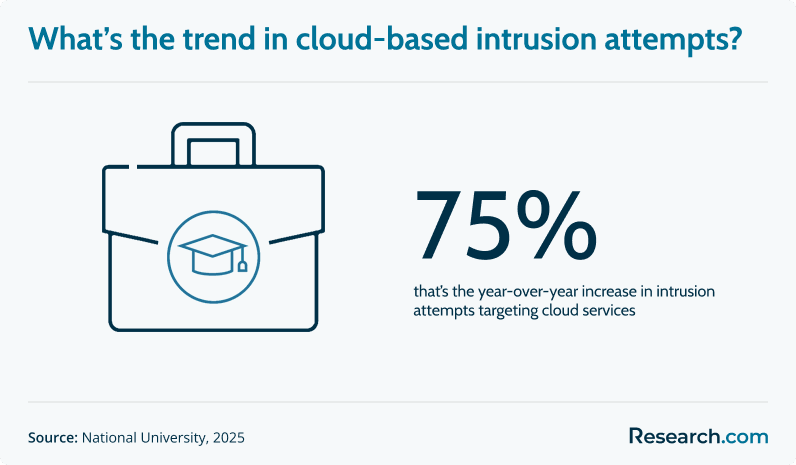
The potential value of CISSP training is connected to the broader security labor market. One widely cited projection states that there will be an estimated 3.5 million unfilled cybersecurity jobs worldwide through 2025. That does not guarantee a job or salary increase for any individual, but it helps explain why experienced security professionals often invest in credentials that signal leadership-level competence.
Financial Aid and Funding Options for Online CISSP Bootcamps
Employer sponsorship is often the most realistic way to pay for a CISSP bootcamp. Since these programs are usually classified as professional development rather than academic degree programs, candidates should not assume they can use federal student loans, Pell Grants, or standard FAFSA-based aid.
When asking an employer to pay, frame the request around business value. Explain how CISSP preparation supports risk management, compliance, security governance, incident response readiness, or leadership development. If the program includes an exam voucher, practice exams, or retake support, include those details in your request.
Other ways to reduce out-of-pocket cost
- Training budgets: Ask your manager or HR team whether your company has annual professional-development funds.
- Tuition reimbursement: Some employers reimburse after successful completion or certification.
- Private payment plans: Review all fees and repayment terms before using financing.
- Workforce programs: Check whether Workforce Innovation and Opportunity Act (WIOA) funding is available in your state and whether any provider appears on the Eligible Training Providers list.
- Degree alternatives: If federal aid is necessary, consider a formal academic pathway instead of a standalone bootcamp.
Candidates who need a longer educational route may compare a bootcamp with a fast-track online cybersecurity bachelor's degree, especially if they are still building the experience required for full CISSP certification.
CISSP Bootcamp Prerequisites: Who Is Eligible?
The most important CISSP requirement is not set by the bootcamp provider. It is set by (ISC)². To earn the full CISSP credential, candidates need at least five years of cumulative, paid, full-time work experience in two or more of the eight CISSP domains.
The experience must be relevant and verifiable. (ISC)² allows a one-year experience waiver for candidates who hold a relevant four-year college degree. Anyone can study CISSP content or take a bootcamp, but passing a course does not remove the official experience requirement for certification.
Who should enroll now?
| Your background | Is a CISSP bootcamp a good fit? | Better next step |
| You have five or more years of relevant security experience | Yes, if you are ready for focused exam preparation | Choose a bootcamp based on format, support, and exam practice |
| You have strong IT experience but not enough qualifying CISSP domain experience | Maybe, if you understand that full certification may come later | Consider the Associate of (ISC)² route after passing the exam |
| You are new to cybersecurity | Usually no; the material may be too advanced | Start with foundational training and entry-level experience |
The CISSP audience is typically experienced. Data shows that most certificate holders are over age 30, with 60% over 40. That aligns with the credential's purpose: validating seasoned professionals rather than introducing beginners to cybersecurity.
For newer professionals, a credential path may begin with foundational training such as a fast-track CompTIA A+ certification online. In other fields, prerequisites serve a similar gatekeeping purpose; for example, a graduate certificate in biotechnology online may require prior academic or professional preparation so students are ready for advanced coursework.
Certified Information Systems Security Professional Age Breakdown

What Do Online CISSP Bootcamps Teach?
Legitimate CISSP bootcamps are organized around the eight official domains defined by (ISC)². These domains are broad because CISSP is not only a technical exam. It also tests security governance, risk management, architecture, operations, and leadership judgment.
Like a cosmetology program online that follows industry standards for professional readiness, CISSP training must map closely to certification requirements so candidates study the right body of knowledge.
| CISSP domain | What it covers | Why it matters |
| Security and Risk Management | Governance, compliance, ethics, policy, and risk principles | Builds the foundation for security leadership decisions |
| Asset Security | Data classification, ownership, privacy, and protection of information assets | Helps organizations manage sensitive information appropriately |
| Security Architecture and Engineering | Secure design principles, models, cryptography, and resilient systems | Supports secure system planning and implementation |
| Communication and Network Security | Network architecture, secure channels, and network defense concepts | Connects enterprise infrastructure decisions to security outcomes |
| Identity and Access Management (IAM) | Authentication, authorization, identity lifecycle, and access controls | Protects systems by controlling who can access what |
| Security Assessment and Testing | Audits, testing strategies, vulnerability assessments, and control validation | Shows whether security controls are working as intended |
| Security Operations | Incident response, investigations, monitoring, logging, and operational controls | Prepares professionals to manage day-to-day security operations |
| Software Development Security | Secure software lifecycle practices and application security concepts | Reduces risk in software design, development, and deployment |
How CISSP differs from hands-on operations training
CISSP has a strong management and governance focus, which makes it different from operationally focused options such as the fastest online CyberOps training bootcamps. Many CISSP candidates already have varied technical backgrounds. A bachelor's degree is common, held by 54% of professionals, while 21% hold master's degrees and 21% hold associate degrees.
CISSP Specializations and Concentrations
The standard CISSP credential is broad by design, but certified professionals can later pursue concentrations that deepen expertise in architecture, engineering, or management. These concentrations make the most sense after you have already established a strong security foundation and want to signal advanced specialization.
A helpful way to think about the progression is moving from general competence to targeted expertise. Just as home repair courses online can introduce broad trade skills before learners pursue narrower specialties, CISSP concentrations build on an existing senior-level credential.
- Information Systems Security Architecture Professional (ISSAP): Designed for professionals who focus on security architecture and program design.
- Information Systems Security Engineering Professional (ISSEP): Built for security engineers who apply systems engineering methods to cybersecurity challenges.
- Information Systems Security Management Professional (ISSMP): Intended for leaders responsible for managing and directing security programs.
CISSP vs. foundational certifications
CISSP concentrations are not entry-level add-ons. They are advanced credentials for professionals who already have broad security knowledge. Foundational certifications, including those supported by the fastest online CompTIA Network+ training bootcamps, usually come earlier in the career path and help build the technical base that senior credentials later expand.
How to Choose the Best Online CISSP Bootcamp
The right CISSP bootcamp is the one that matches your current knowledge, available study time, need for structure, and risk tolerance. Do not choose based only on a provider's marketing language or a single advertised guarantee. Instead, compare programs using the same criteria.
Decision checklist before enrolling
- Instructor background: Look for instructors who have both certification knowledge and real cybersecurity experience.
- Official alignment: Confirm whether the curriculum follows the current CISSP domains and whether materials are official or third-party.
- Practice exam quality: Strong programs should include realistic timed practice questions with explanations.
- Support after the course: Ask whether you retain access to recordings, instructors, discussion boards, or study tools.
- Exam voucher: Determine whether the voucher is included in the price.
- Guarantee terms: If a provider promises a retake or pass guarantee, read all requirements before relying on it.
- Schedule fit: Be honest about whether you can handle a 6-day intensive program or need a slower self-paced format.
Common mistakes to avoid
| Mistake | Why it can hurt you | Better approach |
| Choosing the cheapest course automatically | A low price may exclude exam support, practice tests, or instructor access | Compare total value, not only tuition |
| Ignoring the CISSP experience requirement | You may pass the exam but not yet qualify for full certification | Verify your domain experience before committing |
| Assuming a bootcamp alone is enough | CISSP requires judgment across broad domains, not memorization only | Plan pre-study and post-bootcamp review time |
| Relying only on provider pass guarantees | Guarantees often have conditions and may not cover all costs | Read the fine print and ask what is actually included |
| Skipping practice exams | You may know the content but struggle with timing and question style | Use full-length timed practice tests before scheduling the exam |
Career Paths After CISSP Training
CISSP is commonly used by experienced cybersecurity professionals who want to move from hands-on execution into senior technical leadership, management, consulting, or architecture roles. The bootcamp itself does not create the career outcome; it helps prepare you for the exam that can validate your existing experience and broaden your advancement options.
| Career direction | Example roles | How CISSP can help |
| Security management | Information Security Manager, IT Director, Chief Information Security Officer (CISO) | Shows broad knowledge of governance, risk, operations, and program leadership |
| Technical architecture | Security Architect, Senior Security Consultant | Supports roles that require secure system design and enterprise-level planning |
| Consulting and advisory work | Senior Security Consultant, risk advisor, compliance-focused security professional | Signals credibility with clients and employers evaluating senior security expertise |
Salary context for CISSP-related roles
Advanced security roles can carry strong compensation, but salary depends on employer, location, experience, industry, and responsibilities. As a reference point, a Cyber Security Engineer might earn around $122,000, while an Information Technology Director can earn over $140,000. At the executive level, a Chief Information Security Officer (CISO) has an average salary of over $195,000.
These figures help explain why experienced professionals may invest in CISSP training, but they should not be read as guaranteed outcomes. The credential can help open doors; your work history, interview performance, leadership ability, and business impact still matter.
Job Market Outlook for CISSP-Certified Professionals
The cybersecurity job market remains favorable for experienced professionals, particularly those who can combine technical depth with risk management and leadership skills. CISSP is often used as a screening credential for senior roles because it signals broad knowledge across the security discipline.
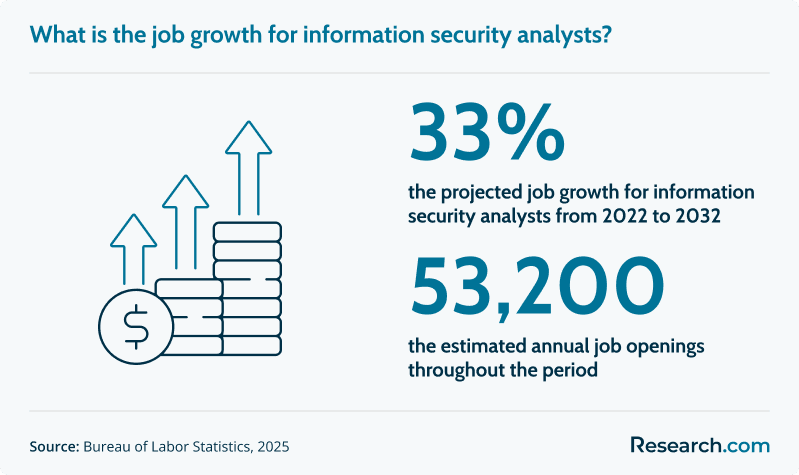
According to the U.S. Bureau of Labor Statistics, employment of information security analysts is projected to grow by 33% between 2023 and 2033. That growth supports continued demand for security talent, although individual outcomes depend on specialization, experience, geography, and employer needs.
Current trends affecting CISSP candidates
- AI and automation: Security teams are increasingly using automation for monitoring, response, and analysis, but leaders still need to govern risk, policy, access, and accountability.
- Remote and hybrid work: Distributed teams increase the importance of identity management, secure architecture, network security, and security operations.
- Governance and compliance pressure: Organizations need professionals who can translate security requirements into policies, controls, and measurable programs.
- Credential-based screening: Employers may use CISSP to identify candidates for senior roles, but certification is usually evaluated with work history and leadership experience.
Should You Pair a CISSP Bootcamp with a Degree?
A CISSP bootcamp is usually best for professionals who already have substantial experience and need exam preparation. A degree is different: it provides broader academic study, may qualify for federal financial aid, and can be useful for professionals who need a deeper technical or theoretical foundation.
Pairing CISSP preparation with an academic credential may make sense if you are moving into leadership, research-driven work, advanced computing roles, or interdisciplinary security fields. For example, an accelerated bachelor's in computer science may strengthen programming, systems, and computing fundamentals alongside professional certification preparation.
When a degree may be worth considering
- You do not yet meet the CISSP experience requirement and need a longer development path.
- You want access to federal financial aid options that standalone bootcamps typically do not provide.
- You are targeting roles where a bachelor's or graduate credential is preferred.
- You want stronger foundations in computer science, systems, research, or management.
Can CISSP Support Careers in Emerging Interdisciplinary Fields?
Yes, CISSP can support interdisciplinary work when cybersecurity intersects with specialized industries. As fields such as aerospace, satellite communications, defense systems, and advanced technology expand, organizations need security professionals who understand risk management, resilience, access control, software security, and governance in complex environments.
The credential alone is not enough to become a sector specialist, but it can complement domain-specific study or experience. For example, cybersecurity professionals interested in aerospace-related work may explore a degree in space studies to build industry context alongside security expertise.
What Graduates Say About Online CISSP Bootcamp Training
- Jake: "I had spent years as a senior security engineer and knew the technical side well, but I was not getting traction for management positions. The online bootcamp gave me a way to study seriously without stepping away from my job. Six months after passing the exam, I moved into an Information Security Manager role with a 20% salary increase."
- Dianne: "For me, the biggest change was confidence. I had more than ten years of experience, but the missing CISSP credential made my resume feel incomplete. Studying online let me work at my own pace, and once I earned the certification, employer conversations became much more focused on my leadership potential."
- Kenji: "My employer paid for the course, so I felt real pressure to pass the first time. The exam simulator made the difference. Repeated timed practice tests helped me build endurance, spot weak domains, and walk into the real exam feeling prepared rather than surprised."
Questions to Ask Before Choosing a CISSP Bootcamp
- Does the program cover all eight CISSP domains in sufficient depth?
- Are the materials official, third-party, or a mix of both?
- Is the exam voucher included in the advertised cost?
- How many practice questions and full-length timed exams are included?
- Can I contact instructors after the live sessions end?
- How long will I retain access to course recordings and study tools?
- What are the exact terms of any pass guarantee or retake option?
- Does the schedule realistically fit my job, family, and exam timeline?
- Do I already meet the CISSP experience requirement, or will I need the Associate of (ISC)² path?
References
- AP News. (2023, April 15). Cybersecurity jobs report: 3.5 million unfilled positions in 2025. Retrieved May 24, 2024, from https://apnews.com/press-release/ein-presswire-newsmatics/technology-steve-morgan-ein-presswire-newsmatics-2c99c00b8673966bde5eca81f6535320
- CybersecurityEducation.org. (2023, May 23). Cybersecurity bootcamps. Retrieved May 24, 2024, from https://www.cybersecurityeducation.org/bootcamps/
- NU.edu. (2025). 101 cybersecurity statistics and trends for 2025. Retrieved May 24, 2024, from https://www.nu.edu/blog/cybersecurity-statistics/
- PayScale. (2025, July 8). Certified Information Systems Security Professional (CISSP) certification salary. Retrieved May 24, 2024, from https://www.payscale.com/research/US/Certification=Certified_Information_Systems_Security_Professional_(CISSP)/Salary
- U.S. Bureau of Labor Statistics. (2025, April). Information security analysts. Occupational Outlook Handbook. Retrieved May 24, 2024, from https://www.bls.gov/ooh/computer-and-information-technology/information-security-analysts.htm#tab-3, https://www.bls.gov/ooh/computer-and-information-technology/information-security-analysts.htm#tab-4, and https://www.bls.gov/ooh/computer-and-information-technology/information-security-analysts.htm#tab-5
- Zippia. (2022). Certified information systems security professional demographics. Retrieved May 24, 2024, from https://www.zippia.com/certified-information-systems-security-professional-jobs/demographics/
- Zippia. (2025, January 8). Education requirements for certified information systems security professionals. Retrieved May 24, 2024, from https://www.zippia.com/certified-information-systems-security-professional-jobs/education/
Key Insights
- CISSP bootcamps are best for experienced professionals, not beginners. Full certification requires at least five years of cumulative, paid, full-time work experience in two or more CISSP domains, though a relevant four-year degree may provide a one-year waiver.
- Online CISSP bootcamps can be just as practical as campus options because employers care primarily about certification, experience, and demonstrated security leadership.
- The listed flat-price programs range from $248.75 to $499, but some providers publish pricing only upon inquiry, so compare total value rather than advertised tuition alone.
- A 6-day or 40-hour bootcamp is only the core training period. Many candidates should plan two to four months from initial study to exam readiness.
- Employer sponsorship is often the strongest funding option because standalone CISSP bootcamps usually do not qualify for FAFSA-based federal aid.
- The best program for you is the one that matches your study habits: self-paced training works for disciplined learners, while instructor-led bootcamps may be better if you need structure, accountability, and live support.
- CISSP can support advancement into roles such as Information Security Manager, Security Architect, Senior Security Consultant, IT Director, and CISO, but salary and job outcomes depend on experience, location, employer, and performance.
Other Things You Should Know About Online CISSP Training Bootcamp Programs
2027's top online CISSP training bootcamps often include resources like official (ISC)² study guides, practice exams from well-known providers, and access to online study groups, facilitating comprehensive preparation for the CISSP certification. They may also provide structured lesson plans and live or recorded lectures.
Yes. Many are eligible if the provider issues an itemized invoice and the program is tied to a professional certification such as the ISC2 CISSP exam. Employers usually require proof of attendance, completion, and payment, and some cap reimbursement at a set annual amount under their education policy.
Participants need a computer with a stable internet connection, a modern web browser, and suitable hardware to handle intensive video streaming and interactive exercises. Familiarity with online learning platforms is also recommended to navigate course materials effectively in 2027.


