
2027 Best Online Christian Leadership Degree Programs

Co-Founder and Chief Data Scientist
Looking to combine your faith with your calling to lead? Online Christian leadership degree programs equip students with the skills to lead effectively in churches, nonprofits, schools, and mission-driven organizations—all while rooted in biblical principles. These programs offer the flexibility of online learning without compromising spiritual formation or academic rigor.
In this guide, you will discover the best online Christian leadership degree programs available, what they offer, and how to choose one that fits your goals.
What are the benefits of getting an online degree in Christian Leadership?
- Graduates with a Christian leadership degree can pursue roles such as pastor, ministry director, nonprofit leader, youth minister, or faith-based counselor.
- Clergy members, one of the common career paths, earn a median salary of around $57,000 per year, with higher salaries possible in executive ministry or nonprofit leadership.
- Online Christian leadership degree programs offer flexible scheduling, allowing students to balance their education with work, ministry, or family commitments.
- These programs integrate leadership theory with biblical and theological foundations, helping students lead with purpose and spiritual insight.
What can I expect from an online Christian leadership degree?
A Christian leadership degree program is designed to equip students with the skills and knowledge needed to lead in church, ministry, nonprofit, and faith-based organizational settings. These programs blend biblical principles, theology, and spiritual formation with practical leadership training in areas like communication, ethics, and organizational management.
Students learn how to apply Christian values to real-world challenges, manage teams, and guide congregations or organizations with integrity and purpose. Many programs also emphasize servant leadership, conflict resolution, and cross-cultural ministry. Whether you're pursuing a career in pastoral ministry, missions, or Christian education, this degree provides a solid foundation for faith-driven leadership. Online options make it easier for working adults and current ministry professionals to gain credentials without putting their calling on hold.
Where can I work with an online Christian leadership degree?
Graduates of an online Christian leadership degree program often find employment in faith-based organizations, including churches, missions agencies, Christian schools, and nonprofit ministries. Many become pastors, youth ministers, or worship leaders within local congregations. Others pursue roles in administrative leadership for parachurch organizations or denominational offices. These roles involve not only spiritual guidance but also organizational management, volunteer coordination, and strategic planning grounded in Christian values.
Beyond traditional ministry roles, graduates can also work in broader sectors where ethical leadership and faith-based decision-making are valued. For instance, they may serve as chaplains in hospitals, prisons, or the military; lead community development initiatives for Christian nonprofits; or take on leadership roles in religious publishing or Christian media. Some work in educational settings, including private Christian schools or colleges, while others may establish their own ministries or consult for churches and organizations. This degree opens doors in both religious and socially oriented sectors.
How much can I make with an online Christian leadership degree?
Graduates with an online Christian leadership degree can expect a wide range of salaries depending on their specific career path, location, experience, and organization type. According to the U.S. Bureau of Labor Statistics, clergy—including pastors and ministers—earn a median annual salary of about $57,230 as of 2024.
Those working in larger churches or taking on senior leadership roles may earn between $60,000 and $90,000 annually, while entry-level or part-time ministry positions may start closer to $35,000. Factors such as denominational funding, geographic region, and church size can significantly impact earnings.
Outside of traditional ministry roles, graduates working as nonprofit managers or directors in Christian organizations may earn higher salaries. The median salary for social and community service managers is around $77,030 per year.
Christian school administrators or principals can also earn between $60,000 and $100,000, depending on school size and location. While salaries in Christian leadership roles may not always match those in corporate sectors, they often come with strong benefits, community support, and a deep sense of purpose.
- Best Online Christian Leadership Degree Programs for 2027 List of Programs
- How long does it take to complete an online Christian leadership degree program? Completion Time
- How does an online Christian leadership degree program compare to an on-campus program? How does an online Christian leadership degree program compare to an on-campus program?
- What is the average cost of an online Christian leadership degree program? Program Cost
- What are the financial aid options for students enrolling in an online Christian leadership degree program? Financial Aid
- What are the prerequisites for enrolling in an online Christian leadership degree program? Requirements
- What courses are typically in an online Christian leadership degree program? What courses are typically in an online Christian leadership degree program?
- What types of specializations are available in online Christian leadership degree programs? What types of specializations are available in online Christian leadership degree programs?
- Howdo do you choose the best online Christian leadership degree program? Howdo do you choose the best online Christian leadership degree program?
- What career paths are available for graduates of online Christian leadership degree programs? Career Paths
- What is the job market like for graduates with an online Christian leadership degree? Job Outlook
- Is an Online Christian Leadership Degree Worth the Investment? online
- How can you verify that an online Christian leadership degree program meets accreditation standards? How can you verify that an online Christian leadership degree program meets accreditation standards?
Best Online Christian Leadership Degree Programs for 2027
Choosing an online Christian leadership degree is not just an academic decision. It can shape how you serve in a church, lead a nonprofit, prepare for pastoral ministry, build a faith-based organization, or strengthen your leadership in a professional setting. The right program should match your theology, schedule, budget, ministry goals, and need for practical field experience.
This guide is for prospective undergraduate and graduate students comparing Christian leadership, ministry, theology, organizational leadership, and related faith-based programs. You will find ranked program options, cost and completion-time guidance, online versus campus comparisons, admissions expectations, common courses, specializations, career paths, accreditation checks, and practical questions to ask before enrolling.
Quick answer: What is the best online Christian leadership degree program?
The best online Christian leadership degree program depends on your goal. Students seeking church or ministry preparation may prefer a Christian ministry, theological studies, or ministry leadership program. Working professionals who want faith-informed leadership training outside the church may be better served by organizational leadership programs. Graduate students should compare accreditation, theological fit, residency requirements, cost per credit, fieldwork expectations, and whether the program prepares them for the specific role they want.
How this ranking was developed
This ranking uses a transparent Research.com methodology that considers institutional and program-level indicators from recognized education data sources. These include the Integrated Postsecondary Education Data System (IPEDS), Peterson's databases including the Distance Learning Licensed Data Set, and the College Scorecard from the National Center for Education Statistics.
Use the ranking as a starting point, not the only factor in your decision. Christian leadership programs can vary widely in theology, residency format, ministry expectations, and career focus, so the best option is the one that fits your calling and your practical constraints.
| School | Credential or program | Format note | Cost listed | Credits or units |
| Creighton University | Master of Arts in Christian Spirituality | Hybrid with summer campus retreat | $885 per credit hour | 36 credit hours |
| Luther Rice College & Seminary | Master of Arts in Leadership | Fully online with no residency requirements | $391 per credit hour | 36 credit hours |
| Hope International University | Master of Ministry | Online through HOPE School of Leadership | $13,764 | 36 credit hours |
| Fresno Pacific University | Bachelor of Arts in Christian Ministry and Leadership | Evening accelerated classes | $32,458 | 120 semester units |
| Cedarville University | Master of Theological Studies | Fully online | $436 per credit | 36 credit hours |
| Dallas Baptist University | Master of Arts in Education Ministry Leadership | 100% online | $550 per credit hour | 36 credit hours |
| North Greenville University | Master of Arts in Leadership | Residential partnership with Impact 360 Institute | $525 per credit hour | 30 credit hours |
| Veritas Baptist College | Master of Ministry | Fully online eight-week classes | $5,860 | 36 credit hours |
| Northwest Nazarene University | Bachelor of Arts in Christian Ministry | Fully online | $30,550 | 124 credits |
| Point Loma Nazarene University | Master of Arts in Organizational Leadership | Online for working professionals | $730 per unit | 36 units |
1. Creighton University
Creighton University offers a Master of Arts in Christian Spirituality for students who already have a foundation in theology, ministry, or spiritual formation. The program is hybrid rather than fully online: students complete online coursework in the fall and spring and participate in a four-to-five-week on-campus retreat each summer. Its Ignatian spirituality focus makes it especially relevant for students interested in spiritual direction, discernment, and deeper formation in the Christian tradition.
- Program Length: 2-4 years
- Tracks/Concentrations: Master of Arts in Christian Spirituality
- Program Cost: $885 per credit hour
- Required Credits to Graduate: 36 credit hours
- Accreditation: The Higher Learning Commission (HLC)
2. Luther Rice College & Seminary
Luther Rice College & Seminary provides a fully online Master of Arts in Leadership with no residency requirements. The program is designed for students who want a biblical leadership framework that can apply in church ministry, parachurch organizations, nonprofit work, or marketplace leadership. Its 100% online delivery makes it a practical option for students serving in ministry while enrolled.
- Program Length: 2-4 years
- Tracks/Concentrations: Master of Arts in Leadership
- Program Cost: $391 per credit hour
- Required Credits to Graduate: 36 credit hours
- Accreditation: Southern Association of Colleges and Schools Commission on Colleges (SACSCOC), Association for Biblical Higher Education (ABHE), and the Transnational Association of Christian Colleges and Schools (TRACS).
3. Hope International University
Hope International University offers an online diploma in 21st Century Christian Leadership and a Master of Ministry through its HOPE School of Leadership. The pathway is built for motivated young adults who want a ministry-oriented alternative to a traditional university experience. The online model combines digital coursework with close student-teacher connection and preparation for a life of Christian service.
- Program Length: 2-4 years
- Tracks/Concentrations: Master of Ministry
- Program Cost: $13,764
- Required Credits to Graduate: 36 credit hours
- Accreditation: Western Association of Schools and Colleges Senior College and University Commission (WSCUC) and the Association for Biblical Higher Education.
4. Fresno Pacific University
Fresno Pacific University offers a Bachelor of Arts in Christian Ministry and Leadership for both traditional students and adult accelerated learners. The curriculum blends biblical study with applied ministry preparation and includes an integrated internship in a local church or parachurch setting. Because the degree is generally delivered through evening accelerated classes, it may work well for students who are already employed or serving in ministry.
- Program Length: 4 years
- Tracks/Concentrations: Bachelor of Arts in Christian Ministry and Leadership
- Program Cost: $32,458
- Required Credits to Graduate: 120 semester units
- Accreditation: WASC Senior College and University Commission (WSCUC)
5. Cedarville University
Cedarville University offers a Master of Theological Studies with a Biblical Leadership concentration. This program is suited for students who want to strengthen ministry leadership while studying Scripture and theology at the graduate level. The degree is fully online and can be completed in as little as one calendar year.
- Program Length: 1-2 years
- Tracks/Concentrations: Master of Theological Studies
- Program Cost: $436 per credit
- Required Credits to Graduate: 36 credit hours
- Accreditation: Higher Learning Commission (HLC)
6. Dallas Baptist University
Dallas Baptist University offers an online Master of Arts in Education Ministry Leadership for students preparing to lead church, parachurch, and ministry education programs. The curriculum combines contemporary ministry methods with practical leadership preparation and a Christ-centered framework. Students complete the program through a 100% online platform.
- Program Length: 1.5 to 2 years
- Tracks/Concentrations: Master of Arts in Education Ministry Leadership
- Program Cost: $550 per credit hour
- Required Credits to Graduate: 36 credit hours
- Accreditation: Southern Association of Colleges and Schools Commission on Colleges (SACSCOC).
7. North Greenville University
North Greenville University offers a Master of Arts in Leadership in partnership with the Residency Program at the Impact 360 Institute. Prospective students should note that this is not an online degree because students must live and work at the Institute while applying leadership concepts in a real-world setting. It may fit students who want an immersive residential leadership experience grounded in a biblical worldview.
- Program Length: 12 months
- Tracks/Concentrations: Master of Arts in Leadership
- Program Cost: $525 per credit hour.
- Required Credits to Graduate: 30 credit hours
- Accreditation: Southern Association of Colleges and Schools Commission on Colleges (SACSCOC)
8. Veritas Baptist College
Veritas Baptist College offers a fully online Master of Ministry with concentration options such as church ministries and pastoral studies. The program is designed for pastors, ministers, and students who want advanced biblical and ministry training. Degree and certificate programs are delivered online in eight-week classes.
- Program Length: 2 years
- Tracks/Concentrations: Master of Ministry
- Program Cost: $5,860
- Required Credits to Graduate: 36 credit hours
- Accreditation: Transnational Association of Christian Colleges and Schools (TRACS).
9. Northwest Nazarene University
Northwest Nazarene University offers a fully online Bachelor of Arts in Christian Ministry. The program combines theological reflection, ministry development, and spiritual formation for students preparing to serve in church or faith-based settings. Its online format is designed for learners balancing school with work, family, or ministry responsibilities.
- Program Length: 4 years
- Tracks/Concentrations: Bachelor of Arts in Christian Ministry
- Program Cost: $30,550
- Required Credits to Graduate: 124 credits
- Accreditation: Northwest Commission on Colleges and Universities (NWCCU).
10. Point Loma Nazarene University
Point Loma Nazarene University offers an online Master of Arts in Organizational Leadership for working professionals. The program is aimed at students who want to strengthen leadership capacity in their current vocation while studying within a whole-person, Christ-centered learning environment. It may be especially relevant for professionals who want leadership development that is broader than church ministry alone.
- Program Length: 2-4 years
- Tracks/Concentrations: Master of Arts in Organizational Leadership
- Program Cost: $730 per unit
- Required Credits to Graduate: 36 units
- Accreditation: Western Association of Schools and Colleges (WASC)
How long does it take to complete an online Christian leadership degree program?
Completion time depends on the credential level, the number of credits required, whether you enroll full time or part time, and how many transfer credits a school accepts. Some ministry students move quickly through accelerated formats, while others choose a slower pace because they are already working, parenting, or serving in a church.
| Degree level | Typical full-time length | Typical credits | Best fit |
| Associate degree | 2 years | Around 60 | Students seeking entry-level ministry, church office, volunteer coordination, or ministry support roles |
| Bachelor’s degree | 4 years; 2–3 years with transfer credits or an accelerated format | Around 120 | Students preparing for pastoral leadership, nonprofit service, Christian education, or broader ministry roles |
| Master’s degree | 1.5 to 2 years; longer for part-time students | Typically 30–48 | Students pursuing senior ministry leadership, specialized training, or academic preparation |
| Doctoral degree | 3–6 years | Varies by institution and degree type | Students focused on advanced theological research, teaching, executive ministry leadership, or specialized practice |
Transfer credits, prior college coursework, ministry experience, and accelerated sessions can shorten the timeline. Before enrolling, ask the school how many credits you can transfer, whether life or ministry experience is evaluated, and whether the program requires internships, practicums, retreats, or residencies.
Students who want to pair leadership preparation with care ministry sometimes explore related credentials, such as a Christian counseling certification, but these may add time depending on the credential and the school’s requirements.
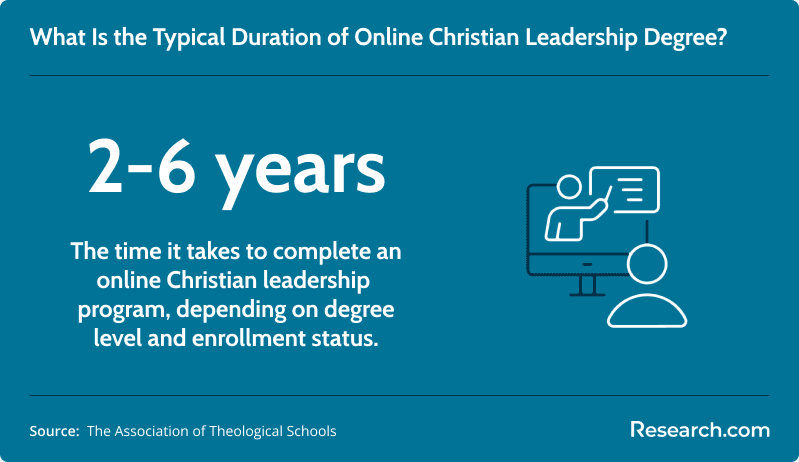
In practical terms, most students should plan for anywhere from two to 6 years or more, depending on degree level and pace.
How does an online Christian leadership degree program compare to an on-campus program?
Online and on-campus Christian leadership programs may cover similar biblical, theological, and leadership content, but the student experience can be very different. The best format depends on your schedule, learning style, need for community, and access to local ministry opportunities.
| Factor | Online Christian leadership degree | On-campus Christian leadership degree |
| Schedule | Often built for working adults, parents, and active ministry leaders who need flexible study times | Usually follows scheduled class meetings and campus-based academic calendars |
| Community | Requires intentional connection through video meetings, discussion boards, cohort groups, and local ministry networks | Offers daily in-person interaction through classes, chapel, events, mentoring, and campus life |
| Learning format | May include asynchronous modules, recorded lectures, online discussions, and occasional live sessions | Provides face-to-face instruction, immediate classroom discussion, and in-person group work |
| Ministry experience | Often lets students complete practicums or internships in their home church or local community | May connect students to campus ministries, nearby churches, and supervised local placements |
| Cost considerations | Can reduce relocation and commuting costs; students can also compare affordable online degrees | May include housing, transportation, and campus fees, but can provide more direct access to facilities |
| Best for | Independent learners who need flexibility and already have a ministry or professional context | Students who want structured campus life, face-to-face mentorship, and immersive spiritual community |
When online makes more sense
An online Christian leadership program is often the better choice if you cannot relocate, need to keep working, serve in ministry while studying, or want to apply assignments directly in your current church, nonprofit, or workplace. It also works well for students who are disciplined enough to manage deadlines without daily campus structure.
When campus may be the stronger option
A campus-based program may be better if you want daily spiritual community, in-person chapel and mentoring, easier access to professors, and a residential college or seminary experience. Students who learn best through face-to-face discussion may also prefer this path.
Industry context for ministry employment
Ministry and religious leadership roles exist across churches, hospitals, schools, nonprofits, and other organizations. The chart below shows industries with high employment for clergy professionals, including General Medical and Surgical Hospitals, which employ 8,390 of the total workforce.
What is the average cost of an online Christian leadership degree program?
Online Christian leadership program costs vary by institution, degree level, number of credits, denomination-related discounts, and whether the school charges per credit, per unit, or by program. Tuition is only one part of the total cost, so students should also check fees, textbooks, technology costs, travel for residencies, and internship-related expenses.
| Credential level | Typical cost information stated | Important cost questions |
| Associate degree | $6,000 to $20,000 in total depending on length and pace | Does the program transfer into a bachelor’s degree? Are general education credits included? |
| Bachelor’s degree | $300 to $600 per credit hour; around $36,000 to $72,000 for a full 120-credit program | How many transfer credits will the school accept? Are ministry internships included in tuition? |
| Master’s degree | $400 and $700 per credit hour; total tuition between $12,000 and $30,000 | Does the school require residencies, intensives, or fieldwork that add travel costs? |
| Doctoral degree | $20,000 and $50,000 for programs such as a Doctor of Ministry (D.Min.) or Ph.D. | Are dissertation, project, continuation, or residency fees charged separately? |
Students comparing costs should look beyond the advertised tuition rate. A lower per-credit price may not be the lowest total cost if the program requires more credits, has limited transfer credit options, or charges additional fees. Students seeking lower-cost undergraduate options can compare an affordable online bachelor's degree before committing.
Some faith-based colleges offer ministry discounts, scholarships for students preparing for Christian service, church partnerships, and payment plans. Ask the admissions or financial aid office for a full cost sheet before applying.
What are the financial aid options for students enrolling in an online Christian leadership degree program?
Students in accredited online Christian leadership programs may be able to combine federal aid, institutional scholarships, church support, employer assistance, payment plans, and military or veteran benefits. Availability depends on the school’s accreditation, program approval, enrollment status, and the student’s individual eligibility.
Federal financial aid
If the school and program meet federal eligibility requirements, students may qualify for Pell Grants, subsidized or unsubsidized federal loans, and in some cases federal work-study. Always confirm federal aid eligibility directly with the school, especially if the institution is small, religiously affiliated, or primarily online.
Institutional and faith-based scholarships
Christian colleges may offer merit-based, need-based, ministry-focused, or denomination-related scholarships. Local churches, denominational bodies, private donors, and ministry foundations may also support students preparing for pastoral, missionary, educational, or nonprofit leadership.
Tuition discounts and payment plans
Some schools reduce tuition for active pastors, ministry staff, missionaries, or members of affiliated church networks. Payment plans can spread tuition over monthly installments, which may make school more manageable without requiring a large upfront payment.
Employer, nonprofit, or church sponsorship
Students already working in ministry or faith-based organizations should ask whether their employer or church offers tuition reimbursement, sponsorship, or professional development funds. Written agreements are important because some sponsors require continued service after graduation.
Military and veteran education benefits
Eligible service members, veterans, and military family members may be able to use GI Bill benefits or tuition assistance if the program is approved. Confirm benefit eligibility with both the school and the appropriate military or veterans education office.
Low-cost and donation-supported models
Some online Christian education providers, including Christian Leaders Institute, use low-cost or donation-based models. These may reduce upfront costs, but students should carefully verify accreditation, transferability, employer recognition, and whether the credential fits their career or ministry plans.
Students exploring people-focused careers sometimes compare related degree pathways, such as an online bachelors degree in human services, because financial aid and career outcomes can differ substantially by field.
What are the prerequisites for enrolling in an online Christian leadership degree program?
Admissions requirements vary by school and degree level, but most Christian leadership programs evaluate academic readiness, faith alignment, ministry background, and ability to succeed in an online environment.
| Requirement area | What applicants may need | Why it matters |
| Education | A high school diploma or GED for bachelor’s programs; a bachelor’s degree for master’s programs, often in theology, ministry, or a related field | Schools need evidence that applicants are academically prepared for the level of study |
| GPA | Some programs ask for a minimum GPA, usually 2.0 or higher, while others use flexible admissions policies | GPA expectations can affect admission, probationary acceptance, and scholarship eligibility |
| Faith commitment | A statement of faith, pastoral reference, testimony, or essay about calling and spiritual formation | Christian leadership programs often want students whose beliefs align with the institution’s mission |
| Ministry experience | Volunteer service, church leadership, mission work, or ministry employment, especially for graduate programs | Experience helps students connect coursework to real leadership responsibilities |
| Technology readiness | Reliable internet, a computer, basic digital skills, and access to tools such as Microsoft Office or Google Workspace | Online students must be able to participate, submit assignments, and communicate consistently |
| Application materials | Transcripts, recommendation letters, personal statement, resume, and possibly an interview | These materials help schools assess fit, readiness, and leadership potential |
Students who want ministry leadership to include pastoral care or counseling should check whether the curriculum supports that goal. An accredited online Christian counseling degree may be a better fit for students who need a more counseling-focused pathway.
What courses are typically in an online Christian leadership degree program?
Christian leadership programs usually combine biblical interpretation, theology, spiritual formation, leadership practice, communication, ethics, and field-based ministry learning. The exact balance depends on whether the program is a ministry degree, theological studies degree, organizational leadership degree, or Christian education program.
| Course area | Common examples | Skills students build |
| Biblical and theological studies | Old Testament Survey, New Testament Survey, Systematic Theology, Biblical Interpretation, Hermeneutics | Scriptural interpretation, doctrinal reasoning, theological reflection, and responsible use of biblical texts |
| Christian leadership and ministry | Principles of Christian Leadership, Servant Leadership, Church Administration, Spiritual Formation | Leading teams, guiding volunteers, building ministry systems, and practicing character-based leadership |
| Communication and teaching | Public Speaking, Preaching and Teaching, Counseling Skills for Ministry, Christian Education | Teaching, preaching, group facilitation, listening, pastoral communication, and discipleship planning |
| Ethics and worldview | Christian Ethics, Apologetics, Contemporary Issues in Christianity | Decision-making, cultural analysis, moral reasoning, and faith-informed engagement with current issues |
| Practical ministry and fieldwork | Ministry Practicum, Leadership Internship, Capstone Projects | Applied leadership, supervised ministry practice, program evaluation, and reflection on real-world service |
| Electives and tracks | Youth Ministry, Church Planting, Nonprofit Management, Cross-Cultural Ministry | Specialized preparation aligned with a student’s ministry context or career goal |
Some courses may support pastoral care and crisis response, but students who want clinical counseling licensure should not assume a Christian leadership degree is enough. Those interested in grief support can compare requirements in guides such as how to become a grief counselor.
It is also important to evaluate Christian leadership programs on their own terms. A ministry degree is not a technical credential like an AutoCAD online course with certificate; the value depends heavily on theological fit, fieldwork, mentoring, and recognition within the student’s intended ministry or professional setting.
The chart below shows percentile wage estimates for religious workers. It indicates that religious workers earn $37,960 annually on average, while also showing how pay differs across income levels in the field.
What types of specializations are available in online Christian leadership degree programs?
Specializations let students align a Christian leadership degree with a specific calling, ministry context, or professional goal. Before choosing a track, compare the required courses, internship options, faculty expertise, and whether the specialization is recognized in the community where you plan to serve.
| Specialization | What it prepares students to do | Best for |
| Pastoral leadership | Study preaching, pastoral care, church administration, and congregational leadership | Future pastors, associate pastors, church planters, and ministry leaders |
| Youth and family ministry | Learn discipleship strategies, adolescent development, family ministry, and mentoring approaches | Students called to youth groups, family ministry, and intergenerational church programs |
| Missions and evangelism | Focus on missiology, cross-cultural communication, outreach strategy, and church planting | Students interested in local outreach, global missions, and evangelistic ministry |
| Worship leadership | Combine worship theology with music, arts, media, and team leadership | Worship leaders, creative arts directors, and church media ministry leaders |
| Christian counseling or care ministries | Develop basic pastoral care, lay counseling, crisis response, and spiritual support skills | Students pursuing care ministry, pastoral counseling support, or chaplaincy-related preparation |
| Christian education or discipleship | Study curriculum development, teaching methods, spiritual formation, and discipleship design | Christian school staff, church educators, small-group directors, and discipleship leaders |
| Church administration | Learn budgeting, operations, governance, volunteer coordination, and organizational systems | Students interested in executive pastor, operations, finance, or ministry administration roles |
Specialization choice should follow your target role, not simply personal interest. For example, students comparing structured undergraduate pathways in other fields, such as an online bachelor's degree in mathematics, often look at how electives affect career direction. Christian leadership students should do the same by matching electives to actual ministry responsibilities.
How do you choose the best online Christian leadership degree program?
The best online Christian leadership program is credible, affordable enough to finish, aligned with your theology, realistic for your schedule, and connected to the kind of leadership role you want. Do not choose based only on a ranking, a low tuition rate, or a familiar school name.
Step-by-step checklist for comparing programs
- Confirm accreditation. Check whether the institution is regionally or nationally accredited and whether any specialized theological accreditor is relevant to your goals.
- Review the statement of faith. Read the school’s doctrinal position, denominational identity, and expectations for student conduct.
- Match the degree to your target role. A Christian ministry degree, theological studies degree, organizational leadership degree, and ministry education degree can lead to different outcomes.
- Check the delivery format. Look for asynchronous courses, live requirements, intensives, retreats, internships, and any required campus visits.
- Calculate the full cost. Include tuition, fees, books, technology, travel, and the cost of reducing work hours if necessary.
- Ask about transfer credits. Find out how previous college work, Bible institute credits, or ministry training may apply.
- Evaluate field experience. A strong program should help you practice leadership through an internship, practicum, capstone, or supervised ministry project.
- Look for mentoring and support. Online students should still have access to academic advising, faculty contact, library resources, tech support, and career or ministry guidance.
- Research graduate outcomes. Ask where alumni serve, what roles they hold, and whether the school is respected in your denomination or ministry network.
Common mistakes to avoid
| Mistake | Why it can hurt you | Better approach |
| Choosing without checking accreditation | Your degree may not transfer, qualify for federal aid, or be recognized by employers or seminaries | Verify accreditation through official accreditor and government databases |
| Focusing only on tuition | Fees, travel, extra credits, and limited transfer policies can raise the real cost | Compare total program cost and ask for a written cost estimate |
| Assuming online means no in-person requirements | Some programs include retreats, intensives, residencies, or field placements | Ask about every required in-person component before enrolling |
| Ignoring theology and denomination | A program may not align with your beliefs or the expectations of the churches where you want to serve | Read the statement of faith and speak with faculty or admissions staff |
| Assuming salary outcomes are guaranteed | Ministry compensation varies by role, church size, location, funding, and experience | Use salary data as context, not a promise |
| Using the wrong comparison standard | Faith-based leadership degrees are evaluated differently from technical job-training programs | Compare ministry programs by theology, accreditation, fieldwork, mentoring, and career fit; for contrast, a trade pathway such as appliance repair training online uses different criteria |
Questions to ask before enrolling
- Is the institution accredited, and by whom?
- Does the degree meet expectations for my denomination, church network, or employer?
- Are there required retreats, residencies, internships, or synchronous class meetings?
- How many credits can I transfer?
- What is the full program cost, including fees and books?
- Are scholarships, ministry discounts, payment plans, or church partnerships available?
- Who teaches the courses, and what ministry or leadership experience do they have?
- What support is available for online students?
- Where do graduates typically serve after completing the program?
What career paths are available for graduates of online Christian leadership degree programs?
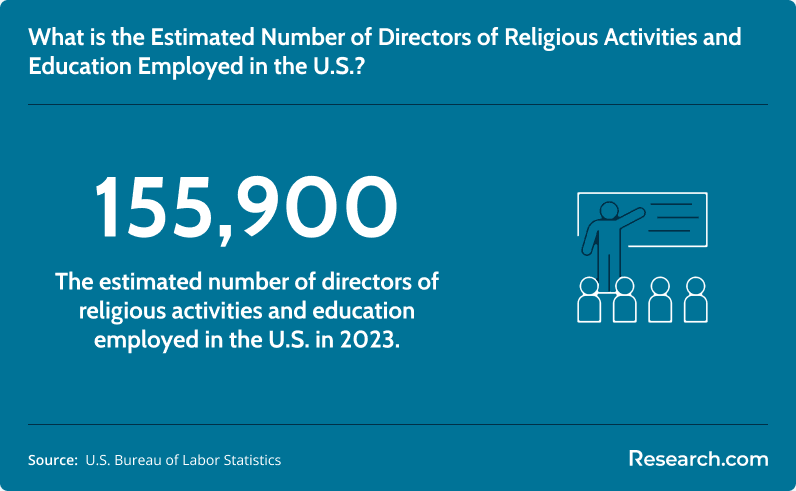
Graduates of online Christian leadership programs may pursue career paths in ministry, church administration, nonprofit leadership, missions, Christian education, chaplaincy-related work, and values-based organizational leadership. In 2023, the U.S. employed approximately 155,900 directors of religious activities and education.
| Career path | What the role usually involves | Additional preparation to consider |
| Pastor or associate pastor | Preaching, teaching, pastoral care, staff leadership, discipleship, and congregational direction | Denominational ordination, supervised ministry, preaching experience, or seminary training |
| Ministry director or coordinator | Leading youth, children’s, small-group, men’s, women’s, or outreach ministries | Volunteer management, curriculum planning, safeguarding policies, and program evaluation |
| Missionary or outreach coordinator | Organizing local or global outreach, evangelism, service programs, and partner relationships | Cross-cultural training, language preparation, fundraising, and missions agency requirements |
| Worship leader or creative arts director | Leading music ministry, creative teams, worship planning, and media coordination | Music training, production skills, team leadership, and worship theology |
| Christian school administrator or educator | Serving in teaching, chaplaincy, student life, or school leadership roles | Teaching credentials or administrative qualifications if required by the role |
| Nonprofit or faith-based organization leader | Managing programs, fundraising, staff, volunteers, operations, and community partnerships | Grant writing, nonprofit finance, board governance, and management experience |
| Chaplain | Providing spiritual care in settings such as hospitals, prisons, schools, military environments, or workplaces | Additional certification, clinical pastoral education, endorsement, or employer-specific requirements |
| Christian counselor or life coach | Offering pastoral support, lay counseling, coaching, or discipleship-based guidance | Counseling coursework, licensure if clinical practice is intended, and clear scope-of-practice boundaries |
| Church administrator or operations manager | Overseeing budgets, facilities, staff coordination, policies, events, and ministry logistics | Finance, human resources, risk management, and organizational leadership skills |
What is the job market like for graduates with an online Christian leadership degree?
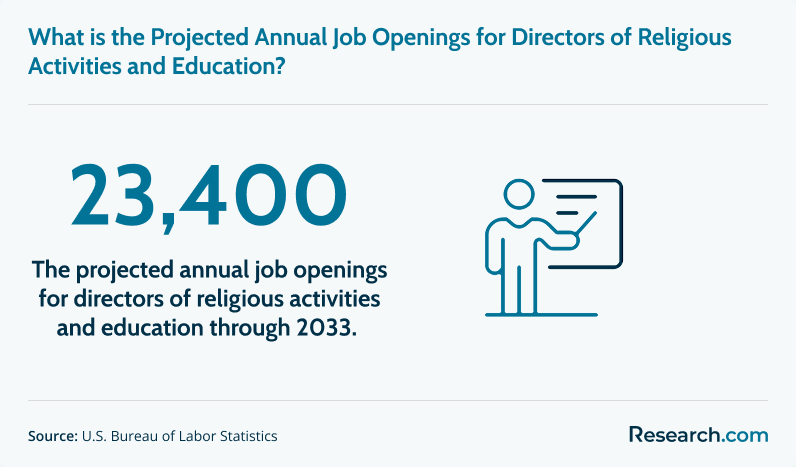
The job market for Christian leadership graduates is steady but competitive. The field includes clergy, directors of religious activities and education, chaplains, church administrators, ministry coordinators, nonprofit leaders, and faith-based educators. The BLS projects 23,400 job openings annually for directors of religious activities and education, which reflects ongoing demand for people who can lead, teach, organize, and administer faith-based programs.
Overall growth is modest rather than explosive. Projections for clergy and religious workers are estimated at 2% to 3% over the next decade. Average salaries range from around $45,000 to $65,000, depending on the role and organization. Pay can be higher or lower based on church size, location, denomination, nonprofit funding, education level, experience, and whether housing or other benefits are included.
Graduates may also work beyond traditional church settings, including education, writing, missions, coaching, Christian media, counseling-adjacent roles, and nonprofit management. Students who build strong networks, complete internships, develop administrative and communication skills, and gain real ministry experience are usually better positioned than those who rely on the degree alone.
Current trends affecting Christian leadership education
Christian leadership education is being shaped by changing church attendance patterns, digital ministry, hybrid work, rising education costs, mental health and pastoral care needs, and increased expectations for organizational competence. Churches and nonprofits increasingly need leaders who can teach Scripture, manage teams, use digital communication tools, understand budgets, build healthy workplace cultures, and respond wisely to community needs.
Online ministry education also continues to expand because many students cannot pause work or ministry to relocate. This makes flexibility valuable, but it also increases the importance of self-discipline, strong advising, and meaningful field placements. Students should look for programs that teach both spiritual formation and practical leadership, not one at the expense of the other.
Is an online Christian leadership degree worth the investment?
An online Christian leadership degree can be worth the investment when it leads to a clear ministry or professional outcome, fits your theological convictions, is affordable enough to complete, and includes practical leadership formation. The value is not only financial. For many students, the return includes deeper biblical knowledge, stronger spiritual maturity, better ministry effectiveness, and expanded networks.
However, the degree is not automatically worth it for every student. If the program is not accredited, does not align with your denomination, requires more debt than your likely salary can support, or lacks field experience, the return may be weak. Students should compare cost against realistic career options, not idealized outcomes. Looking at affordability in unrelated fields, such as the most affordable MLIS online degree programs, can be a useful reminder that program value depends on total cost, job market fit, and credential recognition.
Who should consider this degree?
- Students preparing for church ministry, pastoral leadership, or Christian education
- Current ministry workers who need formal training or advancement preparation
- Nonprofit professionals who want faith-informed leadership development
- Students seeking flexible online study while remaining active in their local ministry context
- Learners who want theological formation alongside practical leadership skills
Who may need a different path?
- Students seeking clinical counseling licensure without a counseling-specific degree
- Students who need ordination in a denomination that requires a specific seminary pathway
- Students who want a purely business-focused leadership degree without theological coursework
- Students who are not comfortable with the school’s statement of faith or conduct expectations
- Students who would need to borrow more than their expected ministry income can reasonably support
How can you verify that an online Christian leadership degree program meets accreditation standards?
Accreditation matters because it affects credit transfer, graduate school admission, federal financial aid eligibility, employer trust, and the credibility of the degree. For ministry roles, accreditation may also influence denominational approval, ordination preparation, or recognition by churches and nonprofit employers.
- Search the school’s website. Find the accreditation page and identify the institutional accreditor and any specialized theological accreditor.
- Verify with the accreditor. Go to the accreditor’s official website and confirm the institution appears in its directory.
- Check federal recognition. Use official education databases to confirm whether the accreditor is recognized for purposes such as federal aid eligibility.
- Ask about program-level approval. Some schools are accredited at the institutional level, but individual programs may have separate requirements or limitations.
- Confirm transfer and ordination relevance. Ask seminaries, denominations, or employers whether they recognize the degree before you enroll.
- Document the answer. Save written confirmation from the school, accreditor, or denomination in case policies change or questions arise later.
Accreditation should be evaluated based on the career or ministry outcome you want. A library science student may research jobs for MLIS degree to understand credential requirements; Christian leadership students should take the same practical approach by checking what churches, denominations, nonprofits, and graduate schools expect.
What Christian leaders say about online Christian leadership study
- Jordan: "My online Christian leadership program helped me keep serving while I studied. I could work full time, stay involved in ministry, and immediately apply what I was learning about biblical leadership. The experience gave me more confidence as I stepped into youth ministry leadership."
- Monica: "The online format made deep theological study accessible without feeling shallow. I was challenged academically and spiritually, and the coursework strengthened the way I lead in nonprofit work. Being able to study from home made the degree possible."
- Samuel: "Studying Christian leadership online gave me the flexibility I needed and the formation I was looking for. I grew in Scripture-based leadership, prepared for pastoral care responsibilities, and built meaningful relationships with classmates who shared a similar calling."
References
- Ann A. Michel, Powe, D., & Anschutz, J. L. (2024). 7 trends impacting church leadership for 2024. Lewis Center for Church Leadership.
- Asbury Theological Seminary. (n.d.). Global Church Research Journal.
- Best Christian Workplaces Institute. (2024). State of the Christian workplace 2024 report highlights employee engagement trends.
- Christian Standard. (2025). The Christian Standard church report for 2024: Continued growth (Part 1).
- National Survey of Religious Leaders. (2024). Publications list: 2024.
- Resonate Global Mission. (2024). 2024 Annual Ministry Report.
- U.S. Bureau of Labor Statistics. (2023). May 2023 OES: Religious worker categories [Clergy data]. Occupational Employment and Wages.
- U.S. Bureau of Labor Statistics. (2023b). May 2023 OES: Educational instruction and library occupations [Directors of religious activities and education]. Occupational Employment and Wages.
Key Insights
- The best program depends on your ministry goal. A student preparing for pastoral work should evaluate different criteria than a professional seeking faith-informed organizational leadership.
- Accreditation is non-negotiable. It can affect financial aid, transfer credit, graduate study, employer recognition, and denominational acceptance.
- Online does not always mean fully remote. Some programs include retreats, residencies, internships, or intensives, so confirm format requirements before enrolling.
- Cost must be calculated in full. Compare tuition, fees, books, technology, travel, transfer credit policies, and financial aid before deciding what is truly affordable.
- Field experience matters. Christian leadership is an applied discipline; practicums, internships, capstones, and supervised ministry projects can be as important as coursework.
- Career outcomes vary widely. Ministry and nonprofit roles can be meaningful, but salaries and advancement depend on role, location, organization size, funding, experience, and credentials.
- Theological fit is part of program quality. Read the statement of faith, denominational expectations, and curriculum before enrolling to ensure the degree supports your calling.
Other Things You Should Know About the Best Online Christian Leadership Degree Programs
Core subjects typically include theology, ethics, ministry leadership, and organizational management. These courses equip students with the necessary skills for effective Christian leadership, combining spiritual guidance with practical management techniques relevant for roles in churches, non-profits, and educational institutions.
Admission requirements typically include a completed application, a minimum GPA of 2.5, and letters of recommendation. Some programs may also require a statement of faith and proof of previous theological coursework for 2027 enrollment.
Yes. Many accredited online Christian leadership programs require 20 to 60 practicum or ministry-service hours, often completed through a local church or ministry partner. Some schools also require virtual chapel attendance or reflection reports, and these requirements are usually documented in the program handbook.


