
2027 Fastest Online Christian Ministry Degree Programs

Co-Founder and Chief Data Scientist
If you are planning to get an online Christian ministry degree but are unsure how, you have come to the right place.
The landscape for faith-based organizations is undergoing a significant shift. This is reflected in data showing that for every person joining the Christian faith, three have left. This trend creates a clear demand for skilled professionals who can build and sustain strong communities. An online Christian ministry degree is the credential designed to build these exact skills. To help you meet this challenge, our career planning experts have developed this comprehensive guide.
What are the benefits of getting a fast online Christian ministry degree program?
- It opens doors to professional, salaried ministry positions as a recognized credential for roles like associate pastor or youth director.
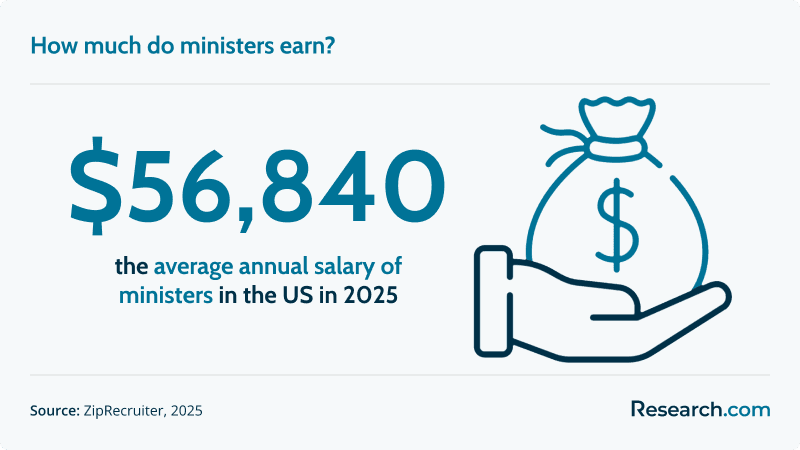
- It provides the qualifications for a professional salary, with ministers earning an average of $56,840 annually.
- It allows you to earn your degree with flexibility, letting you study online without leaving your current job or home.
What can I expect from a fast online Christian ministry degree program?
You can expect a curriculum built around practical application. Your courses will focus on essential ministry skills like pastoral care, effective teaching, and foundational theology, all designed to prepare you for real-world situations.
The program is delivered through online learning platforms. This means you'll engage with video lectures, participate in discussion boards with classmates and professors, and submit your assignments on a structured schedule. It’s important to understand that this format requires a great deal of self-discipline to stay motivated and on track. While the school provides the academic framework, your spiritual formation is something you must actively pursue. You are the one who has to intentionally apply what you learn and seek out mentorship for your personal growth.
Where can I work with a fast online Christian ministry degree program?
This program prepares you for specialized roles in a variety of settings. You will find opportunities in local churches, parachurch organizations like campus ministries or missions agencies, and faith-based non-profits. Common job titles include associate pastor, youth minister, and discipleship director.
It serves as the primary pathway to these crucial professional positions. It is also important to have a clear career map. While this program provides the essential foundation, most senior pastor roles require a Master of Divinity (MDiv) as the next step in your education. Earning this qualification prepares you for a wide range of vital work within an organization.
How much can I make with a fast online Christian ministry degree program?
A formal credential is the key factor in securing a stable, professional wage in ministry. While salaries vary by location and role, the average minister in the U.S. earns around $56,840 annually.
The goal isn't wealth, but a reliable income that allows you to support your family while pursuing your calling. An online Christian ministry degree provides the professional validation that hiring committees look for when setting compensation for these important roles. This moves you from a volunteer position to a professional one.
- List of the Fastest Online Christian Ministry Degree Programs for 2027 List of Programs
- How long does it take to complete a fast online Christian ministry degree program? Completion Time
- How does a fast online Christian ministry degree program compare to an on-campus program? How does a fast online Christian ministry degree program compare to an on-campus program?
- What is the average cost of a fast online Christian ministry degree program? Program Cost
- What are the financial aid options for students enrolling in a fast online Christian ministry degree program? Financial Aid
- What are the prerequisites for enrolling in a fast online Christian ministry degree program? What are the prerequisites for enrolling in a fast online Christian ministry degree program?
- What courses are typically in a fast online Christian ministry degree program? What courses are typically in a fast online Christian ministry degree program?
- What types of specializations are available in a fast online Christian ministry degree program? What types of specializations are available in a fast online Christian ministry degree program?
- How to Choose the Best Fast Online Christian Ministry Degree Program How to Choose the Best Fast Online Christian Ministry Degree Program
- What career paths are available for graduates of a fast online Christian ministry degree program? What career paths are available for graduates of a fast online Christian ministry degree program?
- What is the job market for graduates with a fast online Christian ministry degree program? Job Market
- What Student Support Services Can Enhance My Online Ministry Education? What Student Support Services Can Enhance My Online Ministry Education?
- How Do Fast Online Christian Ministry Degree Programs Incorporate Practical Ministry Experience? How Do Fast Online Christian Ministry Degree Programs Incorporate Practical Ministry Experience?
- How Are Emerging Trends Shaping Fast Online Christian Ministry Degree Programs? How Are Emerging Trends Shaping Fast Online Christian Ministry Degree Programs?
- What Are the Common Challenges in Fast Online Christian Ministry Degree Programs? What Are the Common Challenges in Fast Online Christian Ministry Degree Programs?
Fastest Online Christian Ministry Degree Programs for 2027
Choosing a fast online Christian ministry degree is not only a question of speed. You are also deciding whether a program fits your calling, your theological convictions, your budget, your schedule, and the ministry role you hope to enter. A shorter program can help you move into service sooner, but only if the degree is accredited, academically credible, and practical enough to prepare you for real ministry work.
This guide is designed for working adults, church volunteers, current ministry staff, aspiring pastors, bi-vocational leaders, and students comparing online ministry programs. You will learn which programs offer some of the fastest timelines, how online ministry degrees compare with campus options, what they cost, what courses and specializations to expect, and how to avoid expensive mistakes when choosing a school.
Quick answer: What is the fastest online Christian ministry degree path?
The fastest online Christian ministry degrees are usually accelerated master’s programs that can be completed in about 1 year to 2 years, depending on transfer credits, course load, and program format. Among the listed options, Mount Vernon Nazarene University reports a timeline of 11-19 months, while Liberty University states that its program can be finished in as little as 1 year. Speed should not be the only deciding factor; accreditation, theological alignment, cost, faculty support, and practical ministry experience matter just as much.
How do we rank schools?
Because a ministry degree can affect both your finances and your long-term vocational direction, Research.com uses a transparent ranking process built around verifiable education data. Our evaluation draws from established sources including the IPEDS database, Peterson's database, the College Scorecard database, and The National Center for Education Statistics.
These sources help us compare programs using consistent information about institutions, costs, student outcomes, and academic quality. You can review the broader Research.com ranking process on our methodology page.
Fast online Christian ministry programs at a glance
| School and program | Reported program length | Credits required | Cost per credit | Accreditation listed |
| Grand Canyon University — Master of Arts in Christian Ministry | As little as 24 months | 36 | $585 | Association of Theological Schools (ATS) |
| Mount Vernon Nazarene University — Online Master of Ministry (MMin) | 11-19 months | 30 | $498 | Association of Theological Schools (ATS) |
| Liberty University — Master of Arts in Christian Ministry | As little as 1 year | 36 | $410 (part-time); a block rate is available for full-time students | Association of Theological Schools (ATS) |
| United Theological Seminary — Master of Ministry (MMin) | 1-2 years | 36 | $845 | Association of Theological Schools (ATS) |
| Lancaster Bible College — Master of Arts in Ministry (MAM) | 1-2 years | 42 | $455 (full-time); $535 (part-time) | Association for Biblical Higher Education (ABHE) |
| Southwestern Christian University — Fast Track Master of Ministry | 1-2 years | 36 | $790 (1-12 credits); tiered rates apply for higher course loads | The Higher Learning Commission (HLC) |
| Oral Roberts University — Master of Christian Ministry | 1-2 years | 36 | $550 | The Higher Learning Commission (HLC) |
1. Grand Canyon University - Master of Arts in Christian Ministry
Grand Canyon University offers an online master’s program that introduces students to Old Testament and New Testament study, Christian doctrine, biblical interpretation, pastoral care, and ministry ethics. The program is built for students who want practical preparation for church, nonprofit, or community-based ministry leadership.
- Program Length: As little as 24 months
- Required Credits to Graduate: 36
- Cost per Credit: $585
- Accreditation: Association of Theological Schools (ATS)
2. Mount Vernon Nazarene University - Online Master of Ministry (MMin)
Mount Vernon Nazarene University provides an online MMin intended for current ministry workers, future church leaders, and students considering bi-vocational ministry. Its structure emphasizes applied ministry learning while still giving students a graduate-level foundation in theology and leadership.
- Program Length: 11-19 months
- Required Credits to Graduate: 30
- Cost per Credit: $498
- Accreditation: Association of Theological Schools (ATS)
3. Liberty University - Master of Arts in Christian Ministry
Liberty University offers an online MA in Christian Ministry focused on biblical leadership, discipleship, evangelism, and ministry practice. The program is aimed at students preparing for leadership in local churches, parachurch organizations, and broader ministry settings.
- Program Length: As little as 1 year
- Required Credits to Graduate: 36
- Cost per Credit: $410 (part-time); a block rate is available for full-time students
- Accreditation: Association of Theological Schools (ATS)
4. United Theological Seminary - Master of Ministry (MMin)
United Theological Seminary offers an MMin that combines theology, biblical studies, church history, and spiritual formation. The program may be a fit for students preparing for ordination-related work, diaconal ministry, or later doctoral study in ministry.
- Program Length: 1-2 years
- Required Credits to Graduate: 36
- Cost per Credit: $845
- Accreditation: Association of Theological Schools (ATS)
5. Lancaster Bible College - Master of Arts in Ministry (MAM)
Lancaster Bible College offers an online MAM that blends biblical study, spiritual development, reflective practice, cultural understanding, leadership, and communication. The degree is designed for students seeking ministry roles in churches, nonprofits, and other faith-based service environments.
- Program Length: 1-2 years
- Required Credits to Graduate: 42
- Cost per Credit: $455 (full-time); $535 (part-time)
- Accreditation: Association for Biblical Higher Education (ABHE)
6. Southwestern Christian University - Fast Track Master of Ministry
Southwestern Christian University provides a fast-track ministry program that emphasizes biblical application, strategic planning, graduate research, ministry evaluation, and practicum-based learning. Its flexible delivery may appeal to students balancing ministry, work, and family responsibilities.
- Program Length: 1-2 years
- Required Credits to Graduate: 36
- Cost per Credit: $790 (1-12 credits); tiered rates apply for higher course loads
- Accreditation: The Higher Learning Commission (HLC)
7. Oral Roberts University - Master of Christian Ministry
Oral Roberts University offers a fully online Master of Christian Ministry grounded in Scripture, leadership development, and practical ministry preparation. The program is also available entirely in Spanish for native speakers, which may make it especially useful for students serving bilingual or Spanish-speaking communities.
- Program Length: 1-2 years
- Required Credits to Graduate: 36
- Cost per Credit: $550
- Accreditation: The Higher Learning Commission (HLC)
How Long Does It Take to Complete a Fast Online Christian Ministry Degree?
An accelerated bachelor’s degree in ministry may take 2-3 years, while many accelerated master’s programs can be completed in as little as 18-24 months. Some programs in this guide report even shorter timelines, but actual completion time depends on enrollment status, transfer credits, course sequencing, practicum requirements, and whether the student studies year-round.
The most important point is that faster is not automatically better. A quick program that lacks recognized accreditation can create problems with transfer credits, employer recognition, graduate study, ordination pathways, or financial aid eligibility. In the same way that other professions have defined expectations, such as mortgage broker education requirements, ministry students should treat accreditation as a basic quality filter rather than an optional detail.
Typical timeline by degree level
| Degree level | Common accelerated timeline | Best fit | Key caution |
| Associate degree in ministry | Often shorter than a bachelor’s degree | Students testing their calling or planning to transfer later | Confirm that credits transfer into a bachelor’s program before enrolling |
| Bachelor’s degree in ministry | 2-3 years | Students seeking undergraduate preparation for church or nonprofit service | Accelerated pacing can be demanding for working adults |
| Master’s degree in ministry | As little as 18-24 months | Current ministry workers, career changers, and aspiring leaders with a bachelor’s degree | Check whether the program supports your denomination’s ordination or credentialing expectations |
Why the time investment matters
Ministry can be deeply meaningful, but it can also involve emotional strain, conflict management, crisis care, irregular hours, and high expectations from congregations or communities. A strong degree program should do more than help you finish quickly. It should help you develop theological depth, practical judgment, emotional resilience, and a sustainable approach to leadership.
For many students, the value of a ministry degree is not only the credential. It is the guided formation that helps them serve with clarity, humility, and endurance.
How Does a Fast Online Christian Ministry Degree Compare With an On-Campus Program?
The biggest difference between online and on-campus Christian ministry programs is delivery format, not necessarily academic seriousness. A reputable online program can offer the same credential and similar academic expectations as an on-campus option, but the student experience is different.
| Factor | Online ministry degree | On-campus ministry degree |
| Schedule flexibility | Usually better for working adults, parents, and active ministry staff | Often better for students who can relocate or study full time |
| Community experience | Requires intentional participation in discussion boards, video meetings, mentoring, and local ministry | Offers more face-to-face interaction, chapel life, informal conversations, and campus events |
| Cost considerations | May reduce relocation, housing, and commuting costs | May include higher living or relocation expenses depending on the school |
| Practical ministry access | Often lets students apply coursework immediately in their current church or community | May provide structured campus-based ministry opportunities and nearby partnerships |
| Best for | Self-directed students who need flexibility | Students who want immersive formation and regular in-person faculty access |
Online ministry education is especially useful if you are already serving in a church, nonprofit, school, or community organization and want to apply coursework immediately. However, online study requires discipline. You may need to be more proactive about building relationships with professors, classmates, and mentors.
Students comparing ministry with adjacent leadership or helping-profession routes may also want to examine other accelerated online options. For example, an accelerated doctorate in behavioral health leadership online may make more sense for professionals focused on behavioral health systems, while ministry degrees are better suited to church, chaplaincy, discipleship, pastoral care, and faith-based leadership roles.
For accredited schools, the degree format itself is not the main issue. The stronger question is whether the curriculum, faculty, field experience, theology, and support services match the kind of ministry you are preparing to do.
What Is the Average Cost of a Fast Online Christian Ministry Degree?
Costs vary widely by institution. Based on the programs listed here, per-credit tuition ranges from around $410 to over $845. For a 36-credit master’s degree, that places tuition roughly between $15,000 and over $30,000 before fees, books, technology costs, travel for any residencies, and financial aid are considered.
Do not judge affordability by tuition alone. The more useful figure is net cost: what you pay after scholarships, grants, employer or church support, denominational aid, and federal aid are applied. Two schools with very different sticker prices can become much closer in real cost once aid packages are included.
Cost factors to compare before enrolling
| Cost item | Why it matters | Question to ask |
| Per-credit tuition | It is the main driver of total program cost | Is the rate different for full-time and part-time students? |
| Required credits | A lower per-credit rate may not be cheaper if the program requires more credits | How many total credits are required to graduate? |
| Fees | Online, technology, graduation, and course fees can add up | What is the full estimated cost of attendance? |
| Books and materials | Theology and ministry courses may require extensive reading | Are books included, discounted, or available digitally? |
| Residency or practicum costs | Some online programs may include in-person or field-based components | Will I need to travel, take time off work, or pay for placement requirements? |
| Financial aid | A strong aid package can substantially reduce net cost | Which scholarships, denominational grants, and federal aid options are available? |
How to think about return on investment
The financial return on a ministry degree is different from the return expected in highly compensation-driven careers. A student researching how to become an investment manager may evaluate ROI primarily through earnings growth. Ministry students usually need a broader calculation that includes employability, ordination or credentialing value, long-term sustainability, calling, family finances, and whether the degree opens realistic roles in churches or faith-based organizations.
A good ministry degree should make your calling more professionally sustainable, not create debt that limits your ability to serve. Before enrolling, compare total borrowing against the kinds of roles you are likely to pursue after graduation.
What Financial Aid Options Are Available for Fast Online Christian Ministry Degree Students?
Students in online Christian ministry programs may be able to combine several sources of aid. The best approach is to start early, contact each school directly, and ask specifically about awards for ministry students, online learners, adult students, and denominational candidates.
- Federal Aid: Begin with the Free Application for Federal Student Aid (FAFSA). Eligible students may qualify for federal loans and, in some cases, grants.
- Institutional Scholarships: Many seminaries, Bible colleges, and Christian universities offer donor-funded scholarships for students preparing for ministry leadership.
- Denominational Grants: Churches, districts, conferences, dioceses, presbyteries, or regional bodies may provide financial support for students pursuing ordination, licensing, or recognized ministry service.
- Church Sponsorship: Some local congregations help staff members or ministry interns pay for training when the degree directly supports church needs.
- Employer Support: Students working for nonprofits, schools, counseling-adjacent organizations, or faith-based agencies should ask whether tuition assistance is available.
Ask every school for a written aid estimate before making a decision. If you are comparing lower-cost institutions, Research.com resources on the cheap online colleges that accept FAFSA can help you understand how federal aid access affects affordability.
What Are the Prerequisites for Enrolling in a Fast Online Christian Ministry Degree?
Admissions requirements depend on degree level and institution. Most Christian ministry programs are designed to welcome students from a range of academic and professional backgrounds, especially those who can clearly explain their ministry goals.
- For bachelor’s programs: Applicants usually need a high school diploma or GED.
- For master’s programs: Applicants generally need an accredited bachelor’s degree. Many programs do not require the undergraduate major to be in Bible, theology, or ministry.
- Statement of faith or calling: Many Christian institutions ask applicants to describe their beliefs, ministry experience, and reasons for pursuing the degree.
- References: Some programs may request pastoral, academic, or professional recommendations.
- Technology readiness: Online students should be prepared to use learning management systems, video conferencing, digital libraries, and online discussion tools.
If your ministry interests include mental health support, pastoral counseling, or care for individuals and families, compare a ministry degree with a fastest online counseling psychology degree. Ministry counseling coursework can strengthen pastoral care, but it is not the same as a licensure-focused counseling psychology pathway.
Should you start with an associate degree?
An associate degree can be a practical first step if you feel called to ministry but are not ready for a full bachelor’s or master’s program. It may help you test your academic interest, build foundational biblical knowledge, and earn credits that could later transfer into a bachelor’s degree.
Students involved in worship arts, church media, or creative ministry may also consider complementary training. Research.com’s guide to the best online audio and music degree programs may be useful for students who want to combine ministry preparation with music production, audio technology, or worship-related creative work.
What Courses Are Typically Included in a Fast Online Christian Ministry Degree?
A strong Christian ministry curriculum should balance theological study with practical leadership skills. Course names differ by school, but most programs include several recurring areas of study.
| Course area | What students learn | Why it matters in ministry |
| Biblical studies | Old Testament, New Testament, interpretation, and biblical context | Provides the foundation for teaching, preaching, discipleship, and pastoral decision-making |
| Theology and doctrine | Christian beliefs, systematic theology, and doctrinal development | Helps leaders explain faith clearly and evaluate ministry questions with theological consistency |
| Church history | Major movements, traditions, leaders, and controversies in Christian history | Gives students perspective on current church practices and denominational identity |
| Pastoral care | Spiritual support, crisis response, grief care, and ethical boundaries | Prepares students to serve people during difficult life moments |
| Homiletics and teaching | Sermon preparation, biblical communication, and lesson design | Builds the public communication skills needed for preaching and teaching roles |
| Spiritual formation | Personal discipleship, spiritual disciplines, self-awareness, and vocational maturity | Supports long-term health and integrity in ministry leadership |
| Leadership and administration | Team development, program planning, organizational systems, and conflict management | Equips students to lead ministries, volunteers, staff, and nonprofit initiatives |
Teaching is a major part of many ministry roles. Students who want to understand how instruction, communication, and vocation intersect may find Research.com’s discussion of whether being a teacher is worth it helpful when evaluating preaching, discipleship, and education-focused ministry paths.
A note on Catholic priesthood
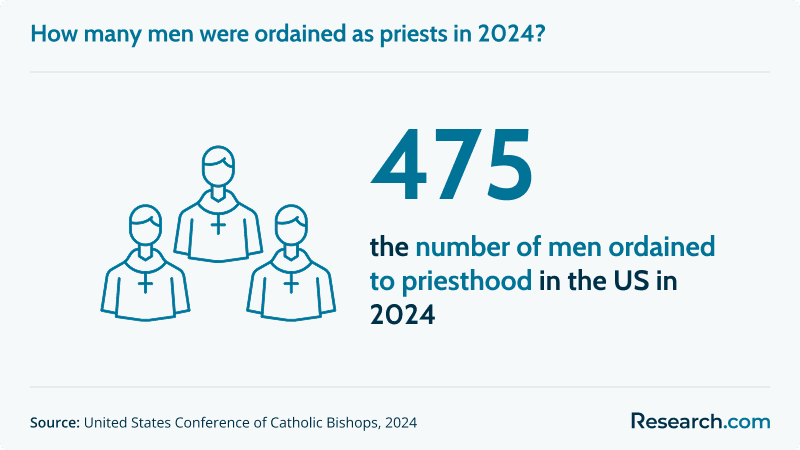
The educational route to ordained Catholic priesthood is separate from the general online Christian ministry degrees discussed here. Catholic priestly formation follows a specific seminary-based process. These online programs may be valuable for many Christian ministry roles, but they are not substitutes for the required Catholic formation pathway. For context, in 2024, there were 475 men ordained to the priesthood in the U.S. through that specific system.
What Specializations Are Available in Fast Online Christian Ministry Degree Programs?
Specializations help students move from broad ministry preparation to a more focused service area. The right concentration depends on the population you want to serve, the setting where you hope to work, and whether your denomination or employer has specific expectations.
| Specialization | Best for students interested in | Skills developed |
| Youth ministry | Children, teenagers, college students, and family ministry | Mentoring, discipleship, age-appropriate teaching, volunteer coordination, and program planning |
| Pastoral counseling | Care ministries, crisis support, premarital guidance, and family support | Listening, referral awareness, theological reflection, ethical care, and basic counseling-informed support |
| Chaplaincy | Hospitals, military settings, correctional facilities, corporate environments, and community care | Interfaith sensitivity, grief care, spiritual assessment, crisis presence, and institutional ministry |
| Missions and evangelism | Local outreach, church planting, global missions, and cross-cultural ministry | Cross-cultural communication, evangelism strategy, community engagement, and ministry planning |
| Worship or creative ministry | Worship leadership, church media, music ministry, and creative teams | Team leadership, service planning, communication, music coordination, and spiritual formation through worship |
| Nonprofit or organizational leadership | Faith-based nonprofits, church administration, and program leadership | Strategic planning, budgeting awareness, team development, and organizational communication |
Pastoral counseling can overlap with social services, but the training goals are different. If you want a licensed social-service career, compare ministry coursework with the requirements explained in Research.com’s guide on what you need to become a social worker. If you want pastoral care within a church or ministry setting, a ministry specialization may be more appropriate.
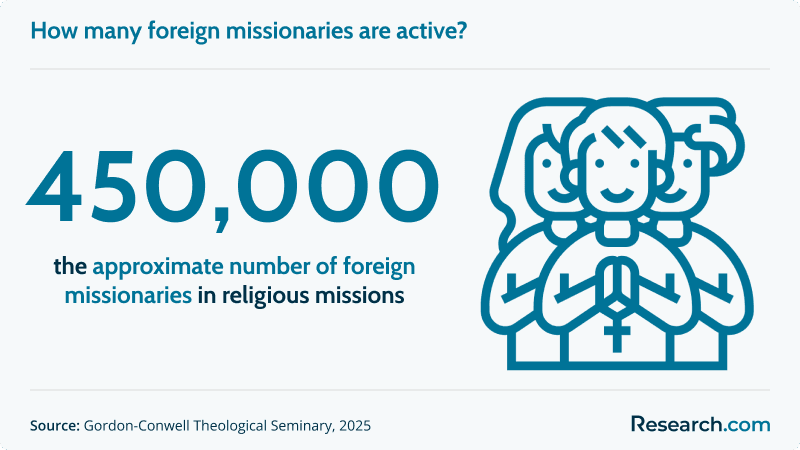
Specializations can also connect local ministry to global service. Graduates interested in missions should consider the scale and complexity of the field, including the approximately 450,000 missionaries serving around the world.
How to Choose the Best Fast Online Christian Ministry Degree Program
The best program is not simply the shortest or cheapest one. It is the program that fits your theological convictions, career goals, budget, schedule, and ministry context. Use the following sequence before applying.
- Verify accreditation first. Confirm institutional accreditation and, when relevant, theological or ministry-related accreditation. This affects credibility, transferability, financial aid, and future study options.
- Read the school’s statement of faith. Ministry education is not religiously neutral. Make sure the school’s theological commitments align with your convictions and your intended ministry setting.
- Compare the curriculum with your career goal. A student preparing for youth ministry needs different courses than someone preparing for chaplaincy, pastoral counseling, missions, or nonprofit leadership.
- Ask about field experience. Online programs should still provide meaningful ministry application through internships, practicums, supervised projects, mentoring, or current ministry placement.
- Calculate net cost, not sticker price. Include tuition, fees, books, aid, scholarships, denominational support, and potential borrowing.
- Evaluate student support. Ask about academic advising, library access, writing help, faculty availability, online tutoring, spiritual formation resources, and career guidance.
- Confirm ordination or credentialing fit. If you serve in a denomination, ask whether the degree satisfies educational expectations for licensing, ordination, or advancement.
Questions to ask before applying
| Decision area | Questions to ask the school |
| Accreditation | Who accredits the institution and program? Are credits transferable? |
| Theology | What statement of faith guides the curriculum and faculty hiring? |
| Program speed | What course load is required to finish on the advertised timeline? |
| Practical experience | Are internships, practicums, mentoring, or ministry projects required? |
| Online format | Are courses asynchronous, synchronous, or a mix of both? |
| Cost | What is the full cost after fees, books, and required experiences? |
| Financial aid | Which scholarships are available for ministry students? |
| Career alignment | Where do graduates typically serve after completing the program? |
If your ministry goal involves organizational leadership, staff development, or nonprofit management, you may also compare ministry training with a fast track master's in industrial-organizational psychology online. Industrial-organizational psychology focuses more directly on workplace behavior and organizational systems, while ministry programs approach leadership through theological and pastoral formation.
What Career Paths Are Available With a Fast Online Christian Ministry Degree?
A fast online Christian ministry degree can prepare graduates for many church, parachurch, nonprofit, and community-facing roles. Some positions require ordination, denominational approval, supervised ministry experience, or additional credentials, so students should verify requirements before choosing a program.
| Career path | Typical responsibilities | Additional considerations |
| Associate Pastor | Preaching, pastoral care, staff support, discipleship, and ministry coordination | May require ordination or denominational credentials |
| Youth Minister | Student discipleship, volunteer leadership, teaching, events, and family communication | Experience with youth safety policies and mentoring is important |
| Discipleship Director | Small group systems, adult education, spiritual formation, and leadership development | Strong teaching and organizational skills are useful |
| Small Groups Coordinator | Leader training, curriculum planning, group placement, and community-building | Often requires volunteer management experience |
| Worship Leader | Service planning, music leadership, team development, and spiritual preparation | Musical ability and pastoral maturity both matter |
| Missions Coordinator | Outreach strategy, missionary partnerships, service trips, and cross-cultural communication | May require travel, fundraising, or language/cultural preparation |
| Non-Profit Program Director | Program management, staff coordination, community partnerships, and mission delivery | Administrative and fundraising skills can strengthen employability |
| Chaplain | Spiritual care in institutional settings such as hospitals, military contexts, or other organizations | Some chaplaincy roles require additional certification, clinical training, or denominational endorsement |
Ministry graduates serve people across a wide range of religious engagement. That matters because only about 21% of adults attend services weekly, while a combined 67% attend monthly, seldom, or never. Effective ministry leaders need to communicate with committed congregants, occasional attenders, seekers, skeptics, and community members with no regular church involvement.
If you are comparing ministry with broader social science careers, Research.com’s guide to the highest paying sociology jobs can help clarify how career outcomes differ between religious leadership, nonprofit work, social research, and human services.
What Is the Job Market for Graduates With a Fast Online Christian Ministry Degree?
The clergy labor market is relatively steady rather than fast-growing. According to the U.S. Bureau of Labor Statistics, the field is projected to grow 3% over the next decade, with approximately 6,500 job openings expected each year. Much of this demand comes from ongoing replacement needs, including retirements and transitions out of ministry roles.
Students should understand that ministry hiring is often relationship-driven and context-specific. Churches and faith-based organizations may weigh theology, denominational background, references, ministry experience, character, communication ability, and fit with the community as heavily as academic credentials.
Salary potential in established ministry roles
Ministry is usually chosen for purpose and service, not maximum pay. Still, established denominational positions can provide a stable professional income. For example, the Presbyterian Church in the United States reports a median effective salary of $70,000 for its pastors in 2025.
Salary outcomes vary by denomination, church size, region, role, education, housing arrangements, benefits, and years of experience. Before enrolling, ask programs how they support job placement, networking, denominational credentialing, internships, and alumni connections.
What Student Support Services Improve an Online Ministry Education?
Online ministry students should look carefully at support services because accelerated programs move quickly. Strong academic advising, technical support, writing assistance, library access, faculty availability, spiritual formation resources, mentoring, and career guidance can make the difference between simply completing courses and being formed for effective ministry.
Working adults should be especially careful to compare support systems, course pacing, and affordability. Research.com’s resource on the most affordable online colleges for working adults can help students think through cost and flexibility when comparing ministry programs with other online options.
How Do Fast Online Christian Ministry Programs Include Practical Experience?
Good online ministry programs should connect classroom learning with real ministry practice. This may happen through internships, field placements, supervised ministry projects, mentorship, practicums, local church assignments, virtual service-learning, or short residencies.
Practical experience matters because ministry is not only academic. Students need to practice pastoral care, teaching, leadership, conflict navigation, ethical decision-making, and community engagement. If you are comparing accelerated graduate options beyond ministry, Research.com’s guide to 1 year online masters programs may help you evaluate how different fields structure fast graduate study.
How Are Current Trends Changing Online Christian Ministry Degrees?
Christian ministry programs are increasingly responding to digital communication, hybrid worship, online discipleship, multimedia outreach, and changing patterns of religious participation. Students may now encounter coursework or assignments involving online community-building, ethical digital communication, social media engagement, livestreaming, content creation, and ministry strategy for people who do not regularly attend in-person services.
These shifts do not replace biblical study, theology, pastoral care, or spiritual formation. They add new tools and new questions. Future ministry leaders need to understand both in-person community and digital engagement. Students still completing an undergraduate degree may also compare ministry options with a fast paced bachelor degree online if speed and flexibility are major priorities.
Common Mistakes to Avoid When Choosing a Fast Online Christian Ministry Degree
Accelerated online ministry programs can be valuable, but students often make avoidable errors when they focus only on convenience. Use this checklist before committing.
| Mistake | Why it can hurt you | Better approach |
| Choosing the fastest program without checking accreditation | The degree may not transfer, qualify for aid, or carry credibility with employers | Verify accreditation before reviewing cost or timeline |
| Ignoring theological fit | You may study in a setting that conflicts with your convictions or denomination | Read the statement of faith and ask how theology shapes the curriculum |
| Looking only at tuition | Fees, books, residencies, and lost work time can change the real price | Compare total cost of attendance and net cost after aid |
| Assuming online means easy | Accelerated courses can be reading-heavy and time-intensive | Ask how many hours per week students typically spend on coursework |
| Overlooking field experience | You may graduate with theory but limited ministry practice | Choose a program with practicums, internships, mentoring, or applied projects |
| Assuming the degree guarantees ordination | Denominations set their own credentialing rules | Confirm requirements with your church body before enrolling |
| Borrowing without a career plan | Ministry salaries vary, and debt can limit vocational flexibility | Estimate likely earnings, aid, church support, and repayment obligations |
What Graduates Say About Their Fast Online Christian Ministry Degree
- : "I knew I was drawn to pastoral counseling, so I did not want a broad program with no focus. The specialization gave me advanced coursework in counseling concepts and ministry care, and that helped me explain my preparation clearly when applying for roles. — Milton"
- : "I felt called to serve, but a traditional seminary path felt intimidating at first. Starting online gave me structure, confidence, and a foundation I could build on. It helped me see which areas of ministry I wanted to pursue more seriously. — Daniel"
- : "I had years of experience managing church operations, but I wanted to understand the pastoral and theological side of leadership. The degree helped me connect administration with mission and made me a stronger partner to our ministry staff. — Alice"
Key Insights
- The fastest option is not always the best option. A program’s speed matters only after you verify accreditation, theological fit, cost, and career relevance.
- Master’s programs are often the quickest advanced route. Some online Christian ministry master’s programs report timelines from as little as 1 year to 2 years, while accelerated bachelor’s programs may take 2-3 years.
- Accreditation should be your first filter. It affects credibility, transfer options, financial aid access, and future education opportunities.
- Net cost is more useful than tuition price. Compare scholarships, denominational grants, church support, federal aid, fees, books, and residency costs before deciding.
- Online ministry degrees require intentional community. Flexible study can work well for adult learners, but students must actively seek mentoring, discussion, field experience, and spiritual formation.
- Specialization affects career fit. Youth ministry, pastoral counseling, chaplaincy, missions, worship, and nonprofit leadership require different skills and may lead to different roles.
- Practical experience is essential. Look for internships, practicums, supervised projects, or opportunities to apply coursework in your current ministry setting.
- Ordination and credentialing rules vary. Always check with your denomination, church network, or intended employer before assuming a degree meets ministry requirements.
References:
- CareerOneStop. (2025). Occupation profile: Clergy. Retrieved July 24, 2025, from https://www.careeronestop.org/Toolkit/Careers/Occupations/occupation-profile.aspx?keyword=Clergy&onetcode=21-2011.00
- Data USA. (2025). Christian studies. Retrieved July 24, 2025, from https://datausa.io/profile/cip/christian-studies
- Data USA. (2025). Divinity & ministry. Retrieved July 24, 2025, from https://datausa.io/profile/cip/divinity-ministry
- Data USA. (2025). Religious studies. Retrieved July 24, 2025, from https://datausa.io/profile/cip/religious-studies-380201
- Gallup News. (2024, March 25). Church attendance has declined in most US groups. Retrieved July 24, 2025, from https://news.gallup.com/poll/642548/church-attendance-declined-religious-groups.aspx
- Gordon Conwell Theological Seminary. (2025). Status of Global Christianity, 2025, in the context of 1900–2050. Retrieved July 24, 2025, from https://www.gordonconwell.edu/wp-content/uploads/sites/13/2025/01/Status-of-Global-Christianity-2025.pdf
- Pew Research Center. (2025, June 9). How the global religious landscape changed from 2010 to 2020. Retrieved July 24, 2025, from https://www.pewresearch.org/religion/2025/06/09/how-the-global-religious-landscape-changed-from-2010-to-2020/
- Pew Research Center. (2025, June 10). Video: How much ‘religious switching’ is there in the U.S.? Retrieved July 24, 2025, from https://www.pewresearch.org/religion/2025/06/10/video-how-much-religious-switching-is-there-in-the-us/
- Population Education. (2024, January 12). World population by religion: A global tapestry of faith. Retrieved July 24, 2025, from https://populationeducation.org/world-population-by-religion-a-global-tapestry-of-faith/
- Statista. (2025, April 4). Self-described religious identification of Americans 2023. Retrieved July 24, 2025, from https://www.statista.com/statistics/245478/self-described-religious-identification-of-americans/
- The Board of Pensions of the Presbyterian Church (USA). (2025). Median and effective salary. Retrieved July 24, 2025, from https://www.pensions.org/what-we-offer/employer-guidance/effective-salary
- The Catholic World Report. (2025, February 17). Diocesan priestly vocations in the United States: A look at the numbers. Retrieved July 24, 2025, from https://www.catholicworldreport.com/2025/02/17/diocesan-priestly-vocations-in-the-u-s-a-look-at-the-numbers/
- United States Conference of Catholic Bishops. (2024, April 15). New survey of men being ordained to the priesthood underscores the significant influence of parents on children’s vocational discernment. Retrieved July 24, 2025, from https://www.usccb.org/news/2024/new-survey-men-being-ordained-priesthood-underscores-significant-influence-parents
- United States Conference of Catholic Bishops. (2025). Clergy and religious. Retrieved July 24, 2025, from https://www.usccb.org/offices/public-affairs/clergy-and-religious
- ZipRecruiter. (2025). Salary: Minister (July 2025). Retrieved July 24, 2025, from https://www.ziprecruiter.com/Salaries/Minister-Salary
- CareerOneStop. (2025). Additional clergy occupation access page: https://www.careeronestop.org/Toolkit/Careers/Occupations/occupation-profile.aspx?keyword=Clergy&onetcode=21-2011.00
Other Things You Should Know About the Fastest Online Christian Ministry Degree Programs
The strongest choice is regional accreditation for the university plus institutional accreditation from the Association for Biblical Higher Education, or ABHE, for the ministry program. Some schools also hold ATS accreditation for graduate theological study. Accreditation affects transfer credit, federal aid eligibility, and graduate school recognition.
For 2027 online Christian ministry degree programs, entry requirements typically include a high school diploma or GED, submission of transcripts, and a personal statement. Some programs may also require letters of recommendation and proof of community service or ministry involvement.


