
2027 Best Online Theology Masters Programs

Co-Founder and Chief Data Scientist
A master’s degree in theology is a graduate program for students who want advanced training in Scripture, doctrine, ministry, ethics, religious history, pastoral care, or theological research. It can support many goals: preparing for ministry, qualifying for chaplaincy pathways, strengthening teaching credentials, moving into nonprofit leadership, or pursuing deeper academic study of religion.
Theology, as described by Encyclopedia Britannica, is a philosophically grounded field that examines religious belief, Christian doctrine, apologetics, God, humanity, salvation, the world, and eschatology. Although many programs focus on Christianity, theological study may also involve Judaism, Islam, interfaith dialogue, ethics, and comparative religion.
This guide is for working adults, ministry professionals, educators, career changers, and students comparing online theology master’s programs. You will learn how online programs work, whether employers respect them, what they cost, how to evaluate accreditation, what courses to expect, which programs are featured in our 2027 list, and how to decide whether this degree fits your career goals.
Best Online Theology Masters Programs in Theology Table of Contents
- Can you get a degree completely online?
- How can you find the best 1-year online theology programs?
- Will employers take my online degree seriously?
- Are online degrees recognized all over the world?
- Online vs. Traditional Master’s Degree in Theology
- How much does an online master’s degree in theology cost?
- What are the requirements of an online master’s degree in theology?
- Courses to Expect in an Online Master’s Degree in Theology
- Things to Look for in an Online Master’s Degree in Theology
- Best Master’s Degree in Theology Programs for 2027
- What are the practical skills you can gain from an online master's degree in theology?
- How does the cost-effectiveness of an online theology degree compare to other online master’s programs?
- What are the practical applications of theology studies in community outreach?
- How can online theology programs enhance networking and community building?
- How do accreditation and institutional quality measures influence online theology education?
- What challenges do online theology students face?
- Can theology studies foster child development and community well-being?
- What are the interdisciplinary opportunities in theology studies?
- What are the career pathways after completing an online master’s degree in theology?
- What role does library science play in online theology education?
- How do theology studies intersect with digital research and information management?
Quick Answer: Is an Online Master’s in Theology Worth Considering?
Yes, an online master’s in theology can be a strong option if you need graduate-level theological training but cannot relocate or attend campus full time. The degree is most useful when the program is accredited, aligned with your faith tradition or academic interests, and matched to a clear goal such as ministry, chaplaincy, teaching, nonprofit leadership, counseling-adjacent work, or doctoral preparation.
It is not automatically the right choice for everyone. Some ministry roles require denominational approval, ordination, supervised fieldwork, or a specific seminary credential. Some counseling roles require a separate state license. Before enrolling, confirm whether the program meets the requirements for the role, church body, school system, or employer you plan to pursue.
Can you get a degree completely online?
Many theology master’s programs are now available fully online, while others use a hybrid format that combines remote coursework with short campus intensives, practicums, internships, or in-person exams. In a fully online program, students usually access lectures, readings, discussions, assignments, and exams through digital platforms. A reliable computer and strong Internet connection are essential.
The biggest advantage is flexibility. Online theology students can often continue working, serving in ministry, caring for family, or living outside commuting distance from a seminary. Asynchronous courses are especially helpful because students can complete lectures and readings on a schedule that fits their week. Synchronous classes, however, may be better for students who want live discussion, real-time faculty interaction, and a more structured learning rhythm.
Before choosing a fully online program, ask whether any required activities must be completed in person. Some schools require campus visits for intensives, oral defenses, exams, spiritual formation retreats, or supervised ministry components.
How can you find the best 1-year online theology programs?
A one-year online theology master’s program can make sense for students who already have a strong foundation in theology, ministry, biblical studies, or religious education and want a faster path to a graduate credential. These programs are usually intensive. They often require careful planning, steady weekly study time, and limited breaks between terms.
Students comparing 1 year masters programs online should look beyond speed. A shorter program is only worthwhile if it still offers the courses, faculty access, research support, and practical preparation needed for the student’s goal. For example, a person preparing for pastoral ministry may need field education and denominational compatibility, while a student pursuing academic work may need a thesis, language study, or research methodology courses.
| When a 1-Year Online Theology Program May Fit | When a Longer Program May Be Better |
| You already completed substantial undergraduate theology, Bible, philosophy, or ministry coursework. | You are new to theology and need foundational courses before advanced study. |
| You can handle a demanding reading, writing, and discussion load every week. | You work full time, serve in ministry, or need a slower pace for family responsibilities. |
| Your goal is professional enrichment, ministry development, or a focused graduate credential. | Your goal requires ordination preparation, chaplaincy training, supervised ministry, or a research thesis. |
| The program’s accelerated schedule still includes the specialization you need. | The faster format removes electives, fieldwork, languages, or advising you consider important. |
Will employers take my online degree seriously?
Employers are most likely to respect an online theology degree when it comes from an accredited institution with a clear academic reputation, qualified faculty, and meaningful coursework. In many cases, the diploma lists the degree rather than the delivery format, and online students may study with the same professors who teach campus-based courses.
What matters most is not whether a class was taken online, but whether the program is credible and relevant. Employers, churches, schools, nonprofits, and chaplaincy organizations may evaluate your institution, accreditation, thesis or capstone quality, ministry experience, references, and fit with their mission.
Graduate research can be especially important. A thesis, capstone, ministry project, or published work gives employers and doctoral programs evidence of your writing, analysis, theological reasoning, and ability to complete a sustained project. Students who intend to teach, publish, or continue into doctoral study should pay close attention to thesis requirements and faculty research interests.
Are online degrees recognized all over the world?
Online theology degrees may be recognized internationally when they are awarded by properly accredited or government-recognized institutions. However, recognition is not automatic in every context. Employers, church bodies, licensing agencies, immigration authorities, and universities may each have their own evaluation process.
Students planning to work outside their home country should verify recognition before enrolling. This is especially important for teaching roles, chaplaincy, ordination, doctoral admissions, or positions with government-funded organizations. Ask the school where its graduates work, whether the degree has been accepted for further study, and what documentation is available for international credential evaluation.
Because theology connects to ministry, education, counseling-adjacent support, community work, and faith-based leadership, graduates may find opportunities in many settings. Still, career outcomes depend heavily on location, denomination, experience, language ability, and the specific type of master’s degree earned.
Online vs. Traditional Master’s Degree in Theology
The main difference between an online and traditional master’s degree in theology is delivery. The academic subjects can be very similar: Scripture, doctrine, church history, ethics, hermeneutics, pastoral care, research, and theological writing. Many institutions use the same faculty, readings, assignments, and assessments across formats.
Online programs typically rely on centralized learning management systems (LMSes) for schools and universities to distribute syllabi, lectures, readings, discussion boards, grades, announcements, videos, and assignment portals. Even campus programs now use LMS platforms, so the practical gap between online and classroom learning has narrowed.
| Factor | Online Master’s in Theology | Traditional Campus Program |
| Schedule | Often asynchronous or partially synchronous; usually better for working adults. | Usually follows set class times and campus calendars. |
| Community | Depends on discussion boards, video meetings, cohorts, online chapel, and virtual groups. | Offers more spontaneous interaction through campus events, chapel, and informal conversations. |
| Cost structure | May reduce commuting, housing, parking, and relocation costs. | May involve more campus-related expenses, but can provide more direct access to facilities. |
| Learning style | Best for self-directed students who can manage reading and deadlines independently. | Best for students who prefer in-person discussion and structured class attendance. |
| Field formation | May require students to arrange ministry placements locally. | May have established local partnerships for practicum or field education. |
Is an online degree cheaper?
An online theology master’s degree can be less expensive overall, but tuition alone does not tell the full story. Online students may save on relocation, commuting, campus housing, parking, and some student fees. They may also continue working while enrolled, which can reduce the opportunity cost of graduate study.
However, online programs can still include technology fees, books, software, proctoring costs, travel for residencies, and higher per-credit tuition in some cases. Some universities do not charge out-of-state tuition for online students, while others price programs differently by residency, credit load, or semester.
Financial aid can also change the real cost. Many students use scholarships, institutional grants, federal aid, denominational support, employer assistance, military benefits, or private awards. Students with military or law-enforcement backgrounds may find scholarships designed for their service category. Always compare the net price after aid, not only the advertised tuition.
Is an online degree as good as a regular degree?
An online theology degree can be academically comparable to an in-person degree when the program is accredited, taught by qualified faculty, and designed with strong student support. Online delivery may even benefit students who want to review lectures, replay complex material, participate across time zones, and keep written records of discussions.
The quality depends on design. A strong online program should include meaningful faculty feedback, rigorous readings, live or recorded lectures, discussion expectations, library access, advising, writing support, and opportunities for applied ministry or research. A weak online program may feel isolated, under-supported, or too dependent on self-paced reading without enough interaction.
How much does an online master’s degree in theology cost?
Costs vary widely by school, country, credit requirement, residency status, denomination, and program type. Tuition data for theology majors in the U.S. showed that the median in-state public tuition was $7,666, a decline of 15%, and the median out-of-state private tuition was $26,678, an increase of 2%.
Program cost can also vary because theology degrees are not all the same length. A shorter academic Master of Arts may require fewer credits than a Master of Divinity, while chaplaincy-oriented or ordination-focused programs may have more extensive requirements. Students should also budget for books, technology, Internet access, possible campus visits, exam proctoring, background checks for field placements, and local transportation for internships or ministry practice.
If you are still completing undergraduate study or comparing your long-term path, Research.com’s guide to the best online bachelor’s degree in theology can help you understand the earlier degree stage before committing to graduate school.
Cost factors to compare before enrolling
| Cost Factor | Why It Matters | Question to Ask |
| Tuition model | Some schools charge by credit, unit, semester, or full program. | What is the total tuition if I finish on the normal timeline? |
| Credit requirement | A 39-credit program and a 75-credit program can have very different total costs. | How many credits are required to graduate? |
| Residency or travel | Some online degrees include campus intensives or in-person exams. | Will I need to travel, and how often? |
| Fees and materials | Books, technology fees, software, and proctoring can add up. | What fees are not included in tuition? |
| Financial aid | Scholarships, grants, military benefits, and church support can lower net cost. | What aid do online theology students usually receive? |
Is an online theology degree worth it?
An online theology degree is worth considering if the credential directly supports your intended vocation and the cost fits your financial situation. It may be valuable for ministry leadership, teaching in religious settings, chaplaincy preparation, nonprofit service, academic study, or personal theological formation.
It may not be worth the cost if you do not need a graduate credential for your goal, if the program does not meet denominational or employer expectations, or if you are choosing a school without verifying accreditation. Students should also be realistic about compensation: some ministry and faith-based roles pay modest salaries, while others provide stipends, housing support, donations, or no fixed salary.
Graduates may use theology training in many occupations, including roles inside and outside churches or seminaries.
| Occupations for Master's in Theology Degree Holders |
| Bereavement coordinators |
| Chaplains/clerics (military, police, hospital, hospice) |
| Charity fundraisers |
| Church administrators/parish support staff |
| Civil servants |
| Community development workers |
| Counselors |
| Diplomats |
| Healthcare professionals |
| K-12 educators |
| Lawyers |
| Ministers/pastors/clergy members |
| Missionaries |
| Musician/music director /worship leaders |
| Nonprofit leaders |
| Publishers |
| Religious studies teachers |
| University lecturers |
| Youth workers |
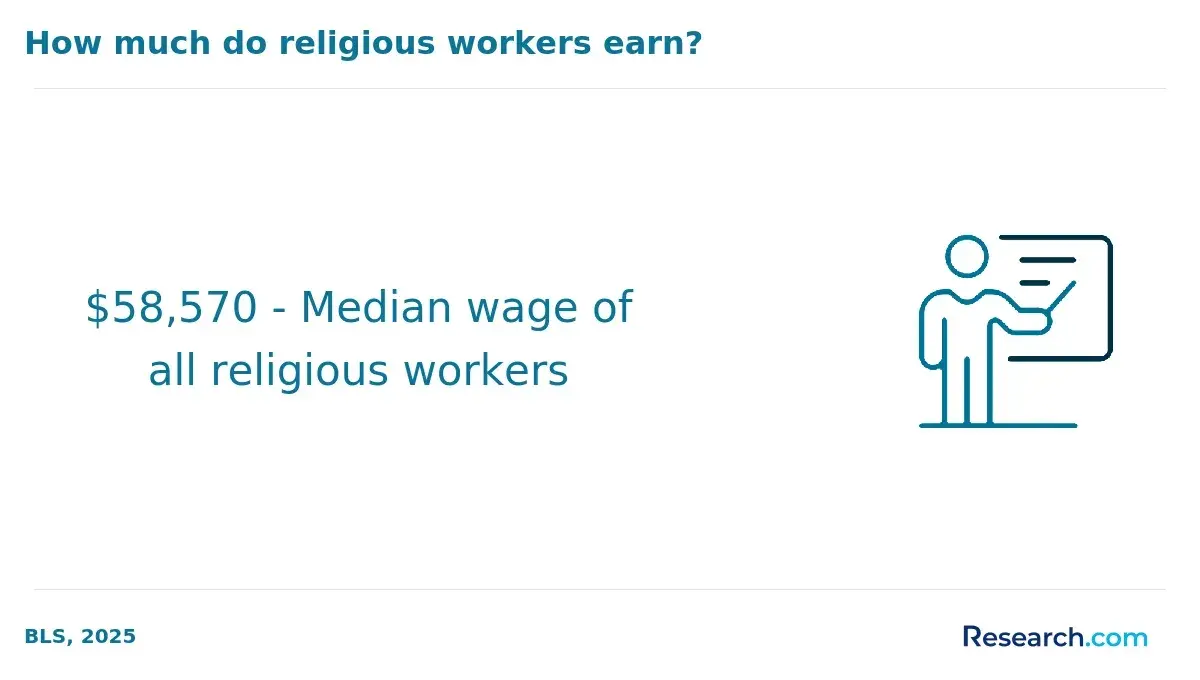
Because these roles differ so much, master’s in theology graduates may encounter compensation ranging from under $20,000 to over $150,000. Some positions do not provide fixed salaries and may instead rely on stipends, donations, or voluntary support.
What are the requirements of an online master’s degree in theology?
Most online theology master’s programs require a bachelor’s degree from an accredited institution. Applicants often come from theology, religious studies, philosophy, humanities, social sciences, education, ministry, or other backgrounds. Some programs accept students from any undergraduate major but may require prerequisite work in Bible, philosophy, church history, or theological method.
Admissions requirements vary by school and by degree type. A ministry-oriented program may ask about church involvement, pastoral recommendations, or vocational calling. A research-focused program may emphasize writing samples, academic preparation, language ability, and faculty fit.
Common admission requirements
- Four-year undergraduate degree/bachelor’s degree in any field of study from a regionally accredited university, with a minimum GPA of 2.7, although university requirements vary
- Official transcripts for all completed undergraduate and graduate coursework
- Professional certification documents, when relevant
- Professional employment documents, when relevant
- TOEFL, TOEIC, or IELTS scores for international students when English proficiency documentation is required
- Related work experience, depending on the program
- Academic preparation in philosophy, which may sometimes be completed as a prerequisite or credit requirement
- Active church membership for programs that require it, with possible waivers for academic or scholarly applicants
Additional application materials
- Application and processing fees
- Statement of Purpose or Personal Goal Statement/Essay
- CV/Resume
- Recommendation letters from an employer, supervisor, pastor, professor, or other approved reference, depending on the program
- GRE or GMAT scores when required or accepted by the institution
For transfer applicants, programs may ask for a cumulative GPA of 2.0 from all prior institutions combined, along with English proficiency documentation when applicable.
What technology do online theology students need?
Students need dependable Internet access, preferably fiber optics or cable, or Wi-Fi that can support live audio and video. A desktop or laptop is strongly recommended for reading, writing, research, video meetings, and long-form assignments. Mobile devices can be useful for communication, but they are not ideal as the primary study tool.
A computer with a dual-core processor and 4 GB of RAM is often treated as a bare minimum, though stronger specifications can make video conferencing, research, document editing, and multitasking much smoother. Students should also have enough local or cloud storage for readings, papers, recorded lectures, and research files.
Common software needs include a web browser, PDF reader, word processor, spreadsheet tool, and presentation software. Many schools provide access to MS Office 365, library databases, citation tools, and sometimes specialized software such as statistical analysis platforms through university licenses or software-as-a-service options.
Courses to Expect in an Online Master’s Degree in Theology
Coursework depends on the school, faith tradition, degree title, and specialization. A Master of Divinity may include more ministry formation and field education, while a Master of Theology or research-focused degree may emphasize advanced scholarship, thesis work, and methodological depth.
| Course Area | What Students Usually Study | Why It Matters |
| Biblical Studies | Major biblical books, historical context, theological themes, interpretation history, and sometimes the Apocrypha. | Builds the textual foundation for preaching, teaching, research, and ministry. |
| Christian Apologetics | Reasoned defenses of Christian doctrine, philosophical arguments, internal critiques, and external challenges. | Helps students explain and evaluate faith claims carefully and respectfully. |
| History of Christianity /Religion/ the Church | Major developments in Christian history, doctrine, traditions, institutions, and practice. | Provides context for current beliefs, denominational differences, and theological debates. |
| Systematic theology | Core doctrines, faith and reason, the nature of God, the authority of Scripture, and doctrinal relationships. | Strengthens doctrinal clarity and theological reasoning. |
| Ministry and Ethics | Pastoral care, church leadership, governance, applied ethics, and contemporary moral issues. | Prepares students for responsible leadership and service. |
| Hermeneutics | Methods of interpreting written texts, especially Scripture and related theological literature. | Trains students to read carefully across language, culture, history, and tradition. |
| Data analysis | Basic and advanced statistics, survey analysis, factor analysis, causal inference testing, research design, and quantitative tools. | Supports thesis work and evidence-based research in ministry, religion, and community studies. |
Possible tracks or concentrations may include Church History, Old Testament Studies, New Testament Studies, Congregational Leadership, Missions, Applied theology, and related areas. Students interested in academic study may also pursue language preparation, research methods, or thesis-based options.
Things to Look for in an Online Master’s Degree in Theology
The best program is not simply the cheapest, fastest, or highest-ranked option. It is the program that fits your theology, vocational goals, academic interests, financial limits, and learning style. A student preparing for pastoral ministry should evaluate different factors than a student preparing for doctoral research, interfaith work, religious education, or nonprofit leadership.
For a broader overview of requirements, salaries, and career options, see Research.com’s guide to a theology degree.
Accreditation and institutional recognition
Accreditation is one of the first filters to use. It helps confirm that a school has been reviewed for academic standards, governance, faculty qualifications, and student support. In theology, students may also need to consider theological school accreditation, institutional accreditation, government recognition, or denominational approval depending on the country and career path.
Faculty background and advising fit
Faculty expertise matters because theology is a mentor-driven field. Look for professors whose scholarship, ministry experience, language skills, research interests, and denominational background match your goals. If you plan to write a thesis, review faculty publications and contact potential advisers before enrolling.
Specializations and customization
Theology includes many subfields, including Christology, Trinitarian theology, Pneumatology, Mariology, Ecclesiology, Sacramental theology, Ecumenism, Interreligious Dialogue, and Eschatology. Students should confirm that the program offers enough electives, tracks, or independent study options in the area they want to pursue.
If your goal involves pastoral counseling, chaplaincy, community leadership, or congregational ministry, ask whether the program includes field experience, supervised practice, ministry placements, or interaction with people from different faith traditions.
Research output and publications
For students considering teaching, writing, or doctoral study, the school’s research culture is important. Review faculty articles, student publications, journals, research centers, and thesis examples. Strong research support can help you choose a better topic, develop an adviser relationship, and produce work that supports your next step.
Relevance of theology in health, society, and public life
Theology remains connected to public questions about ethics, health, suffering, community, death, identity, and meaning. The Oxford Research Encyclopedia of Global Public Health reports that decades of research have associated expressions of faith and spiritual practice with protective effects for physical health, mental health, psychological well-being, morbidity, mortality, and disability across demographic groups, cultures, disease outcomes, and age cohorts, with especially visible effects among older adults.
Questions to ask before applying
- Is the institution accredited or government-recognized in the way my employer, denomination, or future doctoral program expects?
- Does the program match my theological tradition, ministry context, or research interest?
- Will the degree support ordination, chaplaincy, teaching, or licensure-adjacent goals, if those are relevant?
- Are courses asynchronous, synchronous, or blended?
- Are there residencies, retreats, internships, field education, or in-person exams?
- Who will advise my thesis, capstone, or ministry project?
- What is the total cost after fees, books, travel, and expected financial aid?
- What support is available for online students, including library access, writing help, advising, and career services?
2027 Best Online Master’s Degree in Theology Programs
For the 2027 rankings, Research.com reviewed current datasets from credible sources and compared selected programs using factors such as academic ratings, affordability, enrollment rate, reputation, and related quality indicators. Use this list as a starting point, then verify details directly with each institution before applying.
| School | Program | Length | Credits or Units | Accreditation Listed |
| Liberty University | Online Master of Divinity | 2 years | 75 | ATS Commission on Accrediting, USA |
| Fuller Theological Seminary | Online Master of Divinity | as early as 3 years | 120 Quarter Units | WASC Senior College and University Commission (WSCUC), the Association of Theological Schools (ATS), USA |
| Asbury Seminary | Master of Biblical and Theological Foundations | 2 years minimum | 39 credits | Southern Association of Colleges and Schools Commission on Colleges (SACSCOC) / Commission on Accrediting of the Association of Theological Schools in the United States and Canada |
| University of Wales Trinity Saint David | Online Master of Theology | Full-time: 2 Years / Part-time: 4 Years | 90 (30 credits + 60 credits dissertation | The UK government |
| University of Edinburgh | Master of Theology and Religious Studies | 1 year full-time, 2 years part-time | 400 credits | Quality Assurance Agency (QAA), UK |
1. Liberty University
Liberty University’s Online Master of Divinity includes multiple options across its 72-hour and 90+ hour specializations. Featured coursework includes Discipleship Ministries, Expository Teaching and Preaching, Biblical Foundations of Christian Leadership, and Hebrew Language Tools 2. The university also serves military students, including current service members, discharged personnel, retired service members, and spouses.
- Program Length: 2 years
- Tracks/concentrations: 75-hour and 90+hour specializations, including Biblical Languages (90 hours), Professional Chaplaincy Community (93 hours), Professional Chaplaincy Healthcare (93 hours), and Professional Chaplaincy Military (93 hours)
- Cost per Credit: $2,750 Per Semester for 9 to 15 Credits
- Required Credits to Graduate: 75
- Accreditation: ATS Commission on Accrediting, USA
2. Fuller Theological Seminary
Fuller Theological Seminary’s online Master of Divinity has been redesigned so incoming MDiv students begin with shared foundations courses before moving into advanced study. The degree is also offered as a Spanish bilingual program, and the curriculum reflects student diversity through ethnicity-specific course options.
- Program Length: as early as 3 years
- Tracks/concentrations: Asian American Ministry, Biblical Studies, Black Church Studies, Chaplaincy, Intercultural and Urban Ministry, Leadership in Times of Change, Youth, Family, and Culture
- Cost per Credit: $470 per unit
- Required Credits to Graduate: 120 Quarter Units
- Accreditation: WASC Senior College and University Commission (WSCUC), the Association of Theological Schools (ATS), USA
3. Asbury Seminary
Asbury Seminary’s Master of Biblical and Theological Foundations is designed for serving ministry leaders, bi-vocational leaders, nonprofit leaders, laity, and underserved communities. The program uses electives rather than many formal tracks, including options such as Inductive Bible Study. The seminary provides more than 400 scholarships annually to help students reduce debt.
- Program Length: 2 years minimum
- Tracks/concentrations: several electives, including Inductive Bible Study
- Cost per Credit: $692/credit hour
- Required Credits to Graduate: 39 credits
- Accreditation: Southern Association of Colleges and Schools Commission on Colleges (SACSCOC) / Commission on Accrediting of the Association of Theological Schools in the United States and Canada
4. University of Wales Trinity Saint David
University of Wales Trinity Saint David’s Online Master of Theology is connected to a long institutional history. Founded in 1822, UWTSD houses the oldest faculty of theology and Religious Studies in Wales.
The university maintains an active postgraduate research environment in theology, Religion, and Interfaith Studies. Students may participate in local and online research seminars during their semesters of study. Scholarships, bursaries, and other funding options are available for students.
- Program Length: Full-time: 2 Years / Part-time: 4 Years
- Tracks/concentrations: none specified, but students can choose from numerous courses for 120 credit hours of taught courses
- Cost: £10,000 for the whole course (online)
- Required Credits to Graduate: 90 (30 credits + 60 credits dissertation
- Accreditation: The UK government
5. University of Edinburgh (Edinburgh)
University of Edinburgh Master of Theology and Religious Studies may be completed as a Master of Theology by Research (MTh by Research ) or a Master of Science by Research (MscR), with full-time and part-time options. Research areas span many theological and religious studies topics. Students can also connect with the Centre for the Study of Christian Origins, Centre for Theology and Public Issues, and Centre for the Study of World Christianity. The research student body includes people from many countries and from religious and non-religious backgrounds.
- Program Length: 1 year full-time, 2 years part-time
- Tracks/concentrations: Ethics and practical theology, Hebrew and Old testament studies, History of Christianity, Islamic studies and Christian-Muslim relations, New Testament and Christian origins, Religious studies, Science and religion, Systematic theology, World Christianity
- Cost: MTh by Research Theology and Religious Studies 1 Year Full-time Tuition fees Scotland and rest of UK £10,400 / International/EU £27,100; MTh by Research Theology and Religious Studies 2 Years Part-time Tuition fees Scotland and rest of UK £5,200 / International/EU £13,550; MScR Theology and Religious Studies 1 Year Full-time Tuition fees Scotland and rest of UK £10,400 / International/EU £27,100; MScR Theology and Religious Studies 2 Years Part-time Tuition fees Scotland and rest of UK £5,200 / International/EU £13,550
- Required Credits to Graduate: 400 credits
- Accreditation: Quality Assurance Agency (QAA), UK
What are the practical skills you can gain from an online master’s degree in theology?
A theology master’s degree develops more than religious knowledge. Students often strengthen abilities that apply to ministry, education, nonprofit work, public service, research, writing, and human-centered leadership.
- Research and interpretation: Students learn to evaluate sacred texts, theological arguments, historical sources, and scholarly debates with care.
- Critical and logical thinking: Theology requires students to compare claims, identify assumptions, build arguments, and reason through complex questions.
- Writing and presentation: Graduate coursework often involves sermons, papers, presentations, exegetical projects, ministry plans, and research proposals.
- Listening and pastoral sensitivity: Courses in ministry, ethics, and care can strengthen empathy, trustworthiness, active listening, and conflict awareness.
- Cross-cultural understanding: Students may study different traditions, communities, cultures, and worldviews, which can support interfaith dialogue and community work.
- Data and research design: Programs that include data analysis prepare students to conduct surveys, interpret findings, and support evidence-informed ministry or academic research.
How does the cost-effectiveness of an online theology degree compare to other online master’s programs?
Cost-effectiveness depends on total cost, financial aid, career use, and personal mission. Theology degrees can be financially sensible when students use them for roles they already hold, qualify for church or employer support, avoid relocation, and choose a program with a realistic tuition structure. They can be less cost-effective if the student borrows heavily for a role with limited compensation or enrolls in a program that does not meet required ministry, teaching, or chaplaincy standards.
Students comparing theology with other fields should examine tuition, completion time, credential requirements, and expected career outcomes. For comparison across education-related graduate options, Research.com’s guide to the cheapest online master's in education can provide additional affordability context.
What are the practical applications of theology studies in community outreach?
Theology can become highly practical when students connect doctrine, ethics, and pastoral care to community needs. Graduates may lead programs, support vulnerable groups, organize service initiatives, or help communities respond to grief, poverty, conflict, and moral questions.
- Community leadership: Theology graduates may coordinate church programs, outreach events, service projects, and local partnerships.
- Support and care: Training in pastoral care can help graduates provide spiritual and emotional support in hospitals, schools, nonprofits, hospices, and congregations.
- Faith-informed advocacy: Theological ethics can shape work on poverty, inequality, mental health, human dignity, and community development.
- Field-based learning: Programs with practicum or ministry placements let students connect academic study with direct community engagement. Working adults seeking flexible options may also compare the most affordable online universities in USA.
- Youth and family programs: Graduates may mentor young people, lead family ministries, support moral education, or develop inclusive community initiatives.
How can online theology programs enhance networking and community building?
Online theology programs can build community through cohort models, live seminars, discussion forums, faculty meetings, virtual chapel, peer groups, alumni networks, and collaborative projects. Strong programs do not leave students to study alone; they create structured opportunities for conversation, mentorship, and shared reflection.
Networking is especially useful for students pursuing ministry, education, nonprofit leadership, interfaith work, or further academic study. Students who want to combine theology with teaching may also find useful comparisons in Research.com’s guide to the cheapest online elementary education programs.
How do accreditation and institutional quality measures influence online theology education?
Accreditation and institutional quality measures help students avoid weak programs and protect the value of their credential. A reputable online theology program should provide qualified faculty, coherent curriculum, reliable student support, library resources, advising, clear policies, and transparent learning outcomes.
Institutional quality can also affect future options. Students who later pursue doctoral study, such as education-focused pathways including 2 year Ed.D programs online, should confirm that their master’s degree will be accepted by the institutions they may apply to.
What challenges do online theology students face?
Online theology students often face challenges with time management, isolation, delayed feedback, technology issues, and access to specialized theological resources. Students who are balancing ministry, family, and employment may underestimate the weekly reading and writing load.
| Common Mistake | Why It Creates Problems | Better Approach |
| Choosing a program without checking accreditation | The degree may not be accepted by employers, churches, or doctoral programs. | Verify institutional recognition and any theological accreditation before applying. |
| Looking only at tuition | Fees, books, travel, and lost work time can change total cost. | Calculate full net cost after aid and required expenses. |
| Assuming online means easier | Graduate theology involves heavy reading, writing, discussion, and research. | Block weekly study time before the term begins. |
| Ignoring denominational requirements | Some ministry roles require specific formation, approval, or ordination pathways. | Ask your church body or employer which degrees they recognize. |
| Overlooking library access | Theological research depends on journals, databases, archives, and primary sources. | Confirm online access to research databases, librarians, and interlibrary loan. |
Students who want stronger information-management skills may also explore related resources such as affordable online MLIS programs.
Can theology studies foster child development and community well-being?
Theology can contribute to child development and community well-being when it is applied carefully through ethical education, mentoring, youth ministry, family support, and community programs. Faith-based frameworks can encourage empathy, responsibility, resilience, service, and moral reflection when they are delivered in age-appropriate and inclusive ways.
Students interested in this intersection may examine theology alongside education, developmental psychology, counseling, or social work. Research.com’s guide to a child development master's degree online can help readers compare a more development-focused graduate path.
What are the interdisciplinary opportunities in theology studies?
Theology is not limited to church employment. It can intersect with several fields where ethical reasoning, cultural literacy, communication, and care for communities matter.
- Theology and psychology: Pastoral counseling and spiritual care combine theological insight with human support, though licensed counseling usually requires separate credentials.
- Theology and education: Graduates may teach in religious schools, design faith-based curricula, or contribute to moral and spiritual formation programs.
- Theology and business ethics: Theological ethics can inform corporate responsibility, leadership, workplace values, and organizational decision-making.
- Theology, sociology, and public policy: Students interested in justice, poverty, migration, religion, and public life may combine theological study with advocacy or research.
- Theology and law, history, or political science: Students comparing theology with the most popular college majors may find useful overlap in diplomacy, legal ethics, cultural preservation, and public service.
Interdisciplinary planning works best when students identify the second field early and choose electives, internships, research topics, and mentors that support the combined path.
What are the career pathways after completing an online master’s degree in theology?
Career paths after an online theology master’s degree vary by degree type, denomination, experience, location, and additional credentials. Some graduates become pastors, ministers, chaplains, missionaries, religious educators, or theological researchers. Others move into nonprofit leadership, community development, publishing, public service, or faith-based counseling-adjacent support roles.
Students should evaluate program outcomes before enrolling. Ask about alumni employment, doctoral placements, ordination pathways, chaplaincy preparation, internships, and career services. If your priority is a highly accessible graduate credential rather than a specific theology path, you may also compare easiest masters degrees to understand alternative options.
What role does library science play in online theology education?
Library science supports theology by improving how students find, organize, evaluate, cite, and preserve information. Online theology students often work with digital archives, biblical language tools, theological journals, historical documents, sermons, denominational records, and rare texts available through databases.
Strong information literacy helps students produce better exegesis, avoid weak sources, manage citations, and conduct more reliable research. Students who enjoy theological archives, digital collections, and research systems may also explore the top masters in library science online program.
How do theology studies intersect with digital research and information management?
Modern theology students increasingly use digital databases, online archives, citation managers, scanned manuscripts, research repositories, survey tools, and information-management systems. These tools help students analyze texts, organize sources, compare interpretations, and conduct interdisciplinary research.
The overlap with library and information science is especially clear for students interested in archives, theological librarianship, digital humanities, publishing, or research support. Readers considering that direction can review What can I do with a masters in library science?.
The Future of Theology Studies
Theology remains relevant because religion continues to influence identity, culture, ethics, politics, family life, health decisions, education, and community institutions. Although religious disaffiliation has increased in some places, religion remains a major global force.
Pew Research Center projections indicate that by 2050, Islam will be the fastest-growing religion worldwide and will equal the number of Christians.
These shifts make theological education important not only for ministry, but also for interfaith dialogue, public ethics, community leadership, and cross-cultural understanding. Theology programs that include world religions, atheism, agnosticism, history, ethics, and comparative study can help graduates engage a changing religious landscape with more depth and care.
FAQ
Can you get a master’s degree in theology completely online?
Yes. Many institutions offer fully online theology master’s programs. Some, however, may require campus intensives, in-person exams, supervised ministry placements, or short residencies, so students should confirm format requirements before enrolling.
Will employers take my online theology degree seriously?
They generally will when the degree comes from an accredited, reputable institution and matches the role’s requirements. Employers may also evaluate your experience, references, research project, ministry background, and fit with their organization.
Are online theology degrees recognized globally?
They can be, but recognition depends on the institution, accreditation, country, employer, denomination, and receiving university. Students planning international work or further study should verify recognition before applying.
What is the main difference between online and traditional theology master’s programs?
The delivery format is the main difference. Online programs offer remote coursework and more scheduling flexibility, while traditional programs provide in-person community and campus-based formation. Curriculum quality depends on the school, not just the format.
How much does an online master’s degree in theology cost?
Costs vary by institution and program length. The tuition data cited earlier reports median in-state public tuition of $7,666 and median out-of-state private tuition of $26,678. Some summaries also list costs ranging from $8,073 for in-state public tuition to $25,140 for out-of-state private tuition. Students should request a full cost estimate from each school.
What courses are common in an online theology master’s program?
Common areas include Biblical Studies, Christian Apologetics, History of Christianity /Religion/ the Church, Systematic theology, Ministry and Ethics, Hermeneutics, and Data analysis. Specific courses depend on the school and concentration.
Does a theology degree qualify me to become a counselor?
Not by itself in most cases. Theology programs may teach pastoral care and counseling skills, but licensed counseling usually requires a separate counseling, psychology, or social work degree and state licensure.
What should I check before choosing a program?
Verify accreditation, denominational fit, faculty expertise, specialization options, total cost, online support, fieldwork requirements, thesis options, and whether the degree meets the requirements for your intended career.
References
- Association of Theological Schools. (2025). 2025 - 2026 Annual Data Tables. https://www.ats.edu/files/galleries/2025-26-annual-data-tables.pdf
- Hackett, C., Stonawski,, M., Tong, Y., Kramer, S., Shi, A., & Fahmy, D. (2025, June 9). How the Global Religious Landscape Changed From 2010 to 2020. Pew Research Center. https://www.pewresearch.org/religion/2025/06/09/how-the-global-religious-landscape-changed-from-2010-to-2020
- Resume Genius. (2025). 2025 Gen Z Career Prospects Report: What They Really Think About Their Future. https://resumegenius.com/blog/career-advice/gen-z-career-prospects
- Thielicke, H. (n.d.). Theology. Encyclopedia Britannica. Retrieved March 2026, from https://www.britannica.com/topic/theology
- U.S. Bureau of Labor Statistics. (2025, August 28). Occupational projections, 2024–2034, and worker characteristics. Retrieved March 2026, from https://www.bls.gov/emp/tables/occupational-projections-and-characteristics.htm
Key Insights
- Choose by goal, not only by ranking. A student preparing for ordination, chaplaincy, doctoral study, teaching, or nonprofit leadership may need different coursework, accreditation, fieldwork, and faculty support.
- Accreditation is non-negotiable. Before enrolling, confirm that the institution and program will be accepted by your employer, denomination, licensing-related pathway, or future university.
- Online can be academically strong. A well-designed online theology program can offer rigorous readings, faculty feedback, research support, and meaningful community, but students must be self-disciplined.
- Total cost matters more than tuition. Compare tuition, credits, fees, books, travel, technology, financial aid, and the income realities of your intended role.
- Theology skills are transferable. Graduates develop research, interpretation, writing, public speaking, ethical reasoning, listening, and cross-cultural communication skills.
- Career outcomes vary widely. Theology graduates may work in ministry, education, chaplaincy, nonprofits, publishing, community development, or academia, but salaries and requirements differ significantly by role.
- The best program is the one that fits your tradition and future path. Review faculty expertise, specializations, thesis options, ministry placements, and student support before committing.
Other Things You Should Know About Online Theology Masters Programs
Admission requirements for an online master’s degree in theology typically include a bachelor's degree from an accredited institution, letters of recommendation, a statement of purpose, and possibly a resume. Some programs might also require a minimum GPA and standardized test scores, though this can vary by institution.
Most online Master of Theology programs require 36 to 48 credit hours for graduation. Full-time students often finish in 2 to 3 years, while part-time study usually takes longer. Programs may also require a thesis, capstone project, or comprehensive exam before the degree is awarded.
The cost of an online master's degree in theology in 2027 varies widely depending on the institution. Some programs may cost as little as $10,000, while others, especially those offered by prestigious universities, can exceed $40,000. Factors like residency requirements, additional fees, and financial aid availability also impact the total expense.
Yes, many online theology master's programs in 2027 include internship or practicum components. These practical experiences typically involve 100-300 hours of supervised work in a religious or academic setting, allowing students to apply theological concepts in real-world scenarios and gain valuable experience.


