
2027 Best Online Master’s in Library Science Programs

Co-Founder and Chief Data Scientist
An online master’s in library science is designed for people who want to manage information, organize collections, support research, preserve records, and help users access trustworthy resources in libraries and information-centered organizations. The degree is often called an MLS, MLIS, or MSLS, and it can prepare graduates for roles in public libraries, school libraries, academic libraries, archives, museums, government agencies, law libraries, healthcare information settings, and private-sector knowledge management teams.
This guide is for working adults, career changers, teachers considering school librarian roles, and current library workers who need a graduate credential to move into professional or leadership positions. You will learn how online master’s in library science programs work, what they cost, how long they take, which schools are included in our list, what accreditation means, and how to decide whether this degree fits your career goals.
Quick answer: Is an online master’s in library science worth it?
An online master’s in library science can be worth it if your target job requires a graduate library science credential, especially in public, academic, school, government, archival, or specialized library settings. The degree is most valuable when the program is accredited, aligned with your preferred career path, affordable enough to support a reasonable return on investment, and flexible enough for your work schedule.
- Graduates may pursue roles such as librarian, school librarian, archivist, taxonomist, digital archivist, competitive intelligence analyst, data curation specialist, information specialist, and digital asset manager.
- The median annual salary for librarians and library media specialists is $64,320.
- Online programs can offer more scheduling flexibility than campus-based programs, but students should still compare tuition, fees, fieldwork requirements, accreditation, and state licensure rules before enrolling.
What is an online master’s in library science?
An online master’s in library science is a graduate program focused on how information is collected, described, preserved, retrieved, analyzed, and delivered to users. Students study library systems, cataloging, classification, metadata, research support, digital archives, information policy, library leadership, and user services. Many programs also include electives or concentrations that help students prepare for school libraries, archives, public librarianship, academic libraries, legal information, medical librarianship, or digital curation.
Although the word “library” appears in the degree name, the training is broader than shelving books or managing physical collections. Modern library and information science work often involves digital databases, licensed information products, privacy policies, community programming, data organization, open educational resources, accessibility, and technology-supported research services.
| Question | Direct answer |
| Typical degree names | MLS, MLIS, MSLS, Master of Library and Information Science, Master of Science in Information Sciences, or M.A. in Library and Information Science |
| Common length | Most online master’s in library science programs can be completed in two years, though part-time formats may take longer. |
| Common credit load | Many programs require around 36 credits, though some use quarter credits or higher credit totals. |
| Best fit | Students who want professional library, archive, records, research support, information organization, or school library roles |
| Key quality signal | Accreditation, especially American Library Association accreditation for many professional library roles |
What can I expect from an online master’s in library science?
Online library science master’s programs combine theory, applied information work, digital tools, and professional practice. A strong program should help students understand both the human side of information access and the technical systems that support discovery, preservation, and retrieval.
- Students usually complete a postgraduate curriculum that builds advanced skills in research support, information organization, data management, documentation, and analysis.
- Many programs include applied learning through practicums, internships, capstones, fieldwork, digital projects, or portfolio-based assignments.
- Graduates may move into library roles as well as related fields such as digital archiving, government records analysis, information management, knowledge services, and data curation.
- The strongest programs connect traditional library science foundations with digital literacy, metadata, user experience, privacy, access, and emerging information technologies.
Where can I work with an online master’s in library science?
Graduates can work in traditional libraries and in organizations that depend on accurate, searchable, well-governed information. The best work setting depends on your specialization, prior experience, state requirements, and whether you want a public-service, academic, technical, corporate, or archival role.
| Work setting | Examples | Why an MLS or MLIS may help |
| Traditional library environments | Public libraries, school libraries, academic libraries, special libraries | Prepares graduates for patron services, collection development, information literacy, cataloging, programming, and library operations. |
| Cultural and records-focused organizations | Museums, archives, cultural institutions, nonprofit organizations, government agencies | Supports work in preservation, records management, metadata, archival appraisal, access policies, and digital collections. |
| Technology and information-driven employers | IT companies, data science firms, knowledge management companies, publishing organizations, media companies | Builds transferable skills in taxonomy, information architecture, database searching, content organization, and digital asset management. |
| Independent or advisory work | Consulting companies, freelance projects, private practice consulting | Can support consulting in records organization, research systems, digital collections, information governance, or knowledge management. |
How much can I make with a master’s in library science?
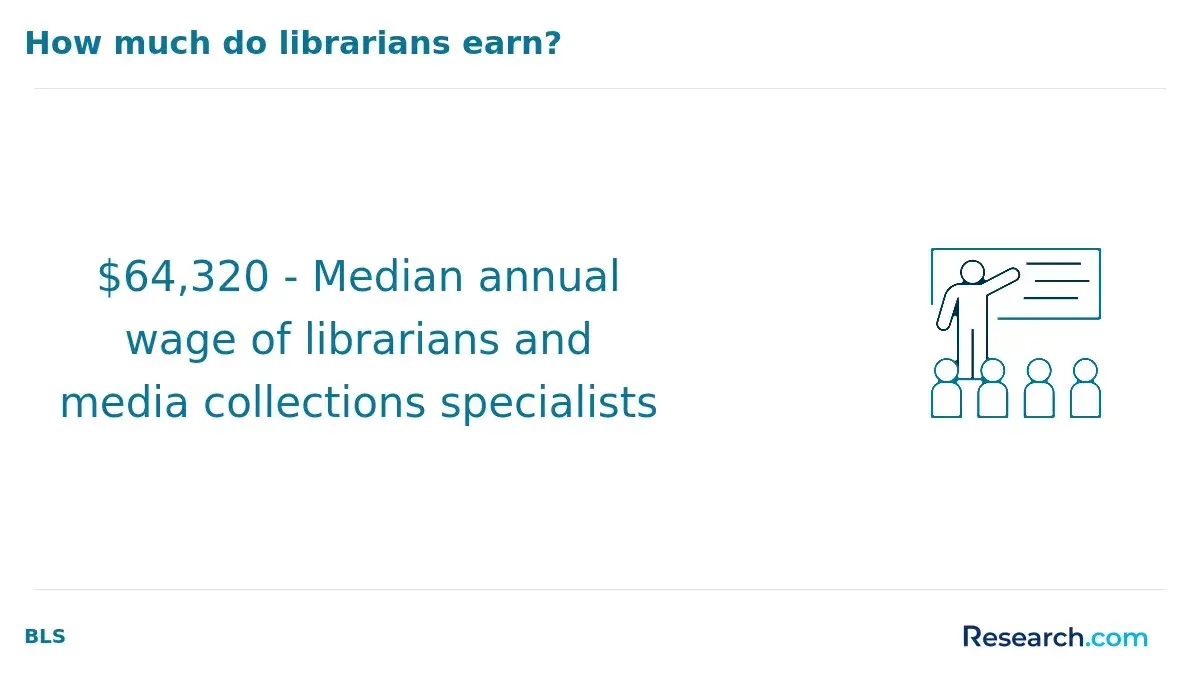
According to data from the United States Bureau of Labor Statistics, librarians and library media specialists earn a median annual salary of $64,320, and the top 10% earn more than $100,880. For comparison, the collective average across all professions in the United States is $49,500.
Salary outcomes vary by employer, location, specialization, years of experience, union or civil-service rules, leadership responsibility, and whether the role is in a school, public library, academic library, government agency, archive, or private organization. A master’s degree can qualify graduates for roles that require advanced training, but it does not guarantee a specific salary or job title.
- Best Online Master’s in Library Science Programs for 2027
- How long does it take to complete an online master’s in library science?
- How does an online master’s in library science compare with a traditional program?
- What is the average cost of an online master’s in library science?
- What financial aid options are available for students pursuing online library science master’s programs?
- What are the prerequisites for enrolling in online library science master’s programs?
- What courses are typically found in an online master’s in library science?
- What types of specializations are available in online library science master’s programs?
- What financial planning strategies should students consider for an online master’s in library science?
- How does one choose the best online master’s in library science?
- How do online master’s programs enhance career support and professional networking?
- Can an online Master’s in Library Science propel advanced academic and leadership trajectories?
- Accreditation and Program Quality
- How do online master’s in library science programs foster global collaboration and diversity?
- What career paths are available for graduates of online library science master’s programs?
- How do online master’s in library science programs integrate emerging digital technologies?
- How do online master’s in library science programs address digital security and privacy challenges?
- What is the job market for graduates with an online master’s in library science?
- How does competency-based education benefit online library science programs?
- How do online master’s in library science programs cultivate leadership and research innovation?
- How do online master’s in library science programs promote diversity, equity, and inclusion?
- How do online master's in library science programs incorporate real-world experience?
- How do library science graduates leverage skills in non-traditional fields?
Best Online Master’s in Library Science Programs for 2027
How we evaluated schools
Because a graduate library science degree requires a substantial investment of time and money, our evaluation emphasizes transparency, program quality, affordability, credential value, and student decision-making. Our research team reviewed publicly available information from sources such as the IPEDS database, Peterson’s Data, the College Scorecard, and the National Center for Education Statistics. You can review our broader ranking methodology for more detail on how Research.com approaches school and program analysis.
1. Louisiana State University Online Master of Library and Information Science
Louisiana State University offers an online Master of Library and Information Science that is the only ALA-accredited program in the state. The program has maintained accreditation for more than 90 years since 1931. Its curriculum is built for students who want broad preparation in library and information science, with opportunities to add a graduate certificate while completing the MLIS.
- Program length: 3 years
- Tracks/concentrations: Information & Society; Management of Information Organizations; Seminar in Archival Appraisal
- Total cost: $19,980
- Required credits to graduate: 36
- Accreditation: American Library Association (ALA)
2. University of North Texas Online Master of Science, Major in Library Science
The University of North Texas offers an ALA-accredited Master of Science with a major in Library Science. The program is structured for students preparing for library and information roles in multiple settings, and it gives learners concentration options that can support specific interests such as archives, organization of information, or law librarianship.
Graduates may pursue positions such as reference librarian, youth and children’s librarian, archivist, or special collections librarian, depending on their coursework, experience, and local employer requirements.
- Program length: 3 years
- Tracks/concentrations: Archival Studies; Information Organization; Law Librarianship and Legal Informatics
- Total cost: $16,500
- Required credits to graduate: 36
- Accreditation: ALA
3. University of Washington Online Master of Library and Information Science
The University of Washington’s online MLIS includes core courses, electives, and a final degree project. The core sequence introduces major areas of the field, including information organization, technology, information policy, research, and management, while electives allow students to pursue advanced topics that match their professional goals.
Students can use electives for fieldwork, independent study, advanced LIS topics, or coursework connected to another discipline. This structure may appeal to learners who want a customizable program with a significant project-based component.
- Program length: 3 years (part-time)
- Tracks/concentrations: Design Methods for Librarianship; Concepts, Services, and Issues for Information Professionals; Management of Information Organizations
- Total cost: $56,007
- Required credits to graduate: 63 quarter credits
- Accreditation: ALA
4. Kent State University Online Master of Library and Information Science
Kent State University’s online MLIS prepares students for professional work in libraries, archives, museums, and other information organizations. The program may be a good fit for students who want a recognized online option with pathways connected to archival studies or medical librarianship.
- Program length: 3 years
- Tracks/concentrations: Archival Studies; Medical Librarianship
- Total cost: $26,800
- Required credits to graduate: 37
- Accreditation: ALA
5. Sam Houston State University Master of Library Science
Sam Houston State University’s Master of Library Science is focused on school librarianship. Coursework includes collection development, children’s and young adult literature, school library management, information and digital literacies, digital tools, reference services, and cataloging techniques.
Graduates may be eligible to take the School Librarian Certification exam in Texas if they also meet additional requirements, including holding a valid teaching certificate, having two years of teaching experience, and completing the coursework required by the Texas Administrative Code for the School Librarian Certificate.
- Program length: 3 years
- Tracks/concentrations: School Library Administration; Literature For Children; Collection Development
- Total cost per year: $5751.20
- Required credits to graduate: 36
- Accreditation: Southern Association of Colleges and Schools Commission on Colleges
6. San Jose State University Master of Library and Information Science
San Jose State University’s Master of Library and Information Science provides a broad, generalist education across the major areas of library and information science. The program supports personalized course planning and allows students to shape their studies around professional interests. Students complete 43 credit hours.
- Program length: 2 years
- Tracks/concentrations: Not specified
- Total cost: $22,575
- Required credits to graduate: 43
- Accreditation: ALA
7. University of Maryland-College Park Master of Library and Information Science
The University of Maryland-College Park offers an MLIS with two concentration options: the Thesis Track and the Field Study Track. Both require 36 credits. The thesis option places more emphasis on the capstone, while the field study option allows more room for applied and elective work. Elective areas include Archives and Digital Curation, Intelligence and Analytics, and Youth Experience.
- Program length: 2 years
- Tracks/concentrations: Thesis Track; Field Study Track
- Total cost: $34,200 (in-state); $69,500 (out-of-state)
- Required credits to graduate: 36
- Accreditation: ALA
8. University of Missouri Master of Library and Information Science
The University of Missouri’s MLIS highlights areas such as professional history, collection management, digital humanities, and IT systems. The 39-credit generalist curriculum uses both synchronous and asynchronous learning. Students also complete a two- to three-hour practicum that connects classroom learning with professional application.
- Program length: 2 to 4 years
- Tracks/concentrations: None
- Total cost: $20,865
- Required credits to graduate: 39
- Accreditation: ALA
9. University of South Florida M.A. Library and Information Science
The University of South Florida’s M.A. in Library and Information Science provides a generalist curriculum with foundational coursework across the field. Students can personalize the degree through 18 credit hours of electives. The program’s fully asynchronous format may be useful for students who need to complete coursework around work or family obligations.
- Program length: 2 years
- Tracks/concentrations: None
- Total cost: $27,764 (in-state), $35,787 (out-of-state)
- Required credits to graduate: 39
- Accreditation: ALA
10. University of Tennessee-Knoxville Master of Science in Information Sciences
The University of Tennessee-Knoxville offers a 36-credit Master of Science in Information Sciences with a broad information science curriculum. Core courses include Information Technology Foundations, Information Organization and Retrieval, and Information Concepts and Foundations. After the core sequence, students work with faculty to shape coursework around their goals. The program is also designed to support students seeking school library media licensure.
- Program length: 2 years
- Tracks/concentrations: None
- Cost per credit: $751 (in-state); $1,011 (out-of-state)
- Required credits to graduate: 36
- Accreditation: ALA
Key metrics for online master’s in library science students
- The average annual salary of an online master of library science graduate is $65,000.
- Most online master’s in library science programs can be completed in two years.
- 54% of librarians in the United States hold a master’s degree or higher.
- There were around 142,100 librarians and media collection specialists in the U.S.
- 31% of public librarian positions require a master's in library science.
- The employment of librarians and library media specialists through 2034 is expected to increase by 1.7%.
How long does it take to complete an online master’s in library science?
Most master’s in library science programs can be completed in two years, according to Indeed.com. Part-time online programs may take longer because students often take fewer courses per term. Accelerated options may be completed in a year or less, but they usually require a heavier course load and may be difficult for students working full time.
Program length also depends on transfer credit policies, practicum requirements, capstone timing, course availability, and whether the school uses semester credits or quarter credits. Students pursuing school librarian certification or licensure should also confirm whether additional teaching experience, exams, or state-specific coursework will extend the timeline.
| Enrollment pace | Typical fit | Trade-off |
| Full-time | Students who can prioritize school and want to finish faster | Higher weekly workload and less flexibility for full-time employment |
| Part-time | Working adults, caregivers, and students paying as they go | Longer time to graduation, but easier to balance with income and responsibilities |
| Accelerated | Students with strong preparation, time availability, and clear career goals | Can reduce time in school but may increase stress and limit room for internships or networking |
How does an online master’s in library science compare with a traditional program?
Online and campus-based library science programs can lead to similar academic outcomes when they are accredited, well-supported, and taught by qualified faculty. The right format depends on how you learn best, whether you need local fieldwork, how much schedule flexibility you require, and whether you value in-person campus access. Students comparing formats may find the same decision factors useful when reviewing other graduate options, such as online masters psychology programs.
| Factor | Online master’s in library science | Campus-based master’s in library science |
| Schedule | Often more flexible, with asynchronous or hybrid coursework available in many programs | Usually follows a set class schedule with in-person meeting times |
| Networking | Requires intentional participation in online discussions, virtual events, internships, and professional associations | May offer easier access to campus events, faculty offices, and local peer connections |
| Field experience | May allow students to complete internships or practicums near where they live | May be tied more closely to campus libraries or local partner sites |
| Cost considerations | May reduce relocation and commuting costs, though online fees and technology costs still matter | May involve transportation, housing, campus fees, and lost work flexibility |
| Best for | Working adults, remote learners, career changers, and students far from an MLS-granting campus | Students who prefer face-to-face learning, campus resources, and a structured weekly routine |
What is the average cost of an online master’s in library science?
According to NCES, the average annual tuition cost of a graduate degree in the US is $20,513. Public institutions average $12,596, while private institutions average $28,017. The average cost of a graduate degree in library science is $24,479.
Online programs are not automatically cheaper. They may reduce commuting, relocation, and campus living expenses, but students should still budget for tuition, fees, books, technology, software, proctoring, graduation fees, travel for any required residencies, and unpaid fieldwork hours. A low sticker price may not be the best value if the program lacks accreditation, career support, or courses aligned with your intended role.
What financial aid options are available for students pursuing online library science master’s programs?
Students considering an online library science master’s should compare aid sources before choosing a program. As with other graduate credentials, including an MBA in IT, the final cost depends on tuition, aid eligibility, employer support, enrollment pace, and borrowing decisions.
- Federal aid: Students should complete the Free Application for Federal Student Aid, commonly known as the FAFSA, to determine eligibility for federal financial aid options, including loans and other forms of assistance.
- Employer tuition support: Working students should ask their human resources department whether the employer offers tuition reimbursement, professional development funds, or education benefits tied to continued employment.
- Assistantships and work-study options: Some schools offer paid or tuition-reducing roles in libraries, research units, or academic departments. These can lower costs while adding relevant experience.
- Scholarships from library organizations: Professional associations may offer scholarships for students entering the field or preparing for specialized roles.
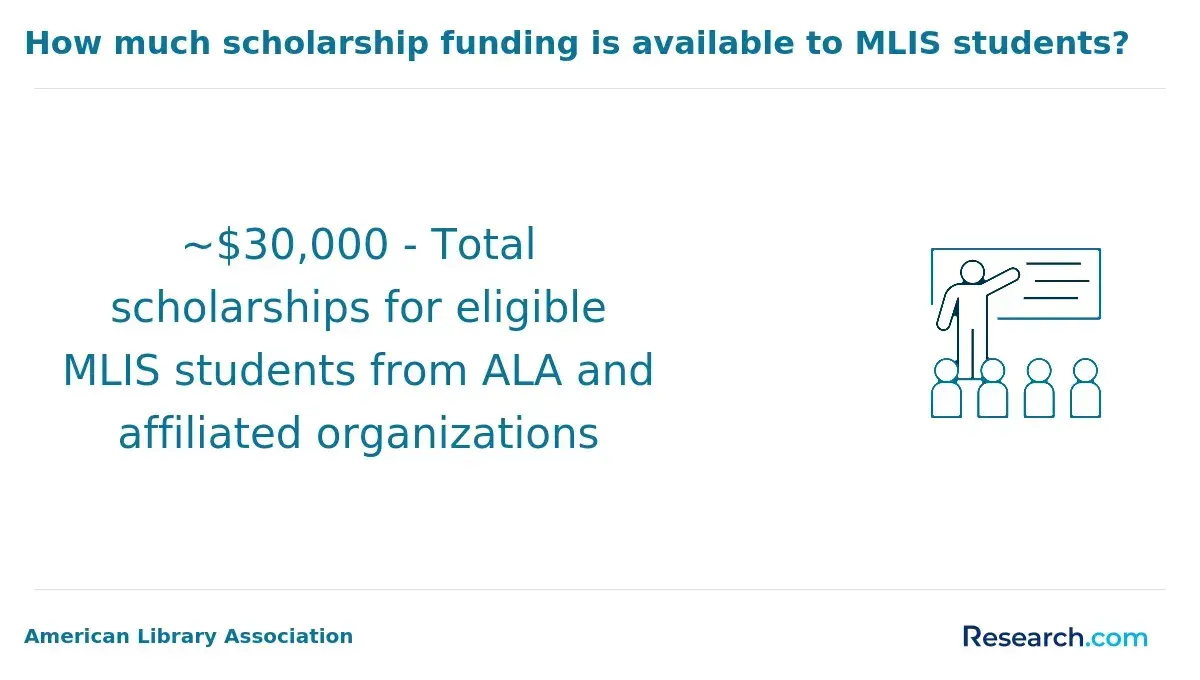
Students in graduate library science programs can also review scholarships from university libraries and professional library associations. The American Library Association’s Spectrum Scholarship Program supports minority students pursuing a graduate degree in library science and provides a one-time scholarship of $5,000 divided over two semesters.
Specialized associations may also support students entering particular areas of librarianship. For example, the American Association of Law Libraries awards scholarships each year to individuals preparing for careers in law librarianship.
What are the prerequisites for enrolling in online library science master’s programs?
Admission requirements vary by school, but most online master’s in library science programs expect applicants to hold a bachelor’s degree from an accredited institution. Applicants should review each program’s admission checklist carefully because requirements may differ for school librarianship, licensure-focused pathways, international students, or applicants with lower undergraduate GPAs. Students comparing information-centered graduate options may also want to review related fields such as health informatics masters programs.
- Bachelor’s degree: A completed undergraduate degree is usually the baseline requirement for graduate admission.
- Application form and fee: Schools generally require an online application, transcripts, and any required fee.
- Statement of purpose: Many programs ask applicants to explain their professional goals, interest in library and information science, and fit with the program.
- Recommendations: Faculty, supervisors, or professional contacts may be asked to describe the applicant’s readiness for graduate study.
- Technology readiness: Online learners need reliable internet access, a computer that meets program specifications, and comfort using learning management systems, video conferencing, online discussion boards, and digital submission tools.
- Additional licensure requirements: Students pursuing school librarian roles should confirm teaching certificate, work experience, examination, and state approval requirements before enrolling.
What courses are typically found in an online master’s in library science?
Course titles vary, but most online MLS and MLIS programs cover information organization, cataloging, reference services, research methods, digital librarianship, library management, collection development, ethics, access, and information technology. Students should compare course catalogs closely because programs with similar degree names may prepare students for different work settings.
| Course area | What students learn | Why it matters professionally |
| Information organization and retrieval | Classification, indexing, metadata, database searching, search behavior, and retrieval systems | Supports cataloging, discovery systems, reference work, taxonomy, and digital collection access. |
| Collection development | Selection policies, budgeting, resource evaluation, collection assessment, and print and digital resource management | Helps librarians build useful, current, mission-aligned collections. According to Zippia, this course appears on 6.6% of librarian resumes. |
| Library management | Planning, budgeting, staffing, policy, outreach, marketing, and organizational leadership | Prepares graduates for supervisory, department head, branch manager, and director-track roles. |
| Digital librarianship | Digital collections, preservation, repository tools, metadata, access platforms, and digital rights considerations | Builds skills for archives, institutional repositories, digital asset management, and online research services. |
| Research methods | Evidence evaluation, user studies, assessment, data interpretation, and applied research design | Useful for academic libraries, program assessment, grant writing, policy work, and doctoral preparation. |
What types of specializations are available in online library science master’s programs?
Library and information science connects to several professional environments, so specializations can strongly influence job readiness. Students should choose a concentration based on target roles rather than selecting the broadest or most familiar option. Those considering school or youth services may also want to explore broader education career options.
- Archives and records management: Focuses on appraisal, preservation, access, records lifecycles, archival description, and long-term stewardship.
- Digital libraries: Covers the creation, organization, preservation, and user access of digital collections.
- Information systems and technology: Examines library systems, digital information tools, database management, and technology-supported services.
- Academic librarianship: Prepares students for research support, information literacy instruction, scholarly communication, and academic collections.
- Public librarianship: Emphasizes outreach, community programming, public service, collection access, and local engagement.
- Youth services and literature: Covers children’s literature, teen services, literacy programming, family outreach, and age-appropriate collections.
- Health informatics: Connects library science with healthcare information resources, medical libraries, and health information systems.
What financial planning strategies should students consider for an online master’s in library science?
Financial planning should start before applications are submitted. First, identify your target roles and determine whether they require an ALA-accredited program, school librarian certification, or a specific state-approved pathway. Then compare only the programs that meet those requirements. Students who are also evaluating education-related careers may find cost-comparison strategies in resources such as cheapest teaching degree online guides useful when thinking about affordability and credential fit.
- Calculate total program cost, not just tuition: Include fees, books, technology, travel, unpaid fieldwork, graduation costs, and interest if you plan to borrow.
- Compare cost against likely roles: A higher-cost program may make sense if it offers a specialization, licensure pathway, network, or practicum access that directly supports your goal. If not, a lower-cost accredited program may be the stronger choice.
- Ask about employer reimbursement early: Some employers require preapproval, minimum grades, or continued employment after reimbursement.
- Consider part-time enrollment: Part-time study can allow students to keep income and benefits while reducing the need for loans.
- Use library resources strategically: Digital texts, interlibrary loan, academic databases, and public library services can reduce out-of-pocket learning costs.
- Build a small emergency fund: Online students can still face unexpected expenses, including computer repairs, software needs, health issues, or schedule disruptions.
How does one choose the best online master’s in library science?
The best online master’s in library science is not automatically the cheapest, fastest, or highest-ranked program. It is the program that meets professional requirements for your intended job, fits your schedule, offers relevant coursework and field experience, and keeps your debt manageable.
| Decision factor | What to check | Why it matters |
| Accreditation | Whether the program is ALA-accredited or otherwise accepted for your target role | Many employers use accreditation as a quality and eligibility screen. |
| Career alignment | Courses, concentrations, certificates, and fieldwork tied to your goal | A student pursuing archives needs different preparation than a student pursuing school librarianship. |
| Licensure or certification | State rules for school librarian or library media specialist roles | Online programs may not meet every state’s requirements. |
| Format | Asynchronous, synchronous, hybrid, cohort-based, or self-paced structure | The wrong format can make an otherwise strong program difficult to complete. |
| Practical experience | Internships, practicums, capstones, field studies, portfolios, or local placements | Applied work helps students build resumes, references, and confidence. |
| Total cost | Tuition, fees, aid, loans, employer support, and time away from work | ROI depends on the full cost of attendance, not only advertised tuition. |
| Career support | Advising, alumni network, job boards, mentorship, resume help, and employer connections | Online students often need intentional networking support to access opportunities. |
Questions to ask before applying
- Is the program accredited in a way that employers in my target role recognize?
- If I want to become a school librarian, does this program meet the requirements in my state?
- Can I complete internships, practicums, or fieldwork near where I live?
- Are courses asynchronous, synchronous, or a mix of both?
- How often are required courses offered?
- What is the total cost after fees, books, technology, and travel?
- What percentage of students complete the program while working?
- Does the program offer coursework in my intended specialty, such as archives, youth services, law librarianship, medical librarianship, or digital libraries?
- What career services are available to fully online students?
- Can I speak with current students, alumni, or faculty before enrolling?
How do online master’s programs enhance career support and professional networking?
High-quality online library science programs do more than deliver course content. They help students build professional connections through faculty mentorship, alumni communities, virtual events, professional association participation, career coaching, and fieldwork partnerships. These supports are especially important for online learners who may not have casual access to campus-based networking.
Students should look for programs that provide resume reviews, interview preparation, job boards, practicum placement guidance, and connections to professional groups. If you are still comparing degree types, Research.com’s guide to an online library science degree can help you understand how library science credentials differ by level and purpose.
Can an online Master’s in Library Science propel advanced academic and leadership trajectories?
An online Master’s in Library Science can support advancement into leadership, research, administration, policy, or doctoral study, especially when students choose a program with strong research methods, management coursework, and capstone or thesis options. Graduates interested in executive leadership may later pursue doctoral or professional programs that deepen expertise in organizational strategy, education leadership, research design, or information policy.
For students comparing future doctoral pathways, guides to options such as cheapest EdD programs may be useful for understanding how advanced education credentials differ in structure, pace, and professional purpose.
Accreditation and Program Quality
Accreditation is one of the most important quality checks for an online Master’s in Library Science. In library and information science, American Library Association accreditation is widely used as a signal that a program meets established professional standards. Some roles, especially in public, academic, and specialized libraries, may prefer or require graduates from ALA-accredited programs.
Accreditation can also affect financial aid eligibility, employer recognition, transferability, and professional credibility. Students should verify accreditation directly through the accreditor and the institution before applying, rather than relying only on marketing language.
Program quality also depends on curriculum currency, faculty expertise, student support, fieldwork access, technology training, and career outcomes. A program can be accredited and still be a poor fit if it does not offer your desired specialization or scheduling format.
Students seeking a lower-cost pathway can compare accredited options through resources such as cheapest MLIS degree online guides, but affordability should be weighed alongside accreditation, licensure fit, and career support.
How do online master’s in library science programs foster global collaboration and diversity?
Online MLS and MLIS programs can expose students to information access issues across communities, countries, languages, legal systems, and cultural contexts. Global case studies, virtual collaboration, diverse peer cohorts, and comparative discussions of archives, intellectual freedom, privacy, and access can help students understand how information services operate beyond a single local setting.
Diversity also matters inside local libraries. Graduates may serve communities with different languages, disabilities, income levels, technology access, cultural backgrounds, and information needs. Students comparing careers across education and public service fields may find broader labor-market context in resources such as early childhood education salary discussions, though library science career planning should rely on library-specific requirements and outcomes.
What career paths are available for graduates of online library science master’s programs?
Graduates can pursue several careers in library science, depending on their specialization, work experience, location, and whether the role requires additional certification. Common pathways include the following:
| Career path | Main responsibilities | Best preparation |
| Librarian | Supports research, manages collections, teaches users how to find information, and develops services for patrons. | General MLS or MLIS with courses in reference, cataloging, collection development, and user services. |
| Archivist | Appraises, preserves, organizes, and provides access to records and historical materials. | Archives and records management coursework, digital preservation, metadata, and fieldwork. |
| Information specialist | Finds, evaluates, organizes, and delivers information for organizational decision-making. | Research methods, database searching, taxonomy, knowledge management, and communication skills. |
| Digital asset manager | Organizes, stores, retrieves, protects, and governs digital files and media assets. | Digital libraries, metadata, digital preservation, rights management, and information systems. |
| Library director | Oversees strategy, budgets, staff, services, partnerships, and long-term planning. | Library management, leadership, finance, policy, and several years of professional experience. |
| School librarian | Supports literacy, research skills, technology use, and curriculum-connected information access for students. | School library coursework, youth services, teaching experience when required, and state certification. |
| Corporate information specialist | Organizes business knowledge, supports research requests, and improves access to internal and external information. | Competitive intelligence, knowledge management, research databases, taxonomy, and analytics. |
| Community engagement librarian | Builds partnerships, designs outreach programs, and connects library services to community needs. | Public librarianship, outreach, program design, equity-focused services, and assessment. |
According to the BLS, the median annual salary of an online master of library science graduate is $64,320. Pay can be higher in some academic, government, corporate, leadership, or specialized information roles, but compensation varies by employer, region, budget, seniority, and job duties.
How do online master’s in library science programs integrate emerging digital technologies?
Modern library science programs increasingly include digital tools because information work now depends on online catalogs, repositories, licensed databases, cloud-based platforms, metadata systems, digital preservation workflows, and user analytics. Some programs also introduce AI-supported search, automated description tools, data curation, and digital collection management.
Students should look for practical technology assignments rather than relying only on course descriptions. A useful program should help learners evaluate tools, understand ethical risks, protect user privacy, document workflows, and explain technology decisions to nontechnical stakeholders. Students interested in interdisciplinary leadership or education technology comparisons may also review guides such as the cheapest online MSN to EdD degree, though library science technology requirements should be evaluated within LIS-specific career goals.
How do online master’s in library science programs address digital security and privacy challenges?
Library and information professionals often handle sensitive user data, licensed content, digital records, research activity, and access credentials. Online MLS programs may address these responsibilities through coursework in information ethics, data privacy, cybersecurity basics, records policy, digital rights, system security, and responsible data management.
Students should ask whether privacy and security are treated as standalone topics or embedded across courses. Strong preparation includes case studies, policy writing, risk assessment, secure system practices, and discussions of confidentiality in public, school, academic, archival, and specialized library settings. For a broader view of online program design in another field, readers can compare structures through an online early childhood development degree guide.
What is the job market for graduates with an online master’s in library science?
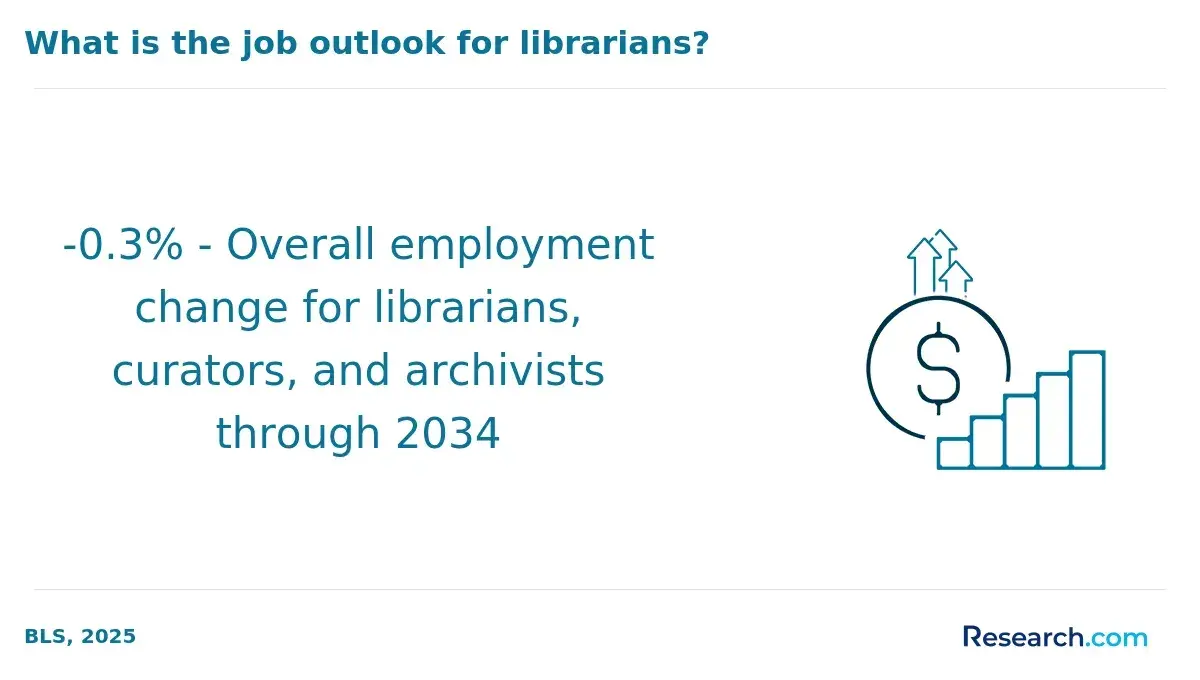
BLS information indicates that overall employment of librarians, curators, and archivists through 2034 will decline by 0.3%. For librarians specifically, employment is projected to increase by 1.7%, with 13,500 openings each year throughout the decade.
The number of employed librarians and media collections specialists in the United States is around 142,100 and is expected to reach 144,500 by 2034. This suggests a relatively modest growth environment, so students should treat practical experience, specialization, networking, and geographic flexibility as important parts of career preparation.
Graduates may also consider curator roles. Employment for curators is projected to grow by 7% over the same period, with around 1,800 job openings annually. The median annual salary for curators is $61,770.
How does competency-based education benefit online library science programs?
Competency-based education focuses on whether students can demonstrate specific skills rather than simply complete a set number of weeks in class. In library science, this model can be useful when competencies are tied to real professional tasks such as creating metadata, designing search strategies, assessing collections, writing policies, managing digital records, or evaluating user needs.
This format may work well for experienced library workers who already have practical exposure and want to move efficiently through material they understand. However, students should confirm how faculty feedback, assessment quality, financial aid, pacing rules, and employer recognition work before choosing a competency-based option. Research.com’s guide to a competency based degree explains this learning model in more detail.
How do online master’s in library science programs cultivate leadership and research innovation?
Leadership preparation in library science usually develops through coursework in management, budgeting, policy, personnel, assessment, advocacy, strategic planning, and community partnerships. Research preparation may come through methods courses, thesis tracks, capstones, user studies, digital humanities projects, or applied evaluation assignments.
Students who want director, department head, systems manager, research librarian, or policy-oriented roles should choose programs with advanced management and research options rather than only introductory coursework. Those planning broader leadership study after the MLS may compare future pathways such as organizational leadership PhD programs.
How do online master’s in library science programs promote diversity, equity, and inclusion?
Diversity, equity, and inclusion are central to library service because libraries support access to information across age, language, disability, income, culture, geography, and technology divides. Online library science programs may address DEI through inclusive collection development, accessibility standards, community needs assessment, intellectual freedom, culturally responsive programming, and ethical information policy.
Students interested in school or youth services should also consider how programs prepare them to work with multilingual learners, students with disabilities, families, and under-resourced communities. Related education-focused resources, such as guides to the best online teaching degrees, can provide additional context for those weighing library roles against classroom teaching roles.
How do online master’s in library science programs incorporate real-world experience?
Applied experience is one of the most important features to compare in online MLS programs. Coursework can teach concepts, but practicums, internships, capstones, and field projects help students turn those concepts into workplace-ready skills.
- Internships and practicums: Students may work in libraries, archives, museums, schools, or information centers to practice reference, cataloging, outreach, instruction, or collection management.
- Virtual simulations: Some courses use digital environments to practice cataloging, searching, systems work, or library service scenarios.
- Collaborative projects: Group assignments may ask students to design information services, build digital collections, solve access problems, or evaluate user needs.
- Service learning: Partnerships with community organizations can help students apply skills while supporting public, school, nonprofit, or archival information services.
- Local fieldwork: Some online programs allow students to complete required experience at approved sites near their home community.
How do library science graduates leverage skills in non-traditional fields?
Library science graduates can apply their training outside traditional library jobs because many organizations need people who can structure information, improve search, manage records, preserve digital assets, evaluate sources, and make complex information easier to use.
In user experience work, LIS graduates may use information architecture and user behavior knowledge to improve website navigation or content organization. In data curation, they may help research organizations, technology companies, or agencies describe, preserve, and retrieve datasets. In knowledge management, they may design systems that help employees find internal documents, policies, research, and expertise more efficiently.
These paths may require additional technical skills, portfolios, software experience, or industry knowledge. Students looking to expand their options while controlling costs can compare broader graduate affordability resources such as cheapest master’s degree online programs.
Common mistakes to avoid when choosing an online MLS program
| Mistake | Why it can hurt you | Better approach |
| Choosing without checking accreditation | You may graduate from a program that does not meet employer expectations for your target role. | Verify accreditation through the school and the recognized accrediting body before applying. |
| Looking only at tuition | Fees, books, technology, travel, and unpaid fieldwork can change the real cost. | Build a full cost estimate and compare aid, employer support, and likely borrowing. |
| Assuming every online program meets school librarian requirements | Certification and licensure rules vary by state and may require teaching credentials or experience. | Confirm state requirements before enrolling, especially if you plan to work in K–12 schools. |
| Ignoring specialization fit | A general program may not provide enough preparation for archives, law libraries, medical libraries, or youth services. | Match electives, fieldwork, faculty expertise, and capstone options to your intended career. |
| Underestimating networking | Online students can miss informal professional connections if they stay passive. | Join associations, attend virtual events, build faculty relationships, and seek field placements early. |
| Assuming salary outcomes are guaranteed | Pay depends on role, location, employer type, experience, and leadership level. | Research local postings and compare requirements, salaries, and advancement paths before enrolling. |
Who should consider an online master’s in library science?
- Current library workers who need a graduate credential for professional advancement
- Teachers who want to move into school librarian or library media specialist roles and can meet state requirements
- Career changers interested in public service, archives, digital collections, research support, or information organization
- Professionals who enjoy helping people find, evaluate, and use information
- Students who want flexible graduate study without relocating
Who may want a different path?
- Students seeking high-growth technology roles that require deep programming, data science, or engineering training may need a more technical degree or additional credentials.
- Students who want K–12 school roles but do not meet teaching certificate or experience requirements should verify state rules before committing to an MLS.
- Students who need a fast financial return should compare local salaries and job postings carefully before taking on graduate debt.
- Students who dislike research, documentation, user service, policy, or detailed information organization may find the work less satisfying than expected.
References
- American Library Association. (n.d.). Scholarships. Retrieved February 2026, from https://www.ala.org/educationcareers/scholarships
- Department for Professional Employees. (2025). Library Professionals: Facts & Figures. https://www.dpeaflcio.org/factsheets/library-professionals-facts-and-figures#_ftnref19
- Public Library Association. (2024). 2024 Public Library Staff Survey: Summary Report. https://www.ala.org/sites/default/files/2025-08/PLA_Staff_Survey_2025.pdf
- U.S. Bureau of Labor Statistics. (2024). Occupational Employment and Wage Statistics. Retrieved February 2026, from https://data.bls.gov/oes/#/industry/000000
- U.S. Bureau of Labor Statistics. (2025, August 28). Occupational projections, 2024–2034, and worker characteristics. Retrieved February 2026, from https://www.bls.gov/emp/tables/occupational-projections-and-characteristics.htm
Key Insights
- An online master’s in library science is most useful when it matches a specific career goal, such as public librarianship, school librarianship, archives, digital libraries, or information management.
- Accreditation is a critical decision factor. Many professional library employers look for ALA-accredited preparation, and school librarian roles may involve additional state rules.
- The median annual salary for librarians and library media specialists is $64,320, but outcomes depend heavily on location, employer type, experience, specialization, and leadership responsibility.
- Most online master’s in library science programs can be completed in two years, though part-time, accelerated, and licensure-focused pathways can change the timeline.
- Program cost should be evaluated in full. Compare tuition, fees, technology costs, fieldwork expenses, financial aid, scholarships, employer reimbursement, and borrowing before enrolling.
- Students should not choose a program based only on ranking or convenience. The strongest choice is the one that combines accreditation, relevant coursework, practical experience, career support, and manageable cost.
- Digital skills now matter across library science careers. Look for coursework in metadata, digital preservation, privacy, information systems, data curation, and emerging search technologies.
Other Things You Should Know About Online Master’s in Library Science Programs
Many ALA-accredited online M.L.I.S. programs require a practicum or internship, often for 3 to 6 credits and about 90 to 150 supervised hours. Some waive it for students with relevant professional experience, but most require fieldwork before graduation.
Common specializations include Archives and Digital Curation, Information Organization, and School Library Media. These concentrations allow students to tailor their studies to specific career goals within library and information science fields, enhancing their expertise in targeted areas.
In 2027, online Master’s in Library Science programs emphasize proficiency in digital research tools, database management, and knowledge of library automation systems. Students typically learn to use cataloging software and data analytics to enhance library services, preparing them for modern information management roles.
International students wanting to study library science in the US must typically meet several admission requirements, including proof of a bachelor's degree from an accredited institution, transcripts, letters of recommendation, and a statement of purpose. Additionally, they may need to provide proof of English language proficiency through exams such as the TOEFL or IELTS. Some programs may also require a GRE score. International applicants should also prepare for visa application processes and ensure they meet any additional requirements specific to their chosen university.


