
2027 ALA-Accredited Master's Programs in Library Science

Co-Founder and Chief Data Scientist
Choosing to pursue an ALA-accredited master's program in library science is a significant career decision. Students who seek to advance in this field need to know if the investment will be worthwhile. For over a decade, our team at Research.com has guided career planning, using only credible sources to provide you with expert, reliable information.
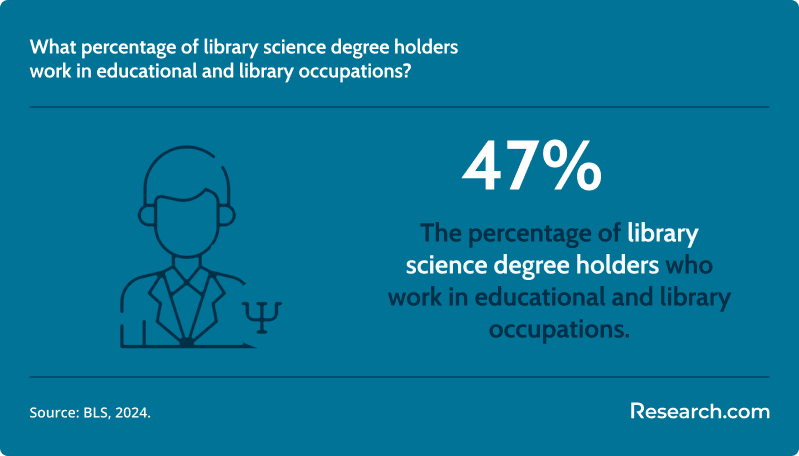
Recent data shows that 47% of library science degree holders work in educational and library occupations, highlighting the degree's strong career prospects. This article will help you understand the value and career outcomes of library science programs. By the end, you will feel confident and informed about your professional future.
What are the benefits of getting an ALA-accredited master’s program in library science?
- An ALA-accredited master's degree in library science qualifies you for a variety of professional roles in libraries, museums, academic institutions, and information management sectors. It meets the educational requirements for most librarian positions, including public, school, academic, and special libraries, and careers such as archivists, curators, and research scientists.
- The median annual salary for librarians with a master's degree in library science is about $72,983.
- Earning an ALA-accredited degree ensures high academic standards and program quality, leading to better career mobility, flexibility in job options, and increased chances of employment and advancement in the evolving information management and library science fields.
What can I expect from an ALA-accredited master’s program in library science?
An ALA-accredited master’s program in library science typically includes a core curriculum covering information organization, management, and digital technologies. Students usually complete a capstone project or thesis to demonstrate their mastery of the field.
Practical experience through required internship hours or practicums is also a key component, providing hands-on skills in a real library or information setting.
Tuition for library science programs varies widely depending on the institution, with costs often ranging from approximately $500 to $1,600 per credit hour. Many programs are designed to be completed within two years, offering both in-person and online flexible options to accommodate different learning needs.
This structured, comprehensive education prepares graduates for diverse roles in the evolving information landscape.
Where can I work with an ALA-accredited master’s degree in library science?
An ALA-accredited master’s degree in library science opens doors to diverse careers in various industries. Graduates can work in corporate settings, government agencies, and nonprofit organizations, or even start their own businesses. Career opportunities include management, consulting, research, and specialized roles such as archivists, law librarians, or museum curators.
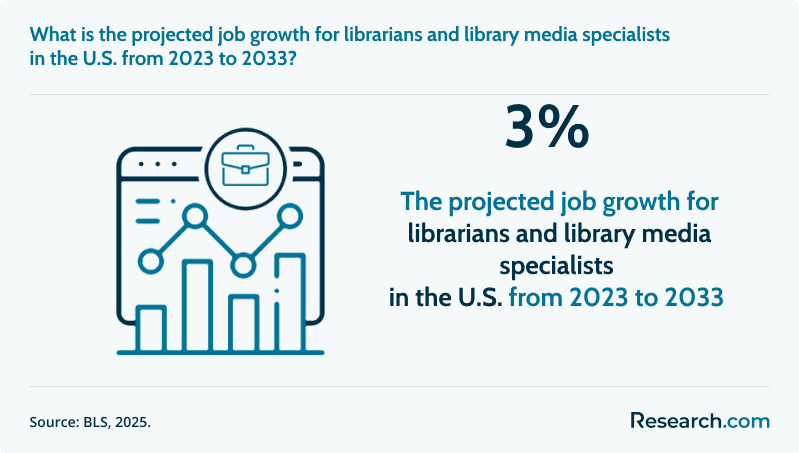
Some library science programs also offer pathways into education, technology, healthcare, and creative fields. The versatile skills gained, like problem-solving, communication, and critical thinking, allow graduates to adapt to many work environments. Employment in librarianship is expected to grow by 3% from 2023 to 2033.
How much can I make with an ALA-accredited master’s degree in library science?
With an ALA-accredited master’s degree in library science, the average annual salary in the United States is about $72,983 as of mid-2025. Salaries typically range from around $57,000 at the 25th percentile to $85,500 at the 75th percentile, with top earners making upwards of $105,500 per year. The hourly wage averages about $35, and the monthly pay is approximately $6,081.
Salary levels can vary based on location, experience, and job type, with some top-paying cities like Nome, AK, and Berkeley, CA offering salaries well above the national average. These earnings reflect the strong career prospects and opportunities for advancement with this degree.
- List of the Best ALA-Accredited Master’s Programs in Library Science 2027 List of Programs
- How long does it take to complete an ALA-accredited master’s program in library science? Completion Time
- What is the average cost of an ALA-accredited master’s program in library science? Average Cost
- What are the financial aid options for students enrolling in an ALA-accredited master’s program in library science? Financial Aid
- What are the prerequisites for enrolling in an ALA-accredited master’s program in library science? What are the prerequisites for enrolling in an ALA-accredited master’s program in library science?
- What courses are typically in an ALA-accredited master’s program in library science? What courses are typically in an ALA-accredited master’s program in library science?
- What types of specializations are available in an ALA-accredited master’s program in library science? Specializations
- How to Choose the Best ALA-Accredited Master’s Program in Library Science How to Choose the Best ALA-Accredited Master’s Program in Library Science
- What career paths are available for graduates of an ALA-accredited master’s program in library science? Career Paths
- Should I Pursue an Advanced Degree After My ALA-Accredited Master’s Degree in Library Science? Should I Pursue an Advanced Degree After My ALA-Accredited Master’s Degree in Library Science?
- What is the job market for graduates with an ALA-accredited master’s degree in library science? Job Market
Best ALA-Accredited Master’s Programs in Library Science for 2027
Choosing a master’s in library science is a high-stakes decision because many librarian, school library media, archive, and information management roles either require or strongly prefer a degree from an American Library Association-accredited program. The right program should fit your career goal, budget, schedule, preferred learning format, and desired specialization—not just look impressive on a ranking list.
This guide is for prospective graduate students comparing ALA-accredited master’s programs in library science, including working adults, career changers, current library staff, and students planning for public, academic, school, archival, or digital information careers. You will learn which programs stand out, how long they take, what they cost, what admissions requirements to expect, which specializations matter, and how to decide whether an MLIS, MLS, MSI, or related degree is worth the investment.
Graduate program choice works best when it is tied to a clear professional outcome. Just as educators may compare options by asking what an education specialist degree can do for teachers, future librarians should evaluate whether a library science program leads to the roles, credentials, internships, and professional networks they need.
Quick Answer: What Is the Best ALA-Accredited Master’s Program in Library Science?
The best ALA-accredited master’s program in library science is the one that matches your target career path, preferred format, and total budget. ALA accreditation is the first filter because it signals that the program meets professional standards commonly expected by library employers. After that, compare program length, credit requirements, tuition, field experience, faculty strengths, and specialization options such as archival studies, school media, digital librarianship, youth services, data services, or information management.
For most students, a strong choice is an ALA-accredited program that offers flexible scheduling, transparent tuition, practical internship or practicum options, and coursework aligned with the type of library or information role they want after graduation.
How This Ranking Was Developed
Because a graduate degree can affect both your finances and career mobility, this ranking emphasizes transparent and practical comparison points. Programs were reviewed using data sources that help evaluate institutional quality, affordability, student outcomes, and program characteristics.
Research.com draws on sources such as the IPEDS database, Peterson's database, the College Scorecard database, and the National Center for Education Statistics. For a broader explanation of how rankings are evaluated, visit the Research.com methodology page.
Best ALA-Accredited Master’s Programs in Library Science: Side-by-Side Comparison
| Rank | School and Program | Format or Focus | Program Length | Cost | Total Credits |
| 1 | University of Alabama — Master of Library and Information Studies | Core library science foundation with options such as archival studies and school media | 1.5 to 2 years | $440 per credit hour | 36 credits |
| 2 | University of Arizona — Master of Arts in Library and Information Science | Online or on-campus study with tracks such as archival studies, digital curation, and public librarianship | As little as 2 years | Approximately $925.33 for the online program. Costs vary for on-campus and by residency. | 37 credits |
| 3 | San Jose State University — Master of Library and Information Science | Fully online program with extensive elective flexibility and internship access | Typically 1.5 to 3.5 years | $525 | 43 credits |
| 4 | University of California, Los Angeles — Master of Library and Information Science | Leadership-oriented program with specializations such as Informatics, Archival Studies, and Media Archival Studies | Typically 2 years of full-time study | $16,847 in-state; $31,949 out-of-state | 72 credits |
| 5 | University of Southern California — Master of Management in Library and Information Science | Online program emphasizing management, leadership, and information strategy | 1 year | $1,644 per credit unit | 36- 40 credits |
| 6 | University of Denver — Master of Library and Information Science | Online program connecting librarianship, information technology, and data services | 21 months (full-time) or 24-36 months (part-time) | $1,102 | 58 quarter credit hours |
| 7 | Southern Connecticut State University — Information and Library Science Program | Online MLIS with field-based internship and capstone project | Typically 1.5 to 2 years | $664 (part-time students) | 36 credits |
| 8 | Florida State University — Master of Science in Information Program | Flexible online MSI with options such as youth services and digital librarianship | The average time to completion is approximately 2.3 years. | Estimated at $474.26 for Florida residents and $1,168.80 for non-Florida residents. | 36 credits |
| 9 | Valdosta State University — Master of Library and Information Science Program | Fully online, non-thesis MLIS for academic, public, and special library careers | Typically 2 years | $300 | 39 credits |
| 10 | University of Hawaii — Master of Library and Information Science Program | Program with attention to Hawaii and the Asia-Pacific region, plus practicum options | 2-3 years | $650 (in-state), $1,402 (out-of-state). | 39 credits |
1. University of Alabama - Master of Library and Information Studies
The University of Alabama offers a Master of Library and Information Studies program designed for students preparing for professional librarian and information roles. The curriculum gives students broad preparation in library and information science while allowing them to build expertise in areas such as archival studies and school media. It is a practical option for students who want a flexible foundation that can apply to public libraries, academic libraries, school settings, or information service environments.
- Program length: 1.5 to 2 years
- Cost: $440 per credit hour
- Total credits: 36 credits
2. University of Arizona - Master of Arts in Library and Information Science
The University of Arizona offers a Master of Arts in Library and Information Science program with a long history of preparing information professionals. Students can study online or on campus and choose coursework connected to areas such as archival studies, digital curation, and public librarianship. This program may appeal to students who want interdisciplinary training and flexibility in how they complete the degree.
- Program length: As little as 2 years
- Cost per credit: Approximately $925.33 for the online program. Costs vary for on-campus and by residency.
- Total credits: 37 credits
3. San Jose State University - Master of Library and Information Science
The fully online Master of Library and Information Science from San Jose State University is built for students who want a customizable graduate experience without relocating. The program includes a wide range of electives and an internship component with over 200 virtual and in-person opportunities each semester. Graduates may use the degree for public or academic librarianship, archives and preservation, data science, or other information-focused careers.
- Program length: Typically 1.5 to 3.5 years
- Cost per credit: $525
- Total credits: 43 credits
4. University of California, Los Angeles - Master of Library and Information Science
The Master of Library and Information Science at UCLA is structured for students who want preparation for leadership and specialized work across information fields. Students complete core coursework and can pursue areas such as Informatics, Archival Studies, and Media Archival Studies. This program may be a strong fit for students seeking a campus-based graduate environment with broad specialization options.
- Program length: Typically 2 years of full-time study
- Cost per credit: $16,847 in-state; $31,949 out-of-state
- Total credits: 72 credits
5. University of Southern California - Master of Management in Library and Information Science
The University of Southern California offers an online Master of Management in Library and Information Science for students interested in the leadership and management side of information work. The program emphasizes managerial thinking, strategic decision-making, and leadership in civic, academic, and professional information environments. It may be especially relevant for working professionals who want a faster graduate pathway with an administrative focus.
- Program length: 1 year
- Cost per credit: $1,644 per credit unit
- Total credits: 36- 40 credits
6. University of Denver - Master of Library and Information Science
The online Master of Library and Information Science from the University of Denver connects traditional library service with information technology and data-centered work. It is the only ALA-accredited master's program in the state of Colorado. Students prepare to support communities, institutions, and organizations that need access to trustworthy information in digital and physical formats.
- Program length: 21 months (full-time) or 24-36 months (part-time)
- Cost per credit: $1,102
- Total credits: 58 quarter credit hours
7. Southern Connecticut State University - Information and Library Science Program
The Master of Library and Information Science at Southern Connecticut State University prepares students for work in public, academic, school, and other information service settings. The online format includes a field-based internship and a capstone project, giving students opportunities to connect graduate coursework with applied professional practice.
- Program length: Typically 1.5 to 2 years
- Cost per credit: $664 (part-time students)
- Total credits: 36 credits
8. Florida State University - Master of Science in Information Program
The Master of Science in Information program at FSU serves students pursuing library, archival, technology, and broader information careers. Its flexible online format allows students to shape the degree around interests such as youth services and digital librarianship. This program may fit students who want an information science degree with options beyond a traditional librarian track.
- Program length: The average time to completion is approximately 2.3 years.
- Cost per credit: Estimated at $474.26 for Florida residents and $1,168.80 for non-Florida residents.
- Total credits: 36 credits
9. Valdosta State University - Master of Library and Information Science Program
Valdosta State University offers a fully online, non-thesis MLIS for students preparing for academic, public, and special library work. The program focuses on core professional abilities such as information organization, retrieval, management, and information systems. Its online structure may be useful for working adults who need a flexible schedule while completing graduate requirements.
- Program length: Typically 2 years
- Cost per credit: $300
- Total credits: 39 credits
10. University of Hawaii - Master of Library and Information Science Program
The Master of Library and Information Science at the University of Hawaii at Manoa prepares students for libraries, archives, and information organizations, with particular attention to Hawaii and the Asia-Pacific region. Students can explore a flexible curriculum and complete coursework that may include a practicum, making it a good option for those interested in regional, cultural, or international information environments.
- Program length: 2-3 years
- Cost per credit: $650 (in-state), $1,402 (out-of-state).
- Total credits: 39 credits
How Long Does It Take to Complete an ALA-Accredited Master’s Program in Library Science?
An ALA-accredited master’s program in library science commonly requires about 36 to 40 credit hours, although individual programs may require more depending on the degree structure, quarter-credit system, internship requirements, or specialization. Full-time students often finish in around 2 to 2.5 years.
Completion time depends heavily on enrollment pace. Full-time students may finish sooner, while part-time students who balance work, caregiving, or other responsibilities may take longer. Some programs allow part-time enrollment that can extend up to five to six years.
For students who cannot relocate or attend daytime campus courses, an online MLIS program can make the degree more realistic by allowing remote coursework and a more flexible schedule.
| Student Situation | Likely Program Pace | What to Check Before Enrolling |
| Full-time student | Often around 2 to 2.5 years | Course sequencing, required practicum timing, and whether summer courses are available |
| Working professional | Often part-time and longer than full-time study | Evening or asynchronous courses, employer tuition support, and maximum time-to-degree limits |
| Career changer | Varies by prior experience and schedule | Internship access, beginner-friendly technology courses, and career advising |
| Student seeking school library roles | May depend on state requirements | Whether the program meets school media or educator licensure expectations in your state |
How Much Does an ALA-Accredited Master’s Program in Library Science Cost?
The total cost of an ALA-accredited master’s program in library science generally ranges from about $10,000 to $50,000 for the full degree. The final price depends on tuition structure, residency status, number of credits, fees, delivery format, and whether you qualify for aid or employer support.
Lower-cost programs are often found at public universities, especially for in-state students or online learners who pay a lower per-credit rate. Many programs in the $10,000 to $20,000 range can be attractive to working adults because they combine flexible delivery with comparatively lower tuition.
Programs in the $20,000 to $40,000 range may reflect higher credit requirements, university fees, residency differences, technology fees, or required practicum expenses. Students should compare total program cost rather than relying only on the advertised per-credit rate.
Private universities and out-of-state programs can reach $50,000 or more. A higher price may come with benefits such as broader elective choices, specialized tracks, small cohorts, or alumni networks, but students should verify that those advantages match their actual career goals.
Also budget for books, software, background checks if required for field placements, travel for practicums, professional memberships, and conference participation. Students comparing information-focused graduate degrees may also want to review cost structures in adjacent programs, such as online master’s in database management programs, especially if they are considering data-heavy career paths.
| Cost Factor | Why It Matters | Question to Ask |
| Per-credit tuition | Advertised tuition may not reflect total degree cost. | How many credits are required for graduation? |
| Residency rate | In-state and out-of-state rates can differ substantially. | Do online students pay a separate tuition rate? |
| Fees | Technology, library, graduation, and practicum fees can add up. | What mandatory fees are charged each term? |
| Field experience | Internships and practicums may involve travel or unpaid hours. | Can I complete fieldwork near where I live? |
| Financial aid | Aid can change the real net cost. | Are scholarships, assistantships, or employer benefits available? |
What Financial Aid Is Available for ALA-Accredited Master’s Students in Library Science?
Students in ALA-accredited library science programs may be able to reduce their costs through scholarships, grants, employer support, fellowships, and federal aid. Availability varies by school, state, employer, and student background, so applicants should research funding early rather than waiting until after admission.
- ALA scholarships: The American Library Association offers scholarships totaling over $300,000 annually, including general awards, support for library staff, specialized scholarships, and awards for students from underrepresented groups.
- Employer support: Some libraries, schools, universities, government agencies, and employers help employees pay for graduate study through tuition reimbursement, flexible scheduling, scholarships, or paid internship arrangements.
- State and national library associations: Professional associations may offer scholarships, grants, conference support, or stipends for students entering the field.
- School-based aid: Universities may provide scholarships, grants, assistantships, and work-study opportunities. Some awards require a separate application, while others are tied to the admissions process.
- Grants and fellowships: Students interested in research, archives, information systems, or records management may find project-based funding opportunities.
- Diversity-focused programs: The ALA Spectrum Scholarship supports racially and ethnically diverse students entering library and information science careers.
How to Lower the Cost of an MLIS or Library Science Master’s Degree
- Apply to more than one affordable ALA-accredited program. Comparing multiple admissions and aid offers can help you avoid overpaying for a similar credential.
- Ask whether online students receive a different tuition rate. Some online programs charge the same rate regardless of residency, while others do not.
- Check employer tuition benefits before enrolling. Current library staff, school employees, and university employees may have benefits they are not using.
- Look for paid graduate assistantships or part-time library work. These opportunities can build experience while helping with costs.
- Plan your course load carefully. Taking too few credits may extend fees across more terms, while taking too many can affect work-life balance and academic performance.
What Are the Prerequisites for ALA-Accredited Master’s Programs in Library Science?
ALA-accredited library science master’s programs are generally accessible to students from many undergraduate backgrounds. Most programs do not require a bachelor’s degree in library science, which makes the field a common option for career changers, educators, humanities graduates, social science majors, technology professionals, and current library workers.
- A bachelor’s degree from a regionally accredited institution, usually with no required undergraduate major.
- A minimum undergraduate Grade Point Average (GPA) commonly around 3.0 on a 4.0 scale, though some programs may review applicants with lower GPAs if they show other strengths.
- Official transcripts, letters of recommendation, a statement of purpose, and sometimes a resume.
- GRE scores for some programs, although many ALA-accredited programs no longer require them or offer waivers.
- English language proficiency scores, such as TOEFL or IELTS, for many international applicants.
- Basic computer literacy, since modern library and information work relies heavily on digital systems.
- A personal essay or interview for programs that use a more holistic admissions review.
If your bachelor’s degree is in another discipline, that usually does not prevent you from applying. Students wondering whether they can go to graduate school with a different undergraduate major will find that library science programs are often designed for applicants with varied academic and professional histories.
Who Is a Good Fit for an ALA-Accredited Library Science Master’s Program?
| This Degree May Fit You If... | You May Want a Different Path If... |
| You want to work as a librarian, archivist, school library media specialist, metadata professional, or information manager. | You mainly want a technical software engineering, cybersecurity, or database administration role. |
| You enjoy organizing information, helping users, teaching research skills, managing collections, or improving access to knowledge. | You prefer work with little public service, collaboration, or documentation. |
| You need an ALA-accredited credential for your target employer or professional setting. | Your target role values industry certifications or technical portfolios more than a library science degree. |
| You are comfortable learning digital tools, metadata standards, cataloging systems, and information ethics. | You want a graduate degree with guaranteed salary outcomes; no degree can guarantee employment or pay. |
What Courses Are Usually Included in an ALA-Accredited Master’s Program in Library Science?
ALA-accredited master’s programs in library science typically combine core professional courses with electives or concentrations. The goal is to help students understand how information is created, organized, preserved, retrieved, evaluated, and shared across communities and institutions.
- Cataloging and classification: Students learn how library materials are described and organized using systems and standards such as MARC, Dewey Decimal, and Library of Congress classification.
- Collection development: Coursework covers how libraries select, purchase, manage, evaluate, and remove materials across print, digital, audiovisual, and electronic formats.
- Information technology for libraries: Students study digital systems used in information work, which may include telecommunications, internet technologies, data security, database design, programming, and library platforms.
- Information sources and reference services: Courses teach students how to support research, evaluate sources, conduct reference interviews, and deliver information services in person or online.
- Children's and young adult literature: Students examine youth literature, reading trends, collection development, outreach, and programming for children and teens.
- Library and information science administration: Coursework may include budgeting, staffing, policy development, grant writing, planning, assessment, and leadership.
- Politics and partnerships: Students explore advocacy, coalition building, public relations, governance, legal issues, and the public role of libraries.
- Internship or practicum: Many programs require or encourage supervised professional experience in a library, archive, school, museum, public agency, or information organization.
Students drawn to the management side of library work may notice overlap with public-sector leadership topics. For comparison, administrative skills such as budgeting, policy, and organizational planning also appear in programs like a fast-track online public administration degree.
What Specializations Are Available in ALA-Accredited Library Science Master’s Programs?
Specializations help students turn a broad library science degree into a clearer career pathway. Not every school offers every concentration, so applicants should confirm whether the program’s electives, field placements, and faculty expertise match their goals.
- Archival studies: Focuses on preserving, arranging, describing, and providing access to historical records and archival collections.
- Digital librarianship: Prepares students to manage digital collections, online repositories, digital preservation workflows, and technology-supported library services.
- Knowledge management or informatics: Emphasizes information organization and use within businesses, nonprofits, universities, and other organizations, often including data analytics or emerging technologies.
- Management and administration: Builds leadership skills in operations, budgeting, staffing, strategic planning, service assessment, and organizational decision-making.
- Rare books and manuscripts: Covers preservation, curation, description, and access for special collections, rare books, manuscripts, and cultural heritage materials.
- Records and information management: Focuses on lifecycle management of records, retention policies, compliance, retrieval, and organizational accountability.
- Public librarianship: Prepares students for community-centered service, outreach, programming, collection development, and public access work.
- Reference and user services: Develops advanced skills in research support, information literacy, user instruction, and individualized patron assistance.
Library science is especially valuable for students who want to manage information across formats, including digital assets. Professionals in creative fields may also benefit from understanding metadata, preservation, and digital organization; students comparing creative and information-focused pathways can review options such as fast-track online digital photography degrees. The chart below highlights in-demand librarian skills.
How to Choose the Best ALA-Accredited Master’s Program in Library Science
The best program is not always the most famous or the most expensive. It is the program that gives you the right credential, practical experience, specialization depth, and cost structure for your intended career. Use the steps below to compare programs in a way that reflects your actual goals.
Step 1: Confirm ALA Accreditation
Start by verifying that the program is accredited by the American Library Association. ALA accreditation is especially important for many professional librarian roles, and it may affect eligibility for public, academic, and specialized library positions. Do not assume that every degree with “library,” “information,” or “archives” in the title is ALA-accredited.
Step 2: Match the Curriculum to Your Target Role
Review required courses, electives, certificates, practicum options, and faculty areas. A student aiming for youth services should evaluate different coursework than a student planning to become a digital archivist, metadata librarian, records manager, or academic research librarian.
Step 3: Compare Total Cost, Not Just Tuition
Tuition is only part of the cost. Include fees, books, software, travel, membership dues, and the financial impact of reducing work hours. A lower per-credit rate may not be the lowest-cost option if the program requires more credits or charges additional fees.
Step 4: Evaluate Field Experience and Career Support
Internships, practicums, capstones, portfolio projects, and alumni networks can influence how prepared you feel after graduation. Ask whether the program helps online students find placements and whether career services understand library and information science hiring.
Step 5: Decide Whether Online, Campus, or Hybrid Study Fits Your Life
Online study is often more convenient for working adults, but campus programs may provide local networking, in-person archives access, or stronger ties to regional employers. Hybrid programs can be useful when students want some campus connection without relocating full time.
| Program Factor | Why It Matters | Best Choice When... |
| ALA accreditation | Many employers expect it for professional librarian roles. | You want broad librarian career eligibility. |
| Specialization options | Electives shape your preparation for archives, school media, public libraries, digital work, or leadership. | You already know your preferred career setting. |
| Online format | Remote coursework can support students who work or cannot relocate. | You need schedule flexibility and local field placement options. |
| Internship or practicum | Hands-on experience can strengthen your resume and clarify career direction. | You are entering the field without library experience. |
| Career services | Library hiring can be specialized and network-driven. | You need help with job search strategy, portfolios, and professional connections. |
| Faculty expertise | Faculty strengths can affect research opportunities and elective depth. | You want archives, digital curation, metadata, school media, or leadership mentoring. |
A strong support environment can matter as much as the course list. Mentoring, student organizations, internship access, and faculty availability can accelerate professional growth in the same way that structured guidance shapes advancement in other fields, including clinical research careers and advancement opportunities.
Common Mistakes When Choosing a Library Science Master’s Program
| Mistake | Why It Can Hurt You | Better Approach |
| Choosing a program before checking ALA accreditation | You may graduate with a degree that does not meet expectations for some librarian jobs. | Verify accreditation before applying. |
| Focusing only on rankings | A highly ranked program may not fit your budget, schedule, or specialization. | Use rankings as a starting point, then compare curriculum, cost, and outcomes. |
| Looking only at per-credit tuition | Total cost can change based on fees, credit requirements, residency, and practicum expenses. | Calculate the full cost of attendance before committing. |
| Assuming all online programs meet local requirements | School library media roles may involve state-specific licensure or certification rules. | Ask your state education agency and program advisor before enrolling. |
| Ignoring practical experience | Graduating without internships, projects, or library work experience can make the job search harder. | Prioritize programs with practicum support, internships, portfolios, or field placements. |
| Expecting guaranteed salary outcomes | Pay varies by role, employer, geography, experience, and funding environment. | Research local job postings and speak with alumni in your target field. |
Questions to Ask Admissions Advisors Before Applying
- Is the program currently ALA-accredited?
- How often are courses offered, and can part-time students graduate on a predictable schedule?
- What specializations, certificates, or elective clusters are available?
- Can online students complete internships or practicums near where they live?
- What career services are available specifically for library and information science students?
- How much is the total estimated cost, including fees and materials?
- Are assistantships, scholarships, or employer partnerships available?
- Does the program support students pursuing school library media roles or state-specific requirements?
- What kinds of jobs have recent graduates pursued?
- Can applicants speak with current students or alumni before accepting admission?
What Career Paths Are Available After an ALA-Accredited Master’s Degree in Library Science?
Graduates of ALA-accredited library science master’s programs can work in traditional libraries as well as archives, museums, schools, universities, corporations, nonprofits, government agencies, and technology-supported information environments. The degree is most useful when paired with practical experience, a clear specialization, and evidence of applied skills such as metadata, research instruction, digital preservation, collection development, or information systems management.
| Career Path | Typical Work | Good Specialization Fit |
| Academic, public, and school librarian | Manage collections, support research, lead programs, teach information literacy, and serve users. | Public librarianship, school media, reference and user services, youth services |
| Archivist or digital archivist | Preserve, describe, organize, and provide access to physical or digital records. | Archival studies, digital preservation, rare books and manuscripts |
| Knowledge management specialist | Help organizations structure, retrieve, share, and use internal knowledge effectively. | Knowledge management, informatics, records management |
| Competitive intelligence analyst | Collect and interpret market, industry, and competitor information for strategic decisions. | Informatics, research services, information analysis |
| Digital asset manager or metadata librarian | Organize digital content, apply metadata standards, and support discovery systems. | Digital librarianship, metadata, information technology |
| Records manager or taxonomist | Manage records, retention rules, taxonomies, controlled vocabularies, and retrieval systems. | Records and information management, knowledge organization |
| Information architect or research analyst | Design information structures, support databases, and analyze information for users or organizations. | Informatics, data services, information systems |
| Library director or manager | Oversee staff, budgets, strategy, services, facilities, and community or institutional partnerships. | Management and administration |
Library science skills also overlap with fields that require precise organization of complex information, including architecture, design, journalism, and digital media. Students comparing information organization with design-centered pathways can also review the shortest online architecture programs. The following chart shows common cities for librarians.
Should I Pursue an Advanced Degree After an ALA-Accredited Master’s in Library Science?
An additional graduate or doctoral degree may be useful if your career goal requires advanced research, senior leadership, university teaching, policy analysis, or specialized expertise beyond the master’s level. However, it is not automatically necessary for every librarian or information professional. Many graduates can advance through experience, certifications, leadership roles, publications, professional association work, or specialized technical training.
Consider another degree only after identifying a clear reason: a specific job requirement, a research goal, a leadership pathway, or a salary and promotion structure that rewards advanced credentials. Professionals interested in education leadership or applied doctoral study may compare options such as the fastest Ed D programs, but they should confirm whether that path aligns with library, academic, or administrative goals.
What Is the Job Market for Graduates With an ALA-Accredited Master’s Degree in Library Science?
The job market for librarians and library media specialists is projected to grow by 3% from 2023 to 2033, which is about as fast as the average for all occupations. On average, around 13,300 job openings are projected each year over the decade.
Many openings are expected to come from replacement needs as workers retire or move into other occupations. Libraries still need professionals who can manage materials, teach users how to find and evaluate information, support digital services, and design programs for communities, schools, and institutions.
In 2023, librarians and library media specialists held about 142,200 jobs. Their largest employers at that time were as follows:
The broader information workforce continues to change as digital platforms, AI-assisted search, misinformation concerns, and new media formats reshape how people find and evaluate information. Students interested in adjacent communication careers can also compare pathways such as the best accelerated online journalism degree programs.
Current Trends Affecting Library Science Students
- AI-assisted search is changing reference work. Librarians increasingly help users evaluate AI-generated information, check sources, understand bias, and use search tools responsibly.
- Digital preservation is becoming more important. Organizations need professionals who can manage born-digital records, institutional repositories, metadata, and long-term access.
- Community services remain central to public libraries. Public libraries continue to support literacy, digital access, workforce help, local programming, and civic information needs.
- School library roles may involve state rules. Students pursuing school library media positions should confirm licensure or certification expectations before choosing a program.
- Employers value practical technical skills. Coursework in databases, metadata, digital curation, privacy, accessibility, and user experience can strengthen employability beyond traditional library settings.
What Graduates Say About Earning an ALA-Accredited Master’s Degree in Library Science
- Lloyd: "My master’s program in library science helped me build strong skills in information literacy and digital curation. ALA accreditation gave me confidence that the curriculum followed professional expectations, and the experience prepared me to help people find, understand, and use information. The relationships I built with classmates and faculty also became an important professional network."
- David: "The ALA-accredited program gave me the academic foundation I needed to move into a new career. I learned how information systems work and why libraries remain essential to their communities. The degree challenged me, but it also helped me find work where I could make a visible contribution."
- Maya: "The coursework was grounded in real professional practice. I learned how to evaluate, arrange, and describe information, and I now use those skills every day as an archivist preserving cultural materials. The credential helped validate my expertise and introduced me to career options I had not previously considered."
References
- 25 of the highest-paying librarian jobs in 2025. (2025). ZipRecruiter. Retrieved August 26, 2025, from https://www.ziprecruiter.com/g/Highest-Paying-Librarian-Jobs
- American Library Association. (n.d.). About ALA & our mission. https://www.ala.org/aboutala
- Field of Degree: Library Science. (2024). U.S. Bureau of Labor Statistics. Retrieved August 26, 2025, from https://www.bls.gov/ooh/field-of-degree/library-science/library-science-field-of-degree.htm#emp
- How to become a librarian: what it is and career path - Zippia. (2025, January 8). https://www.zippia.com/librarian-jobs/
- Librarian Trends. (2024, July 24). Zippia. Retrieved August 26, 2025, from https://www.zippia.com/librarian-jobs/trends/
- Librarians and library media specialists. (2025, April 18). U.S. Bureau of Labor Statistics. Retrieved August 26, 2025, from https://www.bls.gov/ooh/education-training-and-library/librarians.htm#tab-3
- Master of Library Science salary. (2025). ZipRecruiter. Retrieved August 26, 2025, from https://www.ziprecruiter.com/Salaries/Master-Of-Library-Science-Salary
Key Insights
- ALA accreditation should be your first filter. Many professional librarian roles expect an ALA-accredited master’s degree, so verify accreditation before comparing cost or format.
- The best program depends on your target role. Public librarianship, school media, archives, digital curation, metadata, and information management require different electives and field experiences.
- Most students should compare total cost, not sticker tuition. Fees, residency rules, credit totals, practicum expenses, and financial aid can change the real price of the degree.
- Online programs can be strong choices for working adults. They may offer flexibility, but students should confirm internship support, course scheduling, and any state-specific requirements.
- Practical experience matters. Internships, practicums, capstones, library jobs, and portfolio projects can make a graduate more competitive than coursework alone.
- The job market is steady but not automatic. Librarians and library media specialists are projected to grow by 3% from 2023 to 2033, with around 13,300 openings projected each year, but outcomes still depend on location, experience, specialization, and employer needs.
Other Things You Should Know About an ALA-Accredited Master’s Program in Library Science
Enrollment requirements for a 2027 ALA-Accredited Master's Program in Library Science typically include a bachelor's degree from an accredited institution, a satisfactory GPA, letters of recommendation, and a statement of purpose. Some programs might also require GRE scores or relevant work experience. Check individual program requisites for specifics.
In 2027, students in ALA-Accredited Master's Programs in Library Science can explore several financial aid options such as federal student loans, scholarships specific to library science, grants, and work-study programs. It's essential to check with individual programs for specific financial aid opportunities and deadlines.


