2027 AI Master's Degrees for HR Professionals

Co-Founder and Chief Data Scientist
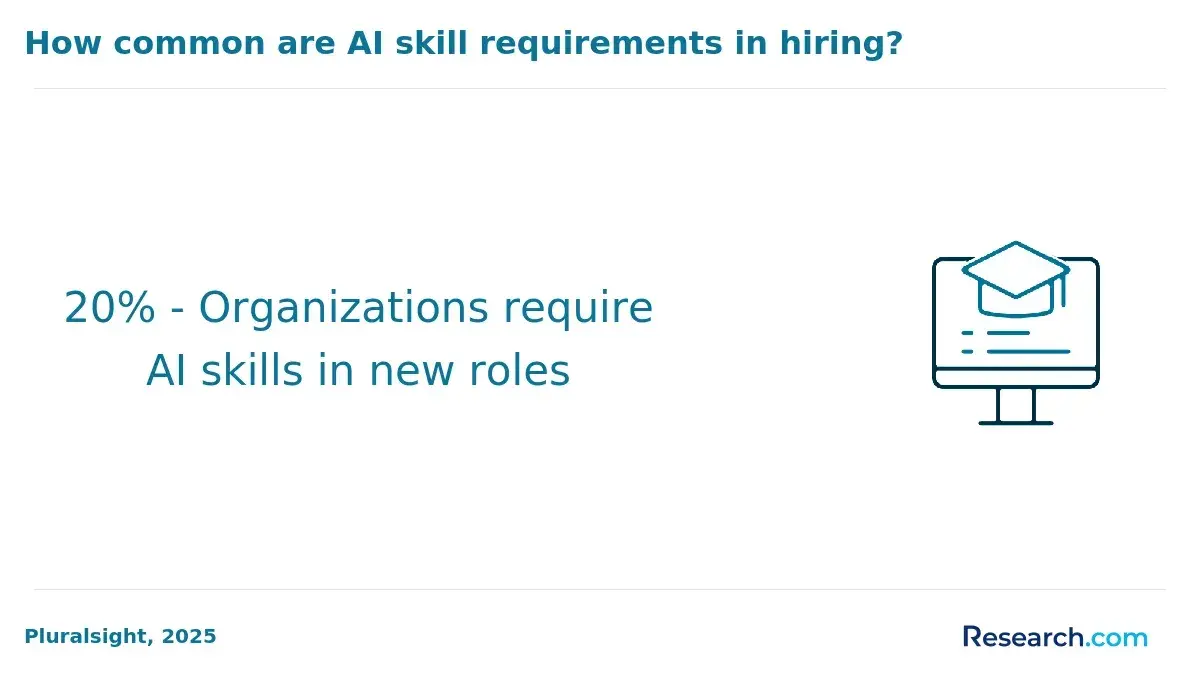
Choosing an AI master’s degree as an HR professional is a practical career decision: you are weighing technical depth, HR relevance, cost, flexibility, and whether the credential will help you move into people analytics, AI-enabled recruiting, workforce planning, or HR technology leadership. As employers add artificial intelligence to hiring, performance management, learning systems, employee engagement platforms, and workforce analytics, HR teams need professionals who can evaluate AI outputs, challenge biased models, and translate data into responsible people decisions.
The demand is already visible. Research shows that 92% of HR leaders expect AI to be embedded in core HR functions, which means HR professionals increasingly need more than general business knowledge. They need enough AI literacy to work with data scientists, vendors, legal teams, and executives while protecting employees and candidates from poorly designed automated decisions.
This guide explains what AI master’s degrees for HR professionals cover, which program types align with different HR goals, how online and campus formats compare, what accreditation to check, what coursework and skills matter, and how to evaluate admissions, cost, time to completion, salary expectations, and complementary certifications.
Key Things You Should Know
- Master's degrees in artificial intelligence for HR professionals focus on integrating AI-driven analytics to enhance talent acquisition, employee engagement, and workforce planning.
- By 2025, 67% of HR leaders expect AI skills to be essential for strategic roles, driving demand for specialized AI education in human resources.
- Programs emphasize practical AI applications, ethical considerations, and workforce automation to prepare HR professionals for evolving digital transformation challenges.
What is an AI master's degree for HR professionals?
An AI master’s degree for HR professionals is a graduate program that connects artificial intelligence, data science, and workforce management. Instead of treating AI as a purely technical subject, these programs focus on how machine learning, natural language processing, predictive analytics, automation, and decision-support systems can be used in recruiting, retention, employee engagement, performance analysis, learning and development, compensation planning, and workforce forecasting.
The strongest programs do not simply teach HR professionals how to use software dashboards. They help students understand how AI models are built, what data they rely on, where bias can enter the process, how to interpret model outputs, and when human judgment should override automated recommendations. That distinction matters because HR decisions affect hiring access, promotions, pay, discipline, and employee opportunity.
According to the World Economic Forum’s Future of Jobs Report 2025, 86% of employers expect AI and information-processing technologies to transform businesses by 2030. For HR professionals, this creates a need for hybrid expertise: enough technical fluency to work with AI systems and enough HR judgment to apply them legally, ethically, and strategically.
Program emphasis varies by school. Some degrees lean toward data science and machine learning, while others focus more on HR analytics, organizational behavior, AI governance, employee experience, or technology management. Working professionals may also find part-time, online, and hybrid formats that allow them to continue in HR roles while building AI skills.
What HR professionals should look for
- Applied HR use cases: Courses and projects should address recruiting, retention, workforce planning, employee engagement, performance data, and talent development.
- Technical foundation: Students should gain practical exposure to statistics, machine learning, data management, and AI tools, not only high-level AI concepts.
- Ethics and compliance: Programs should cover bias mitigation, explainability, privacy, governance, and the risks of automated employment decisions.
- Capstone or project work: A strong degree should give students a portfolio-ready project that shows how AI can solve a real workforce problem.
- Career fit: The curriculum should match the student’s target path, whether that is people analytics, HRIS, talent acquisition technology, AI governance, or HR strategy.
Students who want a more technical foundation before specializing in HR applications may also compare related pathways, such as an online computer science degree, which can build broader preparation in programming, algorithms, data science, and AI methods.
Which AI master's programs best fit HR careers and goals?
The best AI master’s program for an HR professional depends on the role the student wants after graduation. A recruiting leader who wants to manage AI-enabled candidate matching does not need the same curriculum as an HR analytics specialist building predictive retention models or an HR executive responsible for AI governance. Before comparing tuition or brand names, students should identify the career outcome they want and then evaluate whether the program’s coursework, projects, faculty expertise, and employer connections support that outcome.
Master’s programs that best fit HR careers and goals in 2026 usually combine applied machine learning skills with human-centered AI applications. LinkedIn’s Jobs on the Rise 2025 report identifies “AI Engineer” as one of the fastest-growing roles in the U.S., which signals the value of technical AI fluency even for professionals who plan to work in HR rather than software engineering.
| Career goal | Best-fit program emphasis | What to look for |
| People analytics or workforce analytics | Data science, statistics, predictive modeling, visualization | Projects using workforce datasets, dashboards, forecasting, and business decision support |
| AI-enabled talent acquisition | Natural language processing, automation, HR technology, selection analytics | Coursework on resume screening, candidate matching, assessment tools, bias testing, and explainability |
| HR technology or HRIS leadership | AI systems, data governance, enterprise platforms, product evaluation | Training in vendor assessment, system implementation, data quality, and integration with HR platforms |
| AI ethics, compliance, or governance in HR | Responsible AI, employment law context, privacy, algorithmic fairness | Coverage of bias mitigation, audit practices, documentation, and human oversight |
| Strategic HR leadership | AI strategy, organizational change, analytics translation, executive communication | Courses linking AI insights to workforce planning, retention, productivity, and business outcomes |
Prospective students should also examine whether alumni move into HR analytics, people strategy, AI governance, talent technology, or related roles. Placement outcomes, employer partnerships, capstone sponsors, and faculty research areas often reveal more about program fit than a course list alone.
Students comparing graduate programs can also use broader program-comparison resources, such as guides to mechanical engineering programs online, as examples of how to evaluate format, affordability, accreditation, and career alignment across technical degrees.
What careers can HR professionals pursue with an AI master's degree?
HR professionals with an AI master’s degree can move into roles that sit between human resources, analytics, technology, compliance, and business strategy. These positions often require the ability to interpret workforce data, evaluate AI tools, communicate findings to leaders, and ensure that automated systems are used responsibly in employment decisions.
Common career paths include HR Analytics Specialist, People Analytics Manager, AI Talent Acquisition Manager, HR Technology Manager, Workforce Planning Analyst, Employee Experience Analytics Lead, and AI Ethics Officer for HR or workforce systems. The exact title varies by employer, but the underlying work usually involves applying data and AI to hiring, retention, engagement, performance, mobility, and workforce risk.
- HR Analytics Specialist: Interprets workforce metrics, performance trends, diversity data, engagement results, and retention patterns using AI-powered analytics tools.
- AI Talent Acquisition Manager: Oversees tools that support resume screening, candidate matching, sourcing, interview scheduling, and recruiting workflow automation.
- People Analytics Manager: Connects workforce data to business questions such as turnover risk, staffing needs, skills gaps, or employee experience.
- HR Technology or HRIS Leader: Evaluates, implements, and manages AI-enabled HR platforms while coordinating with IT, legal, procurement, and HR teams.
- AI Ethics Officer: Reviews AI use in hiring and employee management, monitors bias and transparency risks, and helps establish governance standards.
Key skills for these roles include natural language processing, machine learning literacy, statistical analysis, data visualization, data governance, and the ability to explain AI-assisted recommendations to nontechnical stakeholders. HR knowledge remains essential because technical outputs must be interpreted in the context of employment practices, organizational culture, labor regulations, and business strategy.
Professionals who want a more technical pathway into AI-related HR work may also explore an engineering degree online, especially if they want stronger preparation in quantitative problem-solving, systems thinking, and technical project work.
How do online AI master's programs compare with on-campus options?
Online AI master’s programs can be a strong fit for working HR professionals because they reduce relocation and commuting barriers while allowing students to apply what they learn in their current jobs. On-campus programs may be better for students who want more in-person networking, structured schedules, research access, or direct interaction with faculty and peers. The better choice depends less on format alone and more on program quality, support, curriculum design, and career goals.
Online AI master’s degrees now rival on-campus programs in perceived quality. In a survey by Inside Higher Ed and College Pulse, 55% of employers regarded online degrees as comparable in rigor. This shift reflects improvements in virtual instruction, interactive learning platforms, remote collaboration tools, and online curriculum design.
| Factor | Online AI master’s programs | On-campus AI master’s programs |
| Flexibility | Often better for full-time HR professionals, especially when asynchronous courses are available | Usually more structured and tied to scheduled class meetings |
| Networking | Depends on live sessions, cohort design, discussion groups, and career services access | Often stronger for informal networking, campus events, and face-to-face collaboration |
| Hands-on learning | Can be strong when programs include applied projects, cloud tools, and team-based work | May offer easier access to labs, research groups, and campus-based projects |
| Cost considerations | May reduce commuting, relocation, and housing costs, though tuition can be comparable | May require additional living, commuting, or relocation expenses |
| Employer perception | Increasingly accepted when the institution is reputable and accredited | Still familiar to employers, especially for highly selective campus-based programs |
Curricula are often similar or identical across formats, with comparable core courses, projects, and assessments. Some online programs, including those at Carnegie Mellon and Georgia Tech, use live sessions, peer discussions, and project collaboration to replicate parts of the classroom experience.
How to choose between online and on-campus study
- Choose online if you need scheduling flexibility, plan to keep working, or want to avoid relocation.
- Choose on campus if you learn better through structured in-person interaction or want stronger access to campus networks.
- Compare whether both formats offer the same faculty, courses, career services, capstone options, and alumni network.
- Confirm that the transcript and diploma will come from the accredited institution and that the online format is clearly supported by the school.
- Ask whether online students receive technical support, advising, library access, and career coaching comparable to campus students.
Students comparing technical online degrees may also review affordability-focused resources, such as guides to online cybersecurity degree programs, to understand how format, tuition, fees, and career outcomes can vary across technology-related graduate options.
What accreditation should AI master's programs have in the United States?
AI master’s programs in the United States should be offered by an institution with recognized institutional accreditation. This is the most important accreditation check because it affects degree legitimacy, credit transfer, employer recognition, and eligibility for many forms of financial aid. Programmatic accreditation may also matter for certain computing-related programs, but it is not equally common across all AI, data science, analytics, or interdisciplinary HR-focused degrees.
There are two main accreditation categories to understand:
- Institutional accreditation: This applies to the entire college or university and confirms that the institution meets broad academic and operational standards. Examples include regional accreditors such as the Middle States Commission on Higher Education and the Western Association of Schools and Colleges.
- Programmatic accreditation: This applies to a specific discipline or program. ABET accreditation for computing programs is one example that can signal a rigorous review of technical education, although not every reputable AI-related master’s program will have ABET accreditation.
For HR professionals, accreditation matters because the degree may be reviewed by employers, graduate schools, certification bodies, or tuition assistance programs. A program from an unrecognized institution can create problems even if the course titles appear relevant.
Accreditation checklist
- Verify the institution through the CHEA database or the U.S. Department of Education’s official website.
- Confirm that the specific campus or online division offering the degree is included under the institution’s accreditation.
- Ask whether credits from the program are transferable to other accredited institutions.
- Check whether employer tuition reimbursement policies require recognized accreditation.
- For highly technical programs, review whether any relevant programmatic accreditation or external quality review applies.
Accreditation does not guarantee that a program is the best fit for HR applications, but it is a baseline quality and legitimacy requirement. After confirming accreditation, students should evaluate curriculum relevance, faculty expertise, applied projects, student support, and graduate outcomes.
What coursework and skills do AI master's degrees teach for HR applications?
AI master’s degrees for HR applications usually combine technical coursework with practical workforce problems. Students learn how AI systems process data, how models make predictions or classifications, and how those outputs can inform HR decisions without replacing professional judgment. The goal is not only to use AI tools, but to understand their limits, risks, and appropriate uses in employment settings.
Common technical topics include programming in Python or R, statistics, data visualization, machine learning, natural language processing, data management, model evaluation, and AI platforms such as TensorFlow and Azure ML. In HR-focused programs or electives, students apply these tools to recruiting, retention, performance management, engagement analysis, workforce planning, learning systems, and employee support.
| Coursework area | How it applies to HR |
| Machine learning | Supports retention modeling, candidate matching, skills analysis, and workforce forecasting |
| Natural language processing | Helps analyze resumes, job descriptions, survey comments, chatbot conversations, and employee feedback |
| Statistics and analytics | Builds the foundation for interpreting workforce trends, testing assumptions, and measuring outcomes |
| Data visualization | Helps HR teams communicate workforce insights clearly to executives and managers |
| AI ethics and governance | Addresses bias mitigation, privacy, transparency, accountability, and compliance risks |
| Capstone or applied project | Allows students to solve a practical HR problem using real or realistic workforce data |
Hands-on projects are especially valuable. Students may analyze hiring patterns, forecast staffing needs, assess engagement survey data, evaluate turnover risk, design dashboards, or build chatbot prototypes for candidate or employee support. These projects help graduates show employers that they can translate AI concepts into HR decisions.
The most important skill is judgment. HR professionals must know when AI can improve efficiency and when it can create risk. They should be able to question data quality, identify proxy variables that may contribute to bias, explain model limitations, and ensure that automated recommendations are reviewed by accountable human decision-makers.
What admissions requirements do AI master's programs typically require?
Admissions requirements for AI master’s programs vary by institution, but most programs look for evidence that applicants can handle graduate-level quantitative, technical, and analytical coursework. HR professionals do not always need a computer science background, but they should be prepared to show readiness in statistics, data analysis, programming, business analytics, or related experience.
Typical application materials may include a bachelor’s degree, official transcripts, a resume, letters of recommendation, a statement of purpose, and evidence of quantitative or technical preparation. Some programs may request prerequisite coursework, coding samples, prior machine learning or data science exposure, or a bridge course for applicants coming from nontechnical fields. International applicants must often submit TOEFL or IELTS scores to demonstrate English proficiency.
Relevant work experience is especially useful for HR applicants. Experience in HR analytics, recruiting operations, HRIS, workforce planning, compensation, employee engagement, organizational development, or data-informed decision-making can help demonstrate that the applicant understands real HR problems and can apply AI training in a practical setting.
How HR professionals can strengthen an application
- Show technical readiness: Highlight coursework, projects, tools, or work experience involving data analysis, statistics, dashboards, programming, or analytics platforms.
- Connect AI to HR goals: Explain how the degree supports a specific career direction, such as people analytics, AI-enabled recruiting, HR technology, or governance.
- Use work examples: Describe HR decisions you have improved through data, process automation, reporting, or technology adoption.
- Address gaps directly: If you lack coding or advanced math experience, mention relevant prerequisites, self-study, certificates, or planned preparation.
- Choose recommenders carefully: Strong letters should speak to analytical ability, leadership, problem-solving, and readiness for graduate work.
A clear statement of purpose matters. Admissions committees should understand why an HR professional wants AI training, what problem the applicant hopes to solve, and how the program’s curriculum supports that plan.
How long do AI master's programs take, and what do they cost?
AI master’s programs typically take one to three years to complete, depending on enrollment status, program structure, prerequisite needs, and whether the student chooses an accelerated, full-time, part-time, online, or hybrid format. Working HR professionals often choose part-time or online study so they can continue earning income while building AI and analytics skills.
Many programs include capstone projects, applied research, or internships that let students use AI tools in real organizational contexts, including human resources and workforce management. These experiences can be especially valuable for career changers or HR professionals who need portfolio evidence of technical and analytical skill.
Program costs vary widely across institutions. In 2027, total tuition for AI or closely related master’s degrees in the United States generally ranges from approximately $20,000 to $80,000, though highly specialized programs at private universities may exceed this range. Students should also budget for indirect expenses such as textbooks, software subscriptions, technology fees, computing equipment, and potential travel for residencies or campus requirements.
| Program pace | Typical completion time | Best fit |
| Accelerated | 12–18 months | Students who can study full time and want to finish quickly |
| Standard full time | 18–24 months | Students who want a traditional graduate pace with room for projects or internships |
| Part time | 24–36 months | Working professionals balancing employment, family, and graduate coursework |
Several factors influence total cost:
- Institution type: Public universities typically offer lower tuition rates than private institutions, particularly for in-state residents.
- Program format: Online programs can reduce living and commuting expenses but may still include technology or platform fees.
- Specialization choices: Advanced electives in areas such as machine learning or data engineering can increase total tuition.
- Financial aid availability: Scholarships, grants, and employer tuition assistance can substantially lower out-of-pocket costs.
- Enrollment pace: Part-time study may spread costs over a longer period, while full-time study may reduce time away from higher-level career opportunities.
Before enrolling, students should ask for a full cost breakdown, including tuition, fees, required software, equipment expectations, residency costs, and any charges tied to capstones or internships. HR professionals should also check whether their employer offers tuition assistance for analytics, AI, HR technology, or business transformation programs.
What salaries can HR professionals expect after earning an AI master's degree?
Salary outcomes depend on role, industry, location, prior HR experience, technical ability, and whether the graduate moves into an analytics-heavy or leadership-focused position. An AI master’s degree can strengthen earning potential, but it does not guarantee a specific salary. Employers typically pay more when candidates can combine HR judgment with measurable AI, analytics, governance, or technology implementation skills.
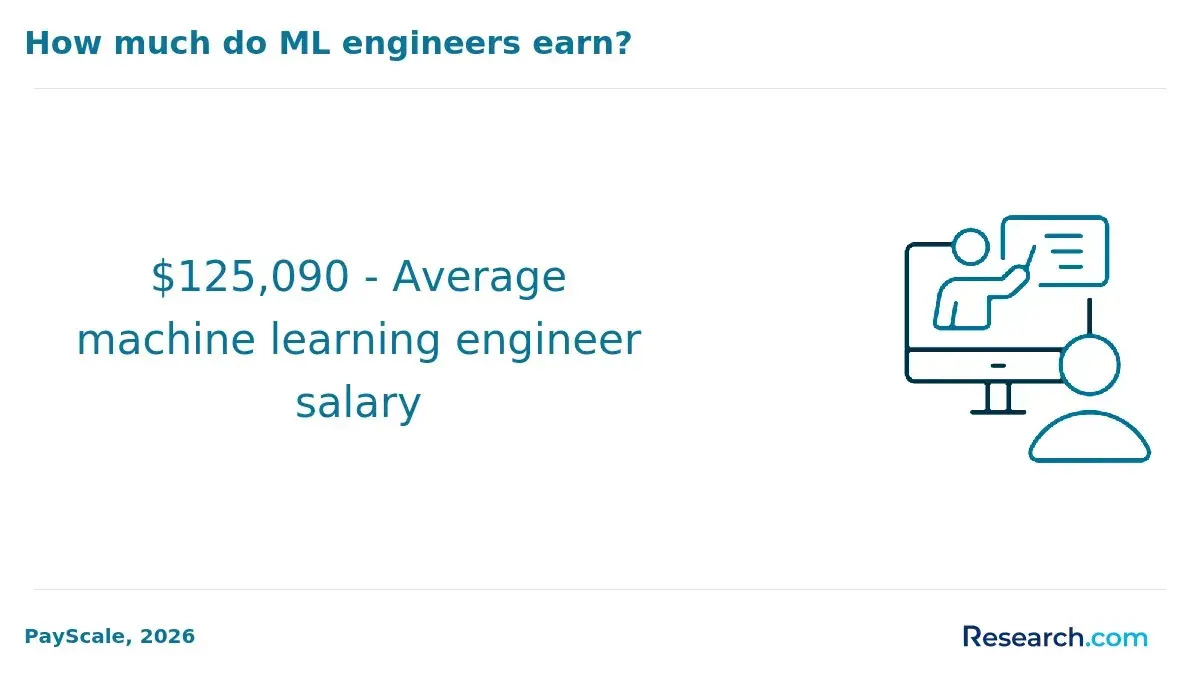
Entry-level salaries for AI master’s graduates working in HR analytics or AI-driven roles typically range from $85,000 to $110,000, influenced by industry and location. Professionals with two to five years of AI experience in HR often earn above $120,000, especially in technology, finance, and healthcare sectors or in large metropolitan areas.
- AI HR Data Analysts usually start between $80,000 and $95,000.
- AI Talent Acquisition Managers focused on algorithmic candidate screening earn $105,000 to $115,000.
- Senior People Analytics Directors combining AI insights with strategy can command $125,000 or more.
To improve salary prospects, HR professionals should build a portfolio of applied work, such as a workforce dashboard, retention model, candidate pipeline analysis, or AI governance framework. Employers often value proof that a candidate can turn technical methods into better workforce decisions, not just completion of a degree.
What certifications complement an AI master's degree for HR professionals?
Certifications can complement an AI master’s degree by signaling targeted expertise in HR practice, analytics, machine learning, or responsible technology use. They are most valuable when they fill a specific gap: HR professionals with strong people experience may use analytics certifications to demonstrate technical credibility, while technically trained graduates may use HR certifications to show knowledge of workforce strategy and compliance.
Notable certifications include:
- People Analytics Certificate programs: These focus on workforce metrics, statistical analysis, reporting, and translating employee data into business insight.
- SHRM certifications: SHRM-CP or SHRM-SCP credentials from the Society for Human Resource Management can strengthen strategic HR credibility when paired with AI training.
- Certified Analytics Professional (CAP): This credential supports advanced analytics knowledge and can help professionals evaluate AI model outputs in HR contexts.
- Google’s Professional Machine Learning Engineer certification: This can deepen technical expertise in designing and managing AI solutions, including applications related to employee engagement and performance prediction.
The right certification depends on the target role. A future People Analytics Manager may benefit most from analytics-focused credentials, while an HR leader responsible for AI adoption may prioritize SHRM credentials plus training in responsible AI, governance, and change management. Certifications should support a clear career story rather than simply add more acronyms to a resume.
Other Things You Should Know About Artificial Intelligence
It is not strictly necessary for HR professionals to have a background in computer science to pursue an AI master's degree in 2027. Many programs offer foundational courses in programming and data analysis to ensure all students, regardless of their previous expertise, can succeed.
AI master's programs in 2027 often provide career support services, including dedicated HR career advisors, internship placements in tech-HR integration roles, and networking events with AI industry leaders, specifically tailored to enhance the employability of HR professionals in AI-focused pathways.
Many programs allow electives or specialized tracks that tailor AI skills toward human resources challenges. Students may engage in projects on talent analytics, workforce optimization, or automated recruitment systems to apply AI specifically to HR functions.
Proficiency in programming languages like Python and familiarity with machine learning frameworks are essential. Additionally, skills in data analysis, natural language processing, and statistical modeling are highly valuable to develop AI tools that enhance HR processes.
Yes, many programs require at least one course in data ethics, privacy, or AI governance. Common prerequisites include 30 to 36 credit hours for the degree, with coursework aligned to FERPA, GDPR, and workplace data compliance. Some universities also require a capstone or internship approval.
References
- (25) Top AI Human Resources Jobs | Murray Resources https://murrayresources.com/25-top-ai-human-resources-jobs/
- London School of International Business https://www.lsib.co.uk/2022/course-details.aspx
- Human Resource Management with Artificial Intelligence https://www.napier.ac.uk/courses/msc-human-resource-management-with-ai-postgraduate-full-time
- AI Courses for HR Professionals https://www.aihr.com/course-overview/ai-courses-for-hr/
- Artificial Intelligence (AI) https://ai-master.org/requirements
- AI in HR Training and Courses: Building Skills for Tomorrow https://www.applaudhr.com/blog/artificial-intelligence/ai-in-hr-training-and-courses-building-skills-for-tomorrow
- Master AI for HR in the Josh Bersin Academy https://getgalileo.ai/learn/artificial-intelligence-hub
- Best AI Courses & Certifications for HR Professionals in 2025 https://learnprompting.org/blog/ai-courses-for-hr-professionals
- HR Career Opportunities in the Era of AI and Automation https://www.unleash.ai/hr-career-opportunities-in-the-era-of-ai-and-automation/
- M.SC. IN Artificial Intelligence https://put.poznan.pl/msc-artificial-intelligence