2027 Best AI Degrees for Students Interested in Media and Entertainment Tech

Co-Founder and Chief Data Scientist
Choosing an AI degree for media and entertainment is no longer just a question of whether to study computer science or digital arts. Students now have to compare programs that mix machine learning, real-time graphics, game engines, virtual production, generative AI, animation pipelines, XR development, and creative portfolio work. The right choice depends on the career target: AI-assisted content production, game development, VFX, immersive media, streaming analytics, technical art, or research.
This guide explains what AI media and entertainment technology degrees cover, which degree level fits different roles, what accreditation to check, what coursework matters, how online programs compare with campus-based options, and what graduates can expect in terms of cost, time, salaries, and certifications. It is designed for students entering college, working professionals pivoting into creative technology, and artists or developers who want a stronger technical foundation for AI-driven production work.
Key Things You Should Know
- AI degrees integrating media and entertainment tech focus on skills like machine learning, computer vision, and creative content generation, reflecting a 23% job growth in this sector through 2028.
- Top programs emphasize hands-on projects with industry partnerships, preparing students for careers in animation, virtual production, and interactive storytelling using AI tools.
- Graduates often access a median starting salary of $75,000, with demand driven by streaming services and gaming companies investing heavily in AI-enhanced content development.
What are AI degrees focused on media and entertainment technology?
AI degrees focused on media and entertainment technology are interdisciplinary programs that teach students how to apply artificial intelligence to creative production, interactive systems, and digital media workflows. Instead of studying AI only as a general computing discipline, students learn how machine learning, computer vision, natural language processing, data analytics, and generative models are used in film, animation, games, streaming platforms, virtual production, and XR environments.
Typical programs combine technical coursework with studio-based or project-based learning. Students may build tools for automated editing, AI-assisted animation, intelligent game characters, procedural environments, speech and voice synthesis, audience recommendation systems, or synthetic media pipelines. Strong programs also require students to understand the creative context of these tools, not just the algorithms behind them.
Degree names vary by institution. Students may see options such as a Bachelor of Science in AI for Entertainment Technology, a master's in computational media, a computer science degree with a game AI concentration, or a digital media program with an AI track. Because titles are inconsistent, applicants should look closely at the curriculum, faculty expertise, software access, portfolio requirements, and industry partnerships rather than relying on the program name alone.
These degrees can prepare graduates for roles such as AI programmer for game studios, media data scientist, technical artist, interactive systems developer, AI tools engineer, or research engineer in creative technology. Demand is being shaped by the rapid use of generative AI in creative industries; 75% of companies in the sector reported using generative AI in business functions.
Students comparing this field with broader AI career paths can also review what jobs can you get with an ai degree to understand how media-focused roles differ from general AI, data science, and software engineering jobs.
Which AI degree level best fits careers in film, games, and XR?
For many careers in film, games, and XR, a bachelor's degree is the most practical entry point. It gives students enough time to build programming ability, understand AI fundamentals, learn production tools, and create a portfolio. In 2024, 51% of U.S. job postings demanding AI expertise specified a bachelor's degree as a minimum requirement, compared to only 25% for master's degrees (Lightcast, 2024 AI skills/job postings analysis). That makes a well-designed undergraduate program in computer science, game development, interactive media, or entertainment technology with AI coursework a strong fit for many production and development roles.
A bachelor's program is especially useful for students targeting hands-on jobs in game AI, technical art, animation tools, XR development, real-time visual effects, and media software development. These roles usually require applied skill: the ability to code, test models, work in engines such as Unity or Unreal Engine, collaborate with artists, and solve production problems under deadlines.
A master's degree becomes more valuable when the career goal involves advanced model development, applied research, leadership in AI systems design, or work in R&D teams at large studios, technology companies, or research labs. Graduate study typically offers deeper training in algorithm design, neural networks, computer vision, optimization, and experimental methods.
| Degree level | Best fit | Important trade-off |
| Associate degree | Entry-level media technology support, production assistance, or transfer into a bachelor's program | May not provide enough depth for AI engineering roles |
| Bachelor's degree | Game AI, technical art, XR development, animation tools, media software, and production technology roles | Students must build a strong portfolio and practical projects to stand out |
| Master's degree | AI research, senior technical roles, advanced computer vision, generative media systems, and leadership-oriented paths | Requires more time and cost, so the return depends on career goals |
Students should choose the lowest degree level that credibly supports their target role, then add focused experience through internships, studio projects, open-source work, hackathons, or certifications. Practical experience with frameworks such as TensorFlow or PyTorch is often as important as the credential itself.
Those considering graduate study at a lower cost can compare options such as the cheapest data science masters in USA, since data science and machine learning programs can provide transferable AI skills for media and entertainment careers.
What careers can you get with an AI media and entertainment degree?
An AI media and entertainment degree can lead to careers that sit between software development, creative production, data analysis, and interactive design. Graduates are often hired because they can communicate with both technical teams and artists: they understand models, code, pipelines, and production constraints.
Common career paths include AI-assisted animation, VFX pipeline development, game AI programming, XR experience development, recommendation systems for streaming platforms, technical art, virtual production engineering, and machine learning work for media content creation or audience analytics. Special effects artists use AI to create more realistic visuals in films, TV, and video games, while animators use AI tools to accelerate motion, rigging, and character workflows. This sector is projected to grow by 8%, according to the U.S. Bureau of Labor Statistics.
| Career path | How AI is used | Portfolio evidence that helps |
| Game AI programmer | Behavior systems, adaptive gameplay, pathfinding, procedural content, and intelligent NPCs | Playable demos, engine projects, behavior trees, and documented code |
| Technical artist | Tool building, automation, shader workflows, animation support, and real-time rendering pipelines | Before-and-after workflow tools, scripts, and real-time engine samples |
| VFX or animation tools developer | AI-assisted rotoscoping, motion generation, facial animation, upscaling, and simulation support | Short production reels, pipeline tools, and model integration examples |
| Media data scientist | Audience analytics, recommendation systems, personalization, and content performance modeling | Data projects, dashboards, predictive models, and clear business explanations |
| XR developer | Computer vision, spatial computing, gesture recognition, and adaptive immersive environments | AR or VR prototypes, interaction demos, and performance optimization work |
Students should build a portfolio that proves they can apply AI to a media problem, not just complete coursework. Strong projects show the problem, the tools used, the technical approach, the creative result, and the limitations. Employers also value applicants who understand ethical issues in synthetic media, copyright-sensitive workflows, data bias, and disclosure of AI-generated content.
For students comparing other technical degree routes, programs such as the cheapest online civil engineering degree can illustrate how online technical education is structured, although AI media careers usually require a different mix of computing, creative software, and portfolio development.
What accreditation should AI and media tech programs have in the United States?
Students should first confirm that the college or university has recognized institutional accreditation. This matters for credit transfer, graduate school eligibility, employer confidence, and access to federal financial aid. For U.S. students, regional accreditation agencies such as the Middle States Commission on Higher Education or the Western Association of Schools and Colleges are commonly used indicators of institutional quality and stability.
Programmatic accreditation can also matter, especially when the AI media program is housed in computing, engineering, information technology, or software engineering. ABET accreditation is particularly relevant for programs with a strong technical focus because it reviews curriculum quality, faculty qualifications, student outcomes, and continuous improvement processes. ABET has accredited over 4,000 programs at more than 850 universities worldwide.
Not every strong media technology program will have ABET accreditation, especially if it is housed in a film school, design school, digital arts department, or interdisciplinary media lab. In those cases, students should look for other signals of quality: rigorous coding requirements, access to production equipment, faculty with industry or research experience, strong student portfolios, internship pipelines, and transparent career outcomes.
- Check institutional accreditation first: This is the baseline for legitimacy, transferability, and financial aid eligibility.
- Look for ABET when the program is computing-heavy: It is most relevant for computer science, engineering, software, and IT-oriented degrees.
- Review industry connections carefully: Partnerships with studios, game companies, AI labs, or media technology firms can improve access to projects and internships.
- Do not rely only on marketing language: A program that advertises AI should still show required coursework in programming, machine learning, data, and applied production.
Students interested in the security side of media systems, cloud pipelines, content platforms, or AI infrastructure may also compare accredited options such as the best online cyber security degrees to build a broader technical foundation.
What coursework teaches AI for VFX, animation, games, and content production?
Strong coursework for AI in VFX, animation, games, and content production should cover both the technical foundation of AI and the production environments where those tools are used. Students need more than a single introductory AI class; they need repeated practice applying models to images, motion, sound, text, real-time graphics, and interactive systems.
Core courses usually include programming, data structures, machine learning, neural networks, computer vision, statistics, and natural language processing. Media-focused programs then extend those topics into procedural content generation, AI-driven animation rigging, real-time rendering, motion capture analysis, character behavior, virtual production, digital compositing, and content recommendation systems.
Hands-on labs are essential because entertainment technology is workflow-driven. Students should expect to work with tools such as TensorFlow, PyTorch, and Unity ML-Agents, as well as game engines, production software, and cloud-based compute resources. This practical emphasis reflects industry adoption: 65% of organizations routinely use generative AI, according to McKinsey's 2024 report.
| Course area | Why it matters for media and entertainment |
| Machine learning and neural networks | Supports generative media, classification, prediction, automation, and intelligent tools |
| Computer vision | Used in tracking, compositing, facial analysis, pose estimation, visual effects, and XR |
| Game AI and procedural systems | Enables adaptive gameplay, NPC behavior, level generation, and simulation |
| Real-time graphics and optimization | Helps students build AI-enabled systems that run inside games, XR, and virtual production environments |
| Natural language processing | Supports script tools, dialogue systems, chat-based characters, metadata analysis, and interactive storytelling |
| AI ethics and synthetic media | Prepares students to address bias, disclosure, consent, authorship, and responsible use |
The best programs require a capstone or portfolio project where students solve a real production problem. Examples include training a model to assist animation cleanup, building an AI-driven game character, generating procedural environments, analyzing streaming engagement data, or creating a tool that reduces repetitive work in a VFX pipeline.
What admissions prerequisites are common for AI and media technology programs?
Admissions requirements for AI and media technology programs usually depend on whether the degree is housed in computer science, engineering, digital media, game design, or an interdisciplinary school. The most technical programs expect strong preparation in mathematics and programming. Creative technology programs may also ask for a portfolio that shows design ability, storytelling, animation, game projects, or interactive media work.
Common academic prerequisites include calculus, programming in languages such as Python, Java, or C++, and readiness for statistics and linear algebra. These subjects support the mathematical and computational work behind machine learning, computer vision, graphics, simulation, and media data analysis. Some programs also prefer prior exposure to digital media, computer graphics, signal processing, or game development.
Applicants may strengthen their applications with Advanced Placement credits in Calculus AB/BC or Computer Science Principles, strong SAT or ACT math scores when required, and letters of recommendation that speak to problem-solving, persistence, creativity, and technical potential. For graduate programs, applicants may need prior college coursework in algorithms, data structures, probability, linear algebra, and software development.
- For computing-heavy programs: Prior coding experience and math readiness are usually more important than a polished art portfolio.
- For digital arts or game programs: A creative portfolio may carry significant weight, especially if it includes technical projects.
- For graduate applicants: Gaps in linear algebra, statistics, or programming can slow progress, even for students with strong creative backgrounds.
- For career changers: Bridge courses, certificates, or community college prerequisites can help prepare for admission without committing to a full degree immediately.
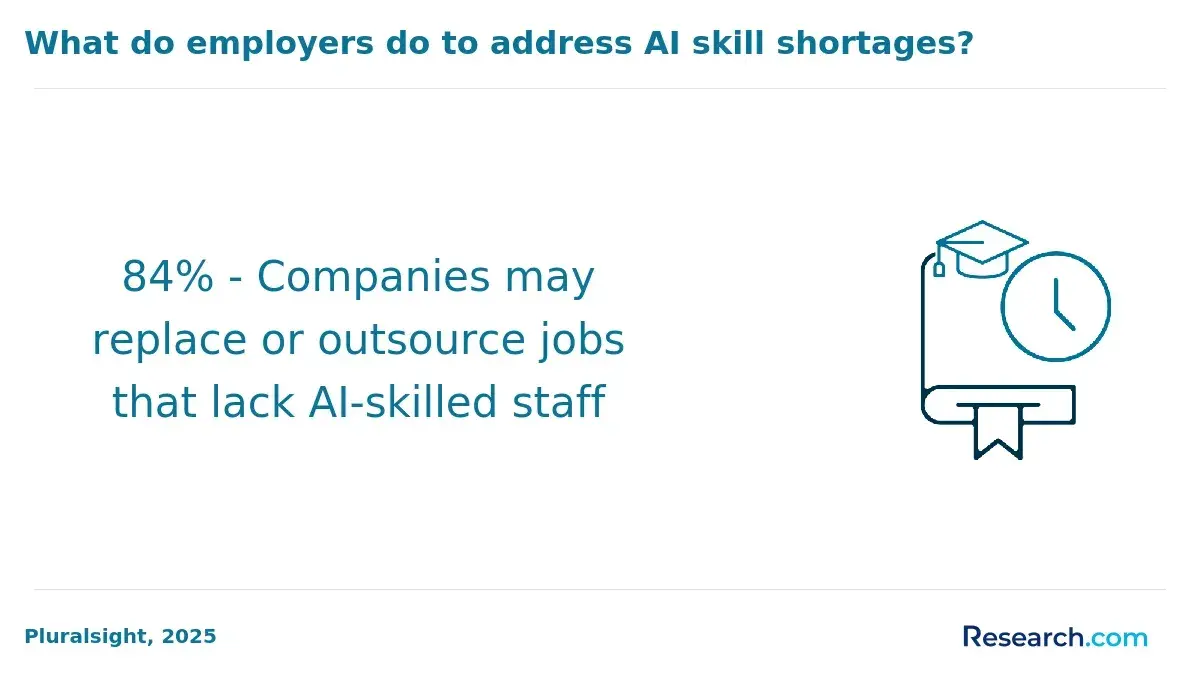
According to McKinsey's "The state of AI in 2024", only 37% of organizations have fully scaled AI initiatives, with a significant barrier being the lack of skilled personnel. That skills gap helps explain why many programs screen for applicants who can handle rigorous technical work from the start.
How do online AI media programs compare with on-campus options?
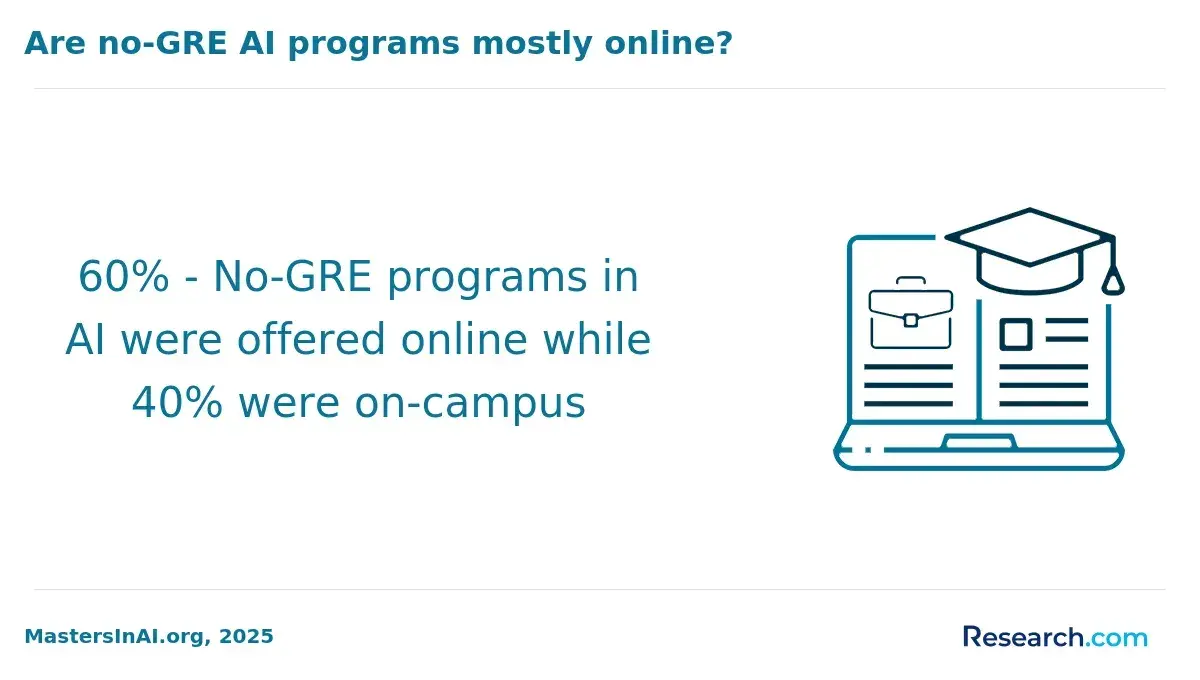
Online AI media programs can be a strong option for students who need flexibility, live far from major campuses, or plan to continue working while studying. More than half of U.S. undergraduate students enroll in at least one distance education course, showing that online learning is now a common part of higher education. Many online programs cover the same academic topics as campus programs, including machine learning, computer vision, media technology, and data-driven content systems.
The main difference is access to equipment, collaboration, and studio culture. On-campus programs may offer specialized labs, motion capture spaces, rendering hardware, production studios, screening rooms, VR equipment, and immediate peer collaboration. These resources can matter for students focused on VFX, XR, virtual production, animation, or game development.
Online programs work best when they provide structured project feedback, cloud-based tools, remote lab access, clear software requirements, and opportunities to collaborate with classmates. Students should ask how group projects, portfolio reviews, critiques, and internships are handled before enrolling.
| Format | Advantages | Potential limitations |
| Online | Flexible schedule, broader geographic access, easier fit for working adults, and often more control over pacing | May offer less access to physical studios, specialized equipment, and local industry networking |
| On campus | Hands-on labs, face-to-face collaboration, equipment access, studio culture, and local internship connections | Less flexible schedule and may require relocation or commuting |
| Hybrid | Combines online coursework with some in-person labs, residencies, or studio intensives | Travel requirements and scheduling may still create barriers |
Students choosing between formats should think about the kind of work they want to do. A student focused on media analytics or AI software may succeed fully online if the curriculum is rigorous. A student focused on motion capture, virtual production, XR hardware, or studio-based VFX may benefit from campus access or a hybrid model.
How long do AI media degrees take, and what do they cost?
AI media degree length depends on the credential level, enrollment status, transfer credits, and whether the program requires internships, studios, or capstone projects. Associate degrees focusing on media technology with AI applications typically require about two years of full-time study. Bachelor's degrees generally take four years and are more widely recognized for AI-related roles. Master's degrees in AI for media or entertainment technology usually last one to two years beyond the bachelor's level.
Cost varies widely by institution type, residency status, program format, and required technology. In-state public four-year universities average $11,260 annually in tuition and fees, while private or out-of-state options can cost two to three times more. For example, a bachelor's in AI media at a public university may total around $45,000, whereas private schools can exceed $100,000. Students should also budget for software, hardware, cloud computing, media equipment, production fees, and potential unpaid internship time.
| Credential | Typical full-time length | Best use case |
| Associate degree | About two years | Starting in media technology, preparing for transfer, or building entry-level technical skills |
| Bachelor's degree | Generally four years | Most AI media, game, XR, technical art, and production technology roles |
| Master's degree | Usually one to two years beyond the bachelor's level | Advanced AI roles, research-oriented work, leadership paths, or specialization after a related bachelor's degree |
Students should compare the total cost of attendance, not just tuition. Important questions include whether the program charges by credit, whether online students pay different fees, whether required software is included, whether students need a high-performance computer, and whether scholarships are available for computing, media arts, or STEM students.
Transfer credits can reduce time and cost, but students should confirm how prior coursework applies to major requirements. General education credits are often easier to transfer than specialized AI, graphics, studio, or production courses. Before enrolling, ask for a written transfer evaluation and a realistic graduation plan.
What salaries can AI media and entertainment tech graduates expect?
AI media and entertainment technology graduates can earn competitive salaries, especially when they combine programming, machine learning, production software, and creative problem-solving. According to the U.S. Bureau of Labor Statistics, special effects artists and animators, who often use AI-driven tools to enhance animation and digital content, earned a median annual wage of $99,060 as of May 2024.
Compensation depends on job function, portfolio quality, employer size, location, technical depth, and whether the role is closer to software engineering, art production, data science, or research. Students should be cautious when comparing salaries across job titles because “AI media” roles can range from production support to advanced machine learning engineering.
- Entry-level roles in AI-assisted animation or media production: $60,000 to $75,000 annually
- Mid-career specialists skilled in machine learning for visual effects or virtual reality: $90,000 to $120,000
- High-demand sectors like procedural content generation and real-time rendering: $130,000+
Freelancers and consultants with advanced AI expertise in media tech often command higher hourly rates, sometimes generating annual incomes above $150,000. However, freelance income can be less predictable than salaried employment and may require business development, client management, and a strong public portfolio.
Location also affects pay. Entertainment and technology hubs such as Los Angeles, New York, and San Francisco often offer premium salaries because of industry concentration and cost of living. Remote work can broaden opportunities, but applicants still need evidence of collaboration skills, production discipline, and the ability to deliver technical work on schedule.
Which certifications help for AI, VFX, game, and XR roles?
Certifications can help AI, VFX, game, and XR professionals prove platform-specific skills, especially when they are paired with a strong portfolio. They are not a substitute for a degree, production experience, or demonstrable projects, but they can be useful for students changing careers, filling a technical gap, or showing readiness for a specific toolchain.
For AI-focused roles, credentials such as the Certified Artificial Intelligence Practitioner (CAIP) and Microsoft Certified: Azure AI Engineer Associate can support skills in machine learning, model deployment, data analysis, and AI integration. These are most useful for students targeting AI engineering, cloud-based media tools, recommendation systems, or production automation.
For VFX and animation, certifications such as Autodesk Maya Certified Professional and Foundry Nuke Certification can validate knowledge of modeling, animation, compositing, and visual effects workflows. These credentials are strongest when supported by a reel that shows finished work and explains the applicant's contribution.
For game development and XR, the Unity Certified Programmer, Unreal Engine Certification, Unity XR Specialist, and Google ARCore Developer Certification may be relevant. They can demonstrate experience with real-time engines, interactive systems, augmented reality, virtual reality, and performance-aware development.
| Career focus | Helpful certifications | Best paired with |
| AI engineering for media | Certified Artificial Intelligence Practitioner (CAIP); Microsoft Certified: Azure AI Engineer Associate | Python projects, model deployment examples, and cloud-based workflows |
| VFX and animation | Autodesk Maya Certified Professional; Foundry Nuke Certification | A reel, breakdowns, compositing examples, and pipeline tools |
| Game development | Unity Certified Programmer; Unreal Engine Certification | Playable demos, source code, optimization work, and AI behavior systems |
| XR development | Unity XR Specialist; Google ARCore Developer Certification | AR or VR prototypes, interaction design, spatial computing projects, and device testing |
Employers increasingly value verified skills because tools change quickly. According to Statista, the global market for IT certification training will reach $26.6 billion by 2025, pointing to rising demand. The best certification strategy is targeted: choose credentials tied to the software, engine, cloud platform, or AI workflow used in the role you want, then build portfolio projects that prove you can apply those skills in real production contexts.
Other Things You Should Know About Artificial Intelligence
In 2027, renowned universities such as Carnegie Mellon University, MIT, and Stanford University offer leading AI degrees tailored towards media and entertainment technology. These programs focus on integrating AI techniques with media applications, preparing students for advancements in the entertainment industry.
AI degrees for media and entertainment tech in 2027 often include internships or collaborative projects. Programs may partner with tech companies or studios to provide real-world experience, ensuring students gain hands-on skills crucial for the entertainment industry’s evolving AI landscape.
Yes. Many programs let students earn certifications such as AWS Certified Machine Learning, NVIDIA Deep Learning Institute credentials, or Adobe technical badges alongside degree coursework. These options often appear in capstone studios or elective labs and usually require passing a vendor exam or completing a verified project.
In 2027, AI graduates focusing on media and entertainment tech can pursue careers as AI specialists in film production, game developers using machine learning, or managers of interactive media platforms. These roles leverage AI for content creation, enhancing user experiences, and optimizing digital distribution.
References
- How to Understand Online vs. On-Campus Student Preferences https://www.userintuition.ai/reference-guides/online-vs-on-campus-student-preference/
- Mckinsey - The State Of Ai In 2024 https://www.mckinsey.com/featured-insights/artificial-intelligence/the-state-of-ai-in-2024
- AI Machine Learning Foundations for VFX Artists | fxphd https://www.fxphd.com/details/712/
- Online AI Degrees vs On-Campus: Which Is Right for You in 2026? https://aidegreeonline.com/online-ai-degrees-vs-on-campus-which-is-right-for-you-in-2026/
- Digital Media Careers: What Can You Do with a Digital Media Degree? https://www.nu.edu/blog/digital-media-careers/
- Campus AI vs. Commercial AI: Comparing How Students and Employees Perceive their University’s LLM Chatbot vs. ChatGPT https://arxiv.org/html/2509.15826v3
- Certificate Course in VFX For Films with AI https://toonzacademy.com/vfx-for-films-with-ai/
- Top Artificial Intelligence Courses: Fees and Duration https://collegevidya.com/blog/artificial-intelligence-course-fees-structure-duration/
- The 10 highest-paying tech jobs in the AI and digital economy https://www.obsbusiness.school/en/blog/10-highest-paying-tech-jobs-ai-and-digital-economy-cp
- Introduction to AI in media production - Stockholm University of the Arts (SKH) https://www.uniarts.se/english/courses/courses/introduction-to-ai-in-media-production/