2027 AI Bachelor's Programs With Weekly Start Dates

Co-Founder and Chief Data Scientist
Many professionals with degrees outside STEM fields struggle to find flexible, accredited programs that allow quick entry into the artificial intelligence industry. Traditional bachelor's programs often start only once or twice a year, delaying career transitions. This rigidity can deter motivated individuals eager to reskill and capitalize on AI's growing job market. Programs with weekly start dates offer a solution by enabling learners to begin coursework almost immediately, accommodating diverse schedules and life commitments.
This article examines the available 2027 AI bachelor's programs featuring weekly start dates and provides insights to help prospective students identify flexible options that support timely career pivots.
Key Things You Should Know
- AI bachelor's programs with weekly start dates offer flexible enrollment, allowing students to begin studies anytime, significantly reducing wait times compared to traditional semester schedules.
- These programs integrate up-to-date curricula emphasizing machine learning, natural language processing, and ethical AI, aligning with 2025 workforce demands projecting 22% job growth in AI fields through 2030.
- Many institutions provide online or hybrid formats, expanding access for working professionals and non-traditional students aiming to enter AI careers without disrupting existing commitments.
Which accredited universities offer AI bachelor's degrees with flexible weekly start dates?
Several accredited universities now offer bachelor's degree programs in artificial intelligence with flexible weekly enrollment, providing tremendous convenience for working professionals, career changers, and students requiring nontraditional schedules. Institutions like Colorado State University Global, Western Governors University, and Southern New Hampshire University allow students to start their AI studies nearly every week or month, bypassing the constraints of traditional semester timelines.
Enrollment in computer science and AI-related bachelor's programs has grown significantly, with the National Center for Education Statistics reporting an 8.1% increase from 2022 to 2023. Online program enrollment surged 12% faster than campus-based options, reflecting the rising demand for accessible digital coursework and frequent start dates.
These bachelor's degree programs in artificial intelligence with flexible start dates at accredited institutions typically combine asynchronous coursework with occasional live sessions. This structure helps students worldwide balance education with professional and personal commitments. Some programs embed AI topics within broader computer science degrees that offer weekly or monthly start options, catering to varied career interests such as machine learning, robotics, or data science. Prospective students interested in such pathways should explore accredited options and consult resources like the computer science degree accelerated listings to find programs that best fit their goals.
Verifying the accreditation, specific weekly start availability, faculty expertise, and technical support is critical when choosing an AI bachelor's program. Programs combining flexible starts with academic rigor and industry connections offer the strongest advantage in navigating the rapidly evolving AI job market.
What are the admission requirements and prerequisites for entering an AI bachelor's program?
Admission requirements for entering an AI bachelor's program in the United States typically include a high school diploma or equivalent, with a strong focus on mathematics and science. Most programs expect students to have completed at least precalculus, while calculus is often preferred. These math skills are essential for grasping algorithms, programming, and data structures foundational to AI. According to the College Board, students with mathematics backgrounds at the precalculus level or higher who pursue STEM degrees earn about 34% more over their lifetime compared to non-STEM graduates, highlighting the importance of these prerequisites.
Standardized tests such as the SAT or ACT are commonly required for U.S. undergraduate admissions, with strong math scores notably strengthening applications. Some universities may ask for SAT Subject Tests in Mathematics or Science, though requirements vary. Demonstrating critical thinking and problem-solving abilities through these tests remains key.
Additional prerequisites may include prior coursework in computer science or programming, which can also be fulfilled through online certifications if formal classes were unavailable in high school. Work experience in related fields or completion of preparatory programs can further support admission. Letters of recommendation and personal statements that emphasize analytical skills, coding experience, and interest in machine learning improve candidacy for artificial intelligence degrees.
Applicants should carefully review individual program prerequisites since some schools require introductory computer science courses before enrollment or recommend summer bridge programs to address gaps. For those exploring other STEM options, an online mechanical engineer degree might also be of interest.
How do online and campus-based AI bachelor's programs differ in curriculum and learning format?
Online vs campus based AI bachelor's degree curriculum primarily differs in delivery but covers similar core topics like machine learning, data structures, neural networks, and ethics. Campus programs blend in-person lectures, labs, and seminars, allowing direct mentorship and hands-on lab work with physical AI hardware. This environment benefits students who prefer structured schedules and face-to-face collaboration.
Conversely, online AI bachelor's programs offer coursework through digital platforms using video lectures, virtual labs, and interactive simulations. Many feature asynchronous modules, enabling flexible pacing and weekly start dates, which suits working professionals or those with other commitments. Although online students may lack traditional physical labs, accredited programs simulate experiments with cloud-based AI tools and remote coding environments. This distinction in differences in AI bachelor's program learning formats allows students to choose based on personal learning preferences and life demands.
A 2024 Gallup survey found 72% of employers value practical, hands-on experience as much as or more than learning format, while 61% accept online STEM degrees for entry-level AI roles. This confirms that online graduates with strong project portfolios remain competitive with campus peers. Prospective students seeking degrees in ai can explore various program options including those emphasizing extensive hands-on projects, which enhance employability. For more information, see degrees in ai.
What core coursework and technical skills are covered in an AI bachelor's degree?
Core coursework in artificial intelligence bachelor's programs cultivates essential technical skills for career readiness. Students usually start with programming, focusing heavily on Python, the industry-standard language for AI development. As LinkedIn's 2024 Jobs Report highlights, Python, machine learning, and data analysis top the list of in-demand AI skills, with a 74% increase in demand year-over-year, reflecting their critical presence in curricula.
Courses in machine learning algorithms cover supervised, unsupervised, deep learning, and reinforcement learning, teaching students to build and refine models using real-world datasets. Data analysis emphasis includes statistical techniques and tools such as Pandas and NumPy within Python environments. These technical skills developed in an AI undergraduate degree prepare students for hands-on challenges in the field.
Mathematics provides the foundation, with linear algebra, calculus, probability, and statistics underpinning algorithm comprehension. Some curricula extend to discrete mathematics and optimization to address algorithmic efficiency. Additionally, students explore natural language processing, computer vision, and robotics, applying AI concepts to image recognition and language modeling.
Practical experience through labs and internships simulates real-world scenarios like predictive analytics and autonomous systems. Software engineering best practices, including version control and testing, ensure graduates are workplace-ready. Ethical considerations such as fairness, bias, and data privacy complete the curriculum, equipping students to address AI's societal impact responsibly.
For those interested in advancing their knowledge after an undergraduate AI degree, exploring online masters data science programs can be a strategic next step.
How long does an AI bachelor's degree take to complete, and what is the typical total cost?
The typical timeframe to complete an ai bachelor's degree is around four years of full-time study. Most traditional programs, including those with weekly start dates, follow this schedule. Accelerated or part-time online options may extend the duration to five or six years depending on the student's pace. Cohort-based models with weekly intakes often maintain the four-year curriculum by compressing semesters or offering continuous coursework.
Regarding costs, the U.S. Bureau of Labor Statistics notes that the average total expense for a bachelor's degree at a private university is approximately $136,380. Online ai bachelor's programs usually offer more affordable tuition, roughly 23% less than private institutions. For example, a private school charging $30,000 per year might have an online counterpart costing about $23,100 annually.
Additional expenses such as textbooks, technology, and lab fees vary by program. Public universities generally provide lower tuition but may have fewer flexible start dates. Students prioritizing both affordability and enrollment flexibility should compare programs offering weekly start dates, tuition rates, and total costs.
Financial aid, scholarships, and employer tuition assistance can help decrease out-of-pocket expenses. Confirming a program's accreditation is important to ensure that credits are recognized by employers and graduate schools. Planning for around four years and budgeting between $100,000 and $136,000 sets realistic expectations for most U.S.-based ai bachelor's degrees starting weekly.
What career roles and job titles are available to AI bachelor's degree graduates?
Graduates with a bachelor's degree in artificial intelligence are prepared for diverse roles such as AI engineer, machine learning engineer, data scientist, and AI research analyst. These careers focus on creating and deploying AI models to address business challenges. Roles like AI software developer and AI product manager also require managing projects to align AI solutions with organizational needs.
Key sectors employing AI graduates include healthcare, finance, automotive, and technology. In healthcare, positions like clinical data analyst or AI algorithms developer support personalized medicine and diagnostics. In finance, AI specialists develop fraud detection and automated trading systems.
The World Economic Forum's 2024 Future of Jobs Report projects 170 million new AI-related jobs globally by 2030, with a 35% annual growth rate for AI specialists-highlighting the strong demand for these skills.
Specialized roles such as natural language processing specialist, robotics engineer, or AI ethics analyst require deep understanding of AI subfields. Employers look for candidates with programming expertise in Python or R and experience with AI frameworks like TensorFlow or PyTorch. Practical projects and internships improve employability by demonstrating real-world AI applications.
Building a tailored resume showcasing hands-on experience and engaging with AI communities or workshops can open opportunities in startups, research labs, and corporations. This expanding job market offers graduates a strong foundation for innovative and sustainable careers in artificial intelligence.
What is the salary potential for graduates with an AI bachelor's degree in the United States?
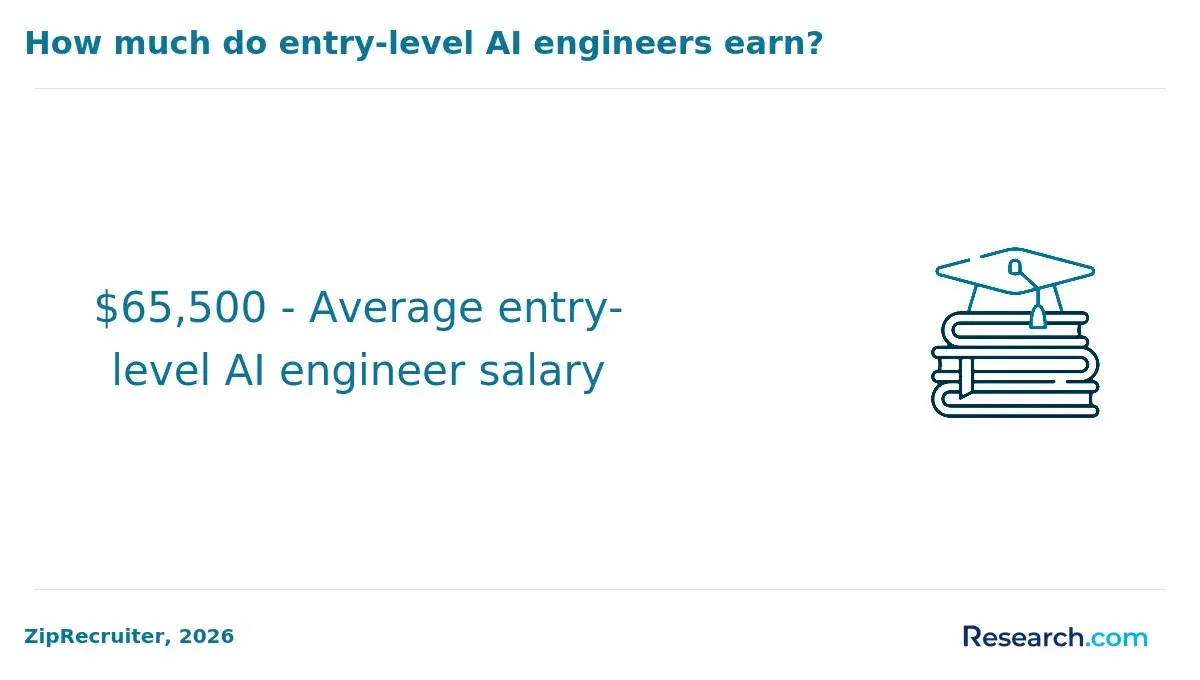
Graduates holding a bachelor's degree in artificial intelligence in the United States can anticipate strong salary prospects. Entry-level AI engineers typically earn around $98,500 annually, reflecting steady demand across sectors such as technology, finance, healthcare, and automotive industries.
With five to seven years of experience, mid-career professionals with the same degree often see salaries rise to $156,000 or more, marking a 58% increase. This growth aligns with deeper expertise, specialized skills, and involvement in complex AI projects.
Salary differences occur based on geographic location, company size, and industry. For example, AI engineers in tech hubs like Silicon Valley or New York City usually earn above average due to competitive markets and higher living costs. Those combining AI with data science, machine learning, or robotics expertise often qualify for premium compensation.
Graduates should also explore roles beyond classic engineering jobs, including AI product management and research analyst positions, which may offer similar or higher pay depending on the employer. Pursuing certifications or advanced training in areas such as natural language processing or computer vision can further enhance earning potential.
Prospective students are advised to consider these salary figures alongside educational investment and career goals. Glassdoor's salary data provides a reliable benchmark for evaluating the return on investment of bachelor's programs with weekly start dates.
What is the job outlook and industry demand for AI professionals through 2030?
The job outlook for AI professionals is exceptionally positive, with rapid growth anticipated across various industries. The U.S. Bureau of Labor Statistics projects a 23% employment increase for computer and information research scientists, including AI specialists, from 2023 to 2033. This rate far exceeds the average 3% growth expected for all occupations, highlighting AI's vital role in business and research advancements.
Demand spans sectors like healthcare, finance, automotive, and cybersecurity. In healthcare, AI drives innovations such as diagnostic tools and personalized medicine, requiring expertise in machine learning and neural networks. Financial institutions utilize AI to boost fraud detection and automate trading, while automotive companies focus on autonomous vehicle development.
Graduates with AI bachelor's degrees qualify for roles including AI researcher, data scientist, machine learning engineer, and AI software developer. Success in these roles depends on strong programming skills, statistical analysis, and familiarity with AI frameworks. Continued education in emerging AI fields further enhances career potential.
Ongoing skill development in areas like natural language processing, computer vision, and ethical AI application remains crucial. Prospective students should seek AI bachelor's programs emphasizing hands-on projects and current AI tools to better prepare for this expanding job market.
Are there professional certifications or industry credentials that complement an AI bachelor's degree?
Professional certifications and industry credentials significantly enhance an AI bachelor's degree by boosting employability and salary potential. A CompTIA study found that individuals with both a bachelor's degree and industry certifications earn 18-25% more than those with degrees alone, with AI-specific credentials offering the highest premium. These certifications validate practical skills that employers prioritize, bridging the gap between academic knowledge and job-ready expertise.
Popular certifications include the Certified Artificial Intelligence Practitioner (CAIP), which emphasizes applying AI frameworks in real-world scenarios. The Microsoft Certified: Azure AI Engineer Associate demonstrates proficiency with AI services on the Azure cloud platform, a valuable skill as many organizations adopt cloud-based AI solutions.
Additional credentials like the Google Professional Machine Learning Engineer certify expertise in designing and implementing machine learning models, a core AI component. For data-focused roles, the Certified Data Scientist and TensorFlow Developer Certificate showcase advanced skills in AI model training and deployment.
Many professionals pursue stackable certifications in emerging AI fields such as AI ethics, natural language processing, or computer vision to align with specific career goals. When choosing certifications, consider industry recognition, relevance to your career path, and hands-on project requirements to maximize their impact alongside your AI bachelor's degree coursework.
How should prospective students evaluate and compare AI bachelor's programs by reputation and outcomes?
Prospective students should assess AI bachelor's programs based on their employer reputation and clear graduate outcomes. Programs with strong industry partnerships and mandatory internships significantly boost job prospects. The National Association of Colleges and Employers (NACE) 2024 survey reports that 94% of employers recruit AI bachelor's graduates, with hiring rates 31% higher for those from programs integrating internships and collaborating with leading companies.
Reputation can also be gauged through AI or computer science-specific university rankings, alumni success, and employer feedback. Accreditation by recognized agencies and transparent employment statistics are key indicators of program quality. Partnerships with top tech firms like Google or IBM often reflect curricula aligned with evolving industry demands.
Graduate outcomes include not only employment rates but also average starting salaries, speed of job placement, and career advancement opportunities. Prospective students should consider whether alumni networks and career services provide ongoing professional support, which can be crucial for navigating AI's dynamic landscape.
Essential questions include whether the program mandates internships with measurable results, if faculty actively participate in AI research or industry, and how frequently the curriculum updates to reflect AI advances. Programs offering flexible start dates and experiential learning components tend to better prepare students for competitive careers.
Other Things You Should Know About Artificial Intelligence
AI bachelor's programs typically include coursework or modules dedicated to the ethical considerations and societal implications of artificial intelligence technologies. Students learn about data privacy, algorithmic bias, and the potential impacts of AI on employment and social equity. This focus prepares graduates to develop AI solutions responsibly and with an awareness of their broader consequences.
Many AI bachelor's programs offer opportunities to combine AI with fields like computer science, data science, robotics, business, or cognitive science. This interdisciplinary approach allows students to tailor their education to specific interests or career goals, such as AI in healthcare, finance, or autonomous systems. Such combinations often enhance employability by broadening technical and domain expertise.
Hands-on learning is a key component of AI bachelor's programs, often including projects, labs, internships, and capstone courses. These practical experiences enable students to apply theoretical knowledge to real-world problems. Access to AI software tools, programming languages like Python, and collaborative group work are common features that build technical skills and teamwork.
Given the fast-evolving nature of artificial intelligence, reputable AI bachelor's programs regularly update their curricula to include the latest advancements and industry trends. This may involve new courses on machine learning techniques, neural networks, natural language processing, and AI ethics. Continuous updates help ensure that graduates are prepared for current and future challenges in the field.
References
- AI Jobs in the U.S.: Salaries, Skills, and Career Growth in 2025 https://www.h2kinfosys.com/blog/ai-jobs-in-the-u-s-salaries-skills-and-career-growth-in-2025/
- How will Artificial Intelligence Affect Jobs 2025-2030 | Nexford University https://www.nexford.edu/insights/how-will-ai-affect-jobs
- Future of AI in College Education | University of Phoenix https://www.phoenix.edu/articles/online-college/ai-in-online-college-education.html
- AI Certification Programs: Which Ones Matter for Your Career https://www.businessplusai.com/blog/ai-certification-programs-which-ones-matter-for-your-career
- Online Bachelor of Science (BSc) in Artificial Intelligence - Swiss School of Business and Management Geneva https://www.ssbm.ch/online-bachelor-of-science-bsc-in-artificial-intelligence/
- Looking for a job in the AI era? Build the skills that will define 2030 | Morson Jobs https://www.morson.com/blog/looking-job-ai-era-build-skills-will-define-2030
- Artificial Intelligence (procedure for non-EU students) https://apply.unipv.eu/enter/295
- The future of work: Emerging job trends and the impact of AI (2025-2030) | EIT Deep Tech Talent Initiative https://www.eitdeeptechtalent.eu/news-and-events/news-archive/the-future-of-work-emerging-job-trends-and-the-impact-of-ai-2025-2030/
- How Long Does It Take to Complete an AI Course https://www.epw.com/blog/courses/how-long-is-ai-course
- AI pricing: how much does AI cost in 2025? | Future Processing https://www.future-processing.com/blog/ai-pricing-is-ai-expensive/