2027 Best AI Master's Degrees for AI in Retail and E-Commerce Careers

Co-Founder and Chief Data Scientist
Retail and e-commerce industries rapidly evolve, demanding professionals who can integrate artificial intelligence solutions to enhance customer experiences and optimize operations. Many prospective students with unrelated undergraduate degrees face challenges identifying flexible, accredited master's programs tailored to such career pivots. Without targeted education, transitioning into AI roles within retail sectors becomes difficult and uncertain.
This article evaluates top master's degrees designed for aspiring AI experts aiming at retail and e-commerce careers. It offers insights into program strengths, flexibility, and industry relevance to help readers choose the most effective pathway for entering this competitive field.
Key Things You Should Know
- Master's degrees in artificial intelligence tailored for retail and e-commerce increasingly emphasize practical skills, including AI-driven customer analytics and supply chain optimization, reflecting 2025 industry demands.
- Graduates with AI expertise in retail can expect a 15% higher salary on average, with jobs growing 22% faster than general tech roles through 2030, per U.S. labor data.
- Top programs integrate coursework in machine learning, natural language processing, and ethical AI use, crucial for navigating AI's expanding role in personalized shopping and fraud detection.
What is an AI master's degree for retail and e-commerce careers?
An AI master's degree programs for retail and e-commerce careers focus on advanced studies in artificial intelligence applications for retail and e-commerce environments. These programs cover key technologies such as machine learning, data analytics, natural language processing, and computer vision applied to challenges like demand forecasting, dynamic pricing, inventory control, customer behavior analysis, and personalized marketing.
Students gain experience developing AI systems that enhance sales conversion, improve supply chain efficiency, and increase customer engagement. Coursework typically includes recommendation engines, chatbots, fraud detection, and customer segmentation to handle large e-commerce datasets. This equips graduates to build AI models that predict purchasing trends and automate customer support, directly addressing industry needs.
Retail and e-commerce companies increasingly adopt AI solutions, with 42% of enterprises deploying AI according to the IBM Global AI Adoption Index 2024. As a result, demand grows for professionals skilled in both AI techniques and retail-specific applications. Programs often emphasize ethical AI use, data privacy, and integration within existing business frameworks.
Prospective students should seek degrees featuring practical projects and collaborations with retail firms, preparing them for roles such as AI product managers, retail data scientists, and e-commerce AI consultants. Some programs offer specialized tracks in supply chain AI, customer experience, or marketing analytics to align with career goals. For foundational studies, consider a 2 year bachelor degree computer science as a stepping stone into this field.
Which accredited schools offer strong AI master's programs for retail and e-commerce?
Several accredited master's programs in artificial intelligence for retail and e-commerce are offered by leading universities such as Carnegie Mellon University, Massachusetts Institute of Technology (MIT), Stanford University, and the University of California, Berkeley. These top schools offering AI master's degrees focused on retail and e-commerce all share the #1 spot in U.S. News & World Report's Best Computer Science Graduate Schools 2024, a reflection of their strength in AI research and practical applications within retail sectors.
Carnegie Mellon's Master of Science in Artificial Intelligence and Innovation emphasizes AI applications in industries like supply chain optimization and customer behavior analytics. MIT's program provides expertise in machine learning and data science, enabling development of AI-driven pricing models and personalization engines critical to e-commerce.
Stanford University offers specialized AI courses linked to business systems, including natural language processing and recommendation systems to tackle challenges like dynamic pricing and customer engagement. UC Berkeley's Master of Information and Data Science focuses on AI tools to analyze consumer data and improve inventory and marketing strategies.
Other reputable institutions such as Georgia Tech and the University of Washington integrate technical AI training with retail and e-commerce applications. Prospective students should consider curriculum focus, faculty expertise, and collaboration opportunities when selecting a program.
For those exploring options, consulting a data science major ranking can help identify affordable and high-quality programs that prepare students for careers at the intersection of AI and retail.
What careers can you get with an AI master's in retail and e-commerce?
An AI master's degree focused on retail and e-commerce opens doors to dynamic roles that integrate technology and data into sales. Careers in retail and e-commerce using artificial intelligence often include positions such as AI and Machine Learning Specialists, Data Scientists, and Retail Analytics Managers. These professionals design algorithms to optimize inventory, personalize shopping experiences, and enhance demand forecasting. The World Economic Forum's Future of Jobs Report 2025 highlights AI and Machine Learning Specialists as among the fastest-growing roles globally through 2030, indicating strong industry demand.
Practical career paths include:
- AI Product Manager: Leading the creation and deployment of AI-powered retail solutions tailored to consumer needs.
- Customer Insights Analyst: Utilizing machine learning to analyze consumer behavior and improve marketing effectiveness.
- Supply Chain Optimization Specialist: Applying AI to streamline logistics and reduce costs in e-commerce operations.
- Chatbot Developer: Building intelligent virtual assistants that provide real-time support and enhance online customer service.
- Fraud Detection Analyst: Deploying AI systems to identify fraudulent activities and secure online marketplaces.
Graduates pursuing AI master's careers in retail and e-commerce should have strong programming skills in Python, R, or Java and be familiar with AI frameworks like TensorFlow or PyTorch. Combining technical expertise with insights into consumer behavior and digital marketing is crucial. Salary ranges often exceed $90,000 annually, reflecting the advanced skills required. Prospective students seeking affordable options may consider online AI degree programs to advance their careers.
What specializations best match AI roles in retail and e-commerce?
Specializations that align with AI roles in retail and e-commerce emphasize data-driven decision making, improving customer experience, and boosting operational efficiency. Key areas include computer vision, natural language processing (NLP), data analytics, and supply chain optimization. Computer vision is particularly vital for loss prevention and shrink reduction, a top use case noted by NVIDIA's State of AI in Retail and CPG 2024 survey report.
Computer vision training helps develop systems to detect theft, analyze in-store behavior, and enhance inventory tracking through image and video data. NLP supports AI in interpreting customer feedback, powering chatbots, and personalizing marketing by understanding natural language queries. Data analytics mines large retail datasets for better pricing, demand forecasting, and customer segmentation. Supply chain specialization focuses on AI-driven route optimization, demand planning, and automated warehouse management, directly cutting costs and improving delivery speed. These are crucial components of ai specializations for retail analytics careers.
Master's degrees focused on ai applications in e-commerce and retail often include practical projects such as real-time fraud detection and customer sentiment analysis. Curricula commonly integrate cloud computing and AI frameworks like TensorFlow or PyTorch to enhance technical skills. For e-commerce roles, prioritizing NLP and recommender systems is beneficial, while computer vision and robotics are more relevant to physical retail positions.
Selecting programs with these specializations aligns with employer needs to reduce losses, optimize supply chains, and engage consumers more effectively. Prospective students can also explore related fields through an online cyber security degree, which complements AI proficiency in retail technology.
What courses and projects prepare you for AI in retail and e-commerce?
Courses designed for AI in retail and e-commerce emphasize machine learning, natural language processing (NLP), and data analytics. Key topics include recommendation algorithms, customer behavior modeling, and supply chain optimization. Students gain practical experience by building AI-powered search engines and personalized product discovery tools that are vital for careers in these sectors.
Generative AI models are becoming essential in the field. Google Cloud's 2024 retail industry report highlights how retailers use generative-AI-powered search to enhance relevance and conversion. Coursework that covers transformer models for search relevance or generative AI to produce dynamic product descriptions aligns well with industry needs.
Capstone projects and internships often focus on applying AI to retail datasets with tasks such as:
- Developing recommendation systems analyzing purchase and browsing history for better engagement
- Implementing NLP-driven chatbots to improve customer service
- Building demand forecasting models with time-series analysis for inventory management
- Using generative AI to automate content creation and personalize marketing campaigns
Selecting programs that partner with e-commerce platforms or retail technology companies is advantageous. Familiarity with cloud AI tools and APIs is critical, given industry dependence on scalable cloud infrastructure. Courses addressing ethical AI and data privacy prepare students to handle regulatory and trust issues effectively.
By focusing on these applied AI areas and projects, graduates position themselves competitively for roles such as AI product managers, data scientists, and machine learning engineers in retail and e-commerce firms.
What are the admission requirements for AI master's programs focused on retail?
Admission to AI master's programs with a retail focus generally requires a bachelor's degree in computer science, data science, engineering, mathematics, or a related STEM field. Applicants often need completed coursework in programming, statistics, and algorithms. Experience in machine learning or data analytics, demonstrated via projects or professional roles, can strengthen an application.
Minimum GPA requirements typically hover around 3.0 on a 4.0 scale, but more competitive programs may demand higher. Non-native English speakers usually must meet TOEFL iBT score standards between 90 and 100, following ETS/TOEFL 2024 guidelines to ensure sufficient language proficiency for technical content and collaboration.
GRE scores are frequently optional or waived, though strong quantitative results may enhance certain applications. Letters of recommendation from professors or employers who can attest to analytical skills are often required. Additionally, a clear statement of purpose outlining interest in AI applications within retail and e-commerce is commonly requested.
Prerequisites may vary by specialization; for example, AI degrees emphasizing supply chain optimization might prioritize candidates with inventory management experience. Prospective students should review program-specific requirements and consider supplemental coursework if lacking direct retail analytics or AI backgrounds.
How do online AI master's programs compare with on-campus options?
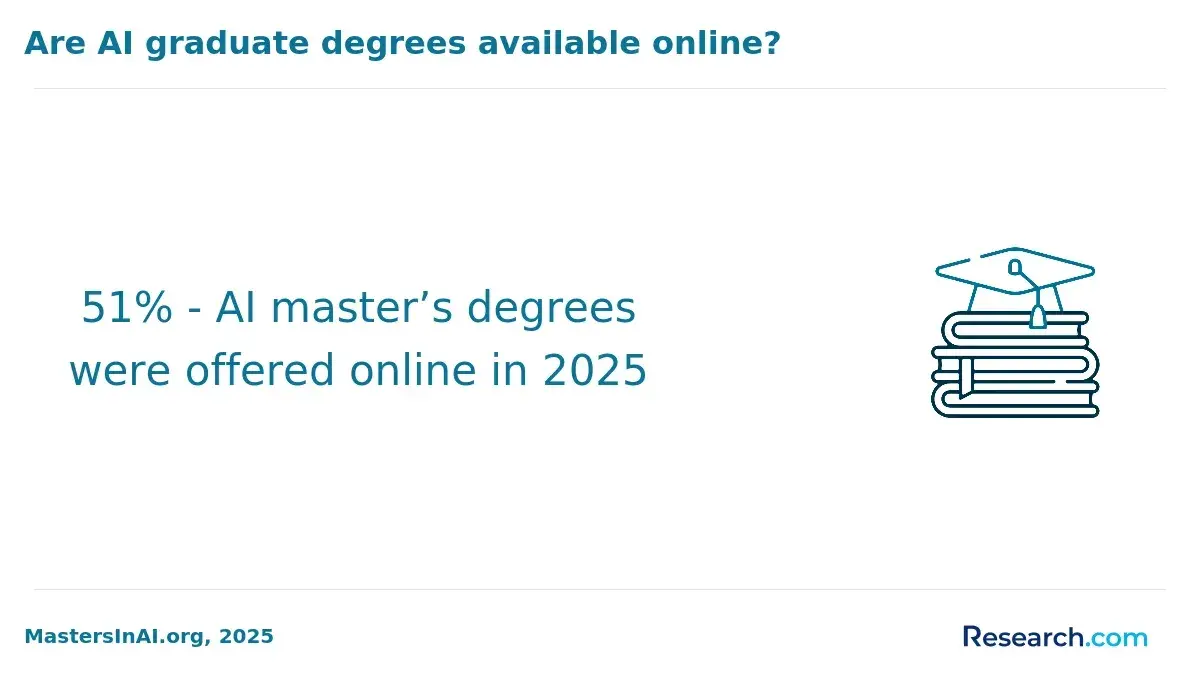
Online AI master's programs provide unmatched flexibility and accessibility, ideal for working professionals or students managing multiple responsibilities. According to a survey by Inside Higher Ed and College Pulse, many undergraduates prefer some level of online learning, confirming strong interest in hybrid and fully online formats. This trend enhances the feasibility of pursuing AI degrees relevant to retail and e-commerce careers.
On-campus programs offer face-to-face interaction, spontaneous networking, and hands-on lab work, which can benefit areas like machine learning implementation and retail data analysis. However, leading universities now integrate virtual labs, collaborative projects, and live online sessions into their remote AI offerings, narrowing this gap.
Consider these key factors when choosing between online and on-campus formats:
- Schedule flexibility: Online courses often allow asynchronous study, letting students learn outside traditional hours.
- Networking opportunities: On-campus settings give direct access to faculty and local industries, while online platforms provide forums and virtual meetups.
- Access to resources: Digital libraries, AI software, and remote mentoring are increasingly available in top online programs.
- Cost considerations: Online degrees can reduce housing and commuting costs, though tuition varies by school.
Choosing a program aligned with career goals, learning style, and personal needs is essential. Evaluating accreditation, faculty expertise, and curriculum relevance is equally important for success in AI-related roles in retail and e-commerce.
How long do AI master's programs take, and what do they cost?
Master's programs focusing on artificial intelligence for retail and e-commerce careers usually require 1 to 2 years of full-time study. Many universities also offer part-time or online options, which can extend completion times to 3 or more years depending on program design, credit load, and thesis or project requirements.
Tuition costs vary significantly between private nonprofit and public institutions. According to the National Center for Education Statistics (NCES, NPSAS 2024), private nonprofit programs typically charge between $25,000 and $45,000 annually, while public schools generally range from $10,000 to $20,000 per year. This tuition gap greatly influences total expenses over the course of a master's degree.
Additional fees, such as technology, lab access, and materials, can add $1,000 to $3,000 per year. Students should also budget for books, software licenses, and potential travel related to residencies or internships. Programs tailored for AI in retail may include industry partnerships that can impact costs through experiential learning fees.
Financial aid, scholarships, and employer tuition reimbursement can help offset these costs. Prospective students should carefully evaluate total program length and calculate cumulative tuition based on their pace of study. While part-time enrollment keeps annual costs stable, extending program duration may increase overall expenses. Strategic planning is essential to balance time and investment when advancing a career in artificial intelligence for retail and e-commerce.
What salaries can AI retail and e-commerce graduates expect?
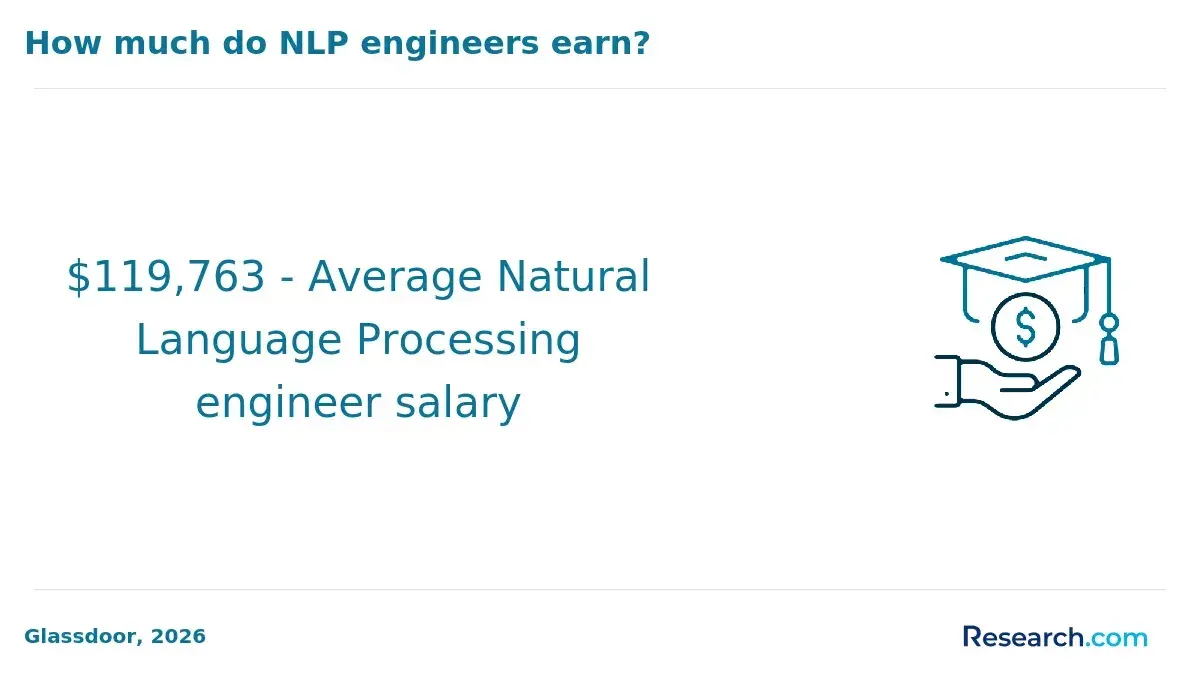
Graduates holding a master's degree in artificial intelligence with a focus on retail and e-commerce often earn competitive salaries due to the strong demand for technical skills in these industries. According to the U.S. Bureau of Labor Statistics (2024 update), the median annual salary for data scientists-closely related professionals-was $108,020 in 2023. This figure provides a reliable benchmark for AI experts applying data-driven methods in retail, such as demand forecasting, customer segmentation, and personalization algorithms.
Salary levels vary based on experience, location, and employer size. Entry-level positions typically start between $85,000 and $95,000 annually. With three to five years of experience, salaries usually increase to $110,000-$130,000, reflecting specialized knowledge in the field. Senior or lead AI roles can surpass $150,000. Key skills that enhance earning potential include natural language processing for chatbots, reinforcement learning for pricing strategies, and computer vision for inventory tracking.
Higher salaries are common in major tech hubs like San Francisco, New York, and Seattle, driven by living costs and talent demand. Additional compensation often includes performance bonuses, stock options, and signing incentives, especially at leading e-commerce companies and AI startups. These factors contribute to the total value of compensation packages more than base salary alone.
Which certifications complement an AI master's for retail and e-commerce work?
Certifications that complement a master's degree in artificial intelligence are essential for retail and e-commerce careers focused on data-driven customer insights, automation, and generative AI applications. Key certifications include:
- Certified Analytics Professional (CAP) for advanced data analytics skills applicable to consumer behavior and inventory management.
- Google Cloud Professional Data Engineer, which develops proficiency in scalable cloud infrastructures critical to e-commerce platforms.
- Microsoft Certified: Azure AI Engineer Associate, covering deployment of AI solutions in retail environments.
- Coursera's Generative AI Specialization, directly aligned with employer demand for generative AI expertise, as noted in Coursera's Global Skills Report 2024.
- Certified Supply Chain Professional (CSCP) to integrate AI applications with supply chain optimization in retail settings.
These certifications address retail challenges such as dynamic pricing algorithms, demand forecasting, personalized marketing, and chatbot development. For example, generative AI skills support personalized product recommendations and automated customer support, which are rapidly growing areas for upskilling.
Expertise in cloud platforms also aids the deployment and scaling of AI models to handle large customer volumes and fluctuating e-commerce traffic. Supply chain certification strengthens integration of AI's predictive tools for inventory and logistics efficiency.
Prospective students should seek certifications offering recognized industry validation and hands-on experience with tools used by leading retailers. Aligning these certifications with an AI master's degree enhances employability by demonstrating competencies that employers actively seek in this competitive sector.
Other Things You Should Know About Artificial Intelligence
Python is the most widely used programming language in AI due to its extensive libraries like TensorFlow and PyTorch. R is also popular for statistical analysis and machine learning. Knowledge of SQL and familiarity with big data tools are valuable for managing large datasets common in retail and e-commerce environments.
Ethical considerations include data privacy, transparency in automated decision-making, and avoiding biases in AI algorithms. Retail AI systems must comply with regulations such as GDPR and ensure fair treatment of all customer groups. Understanding these issues is essential for developing responsible AI solutions in retail and e-commerce.
Yes, graduates with AI expertise can transition into various industries including healthcare, finance, and manufacturing. The core AI skills acquired during their degree apply across sectors that use data-driven decision-making and automation. However, domain-specific knowledge enhances effectiveness in targeted fields like retail or e-commerce.
Graduates acquire skills in machine learning, data analysis, and predictive modeling tailored for retail environments. These programs also emphasize customer data management and algorithmic pricing strategies. Learn about how these apply to different sectors through a financial AI master’s degree.
References
- Choosing a master’s degree: data science or artificial intelligence | edX https://www.edx.org/resources/choosing-a-masters-degree-data-science-or-artificial-intelligence
- Online AI Degrees vs On-Campus: Which Is Right for You in 2026? https://aidegreeonline.com/online-ai-degrees-vs-on-campus-which-is-right-for-you-in-2026/
- 94 Hybrid & Onsite E-Commerce Jobs Matching "Ai" https://meetfrank.com/
- Online vs On-Campus Artificial Intelligence Degrees: Which Is Better? https://hakia.com/degrees/artificial-intelligence/online-vs-campus/
- M.SC. IN Artificial Intelligence https://put.poznan.pl/msc-artificial-intelligence
- AI in Retail and E-Commerce Training Course - Imperial Corporate Training Institute https://imperialtraining.org/training-course/ai-in-retail-and-e-commerce-training-course/
- Artificial Intelligence in e-commerce. How to make good use of AI in your business? - Media4U https://media4u.pl/en/blog/artificial-intelligence-in-ecommerce-how-to-make-good-use-of-ai-in-your-business/
- Course Details https://macskillsdevelopment.com/course/ai-in-retail-e-commerce-optimization-training-course
- Which AI certifications hold the most value after completing an AI course? | H2K Infosys Blog https://www.h2kinfosys.com/blog/which-ai-certifications-hold-the-most-value-after-completing-an-ai-course/
- AI in Retail and E-commerce 2024 https://www.rapidinnovation.io/post/ai-in-retail-and-e-commerce