
2027 Most Affordable Online Master’s in Adult Education Programs

Co-Founder and Chief Data Scientist
An affordable online master’s in adult education can be a practical next step if you already teach, train employees, manage programs, support adult learners, or want to move into instructional design, workforce development, higher education, nonprofit education, or learning leadership. The key decision is not simply finding the lowest tuition. You need a regionally accredited program with the right curriculum, flexible delivery, useful faculty support, and career alignment.
This guide explains what these programs teach, how much they cost, how long they take, which affordable online programs stand out for 2027, and how to compare your options without overpaying. It is designed for working adults who need a graduate degree that fits around employment, family responsibilities, and long-term career goals.
Quick Answer: Is an Affordable Online Master’s in Adult Education Worth It?
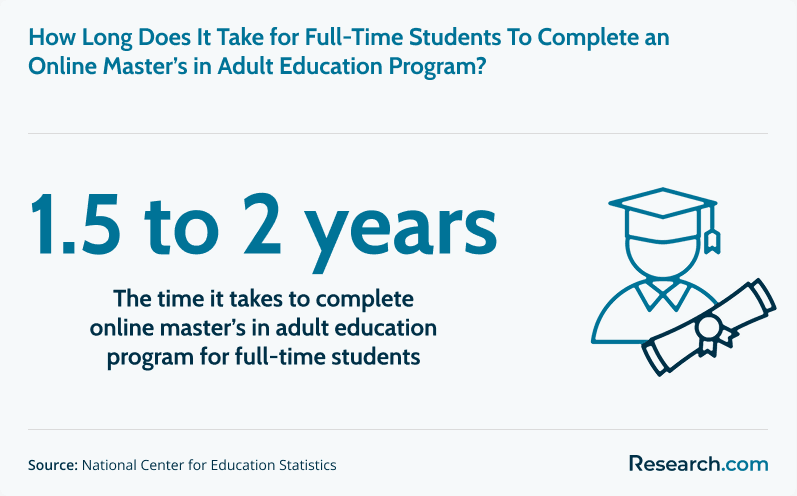
An affordable online master’s in adult education can be worth it for professionals who want to design, teach, evaluate, or lead learning programs for adults. Graduates may work in corporate training, instructional design, community education, adult literacy, higher education, workforce development, government programs, and nonprofit learning initiatives. Many programs require 30 to 36 credits and can be completed in about 1.5 to 2 years by full-time students.
The strongest value usually comes from choosing an accredited program with tuition that fits your budget, coursework tied to your intended career path, and enough flexibility to let you keep working while enrolled. Graduates often report salary opportunities ranging from $60,000 to $85,000 annually, depending on role, employer, experience, and location, while leadership roles may exceed that range.
What are the benefits of getting an affordable online master's degree in adult education?
- Career mobility: The degree can support advancement into roles such as corporate trainer, instructional designer, adult literacy instructor, workforce development specialist, education program coordinator, or learning and development leader.
- Flexible study format: Online delivery allows many students to keep working while completing coursework, which can reduce the financial pressure of graduate school.
- Adult-learning expertise: Students learn how adults build skills, apply prior experience, stay motivated, and succeed in education or training environments.
- Broader employment options: Adult education graduates are not limited to schools. They may work in businesses, healthcare organizations, government agencies, community colleges, nonprofits, and technical training programs.
- Potential earnings growth: Professionals with this degree often earn a median salary ranging from $60,000 to $85,000 annually, depending on position, experience, employer, and location.
What can I expect from an affordable online master's degree in adult education?
An online master’s in adult education focuses on how adults learn and how organizations can design effective learning experiences for them. Unlike K–12 education programs, adult education emphasizes learner autonomy, professional experience, workplace relevance, motivation, accessibility, and measurable outcomes.
Students usually study adult learning theory, instructional design, curriculum development, program planning, assessment, leadership, equity in adult learning, and educational technology. Some programs lean toward workplace training and organizational learning, while others emphasize literacy, higher education, community learning, or continuing education.
The online format is especially common because many students are already employed as teachers, trainers, coordinators, advisors, nonprofit staff, or human resources professionals. Courses may be asynchronous, synchronous, or a mix of both. Some programs include a capstone, portfolio, practicum, applied project, or research-based final assignment.
| Program feature | What it usually means for students | Why it matters when comparing programs |
| 30 to 36 credits | Most programs fall within this credit range, though some require more depending on electives or tracks. | More credits usually increase total tuition and time to completion. |
| Online delivery | Students complete coursework remotely, often while continuing full-time employment. | Format affects scheduling, networking, faculty access, and work-life balance. |
| Adult learning core | Courses cover how adults learn, stay engaged, and apply new knowledge. | This is the foundation for careers in training, literacy, higher education, and program leadership. |
| Applied project or capstone | Students demonstrate skills through a portfolio, practicum, program design, or research project. | Applied work can strengthen a resume and show employers practical evidence of your skills. |
| Specialization options | Some programs offer tracks in workforce development, instructional design, literacy, leadership, or higher education. | The right specialization can make the degree more relevant to your target role. |
Who should consider an online master’s in adult education?
This degree is best suited for people who want to help adults learn in professional, academic, community, or nonprofit settings. It can be especially useful for current educators who want to move beyond traditional classroom roles, human resources professionals who design training, nonprofit staff who manage learning programs, and higher education professionals who support adult or nontraditional students.
This degree may be a strong fit if you want to:
- Move into corporate training, instructional design, workforce development, or learning and development.
- Teach or support adults in community colleges, literacy centers, community programs, or continuing education units.
- Lead education programs in nonprofit, government, healthcare, technical, or workforce organizations.
- Build expertise in adult learning theory, program evaluation, curriculum design, and online learning.
- Prepare for future doctoral study in education, leadership, adult learning, or workforce education.
You may want a different path if you:
- Need initial K–12 teacher licensure, because adult education master’s programs do not always lead to classroom certification.
- Want a counseling, social work, or school psychology license, which usually requires a different accredited degree path.
- Prefer a highly technical e-learning career and may be better served by a specialized instructional design, learning technology, or UX learning program.
- Want to teach full-time in a university faculty role, where a doctorate is often expected.
- Need a program with extensive in-person networking, labs, or campus-based mentoring.
Where can I work with an affordable online master's degree in adult education?
Adult education graduates work wherever organizations need to teach, train, reskill, advise, or support adult learners. The degree is flexible because adult learning happens in many settings, not only in schools.
- Higher education: Graduates may work as academic advisors, continuing education instructors, program coordinators, student support professionals, or administrators at community colleges and universities.
- Corporate and private sector: Common roles include corporate trainer, instructional designer, talent development specialist, learning coordinator, and training manager.
- Nonprofit organizations: Graduates may manage literacy programs, vocational education services, community outreach initiatives, or learner support programs.
- Government agencies: Adult education specialists and workforce development coordinators may support employment, reskilling, community education, or training programs.
- Healthcare and technical fields: Training facilitators and education managers may support staff development, continuing education, compliance training, and certification preparation.
How much can I make with an affordable online master's degree in adult education?
Graduates of online master’s in adult education programs typically earn between $60,000 and $85,000 per year, depending on job title, industry, location, employer, and experience. Corporate trainers and instructional designers may earn around $70,000 to $80,000 annually, while adult literacy instructors or ESL program coordinators may be closer to $60,000.
Leadership positions can pay more. Training and development managers can exceed $90,000, with top earners making over $115,000, according to the U.S. Bureau of Labor Statistics. The degree does not guarantee a specific salary, but it can help professionals qualify for roles that require graduate-level knowledge of adult learning, curriculum, organizational training, and program evaluation.
| Career direction | Typical work | Salary context stated in this guide |
| Adult literacy or ESL instruction | Teaching reading, writing, English language, GED preparation, or basic skills to adults. | May be closer to $60,000 depending on role, location, and employer. |
| Corporate training | Designing and delivering employee learning, onboarding, compliance, leadership, or skills training. | Corporate trainers may earn around $70,000 to $80,000 annually. |
| Instructional design | Creating online courses, learning materials, assessments, and digital training modules. | Instructional designers may earn around $70,000 to $80,000 annually. |
| Training and development management | Leading training strategy, teams, budgets, vendors, and organization-wide learning programs. | Leadership roles can exceed $90,000, with top earners making over $115,000. |
- Most Affordable Online Master's in Adult Education Programs for 2027
- How long does it take to complete an affordable online master’s in adult education program?
- How does an affordable online master’s in adult education compare to an on-campus program?
- What is the average cost of an affordable online master’s in adult education program?
- What are the financial aid options for online adult education master’s students?
- What are the prerequisites for enrolling in an online master’s in adult education?
- What courses are typically in an affordable online master’s in adult education program?
- What types of specializations are available in online master’s in adult education programs?
- Can an affordable online master’s in adult education help you prepare for doctoral study?
- What challenges should online adult education students expect?
- How does the ROI compare with similar graduate degrees?
- How do you choose the best affordable online master’s in adult education program?
- What career paths are available after graduation?
- What is the job market like for graduates?
- How do online programs use digital tools to improve adult learning?
List of Most Affordable Online Master's in Adult Education Programs for 2027
How do we rank schools?
Choosing a graduate program requires more than scanning tuition prices. Accreditation, credit requirements, delivery format, student support, and program focus all affect the total value of an online master’s in adult education.
Research.com uses a transparent methodology that draws on data from established education sources, including the Integrated Postsecondary Education Data System (IPEDS), Peterson's databases including their Distance Learning Licensed Data Set, and the College Scorecard database from the National Center for Education Statistics. These sources help compare programs using consistent data points that matter to prospective graduate students.
| School | Program | Credits | Cost per credit | Accreditation |
| University of Idaho | M.Ed. in Adult, Organizational Learning and Leadership | 30–39 credits | $618 per credit, plus $35 per credit for web-based courses | Northwest Commission on Colleges and Universities (NWCCU) |
| Kansas State University | M.S. in Adult Learning and Leadership | 33 credits | $551.14 | Higher Learning Commission (HLC) |
| City University of Seattle | M.Ed. in Adult Education and Instructional Design | 36 credits | $541 | Northwest Commission on Colleges and Universities (NWCCU) |
| University of Georgia | M.Ed. in Workforce Education | 36 credits | $645 | Southern Association of Colleges and Schools Commission on Colleges (SACSCOC) |
| University of Arkansas | M.Ed. in Adult and Lifelong Learning | 33 credits | $446.29 | Higher Learning Commission (HLC) |
| Indiana University–Bloomington | M.S.Ed. in Adult Education | 36 credits | $600 (non-resident); $500.36 (Indiana resident) | Higher Learning Commission (HLC) |
| Rutgers University–New Brunswick | Ed.M. in Adult and Continuing Education | 30 credits | $459 (New Jersey resident); $1,096 (non-resident) | Middle States Commission on Higher Education (MSCHE) |
| Indiana University of Pennsylvania | M.Ed. in Education | 36 credits | $516 (in-state tuition) | Middle States Commission on Higher Education (MSCHE) |
| Colorado State University–Fort Collins | M.Ed. in Learning Design and Training | 30 credits | $694 | Higher Learning Commission (HLC) |
| Ball State University | M.A. in Adult and Community Education | 36 credits | $489 (in-state tuition) | Higher Learning Commission (HLC) |
1. University of Idaho – M.Ed. in Adult, Organizational Learning and Leadership
The University of Idaho offers a Master of Education in Adult, Organizational Learning and Leadership for professionals who want to teach, train, or lead learning initiatives in organizational and adult education environments. Students may select emphasis areas connected to adult learning and literacy education, organizational learning, or human resource development, making the program relevant to both education and workplace learning careers.
- Program Length: Typically 2 years (full-time); flexible pacing available
- Tracks/Concentrations: Adult Learning and Literacy Education, Organizational Learning, Human Resource Development
- Cost per Credit: $618 per credit, plus $35 per credit for web-based courses
- Required Credits to Graduate: 30–39 credits
- Accreditation: Northwest Commission on Colleges and Universities (NWCCU)
2. Kansas State University – M.S. in Adult Learning and Leadership
Kansas State University offers a Master of Science in Adult Learning and Leadership built for working adults interested in training, education, leadership, and program development. The 33-credit hour program uses eight-week online courses and includes an electronic portfolio capstone, giving students a way to document applied learning and professional growth.
- Program Length: Approximately 2 years (full-time); flexible pacing with 8-week asynchronous courses
- Tracks/Concentrations: Community College Leadership, Administration, Teaching
- Cost per Credit: $551.14
- Required Credits to Graduate: 33 credits
- Accreditation: Higher Learning Commission (HLC)
3. City University of Seattle – M.Ed. in Adult Education and Instructional Design
City University of Seattle offers a Master of Education in Adult Education and Instructional Design for professionals who want to strengthen their ability to build effective learning experiences for adults. The 36-credit program is fully online and is especially relevant for students interested in instructional strategy, curriculum development, and adult-learning practice.
- Program Length: Typically 7 quarters; can be completed in as few as 5 quarters or up to 4 years
- Tracks/Concentrations: Focus on adult education and instructional design
- Cost per Credit: $541
- Required Credits to Graduate: 36 credits
- Accreditation: Northwest Commission on Colleges and Universities (NWCCU)
4. University of Georgia – M.Ed. in Workforce Education
The University of Georgia offers a fully online Master of Education in Workforce Education for professionals focused on career preparation, technical education, and workforce learning. The program requires a minimum of 36 credit hours and recommends two courses per academic term, including summers, which can help working students plan a steady path through the degree.
- Program Length: Flexible pacing; recommended two courses per academic term (including summers)
- Tracks/Concentrations: Workforce Education
- Cost per Credit: $645
- Required Credits to Graduate: 36 credits
- Accreditation: Southern Association of Colleges and Schools Commission on Colleges (SACSCOC)
5. University of Arkansas – M.Ed. in Adult and Lifelong Learning
The University of Arkansas offers a Master of Education in Adult and Lifelong Learning that prepares students for careers in adult literacy, community education, higher education, and lifelong learning programs. The online curriculum emphasizes instructional and leadership skills for professionals who support adult learners in varied settings.
- Program Length: Can be completed in as little as 2 years (taking 6 credit hours each semester, including summer); students have up to 6 years to complete
- Tracks/Concentrations: Adult and Lifelong Learning
- Cost per Credit: $446.29
- Required Credits to Graduate: 33 credits
- Accreditation: Higher Learning Commission (HLC)
6. Indiana University–Bloomington – M.S.Ed. in Adult Education
Indiana University–Bloomington offers a 36-credit Master of Science in Education in Adult Education for students interested in adult learning theory, instructional design, and distance education systems. The program is primarily online and allows students to use electives in areas such as instructional systems technology, educational leadership, and curriculum studies.
- Program Length: Typically 2 years (full-time); flexible pacing available
- Tracks/Concentrations: Focus on adult learning theory, instructional design, and distance education systems
- Cost per Credit: $600 (non-resident); $500.36 (Indiana resident)
- Required Credits to Graduate: 36 credits
- Accreditation: Higher Learning Commission (HLC)
7. Rutgers University–New Brunswick – Ed.M. in Adult and Continuing Education
Rutgers University–New Brunswick offers an Ed.M. in Adult and Continuing Education for professionals in education, nonprofit, community-based, healthcare, and corporate learning settings. The 30-credit program focuses on understanding adult learners and designing, managing, and evaluating learning opportunities that fit their needs.
- Program Length: Typically 2 years (full-time); flexible pacing available
- Tracks/Concentrations: Emphasis on conceptual and practical understanding of adult learners and program planning
- Cost per Credit: $459 (New Jersey resident); $1,096 (non-resident)
- Required Credits to Graduate: 30 credits
- Accreditation: Middle States Commission on Higher Education (MSCHE)
8. Indiana University of Pennsylvania – M.Ed. in Education
Indiana University of Pennsylvania offers an online Master of Education in Education for educators who want to continue progressing professionally. The program provides year-round courses with fall, winter, spring, and summer start opportunities, helping students maintain momentum toward completion.
- Program Length: Can be completed in less than 18 months
- Tracks/Concentrations: General education with options for Level II certification and leadership roles
- Cost per Credit: $516 (in-state tuition)
- Required Credits to Graduate: 36 credits
- Accreditation: Middle States Commission on Higher Education (MSCHE)
9. Colorado State University–Fort Collins – M.Ed. in Learning Design and Training
Colorado State University–Fort Collins offers an online Master of Education in Learning Design and Training that emphasizes adult teaching, learning and development theory, and instructional design. The program is a strong match for students who want to build training programs, design learning experiences, and engage adult learners across in-person, online, and blended formats.
- Program Length: Can be completed in five semesters, depending on course availability
- Tracks/Concentrations: Specialization in Learning Design & Training
- Cost per Credit: $694
- Required Credits to Graduate: 30 credits
- Accreditation: Higher Learning Commission (HLC)
10. Ball State University – M.A. in Adult and Community Education
Ball State University offers a fully online Master of Arts in Adult and Community Education focused on instructional design, program planning, teaching strategies, leadership, inclusive excellence, and social justice. The program can also support students who are considering doctoral study in adult and community education.
- Program Length: Typically 2 years (full-time); flexible pacing available
- Tracks/Concentrations: Focus on planning, designing, implementing, and evaluating adult education programs
- Cost per Credit: $489 (in-state tuition)
- Required Credits to Graduate: 36 credits
- Accreditation: Higher Learning Commission (HLC)
How long does it take to complete an affordable online master’s in adult education program?
Most online master’s in adult education programs take about 1.5 to 2 years for full-time students. Programs commonly require 30 to 36 credit hours, though individual schools may require more depending on tracks, electives, or capstone requirements.
Full-time students often finish in four to six semesters. Part-time students may need closer to three years, especially if they take one course at a time while working. Some accelerated programs can be completed in as little as 12 to 18 months, but that pace usually requires a heavier workload and strong time management.
Educators who are comparing graduate study with credential requirements should review whether the program supports or differs from teaching certification requirements. Adult education graduate programs do not automatically satisfy every state or role-specific certification requirement.
| Enrollment pace | Typical timeline | Best for | Trade-off |
| Accelerated | As little as 12 to 18 months | Students with predictable schedules and strong academic readiness | Higher weekly workload and less flexibility |
| Full-time | About 1.5 to 2 years | Students who want steady progress and can manage multiple courses | May be demanding for those working full time |
| Part-time | Closer to three years | Working professionals, caregivers, and students with variable schedules | Longer time before career benefits may materialize |
| Extended pace | Depends on school policy | Students who need to pause or reduce course load | May affect tuition planning, motivation, and completion deadlines |
How does an affordable online master’s in adult education compare to an on-campus program?
An online master’s in adult education usually covers the same academic areas as an on-campus program, including instructional design, program planning, learning assessment, educational technology, and adult learning theory. In many universities, online and campus students study with the same faculty and earn the same degree title.
The main difference is the learning experience. Online programs offer more scheduling flexibility, especially when courses are asynchronous. Campus programs may provide more face-to-face discussion, structured class times, and easier access to in-person campus resources.
| Factor | Online master’s in adult education | On-campus master’s in adult education |
| Schedule | Often more flexible, especially with asynchronous courses | More structured class meeting times |
| Networking | May include virtual discussions, group projects, and online cohorts | Offers more in-person interaction with faculty and classmates |
| Best fit | Working adults, remote students, caregivers, and students outside commuting range | Students who prefer face-to-face learning and campus involvement |
| Cost considerations | May reduce commuting, relocation, and campus-related costs | May include transportation, housing, parking, or relocation costs |
| Learning discipline | Requires strong self-direction and time management | Provides more built-in structure and routine |
Digital access also shapes adult learning. Fewer than half (43%) of individuals with only a high school education have used the internet for personal learning, compared to 58% of those with a college degree or higher. Among employed adults pursuing professional development, just 40% of high school graduates use the internet for learning activities, while nearly two-thirds (64%) of their college-educated counterparts do so.
The chart below compares internet use for personal learning by adults with different levels of educational attainment. It shows why online adult education professionals need to understand both digital opportunity and digital exclusion.
What is the average cost of an affordable online master’s in adult education program?
The average cost of an online master’s in adult education program typically ranges from $10,000 to $30,000 in total tuition. Public universities are often less expensive, especially for in-state students, with tuition rates averaging around $300 to $600 per credit hour. Private institutions may charge more, sometimes exceeding $800 per credit hour.
Total cost is not limited to tuition. Students should also check technology fees, online course fees, books, software, portfolio costs, background checks if required, and any travel expenses for hybrid or residency components. If you plan to continue into doctoral study, compare master’s options with long-term academic plans and understand the difference between EDD and PhD.
If you want a broader benchmark for graduate tuition, compare adult education programs with other low-cost online graduate options, such as low cost master's in homeland security online programs. Cross-field comparisons can clarify whether a school’s tuition, credit load, and fees are truly competitive.
| Cost item | Why it matters | Question to ask the school |
| Tuition per credit | This is usually the largest cost driver. | Is the rate the same for online, in-state, and out-of-state students? |
| Total required credits | A lower per-credit price may not save money if the program requires more credits. | How many credits are required for my chosen track? |
| Online or technology fees | Web-based course fees can add up across the full program. | Are online course fees charged per course or per credit? |
| Books and digital materials | Some programs use paid platforms, textbooks, or software. | What is the estimated annual cost for learning materials? |
| Residency or campus visits | Hybrid requirements may add travel, lodging, and time-off costs. | Can the program be completed fully online? |
What are the financial aid options for students enrolling in an affordable online master’s in adult education program?
Online graduate students may qualify for many of the same financial aid options as campus students, provided the school and program meet eligibility requirements. Students usually start by completing the Free Application for Federal Student Aid (FAFSA). Graduate students commonly use Direct Unsubsidized Loans and may also consider Graduate PLUS Loans for remaining costs.
Students should also review institutional scholarships, graduate assistantships, private scholarships, professional association awards, and employer tuition reimbursement. Organizations such as the American Association for Adult and Continuing Education (AAACE) may be relevant for students in this field. Apply early, because scholarship and assistantship deadlines may arrive before admission deadlines.
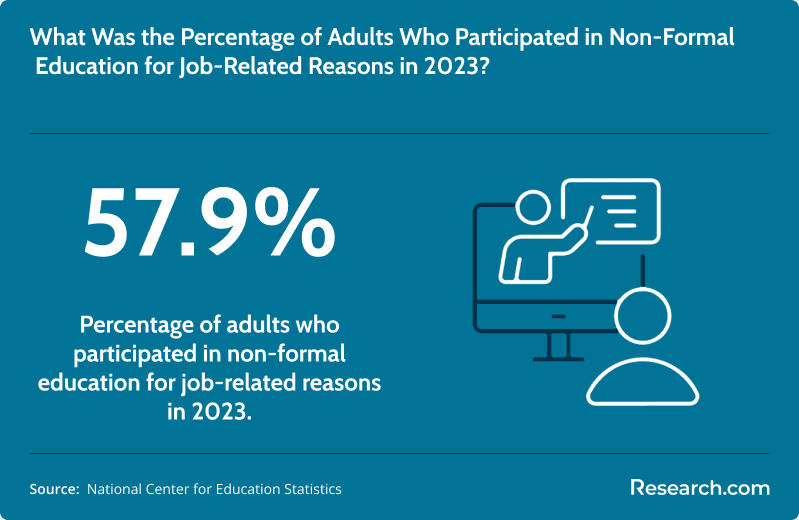
In 2023, 57.9% of adults participated in non-formal education for job-related reasons. That job-related demand is one reason some employers may support education benefits for employees moving into training, development, or workforce-learning roles.
Financial aid planning is similar across education fields. Students can also review affordability strategies used in low cost early childhood development degree online programs, including grants, scholarships, and employer reimbursement options.
| Funding option | How it may help | Important caution |
| Federal student loans | Can help cover tuition and eligible education expenses. | Loans must be repaid with interest, so borrow only what you need. |
| Institutional scholarships | May reduce tuition without repayment. | Deadlines and eligibility rules vary widely by school. |
| Graduate assistantships | May provide tuition support, stipends, or professional experience. | Online students may have fewer assistantship options than campus students. |
| Employer reimbursement | Can offset costs if your degree supports your current role or advancement. | Employers may require grades, continued employment, or repayment if you leave. |
| Professional scholarships | May support students in adult education, literacy, workforce development, or training. | These awards can be competitive and may require essays or membership. |
What are the prerequisites for enrolling in an affordable online master’s in adult education program?
Admission requirements vary, but most online master’s in adult education programs require a bachelor’s degree from an accredited institution. Many schools also set a minimum GPA, often around 2.5 to 3.0. Applicants may come from education, human services, social sciences, business, healthcare, nonprofit work, military training, human resources, or other professional backgrounds.
Typical application materials include official transcripts, a resume or CV, letters of recommendation, and a statement of purpose. Some programs prefer applicants with experience in teaching, training, advising, program coordination, or working with adult learners. Applicants who already hold related credentials, such as those from reading specialist certification programs, should ask whether that background strengthens the application or affects prerequisites.
GRE requirements are less common than they once were, but some schools may request test scores if an applicant’s academic record does not meet standard admission thresholds. Always verify requirements directly with the program, because graduate admissions policies differ by institution.
| Requirement | Common expectation | How to prepare |
| Bachelor’s degree | Degree from an accredited institution | Request official transcripts early. |
| Minimum GPA | Often around 2.5 to 3.0 | Ask about conditional admission if your GPA is below the stated threshold. |
| Resume or CV | Professional, teaching, training, volunteer, or leadership experience | Highlight adult learning, coaching, curriculum, advising, and program work. |
| Statement of purpose | Explanation of career goals and fit with the program | Connect the curriculum to your intended role or advancement plan. |
| Recommendations | Academic or professional references | Choose recommenders who can discuss your communication, leadership, and learning-related work. |
What courses are typically in an affordable online master’s in adult education program?
Based on the Adult Literacy and Learning Impact Network 2024 report, 23.77% of Americans participated in formal education in 2023. Of this group, 16.7% enrolled in graduate or professional degree. Online master’s programs in adult education prepare graduates to support this kind of continued learning through theory, design, facilitation, and evaluation.
- Foundations of Adult Education: Reviews the history, purposes, philosophies, and major movements that shaped adult education as a field.
- Adult Learning Theory: Examines andragogy, transformative learning, motivation, self-directed learning, and the role of life experience in adult education.
- Instructional Design for Adult Learners: Teaches students to design courses, training modules, learning materials, assessments, and technology-supported instruction for adults.
- Program Planning and Evaluation: Covers needs assessment, goal setting, implementation, budgeting, stakeholder engagement, and outcome measurement.
- Teaching Methods for Adult Learners: Focuses on facilitation, active learning, discussion, coaching, feedback, and adapting instruction for diverse adult learners.
- Assessment and Evaluation in Adult Education: Introduces tools for evaluating adult learners’ progress and judging whether learning programs are effective.
- Diversity and Inclusion in Adult Education: Explores equity, access, cultural responsiveness, disability inclusion, language needs, and barriers that affect adult learners.
- Technology in Adult Learning: Covers learning management systems, virtual instruction, multimedia tools, digital accessibility, and blended learning design.
- Leadership and Administration in Adult Education: Prepares students to manage staff, programs, policies, budgets, partnerships, and strategic planning in adult education settings.
- Capstone Project or Practicum: Allows students to apply theory to a workplace, community, instructional design, program evaluation, or research-based project.
The chart below shows adult participation in formal education programs and highlights differences by educational attainment. It helps explain why adult educators must design learning that is accessible, relevant, and responsive to prior educational experience.
What types of specializations are available in online master’s in adult education programs?
Specializations let students align the degree with a specific career direction. Some programs offer formal concentrations, while others allow students to shape their focus through electives, practicum projects, or capstone work.
| Specialization | Best for students interested in | Common career outcomes |
| Workforce Development and Training | Employee learning, reskilling, job readiness, and organizational performance | Corporate trainer, workforce development specialist, training coordinator |
| Community and Continuing Education | Community-based learning, outreach, lifelong education, and public programs | Community education coordinator, nonprofit program manager, continuing education specialist |
| Higher Education and Student Affairs | Adult and nontraditional student support in colleges and universities | Academic advisor, student services professional, program coordinator |
| Instructional Design and Technology | Online courses, learning platforms, e-learning, and digital curriculum | Instructional designer, e-learning developer, learning experience designer |
| Adult Literacy and ESL Education | Literacy, English language learning, adult basic education, and GED preparation | Adult literacy instructor, ESL instructor, adult basic education specialist |
| Leadership in Adult Education | Program administration, policy, organizational strategy, and management | Program director, education administrator, training and development manager |
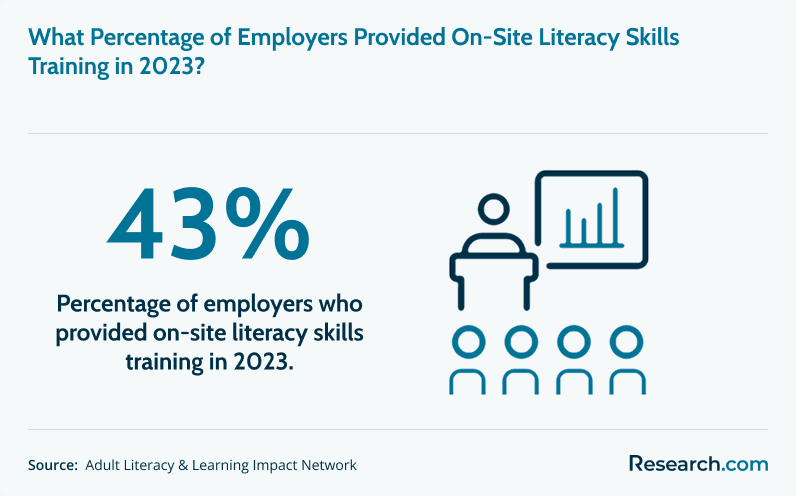
- Workforce Development and Training: Focuses on training adults for job performance, career advancement, and workplace learning. Among employers in 2023, 43% offered on-site literacy skills training.
- Community and Continuing Education: Prepares students to design learning for community programs, lifelong learning, outreach services, and non-formal education.
- Higher Education and Student Affairs: Supports careers in advising, adult student services, campus programs, and higher education administration.
- Instructional Design and Technology: Builds skills in online learning, digital tools, course development, assessment, and learner engagement.
- Adult Literacy and ESL Education: Focuses on adults who need literacy, language, basic education, or academic preparation support.
- Leadership in Adult Education: Develops administrative, policy, strategic planning, and organizational management skills.
If you are comparing education specializations, review how niche tracks are structured in related fields, such as affordable master's in gifted education online programs. The same decision logic applies: choose the specialization that best matches your target learners and work setting.
Can an affordable online master’s in adult education accelerate your path to a doctoral degree?
An online master’s in adult education can help prepare students for doctoral study, especially if the program includes research methods, leadership coursework, a thesis, a capstone, or a strong applied research project. It may not automatically shorten a doctorate, but it can help students clarify research interests, build academic writing skills, and meet graduate-level prerequisites.
Students who plan to continue should ask whether master’s credits can transfer into doctoral programs, whether the curriculum includes research preparation, and whether faculty can support doctoral applications. If you are comparing accelerated doctoral routes, resources on 2 year Ed D programs online can help you understand how fast-track structures work and what trade-offs they may involve.
What challenges might students face in affordable online master’s in adult education programs?
Online learning is flexible, but flexibility can also make it easier to fall behind. Students need consistent time management, comfort with digital tools, and the ability to participate actively without face-to-face reminders. Some students also miss the immediacy of campus discussions, informal networking, or in-person faculty access.
Program quality can vary, so students should look beyond tuition. Accreditation, faculty responsiveness, career services, library access, technical support, advising, and course design all affect the student experience. Comparing adult education options with broader affordability benchmarks, such as the cheapest master of education online programs, can help you judge whether a program is low-cost or simply under-supported.
| Common challenge | Why it happens | How to reduce the risk |
| Falling behind in asynchronous courses | No fixed class meeting can make deadlines feel less immediate. | Block weekly study time and use course calendars from day one. |
| Limited networking | Online students may have fewer informal interactions. | Join discussion groups, attend virtual events, and contact faculty early. |
| Technology problems | Learning platforms, video tools, and software may require adjustment. | Test systems before classes begin and confirm technical support hours. |
| Weak career connection | Some programs may be theory-heavy without enough applied work. | Choose programs with capstones, portfolios, projects, practicums, or employer-relevant assignments. |
| Unexpected costs | Fees, books, and software may not be obvious in advertised tuition. | Request a full cost estimate before enrolling. |
How does the ROI of an affordable online master’s in adult education compare to similar graduate degrees?
Return on investment depends on what you pay, how much debt you take on, whether you keep earning while enrolled, and how the degree changes your career options. Adult education can offer strong value when it leads to advancement in training, instructional design, workforce development, higher education administration, or program leadership.
Students should compare total tuition against likely career outcomes in their target sector. For example, someone aiming for corporate learning and development may evaluate the degree differently than someone seeking adult literacy or community education roles. Related salary benchmarks, such as the average salary for masters in library science, can help prospective students compare graduate fields before committing.
| ROI factor | Why it matters | How to evaluate it |
| Total tuition | Lower tuition can improve ROI if program quality remains strong. | Compare tuition, fees, and required credits together. |
| Ability to keep working | Maintaining income can reduce opportunity cost. | Look for asynchronous, part-time, or flexible pacing options. |
| Career target | Some roles pay more than others. | Match curriculum to roles such as instructional design, training management, or workforce development. |
| Employer support | Tuition reimbursement can significantly reduce out-of-pocket cost. | Ask your employer about education benefits before enrolling. |
| Graduate pathway | A master’s may support entry into doctoral study or leadership roles. | Check whether the program includes research, leadership, and applied project options. |
How do you choose the best affordable online master’s in adult education program?
The best affordable program is the one that meets quality standards, supports your career goal, and fits your budget without creating unnecessary debt. Start with accreditation, then evaluate curriculum, cost, flexibility, student support, and career alignment.
If you expect to pursue doctoral study later, ask whether the curriculum supports research preparation and whether graduates have moved into doctoral programs. You can also compare future education options through guides to affordable online EDD programs.
Step-by-step program selection checklist
- Confirm institutional accreditation. Make sure the school is regionally accredited and eligible for federal financial aid if you plan to use it.
- Match the curriculum to your career goal. Choose workforce development for training roles, instructional design for e-learning roles, literacy or ESL for adult basic education, and higher education tracks for college-based roles.
- Calculate total program cost. Multiply cost per credit by required credits, then add fees, books, technology costs, and any residency expenses.
- Review course format. Decide whether asynchronous, synchronous, part-time, full-time, or accelerated delivery fits your schedule.
- Check applied learning opportunities. Look for capstones, portfolios, practicums, projects, or coursework that produces work samples.
- Evaluate student support. Ask about advising, tutoring, library access, tech support, career services, and faculty availability.
- Ask about outcomes. Request information about graduate roles, alumni examples, employer connections, and career support.
- Compare at least three programs. A side-by-side comparison prevents you from choosing based only on tuition or brand recognition.
Questions to ask admissions advisors before applying
- Is the program fully online, or are any campus visits required?
- Are online students charged the same tuition regardless of residency?
- How many credits are required for my chosen specialization?
- Can I study part time, and is there a maximum time allowed for completion?
- Does the program include a capstone, portfolio, practicum, or field-based project?
- What career services are available to online graduate students?
- Are courses taught by full-time faculty, adjunct faculty, or both?
- Does the program prepare students for any certification, licensure, or professional credential?
- Can prior graduate credits transfer into the program?
- What financial aid, scholarships, or employer partnership discounts are available?
Common mistakes to avoid
- Choosing only by lowest tuition: A cheap program may be a poor value if it lacks support, applied learning, or relevant coursework.
- Ignoring accreditation: Accreditation affects financial aid eligibility, transfer credit, employer recognition, and doctoral admission.
- Assuming online means self-paced: Many online courses still have weekly deadlines and group assignments.
- Overlooking fees: Technology fees, online course fees, and books can change the real cost.
- Choosing the wrong specialization: A literacy-focused track may not be ideal for corporate training, and a workforce track may not fit ESL instruction.
- Assuming salary outcomes are guaranteed: Pay depends on role, industry, region, experience, and employer.
- Not checking licensure or certification rules: If you need a specific credential, confirm requirements before enrolling.
What career paths are available for graduates of affordable online master’s in adult education programs?
An online master’s in adult education can support a range of roles in teaching, training, advising, program leadership, and learning design. It may appeal to students comparing flexible graduate options and other quick online degrees, but career fit should matter more than speed alone.
- Corporate Trainer: Designs and facilitates employee learning programs, onboarding, compliance training, leadership development, or technical upskilling.
- Adult Education Instructor: Teaches adults in community colleges, adult learning centers, workforce programs, nonprofits, or continuing education units.
- Instructional Designer: Builds courses, learning modules, assessments, job aids, and online training materials for schools, businesses, government agencies, or e-learning providers.
- Program Coordinator or Administrator: Oversees adult learning programs, schedules, staff, budgets, learner services, reporting, and evaluation.
- Higher Education Student Affairs Professional: Supports adult and nontraditional students through advising, retention services, career support, or student success programs.
- Workforce Development Specialist: Creates programs that help adults gain employable skills, transition careers, or advance in the labor market.
- Adult Literacy and ESL Instructor: Teaches reading, writing, basic education, English language, or GED preparation to adult learners.
- Educational Consultant: Advises organizations on adult learning strategy, curriculum design, training effectiveness, accessibility, or program improvement.
- Adult Education Leader: Manages education initiatives, policy implementation, partnerships, staff development, and strategic planning.
Skills-based career pathways also exist outside traditional education. For comparison, students can review how practical credentials are positioned in fields such as affordable software engineer training bootcamp online programs, where portfolio-ready skills and employer alignment are central to career outcomes.
What is the job market like for graduates with an affordable online master’s in adult education?
The job market for adult education graduates is broad because adult learning is central to workforce training, higher education, government employment programs, literacy services, nonprofit outreach, and corporate talent development. Demand can differ significantly by location, industry, funding source, and role.
Education Sector
- Adult Basic and Secondary Education and ESL Teachers: Teach adults reading, writing, English as a Second Language (ESL), GED preparation, or foundational academic skills. According to the U.S. Bureau of Labor Statistics, the median annual wage for this role was $59,950 in May 2024.
- Community College Faculty: Teach adult learners in community college settings, often in continuing education, career preparation, GED preparation, or professional development programs. Graduates of an online teaching degree may also explore related education roles.
- Career and Technical Education Teachers: Provide instruction in occupational areas such as healthcare, information technology, trades, and other technical fields.
Corporate and Organizational Development
- Training and Development Managers: Lead employee learning strategy, training programs, compliance education, leadership development, and performance improvement initiatives.
- Instructional Designers: Create adult learning materials, e-learning modules, assessments, facilitator guides, and online course experiences.
- Learning and Development Directors: Oversee organization-wide learning systems, teams, budgets, vendors, and long-term development strategies.
Government and Nonprofit Organizations
- Policy Analysts: Study adult education, workforce, literacy, or community-learning programs and help shape policy recommendations.
- Program Coordinators: Manage adult education services, learner recruitment, funding reports, partner relationships, and program evaluation.
- Educational Consultants: Help agencies or nonprofit organizations improve adult learning design, accessibility, curriculum, and outcomes.
Freelance and Consulting Opportunities
- Corporate Trainers: Offer specialized workshops in leadership, communication, compliance, technology, management, or job-specific skills.
- Adult Education Consultants: Support schools, nonprofits, employers, or public agencies that want to design or improve adult learning programs.
How do these programs leverage digital innovations to enhance adult learning outcomes?
Online master’s programs in adult education increasingly use digital tools that mirror the environments graduates may later design or manage. Students may work with learning management systems, discussion platforms, multimedia assignments, virtual collaboration tools, online assessment methods, and data-informed feedback practices.
These tools matter because many adult learners need flexible, accessible, career-relevant education. Effective programs do more than move lectures online. They teach students how to design learning that supports motivation, interaction, feedback, accessibility, and practical application.
Digital learning trends appear across many online graduate disciplines. For comparison, students can review how online academic fields structure digital delivery in guides such as affordable history master's programs online.
Current Trends Affecting Adult Education Graduate Students
- Workforce reskilling remains important: Adults continue seeking education for job-related reasons, and in 2023, 57.9% of adults participated in non-formal education for job-related reasons.
- Digital access affects participation: Internet-based learning is common, but participation differs by educational attainment, creating challenges for adult educators who serve diverse learners.
- Employers are part of the adult learning ecosystem: Among employers in 2023, 43% offered on-site literacy skills training.
- Instructional design skills are increasingly valuable: Adult education professionals are often expected to understand online learning, digital assessment, accessibility, and learner engagement.
- Graduate students are cost-conscious: Affordable online programs can help working adults pursue advancement without stepping away from employment.
Key Insights
- An affordable online master’s in adult education is best for professionals who want to teach, train, design, manage, or evaluate learning programs for adults.
- Most programs require 30 to 36 credits and take about 1.5 to 2 years for full-time students, while part-time students may need closer to three years.
- The average cost of an online master’s in adult education program typically ranges from $10,000 to $30,000 in total tuition, with public universities often offering lower rates for in-state students.
- Do not judge affordability by tuition alone. Compare required credits, fees, online course charges, books, technology costs, and whether the format allows you to keep working.
- Specialization matters. Workforce development, instructional design, literacy, ESL, higher education, and leadership tracks can lead to different career outcomes.
- Accreditation is essential for financial aid, employer recognition, transfer credit, and possible doctoral study.
- Adult basic and secondary education and ESL teachers had a median annual wage of $59,950 in May 2024, while training and development leadership roles can pay more depending on employer, location, and experience.
- The best program is not always the cheapest. The strongest choice is the accredited program that fits your career target, schedule, support needs, and long-term return on investment.
References:
- All In Literacy. (2023). ALL IN employer survey report.
- All In Literacy. (2024). Building provider capacity.
- Learning and Work Institute. (2024). Persistent inequalities in lifelong learning: What can we learn from the adult participation in learning survey 2024?
- National Center for Education Statistics. (2024). Adult participation in education lowest among those with less educational attainment.
- National Center for Education Statistics. (n.d.). Table 1. Percentage of adults who participated in various educational activities, by highest level of educational attainment.
- OECD. (2024, December). Do adults have the skills they need to thrive in a changing world?
- Pew Research Center. (2016, March 22). Lifelong learning and technology.
Other Things You Should Know About the Most Affordable Online Master's in Adult Education Programs
Many programs accept up to 6–12 transfer credits, which can lower tuition by one or two courses. Schools usually require a grade of B or higher, official transcripts, and approval from the graduate program before applying transferred credits toward the degree.
Applicants typically need a bachelor's degree, a minimum GPA, and professional or academic references for 2026 affordable online master's in adult education programs. Some programs may also require a statement of purpose or relevant work experience in the field.


