
2027 Types of Teaching Certifications and Requirements

Co-Founder and Chief Data Scientist
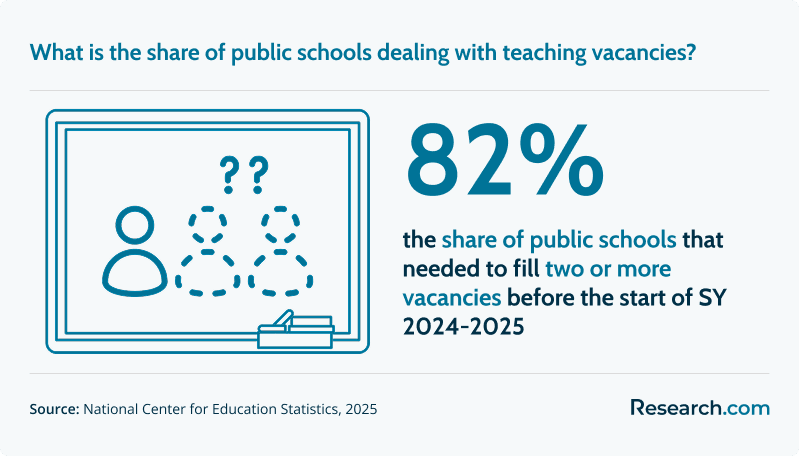
Choosing a teaching certification is not just a paperwork step; it determines the grades, subjects, schools, and student populations you are legally qualified to teach. The decision matters even more now because schools continue to report staffing pressure: before the 2024-2025 school year, 82% of public schools said they needed to fill two or more teaching vacancies. For aspiring teachers, career changers, paraprofessionals, and recent graduates, the challenge is figuring out which route leads to certification without wasting time or money on the wrong program.
This guide explains the major types of teaching certifications, how requirements differ by state and role, what exams you may need, how long certification can take, and how salary and job outlook vary across teaching careers. It also gives you practical ways to compare programs, avoid common mistakes, and decide whether a traditional degree, alternative certification, online program, or advanced degree makes the most sense for your goals.
Quick answer: What teaching certification do you need?
Most future teachers need a state-issued teaching license or certification. In most cases, that means earning at least a bachelor's degree, completing a state-approved teacher preparation program, passing required certification exams, and clearing a background check. The exact certification depends on what you want to teach: early childhood, elementary education, middle grades, secondary education, special education, ESL, career and technical education, or another specialty. Career changers may qualify through alternative certification instead of completing a traditional education degree.
Key things to know before choosing a teaching certification
- Certification depends on the teaching role. A kindergarten teacher, high school math teacher, special education teacher, and CTE instructor usually need different credentials.
- State rules matter. Most states require a bachelor's degree, approved teacher preparation, exams, and renewal requirements, but the details vary widely.
- Shortage areas can affect opportunity. With 82% of public schools reporting multiple vacancies before the 2024-2025 school year, certified teachers may find stronger demand in hard-to-fill areas such as special education, STEM, ESL, and bilingual education.
- Alternative certification can work for career changers. Professionals with non-teaching degrees may be able to begin teaching under a provisional route while completing licensure requirements.
- Specialized credentials can change career options and earnings. In 2023, special education teachers had a median salary of $65,910, while career and technical education teachers had a median salary of $63,580.
- What are the main teaching certification types for 2026?
- Which certifications do general education teachers need?
- What certifications are available for specialized education teachers?
- What are alternative teacher certifications and who should use them?
- What steps do you follow to earn teaching certification?
- What exams are required for teacher certification?
- How do teachers renew, maintain, or upgrade certification?
- How long does it take to become certified?
- How can you pay for a teaching certification program?
- How much do teachers earn?
- What is the job outlook for teachers?
- Why does accreditation matter for certification programs?
- How do you choose the right teaching certification?
- Can an advanced degree improve your teaching career?
- When do online accelerated programs make sense?
- Are online teacher certification programs comparable to campus programs?
- What trends are changing teaching certification?
- How do certification programs address diversity, equity, and inclusion?
- Can certification support long-term academic and career growth?
What are the main teaching certification types for 2026?
A teaching certification is a state-recognized credential showing that an educator has met the minimum preparation, testing, and professional standards required to teach in public schools. Private schools may set their own requirements, but state certification is still valuable because it signals formal preparation and can expand employment options.
If you are asking what a teaching degree can lead to, certification is the practical bridge between academic preparation and classroom employment. A degree may prepare you academically, but certification determines whether you can legally teach a specific subject or grade level in a public school system.
Most teaching certifications fit into three broad categories: general education, specialized education, and alternative certification. The right category depends on your academic background, target grade level, subject expertise, and whether you are entering teaching through a traditional or nontraditional route.
| Certification category | Best for | Typical examples | Key requirement to verify |
| General education certification | Future classroom teachers in standard K-12 settings | Elementary education, middle grades math, high school English, science, social studies | Grade band, subject endorsement, teacher preparation approval, and required exams |
| Specialized education certification | Educators serving specific student needs or specialized instructional areas | Special education, ESL, reading specialist, gifted education, career and technical education | Additional coursework, fieldwork, endorsement exams, and state-specific eligibility rules |
| Alternative certification | Career changers, professionals with non-education degrees, military veterans, and shortage-area candidates | Teacher residency, post-baccalaureate certification, provisional certification, emergency certification | Whether the program is state-approved and whether it leads to full certification |
General education certifications
General education credentials qualify teachers to work in mainstream classrooms and teach core academic subjects. These certifications are usually organized by grade level, subject area, or both. A future elementary teacher may need broad preparation across reading, math, science, and social studies, while a high school teacher usually needs deeper content preparation in one subject.
To understand the usual sequence, review how to earn a teaching credential, including degree, preparation, exam, and application steps. This traditional route is often the most direct path for students who already know they want to teach before starting college.
Specialized education certifications
Specialized certifications prepare teachers for roles that require focused training beyond the general classroom license. Common examples include special education, English as a Second Language, reading intervention, gifted education, and career and technical education. These credentials can be especially useful for educators who want to serve students with disabilities, multilingual learners, advanced learners, or students preparing for skilled careers.
Alternative teacher certifications
Alternative certification routes are designed for people who already hold a bachelor's degree or have substantial professional expertise but did not complete a traditional education program. These pathways may allow candidates to teach under a temporary or provisional license while completing pedagogy coursework, exams, mentoring, and supervised teaching requirements.
Alternative certification is not a shortcut around standards. It is a different structure for meeting them. The strongest programs still include classroom practice, mentoring, subject testing, and clear state approval.
The need for qualified educators remains significant. In 2023, around 51,000 teachers left their jobs. Before the 2024-2025 school year, 82% of public schools reported needing to fill two or more teaching vacancies, which helps explain why more adults are considering teaching as a first career or career change.
Which certifications do general education teachers need?
General education certification usually authorizes a teacher to work with a defined grade span, subject area, or instructional specialty. Because states use different names and grade bands, always check the licensing rules for the state where you plan to teach before enrolling in a program.
Grade-level certifications
- Early childhood education certification: This credential prepares teachers for young children, often from birth through third grade, with emphasis on early literacy, numeracy, social development, and developmentally appropriate instruction. If this is your target age group, compare your state’s rules with typical early childhood teaching requirements.
- Elementary education certification: This license usually covers kindergarten through sixth grade and requires broad preparation because elementary teachers often teach multiple subjects.
- Middle grades education certification: This credential is commonly designed for grades 5 through 9 and often combines adolescent learning theory with a subject focus such as English, mathematics, science, or social studies.
- Secondary education certification: This license typically covers grades 7 through 12 and is usually tied to a specific subject, such as biology, English, history, or mathematics.
Subject-specific certifications
- English language arts certification: Prepares teachers to teach reading, writing, grammar, literature, composition, and communication skills.
- Mathematics certification: Qualifies teachers to teach math content that may range from foundational middle school skills to advanced high school coursework.
- Science certification: May cover general science or a specific discipline such as biology, chemistry, or physics, depending on the state and grade level.
- Social studies certification: Authorizes instruction in areas such as history, geography, civics, economics, and government.
- Foreign language certification: Allows teachers to teach languages such as Spanish, French, Mandarin, or other state-approved world languages.
Specialty area certifications
- Art education certification: Prepares educators to teach visual arts, studio practice, art criticism, and art history.
- Music education certification: Qualifies teachers for vocal music, instrumental music, music theory, performance, and music appreciation roles.
- Physical education certification: Authorizes teachers to deliver fitness, movement, health-related physical activity, and sports instruction.
- English for Speakers of Other Languages certification: Prepares teachers to support English language learners through language development and academic instruction.
| If you want to teach... | Look for this certification type | Important question to ask |
| Young children | Early childhood education | Which ages and grades does the license cover in my state? |
| Multiple subjects in one classroom | Elementary education | Does the program include enough reading instruction and supervised classroom practice? |
| Adolescents in a core subject | Middle grades education | Do I need a subject concentration or separate endorsement? |
| High school students | Secondary education plus subject certification | Does my major or coursework meet content-area requirements? |
| Art, music, PE, or world language | Specialty area certification | Are performance, portfolio, or subject exams required? |
General education candidates should confirm three details before applying to a program: whether the teacher preparation program is state-approved, which exams are required, and whether the certification will cover the exact grades and subjects they want to teach.
What certifications are available for specialized education teachers?
Specialized education certifications are for teaching roles that require additional expertise in student support, language development, intervention, disability services, advanced learning, or workforce preparation. These credentials can be valuable for teachers who want a more targeted role or who want to work in areas where schools often report hiring difficulty.
Special education certifications
Special education credentials prepare teachers to support students whose disabilities affect learning, communication, behavior, mobility, or daily classroom participation. These programs often include training in individualized education plans, differentiated instruction, assistive technology, legal requirements, and collaboration with families and service providers. Before choosing this path, review typical special education teacher certification requirements and compare them with your state’s rules.
- Mild/moderate disabilities certification: Prepares teachers to support students with learning disabilities, attention disorders, and other needs that require individualized academic or behavioral support.
- Severe disabilities certification: Focuses on teaching students with significant cognitive, developmental, physical, or multiple disabilities, often in specialized classrooms or programs.
- Deaf and hard of hearing certification: Qualifies teachers to work with students with hearing impairments and may involve sign language, communication strategies, and assistive technology.
- Blind and visually impaired certification: Prepares educators to teach students with visual impairments, including adaptive technologies and Braille-related instruction where required.
Language and literacy certifications
Language and literacy credentials are designed for teachers who support reading development, writing skills, and English language acquisition. These roles may be classroom-based, intervention-focused, or schoolwide support positions.
- English as a Second Language certification: Prepares teachers to help English language learners build English proficiency while accessing grade-level academic content.
- Reading specialist certification: Qualifies educators to assess reading needs, deliver targeted literacy instruction, and support students who struggle with reading and writing.
Career and technical education certifications
Career and technical education credentials allow teachers to prepare students for workforce pathways in applied fields. Requirements may differ from standard academic certification because states may consider industry experience, technical credentials, or occupational licenses.
- Health science certification: Authorizes instruction in healthcare-related courses such as nursing, medical technology, and health administration.
- Information technology certification: Prepares teachers for subjects such as programming, networking, cybersecurity fundamentals, and digital systems.
- Skilled trades certification: Qualifies educators to teach fields such as automotive technology, construction, cosmetology, or other trade-based programs.
Gifted and talented education certification
Gifted education credentials prepare teachers to work with academically advanced students, often from preschool through grade 12. These teachers design enriched, accelerated, or differentiated learning experiences for students who need greater depth, pace, or complexity than the standard curriculum provides.
Behavior and intervention certifications
Behavior-focused credentials help educators support students with behavioral, developmental, or social communication needs. These teachers may work in special education, intervention teams, autism support programs, or schoolwide behavior support roles.
- Behavior intervention specialist certification: Prepares teachers to design and apply individualized behavior strategies for students with significant behavioral needs.
- Applied Behavior Analysis certification: Qualifies educators to use evidence-based behavior strategies, often with students with autism or developmental disorders.
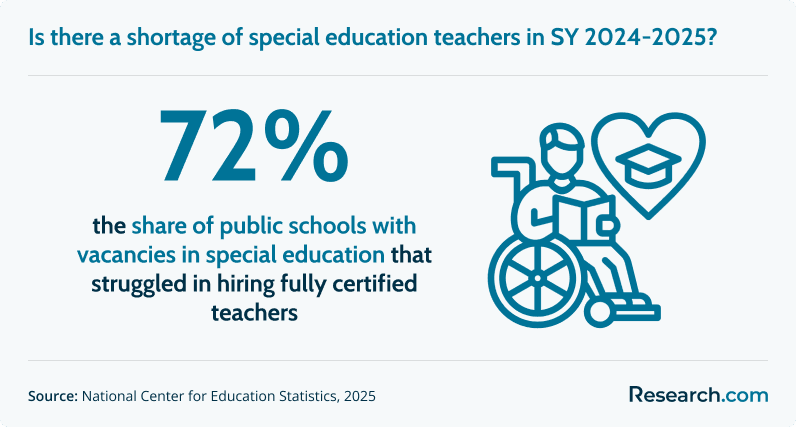
Special education is one of the most important shortage areas. In the 2024-2025 school year, 72% of public schools with special education vacancies reported difficulty hiring fully certified teachers. For educators who are prepared for the demands of the work, specialized certification can offer meaningful career options while addressing a critical need for students with disabilities.
What are alternative teacher certifications and who should use them?
Alternative teacher certification is for people who want to become teachers without completing a traditional undergraduate education major. It is often used by career changers, recent graduates in non-education fields, military veterans, paraprofessionals, and professionals with expertise in shortage subjects.
This route can be a strong fit if you already have a bachelor's degree, want to teach a high-need subject, or need a pathway that lets you work while finishing certification requirements. It may not be the best option if you need extensive time to build subject knowledge, want a slower preparation experience, or plan to teach in a state with limited alternative routes.
Common alternative certification routes
- Teacher residency programs: Combine graduate or certification coursework with intensive classroom experience under a mentor teacher, often in schools with staffing needs.
- Post-baccalaureate certification programs: Allow bachelor's degree holders to complete required education coursework and fieldwork without earning a second bachelor's degree.
- Career and technical education certification: Helps professionals with industry experience transition into teaching vocational or technical subjects such as health sciences, business, information technology, and skilled trades.
- Emergency and provisional certifications: Temporary licenses that may allow candidates to teach while finishing requirements, usually in response to immediate staffing shortages.
| Alternative route | When it may make sense | Main caution |
| Teacher residency | You want structured mentoring and classroom immersion | Residencies can be intensive and may limit work flexibility |
| Post-baccalaureate certification | You already have a bachelor's degree and want a focused certification path | Confirm whether it leads only to certification or also to a master's degree |
| CTE certification | You have strong industry experience and want to teach applied career skills | Industry credentials and state rules may be very specific |
| Emergency or provisional license | A school has an immediate need and the state permits temporary authorization | Temporary approval is not the same as full certification |
Some career changers come from human services fields because their communication, crisis response, advocacy, and family-support skills transfer well to schools. If you are weighing that background, this guide on whether social work is a good major may help you think through related education and student-support careers.
How does teacher certification reciprocity work across states?
Teacher certification reciprocity allows a teacher licensed in one state to apply for certification in another state, but it does not guarantee automatic approval. A receiving state may require additional exams, coursework, fingerprinting, teaching experience, or a temporary license before granting full certification.
Reciprocity matters if you may relocate, teach near a state border, or want more job flexibility. If you are still evaluating whether teaching is a good long-term career, mobility should be part of the calculation. A credential that transfers smoothly can make future career moves easier.
What steps do you follow to earn teaching certification?
The steps to certification depend on your starting point, but most candidates complete the same core milestones: meet education requirements, finish approved teacher preparation, pass exams, complete field experience, submit an application, and satisfy background-check requirements.
| Candidate type | Most likely pathway | Typical next step |
| Recent high school graduate or college student | Bachelor's degree with teacher preparation | Choose an approved education program aligned with your target license |
| Recent graduate with an education degree | Traditional certification | Pass required exams and apply to the state licensing agency |
| Career changer | Alternative or post-baccalaureate certification | Confirm subject eligibility and program approval |
| Current paraprofessional or education aide | Grow-your-own, paraprofessional-to-teacher, or degree-completion route | Check whether work experience and prior credits apply |
| Bachelor's degree holder seeking graduate preparation | Master of Arts in Teaching or related master's pathway | Compare certification outcomes, student teaching placement, and cost |
For recent graduates
Students who completed an education degree usually follow the standard state certification process.
- Earn a bachelor's degree: Most states require at least a bachelor's degree in education, a content area, or an approved related field.
- Complete teacher preparation: Approved programs include coursework in pedagogy, classroom management, assessment, student development, and supervised student teaching.
- Pass certification exams: Candidates typically take content, pedagogy, or basic skills exams required by the state.
- Apply for licensure: Submit transcripts, test scores, background-check documentation, and program verification to the state education agency.
For career changers
Professionals moving into education, training, and library occupations may use alternative certification if they meet state and program eligibility requirements.
- Verify degree and subject eligibility: Many alternative programs require a bachelor's degree, and some require specific coursework in the subject you plan to teach.
- Enroll in an approved route: Choose an alternative certification program that is recognized by the state where you want to teach.
- Complete required testing: Alternative candidates usually must pass many of the same exams as traditional candidates.
- Teach under temporary authorization if allowed: Some states allow candidates to begin teaching under a provisional license while completing remaining requirements.
For master's pathway candidates
A master's pathway can be useful if you already have a bachelor's degree and want certification plus graduate-level preparation. Programs such as a Master of Arts in Teaching or Master of Education may combine coursework, clinical practice, and certification requirements.
Working adults often compare flexible programs such as affordable online master's degrees in teaching, but online coursework does not eliminate the need for in-person fieldwork or student teaching. Confirm where and how those placements are arranged before enrolling.
- Complete graduate coursework: Study teaching methods, learning theory, assessment, subject pedagogy, and classroom practice.
- Fulfill clinical requirements: Most certification-focused master's programs require supervised teaching in a real school setting.
- Pass state-required exams: Testing requirements may include content and pedagogy exams.
- Apply for certification: Send graduate transcripts, exam scores, program verification, and other documents to the licensing agency.
For current education professionals
Paraprofessionals, instructional aides, substitute teachers, and other school staff may already have classroom experience that helps them transition into certified teaching.
- Review degree requirements: Some routes require an associate degree, while full teacher certification usually requires a bachelor's degree.
- Ask about credit for experience: Some programs support paraprofessional-to-teacher pathways or local grow-your-own initiatives.
- Complete approved preparation: Coursework and supervised practice are still usually required.
- Meet testing and application rules: Candidates must submit required exams, background checks, and documentation to the state.
What exams are required for teacher certification?
Teacher certification exams are used to verify that candidates have the academic skills, subject knowledge, and teaching ability needed for the classroom. Required exams vary by state, grade level, subject, and certification route, so use your state licensing agency as the final authority.
Basic skills exams
Basic skills tests measure reading, writing, and mathematics. Some states require them before admission to teacher preparation, while others require them before certification. One common example is the Praxis Core Academic Skills for Educators overview.
Subject area exams
Subject exams assess whether candidates understand the content they plan to teach. A future high school chemistry teacher, middle school math teacher, or special education teacher may each face a different content exam.
Pedagogy and performance exams
Pedagogy exams test knowledge of instructional planning, student development, classroom management, and assessment. Some states also use performance-based assessments such as the Praxis Principles of Learning and Teaching or edTPA, which may require lesson materials, reflection, and evidence of teaching practice.
English language proficiency and bilingual exams
Teachers pursuing ESL, ESOL, or bilingual education credentials may need additional assessments covering language acquisition, bilingual instruction, and proficiency in English and another language.
| Exam type | What it measures | Who may need it |
| Basic skills | Reading, writing, and math foundations | Candidates entering or completing teacher preparation |
| Subject area | Knowledge of the content to be taught | Most general, secondary, and specialized certification candidates |
| Pedagogy | Teaching methods, classroom management, and learning theory | Traditional and alternative certification candidates |
| Performance assessment | Applied classroom readiness through teaching evidence | Candidates in states or programs requiring portfolio-style assessment |
| ESL or bilingual | Language development and bilingual instructional skills | ESL, ESOL, and bilingual education candidates |
How do teachers renew, maintain, or upgrade certification?
Certification is not a one-time credential. Teachers usually need to renew their licenses, complete professional development, and keep documentation current. Letting a license lapse can create employment problems and may require extra steps to regain active status.
Continuing education requirements
Most states require teachers to complete continuing education credits, professional development hours, graduate coursework, or other approved learning activities. These requirements are intended to keep educators current in instructional practice, education law, technology, assessment, and subject-area knowledge.
Renewal timelines
Teaching certifications are typically valid for five years, although the renewal cycle depends on the state and license type. Teachers should track renewal deadlines early, especially if they need a specific number of credits or hours before submitting the renewal application.
Upgrading a teaching license
Teachers may upgrade credentials by adding endorsements, earning a master's degree, completing leadership preparation, or pursuing advanced study. Educators interested in district leadership, curriculum design, higher education, or research may eventually consider doctoral study. Some working professionals compare flexible options such as the shortest online EdD programs, but any advanced program should be evaluated for accreditation, relevance, cost, and career fit.
Renewal matters during staffing shortages because schools need fully qualified teachers who can remain in the classroom without licensing interruptions. In the 2024-2025 school year, 31% of public schools reported losing teaching positions compared with the prior year, and half of school leaders described their schools as understaffed.
How long does it take to become certified?
The time required to become a certified teacher depends on your current education, program format, state rules, testing schedule, and student teaching requirements. The fastest path is not always the best path; the right timeline is the one that gets you eligible for the license you need without leaving gaps in preparation.
| Certification pathway | Typical timeline | Best fit |
| Traditional bachelor's degree pathway | 4 Years | Students beginning college with teaching as the goal |
| Alternative certification | Several Months to 2 Years | Career changers and bachelor's degree holders in non-education fields |
| Master's degree pathway | 1 to 2+ Years | Bachelor's degree holders who want certification and graduate preparation |
| Post-baccalaureate program | 1 to 2 Years | Degree holders who need teacher preparation without completing another bachelor's degree |
Traditional bachelor's degree pathway: 4 Years
This route typically includes general education courses, major coursework, teacher preparation, field experiences, student teaching, and certification exams. State processing time and exam retakes can extend the overall timeline.
Alternative certification programs: Several Months to 2 Years
Alternative routes vary widely. Some accelerated options move candidates into classrooms quickly, while others require 1 to 2 Years of coursework, mentoring, and supervised teaching before full certification is granted.
Master's degree pathway: 1 to 2+ Years
Certification-focused master's programs often take 1 to 2+ Years, depending on whether the student attends full time or part time. Specializations such as special education may require additional fieldwork or coursework.
Post-baccalaureate programs: 1 to 2 Years
Post-baccalaureate programs are built for bachelor's degree holders who need teacher preparation. Some lead only to certification, while others combine certification with graduate credit or a master's degree.
How can you pay for a teaching certification program?
Certification costs can include tuition, fees, books, exams, background checks, fingerprinting, transportation to field placements, and unpaid student teaching time. Before enrolling, calculate the full cost instead of comparing tuition alone.
Common funding options may include federal financial aid for eligible degree programs, state grants, scholarships, district-sponsored programs, employer tuition support, loan forgiveness programs, and paid residency models. If you are considering graduate study, compare flexible options such as 1 year online master's programs, but confirm that the program actually satisfies teacher certification requirements in your state.
Questions to ask before paying for a program
- Is the program approved for teacher certification in the state where I plan to teach?
- What is the total cost, including exams, fees, and student teaching expenses?
- Can I use federal financial aid, scholarships, grants, or employer support?
- Does the program help arrange field placements, or must I find my own?
- What happens financially if I need to retake an exam or extend student teaching?
How much do teachers earn?
Teacher pay varies by grade level, subject, district, state, years of experience, education level, union contract, and local salary schedule. Median salary data can help with planning, but it should not be treated as a guarantee for any specific school or location.
Compensation also differs across professions requiring similar levels of education. For comparison, this Research.com guide on accounting career salaries notes that the 2023 median for accountants was slightly over $70,000, which is higher than many teaching occupations.
Median salaries by teaching level
According to 2023 data, median annual salaries for selected teaching occupations were:
| Teaching role | Median annual salary in 2023 |
| Preschool Teachers | $37,130 |
| Kindergarten and Elementary School Teachers | $63,670 |
| Middle School Teachers | $64,290 |
| High School Teachers | $65,220 |
Median salaries for specialized teaching roles
| Specialized role | Median annual salary in 2023 |
| Special Education Teachers | $65,910 |
| Career and Technical Education Teachers | $63,580 |
| Adult Basic and Secondary Education and ESL Teachers | $60,560 |
Higher-paying education roles often require experience, graduate education, or a move beyond the standard classroom role. Postsecondary teaching positions, which often require a master's or doctorate degree, had a median annual salary of $84,380 in 2023. Instructional coordinators, who help design and improve curriculum, had a median salary of $74,620.
What is the job outlook for teachers?
Projected job growth for many P-12 teaching roles from 2023 to 2033 is limited or slightly negative, even though schools continue to report hiring challenges. Preschool teachers have the strongest projected growth among the roles discussed here at 4%, while many other teaching roles are projected to decline by 1%.
This differs from some fields with similar education requirements. For example, the internal auditor career outlook is projected to grow by 6% over the same period.
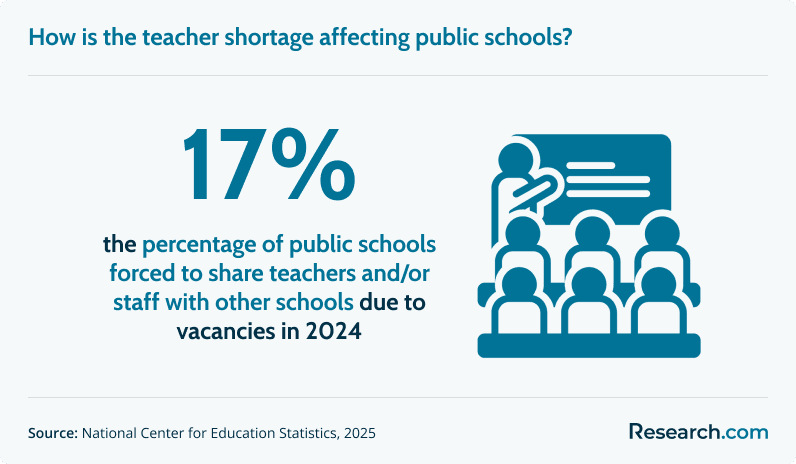
Low projected growth does not mean no hiring. Schools still need teachers because of retirements, turnover, relocation, career changes, and shortages in specific subjects and regions. In 2024, 17% of public schools reported sharing teachers or staff with other schools to cover vacancies, showing how staffing gaps can persist even when overall occupational growth appears flat.
| Career factor | What it means for prospective teachers |
| Overall growth projections | Some P-12 roles may show limited or declining growth from 2023 to 2033 |
| Shortage areas | Special education, STEM, ESL, and certain geographic regions may still have strong hiring needs |
| Turnover and retirements | Annual openings can remain steady even when long-term growth is modest |
| Certification match | Teachers with credentials aligned to hard-to-staff areas may have more options |
Why does accreditation matter for certification programs?
Accreditation and state approval are two of the most important quality checks for teacher preparation. Accreditation can signal that a college or university meets recognized academic standards, while state approval confirms that a program is authorized to prepare candidates for licensure in that state.
Do not assume that every education degree, online program, or accelerated pathway leads to certification. Some programs are designed for professional development, educational studies, or non-licensure careers. Others may be legitimate degrees but not approved for initial teacher certification where you live.
When comparing education options with broader online degree guides, such as quick online degrees that may lead to strong pay, make sure teacher licensure requirements remain the priority. A convenient or affordable program is only useful for becoming a teacher if it aligns with state certification rules.
How to verify program quality
- Check the state education agency’s list of approved teacher preparation programs.
- Confirm the institution’s accreditation status with recognized accrediting bodies.
- Ask whether the program leads to initial certification, an endorsement, or a non-licensure degree.
- Review pass-rate support, student teaching placement policies, advising, and licensure exam preparation.
- Ask whether the program meets requirements only in one state or supports certification mobility.
How do you choose the right teaching certification?
The best teaching certification is the one that matches the students you want to teach, the subject you are prepared to teach, the state where you want to work, and the amount of time and money you can invest. Start with the license, then choose the program—not the other way around.
Consider your academic background
If you already have an education degree, a traditional certification application may be the most direct route. If your bachelor's degree is in another field, alternative certification, post-baccalaureate preparation, or a certification-focused master's program may fit better.
Choose your student population
Teaching young children, adolescents, multilingual learners, students with disabilities, and career-focused high school students requires different preparation. Be specific about the age group and learning needs you want to serve.
Match your subject strengths
Secondary and middle grades certifications often require subject expertise. If you want to teach math, science, English, social studies, or a world language, confirm that your coursework and test preparation align with state expectations.
Think about career growth
If you want to become a department chair, instructional coach, curriculum specialist, principal, or higher education instructor later, consider how your initial certification connects to future endorsements, graduate study, and leadership credentials.
Research state requirements before applying
Teacher certification is state-specific. Before choosing a program, verify required exams, fieldwork hours, background checks, application fees, renewal rules, and reciprocity policies.
Common mistakes to avoid
| Mistake | Why it causes problems | Better approach |
| Choosing a program before checking state approval | The program may not lead to licensure where you plan to teach | Start with your state’s approved program list |
| Comparing only tuition | Fees, exams, field placement costs, and unpaid student teaching can change the true cost | Build a full certification budget |
| Assuming online means fully remote | Teacher certification usually requires in-person clinical practice | Ask how student teaching placements are arranged |
| Ignoring reciprocity | Your license may not transfer easily if you move | Review interstate certification rules before enrolling |
| Picking a broad credential without checking job goals | The license may not cover the grade or subject you actually want | Match certification to a specific role |
| Assuming salary outcomes are guaranteed | Teacher pay depends on local salary schedules and experience | Review district pay scales in your target area |
Is an online bachelor's degree a viable starting point for a teaching career?
An online bachelor's degree can be a legitimate starting point if the institution is accredited, the program is state-approved for teacher preparation, and the required fieldwork or student teaching can be completed in an approved school setting. Flexibility is the main advantage, especially for working adults or students who cannot relocate.
The risk is choosing a general online education degree that does not lead to initial licensure. Before enrolling, ask whether the program prepares candidates for certification, which state it is designed for, and how it handles supervised classroom placements. If you are comparing accessible undergraduate options, this guide to the easiest bachelor's degrees to complete online can provide broader context, but licensure alignment should drive your final decision.
Can an advanced degree improve your teaching career?
An advanced degree can help teachers build specialized expertise, qualify for leadership roles, meet renewal or advancement requirements, and move into positions such as instructional coordinator, administrator, specialist, or postsecondary educator. However, a graduate degree should be evaluated against cost, local salary schedules, career goals, and whether the credential is actually required for the role you want.
Teachers interested in maximizing long-term earnings sometimes compare education pathways with broader lists of high-paying master's degrees. That comparison can be useful, but teaching ROI is often determined by district pay rules, state credential structures, and whether the degree leads to a role with higher responsibility.
When do online accelerated programs make sense?
Online accelerated programs can be helpful when you need flexibility and already have the discipline, schedule, and academic background to handle a faster pace. They may work well for career changers, paraprofessionals completing a degree, or students who need to reduce time out of the workforce.
Speed should not come at the expense of licensure eligibility. When reviewing accelerated online bachelor's degree programs, confirm accreditation, state approval, student teaching arrangements, exam preparation, transfer credit policies, and total cost.
Are online teacher certification programs comparable to campus programs?
Online teacher certification programs can be as rigorous as campus-based programs when they are accredited, state-approved, and include supervised classroom experience. The coursework may be delivered online, but teaching practice must still happen with real students under qualified supervision.
Online programs can be especially useful for adults who need geographic flexibility or who cannot attend daytime campus courses. Cost also matters. Some students compare options through online colleges that accept FAFSA, but financial aid eligibility is only one part of the decision. Licensure approval, placement support, and program completion requirements are just as important.
What trends are changing teaching certification?
Teacher certification is changing as states, districts, and universities respond to staffing shortages, online learning demand, and changing expectations for classroom readiness. Several trends are especially relevant for new candidates.
- More flexible pathways: Alternative certification, residencies, and online coursework are helping adults enter teaching without following a traditional undergraduate education major.
- Competency-based evidence: Some programs emphasize portfolios, performance assessment, classroom artifacts, and demonstrated skills instead of relying only on seat time.
- Technology integration: Teacher preparation increasingly includes digital tools, online instruction strategies, data use, and classroom technology management.
- Shortage-area targeting: Programs and districts may focus recruitment on special education, STEM, bilingual education, ESL, and hard-to-staff communities.
- Adult learner support: Flexible scheduling and remote coursework are especially important for working adults comparing options such as an online college for adult learners.
How do certification programs address diversity, equity, and inclusion?
Strong teacher preparation programs train candidates to work with students from different racial, cultural, linguistic, socioeconomic, disability, and family backgrounds. This is not an optional add-on; it affects lesson design, classroom relationships, assessment, family engagement, discipline, and student outcomes.
Relevant coursework may cover culturally responsive teaching, inclusive classroom practices, English learner support, special education collaboration, trauma-informed strategies, bias awareness, and community engagement. Some students pursuing graduate-level preparation compare flexible options such as the shortest master's programs, but a fast program should still provide meaningful preparation for diverse classrooms.
Can certification support long-term academic and career growth?
Initial teacher certification can be the foundation for a long education career. Many teachers later add endorsements, earn graduate degrees, move into instructional coaching, become curriculum specialists, pursue administration, or transition into higher education and research.
If you expect to pursue advanced academic work, ask whether your certification program connects smoothly to graduate certificates, master's programs, doctoral preparation, or leadership credentials. Some educators eventually compare doctoral options, including guides to the shortest online doctoral programs, but advanced study should align with a clear career purpose rather than speed alone.
Practical checklist before enrolling in a teaching certification program
- Identify the exact grade level, subject, and student population you want to teach.
- Check your state education agency’s certification requirements.
- Confirm that the program is state-approved for the license you need.
- Ask which exams are required and when candidates usually take them.
- Review student teaching or clinical placement requirements.
- Calculate total cost, including tuition, fees, exams, transportation, and unpaid fieldwork.
- Ask about certification pass rates, advising, and job placement support.
- Check whether credits transfer into a master's or advanced credential later.
- Review reciprocity rules if you may move to another state.
- Compare the program timeline with your financial and work obligations.
Key Insights
- Teaching certification is state-specific, so the first step is to identify the license required for the grade, subject, and student population you want to teach.
- General education credentials fit standard classroom roles, while specialized credentials prepare teachers for areas such as special education, ESL, reading, gifted education, and career and technical education.
- Alternative certification can be a practical route for career changers, but it must still lead to full state licensure and include adequate classroom preparation.
- Shortage data shows real staffing pressure: 82% of public schools reported needing to fill two or more vacancies before the 2024-2025 school year, and 72% of public schools with special education vacancies struggled to hire fully certified teachers.
- Salary varies by role. In 2023, high school teachers had a median salary of $65,220, while special education teachers had a median salary of $65,910 and preschool teachers had a median salary of $37,130.
- Job growth projections are modest for many P-12 roles from 2023 to 2033, but annual openings continue because of turnover, retirements, shortages, and regional hiring needs.
- Accreditation, state approval, exam preparation, student teaching placement, cost, and reciprocity are the most important factors to verify before choosing a program.
- Online and accelerated programs can be worthwhile, but only if they meet state certification requirements and provide supervised in-person teaching experience.
References:
- Bureau of Labor Statistics. (2024). Kindergarten and elementary school teachers. U.S. Department of Labor. Retrieved February 27, 2025, from BLS kindergarten and elementary school teachers data.
- Bureau of Labor Statistics. (2024). Preschool teachers. Retrieved February 27, 2025, from BLS preschool teachers data.
- Bureau of Labor Statistics. (2024). Middle school teachers. U.S. Department of Labor. Retrieved February 27, 2025, from BLS middle school teachers data.
- Bureau of Labor Statistics. (2024). High school teachers. U.S. Department of Labor. Retrieved February 27, 2025, from BLS high school teachers data.
- Bureau of Labor Statistics. (2024). Adult basic and secondary education and ESL teachers. U.S. Department of Labor. Retrieved February 27, 2025, from BLS adult education and ESL teachers data.
- Bureau of Labor Statistics. (2024). Special education teachers. U.S. Department of Labor. Retrieved February 27, 2025, from BLS special education teachers data.
- Bureau of Labor Statistics. (2024). Career and technical education teachers. U.S. Department of Labor. Retrieved February 27, 2025, from BLS career and technical education teachers data.
- Peck, D. (2025, January 3). 15 teacher shortage statistics (2025). Retrieved February 27, 2025, from Devlin Peck teacher shortage statistics.
- National Center for Education Statistics. (2025). School Pulse Panel: Surveying high-priority, education-related topics. U.S. Department of Education. Retrieved February 27, 2025, from NCES School Pulse Panel results.
- Bureau of Labor Statistics. (2024). Accountants and auditors. U.S. Department of Labor. Retrieved February 27, 2025, from BLS accountants and auditors data.
Other Things You Should Know About Types of Teaching Certificates and Requirements
In 2027, educators can pursue various certifications, including Initial Certification for new teachers, Professional Certification for experienced educators, and Specialized Endorsements in areas like Special Education and STEM. Specific requirements vary by state, but a bachelor's degree in education and a successful pass of required exams are generally needed.
Student teaching is usually required for initial certification and is a common eligibility checkpoint. Many state programs require a supervised clinical placement of about 12 to 16 weeks, or roughly 300 to 600 hours, before recommending candidates for licensure through the state education agency.
Initial certifications in 2027 allow new educators to begin teaching, often requiring a bachelor's degree and passing state exams. Professional certifications require additional teaching experience, continued education credits, and sometimes passing advanced exams, reflecting a higher level of teacher development.


